Managing people sounds simple until you actually have to do it. From piles of paperwork and payroll confusion to attendance errors and communication gaps, HR in many Nepalese businesses still feels stuck in an older system that just can’t keep up anymore. And the problem isn’t effort, HR teams are working hard, but the tools? Not always helping. So the real question is, why are so many companies still struggling with issues that already have solutions?
In this blog, we’ll break down the Top 5 Challenges of HR Management in Nepal and, more importantly, how modern HR software is helping businesses overcome them. From reducing manual work and improving accuracy to enhancing employee experience and compliance, we’ll explore practical solutions that actually work. If you’re running a business or managing HR in Nepal, this guide might just help you fix problems you’ve been quietly dealing with for years.
What Is HR Management and Why Is It Important in Nepal?
HR management is the process of managing employees, workplace policies, and organisational culture to ensure smooth business operations. It includes tasks like recruitment, payroll, attendance, performance management, and employee engagement. In simple terms, HR acts as the bridge between a company and its people, often supported by modern HR Software that simplifies and automates these processes. When done right, it improves productivity, reduces conflicts, and helps businesses grow more efficiently.
Helps manage growing workforces in Nepalese businesses effectively
Ensures compliance with Nepal labor laws and regulations
Reduces errors in payroll, attendance, and employee records
Improves employee satisfaction and retention in competitive markets
Supports business growth by building a structured HR system
Encourages transparency and better communication within organisations
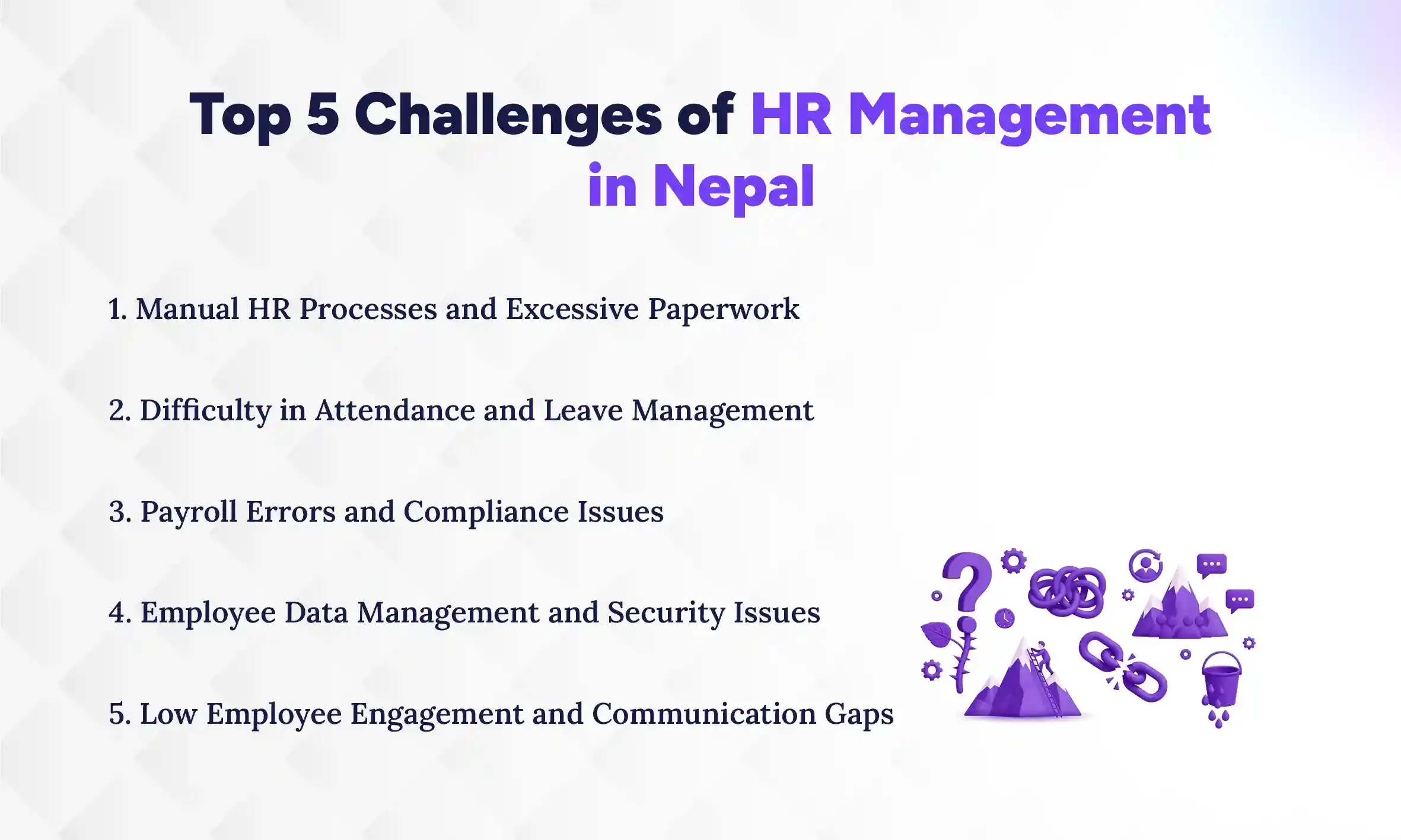
Top 5 Challenges of HR Management in Nepal
Top 5 Challenges of HR Management in Nepal mainly come from outdated processes, lack of automation, and limited use of technology. Many businesses still rely on manual systems, which makes HR tasks slow, error-prone, and difficult to manage. As companies grow, these small inefficiencies turn into bigger problems affecting productivity and employee satisfaction. The gap between traditional HR practices and modern business needs is becoming more visible. And honestly, this is where most organisations start feeling the pressure.
1. Manual HR Processes and Excessive Paperwork
One of the biggest challenges is the heavy reliance on manual processes and physical paperwork. Employee records, leave forms, and approvals are often handled on paper, which is time-consuming and prone to errors. This creates delays and makes it difficult to track information efficiently. Over time, managing documents becomes messy and overwhelming. HR software solves this by digitising records, automating workflows, and creating a completely paperless system. It saves time, reduces errors, and keeps everything organised in one place.
2. Difficulty in Attendance and Leave Management
Tracking attendance and leave manually can lead to inaccuracies and confusion. Employees may forget to update records, and HR teams often struggle to maintain consistency. This affects payroll calculations and overall transparency. It also creates unnecessary back-and-forth between employees and HR. HR software solves this by providing real-time attendance tracking, automated leave requests, and instant approvals. Everything becomes transparent, accurate, and easy to manage.
3. Payroll Errors and Compliance Issues
Payroll processing in many Nepalese companies is still done manually or through basic tools, which increases the risk of errors. Miscalculations in salary, tax, or deductions can lead to employee dissatisfaction and compliance issues. Keeping up with changing labour laws can also be challenging. These mistakes can cost both time and trust. HR software solves this by automating payroll calculations, ensuring tax compliance, and generating accurate reports. It makes payroll faster, error-free, and reliable.
4. Employee Data Management and Security Issues
Managing employee data across spreadsheets or physical files increases the risk of data loss and security breaches. Information can be misplaced, duplicated, or accessed by unauthorised people. This not only affects efficiency but also raises serious security concerns. As organisations grow, managing data becomes even more complex. HR software solves this by offering centralised, secure, and cloud-based storage with controlled access. It keeps data safe, organised, and easily accessible when needed.
5. Low Employee Engagement and Communication Gaps
Many organisations struggle with maintaining clear communication and employee engagement. Employees often feel disconnected due to lack of transparency and delayed responses. This can lead to low motivation and higher turnover rates. HR teams also find it difficult to manage feedback and communication manually. HR software solves this by providing employee self-service portals, communication tools, and feedback systems. It improves transparency, engagement, and overall workplace satisfaction.
Ready to Accelerate Your Digital Growth?
Partner with The Pace Infosys to build scalable web and mobile solutions tailored to your business goals.
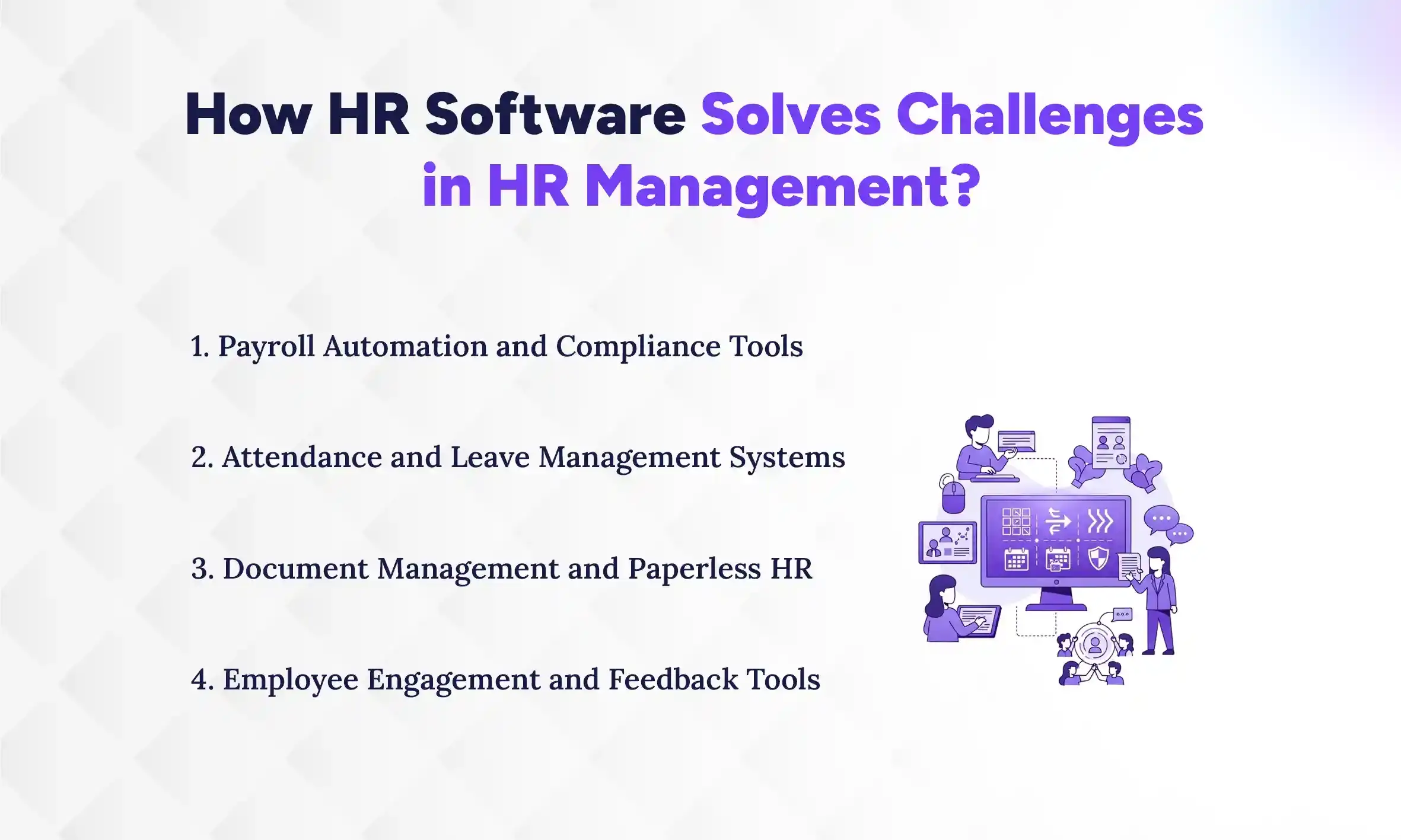
How HR Software Solves Challenges in HR Management?
HR software solves HR management challenges by automating repetitive tasks, centralising data, and streamlining processes into one digital system. Instead of juggling spreadsheets, files, and manual approvals, everything runs through a structured workflow. This reduces errors, saves time, and improves overall efficiency, clearly highlighting the benefits of using hr software in modern workplaces. In simple terms, it replaces chaos with clarity, and that alone makes a big difference.
1. Payroll Automation and Compliance Tools
Payroll automation tools handle salary calculations, tax deductions, and payslip generation without manual effort. This reduces the chances of errors and ensures employees are paid accurately and on time. It also helps businesses stay compliant with local labor laws and tax regulations. Reports are generated automatically, making audits easier. Overall, it removes one of the most stressful HR tasks and turns it into a smooth process. And honestly, fewer payroll mistakes mean fewer awkward conversations.
2. Attendance and Leave Management Systems
These systems track employee attendance in real time and manage leave requests digitally through an efficient attendance management system. Employees can apply for leave through the system, and managers can approve it instantly. This eliminates confusion caused by manual records or missing data. It also ensures accurate attendance data for payroll processing. Everything becomes transparent and easy to monitor. No more chasing people for attendance updates which is a relief.
3. Document Management and Paperless HR
HR software stores all employee documents in a centralised digital platform, removing the need for physical files. Contracts, IDs, and records can be accessed anytime with just a few clicks. This improves organisation and reduces the risk of losing important documents. It also enhances data security with controlled access. Paperwork is replaced by clean, searchable digital records. Basically, it turns clutter into control.
4. Employee Engagement and Feedback Tools
Employee engagement tools allow companies to collect feedback, track performance, and communicate effectively. Employees can share their opinions, raise concerns, and stay informed through the system. This improves transparency and builds trust within the organisation. HR teams can identify issues early and take action quickly. It creates a more connected and motivated workforce. And when employees feel heard, they usually perform better too.
Benefits of Using HR Software for Nepalese Businesses
Using HR software offers multiple advantages for Nepalese businesses, especially those struggling with manual processes and inefficiencies. It helps streamline HR operations, reduce paperwork, and improve accuracy across tasks like payroll and attendance. As businesses grow, managing HR manually becomes harder, and that’s where understanding different types of hr software makes a real difference. It not only saves time but also improves overall productivity and decision-making. In many ways, it turns HR from a burden into a more strategic function.
1. Improved Efficiency and Reduced Manual Work
HR software automates repetitive tasks like data entry, attendance tracking, and approvals, which significantly reduces manual workload. This allows HR teams to focus on more important tasks instead of routine admin work. Processes that used to take hours can now be completed in minutes. It also reduces dependency on paperwork and physical records. Overall, it makes HR operations faster, smoother, and far less stressful. And yes, fewer manual tasks mean fewer chances for mistakes.
2. Accurate Payroll Processing and Compliance Management
With HR software, payroll calculations become automated and highly accurate. It handles tax deductions, bonuses, and compliance requirements without manual intervention. This reduces errors that often occur in traditional payroll systems. It also ensures that businesses stay compliant with Nepal’s labor laws and regulations. Reports can be generated instantly for audits or reviews. In short, it brings both accuracy and peace of mind.
3. Better Employee Data Management and Security
HR software stores all employee data in a centralised and secure system. This eliminates scattered records across files and spreadsheets. Access controls ensure that only authorised personnel can view or edit sensitive information. It also reduces the risk of data loss or duplication. Managing employee information becomes much more organised and reliable. And honestly, knowing your data is safe is a big relief.
4. Enhanced Employee Experience and Self-Service Access
Employees can access their own data, apply for leave, and check payslips through self-service portals. This reduces dependency on HR for basic tasks and improves transparency. It also speeds up processes like approvals and updates. Employees feel more in control and informed about their information. This leads to better satisfaction and engagement. A smoother experience for employees usually reflects in their performance too.
5. Cost Savings and Increased Productivity
By reducing paperwork, manual labor, and errors, HR software helps businesses save operational costs. It also improves productivity by speeding up HR processes. Fewer delays and mistakes mean better overall efficiency. Over time, these small improvements add up to significant savings. It’s not just about cutting costs, it’s about working smarter. And that’s what growing businesses really need.
Insights
Did You Know?
Pace HRMS offers cloud-based access, allowing HR teams to manage employees anytime, anywhere, even on mobile devices.
Future of HR Management in Nepal
The future of HR management in Nepal is clearly moving toward digital, automated, and data-driven systems. As businesses grow and competition increases, traditional HR practices are slowly being replaced by smarter technologies. Companies are realising that managing people efficiently requires more than just manual effort, it needs the right tools, and understanding how to choose hr software becomes increasingly important. The shift toward HR software and digital platforms is no longer optional, it’s becoming essential. And honestly, those who adapt early will have a clear advantage.
1. Rise of HR Automation and Digital HR Systems in Nepal
HR automation is becoming more common as businesses look to reduce manual work and improve efficiency. Tasks like payroll, attendance, and recruitment are increasingly being handled through digital systems. This reduces errors and speeds up processes significantly. Companies are moving away from paperwork toward fully automated workflows. It also helps HR teams focus on strategy rather than routine tasks. The shift may feel gradual, but it’s definitely happening.
2. Increasing Adoption of Cloud-Based HR Software
Cloud-based HR software allows businesses to manage HR processes from anywhere, at any time. This flexibility is especially useful for growing companies and remote work environments. It also ensures data is stored securely and backed up regularly. More Nepalese businesses are adopting cloud solutions for their scalability and ease of use. It removes the need for physical storage and complex systems. In simple terms, it makes HR more accessible and manageable.
3. Growing Importance of Data-Driven HR Decisions (HR Analytics)
HR analytics is helping organisations make better decisions based on real data rather than assumptions. It provides insights into employee performance, attendance, and engagement. This allows HR teams to identify issues early and improve strategies. Data-driven decisions lead to better outcomes and higher efficiency. It also supports workforce planning and growth. Basically, it turns numbers into meaningful actions.
4. Focus on Employee Experience and Engagement Tools
Companies are placing more importance on employee satisfaction and engagement. Tools that allow feedback, communication, and performance tracking are becoming essential. These systems help create a more transparent and connected workplace. Employees feel more valued when their voices are heard. This leads to better retention and productivity. And when people are happier at work, everything tends to run more smoothly.
5. Integration of AI and Smart Technologies in HR Processes
Artificial Intelligence is starting to play a role in HR processes like recruitment, performance evaluation, and employee support. AI can automate tasks, analyse data, and even predict trends like employee turnover. This helps HR teams make faster and smarter decisions. It also reduces manual workload significantly. While still evolving, AI is expected to shape the future of HR in Nepal. It’s like adding intelligence to an already smart system.
Is HR Software Worth It for Businesses in Nepal?
Yes, HR software is absolutely worth it for businesses in Nepal. It helps overcome common HR challenges like paperwork, payroll errors, and inefficient processes. Automating tasks and centralising data, it saves time and improves accuracy. For growing businesses, it’s not just helpful, it quickly becomes essential for smooth operations.
Reduces manual workload and eliminates excessive paperwork
Improves accuracy in payroll, attendance, and employee records
Ensures compliance with Nepal labor laws and regulations
Saves operational costs by automating routine HR tasks
Enhances employee experience through self-service systems
Supports business growth with scalable and efficient HR processes
Which is the Best HR Software to Solve HR Management Problems in Nepal?
Pace HRMS is the best HR software to solve HR management problems in Nepal because it provides a complete, centralised platform that handles payroll, attendance, employee records, and recruitment in one system. It is specifically designed to meet the needs of Nepalese businesses, including compliance with local labour laws and regulations.
With features like automated payroll, real-time attendance tracking, and employee self-service portals, it significantly reduces manual work and errors. It also offers secure data management and scalable solutions for growing companies. Overall, Pace HRMS simplifies complex HR processes, improves efficiency, and helps businesses move toward a fully digital and paperless HR environment.
Conclusion
Managing HR in Nepal comes with its own set of challenges, from manual processes and payroll errors to communication gaps and data management issues. As we’ve seen, these problems are quite common, but they are not impossible to solve. With the right approach and tools, businesses can streamline their HR operations and reduce unnecessary complexity. That’s where HR software steps in, turning time-consuming tasks into smooth, automated processes.
At the end of the day, adopting HR software is not just about technology; it’s about improving how people and processes work together. Businesses that embrace digital HR systems, often with solutions from The Pace Infosys, can save time, reduce errors, and create a better experience for employees. And honestly, in today’s fast-moving business world, staying efficient is not optional anymore, it’s essential.
FAQs
What are the main HR challenges in Nepal?
+
Manual processes, payroll errors, attendance issues, and poor data management are common.
How HR software helps solve HR challenges in Nepal?
+
It automates tasks, reduces errors, and improves efficiency in HR operations.
Is HR software useful for small businesses in Nepal?
+
Yes, it helps small businesses manage HR tasks efficiently and save time.
Can HR software reduce paperwork in organisations?
+
Yes, it digitises records and eliminates the need for physical documents.
What features should HR software have in Nepal?
+
Payroll automation, attendance tracking, data security, and employee self-service are essential.
Does HR software help with compliance in Nepal?
+
Yes, it ensures accurate payroll and compliance with labour laws.
Is HR software expensive for Nepalese businesses?
+
Costs vary, but it offers long-term savings and improved productivity.
Can HR software improve employee engagement?
+
Yes, it enhances communication, transparency, and employee satisfaction.
Ready to get started?
Book a 30-minute consultation call, and let's talk about your goals.