


Salary day shouldn’t feel like a monthly headache. But, for many businesses in Nepal, payroll still means spreadsheets, last-minute fixes, and constant worry about errors. One small mistake in tax, SSF, or deductions can lead to bigger problems than expected. And as your team grows, managing payroll manually only gets harder.
That’s where things start to change.
Automated salary processing software takes the stress out of payroll by handling calculations, deductions, and payslips in one place quickly and accurately. No more guesswork, no more delays.
In this guide, we’ll walk you through what payroll software is, how payroll automation works, why it matters for Nepali businesses, and how you can choose the right automated salary processing software in Nepal without overcomplicating things.
What is Automated Salary Processing Software in Payroll?
Automated salary processing software is a tool that helps businesses manage payroll without doing everything manually. It handles salary calculations, tax deductions, SSF and CIT contributions, and even generates payslips, automatically and accurately.
In simple terms, it replaces spreadsheets and manual work with a smarter system. Instead of calculating salaries line by line, the software does it for you based on set rules. This is what we call payroll automation.
Now, this matters even more in Nepal. Payroll isn’t just about paying salaries, it also includes tax compliance, SSF, CIT, and other legal requirements. Keeping up with all of this manually can be time-consuming and risky.
With automated payroll software, everything stays organized, updated, and compliant. So, you save time, reduce errors, and stay worry-free every payroll cycle.
Why Businesses in Nepal Are Switching to Automated Payroll Software
Many businesses in Nepal are moving to automated payroll software to handle complex legal rules and reduce costly manual mistakes. This technology helps companies follow the latest government laws while ensuring every staff member gets paid the right amount on time. The following sections explain the specific reasons why this digital shift is becoming a standard for successful local employers:
1. Increasing Complexity in Payroll Compliance in Nepal
Staying compliant in Nepal is getting harder because the government frequently updates rules for the Social Security Fund (SSF) and Citizen Investment Trust (CIT). Companies must now accurately calculate a 31% total contribution for SSF, which includes a 20% share from the employer and 11% from the employee. Beyond these funds, managers have to track various tax brackets and labor law changes to avoid heavy fines or legal trouble during audits. Using a digital system makes this easy because the software updates these rates automatically, so you do not have to memorize new laws every year.
2. Manual Payroll Processing Leads to Errors and Delays
Using paper files or simple spreadsheets often leads to small typing mistakes that cause big problems with salary totals. When an HR person has to manually check attendance, leave days, and overtime for dozens of people, it is very easy to miss a detail or use an old formula. These errors often result in late payments, which can make employees feel frustrated and lose trust in the company leadership. By switching to automation, a business removes the "human element" from basic math, ensuring that every payslip is 100% accurate before it reaches the worker.
3. Need for Faster and More Accurate Payroll Management
Processing payroll by hand can take several days of focused work, but automated software can finish the same task in just a few clicks. This speed allows your HR team to stop acting like data entry clerks and start focusing on more important things, like hiring great talent or improving office culture. Digital systems also give you instant reports, so you can see exactly how much you are spending on salaries and taxes at any moment. Saving this much time every month helps a business stay organized and react quickly to any financial changes.
4. Growing Adoption of Digital Payroll Systems in Nepal
More companies in Nepal are joining the digital trend because they want to build a reputation as a modern and reliable employer. When employees can log in to a portal to see their own payslips and tax records, it creates a sense of transparency that keeps the team happy. Leading firms across Kathmandu and other hubs are already using these tools to prove they are serious about following national labor standards. Investing in this technology shows your staff and the government that your business is stable, professional, and ready for future growth.
Top Features of Automated Salary Software for Nepali Businesses
Automated salary software offers a range of tools designed to simplify complex financial tasks and ensure every employee is paid accurately. These HRMS features work together to handle everything from tax math to attendance tracking without the need for manual data entry. Let’s dive into the specific features that make this software essential for modern companies in Nepal.
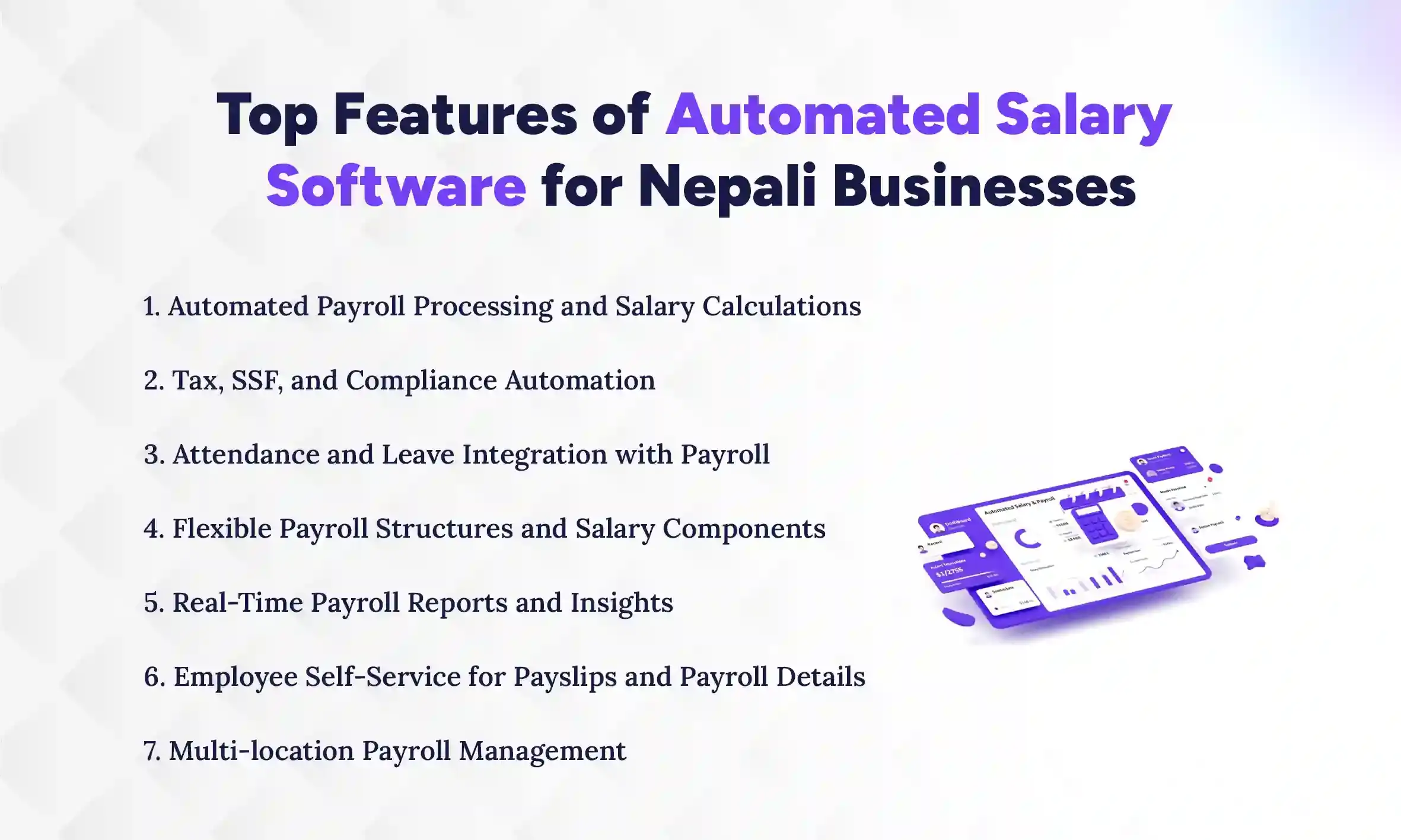
1. Automated Payroll Processing and Salary Calculations
This feature handles the heavy lifting by automatically calculating gross pay, deductions, and net salaries for your entire team in minutes. Instead of using calculators and spreadsheets, the system uses pre-set formulas to ensure that no math errors occur during the process. Because the software is consistent, you can trust that every paycheck is correct, which keeps your accounting records clean and professional. Using this tool allows your office to run payroll much faster, giving you more time to focus on growing your business.
2. Tax, SSF, and Compliance Automation
Staying on the right side of the law is easy when your software automatically deducts TDS (Tax Deducted at Source) and SSF contributions. It is programmed to follow the latest Nepal government tax slabs, so you don't have to manually update figures when laws change. The system also generates the necessary reports for government filing, which saves you from the stress of tax season audits. This automation acts like a digital legal expert, ensuring your company never misses a payment to the tax office or the Social Security Fund.
3. Attendance and Leave Integration with Payroll
Modern payroll systems connect directly to your biometric machines or mobile check-in apps to track exactly when staff arrive and leave. This integration means the software automatically adjusts pay based on late arrivals, unpaid leave, or overtime hours without any human help. You no longer have to spend hours at the end of the month comparing attendance sheets to salary slips. This attendance management feature ensures that employees are paid fairly for the actual time they spend working, which reduces disputes over missing hours.
4. Flexible Payroll Structures and Salary Components
Nepali businesses often have unique pay structures that include various allowances like fuel, meals, and festival bonuses (Dashain bonus). This software allows you to customize these components for different departments or individual job roles very easily. Whether you pay a flat monthly rate or use a commission-based system, the software adapts to your specific business model. Having this flexibility ensures that your payroll stays organized even as you hire different types of staff or change your benefit packages.
5. Real-Time Payroll Reports and Insights
With just one click, you can generate detailed reports that show exactly where your company’s money is going each month. These insights help owners see trends in labor costs, such as rising overtime expenses or high turnover rates in certain departments. Instead of waiting for a yearly audit, you can check your financial health daily through a simple dashboard. These real-time numbers make it much easier to plan your budget and make smart decisions about hiring or raises.
6. Employee Self-Service for Payslips and Payroll Details
A self-service portal lets employees log in to their own accounts to download payslips, check their tax history, or see their remaining leave days. This feature stops the constant flow of questions to the HR department, as staff can find the information they need on their own. It also builds trust because workers can see exactly how their pay was calculated, including all their benefits and deductions. Providing this digital access makes your company feel more transparent and modern to every member of the team.
7. Multi-location Payroll Management
Even if your business has offices in different cities, this feature lets you manage them all from one central screen. You can set different holiday calendars or local rules for each branch while still keeping the main payroll records in one place. This is much safer and faster than sending physical files back and forth between different office locations. It ensures that your entire organization stays synchronized, no matter how many branches you open across the country.
Manual Payroll vs. Automated Salary Processing Software
Choosing between old-fashioned manual systems and new automated software is a big decision for any growing business in Nepal. While paper files might seem cheaper at first, they often hide secret costs that can hurt your company’s bottom line over time. This comparison breaks down the main differences to help you see which method actually supports your business goals.
1. Human Error vs. Digital Precision
Doing payroll by hand usually means someone is typing numbers into a spreadsheet for hours, which often leads to "human error." Even a tiny typo in an employee's salary or tax deduction can cause a huge mess that takes days to fix later on. On the other hand, automated software uses smart formulas to do the math perfectly every single time without getting tired. This switch ensures that every worker gets the exact amount they earned, which helps maintain a happy and trusting workplace.
2. Slow Paperwork vs. High-Speed Processing
Manual payroll is a slow process that eats up a lot of your HR team's valuable time every single month. When you add up the hours spent checking attendance cards and writing out physical checks, the "hidden cost" of manual labor becomes quite expensive. Automated systems finish these same tasks in seconds, allowing your staff to focus on more important work like growing the business. Even though software has a monthly fee, it usually pays for itself by saving you dozens of hours in administrative labor costs.
3. Legal Risks vs. Automatic Compliance
Trying to keep up with changing Nepal government rules for SSF and taxes by hand is very risky and stressful for business owners. If you accidentally use an old tax rate or miss a filing deadline, your company could face heavy fines or even legal trouble during a government audit. Automated software solves this problem by keeping all the latest laws updated in the system, so you are always following the rules correctly. This gives you peace of mind, knowing your company is legally safe without having to check the news every morning.
4. Messy Spreadsheets vs. Easy Scalability
As your company hires more people, manual payroll becomes a nightmare because there is simply too much data for one person to track. Managing five employees on a spreadsheet is easy, but managing fifty or a hundred people that way is almost impossible and leads to total chaos. Automated software is built to grow with you, meaning it works just as fast whether you have ten employees or a thousand. This scalability eliminates the requirement to hire a giant team of accountants just because your business is becoming more successful.
Quick Comparison: Manual vs. Automated Payroll
To help you make the best choice for your business, here is a quick look at how these two methods compare. This table breaks down the most important parts of managing a team in Nepal today:
| Feature | Manual Payroll (Paper/Excel) | Automated Payroll Software |
|---|---|---|
| Accuracy | High risk of typos and math errors. | 100% precise using built-in formulas. |
| Speed | Takes days of focused data entry. | Finishes the whole month in minutes. |
| Tax & SSF | You must track new laws yourself. | Updates automatically with Nepal's laws. |
| Cost | High "hidden" cost of staff time. | Low, predictable monthly fee. |
| Records | Hard to find old files or payslips. | Instant digital access to all history. |
| Team Trust | Errors can lead to unhappy staff. | Transparent and always on time. |
| Growth | Becomes a mess as you hire more. | Scales easily from 5 to 500+ staff. |
While manual payroll might feel free because you aren't paying for a subscription, it actually costs you more in wasted time, legal risks, and human errors. Switching to an automated system is like moving from a hand-drawn map to a GPS; it simply makes running a business in Nepal much safer and more efficient.
Common Payroll Challenges Faced by Businesses in Nepal
Businesses in Nepal often struggle with manual math mistakes, tricky tax rules, lost records, and slow payment dates that make running a company difficult. These common problems happen because using paper and pens for salaries takes up too much time and energy. The points below explain why these specific issues are so frustrating for local business owners today.
1. Frequent Math Mistakes in Monthly Salaries
When you calculate salaries by hand, it is very easy to make a small mistake that ruins your entire spreadsheet. You might accidentally miss a half-day of leave or type in the wrong bonus amount for an employee. These tiny errors often mean you have to restart your work, which wastes hours of your busy day. Without a computer to check the math, your business will always be at risk of paying the wrong amount to your team.
2. Struggle with Changing Taxes and Deductions
Nepal’s tax laws and SSF (Social Security Fund) rules change often, which makes it hard for owners to stay updated. Figuring out the exact tax for different salary levels by yourself is very confusing and leads to big errors. If these tax numbers are wrong, the government might give your business a fine during a formal audit. This constant worry about following the rules makes the end of every month feel much more stressful than it should be.
3. Scattered Records and Missing Paperwork
Keeping your payroll information in different notebooks or random computer folders makes it hard to find what you need. If an employee asks for an old payslip from last year, you might spend hours digging through dusty files to find it. This lack of a single, "central home" for your data makes your business look disorganized and unprofessional. When your records are scattered, it is also much harder to prove to the labor office that you are following the law.
4. Slow Processing That Causes Late Payments
Doing payroll manually takes so much time that salaries are often paid a few days late, especially during festivals like Dashain. Late pay makes your staff feel worried and can make it hard for them to pay their own bills on time. If the person who usually handles the money is sick or away, the whole process stops because nobody else knows the system. This delay hurts the trust your employees have in you and makes your company look less reliable.
5. Not Knowing Where Your Money Is Going
Without clear, simple reports, it is nearly impossible to see exactly how much you spend on overtime or extra bonuses. Most manual systems do not give you a "big picture" look at your costs, so you are basically guessing how much money you have left. You might be overspending on certain departments without even realizing it until it is too late. Lacking these insights makes it very difficult to plan your budget or save money for future business growth.
What Are The Benefits of Using Automated Salary Software in Nepal?
Using automated software helps your business save time, stop math mistakes, follow Nepal's tax laws, build staff trust, and grow easily without any extra stress. These systems take over the most difficult parts of paying your team so you can focus on leading your company. The following points explain how an HR software benefits your daily operations with measurable results.
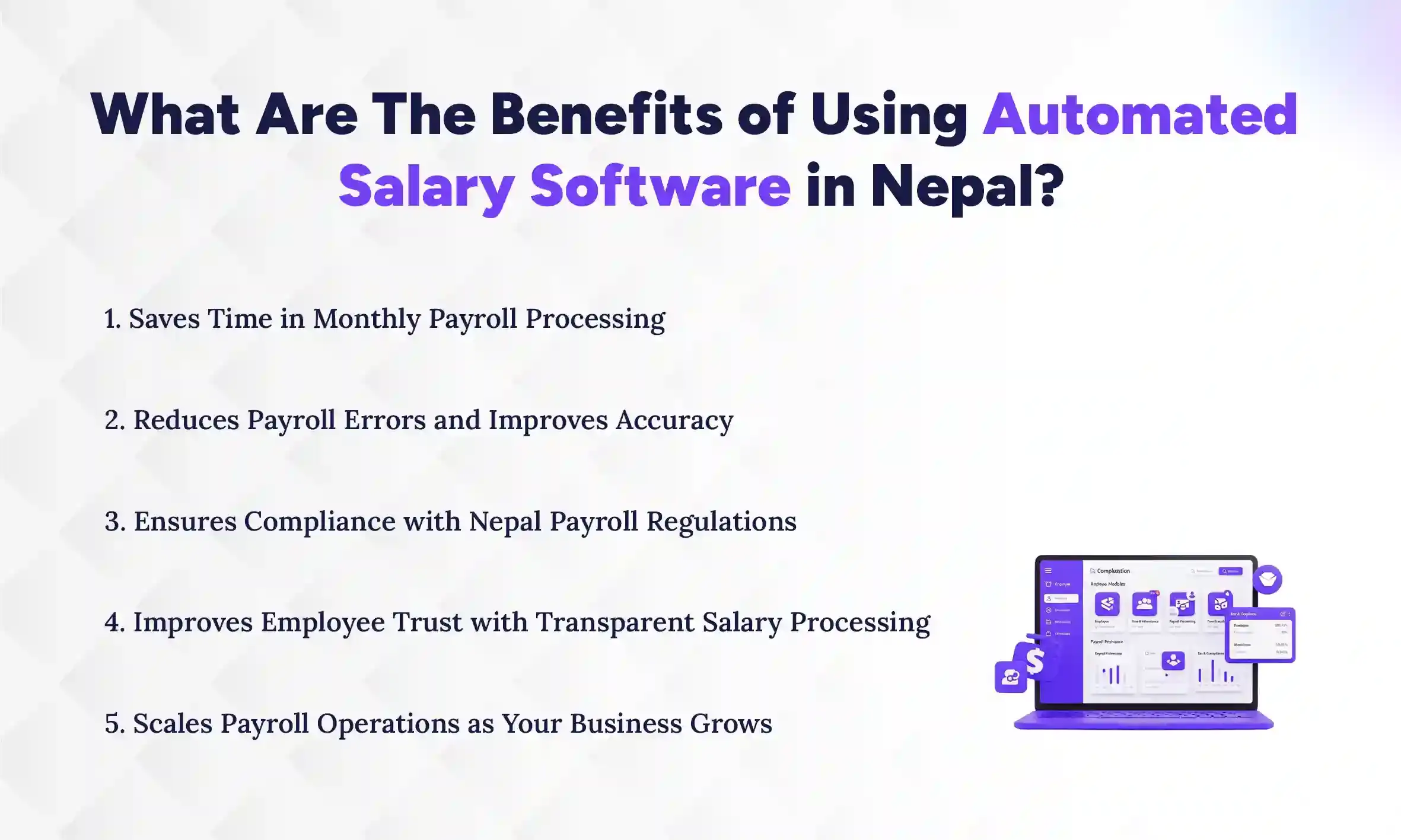
1. Saves Time in Monthly Payroll Processing
Automated systems finish a full month of payroll in minutes rather than the days required for manual data entry. The software syncs directly with attendance records to pull work hours without any typing. This shift allows your HR staff to complete their monthly tasks up to 80% faster. By removing slow paperwork, your team stays productive and focused on growing the business.
2. Reduces Payroll Errors and Improves Accuracy
Computerized formulas ensure every salary calculation is 100% precise by removing human typing mistakes. The system automatically applies the correct bonuses and deductions based on the exact hours worked by each employee. Having perfect numbers prevents the need to redo payroll or fix expensive accounting errors later. This accuracy keeps your financial records clean and ready for any professional review.
3. Ensures Compliance with Nepal Payroll Regulations
The software stays updated with the latest SSF and TDS tax brackets to keep your business legally safe. It automatically calculates the 31% Social Security contribution for every staff member based on current government rules. Using these built-in tools helps you avoid costly fines and makes your yearly tax audits much faster. Following these national laws correctly proves that your company is stable and professional.
4. Improves Employee Trust with Transparent Salary Processing
Digital payslips show employees exactly how much money was deducted for taxes or added for bonuses. Staff can log in to a private portal to view their own payment history and leave balances at any time. This transparency stops confusion about "missing pay" and reduces the number of questions sent to the HR office. When workers see clear and honest records, they feel more loyal to the company.
5. Scales Payroll Operations as Your Business Grows
Software handles a team of five or five hundred people with the same speed and ease. As you open new branches in different cities, you can manage all salaries from one central screen without hiring more accountants. The system is built to grow with your success, so your payroll process never becomes a bottleneck. Investing in this technology now ensures your office stays organized for years to come.
Which is the Best Salary & Payroll Processing Software in Nepal?
Pace HRMS is widely considered the best salary payroll processing software in Nepal because it combines powerful automation and salary compliance with a very user-friendly design. The software makes it easy for any business to handle complex tasks like salary calculations, attendance tracking, and tax filing with just a few clicks.
With over 12 years of experience in the technology industry and 14+ years of history in HR and recruitment, the team behind Pace HR Software has built a strong reputation for providing reliable and modern solutions to hundreds of local organizations. The following sections explain the unique features that make this specific tool the top choice for employers across the country.
Why Choose Pace HRMS for Your Salary Processing?
Pace HRMS is built specifically to handle the latest government regulations like SSF and TDS automatically. The system stays updated with Nepal’s current tax brackets, so you never have to worry about doing manual math. This feature ensures your business stays compliant with the Labor Act while protecting you from expensive legal fines.
- Calculates 31% SSF contributions with one click.
- Updates Nepal tax slabs automatically every year.
- Eliminates all manual math and typing errors.
- Generates professional payslips for every staff member.
- Saves hours of administrative work every month.
Top Features of Pace HR Payroll Software
This software connects directly to your biometric machines to track exactly when your employees start and finish work. It automatically calculates how much to pay based on late arrivals, overtime, and approved leave days. Because everything is synced in real-time, your payroll is always ready to go without any last-minute data entry.
- Syncs directly with biometric attendance machines.
- Tracks overtime and late arrivals automatically.
- Manages Dashain bonuses and festival allowances easily.
- Provides a private portal for employee self-service.
- Creates instant financial reports for business owners.
Quick Comparison: Pace HRMS vs. Manual Excel Tracking
Choosing between a dedicated system like Pace HRMS and a traditional spreadsheet like Excel is a major decision for any growing office in Nepal. While Excel is a familiar tool, it often requires hours of manual data entry that can lead to costly math errors. The table below highlights the key differences to help you see which method provides the most value for your business.
The Better Choice for Your Business
While Excel might seem free at first, it actually costs your business more in wasted time, legal risks, and human errors. Moving to Pace HRMS is a long-term investment that ensures your payroll is always 100% accurate and follows all Nepal labor laws. This switch allows your HR team to stop acting like data entry clerks and start focusing on more important tasks.
How to Choose the Right Automated Salary Software in Nepal?
Finding the best payroll software in Nepal requires looking for a system that handles local tax rules, biometric attendance, and flexible salary settings while staying within your budget. Since every office has different needs, you must pick a tool that simplifies your specific daily tasks without being too complicated for your team to learn. The following guide explains the most important factors to check before you invest in a new digital system for your business.
| Feature | Manual Excel Tracking | Pace HRMS Automation |
|---|---|---|
| Data Entry | Hours of manual typing required. | Pulls attendance data automatically. |
| Tax Updates | You must change formulas yourself. | Updates Nepal tax slabs automatically. |
| SSF Calculation | High risk of manual math errors. | Calculates 31% contributions instantly. |
| Security | Easy to delete or lose files. | Secure cloud storage with backups. |
| Employee Access | Staff must ask HR for payslips. | Private portal for self-service. |
| Reporting | Hard to create visual charts. | Generates one-click financial insights. |
1. Choose Software That Follows Nepal Payroll Rules
fiYour software must be able to calculate TDS and SSF contributions exactly as the Nepal government requires. It is important to ask if the provider updates the system automatically when new tax brackets are announced in the national budget. A system that follows these local rules perfectly will save you from expensive legal fines during a tax audit. This built-in compliance acts like a digital expert that keeps your company safe and professional at all times.
2. Pick a System That’s Easy to Use
The best payroll tool should have a clean design that your HR manager and accountants can understand without weeks of technical training. If a system is too difficult to navigate, your staff might go back to using manual spreadsheets out of frustration. Look for a dashboard that shows your most important numbers, like total monthly salaries and pending leave requests, right on the home screen. A simple interface ensures that your team actually uses the software to its full potential every single day.
3. Make Sure it Connects with HR and Attendance
A great payroll system should talk directly to your biometric machines or mobile check-in apps to pull work hours automatically. This connection prevents you from having to type in attendance data by hand, which is where most math mistakes happen. When leave requests and overtime are synced in real-time, your month-end salary processing becomes a simple one-click task. This integration keeps your records synchronized and ensures that every employee is paid accurately for their actual time in the office.
4. Look for Flexible Payroll Settings
Every business in Nepal has different ways of paying staff, such as adding fuel allowances, meal money, or festival bonuses like the Dashain bonus. Your software needs to be flexible enough to add or change these salary components without needing help from a computer programmer. Whether you pay people a fixed monthly rate or use a daily wage system, the software should adapt to your specific business model easily. Having this flexibility means you can grow your team and change your benefit packages whenever you need to.
5. Compare Price, Support, and Growth Options
Before you buy, compare the monthly subscription costs and check if the provider offers reliable customer support here in Nepal. It is helpful to choose a company that can send a technician to your office or provide quick help over the phone if you have a problem. You should also make sure the software can handle more employees as your business gets bigger over the next few years. Picking a partner that offers both a fair HR software price and great service ensures that your technology remains a helpful tool rather than a source of stress.
Conclusion
Choosing automated payroll software is one of the smartest moves for any business in Nepal. It stops calculation mistakes, follows tax laws, and makes salary processing much easier. From accurate salary calculations and tax compliance to real-time reports and handling multiple locations, automation turns a stressful, days-long task into a quick and simple process every month.
Automated payroll doesn’t just save time, it builds trust, keeps employees happy, and frees your HR team to focus on growing the business instead of repetitive tasks.
If you want to make payroll effortless, it’s time to explore a modern solution. The Pace Infosys offers tools designed to simplify payroll for Nepali businesses. Take a demo or check out our HRMS today and see how smooth payroll can really be.