


In 2026, HR software is almost mandatory for managing a remote or hybrid team. From tracking attendance to keeping everyone aligned on projects, remote teams face unique hurdles that traditional HR tools simply can’t handle.
In Nepal, where more businesses are embracing flexible work models, staying organized and connected isn’t just convenient; it’s essential for growth. That’s where specialized HR software comes in.
The right HR management platform helps you manage payroll, attendance, onboarding, and performance, all in one place, while keeping your team engaged and productive, no matter where they are.
In this guide, we’ll explore the must-have features, benefits, top HR software for remote teams, and smart tips to help Nepalese businesses choose the perfect solution for their remote or hybrid workforce.
What is HR Software for Remote Teams?
HR software for remote teams is a digital tool that helps businesses manage all their human resources tasks online. Instead of relying on paper files or in-office systems, this software lets HR managers track attendance, payroll, leave, and employee performance from anywhere. For teams spread across different locations, it becomes a central hub for keeping everyone organized and on the same page.
A smart HR system makes the entire work easier for employees. Many platforms include self-service features where staff can apply for leave, check their payslips, or update personal information without waiting for HR. This saves time and reduces mistakes, which can quickly add up when managing remote staff.
Moreover, HR software often integrates with communication and collaboration tools, so teams stay connected, even when they’re working from home or from different cities. In short, it’s a complete solution to help Nepalese businesses manage remote or hybrid teams efficiently, keeping both employees and managers happy.
Why Remote & Hybrid Teams in Nepal Need HR Software
Remote teams need HR software to simplify workflows, track productivity, and keep everyone connected. When employees work from different locations, managing day-to-day HR tasks the old-fashioned way can quickly become confusing and time-consuming. Things like tracking attendance, processing payroll, onboarding new hires, and monitoring performance get harder when your team isn’t all in one place.
Without the right tools, HR managers often face recurring headaches. Mismanaged leave requests, delayed payroll, scattered employee records, and poor communication. These small issues can pile up and affect team morale, efficiency, and even compliance.
Common pain points without HR software include:
- Losing track of attendance and leave across locations
- Payroll delays or errors due to manual calculations
- Difficulties onboarding and training remote employees
- Limited visibility into employee performance
- Poor collaboration and miscommunication between team members
By using HR software designed for remote and hybrid teams, businesses in Nepal can reduce these challenges, save time, and create a more organized and connected work environment.
Must-Have Features in HR Software for Remote Teams
The best HR software for remote teams includes features like cloud access, automated attendance tracking, and seamless payroll management right from the start. These tools make managing employees easier, faster, and more accurate, helping HR teams save time while reducing errors. They also keep employees engaged and informed, even when they work from home or different locations. Let’s explore the key HRMS features that make remote HR management smooth and effective.
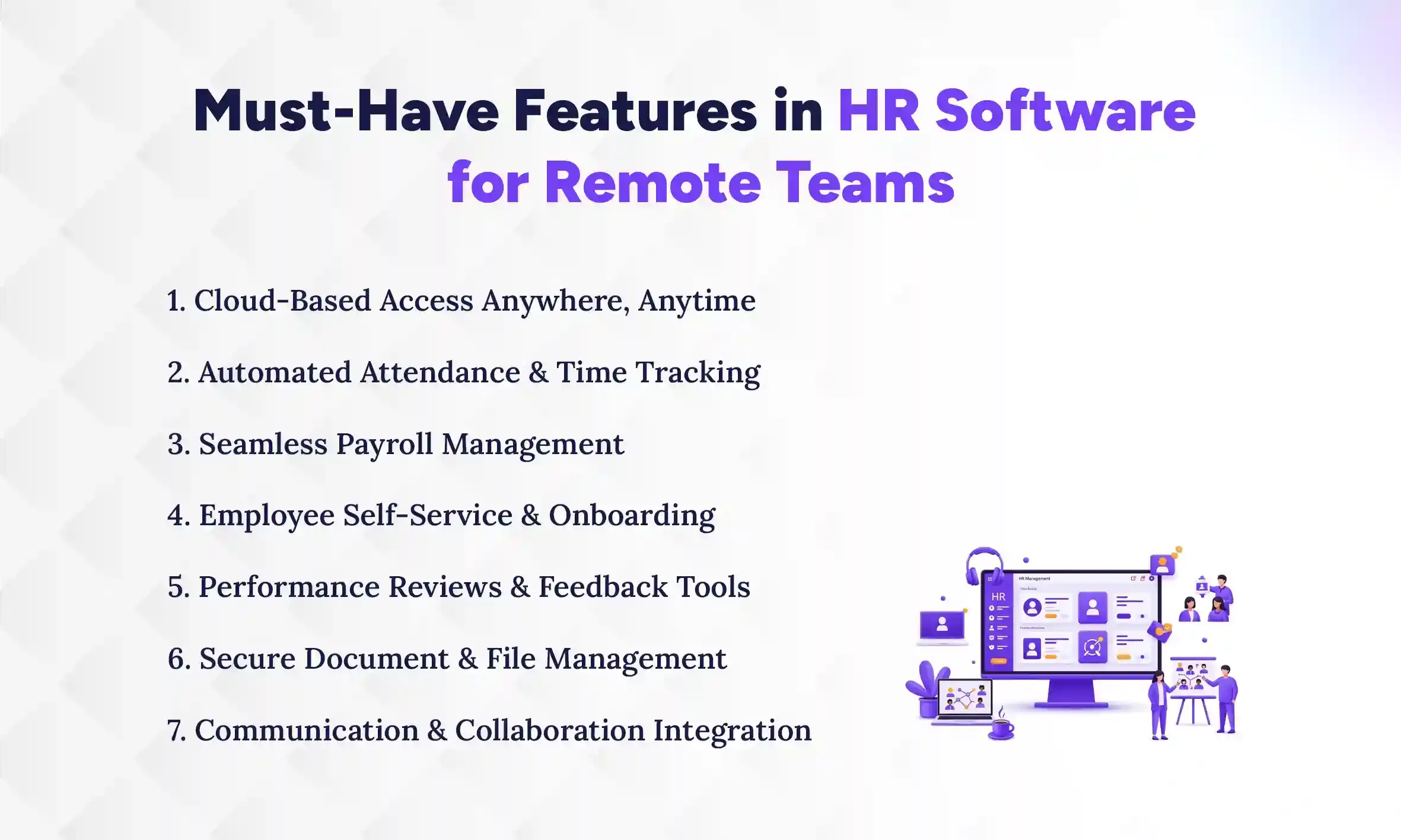
1. Cloud-Based Access Anywhere, Anytime
Cloud access allows HR managers and employees to log in from anywhere, whether at home, in the office, or on the go. Leave requests, approvals, and updates happen instantly, without delays or confusion. HR teams can manage all employee information in real-time, ensuring nothing gets lost or overlooked. Overall, a cloud-based HRMS makes remote operations more organized and keeps everyone on the same page.
2. Automated Attendance & Time Tracking
Automatic time tracking records employees’ work hours, attendance, and overtime without any manual entry. This reduces errors and speeds up payroll calculations, saving hours of administrative work. HR managers can quickly check attendance reports and monitor productivity without chasing employees. The attendance management system also makes tracking remote or hybrid teams much simpler.
3. Seamless Payroll Management
Payroll tools calculate salaries, deductions, and taxes automatically, eliminating mistakes from manual work. HR teams can generate reports, process payments, and ensure compliance in just a few clicks. Employees get their payslips on time, which boosts trust and satisfaction. This payroll system saves both time and effort for everyone involved.
4. Employee Self-Service & Onboarding
With self-service portals, employees can apply for leave, check payslips, and update personal information without waiting for HR. Onboarding new hires becomes structured and easy, even if they are joining remotely. HR teams can share documents, assign tasks, and track progress digitally. An onboarding HR software reduces paperwork and keeps the onboarding process smooth and consistent.
5. Performance Reviews & Feedback Tools
Managers can set goals, track progress, and give feedback digitally, so employees always know where they stand. This helps maintain motivation and accountability in a remote setup. Teams stay aligned on objectives without long email chains or back-and-forth meetings. It also makes performance tracking fair and transparent.
6. Secure Document & File Management
All employee files, contracts, and HR documents are stored safely in one central system. Role-based access ensures only authorized people can view sensitive information. Employees and managers can quickly retrieve documents when needed, avoiding lost paperwork. This keeps data secure and organized for smooth HR operations.
7. Communication & Collaboration Integration
HR software that connects with tools like Slack, Teams, or Zoom helps employees and managers stay in touch without switching apps constantly. Team discussions, announcements, and meetings happen in one place, reducing email clutter. Collaboration is faster and more efficient, which strengthens remote team coordination.
These features altogether create a smoother, more engaging experience for employees. By combining automation, communication, and security, HR software sets the stage for higher productivity, better collaboration, and a happier remote workforce.
What are the Benefits of HR Software for Remote Teams?
Investing in HR software for remote teams saves time, improves transparency, and simplifies all the essential HR tasks. The benefits of using HR software touch every part of workforce management for remotely operating businesses. Here’s a closer look at the key advantages for Nepalese businesses managing remote or hybrid teams.
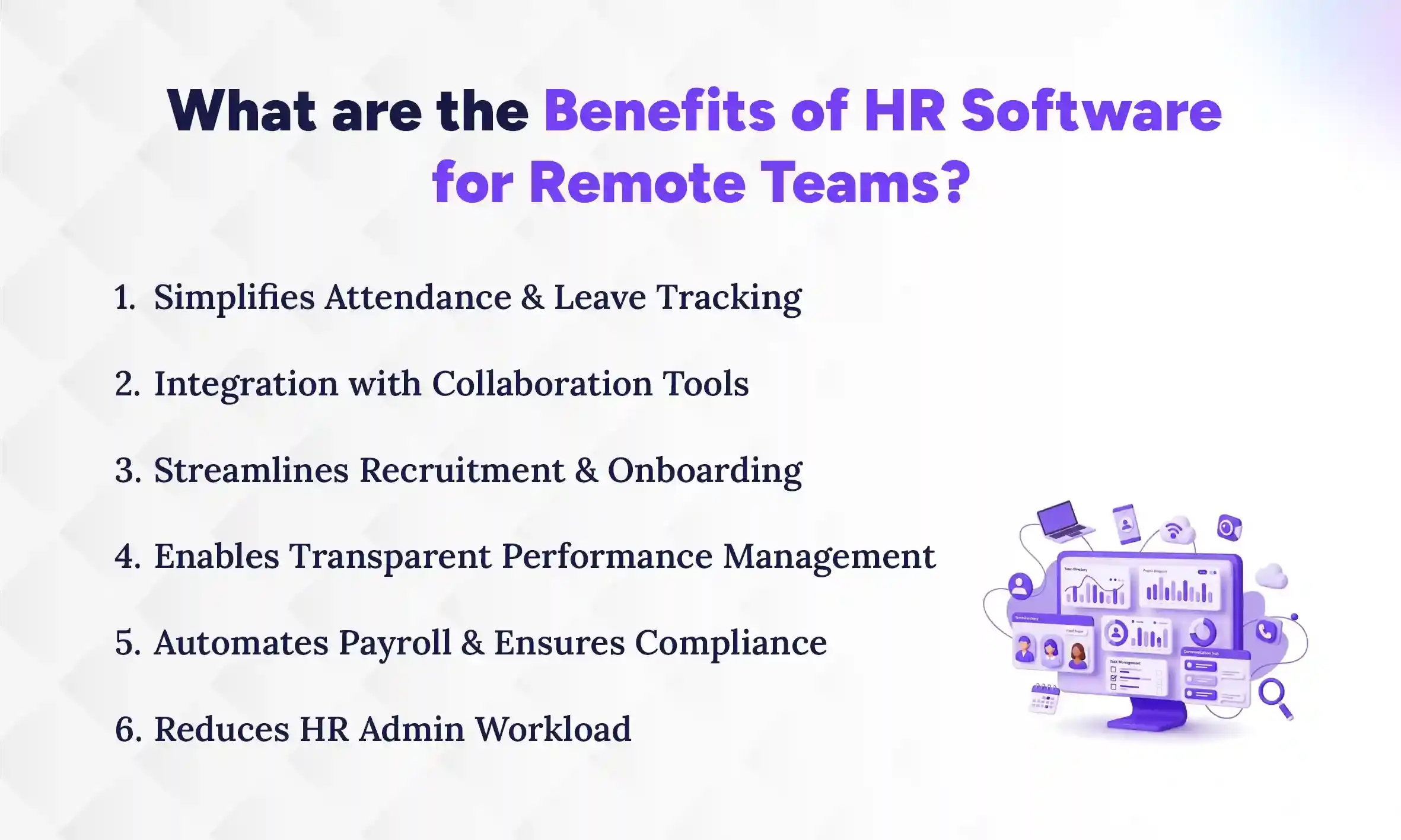
1. Simplifies Attendance & Leave Tracking
HR software automatically records attendance and leave, so there’s no need for manual logs or chasing employees. Managers can quickly see who is working, on leave, or approaching overtime. This makes scheduling easier, reduces errors, and ensures fair tracking across the team. Employees also appreciate the transparency and convenience.
2. Integration with Collaboration Tools
Many HR platforms connect seamlessly with tools like Slack, Microsoft Teams, or Zoom. This means announcements, approvals, and updates happen in real-time without switching apps constantly. Teams stay aligned, communication becomes smoother, and remote employees feel more connected to the company.
3. Streamlines Recruitment & Onboarding
HR software centralizes the hiring process, from posting job openings to managing applications and onboarding new hires. Remote employees can complete paperwork, access training materials, and get introduced to the team online. This saves HR time, improves the experience for new staff, and ensures nothing falls through the cracks.
4. Enables Transparent Performance Management
Managers can set clear goals, track progress, and provide regular feedback digitally. Employees know what’s expected and can see their own growth, which builds accountability and motivation. Performance reviews become fair, consistent, and easy to manage, even for distributed teams.
5. Automates Payroll & Ensures Compliance
Payroll features calculate salaries, deductions, and taxes automatically, making payments accurate and timely. Compliance with labor laws and tax regulations becomes simpler, reducing risks for your business. Automation also frees HR from repetitive calculations, letting them focus on more strategic tasks.
6. Reduces HR Admin Workload
By handling attendance, payroll, onboarding, and employee records in one system, HR software cuts down on repetitive administrative work. Teams spend less time on paperwork and more on supporting employees. This improves efficiency, reduces errors, and gives HR managers breathing room to focus on strategy and team development.
Using HR software, Nepalese businesses can simplify complex processes, improve accuracy, and boost employee satisfaction, all while keeping remote teams connected and productive.
Which is the Best HR Software for Remote Teams in Nepal?
For Nepalese businesses managing remote or hybrid teams, Pace HRMS stands out as a smart choice. It’s designed to handle the real challenges of distributed work, tracking attendance, managing payroll, onboarding staff, and keeping everyone connected, all from a single platform.
Whether your team works from home, co-working spaces, or multiple city offices, Pace HRMS makes it simple to stay organized. Managers can monitor workflows, approve requests, and review performance without spending hours on manual tracking. Employees also benefit from self-service features that keep them informed and engaged, no matter where they are.
Pace HRMS: Key Features for Remote Teams
Pace HRMS is designed for remote and hybrid teams, making attendance, productivity, and task tracking simple and transparent. Payroll is automated and compliant with Nepalese labor laws, ensuring accuracy and timely payments. These features save time, reduce errors, and help managers keep teams organized and engaged.
1. Adaptable to Remote & Hybrid Work
Pace HRMS adjusts to flexible schedules and multiple locations, making it easy to track hours, attendance, and productivity for each team member. Managers get clear dashboards to monitor work progress, while employees have transparency over their own tasks and schedules.
2. Streamlined Payroll & Legal Compliance
Payroll is automated, accurate, and aligned with Nepalese labor regulations. Salaries, bonuses, and statutory deductions are calculated automatically, so HR teams can avoid mistakes and meet deadlines effortlessly.
3. Smooth Onboarding & Employee Experience
New hires can complete onboarding online, access training, and submit documents digitally. This reduces paperwork, speeds up the process, and ensures employees feel welcomed and supported from day one.
4. Real-Time Insights & Reports
Managers can generate reports on attendance, performance, and payroll instantly. This helps make smarter decisions, identify productivity trends, and address issues before they become problems.
Why Pace HRMS Works for Nepalese Remote Teams
- Handles distributed teams across cities or work-from-home setups
- Reduces manual work and errors in payroll, attendance, and leave management
- Provides self-service options for employees, boosting engagement
- Offers real-time insights for proactive HR management
With Pace HRMS, businesses in Nepal can manage remote teams effectively, save time on administrative tasks, and create a smoother, more connected work environment for everyone.
How to Choose the Right HR Software for Remote Teams in Nepal?
To choose the right HR software for remote teams, start by analyzing your team size, identifying core HR needs, and testing key features before making a decision. These actions help you pick a system that simplifies daily HR tasks, improves productivity, and keeps employees engaged. With the right approach, Nepalese businesses can avoid costly mistakes and make HR management much easier.
1. Know Your Team Size & Structure
Start by understanding how many employees you have and where they work. Are most people remote, or do you have a hybrid setup across multiple locations? The software should handle different work patterns and team sizes without adding complexity. This ensures everyone is tracked accurately, from attendance to productivity.
2. Identify Core HR Needs
List the most important HR tasks your business needs: attendance, payroll, onboarding, or performance tracking. Focus on the tasks you use daily to avoid paying for unnecessary features. Prioritizing your core needs ensures the software truly solves real problems. It also makes training and adoption easier for your team.
3. Look for Automation & Integration
Check if the software can automate repetitive tasks like payroll, leave approvals, and performance monitoring. Automation saves time and reduces human errors. Also, ensure it integrates with collaboration tools like Slack, Teams, or email. This keeps your remote teams connected and workflows smooth.
4. Prioritize Ease of Use
A simple, intuitive system prevents confusion and saves time. First of all, understand what HR software actually does. Look for software with easy navigation, clear dashboards, and straightforward workflows. If employees can use it without constant help, adoption will be faster. This also reduces frustration for managers and staff alike.
5. Ensure Data Security & Compliance
Remote work means data is accessed from multiple locations. Make sure the software has strong security measures, encrypted storage, and role-based access. It should also comply with Nepalese labor laws. This protects sensitive information and keeps your business safe from mistakes or legal issues.
6. Test via Trial or Demo
Before buying, try a free trial or demo to see how it works in real life. Test important features like attendance tracking, payroll, and reporting. Make sure it fits your team’s workflow and is easy to use. This reduces surprises and ensures you get the best value for your investment.
By following these steps, Nepalese businesses can confidently select HR software that simplifies remote and hybrid team management, improves efficiency, and keeps employees engaged.
Conclusion
Choosing the right HR software is no longer optional for remote and hybrid teams; it’s essential. The right system streamlines attendance, payroll, onboarding, performance tracking, and communication, all in one place. For Nepalese businesses, this means less time spent on paperwork, fewer errors, and more focus on growing your team and achieving business goals.
With a reliable HR platform, you can take control, stay organized, and create a work environment where employees feel supported and motivated, no matter where they work.
Start by exploring a demo or trial of a trusted HR software like Pace HRMS. See how it fits your team, test key features, learn HRMS pricings, and make an informed choice. The right HR tool can transform your remote workforce into a more connected, productive, and happy team.