Ever wondered how growing companies manage hundreds of employees without drowning in paperwork or endless spreadsheets? HR today isn’t just about hiring and payroll anymore; it’s about speed, access, and keeping everything connected. That’s where cloud technology quietly steps in and changes the whole game.
In this blog, we’ll explore cloud-based HR software, what it really means, how it works behind the scenes, and why so many modern businesses are switching to it. We’ll also cover its benefits, key features, and how it relates to a human resource management system, helping you understand whether this type of HR solution actually fits your business needs or not.
What is Cloud-Based HR Software?
Cloud-based HR software is an online human resource management system that stores employee data on secure cloud servers and can be accessed through the internet. Instead of running on a single office computer or internal server, it works through a browser, making HR tasks faster and more flexible.
The biggest difference between cloud HR systems and traditional on-premise software is where the data lives and how it’s managed. On-premise HR software requires local installation, manual updates, and IT support, while cloud-based systems update automatically and don’t need heavy maintenance. Honestly, this alone saves teams a lot of time and effort.
Cloud computing in HR technology stores HR data on remote servers for easy access.
Employees and HR teams can view records, payroll, attendance, and performance anytime.
It supports remote and hybrid work, letting teams stay productive from anywhere.
Collaboration improves as managers and staff can access the same data in real time.
HR operations run smoothly without being tied to a single office or server location.
Overall, it reduces delays and errors and makes workforce management more flexible.
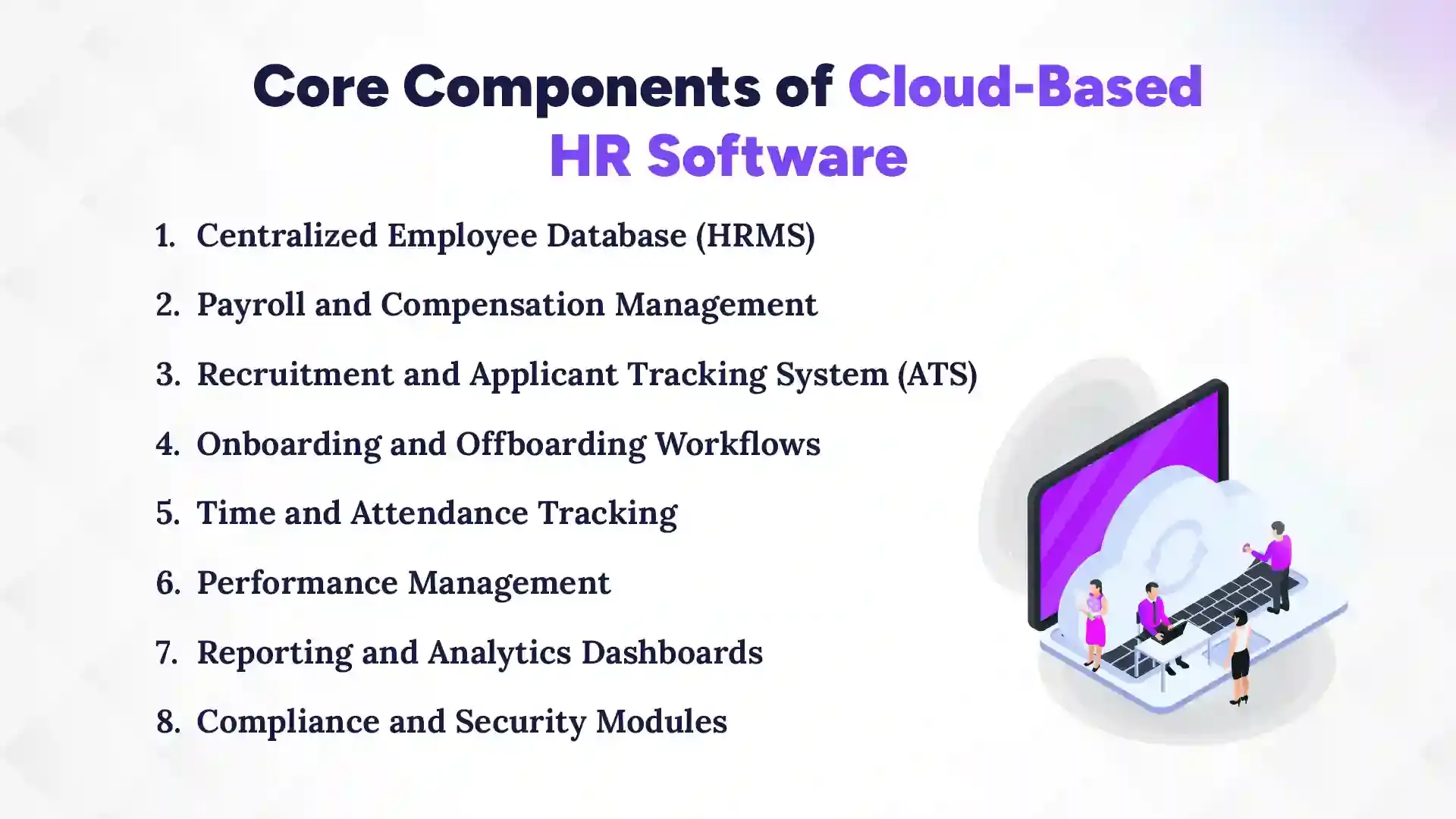
Core Components of Cloud-Based HR Software
Cloud-based HR software is built from multiple connected modules that work together as one system. Each component handles a specific HR function, but they all share data in real time, which reduces duplication and silly mistakes. Understanding how to choose HR software becomes easier when you see how these integrated modules simplify HR processes. This modular setup helps businesses manage employees from hiring to exit without switching between different tools. Over time, it also makes HR work feel more organised and less chaotic.
1. Centralized Employee Database (HRMS)
A centralized employee database acts as the backbone of the entire HR system. It stores employee profiles, documents, job history, and personal details in one secure place. HR teams don’t have to search emails or folders anymore; everything is right there. Updates happen instantly, so everyone sees the same information. It’s simple, but extremely powerful when managing growing teams. This also helps HR spot trends and manage resources more effectively.
2. Payroll and Compensation Management
This module handles salaries, deductions, bonuses, and tax calculations automatically through payroll software. It reduces manual errors, which honestly happen more often than people admit. Payroll data syncs directly with attendance and leave records, making salary processing smoother. Employees also get transparent payslips, which builds trust. Late or incorrect payments become rare, and it even helps managers plan budgets better without extra effort.
3. Recruitment and Applicant Tracking System (ATS)
The ATS helps HR teams manage job postings, applications, and candidate communication in one place. It tracks applicants from the first resume to the final offer letter. Recruiters can shortlist candidates faster and collaborate better with hiring managers. It saves time and avoids losing good candidates in long email threads. Plus, it keeps a searchable record for future hiring needs.
4. Onboarding and Offboarding Workflows
Onboarding workflows guide new hires through documents, policies, and initial tasks without confusion. Everything is structured, so new employees don’t feel lost on day one. Offboarding workflows handle exit formalities, asset recovery, and access removal properly. This keeps processes clean and professional on both ends. It also ensures compliance with company policies every step of the way.
5. Time and Attendance Tracking
Time and attendance tracking records working hours, leaves, and overtime accurately through an attendance management system. Employees can clock in remotely, which is helpful for hybrid or remote teams. The system reduces disputes over attendance data. It also feeds directly into payroll, saving HR from manual calculations. Managers can analyse productivity trends with ease.
6. Performance Management
Performance management tools help track goals, reviews, and feedback over time. Managers can set expectations clearly and review progress regularly. Employees get constructive feedback instead of once-a-year surprises. This creates a culture of growth, not just evaluation. It also highlights top performers and areas for skill improvement.
7. Reporting and Analytics Dashboards
Reporting dashboards turn raw HR data into visual insights. HR leaders can quickly understand trends like attrition, hiring speed, or payroll costs. These reports help in better decision-making, not just guesswork. Having data ready saves time during audits and reviews. It also allows managers to predict potential workforce challenges.
8. Compliance and Security Modules
Compliance and security modules protect sensitive employee data and ensure legal requirements are met. They manage access controls, data encryption, and audit trails. This reduces risks related to data breaches or regulatory fines. It gives businesses peace of mind, which is honestly priceless. It also builds trust with employees, knowing their data is safe.
How Does Cloud-Based HR Software Work?
Cloud-Based HR Software works as an online system where all HR functions are hosted on remote servers instead of a company’s local machines. HR teams, managers, and employees access it through the internet, which means work can happen anytime, anywhere. The software handles tasks like payroll, attendance, recruitment, and performance tracking automatically. Updates, backups, and security are managed by the provider, so companies don’t have to worry about technical maintenance. Overall, it makes HR operations faster, more flexible, and less prone to errors.
1. Explanation of SaaS HR Platforms
Most cloud-based HR systems are offered as SaaS (Software as a Service). This means the software is rented or subscribed to, instead of purchased outright. The provider hosts the software, and you simply log in to use it. SaaS platforms update automatically, so HR teams always get the latest features without lifting a finger. It’s cost-effective and easy to scale as the business grows. Honestly, this model is a game-changer for small and medium-sized businesses.
2. Role of Cloud Infrastructure and Remote Servers
Cloud infrastructure is the backbone that makes everything possible. Employee data, payroll records, and HR documents are stored on secure remote servers instead of local computers. These servers handle all computing and storage, reducing the need for expensive hardware at the office. It also allows multiple users to work simultaneously without slowing down the system. This is what makes cloud HR truly accessible and reliable.
3. User Access Through Web Browsers and Mobile Apps
HR teams, managers, and employees access the system via web browsers or mobile apps. No complicated installation is needed, and updates happen automatically in the background. Employees can check payslips, request leave, or track performance on the go. Managers can approve requests and run reports from anywhere. This convenience is especially important for remote or hybrid teams.
4. Data Security, Backups, and System Updates
Cloud HR software ensures data is safe with encryption, firewalls, and regular backups. The provider takes care of system updates, so there’s no downtime or security gaps. In case of hardware failure or accidental deletion, backups allow quick recovery. It gives HR teams peace of mind and reduces IT headaches. Honestly, this level of protection is usually better than traditional on-premise setups.
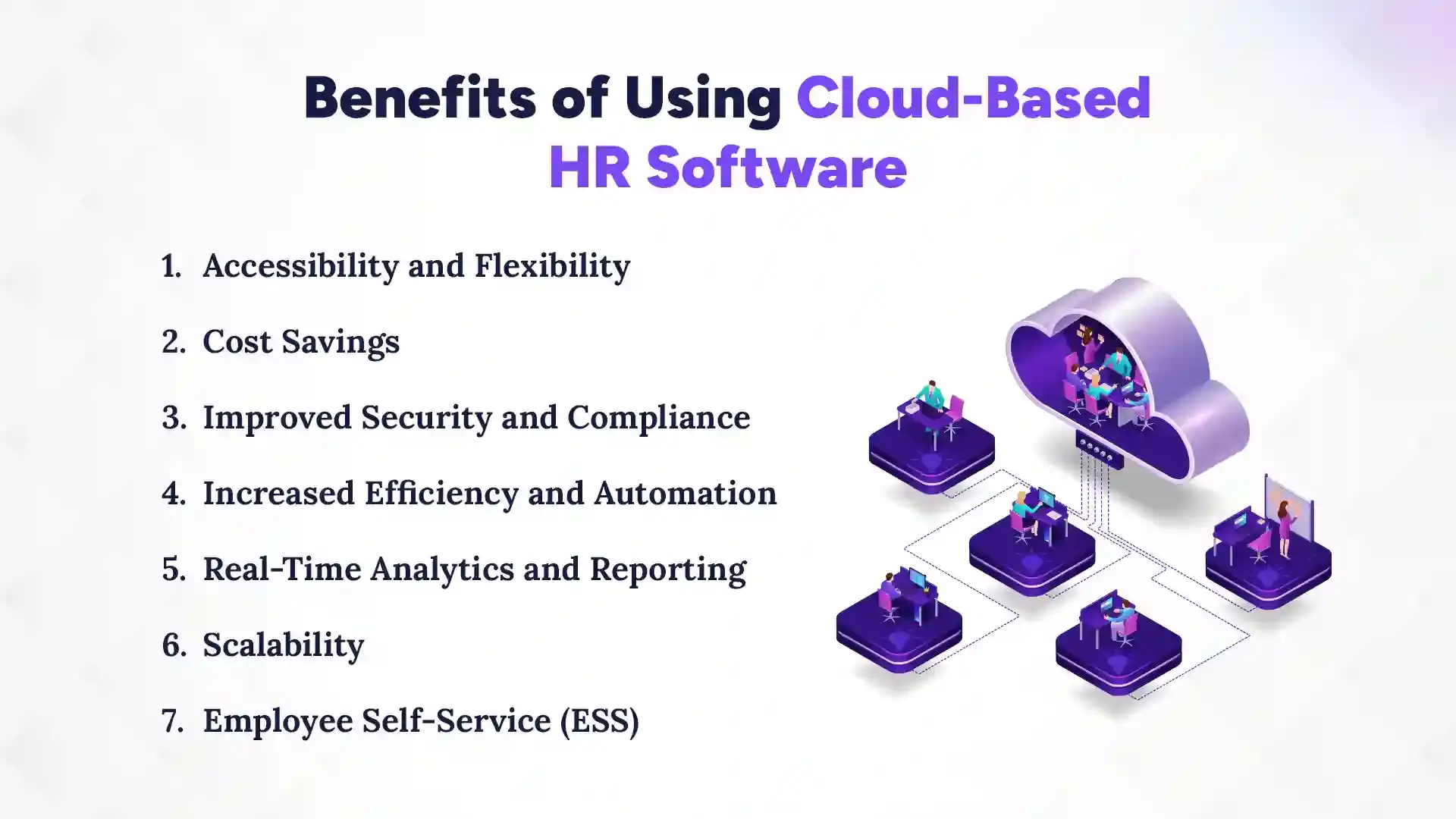
Benefits of Using Cloud-Based HR Software
Using cloud-based HR software brings a ton of benefits of using HR software that traditional HR systems just can’t match. It makes HR tasks faster, reduces errors, and gives teams the flexibility to work from anywhere. Companies save money, stay compliant with regulations, and can scale operations without stress. On top of that, employees get more control over their own information, which makes the workplace feel more modern and transparent. Overall, it transforms HR from a tedious process into something smooth and manageable.
1. Accessibility and Flexibility
Cloud-based HR systems let HR teams, managers, and employees access information anytime, anywhere, using web browsers or mobile apps. You’re not tied to a single office or computer, which is perfect for remote or hybrid teams. It also means employees can quickly check payslips, submit leave requests, or track attendance without emailing HR repeatedly. Honestly, having everything at your fingertips saves so much time and frustration.
2. Cost Savings
Cloud HR software reduces the need for expensive hardware and IT maintenance. Most platforms work on subscription models, which spread out costs and avoid big upfront investments. Automation also cuts down on repetitive tasks, so HR teams don’t need extra staff just to handle paperwork. In the long run, this can save companies thousands every year, especially for growing businesses.
3. Improved Security and Compliance
Data security is a major benefit of cloud HR systems. Providers use encryption, regular backups, and strict access controls to keep sensitive employee data safe. Compliance with labour laws and regulations is also easier because the system can automatically update policies and track necessary records. For HR teams, this peace of mind is invaluable; it reduces risks of breaches and legal penalties.
4. Increased Efficiency and Automation
Cloud HR software automates repetitive tasks like payroll, leave approvals, and performance tracking. This reduces manual errors and frees HR teams to focus on strategic work. Notifications, reminders, and workflows help keep everyone on track without micromanagement. Honestly, it’s like having an extra HR assistant that never sleeps.
5. Real-Time Analytics and Reporting
Dashboards and reports turn raw HR data into actionable insights in real time. Managers can quickly see trends in attendance, attrition, hiring speed, or employee performance. This makes decision-making faster and more accurate, instead of guessing or relying on outdated spreadsheets. It also helps in planning for future workforce needs.
6. Scalability
Cloud-based HR software grows with your business. Whether you’re hiring 10 people or 1,000, the system can handle the workload without slowing down. Adding new users or departments is usually just a few clicks. This scalability makes it ideal for startups, expanding companies, or seasonal businesses.
7. Employee Self-Service (ESS)
Employee self-service portals give staff control over their own information. They can update personal details, access payslips, track leave, and even manage benefits without HR intervention. This reduces repetitive requests for HR staff and makes employees feel empowered. Honestly, it creates a much more transparent and satisfying work experience.
Advantages for Small Businesses vs Enterprises
Cloud-based HR software is ideal for small and midsize businesses because it reduces costs, simplifies HR processes, and requires minimal IT support. For enterprises, it offers advanced customisation and integrations to manage large, complex workforces efficiently.
Feature / Benefit
Small & Midsize Businesses
Enterprises
Cost
Affordable subscription-based pricing
Higher investment but scalable features
IT Support
Minimal IT needed
Dedicated IT may manage complex integrations
Flexibility
Quick deployment, easy to scale
Customizable workflows, multiple system integrations
Automation
Streamlines HR tasks for small teams
Handles complex HR processes at scale
Employee Access
Simple self-service portals
Advanced employee portals with role-based access
Compliance & Security
Basic compliance support
Enterprise-grade security and regulatory compliance
Reporting & Analytics
Pre-built reports for decision-making
Customizable dashboards for detailed insights
Challenges and Limitations of Cloud-Based HR Software
While cloud-based HR software brings many benefits, it’s not without its challenges. Businesses may face concerns around data privacy, internet dependency, and limited customisation in some platforms. Adopting new technology also requires proper training and change management to ensure employees actually use the system. Understanding these limitations upfront helps companies plan better and avoid frustration later.
1. Data Privacy and Security Concerns
Even though most cloud HR platforms use strong encryption and security measures, some businesses worry about sensitive employee data being online. Breaches, hacking, or accidental leaks are potential risks. It’s important to choose reputable providers with clear security policies and regular audits. Honestly, staying vigilant and understanding where your data lives is crucial. Regular monitoring and employee awareness training can also help reduce risks.
2. Internet Dependency and Downtime Risks
Since cloud HR systems rely on the internet, any outage or slow connection can disrupt access. This can temporarily halt payroll, attendance tracking, or leave approvals. Most providers offer uptime guarantees, but downtime can still be frustrating. Planning backup access or offline procedures can help reduce interruptions. Companies should also have a contingency plan in case of extended outages.
3. Limited Customisation in Some HR Cloud Platforms
Some cloud HR software comes with fixed workflows and limited customisation options. While this works for small businesses, larger enterprises may need advanced features or integrations that the platform doesn’t support. It’s important to assess your business needs before committing. Honestly, not all platforms are one-size-fits-all. Evaluating multiple vendors before purchase can save headaches later.
Cloud-Based HR Software vs Traditional HR Software
Many businesses today face the choice between cloud-based HR software and traditional on-premise HR systems. While both manage core HR functions, their approach, cost, flexibility, and accessibility differ significantly. Cloud HR software is online, flexible, and easier to scale, whereas traditional HR systems are installed locally and often require more IT resources. Understanding these differences helps companies pick the right solution for their size and goals.
Feature / Aspect
Cloud-Based HR Software
Traditional HR Software
Deployment
Accessed via web browsers or mobile apps
Installed on local servers or office computers
Cost
Subscription-based, lower upfront costs
High upfront investment for hardware or software
Flexibility & Accessibility
Work from anywhere, easy remote access
Limited to the office network, less flexible
Maintenance & Updates
Managed by the provider, automatic updates
Managed internally, manual updates required
Scalability
Easy to scale as business grows
Scaling requires new hardware or software
Security & Compliance
Provider ensures encryption and compliance
Depends on internal IT resources
Employee Experience
Self-service portals with mobile access
Manual or limited employee access
Automation & Efficiency
Automates payroll, attendance, and onboarding
Many processes are manual, resulting in more errors
Why are Companies Moving to Cloud-Based HR Software?
Companies are moving to cloud-based HR software because it offers flexibility, efficiency, and modern tools that traditional systems can’t match. With cloud HR, businesses can manage employees from anywhere, get real-time insights, and automate repetitive tasks. It also improves the employee experience by giving staff self-service access and transparency. Simply put, cloud-based HR makes life easier for HR teams and employees alike, which is why more companies are choosing it when they implement HR software instead of relying on legacy systems.
1. Shift to Remote and Hybrid Work Models
With remote and hybrid work becoming the norm, cloud HR software allows employees and managers to access HR systems from anywhere. No more being tied to office servers or waiting for HR to process requests manually. Leave approvals, attendance tracking, and document management all happen online. This flexibility keeps operations smooth and ensures everyone stays connected, whether they’re at home, travelling, or in the office.
2. Demand for Real-Time HR Data and Insights
Cloud HR provides instant access to employee data, payroll information, and performance metrics. Managers don’t have to wait for monthly reports or manually compile spreadsheets anymore. Real-time dashboards help spot trends, identify gaps, and make smarter decisions quickly. Honestly, having data at your fingertips changes how HR drives business strategy.
3. Automation of HR Processes and Workflows
Automation is a major reason companies are shifting to cloud HR. Tasks like payroll, onboarding, leave management, and performance reviews are handled automatically, reducing errors and freeing HR teams for strategic work. Alerts and reminders ensure nothing falls through the cracks. This makes HR more efficient and less stressful, especially for growing teams.
4. Focus on Employee Experience and Engagement
Cloud HR software empowers employees with self-service portals where they can update details, check payslips, or request time off. This reduces repetitive queries to HR and gives staff more control over their own information. It also improves engagement, as employees feel more informed and involved in processes. Honestly, happy and empowered employees are more productive, and that benefits everyone.
Who Should Use Cloud-Based HR Software?
You should use cloud-based HR software if you want to make HR management easier, faster, and more flexible. It’s ideal for businesses that want real-time access to HR data, streamlined workflows, and better employee engagement. Whether your team is small, growing fast, or spread across multiple locations, cloud HR adapts to your needs. Simply put, if you want to reduce HR headaches and focus on people rather than paperwork, cloud HR is the way to go.
1. Startups and Fast-Growing Companies
Startups and fast-growing companies benefit a lot from cloud HR because it’s quick to set up and scales easily as the team grows. You don’t need expensive servers or IT staff to manage it. Automation takes care of payroll, onboarding, and leave management, letting founders and HR focus on strategy. Honestly, it’s like having a full HR department without the massive overhead. It keeps things organised even when hiring ramps up fast.
2. Small and Midsize Businesses
Small and midsize businesses can use cloud HR to reduce manual work and save costs. Instead of juggling spreadsheets and paperwork, they get everything in one place: attendance, performance, and payroll. Subscription-based pricing also keeps it affordable. Employees get self-service access, which cuts down repetitive HR queries. For smaller teams, this convenience is a real lifesaver.
3. Large Enterprises and Global Organisations
Large enterprises and global organisations need cloud HR for its scalability and advanced features. It can handle thousands of employees across different countries with complex workflows and compliance requirements. Integration with other systems like ERP or payroll software makes life easier for HR teams. Real-time dashboards and reporting help leaders make strategic decisions quickly. It’s perfect for keeping large workforces connected and organised.
4. HR Teams Managing Distributed Workforces
HR teams managing remote or hybrid employees need cloud HR for accessibility and efficiency. Teams can approve leave, track attendance, and manage payroll from anywhere. Employees also get the flexibility to update their info, submit requests, or check policies without emailing HR constantly. Honestly, it makes HR operations smooth and stress-free, even when people are working from multiple locations.
How to Choose the Right Cloud-Based HR Software?
You can choose the right cloud-based HR software by evaluating your business needs, team size, and long-term goals. It’s important to look for a solution that integrates well with your current systems, offers flexibility, and provides good support. Picking the right software ensures smoother HR processes, happier employees, and fewer technical headaches. Honestly, spending a little time upfront on research can save a lot of stress later.
1. Integration with Existing Business Systems
A good cloud HR system should connect seamlessly with your current tools like payroll, accounting, or project management software. Integration prevents double entry of data and reduces mistakes. For example, linking attendance tracking directly to payroll saves time every month. Think of it as making all your systems “talk” to each other. It keeps workflows smooth and HR teams less frustrated.
2. Customisation, Scalability, and User Experience
Look for software that can grow with your business and adapt to your workflows. Customisation lets you tweak forms, reports, and dashboards according to your needs. Scalability ensures you won’t outgrow the system as your team expands. And don’t forget user experience; if it’s complicated, employees won’t use it. An intuitive platform keeps everyone happy and reduces training time.
3. Vendor Reputation, Support, and Pricing Models
Choosing a reliable vendor matters as much as the software itself. Check reviews, case studies, and references to see if they deliver on promises. Good support ensures you can solve issues quickly, especially during rollout. Pricing models vary, so pick one that aligns with your budget. Subscription or per-employee pricing works differently for small and large companies. Honestly, a trustworthy vendor makes adoption much smoother and stress-free.
Which is the Best Cloud-Based HR Software in Nepal?
Pace HRMS is the best cloud‑based HR software in Nepal because it combines powerful HR automation with flexibility tailored for Nepali businesses. Unlike traditional systems that tie you down to local servers, Pace HRMS runs smoothly in the cloud, making it easy for HR teams to manage payroll, attendance, leave, and employee records from anywhere. It simplifies everyday HR tasks, reduces manual work, and gives real‑time access to important data, which is exactly what modern companies need. With reliable cloud hosting and features designed to improve efficiency and transparency, it’s a smart choice for businesses looking to modernise their HR processes.
Conclusion
Cloud-based HR software has truly transformed the way businesses manage their workforce. From startups to large enterprises, it brings efficiency, flexibility, and real-time insights that traditional HR systems simply can’t match. Automating payroll, attendance, onboarding, and performance tracking saves time and reduces errors, while self-service portals empower employees and improve engagement.
Despite minor challenges like internet dependency or change management, the benefits far outweigh the drawbacks. Choosing the right platform, like Pace HRMS from The Pace Infosys in Nepal, ensures your HR processes are smooth, secure, and future-ready. Ultimately, cloud HR isn’t just a tool; it’s a smart investment in your company’s growth and employee satisfaction.
FAQs
What is Cloud-Based HR Software?
+
Cloud-based HR software is an online HR management system that stores employee data on secure servers and can be accessed via the internet. It manages payroll, attendance, performance, recruitment, and other HR tasks in one platform.
How does Cloud-Based HR Software work?
+
Cloud-based HR software works by hosting all HR functions on remote servers. Employees and HR teams log in through web browsers or mobile apps, while the provider manages updates, backups, and security.
How is Cloud-Based HR Software different from traditional HR software?
+
Unlike traditional HR software, which runs on local servers and requires IT maintenance, cloud HR is accessible anywhere, updates automatically, and scales easily with your business.
Is Cloud-Based HR Software secure for employee data?
+
Yes, reputable cloud HR platforms use encryption, firewalls, and regular backups. Providers also maintain compliance with local labour laws and regulations to protect sensitive employee information.
What are the main benefits of Cloud-Based HR Software?
+
The key benefits include real-time data access, automation of HR tasks, improved efficiency, cost savings, employee self-service, and better analytics for decision-making.
Who should use Cloud-Based HR Software?
+
Startups, small and midsize businesses, large enterprises, and HR teams managing remote or distributed workforces can all benefit from cloud HR software. Essentially, any business that wants to streamline HR processes and improve accessibility can use it.
How much does Cloud-Based HR Software cost?
+
Costs vary depending on the provider, features, and number of employees. Most platforms use subscription-based pricing or per-employee pricing, which is generally more affordable than traditional on-premise systems.
Can employees access Cloud-Based HR Software on mobile devices?
+
Yes, most cloud HR platforms offer mobile apps, allowing employees to check payslips, apply for leave, and update personal details on the go.
Does Cloud-Based HR Software require IT support?
+
Minimal IT support is needed because the provider handles hosting, updates, and backups. Your internal IT team mainly supports user access or integration with other business systems.
Can Cloud-Based HR Software scale with my business?
+
Absolutely. Cloud HR can handle growing teams, additional locations, and more complex workflows without slowing down or requiring extra hardware.
Ready to get started?
Book a 30-minute consultation call, and let's talk about your goals.