Managing employees in the retail industry can sometimes feel like juggling too many things at once: shift schedules, attendance tracking, payroll processing, and customer-facing staff management all happening simultaneously. Retail businesses in Nepal, especially those with multiple branches or large sales teams, often struggle to manage HR operations efficiently using manual systems. This is where modern HR software steps in, helping businesses streamline workforce management and focus more on delivering better customer experiences.
In this blog, we will explore HR software for retail, including how it helps retail businesses manage employee attendance, shift scheduling, payroll, and workforce performance. We will also discuss the key features retail companies should look for in HR software, its benefits for retail operations, and how businesses in Nepal can choose the right HR solution to improve efficiency and productivity in 2026.
What Is HR Software for Retail Businesses?
HR software for retail businesses is a digital system designed to manage employee data, attendance, shift schedules, payroll, and workforce performance in retail operations. It helps retail companies automate daily HR tasks and organize employee information in one centralized platform through a Human Resource Management System. This is especially useful for retail businesses with multiple stores or large sales teams that require efficient staff management. By using HR software, retail companies can reduce manual work, improve scheduling accuracy, and ensure smooth workforce operations across all branches.
Why Retail Businesses in Nepal Need HR Software?
Retail businesses in Nepal need HR software to efficiently manage their workforce, automate HR processes, and ensure smooth daily operations across multiple stores. Retail companies often deal with large teams of sales staff, rotating shifts, and high employee turnover. Managing these tasks manually can lead to scheduling errors, payroll mistakes, and compliance issues. Understanding the benefits of hr software for nepali business helps retailers adopt the right technology to overcome these challenges. HR software helps centralize employee data, automate administrative tasks, and improve workforce coordination across retail outlets.
1. Managing Large Retail Workforce Efficiently
Retail businesses often employ a large number of workers, including sales associates, supervisors, and store managers. Managing employee records, schedules, and performance manually can become complex as the workforce grows. HR software helps businesses maintain a centralized database of employee information and track staff assignments easily. Managers can quickly access employee data and monitor workforce distribution across stores. This improves workforce organization and operational efficiency.
2. Tracking Employee Attendance Across Multiple Stores
Retail businesses with multiple branches need accurate systems to track employee attendance in different locations. HR software integrated with biometric or digital attendance systems can automatically record check-in and check-out times. This eliminates manual attendance registers and reduces errors or manipulation. Managers can monitor attendance in real time from a centralized dashboard. Accurate attendance tracking also ensures fair payroll calculations.
3. Ensuring Compliance with Nepal Labor Regulations
Retail companies must follow labor regulations related to working hours, overtime, employee benefits, and leave policies. HR software helps businesses maintain proper records and ensure compliance with these legal requirements. Automated systems track employee working hours, overtime, and leave balances according to company policies. This reduces the risk of labor disputes and regulatory penalties. Maintaining compliance also improves transparency in HR management.
4. Improving Payroll Accuracy for Retail Staff
Payroll processing in retail businesses often includes calculating overtime, commissions, and different salary structures for employees. HR software automates these calculations based on attendance data and company policies. This reduces payroll errors and ensures employees are paid accurately and on time. Automated payroll systems can also generate payslips and financial reports easily. Accurate payroll processing improves employee satisfaction and trust.
5. Enhancing Retail Workforce Productivity
HR software helps retail businesses monitor employee performance and productivity more effectively. Managers can track sales performance, attendance patterns, and employee contributions through digital reports and dashboards. These insights help identify high-performing employees and areas that require improvement. Performance monitoring also supports better training and workforce planning. As a result, retail businesses can improve overall productivity and customer service quality.
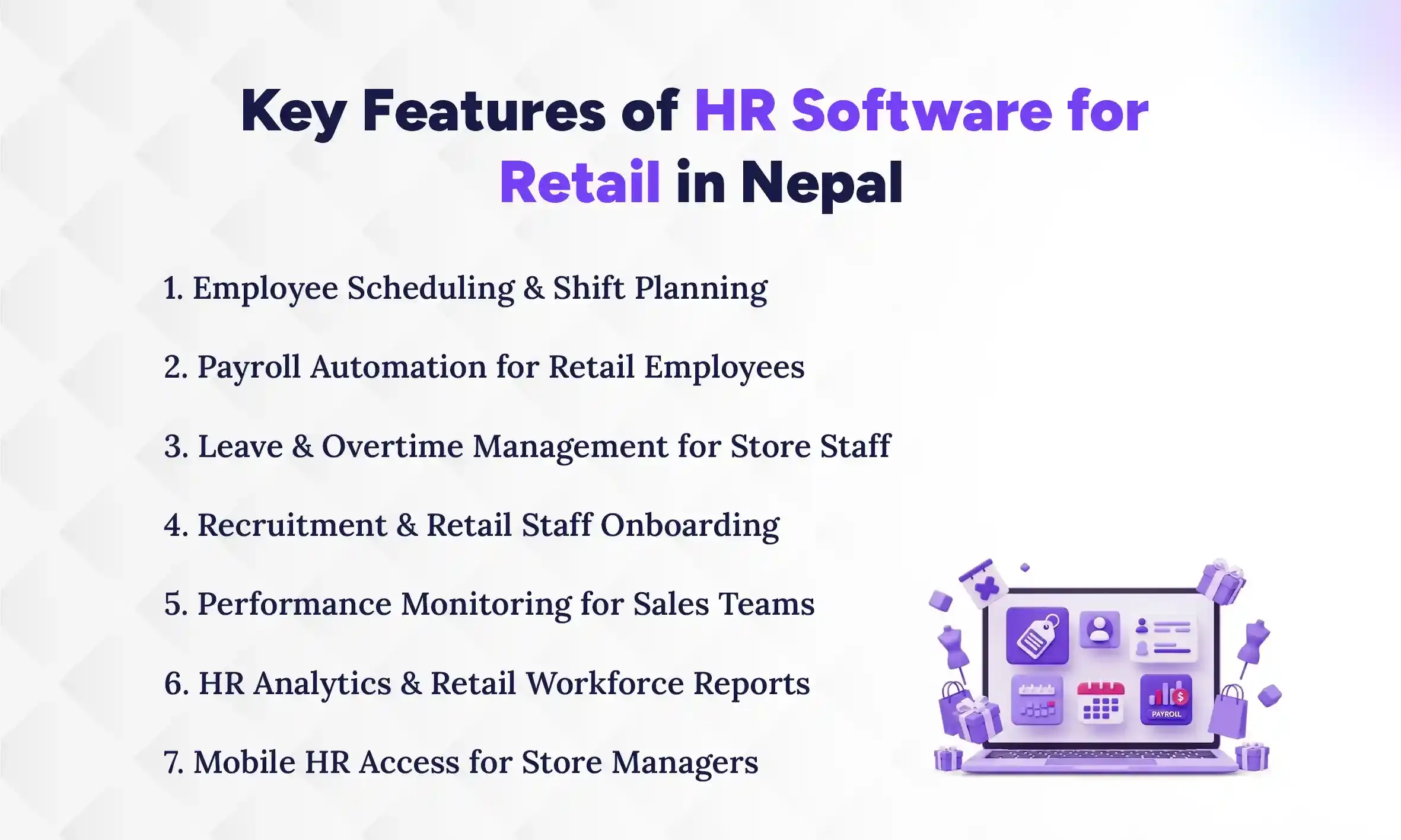
Key Features of HR Software for Retail in Nepal
HR software designed for retail businesses includes several features that help manage store employees, automate HR processes, and improve workforce efficiency. Retail companies often deal with shift-based work schedules, high employee turnover, and multiple store locations. HR software helps centralize employee data, simplify payroll processing, and improve staff scheduling through various features of hr system. These features allow retail businesses to manage their workforce more effectively while focusing on customer service and sales performance.
1. Employee Scheduling and Shift Planning
Employee scheduling and shift planning are essential features for retail businesses that operate long hours or multiple shifts. HR software allows managers to create, modify, and manage employee schedules easily. Store managers can assign staff based on store traffic, employee availability, and operational needs. Automated scheduling reduces conflicts and ensures that stores are properly staffed during peak hours. This helps maintain smooth daily operations.
2. Payroll Automation for Retail Employees
Payroll automation helps retail businesses calculate salaries accurately based on attendance, overtime, and commission structures. HR software automatically processes payroll data and generates employee payslips. This reduces manual payroll errors and saves significant administrative time. Automated payroll systems also ensure that employees receive their salaries on time. Accurate payroll processing improves employee trust and satisfaction.
3. Leave and Overtime Management for Store Staff
Retail staff often work flexible schedules that include overtime during busy seasons or promotional periods. HR software helps track employee leave requests and overtime hours automatically. Employees can apply for leave through the system, while managers can approve or reject requests digitally. The system also calculates overtime based on company policies. This ensures transparency and proper workforce planning.
4. Recruitment and Retail Staff Onboarding
Recruitment features in HR software help retail businesses manage hiring processes more efficiently. HR teams can track job applications, shortlist candidates, and schedule interviews within the system. Once a candidate is selected, the onboarding process can also be managed digitally. New employees can submit documents, complete training requirements, and receive company information through the platform. This makes hiring and onboarding faster and more organized.
5. Performance Monitoring for Sales Teams
Retail businesses rely heavily on the performance of their sales teams. HR software allows managers to track employee performance metrics such as sales targets, attendance, and customer interactions. Performance dashboards provide insights into individual and team productivity. Managers can use this data to reward high-performing employees or provide training where needed. Performance monitoring helps improve sales efficiency and customer service quality.
6. HR Analytics and Retail Workforce Reports
HR analytics provide valuable insights into workforce trends, employee turnover, attendance patterns, and payroll expenses. Retail managers can generate reports that help analyze workforce performance and operational efficiency. These insights help businesses make informed decisions related to staffing, scheduling, and employee development. HR analytics also support strategic workforce planning. Data-driven insights help retail businesses improve their HR operations.
7. Mobile HR Access for Store Managers
Mobile HR access allows store managers to manage HR tasks directly from their smartphones or tablets. This feature is especially useful for managers who need to monitor staff activity while working on the sales floor. Managers can check attendance records, approve leave requests, and review employee performance reports in real time. Mobile access improves communication between HR teams and store managers. It also ensures faster decision-making and better workforce coordination.
What Are the Benefits of HR Software for Retail Businesses?
HR software provides several benefits for retail businesses by automating HR processes, improving staff management, and increasing operational efficiency. Retail companies often manage large teams across multiple stores, which can make manual HR management difficult and time-consuming. HR software helps centralize employee information, automate routine HR tasks, and improve workforce coordination. Many retail companies choose to implement hr system solutions to reduce administrative workload and focus more on improving customer service and store performance.
1. Reduces Manual HR Administrative Tasks
HR software significantly reduces the amount of manual administrative work required to manage retail employees. Tasks such as maintaining employee records, tracking attendance, processing payroll, and managing leave requests can be automated through the system. This eliminates the need for spreadsheets or paper-based processes. Automation also minimizes the chances of human error in HR operations. As a result, HR teams can save time and focus on more strategic workforce management activities.
2. Improves Retail Staff Scheduling Efficiency
Retail businesses often operate extended hours and require flexible employee scheduling to handle peak customer traffic. HR software helps managers create accurate work schedules based on store needs and employee availability. Automated scheduling tools can quickly assign shifts and update schedules when necessary. This reduces scheduling conflicts and ensures that stores are adequately staffed at all times. Efficient scheduling helps improve store operations and customer service quality.
3. Ensures Payroll Accuracy and Compliance
Payroll processing in retail businesses can be complex because it may involve overtime pay, commissions, and different salary structures for employees. HR software automatically calculates salaries based on attendance records and company policies. This ensures that employees are paid accurately and on time. The system also helps businesses maintain compliance with labor regulations and payroll standards. Accurate payroll processing improves employee satisfaction and reduces disputes.
4. Enhances Employee Data and HR Record Management
Retail companies often manage a large amount of employee information, including personal details, job roles, attendance records, and salary structures. HR software stores all this data in a centralized and secure system. Managers and HR teams can easily access employee information whenever needed. Organized record management reduces the risk of lost or incomplete data. It also improves the efficiency of HR operations across multiple retail locations.
HR software provides valuable insights through workforce analytics and reporting tools. Retail managers can analyze data related to employee attendance, staff productivity, and payroll expenses. These insights help businesses identify trends and make informed decisions about staffing, scheduling, and employee development. Data-driven decision-making allows retail businesses to optimize their workforce and improve store performance. Over time, this leads to better operational efficiency and increased profitability.
How HR Software Improves Retail Workforce Management?
HR software improves retail workforce management by automating employee scheduling, organizing workforce data, and helping managers monitor staff productivity across stores. Retail businesses often deal with part-time workers, rotating shifts, and multiple store locations, which can make workforce management complicated. Using a cloud based hr system, HR software centralizes employee information and simplifies tasks such as attendance tracking, payroll processing, and performance monitoring. This allows store managers and HR teams to manage employees more efficiently and maintain smooth retail operations.
1. Managing Part-Time and Shift-Based Retail Employees
Retail businesses frequently employ part-time staff and workers assigned to rotating shifts. HR software helps managers schedule employees based on store demand, employee availability, and operational requirements. The system allows managers to create flexible schedules and update shifts easily when needed. This ensures that each store has enough staff during busy hours. Efficient shift management also helps reduce scheduling conflicts and improves employee satisfaction.
2. Monitoring Sales Staff Performance and Productivity
Retail success often depends on the performance of sales staff who interact directly with customers. HR software provides tools that allow managers to monitor employee productivity, attendance, and sales performance. Managers can review reports that highlight individual and team performance metrics. These insights help identify top-performing employees as well as those who may require additional training. Performance monitoring also helps businesses maintain high customer service standards.
3. Simplifying Payroll for Multi-Store Retail Businesses
Retail businesses with multiple branches often face challenges when managing payroll for employees across different locations. HR software automates payroll calculations using attendance data, overtime records, and salary structures. This reduces manual calculations and ensures employees are paid accurately and on time. The system can also generate payroll reports and employee payslips easily. Automated payroll processing saves time and improves financial accuracy.
4. Reducing HR Errors and Administrative Delays
Manual HR processes often lead to errors in employee records, attendance logs, and payroll calculations. HR software reduces these issues by automating data entry and processing tasks. All HR information is stored in a centralized system, making it easier to update and manage employee records. Automated workflows also speed up HR tasks such as leave approvals and attendance tracking. This improves overall efficiency and reduces administrative delays in retail operations.
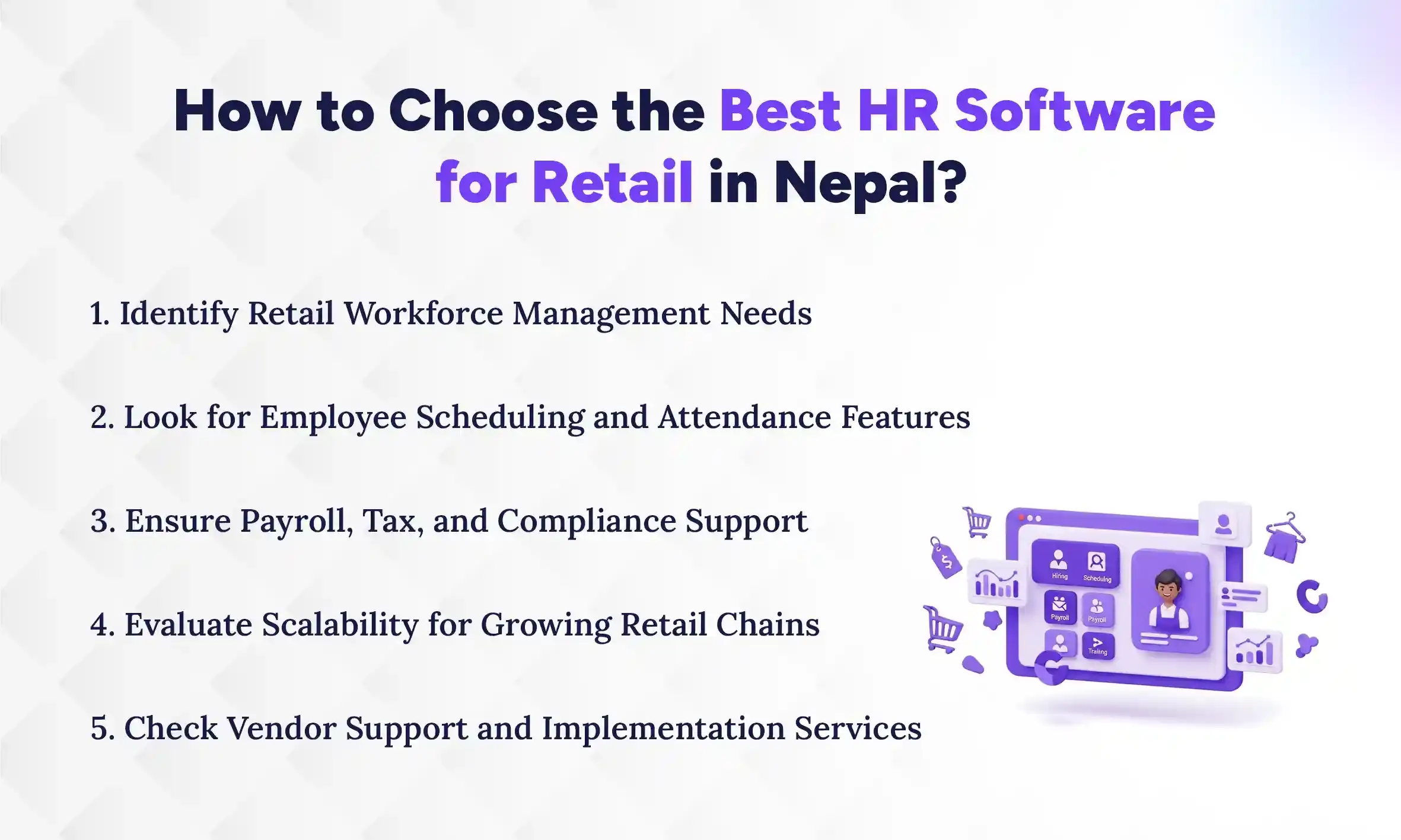
How to Choose the Best HR Software for Retail in Nepal?
To choose the best HR software for retail in Nepal, businesses should evaluate their workforce needs, scheduling features, payroll capabilities, scalability, and vendor support. Retail companies operate in fast-paced environments with multiple employees, shifts, and store locations, so selecting the right HR system is crucial. Understanding the different types of hr software available can help businesses compare solutions more effectively. A good HR platform should automate routine HR processes, simplify scheduling, and provide accurate workforce insights. By carefully assessing these factors, retail businesses can choose software that improves efficiency and supports long-term growth.
1. Identify Retail Workforce Management Needs
The first step in choosing HR software is understanding the specific workforce challenges of your retail business. Retail stores often deal with part-time staff, rotating shifts, and multiple store locations. Identifying these needs helps determine what features the HR system should include. Businesses should evaluate their employee count, scheduling complexity, and payroll requirements. This ensures the selected HR software can effectively manage daily retail operations.
2. Look for Employee Scheduling and Attendance Features
Retail businesses rely heavily on accurate employee scheduling and attendance tracking. A good HR software system should include tools for automated shift planning, time tracking, and leave management. Digital time clocks and scheduling tools help capture employee working hours and link them directly to payroll systems. These features reduce scheduling conflicts and improve staff availability during busy retail hours.
3. Ensure Payroll, Tax, and Compliance Support
Payroll accuracy is essential for retail businesses with hourly staff, overtime pay, and commission structures. HR software should automate payroll calculations and ensure compliance with tax regulations and labor policies. Automated payroll systems reduce human errors and ensure timely salary payments. They also help businesses stay compliant with legal requirements and maintain accurate financial records.
4. Evaluate Scalability for Growing Retail Chains
Retail businesses often expand by opening new branches or increasing their workforce. Therefore, HR software should be scalable and capable of handling additional employees and store locations. A scalable HR system allows businesses to add new users, features, or modules as the organization grows. This prevents the need to replace the system in the future. Choosing scalable software supports long-term retail expansion.
5. Check Vendor Support and Implementation Services
Reliable vendor support is important when implementing HR software for retail operations. Businesses should choose providers that offer onboarding assistance, training, and ongoing technical support. Proper implementation ensures the HR system integrates smoothly with existing processes such as payroll and scheduling. Good customer support also helps resolve technical issues quickly. This ensures that the HR software continues to operate efficiently as the business grows.
Best HR Software for Retail Businesses in Nepal
Pace HRMS is one of the best HR software solutions for retail businesses in Nepal because it helps manage employee data, automate HR processes, and streamline workforce management across multiple store locations. Retail companies often deal with shift-based employees, payroll complexity, and high workforce turnover, and Pace HRMS provides tools that simplify these operations. The system centralizes HR information and automates tasks such as payroll processing, attendance tracking, and leave management.
With features like digital employee databases, attendance and leave tracking, payroll automation, and performance monitoring, HRMS platforms help organizations reduce manual paperwork and improve efficiency. Pace HRMS enables retail managers to monitor staff schedules, manage employee records, and generate workforce reports easily. This helps retail businesses improve productivity, maintain accurate payroll records, and manage their workforce more effectively across all branches.
Future of HR Technology in Nepal’s Retail Industry
The future of HR technology in Nepal’s retail industry is moving toward automation, cloud-based systems, and data-driven workforce management. As retail businesses grow and expand across multiple locations, managing employees manually becomes inefficient and time-consuming. Modern HR technologies are helping companies streamline HR processes, improve workforce planning, and enhance operational efficiency. Retail businesses in Nepal are increasingly adopting digital HR solutions to stay competitive and manage their workforce more effectively.
1. AI and Automation in Retail Workforce Management
Artificial Intelligence (AI) and automation are beginning to transform workforce management in retail businesses. AI-powered HR systems can automate tasks such as employee scheduling, attendance tracking, and payroll processing. These technologies help reduce manual workload and improve accuracy in HR operations. AI can also analyze workforce data to predict staffing needs during busy shopping seasons. As AI technology evolves, retail companies will rely more on automated systems to manage their workforce efficiently.
2. Cloud-Based HR Systems for Retail Businesses
Cloud-based HR systems are becoming increasingly popular among retail companies because they allow managers to access HR data from anywhere. These systems store employee information securely online, making it easier to manage staff across multiple store locations. Cloud platforms also provide automatic updates, improved security, and easier system integration. Retail managers can monitor attendance, approve leave requests, and review workforce reports in real time. This flexibility helps retail businesses operate more efficiently.
3. Smart Workforce Analytics for Retail Operations
Workforce analytics is helping retail businesses make better decisions about staffing, scheduling, and employee performance. HR software can generate reports that analyze attendance patterns, productivity levels, and employee turnover trends. Managers can use these insights to improve workforce planning and allocate staff more effectively. Data-driven insights also help businesses identify training needs and improve employee performance. Smart workforce analytics will play a major role in shaping the future of retail workforce management.
Conclusion
Managing employees in the retail industry can be challenging due to shift-based work schedules, multiple store locations, and large sales teams. This is why many businesses are now adopting HR software for retail to simplify workforce management and improve operational efficiency. From employee scheduling and attendance tracking to payroll automation and performance monitoring, HR software helps retail companies manage their staff more effectively. By automating routine HR tasks, businesses can reduce administrative workload and focus more on improving customer experience and store performance.
As Nepal’s retail industry continues to grow, digital HR systems will become essential for managing workforce operations. Choosing the right HR software allows retail businesses to streamline HR processes, improve compliance, and make data-driven workforce decisions. Investing in modern HR technology today, such as solutions offered by The Pace Infosys, can help retail companies build a more efficient, organized, and future-ready workforce.
FAQs
What is HR software for retail businesses?
+
HR software for retail businesses is a digital system that manages employee scheduling, attendance, payroll, and workforce performance.
Why do retail businesses in Nepal need HR software?
+
Retail businesses need HR software to manage large workforces, automate HR tasks, improve scheduling, and ensure payroll accuracy.
What features should HR software for retail include?
+
Retail HR software should include employee scheduling, attendance tracking, payroll automation, leave management, recruitment tools, and workforce analytics.
Can HR software manage employees across multiple retail stores?
+
Yes, modern HR software allows businesses to track attendance, schedules, and payroll for employees across multiple store locations.
How does HR software improve retail workforce productivity?
+
HR software helps managers monitor staff performance, schedule shifts effectively, and analyze workforce data to improve productivity.
Is HR software suitable for small retail businesses in Nepal?
+
Yes, many HR software solutions offer scalable features that support both small retail shops and large retail chains.
Can HR software integrate with biometric attendance systems?
+
Yes, most HR software can integrate with biometric devices to record employee attendance automatically and accurately.
Which HR software is best for retail businesses in Nepal?
+
Pace HRMS is considered a reliable HR software solution for retail businesses due to its automation and workforce management features.
Ready to get started?
Book a 30-minute consultation call, and let's talk about your goals.