Managing a manufacturing workforce is no small task. From tracking employee attendance and shift schedules to handling payroll for hundreds of factory workers, HR teams in manufacturing companies deal with complex daily operations. When these processes are managed manually, it can lead to payroll errors, attendance issues, and compliance challenges. This is why many manufacturing businesses are now turning to digital HR systems to streamline workforce management.
In this blog, we will explore HR software for manufacturing in Nepal, including how it works, the key features manufacturers should look for, and the benefits it offers for factory operations. We will also discuss the cost of HR software, how it improves workforce management in manufacturing environments, and tips for choosing the right HR solution for your business in 2026.
What Is HR Software for Manufacturing Companies?
HR software for manufacturing companies is a digital system designed to manage factory employees, track attendance, automate payroll, and improve workforce productivity. Manufacturing industries often deal with large workforces, multiple shifts, and strict labor regulations. Human Resource Management Software helps streamline these processes by organizing employee data and automating routine HR tasks. This allows HR teams and factory managers to manage workers more efficiently and focus on improving operational performance.
1. Workforce Management for Manufacturing Plants
Workforce management is one of the most important functions of HR software in manufacturing environments. Factories often employ hundreds of workers across different departments and production units. HR software helps manage employee records, job roles, and workforce allocation efficiently. Managers can easily track which employees are assigned to specific tasks or production lines. This improves operational efficiency and ensures better workforce planning.
2. Employee Attendance and Shift Management
Manufacturing industries usually operate with multiple shifts, including day, night, and rotating shifts. HR software allows companies to track employee attendance accurately and manage shift schedules efficiently. Integration with biometric devices ensures that attendance data is recorded automatically. This reduces manual errors and prevents attendance manipulation. Shift scheduling tools also help managers plan worker availability and production requirements more effectively.
3. Payroll and Compliance for Factory Workers
Payroll management in manufacturing companies can be complex because of overtime payments, shift allowances, and labor law compliance. HR software automates payroll calculations based on attendance, overtime hours, and employee salary structures. It also ensures compliance with labor regulations and company policies. This reduces payroll errors and saves significant administrative time. Accurate payroll processing also improves employee trust and satisfaction.
4. HR Automation for Production Teams
HR automation helps reduce repetitive administrative tasks that HR teams usually handle manually. With HR software, processes such as leave management, employee onboarding, and attendance tracking can be automated. Automation improves efficiency and allows HR professionals to focus on more strategic activities. For manufacturing companies with large workforces, automation can significantly reduce administrative workload. It also ensures that HR processes remain consistent and transparent.
5. Employee Performance and Productivity Tracking
HR software also helps manufacturing companies monitor employee performance and productivity levels. Managers can track key performance indicators related to production efficiency, attendance consistency, and employee output. These insights help identify high-performing workers as well as areas that require improvement. Performance tracking also supports fair performance evaluations and workforce development programs. Ultimately, this contributes to higher productivity within the manufacturing organization.
Why Manufacturing Companies in Nepal Need HR Software
Manufacturing companies in Nepal need HR software to efficiently manage large workforces, automate HR processes, and ensure compliance with labor regulations. Factories often operate with multiple shifts and hundreds of workers, which makes manual HR management difficult and error-prone. HR software helps centralize employee data, automate payroll calculations, and track attendance accurately. By understanding how to choose hr software, manufacturing businesses can select the right solution to digitize HR operations, improve efficiency, and reduce administrative workload.
1. Managing Large Industrial Workforce Efficiently
Manufacturing industries usually employ a large number of workers across different departments and production lines. Managing employee information, job roles, and schedules manually can quickly become complicated. HR software helps companies maintain a centralized employee database and organize workforce records efficiently. Managers can easily track employee details, work assignments, and department structures. This improves workforce management and helps factories operate more smoothly.
2. Tracking Employee Attendance and Biometric Integration
Employee attendance tracking is critical in manufacturing environments where productivity depends on workforce availability. HR software can integrate with biometric attendance systems to record employee check-ins and check-outs automatically. This eliminates manual attendance registers and reduces the chances of attendance fraud. Real-time attendance data helps managers monitor worker availability and shift coverage. Accurate attendance tracking also improves payroll accuracy.
3. Ensuring Labor Law Compliance in Nepal
Manufacturing companies must comply with various labor laws related to employee working hours, overtime, leave policies, and benefits. HR software helps businesses maintain proper records and follow regulatory requirements. Automated systems can track overtime hours, leave balances, and compliance reports. This reduces the risk of legal issues and ensures transparency in HR operations. Compliance management is particularly important for companies with large industrial workforces.
4. Improving Payroll Accuracy for Factory Workers
Payroll processing in manufacturing companies often involves overtime payments, shift allowances, and different salary structures. Calculating these manually can lead to mistakes and delays. HR software automates payroll calculations based on attendance data, overtime hours, and salary policies. This ensures accurate salary payments and reduces payroll processing time. Reliable payroll systems also improve employee trust and satisfaction.
5. Enhancing Workforce Productivity and Performance
HR software helps manufacturing companies track employee productivity and performance metrics. Managers can analyze workforce data to identify productivity trends and potential areas for improvement. Performance monitoring tools allow companies to evaluate employee contributions more effectively. By understanding workforce performance, businesses can make better decisions related to training, promotions, and workforce allocation. This ultimately leads to improved operational efficiency and production output.
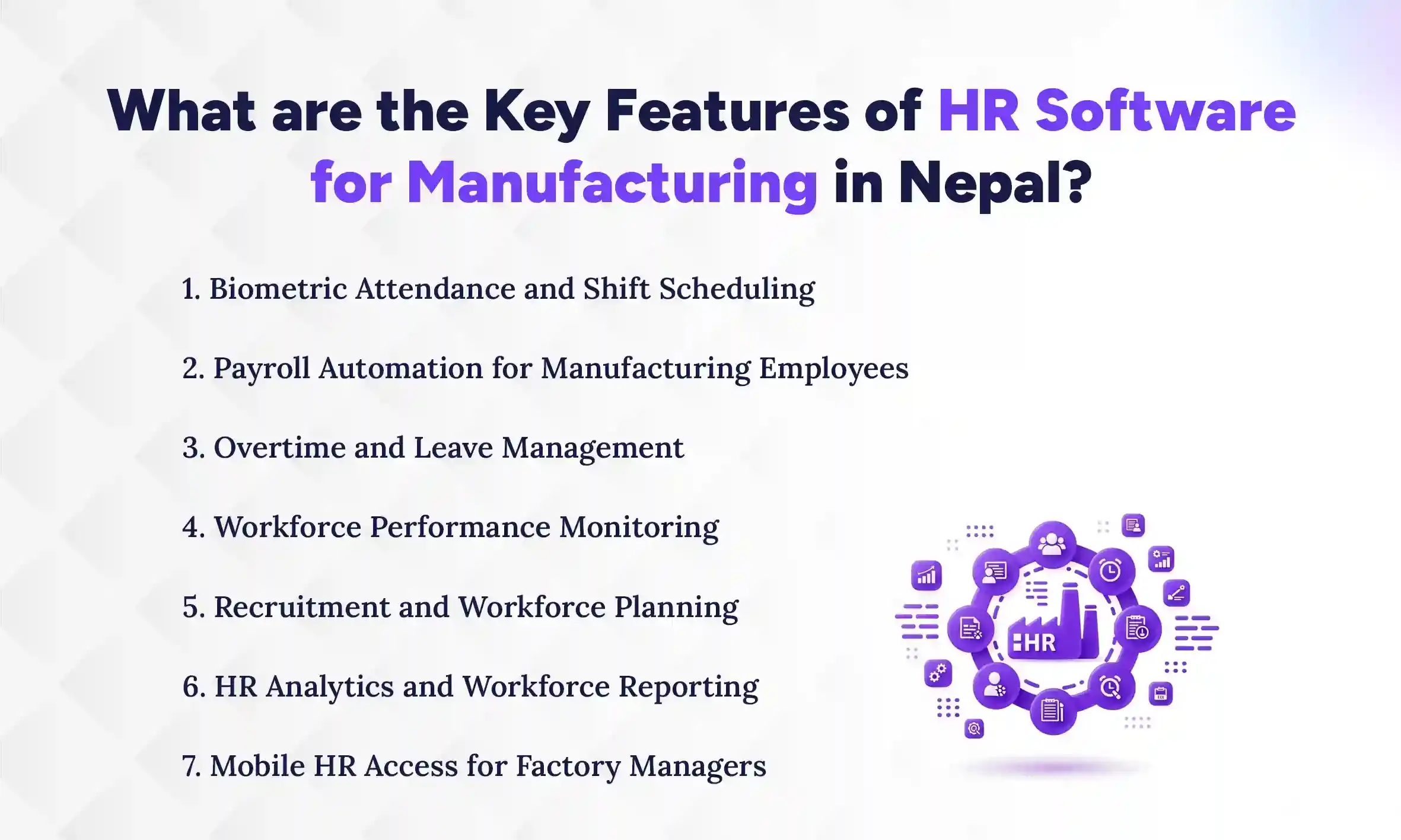
Key Features of HR Software for Manufacturing in Nepal
HR software designed for manufacturing companies includes several specialized features of hr software that help manage large industrial workforces efficiently. Manufacturing businesses require systems that can handle shift scheduling, attendance tracking, payroll automation, and compliance with labor regulations. A good HR system centralizes employee data and automates many time-consuming HR processes. By using the right HR software, factories can reduce manual work, improve workforce management, and enhance productivity across production units.
1. Biometric Attendance and Shift Scheduling
Biometric attendance integration is one of the most important features of HR software for manufacturing companies. It allows factories to automatically record employee attendance through fingerprint or facial recognition devices. This eliminates manual attendance registers and reduces the risk of attendance manipulation. HR software also supports shift scheduling, making it easier to manage day, night, and rotating shifts. Managers can quickly assign workers to shifts based on production needs.
2. Payroll Automation for Manufacturing Employees
Payroll automation simplifies salary processing for factory workers. HR software calculates wages based on attendance, overtime hours, shift allowances, and salary structures. This reduces payroll errors and saves time for HR teams. Automated payroll systems also ensure that employee salaries are processed accurately and on time. In addition, the system can generate payslips and payroll reports for financial records.
3. Overtime and Leave Management
Overtime management is essential in manufacturing environments where workers often work extra hours during peak production periods. HR software automatically calculates overtime based on company policies and labor laws. The system also tracks employee leave balances and manages leave requests efficiently. Employees can apply for leave through the system while managers can approve or reject requests easily. This ensures transparency and proper workforce planning.
4. Workforce Performance Monitoring
HR software allows companies to monitor employee productivity and performance across departments. Managers can track production output, attendance patterns, and employee efficiency metrics. Performance monitoring tools help identify top-performing employees as well as areas that require improvement. This data can be used to support employee training and performance evaluation programs. As a result, manufacturing companies can improve workforce productivity.
5. Recruitment and Workforce Planning
Recruitment features in HR software help manufacturing companies manage hiring processes more effectively. HR teams can track job applications, schedule interviews, and maintain candidate databases. Workforce planning tools also help companies forecast future staffing needs based on production requirements. This ensures that factories always have the right number of employees available for operations. Efficient recruitment and workforce planning help prevent labor shortages.
6. HR Analytics and Workforce Reporting
HR analytics provides valuable insights into workforce performance, attendance trends, and HR operations. Managers can generate reports related to employee turnover, payroll costs, and productivity levels. These insights help business leaders make data-driven decisions about workforce management. HR analytics also helps identify operational inefficiencies and areas for improvement. This makes HR management more strategic and effective.
7. Mobile HR Access for Factory Managers
Mobile HR access allows managers to use HR software through smartphones or tablets. This is especially useful in manufacturing environments where supervisors are frequently on the production floor. With mobile access, managers can check attendance records, approve leave requests, and monitor workforce data in real time. This improves responsiveness and operational efficiency. Mobile HR systems also make it easier for HR teams to stay connected with employees and managers.
What Are the Benefits of HR Software for Manufacturing Businesses?
HR software provides several benefits of using hr software for manufacturing businesses by automating HR processes, improving workforce management, and increasing operational efficiency. Manufacturing companies often manage large teams of workers, multiple shifts, and complex payroll structures. Using HR software helps centralize employee data and streamline HR tasks that would otherwise be handled manually. This improves accuracy, reduces administrative workload, and allows HR teams to focus on strategic workforce management.
1. Reduces Manual HR Administrative Work
HR software significantly reduces the amount of manual work involved in managing employee records, attendance tracking, payroll processing, and leave management. Instead of maintaining spreadsheets or paper-based records, all employee data can be stored in a centralized digital system. Automated processes help HR teams complete routine tasks more quickly and accurately. This saves valuable time for HR professionals. As a result, HR teams can focus more on workforce development and employee engagement.
2. Improves Workforce Attendance Tracking
Attendance management is critical in manufacturing environments where workforce presence directly affects production output. HR software integrated with biometric systems automatically records employee attendance and shift timings. This eliminates manual attendance registers and reduces the possibility of attendance fraud. Managers can monitor attendance in real time and quickly identify absenteeism patterns. Accurate attendance tracking also supports fair payroll calculations.
3. Ensures Compliance with Labor Regulations
Manufacturing companies must follow labor laws related to working hours, overtime payments, leave policies, and employee benefits. HR software helps organizations maintain accurate records and comply with these legal requirements. Automated systems can track overtime hours and generate compliance reports when needed. This reduces the risk of legal issues and regulatory penalties. Maintaining compliance also improves transparency in HR operations.
4. Enhances Employee Data Management
HR software helps businesses maintain a centralized database of employee information, including personal details, job roles, attendance records, and salary structures. This organized system makes it easy for HR teams to access and update employee data when needed. Proper data management improves efficiency and reduces the risk of errors. It also ensures that important employee records are stored securely. This is particularly valuable for manufacturing companies with large workforces.
5. Supports Data-Driven HR Decisions
HR software provides valuable insights through reports and analytics related to workforce performance, attendance trends, and payroll expenses. Managers can analyze this data to identify operational patterns and make better workforce management decisions. Data-driven insights help businesses plan staffing requirements, training programs, and productivity improvements. Instead of relying on assumptions, companies can use real data to guide HR strategies. This leads to more effective workforce planning and business growth.
How HR Software Improves Workforce Management in Manufacturing?
HR software improves workforce management in manufacturing by automating employee management tasks, organizing workforce data, and helping managers track productivity more effectively. Manufacturing companies often operate with multiple shifts and large numbers of employees, which can make manual workforce management difficult. HR software provides tools to manage attendance, payroll, and employee performance from a centralized system. This also guides businesses on how to implement hr system effectively within their operations. It helps reduce administrative workload and improves coordination between HR teams and factory managers. As a result, companies can operate more efficiently and maintain better workforce discipline.
1. Managing Shift-Based Employees Efficiently
Manufacturing plants usually operate with multiple shifts, including day, evening, and night shifts. HR software helps managers schedule employees for different shifts based on production requirements and worker availability. Automated shift scheduling reduces confusion and prevents staffing shortages. Managers can easily update schedules and notify employees about shift changes. This improves workforce coordination and ensures smooth production operations.
2. Monitoring Worker Productivity and Performance
HR software allows managers to monitor worker productivity and performance through digital dashboards and reports. Performance metrics such as attendance consistency, task completion, and output levels can be tracked easily. This helps identify high-performing employees as well as workers who may require additional support or training. Managers can use this data to improve workforce efficiency. Performance monitoring also supports fair employee evaluations.
3. Simplifying Payroll for Large Workforce
Payroll processing in manufacturing companies can be complex because of overtime payments, shift allowances, and different wage structures. HR software automatically calculates salaries based on attendance data, overtime hours, and company policies. This reduces the chances of payroll errors and ensures that employees are paid accurately and on time. Automated payroll systems also generate detailed reports for financial records. This makes payroll management faster and more reliable.
4. Reducing HR Errors and Administrative Delays
Manual HR processes often lead to mistakes in employee records, attendance tracking, and payroll calculations. HR software minimizes these risks by automating data entry and calculations. The system stores all employee information in one centralized platform, reducing the chances of missing or incorrect data. Automated workflows also speed up HR processes such as leave approvals and attendance tracking. This improves operational efficiency and reduces administrative delays.
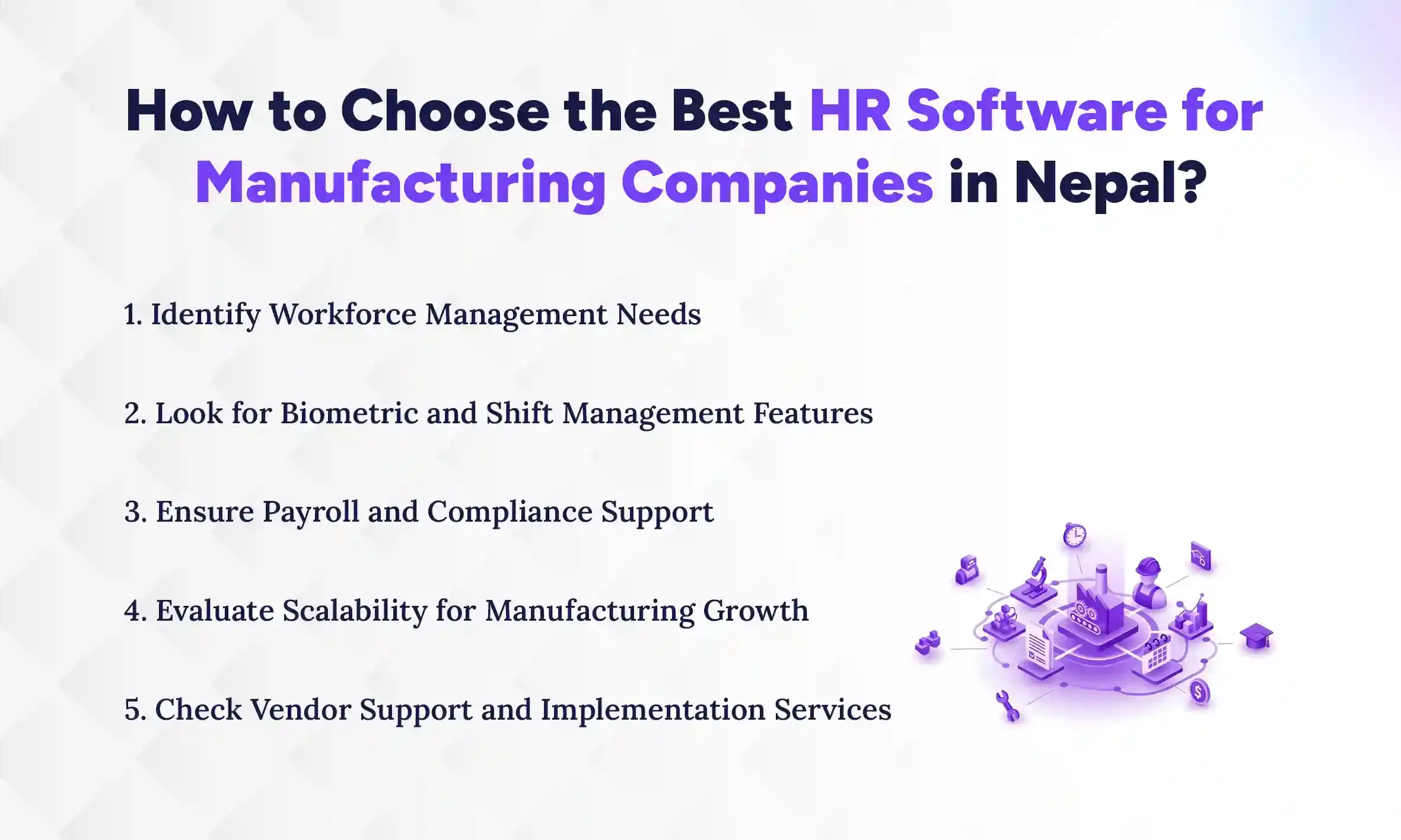
How to Choose the Best HR Software for Manufacturing Companies in Nepal?
To choose the best HR software for manufacturing companies in Nepal, you must first identify the workforce management, look for biometrics and shift management features among many others. Factories often operate with multiple shifts and hundreds of workers, which makes manual HR management difficult and error-prone. HR software helps centralize employee data, automate payroll calculations, and track attendance accurately. By adopting cloud based hr software, manufacturing businesses can manage workforce data online, streamline HR operations, and improve overall efficiency across multiple factory locations.
1. Identify Workforce Management Needs
The first step in choosing HR software is identifying the specific workforce challenges your manufacturing company faces. This may include managing large teams, handling shift-based schedules, or automating payroll processes. Companies should clearly define their HR priorities before selecting software. For example, some factories may focus more on attendance tracking while others may prioritize recruitment and workforce planning. Understanding these needs helps businesses choose a solution that truly supports their operations.
2. Look for Biometric and Shift Management Features
Manufacturing companies often operate with multiple shifts and large numbers of employees. HR software should support biometric attendance systems and flexible shift scheduling tools. These features help managers track employee attendance accurately and assign workers to different shifts easily. Automated shift scheduling also prevents workforce shortages and improves production planning. HR software designed for manufacturing should prioritize these capabilities.
3. Ensure Payroll and Compliance Support
Payroll automation and compliance management are critical for manufacturing companies. HR software should automatically calculate salaries based on attendance, overtime, and company policies. It should also help maintain records required for labor law compliance and reporting. Automated payroll systems reduce human errors and ensure timely salary payments. This improves employee satisfaction and reduces administrative workload for HR teams.
4. Evaluate Scalability for Manufacturing Growth
Manufacturing companies often expand their workforce as production increases. The HR software you choose should be able to scale as the organization grows. A scalable system allows businesses to add more employees, departments, and features without changing the software. This prevents the need for expensive system replacements in the future. Choosing scalable HR software ensures long-term efficiency and flexibility.
5. Check Vendor Support and Implementation Services
Vendor support is an important factor when selecting HR software. Businesses should choose providers that offer reliable implementation assistance, training, and ongoing technical support. Good vendor support ensures that the HR system runs smoothly and issues can be resolved quickly. Companies should also review customer support availability and service quality before making a decision. Reliable vendor support helps businesses get the most value from their HR software investment.
Best HR Software for Manufacturing Companies in Nepal
Pace HRMS is one of the best HR software solutions for manufacturing companies in Nepal because it helps manage the entire employee lifecycle, from attendance tracking to payroll automation and performance management. The system centralizes employee data and automates HR processes, reducing manual paperwork and administrative workload. HRMS platforms like Pace also support payroll management, leave tracking, and workforce reporting, which improves HR efficiency and decision-making.
For manufacturing businesses with large workforces and multiple shifts, Pace HRMS provides tools that help track attendance, manage employee records, and automate payroll calculations. These capabilities improve operational efficiency and ensure that HR teams can manage factory workers, compliance, and workforce data more effectively.
Future of HR Technology in Nepal’s Manufacturing Industry
The future of HR technology in Nepal’s manufacturing sector is moving toward automation, digital workforce management, and data-driven decision-making. As manufacturing companies continue to grow and adopt digital systems, HR software will play a bigger role in managing employees, productivity, and compliance. Modern HR technologies help factories reduce manual work and improve operational efficiency. In the coming years, manufacturing companies in Nepal are expected to adopt smarter HR solutions that combine automation, analytics, and integrated workforce management tools.
1. AI and Automation in Workforce Management
Artificial Intelligence (AI) and automation are beginning to transform workforce management in manufacturing industries. AI-powered HR systems can automate routine tasks such as employee attendance tracking, payroll processing, and performance analysis. These technologies help reduce manual HR workload and improve accuracy in workforce management. AI can also assist in workforce planning by analyzing employee data and predicting staffing needs. As automation technology advances, manufacturing companies will increasingly rely on AI-driven HR tools.
2. Digital HR Systems in Industrial Operations
Manufacturing companies are gradually shifting from traditional HR practices to fully digital HR systems. Digital HR platforms allow factories to manage employee data, payroll, attendance, and compliance through a centralized system. This reduces paperwork and improves operational transparency. Managers can access workforce information in real time, which helps them make faster decisions. Digital HR systems also improve communication between HR teams, supervisors, and factory workers.
3. Smart Workforce Analytics for Manufacturing
Workforce analytics is becoming an important tool for manufacturing companies that want to improve productivity and workforce efficiency. HR software can analyze employee attendance patterns, performance metrics, and workforce productivity data. These insights help managers identify trends, detect operational issues, and improve workforce planning. Smart analytics also supports better decision-making regarding employee training and workforce allocation. As data-driven management becomes more common, analytics will play a key role in modern HR systems.
Conclusion
Managing a large workforce in manufacturing can be complex, especially when dealing with shift schedules, attendance tracking, payroll calculations, and labor law compliance. This is why many companies are now adopting HR software for manufacturing in Nepal to streamline their HR operations. With features such as biometric attendance integration, payroll automation, workforce analytics, and performance monitoring, HR software helps manufacturing businesses improve efficiency and reduce administrative workload.
As Nepal’s manufacturing industry continues to grow, digital HR systems will become essential for managing employees and maintaining operational efficiency. By choosing the right HR solution, companies can centralize employee data, improve workforce productivity, and ensure compliance with labor regulations. Investing in the right HR technology today can help manufacturing businesses build a more organized, efficient, and future-ready workforce with the support of The Pace Infosys.
FAQs
What is HR software for manufacturing companies?
+
HR software for manufacturing companies is a digital system that helps factories manage employee data, attendance, payroll, and workforce performance efficiently.
Why do manufacturing companies in Nepal need HR software?
+
Manufacturing companies need HR software to manage large workforces, automate payroll, track attendance, and ensure compliance with labor regulations.
What features should HR software for manufacturing include?
+
HR software for manufacturing should include attendance tracking, shift scheduling, payroll automation, overtime management, workforce analytics, and performance monitoring.
How does HR software help manage shift-based workers?
+
HR software helps manage shift-based workers by automating shift scheduling, tracking attendance through biometric systems, and ensuring proper workforce allocation.
Is HR software suitable for small manufacturing businesses in Nepal?
+
Yes, many HR software solutions offer scalable features that can support both small factories and large manufacturing companies.
Can HR software integrate with biometric attendance systems?
+
Yes, most modern HR software can integrate with biometric devices to automatically record employee attendance and working hours.
How does HR software improve payroll accuracy in manufacturing companies?
+
HR software automatically calculates salaries based on attendance records, overtime hours, and company policies, reducing payroll errors.
Which HR software is best for manufacturing companies in Nepal?
+
Pace HRMS is considered one of the best HR software solutions for manufacturing companies due to its automation and workforce management features.
Ready to get started?
Book a 30-minute consultation call, and let's talk about your goals.