Ever tried managing lawyers, case deadlines, billable hours, and payroll all at once, only to realize everything is scattered across spreadsheets, emails, and maybe a notebook somewhere? Law firms don’t just deal with legal complexity; they also handle people, time, and precision. And when HR processes are manual, even a small mistake can lead to bigger operational headaches, missed billable hours, payroll errors, or compliance risks.
In this blog, we’ll explore hr software for law firms in Nepal and how it helps streamline workforce management in legal practices. We’ll break down key features, benefits, and real-world use cases, along with practical tips to choose the right HRMS for your firm. Whether you run a small legal office or a growing law firm, this guide will help you manage your team more efficiently and with far fewer complications.
What Is HR Software for Law Firms?
HR software for law firms is a digital system designed to manage employee data, attendance, payroll, and workforce operations specifically for legal practices. It helps law firms handle staff management, track billable hours, and organize HR processes in one place. Instead of relying on manual systems, everything is automated and centralized. This improves efficiency, reduces errors, and allows law firms to focus more on legal work rather than administrative tasks.
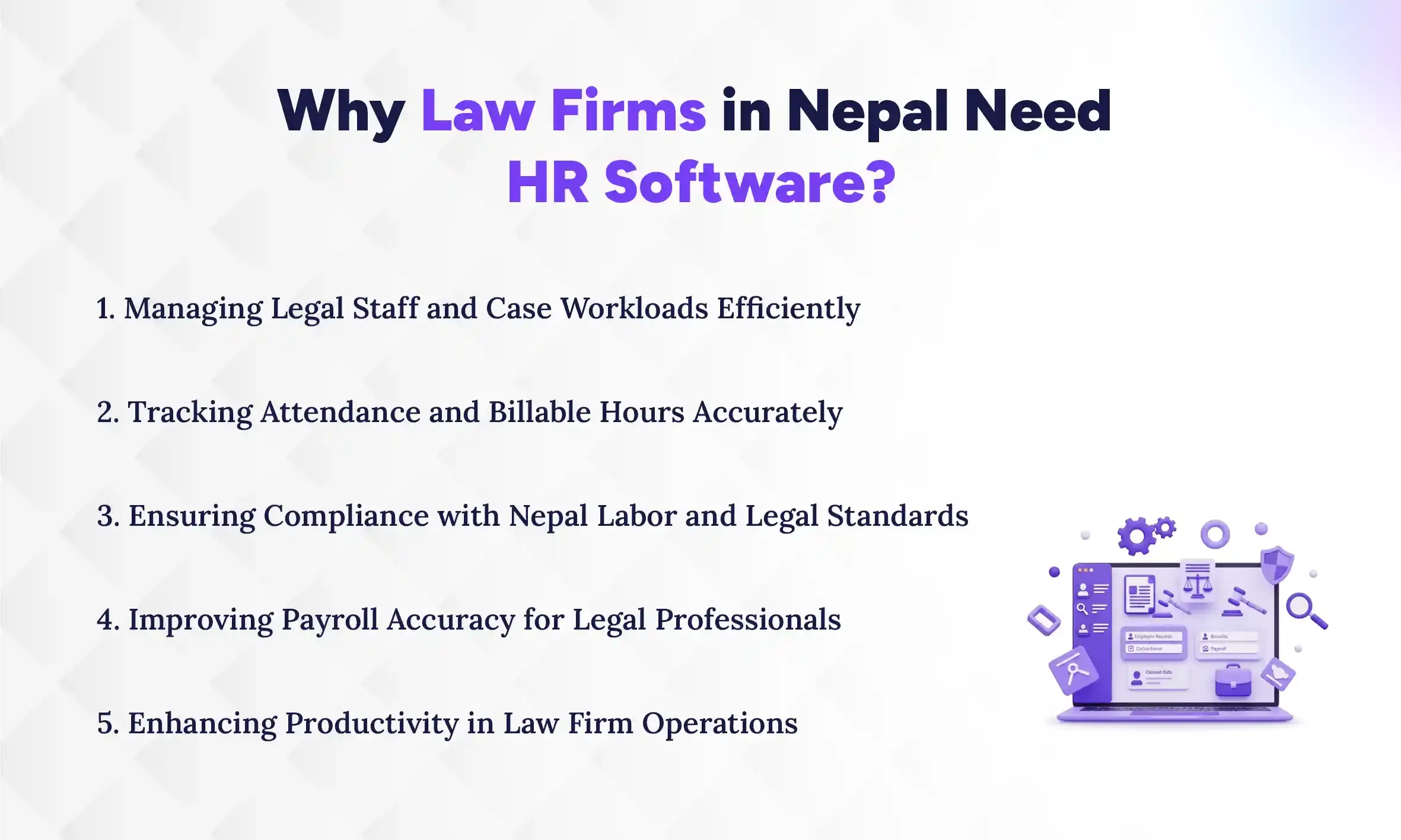
Why Law Firms in Nepal Need HR Software?
Law firms in Nepal need HR software to manage staff, track billable hours, and streamline daily operations more efficiently. Legal work involves tight deadlines, detailed time tracking, and precise payroll calculations, which can become difficult to manage manually. HR software helps centralize these processes, reduce errors, and improve overall workflow, highlighting the benefits of hr software. It also allows firms to focus more on client work instead of administrative tasks.
1. Managing Legal Staff and Case Workloads Efficiently
Law firms often handle multiple cases at the same time, which makes managing staff workloads challenging. HR software helps allocate tasks, monitor employee availability, and balance workloads effectively. It ensures that no employee is overburdened while others are underutilized. This leads to better resource management and smoother case handling. Overall, it improves team coordination and efficiency.
2. Tracking Attendance and Billable Hours Accurately
In law firms, tracking billable hours is just as important as tracking attendance. HR software allows firms to record working hours and billable time accurately in one system. This reduces the risk of missed or incorrect billing. It also helps maintain transparency between employees and management. Accurate tracking directly impacts revenue and productivity.
3. Ensuring Compliance with Nepal Labor and Legal Standards
Law firms must follow both labor laws and professional standards, making compliance essential. HR software helps maintain proper employee records, attendance logs, and payroll documentation. This makes audits and reporting much easier. It also reduces the risk of legal issues due to incomplete or incorrect records. Staying compliant becomes more manageable with a structured system.
4. Improving Payroll Accuracy for Legal Professionals
Payroll in law firms can be complex due to varying salaries, billable hours, and bonuses. HR software automates these calculations, ensuring employees are paid correctly and on time. It reduces manual errors and saves time during salary processing. Accurate payroll also builds trust among employees. It simplifies one of the most time-consuming HR tasks.
5. Enhancing Productivity in Law Firm Operations
By automating routine HR tasks, law firms can focus more on their core legal work. HR software reduces administrative workload and improves workflow efficiency. Managers can track performance, monitor tasks, and make better decisions using real-time data. This leads to improved productivity across the firm. It creates a more organized and efficient working environment.
Key Features of HR Software for Law Firms in Nepal
HR software for law firms in Nepal includes a set of features designed to manage legal staff, track billable hours, and automate HR processes efficiently. These features help firms handle complex workflows, improve accuracy, and reduce administrative workload, highlighting the features of hr software. Instead of managing multiple systems, everything is centralized in one platform, making operations smoother and more organized.
1. Employee Attendance and Billable Hour Tracking
In law firms, tracking time isn’t just about attendance, it’s directly linked to revenue. This feature allows firms to record both working hours and billable hours accurately. It helps ensure that no billable time is missed or underreported. Managers can monitor employee activity and workload in real time. This improves transparency and ensures proper client billing. Over time, it also helps analyze productivity and efficiency.
2. Payroll Automation for Lawyers and Staff
Payroll in law firms often involves different salary structures, bonuses, and billable incentives. HR software automates salary calculations based on attendance and billable hours. This reduces errors and ensures employees are paid accurately. It also saves time for HR teams during payroll processing. Automated payroll builds trust and consistency. It simplifies a complex and critical process.
3. Leave, Overtime, and Case-Based Work Management
Managing leave and overtime becomes more complex when employees are working on different cases. HR software helps track leave requests, overtime hours, and case-based assignments in one place. It ensures proper coordination and avoids scheduling conflicts. Employees can apply for leave easily, and managers can approve it quickly. This creates a smoother workflow. It also helps maintain balance between workload and availability.
4. Recruitment and Onboarding for Legal Professionals
Hiring the right talent is crucial for law firms, and HR software simplifies this process. It helps track candidates, manage applications, and streamline hiring workflows. Once hired, onboarding becomes structured with digital documentation and training processes. This ensures new employees can start working efficiently. It also reduces the time spent on manual hiring processes. A smooth onboarding experience improves employee retention.
5. Performance Monitoring for Legal Teams
Tracking performance in law firms involves more than just attendance, it includes case handling, billable hours, and productivity. HR software provides tools to monitor these metrics effectively. Managers can identify high-performing employees and areas that need improvement. This helps in making better decisions related to promotions or training. It creates a more accountable work environment. Over time, it improves overall team performance.
6. HR Analytics and Legal Workforce Reports
HR software provides detailed reports and analytics related to employee performance, attendance, and workload. These insights help law firms make data-driven decisions. Managers can identify trends, improve resource allocation, and plan better. It also simplifies reporting for audits and compliance. Having clear data improves strategic planning. It turns raw data into useful insights.
7. Cloud-Based Access and Data Security
Cloud-based HR software allows access to employee data from anywhere, making it highly convenient for law firms. Managers can monitor operations even when working remotely. It also ensures data is stored securely with proper backup systems. Sensitive employee and client-related data remain protected. Regular updates improve system reliability and security. This combination of accessibility and security makes cloud systems highly effective.
What Are the Benefits of HR Software for Law Firms in Nepal?
Benefits of HR software for law firms in Nepal include streamlining operations, reducing manual work, and improving accuracy in managing legal staff and workflows. It simplifies complex HR tasks like tracking billable hours, payroll processing, and compliance management, while also highlighting how to implement hr software effectively. By automating these processes, law firms can save time and focus more on legal work. Overall, it creates a more efficient and organized work environment.
1. Reduces Manual HR Tasks in Law Firms
Manual HR work, like maintaining records, calculating payroll, and tracking attendance, can be time-consuming and error-prone. HR software automates these repetitive tasks, reducing the workload for HR teams. It allows staff to focus on more important activities instead of administrative work. This improves efficiency across the firm. It also minimizes the chances of human error. Over time, it helps streamline overall HR operations.
2. Improves Accuracy in Billable Hours and Payroll
In law firms, accurate tracking of billable hours is essential for revenue and payroll. HR software ensures that working hours and billable time are recorded precisely. This reduces errors in client billing and salary calculations. It also brings transparency to the process. Accurate data helps maintain trust with both clients and employees. It ultimately improves financial accuracy within the firm.
3. Enhances Employee Record and Case Management
Managing employee data and case-related work manually can become messy over time. HR software organizes all records in a centralized system. This makes it easier to access, update, and manage information. It also improves coordination between different teams. Having structured data leads to smoother operations. It also ensures important information is never lost or overlooked.
4. Supports Better Decision-Making with Data Insights
HR software provides valuable insights through reports and analytics. Managers can track performance, workload, and productivity in real time. This data helps in making informed decisions about staffing and operations. It also helps identify areas that need improvement. Better decisions lead to improved efficiency and growth. Data-driven insights give firms a competitive advantage.
5. Ensures Legal and Labor Compliance
Law firms must follow strict labor laws and professional regulations. HR software helps maintain accurate records required for compliance and audits. It ensures that policies are followed consistently across the organization. This reduces the risk of legal issues or penalties. Staying compliant becomes much easier with a structured system. It also helps firms stay prepared for audits and regulatory checks.
How HR Software Improves Workforce Management in Law Firms?
HR software improves workforce management in law firms by organizing staff operations, tracking workloads, and automating key HR processes. It helps firms manage different roles efficiently, from lawyers to support staff, while ensuring accuracy in time tracking and payroll, highlighting the types of hr software available. Centralizing data and reducing manual work, it enhances coordination and productivity. Overall, it makes managing a legal workforce more structured and efficient.
1. Managing Lawyers, Paralegals, and Support Staff Efficiently
Law firms have a mix of professionals, each with different responsibilities and workloads. HR software helps manage these roles by organizing tasks, tracking availability, and allocating work effectively. It ensures that responsibilities are clearly defined and balanced across the team. This improves coordination and reduces confusion. A structured system helps teams work more efficiently together.
2. Tracking Case Workload and Time Allocation
Tracking how much time is spent on each case is critical for both productivity and billing. HR software allows firms to monitor case workloads and allocate time accurately. This helps ensure that work is distributed fairly and deadlines are met. It also improves billing accuracy by capturing all billable hours. Better tracking leads to improved efficiency and client satisfaction.
3. Simplifying Payroll for Complex Legal Roles
Payroll in law firms can be complicated due to different pay structures, bonuses, and billable incentives. HR software automates payroll calculations based on actual work data. This reduces errors and ensures employees are paid correctly. It also saves time during salary processing. Simplified payroll improves both accuracy and efficiency.
4. Reducing Administrative Errors and Delays
Manual processes often lead to errors and delays in HR operations. HR software minimizes these issues by automating tasks and maintaining accurate records. It reduces the need for repetitive data entry and manual calculations. This speeds up processes and improves reliability. Fewer errors mean smoother operations and better productivity overall.
How to Choose the Best HR Software for Law Firms in Nepal?
To choose the best HR software for law firms in Nepal, you need to evaluate your firm’s operational needs and select a system that improves efficiency, accuracy, and scalability. The right software should handle time tracking, payroll, and compliance without adding complexity. It should also integrate smoothly with your existing processes and be easy for your team to use. Considering long-term growth and vendor support is equally important. A well-chosen HR system can significantly improve how your law firm operates.
1. Identify Law Firm Workforce Needs
The first step is understanding what your law firm actually requires from an HR system. Different firms have different structures, case loads, and staffing needs. You should consider the number of employees, types of roles, and workload distribution. This helps you avoid choosing software that doesn’t match your workflow. A clear understanding of your needs makes the selection process much easier.
2. Look for Time Tracking and Billable Hour Features
Time tracking is critical in law firms as it directly impacts billing and revenue. The software should accurately track both attendance and billable hours. It should also provide detailed reports for better transparency. This helps ensure no billable time is missed. A good time tracking system improves both productivity and financial accuracy.
3. Ensure Payroll, Tax, and Compliance Support
Payroll and compliance are essential parts of HR management in law firms. The software should automate salary calculations, taxes, and other deductions. It should also help maintain compliance with labor laws and regulations in Nepal. This reduces the risk of errors and legal issues. Proper compliance support ensures smooth operations.
4. Evaluate Scalability for Growing Law Firms
As your law firm grows, your HR needs will also change. The software should be able to handle an increasing number of employees and more complex operations. A scalable system allows you to expand without needing to switch platforms later. It also supports long-term efficiency. Choosing scalable software saves time and future costs.
5. Check Vendor Support and Implementation Services
Good support from the software provider is crucial for smooth implementation and usage. You should check if the vendor offers training, technical assistance, and regular updates. Local support can be especially helpful in resolving issues quickly. Reliable support ensures that your HR system runs without disruptions. It also makes the transition to new software much easier.
Best HR Software for Law Firms in Nepal
Pace HRMS is the best hr software for law firms in Nepal because it offers a complete, cloud-based solution that automates attendance, payroll, billable hour tracking, and employee management in one platform. It helps law firms reduce manual work, improve accuracy, and manage legal staff more efficiently.
The software is designed with flexibility and local compliance in mind, making it suitable for Nepali businesses. It provides real-time access to HR data, secure document management, and scalable features that grow with your firm. This combination of automation, compliance, and ease of use makes Pace HRMS a reliable choice for law firms looking to streamline their HR operations.
Common Challenges Law Firms Face Without HR Software
Without HR software, law firms often struggle with managing staff, tracking time, and maintaining accuracy in daily operations. Manual processes can quickly become overwhelming, especially when handling multiple cases and tight deadlines. Errors in payroll, billing, and record-keeping are more common. Over time, these challenges affect productivity, efficiency, and even client satisfaction.
1. Manual Time Tracking and Billing Errors
Tracking time manually can lead to missed or inaccurate billable hours. Lawyers may forget to log time, or records may not be updated properly. This directly affects client billing and revenue. Even small mistakes can result in financial losses. A lack of automation makes time tracking unreliable.
2. Payroll Miscalculations for Legal Staff
Payroll in law firms can be complex due to varying salaries, incentives, and billable hours. Manual calculations often lead to errors in salaries and deductions. This can cause dissatisfaction among employees. It also takes extra time to correct mistakes. Inconsistent payroll affects trust and efficiency.
3. Difficulty Managing Case Workloads
Managing multiple cases and assigning work manually can become confusing. Without a proper system, it’s hard to track who is working on what. This can lead to uneven workload distribution and missed deadlines. Poor coordination affects overall performance. It also creates unnecessary stress for staff.
4. Lack of Real-Time Workforce Insights
Without HR software, managers don’t have access to real-time data on employee performance and workload. Decisions are often based on incomplete or outdated information. This makes it harder to identify issues early. It also limits the ability to improve operations. Lack of insights reduces overall efficiency.
Future of HR Technology in Nepal’s Legal Industry
The future of HR technology in Nepal’s legal industry is moving toward smarter, faster, and more data-driven systems. Law firms are gradually adopting digital tools to improve efficiency and reduce manual workload. Modern HR systems are evolving beyond basic management into intelligent platforms that support decision-making. With advancements in AI, cloud computing, and analytics, legal HR operations are becoming more streamlined and proactive.
1. AI-Based Time Tracking for Legal Work
AI-based time tracking is transforming how law firms record billable hours. Instead of manual entries, the system can automatically track time spent on tasks and cases. This reduces the chances of missed or inaccurate billing. It also improves efficiency by minimizing manual input. Over time, AI can provide insights into work patterns and productivity.
2. Cloud HR Systems for Law Firms
Cloud-based HR systems allow law firms to access employee data and manage operations from anywhere. This is especially useful for firms with remote work setups or multiple offices. It ensures real-time updates and centralized data management. Cloud systems also provide better security and automatic backups. This makes HR processes more flexible and reliable.
3. Advanced Workforce Analytics for Legal Operations
Advanced analytics tools help law firms make better decisions using real-time data. Managers can track performance, workload distribution, and overall productivity. These insights help identify inefficiencies and improve operations. Data-driven decisions lead to better resource allocation. It also helps firms plan for future growth more effectively.
Conclusion
Managing a law firm isn’t just about winning cases; it’s also about managing people, time, and accuracy behind the scenes. The right HR software for law firms in Nepal can simplify daily operations, reduce manual errors, and bring structure to complex workflows. From tracking billable hours to handling payroll and compliance, everything becomes more organized and efficient.
The key is to choose a solution that fits your firm’s needs today while supporting future growth. Look for features like automation, scalability, and reliable support. When implemented correctly, HR software doesn’t just save time ,it improves productivity, enhances transparency, and helps law firms operate more smoothly in an increasingly competitive environment, as seen with The Pace Infosys.
FAQs
What is HR software for law firms in Nepal?
+
HR software helps manage attendance, payroll, and billable hours for legal staff efficiently. It centralizes HR tasks and improves overall law firm operations.
Why do law firms need HR software?
+
It reduces manual work, improves accuracy, and helps track billable hours and staff performance. This leads to better productivity and smoother operations.
Can HR software track billable hours?
+
Yes, modern HR software can track billable hours along with employee attendance accurately. This ensures proper client billing and revenue tracking.
What features should HR software for law firms include?
+
Key features include time tracking, payroll automation, compliance tools, and performance monitoring. These features help manage legal staff efficiently.
How much does HR software cost in Nepal?
+
Costs vary based on features, number of users, and software type (cloud or on-premise). Most providers offer flexible pricing plans.
Is cloud-based HR software secure for law firms?
+
Yes, cloud HR software uses encryption and secure servers to protect sensitive data. It also offers regular backups and controlled access.
Which is the best HR software for law firms in Nepal?
+
Pace HRMS is a popular choice due to automation, compliance support, and scalability. It is suitable for both small and large law firms.
How to choose the right HR software for a law firm?
+
Choose based on your firm’s needs, features like time tracking, and vendor support. Testing demos before buying is highly recommended.
Ready to get started?
Book a 30-minute consultation call, and let's talk about your goals.