Ever wondered why some websites rank on the first page while others stay invisible, no matter how good their content is? The answer often lies behind the scenes in something most people ignore, technical SEO. It is the foundation that helps search engines properly crawl, understand, and rank your website. Without it, even great content can struggle to perform well.
In this blog, we will explore what is technical SEO in a simple and practical way so you can actually understand how it works. We will cover its importance, key components, benefits, and common mistakes to avoid. You will also learn how technical SEO connects with overall rankings and website performance. By the end, you will have a clear and complete understanding of the topic.
What Is Technical SEO?
Technical SEO is the process of optimizing a website’s backend structure to help search engines crawl, index, and rank it effectively. If you first understand what is seo, it becomes easier to see how technical SEO fits into the bigger picture. It focuses on improving technical elements like site speed, mobile-friendliness, security, and website architecture. Unlike content SEO, it does not deal with keywords or writing but with how well a site performs technically. A properly optimized technical setup ensures search engines can easily understand your website and display it in search results.
Importance of Technical SEO
Technical SEO is important because it ensures that your website is properly structured for search engines to crawl, understand, and rank. Without strong technical SEO, even high-quality content may not appear in search results. It works closely with on-page seo to improve overall website performance, speed, and usability. In simple terms, it builds the foundation that supports better visibility and rankings.
1. Helps Search Engines Crawl Your Website Efficiently
Technical SEO ensures that search engine bots can easily access and navigate your website. A well-structured site with proper internal links and a sitemap helps crawlers discover all important pages. If crawling is smooth, your content gets indexed faster. This improves the chances of ranking in search results. Without proper crawlability, some pages may remain invisible to search engines. It also ensures no important page is missed during crawling.
2. Ensures Proper Indexing of Web Pages
Indexing is the process by which search engines store and organize your web pages in their database. Technical SEO ensures that important pages are indexed correctly. It also prevents unwanted pages from being indexed. This helps search engines show the right content to users. Proper indexing improves visibility and search performance. It also avoids duplication issues in search results.
3. Improves Website Speed and Performance
Website speed is a key ranking factor in SEO. Technical SEO focuses on optimizing loading time through image compression, caching, and clean code. Faster websites provide better user experience and reduce bounce rates. Slow websites often lose both traffic and rankings. Improving speed helps retain visitors and increases engagement. It also positively impacts conversion rates.
4. Enhances User Experience and Engagement
A technically optimized website is easier to navigate and use. Good structure, mobile responsiveness, and fast loading pages improve user satisfaction. When users find a website easy to use, they stay longer and explore more pages. This increases engagement signals for search engines. Better user experience directly supports higher rankings. It also builds trust with visitors over time.
5. Reduces Technical Errors and Broken Pages
Technical SEO helps identify and fix issues like broken links, 404 errors, and duplicate content. These errors can harm user experience and search rankings. Fixing them ensures smooth website performance. It also helps search engines trust your website more. A clean and error-free site performs better in search results. It also improves the overall site health score.
6. Supports Higher Rankings in Search Results
All technical SEO efforts work together to improve search engine rankings. When a website is fast, secure, and easy to crawl, search engines rank it higher. It also ensures that content is properly understood and displayed. Strong technical SEO gives your website a competitive advantage. It plays a major role in long-term SEO success. It helps maintain stable rankings even during algorithm updates.
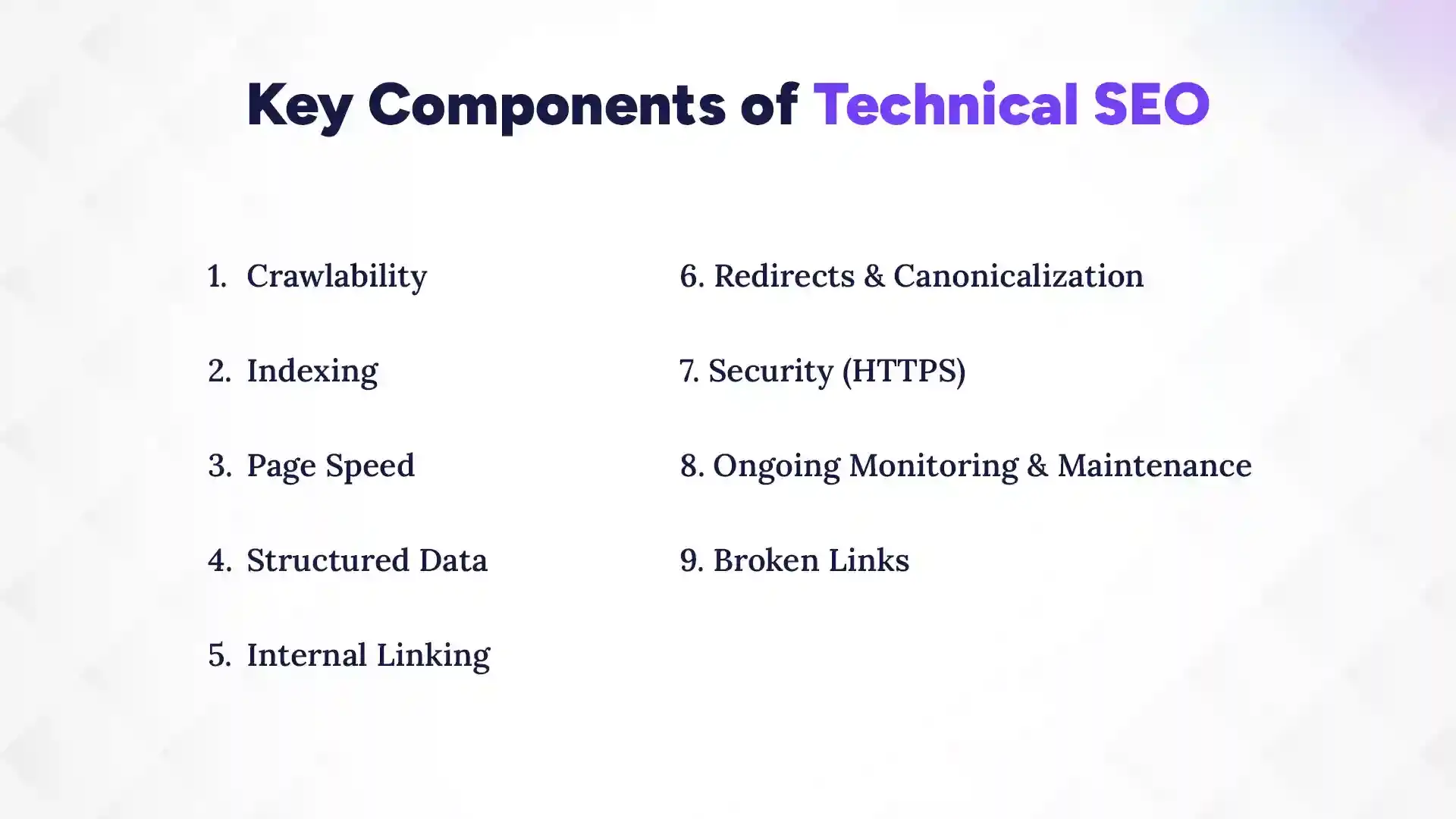
Key Components of Technical SEO
Key components of technical SEO are the foundation elements that make sure your website is properly structured for search engines. These components help search engines crawl, understand, and rank your pages effectively. Each element plays a specific role in improving performance, speed, and visibility. When combined properly, they create a strong technical base for long-term SEO success.
1. Crawlability
Crawlability refers to how easily search engine bots can access and move through your website pages. If your site is not crawlable, important pages may not get discovered or ranked. A proper structure ensures that all key pages are reachable without confusion. It is one of the most important parts of technical SEO.
Use a clear internal linking structure
Submit XML sitemap to search engines
Avoid blocking important pages in robots.txt
It ensures search engines can discover all important content on your website and improves indexing efficiency.
2. Indexing
Indexing is the process by which search engines store and organize your web pages after crawling them. If a page is not indexed, it will not appear in search results. Proper indexing ensures that only useful and relevant pages are visible to users. It helps improve search visibility and ranking accuracy.
Use meta robots tags correctly
Avoid duplicate or thin content
Check index status in Google Search Console
It ensures search engines show the right pages and avoid unnecessary or low-value content in results.
3. Page Speed
Page speed refers to how quickly your website loads when a user visits it. Slow-loading websites often lead to higher bounce rates and lower rankings. Fast websites improve user experience and keep visitors engaged. It is also a confirmed ranking factor in SEO.
Compress images and optimize file sizes
Enable browser caching
Reduce server response time
It improves user satisfaction and increases chances of higher conversions and better rankings.
4. Structured Data
Structured data helps search engines understand your content in a more detailed way. It uses schema markup to explain what your page is about. This can improve how your website appears in search results with rich snippets. It also increases visibility and click-through rates.
Add schema markup for articles and products
Enhance search appearance with rich results
Help search engines understand page context
It makes your content more meaningful for search engines and improves SERP performance.
5. Internal Linking
Internal linking connects different pages within your website and guides both users and search engines. It helps distribute link authority across your site. Good internal linking improves navigation and makes content easier to discover. It also strengthens overall site structure.
Link related pages and blog posts
Use clear and descriptive anchor text
Avoid broken or irrelevant internal links
It improves crawlability and helps search engines understand your website hierarchy.
6. Redirects and Canonicalization
Redirects help send users and search engines from old URLs to new ones. Canonicalization helps prevent duplicate content issues by defining the main version of a page. Both are important for maintaining clean SEO structure. They ensure ranking signals are properly managed.
Use 301 redirects for permanent changes
Set canonical tags for duplicate pages
Avoid redirect chains and loops
It helps preserve SEO value and ensures search engines index the correct pages.
7. Security (HTTPS)
HTTPS secures your website by encrypting data between the user and the server. Search engines prefer secure websites and often rank them higher. It also builds trust with visitors and improves credibility. Security is a basic but essential SEO factor.
Install SSL certificate on your website
Redirect HTTP pages to HTTPS
Secure all internal pages properly
It improves ranking signals and increases user trust in your website.
8. Ongoing Monitoring and Maintenance
Technical SEO requires regular monitoring to keep your website healthy. Issues can appear over time due to updates, content changes, or errors. Continuous maintenance ensures everything works smoothly. It helps avoid ranking drops caused by technical problems.
Use SEO audit tools regularly
Monitor crawl errors and indexing issues
Fix technical problems immediately
It ensures long-term stability and consistent SEO performance.
9. Broken Links
Broken links lead users to pages that no longer exist and create a poor browsing experience. They also affect SEO performance by wasting crawl budget. Fixing broken links helps maintain a clean and professional website. It is important for both users and search engines.
Regularly check for broken internal and external links
Update or remove dead URLs
Use proper redirects when necessary
It improves user experience and keeps your website structure clean and efficient.
How Does Technical SEO Work?
Technical SEO works by helping search engines crawl, understand, and rank your website more effectively through proper optimization of its structure and technical elements. It ensures that search engine bots can easily access your pages, interpret the content, and store it in their database. This process directly impacts how your website appears in search results. It also relies on tools like XML sitemaps and robots.txt to guide search engines correctly.
Search engine bots crawl your website to discover new and updated pages
Crawling allows bots to move through your site using internal links and sitemaps
Indexing stores your web pages in the search engine database for ranking
Ranking determines where your pages appear in search results based on relevance
XML sitemap helps search engines find all important pages easily
Robots.txt file guides bots by controlling which pages to crawl or ignore
It ensures that your site structure is clear, organized, and fully optimized for search engine visibility.
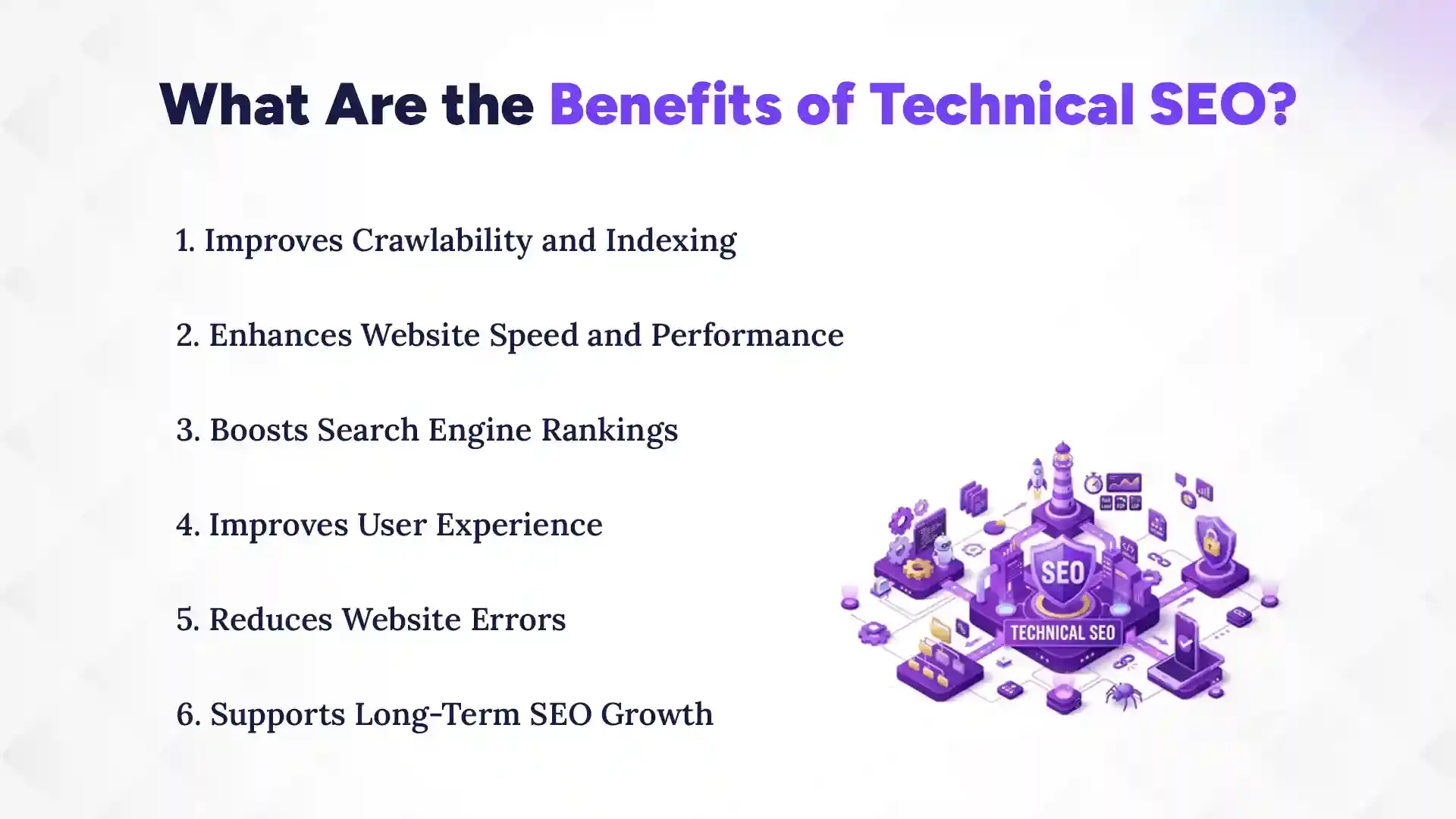
What Are the Benefits of Technical SEO?
Benefits of technical SEO are improved website performance, better search visibility, and stronger long-term rankings in search engines. It ensures that your website is properly structured so search engines can easily crawl and understand it. Technical SEO also improves user experience by making websites faster, cleaner, and more reliable. Overall, it plays a key role in increasing organic traffic and building a strong SEO foundation.
1. Improves Crawlability and Indexing
Technical SEO ensures that search engine bots can easily crawl and index your website pages. When crawling is smooth, more pages are discovered and stored in search results. This increases your chances of ranking for different keywords. Proper indexing also ensures that only important and relevant pages appear in search engines. A well-optimized site structure helps search engines understand your content better. It also improves overall visibility in search results.
2. Enhances Website Speed and Performance
Website speed is a major factor in both SEO and user experience. Technical SEO helps optimize loading time through image compression, caching, and clean code. Faster websites keep users engaged and reduce bounce rates. Slow websites often lose traffic and rankings. Improving performance also increases conversions and user satisfaction. It creates a smoother browsing experience for visitors.
3. Boosts Search Engine Rankings
Technical SEO directly impacts how search engines rank your website. A well-optimized site is easier for search engines to understand and trust. Factors like speed, structure, and security all contribute to better rankings. When technical issues are fixed, search engines reward your site with higher positions. This leads to increased visibility in search results. It also helps your content compete better in crowded niches.
4. Improves User Experience
A technically optimized website is easier to navigate and use. Fast loading pages, mobile responsiveness, and clean structure all improve user satisfaction. When users have a good experience, they stay longer on your site. This increases engagement and reduces bounce rates. Search engines also consider user behavior when ranking websites. Better experience leads to better SEO performance overall.
5. Reduces Website Errors
Technical SEO helps identify and fix errors like broken links, duplicate content, and crawl issues. These errors can negatively affect both users and search engines. Fixing them ensures smooth website performance. It also helps maintain a clean and professional website structure. Fewer errors improve trust with search engines. This leads to better indexing and ranking stability.
6. Supports Long-Term SEO Growth
Technical SEO builds a strong foundation for long-term SEO success. Once your website is properly optimized, it continues to perform well over time. It supports all other SEO strategies, like content and backlinks. Regular maintenance keeps your site healthy and competitive. It also helps adapt to search engine algorithm updates. This ensures consistent growth in organic traffic and rankings.
Common Technical SEO Mistakes to Avoid
Common technical SEO mistakes can seriously affect your website’s visibility, rankings, and overall performance in search engines. Many websites lose traffic simply because basic technical issues are ignored. These mistakes often stop search engines from properly crawling or indexing pages. Fixing them is important to maintain a healthy and SEO-friendly website structure.
1. Ignoring Crawl Errors
Ignoring crawl errors can prevent search engines from accessing important pages on your website. These errors often occur when pages are blocked, deleted, or incorrectly linked. If not fixed, valuable content may not appear in search results. Regular monitoring in tools like Google Search Console is essential. Crawl errors can directly reduce your website’s visibility. It may also delay the indexing of new pages.
2. Poor Website Structure
A poorly organized website structure makes it difficult for search engines and users to navigate. Important pages may get buried deep and remain undiscovered. A clear hierarchy with proper categories improves crawling efficiency. Good structure also enhances user experience and engagement. Poor structure often leads to lower rankings. It can also reduce overall site authority.
3. Slow Page Speed
Slow page speed negatively affects both user experience and search engine rankings. Users tend to leave websites that take too long to load. Search engines also prefer fast-loading websites for better ranking positions. Large images, unoptimized code, and poor hosting can cause speed issues. Improving speed increases engagement and reduces bounce rate. It also improves conversion rates significantly.
4. Duplicate Content Issues
Duplicate content confuses search engines about which page to rank. It can reduce the visibility of your important pages. This often happens when similar content exists on multiple URLs. Search engines may ignore or lower the ranking of such pages. Using canonical tags helps solve this issue. It can also dilute your SEO authority.
5. Missing XML Sitemap
An XML sitemap helps search engines find and understand all pages on your website. Without it, some pages may remain undiscovered. It acts like a roadmap for search engine bots. Missing sitemap can slow down the indexing of new content. It is especially important for large websites. It may also reduce crawling efficiency.
6. Improper Redirects
Improper redirects can confuse both users and search engines. Redirect chains or loops can negatively affect SEO performance. They may also slow down page loading speed. Using correct 301 redirects ensures proper page movement. It helps preserve SEO value from old pages. It can also break link equity flow.
7. Not Using HTTPS
Not using HTTPS makes your website less secure and less trustworthy. Search engines prefer secure websites for better rankings. Users may also avoid websites that are not secure. HTTPS protects data and builds user confidence. It is now a basic requirement for SEO. It can also impact conversion rates negatively.
8. Broken Links and 404 Errors
Broken links and 404 errors lead users to non-existent pages. This creates a poor user experience and increases bounce rate. Search engines also see them as a sign of poor website maintenance. Too many broken links can harm SEO performance. Regular audits help identify and fix these issues. It can also waste crawl budget over time.
Technical SEO vs On-Page SEO vs Off-Page SEO
Technical SEO, on-page SEO, and off-page SEO are the three main pillars of search engine optimization. Each one focuses on a different area of improving website visibility and rankings. Technical SEO handles website structure, on-page SEO focuses on content, and off-page SEO builds authority outside the website. Together, they create a complete SEO strategy that improves overall performance.
Factor
Technical SEO
On-Page SEO
Off-Page SEO
Definition
Optimizing website backend and structure for search engines
Optimizing content and page elements within the website
Building authority through external signals
Main Focus
Site performance, crawling, indexing
Content quality, keywords, meta tags
Backlinks, brand mentions, authority building
Control Level
Fully controlled by website owner
Fully controlled by website owner
Partially controlled (depends on external sites)
Key Elements
Speed, HTTPS, sitemap, structure, indexing
Content, headings, keywords, images
Backlinks, PR, social signals
Goal
Make website technically accessible to search engines
Make content relevant and user-friendly
Build trust and authority for rankings
Example
Fixing crawl errors and improving site speed
Writing optimized blog posts
Getting backlinks from high-authority websites
Impact Speed
Medium to long-term
Short to medium-term
Long-term authority building
Role in SEO
Foundation of SEO
Content optimization layer
Reputation and trust building layer
Tools for Technical SEO Optimization
Technical SEO tools are essential for analyzing, monitoring, and improving your website’s performance in search engines. These tools help identify issues like crawl errors, slow pages, and indexing problems. They also provide insights into how search engines view your website. Using the right tools makes it easier to maintain a healthy and optimized website structure.
1. Google Search Console
Google Search Console is a free tool provided by Google to monitor website performance in search results. It helps you understand how your site is indexed and identifies crawling or indexing issues. You can also submit sitemaps and check search performance data. It shows which keywords bring traffic to your site. It also alerts you about technical problems like mobile usability or security issues. This tool is essential for every website owner.
2. Screaming Frog
Screaming Frog is a powerful website crawler used for technical SEO audits. It scans your website and identifies issues like broken links, duplicate content, and missing tags. The tool helps you analyze site structure and internal linking. It is widely used by SEO professionals for deep technical analysis. Screaming Frog also helps in finding redirect errors and metadata issues. It provides a complete overview of your website health.
3. Ahrefs / SEMrush
Ahrefs and SEMrush are advanced SEO tools that offer both technical and off-page SEO insights. They help analyze backlinks, keyword rankings, and site performance. These tools also detect technical issues like crawl errors and slow pages. They provide detailed SEO audit reports for improvement. You can track competitors and compare performance easily. Both tools are widely used for complete SEO optimization strategies.
4. PageSpeed Insights
PageSpeed Insights is a Google tool that analyzes website loading speed and performance. It provides scores for both mobile and desktop versions of your site. The tool also suggests improvements like image optimization and code reduction. Faster websites improve user experience and search rankings. It helps identify issues affecting Core Web Vitals. This tool is very important for improving page performance and SEO results.
Is Technical SEO Difficult for Beginners?
No, technical SEO is not too difficult for beginners if learned step by step with the right approach. At first, it may look complex because it involves website structure, crawling, and indexing concepts. However, with practice and basic tools, anyone can understand and apply it. The key is to start small and focus on fundamentals before moving to advanced areas.
Beginners often struggle with technical terms like crawlability and indexing
Website errors and tools can feel overwhelming at the start
Start by learning basics like sitemap, speed, and HTTPS
Use free tools like Google Search Console for practice
Regular SEO audits help identify and fix issues easily
Consistent learning makes technical SEO easier over time
It becomes much simpler once you understand how search engines work and start applying small optimizations step by step.
Conclusion
Technical SEO is the backbone of any successful website because it ensures that search engines can properly crawl, index, and understand your content. Without it, even high-quality content may struggle to rank well in search results. From improving site speed to fixing crawl errors and optimizing structure, every element of technical SEO plays a vital role in overall website performance. It directly impacts visibility, rankings, and user experience in a meaningful way. For better understanding and expert guidance, you can explore The Pace Infosys.
In simple terms, technical SEO is not just a one-time task but an ongoing process that keeps your website healthy and competitive. When done correctly, it supports long-term SEO growth and helps your site perform better against competitors. By focusing on regular audits and continuous improvements, you can build a strong foundation for lasting search success through seo services.
FAQs
What is technical SEO in simple words?
+
Technical SEO means optimizing website structure for search engines to crawl and index properly. It focuses on speed, security, and website performance.
Why is technical SEO important for rankings?
+
It helps search engines understand and trust your website content. Better technical setup improves visibility and search rankings.
What are the main elements of technical SEO?
+
Key elements include crawlability, indexing, speed, and structured data. It also includes security, redirects, and internal linking.
How do I check technical SEO issues?
+
You can use tools like Google Search Console or Screaming Frog. These tools help find errors, speed issues, and indexing problems.
Is technical SEO hard for beginners?
+
No, it is manageable with basic learning and practice. Start with simple concepts like sitemap and page speed.
How does technical SEO improve website speed?
+
It optimizes images, code, and server performance for faster loading. Faster websites improve user experience and rankings.
What is the difference between technical and on-page SEO?
+
Technical SEO focuses on website structure and backend optimization. On-page SEO focuses on content, keywords, and page elements.
How often should technical SEO be done?
+
It should be checked regularly through SEO audits and monitoring. Ongoing maintenance keeps the website healthy and optimized.
Ready to get started?
Book a 30-minute consultation call, and let's talk about your goals.