Many business owners face a common problem: customers are searching online for the services they offer, but their website doesn’t appear where it should. Instead, competitors show up first and capture the attention, leads, and sales. This lack of visibility often slows growth, even when the business itself is strong. This is where SEO becomes important.
Search Engine Optimization helps your website appear in search results when people look for businesses like yours. It improves visibility, builds trust, and attracts customers without relying on constant advertising.
In this guide, we will explore what SEO is, why it matters, and how it can help your business reach more people and grow more effectively.
What is SEO?
SEO, or Search Engine Optimization, is the process of helping your website show up higher on search engines so more people can find you without paid ads. It’s basically a way to make your website easier for Google, Bing, and other search engines to understand.
When someone searches for something related to your business, search engines decide which websites to show first. SEO helps your website rank among the top results.
Here’s how SEO helps your business:
Gets your website in front of people already searching for your services
Brings in free, ongoing traffic
Makes your website easier for both users and search engines to understand
Search engines look at many things to decide which pages to show. SEO simply makes those things work better on your site. For example, it helps you:
Use the right keywords that your customers are typing
Write content that clearly explains what you offer
Improve page speed so visitors don’t leave
Make your site easy to use on phones
Organize your pages in a simple, logical way
When done correctly, SEO brings you visitors who are already interested in what you offer. That means more inquiries, more leads, and more trust without running ads every day. In short, SEO makes sure your business gets seen by the right people at the right time through seo service.
Why SEO is Important?
SEO is important because it helps your business get found online, reach the right people, and grow over time. Without it, even the best products or services can stay invisible to potential customers. Many business owners don’t realize that being online alone is not enough; if your website doesn’t appear in search results, it’s like having a store in the middle of nowhere. SEO changes that by making sure the right people see your business at the right time through digital marketing service. Let’s break down exactly why SEO matters and how it helps your business succeed:
1. Get Found by the Right People
When someone searches for the services or products you offer, SEO makes sure your website appears in search results. This means you attract people who are already looking for what you provide, instead of wasting money trying to reach random audiences.
2. Build Trust and Credibility
Websites that rank higher in search results are often seen as more trustworthy. When people see your business at the top, they automatically believe you are reliable and professional. Over time, good SEO builds your brand’s credibility without you having to explain it every time.
3. Save Money on Ads
Unlike paid ads, SEO brings visitors without paying for each click. Once your website starts ranking, traffic comes naturally. This makes SEO a cost-effective way to get new leads and customers consistently.
4. Grow Your Business for the Long Term
The results of SEO are long-lasting. A well-optimized website keeps attracting visitors, even months after you make improvements. Instead of temporary boosts from ads, SEO provides a steady stream of people interested in your business.
5. Improve User Experience
SEO isn’t just about search engines; it also makes your website better for visitors. Fast-loading pages, easy navigation, and clear content help users find what they need quickly. This makes them more likely to stay, explore, and become customers.
In short, SEO is not just about rankings. It’s about being visible, trusted, and accessible to the people who matter most to your business. Investing in SEO today means more visitors, more leads, and a stronger online presence tomorrow.
How Search Engines Work?
Search engines crawl your website to explore it, index it to store the useful pages, and rank it to show the best results to people searching online. Search engines like Google, Bing, and Yahoo are like giant libraries for the internet. They help people find the websites they need quickly. To do this, they follow three main steps: crawling, indexing, and ranking.
1. Crawling
Crawling is when search engines send out small programs called bots or spiders to visit every page on the internet. These bots look at your website’s content, links, and structure to understand what it’s about. Think of it as a robot exploring a huge city and taking notes on every building.
2. Indexing
After crawling, the search engine decides which pages are useful and stores them in a giant database called the index. This is like a library catalog. Only pages in the index can show up in search results. If your website isn’t indexed, no one can find it.
3. Ranking
Ranking is the process of deciding which pages should appear first when someone searches. Search engines look at hundreds of signals, like content quality, relevance to the search, website speed, mobile-friendliness, and trustworthiness.
In short, search engines crawl your site, index your pages, and rank them based on usefulness. By understanding this process and focusing on what users want, your website can appear higher in search results and reach more potential customers.
Main Types of SEO
SEO is not just one thing. It’s made up of different types that work together to help your website rank higher. Each type focuses on a specific part of your website or online presence. By understanding and using all types, you can attract more visitors, improve user experience, and grow your business online. Let’s look at the main types of SEO in simple terms.
1. On-Page SEO
On-page SEO is about improving the content and structure of your own website. This includes using the right keywords that people search for, writing clear titles and headings, and creating helpful content. It also means adding meta descriptions and using images correctly. Everything on your page should make it easy for search engines and users to understand what your website is about. Good on-page SEO helps your site appear in the right searches and keeps visitors engaged.
2. Off-Page SEO
Off-page SEO focuses on actions outside your website that improve your authority. This includes getting other websites to link to yours, being mentioned on social media or blogs, and building your brand’s reputation online. The more trustworthy sites link to you, the more search engines see your website as reliable. Off-page SEO shows search engines that people value your content and business.
3. Technical SEO
Technical SEO ensures your website works well for both users and search engines. It includes fast loading speed, mobile-friendly design, secure connections (HTTPS), and helps search engines index your pages properly. A website that runs smoothly keeps visitors happy and ranks better.
4. Local SEO
Local SEO helps businesses show up in searches near their location. It’s important for stores, offices, and service providers who want customers nearby. This includes optimizing your Google Business Profile, getting local reviews, and using location-based keywords. Local SEO makes it easier for people in your area to find and visit your business.
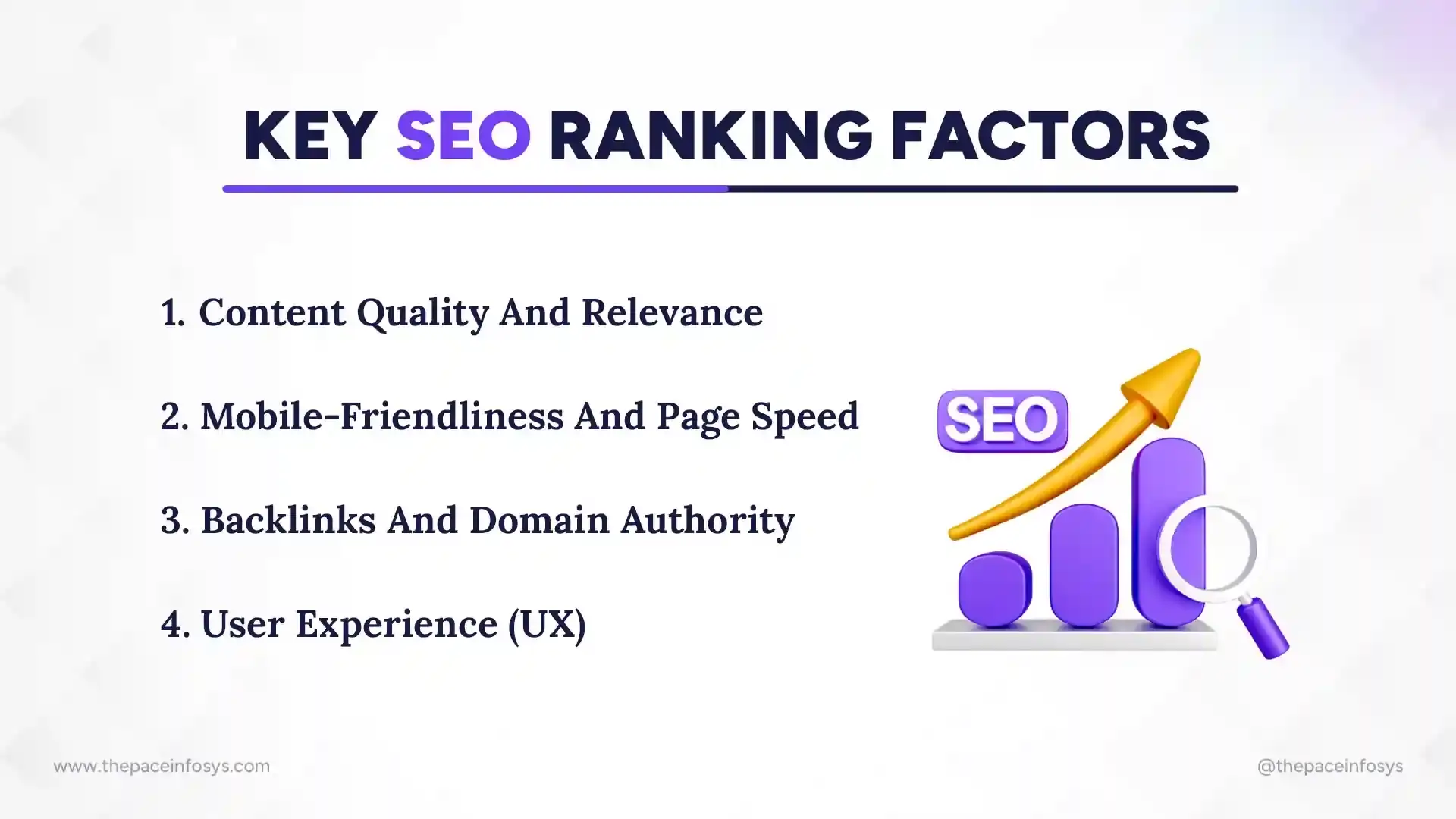
Key SEO Ranking Factors
SEO ranking depends on several important factors. Search engines look at these factors to decide which websites to show first. By focusing on the right areas, your website can rank higher and attract more visitors. Let’s look at the main factors in simple terms:
1. Content Quality and Relevance
The content on your website must be clear, helpful, and answer what people are searching for. It should include the right keywords naturally, so search engines understand what your page is about. High-quality content keeps visitors engaged and encourages them to explore more pages. Writing content that solves real problems builds trust with your audience. Regularly updating your content shows that your website is active. Search engines reward content that is informative and relevant. Poor or copied content can hurt your rankings.
2. Mobile-Friendliness and Page Speed
Most people use phones to search online, so your website must work well on mobile devices. If pages take too long to load, visitors leave quickly, which can lower your ranking. A fast-loading site improves both user experience and search engine performance. Mobile-friendly design ensures text, images, and buttons are easy to use. Search engines prefer sites that work smoothly on all devices. Optimizing images and code can help pages load faster. A slow or clunky website will lose visitors and rank lower.
3. Backlinks and Domain Authority
Backlinks are links from other websites to yours. When trusted websites link to your content, search engines see your site as reliable. The more quality backlinks you have, the higher your site can rank. Domain authority is a measure of your website’s overall trustworthiness. Building links from relevant, high-quality sites improves your authority. Avoid low-quality links, as they can hurt your rankings. Strong backlinks make it easier for search engines to trust your site.
4. User Experience (UX)
A website that is easy to use keeps visitors longer and encourages them to explore. Clear menus, readable text, and simple layouts improve navigation. Good UX reduces bounce rates, which is noticed by search engines. Visitors should be able to find what they need quickly. Fast-loading pages and mobile-friendly design are part of UX. A positive user experience makes people return to your site. Websites that are confusing or cluttered rank lower in search results.
5. Secure and Accessible Website
A secure website with HTTPS protects visitors’ data and builds trust. Search engines prefer secure sites and may rank them higher. Your site must also be easy for search engines to crawl and index. Poor site structure or broken links make it hard for search engines to understand your content. Simple URLs, XML sitemaps, and proper navigation improve accessibility. Secure and accessible websites attract more visitors and rank better. Neglecting security or structure can hurt SEO performance.
6. Freshness of Content
Search engines favor websites that update content regularly. Adding new articles, updating old pages, or improving content keeps your site relevant. Fresh content attracts more visitors and can improve rankings. It shows search engines that your business is active. Updating content also gives visitors more value and builds trust. Stale or outdated content can lower your visibility. Keeping content current is an easy way to maintain long-term SEO success.
How Long Does SEO Take?
SEO usually takes 3 to 6 months to start showing noticeable results, but the exact time depends on your website, industry, and efforts. SEO is not instant. Unlike paid ads, which can bring traffic immediately, SEO works gradually to improve your website’s visibility in search results. For most new websites or small businesses, you can expect to see some improvements in 3 to 6 months. Bigger or more competitive industries may take longer.
Consistency is key. Updating your website regularly with fresh, helpful content signals to search engines that your site is active. Posting blogs, adding new pages, or refreshing old content all contribute to faster results. Backlinks also help speed things up. When other trustworthy websites link to yours, search engines see your site as credible. Earning quality backlinks alongside consistent content updates can improve rankings faster.
It’s important to remember that SEO is a long-term investment. Once your site starts ranking higher, it can maintain traffic for months or even years if you keep it updated. Skipping updates or ignoring SEO best practices can slow progress or cause rankings to drop.
In short, while some minor improvements may appear in a few weeks, most businesses see real, measurable results in 3–6 months. With consistent updates, quality content, and backlinks, SEO can become a steady, long-lasting source of traffic and leads for your business.
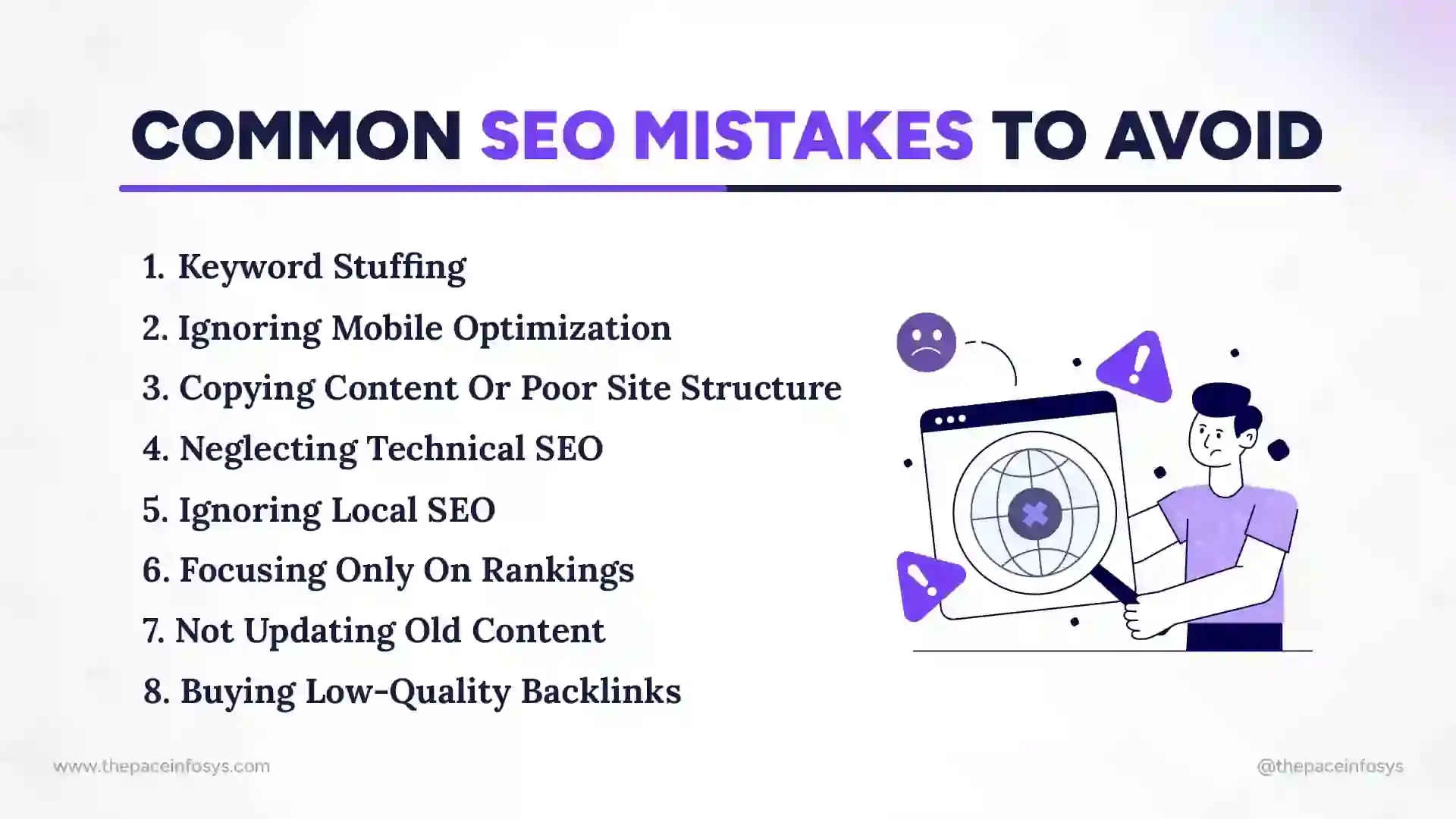
Common SEO Mistakes to Avoid
SEO can be tricky, especially if you are new to it. Even small mistakes can prevent your website from ranking well or reaching the right audience. Many business owners unknowingly make errors that slow down their growth online. By knowing these common mistakes, you can save time, money, and effort while improving your website’s performance.
1. Keyword Stuffing
Keyword stuffing is when you use the same keywords too many times in your content. Search engines see this as unnatural and may lower your rankings. Instead, use keywords naturally and focus on creating helpful content. Include variations and related terms instead of repeating one word constantly. Overusing keywords can also make your content hard to read. Good SEO balances keywords with quality writing. Always think about what your audience wants to read, not just what search engines want.
2. Ignoring Mobile Optimization
Most people search on their phones today. If your website isn’t mobile-friendly, visitors may leave immediately. Slow-loading pages, unreadable text, or buttons that are hard to click can frustrate users. Search engines also prioritize mobile-friendly websites for rankings. Ensuring your site works on all devices improves user experience and boosts your SEO. Mobile optimization is not optional; it’s essential.
3. Copying Content or Poor Site Structure
Copying content from other websites can harm your rankings because search engines prefer original material. Poor site structure, like confusing menus or broken links, makes it hard for visitors and search engines to navigate your site. Organize your pages clearly and create unique, helpful content. A well-structured site improves SEO and keeps users engaged.
4. Neglecting Technical SEO
Technical SEO includes things like site speed, secure connections (HTTPS), and proper indexing. Ignoring these basics can prevent search engines from reading your website correctly. Broken links, missing sitemaps, or slow pages hurt both ranking and user experience. Regularly check technical aspects to keep your site running smoothly.
5. Ignoring Local SEO
If your business serves a local area, ignoring local SEO is a big mistake. Without it, local customers may not find you. Optimize your Google Business Profile, collect reviews, and use location keywords. Local SEO helps attract nearby customers and grow your business.
6. Focusing Only On Rankings
Ranking higher is important, but it’s not the only goal. You also want traffic, leads, and sales. A site that ranks high but doesn’t convert visitors is not effective. Focus on creating content that helps and engages users, not just search engines.
7. Not Updating Old Content
Old content can become outdated, irrelevant, or inaccurate. Search engines favor fresh, updated material. Regularly refresh old pages with new information, links, or images. This keeps your site relevant and maintains rankings.
8. Buying Low-Quality Backlinks
Buying cheap links may seem like a shortcut, but it can hurt your website. Low-quality backlinks can trigger penalties from search engines. Focus on earning natural links from trustworthy websites instead. Quality backlinks improve credibility and rankings over time.
The Future of SEO
SEO is always changing, and the way search engines work is evolving fast. New technologies like AI and voice search are changing how people find information online. Businesses that adapt to these changes early will have a big advantage. The future of SEO focuses on understanding people, not just keywords.
Key Trends Shaping SEO:
AI and Voice Search: People are increasingly using voice assistants like Siri, Alexa, or Google Assistant to search. This means search queries are more conversational, and websites need to answer questions clearly. AI also helps search engines understand content better, making relevance more important than ever.
Human-First, Intent-Based Content: Search engines now prioritize content that solves real problems for users. Instead of stuffing keywords, you should focus on what your audience wants to know. Writing helpful, clear, and easy-to-understand content will become more important than ever.
Content Clustering and Entity-Based SEO: Organizing content around topics rather than individual keywords is growing in importance. Content clusters connect related pages, making it easier for search engines to understand your website. Entity-based optimization focuses on the meaning behind words and relationships between topics, not just phrases.
In short, the future of SEO is about helping users first. Websites that provide clear answers, solve problems, and organize content logically will rank higher. Businesses that follow these trends today will be ready for tomorrow’s search engines and stay ahead of the competition.
Conclusion
SEO is not just a marketing tool. It’s a way to make your business visible to the people who need it most. When done right, it connects your website with customers actively searching for your products or services. It builds trust, brings long-term traffic, and helps your business grow steadily without relying on ads every day.
The future of SEO shows that understanding your audience, creating helpful content, and organizing your site clearly will always matter more than tricks or shortcuts. Investing in SEO is investing in your business’s ability to be found, trusted, and chosen by the right people, now and in the years to come.
Wondering how SEO works in real world? Explore our case study of Kumari Job's organic SEO growth. This is the story drawing our entire journey of partnering with Kumari Job, decoding their core requirements, engineering their growth, and positioning them as one of the leading job portals, recruitment service, and training providers in Nepal.
FAQs
What does SEO mean?
+
SEO stands for Search Engine Optimization. It is the process of making your website easier to find and rank higher on search engines like Google. The goal is to get more visitors without paying for ads.
Why is SEO important for businesses?
+
SEO helps your business get noticed by people who are already searching for your products or services. It builds trust, increases website traffic, and brings long-term growth without constant ad spending.
How does SEO work?
+
SEO works by helping search engines understand your website. It uses strategies like good content, keywords, site speed, mobile-friendliness, and backlinks to improve rankings. Higher rankings mean more visitors.
What are the main types of SEO?
+
The main types are On-Page SEO (content and keywords), Off-Page SEO (links and brand mentions), Technical SEO (site speed, mobile, indexing), and Local SEO (visibility in local searches). Each type improves your website in different ways.
What is the difference between SEO and SEM?
+
SEO focuses on organic search results without paying, while SEM includes paid ads on search engines. SEO brings long-term traffic, whereas SEM can bring fast results but requires ongoing payment.
How long does SEO take to show results?
+
Most websites see noticeable results in 3 to 6 months. Consistently updating content and earning quality backlinks can speed up progress.
What are common SEO mistakes to avoid?
+
Common mistakes include keyword stuffing, ignoring mobile optimization, copying content, poor site structure, neglecting technical SEO, not updating content, and buying low-quality backlinks.
How can I improve my SEO ranking?
+
Focus on creating helpful content, using the right keywords, improving site speed and mobile-friendliness, earning quality backlinks, and updating your website regularly.
What tools are used for SEO analysis?
+
Popular tools include Google Analytics, Google Search Console, Ahrefs, SEMRush, and Moz. They help track rankings, traffic, and site performance.
What is the future of SEO in 2025 and beyond?
+
SEO will focus more on user intent, AI, voice search, and topic-based content. Websites that provide clear, helpful information and organize content logically will rank higher in the future.
Ready to get started?
Book a 30-minute consultation call, and let's talk about your goals.