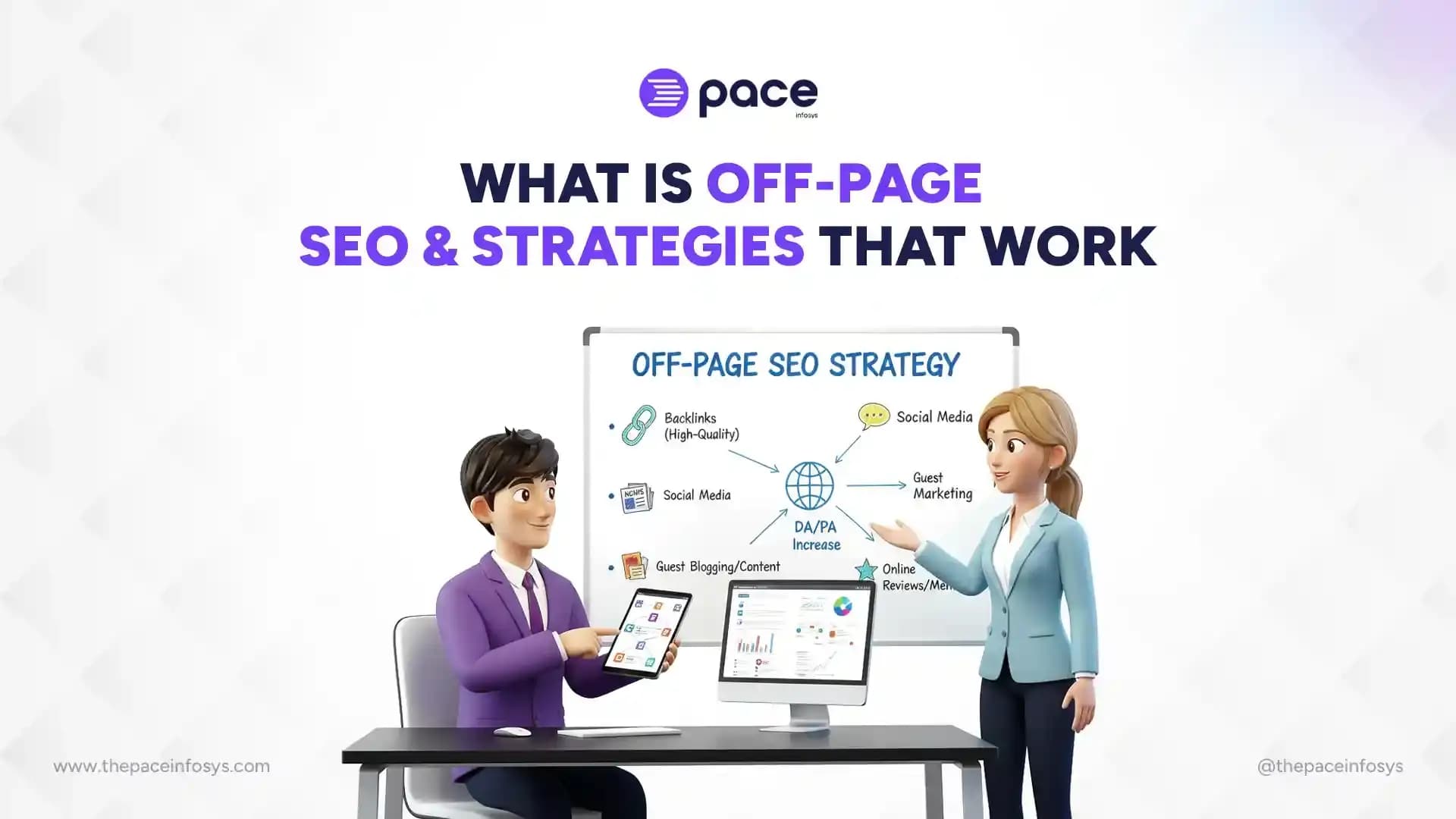
Search rankings don’t improve by great content alone; what happens outside your website can matter just as much. Off-page SEO is all about building authority, trust, and visibility through external signals like backlinks, mentions, and online reputation. These factors tell search engines how credible your website is in the wider digital space.
In this blog What is Off-Page SEO & Strategies that Work, we will explore what off-page SEO means and why it is essential for better search rankings. You will also learn the most effective strategies, such as link building, social signals, and brand mentions, that can help improve your website's authority and long-term SEO performance.
What is Off-Page SEO?
Off-page SEO refers to all the activities done outside your website to improve its search engine rankings and is closely related to what is seo and how it works. It mainly focuses on building your website’s authority and trust through backlinks, social media signals, and online mentions. These external factors help search engines understand how popular and reliable your site is. The stronger your off-page SEO, the higher your chances of ranking well in search results.
Importance of Off-Page SEO
Off-page SEO plays a key role in determining how search engines perceive the authority and trustworthiness of your website. It helps build a strong online reputation through external signals like backlinks, mentions, and engagement across different platforms. These factors work together to improve rankings and visibility in search results. Without strong off-page SEO, even high-quality content supported by effective on-page SEO may struggle to perform well. It also helps your website gain long-term stability in search rankings.
1. Builds Domain Authority And Website Credibility
Building domain authority is one of the main benefits of off-page SEO, as it reflects how trustworthy your website is in the eyes of search engines. High-quality backlinks from reputable sites signal that your content is valuable and reliable. Over time, this improves your website’s credibility and helps it gain a stronger position in search rankings. It also increases user trust when they discover your brand online. Strong authority also supports long-term SEO growth.
2. Improves Search Engine Trust Signals
Search engines use off-page signals to determine whether a website is trustworthy and relevant. When your site is mentioned or linked by authoritative sources, it sends strong trust signals to search engines. These signals help improve your chances of ranking higher in search results. Consistent external validation builds long-term SEO strength. It also helps search engines index your content more confidently.
3. Helps Websites Rank Higher In Competitive Niches
In highly competitive industries, off-page SEO becomes essential for standing out. Quality backlinks and strong external engagement can give your website the edge over competitors. It helps search engines prioritize your content over others targeting the same keywords. This leads to better rankings and increased online visibility. It also improves your chances of ranking for high-value keywords.
4. Increases Organic Visibility Across Search Engines
Off-page SEO expands your reach beyond your website by promoting content across different platforms. When your site is shared, linked, or mentioned, it becomes more visible to a wider audience. This increased exposure helps attract more organic traffic from search engines. It also strengthens your overall online presence. Better visibility leads to higher brand awareness.
5. Drives Referral Traffic From External Websites
Backlinks from other websites not only improve SEO but also bring direct referral traffic. Users who click on these links are already interested in your content or services. This results in higher engagement and better conversion opportunities. Quality referral traffic can significantly support business growth. It also helps diversify your traffic sources beyond search engines.
6. Strengthens Brand Reputation Online
Strong off-page SEO strategy helps build a positive brand image across the internet. Mentions on trusted websites and social platforms improve how users perceive your brand. This enhances credibility and encourages more people to trust your services. Over time, it establishes your brand as an authority in your industry. It also increases customer loyalty and recognition.
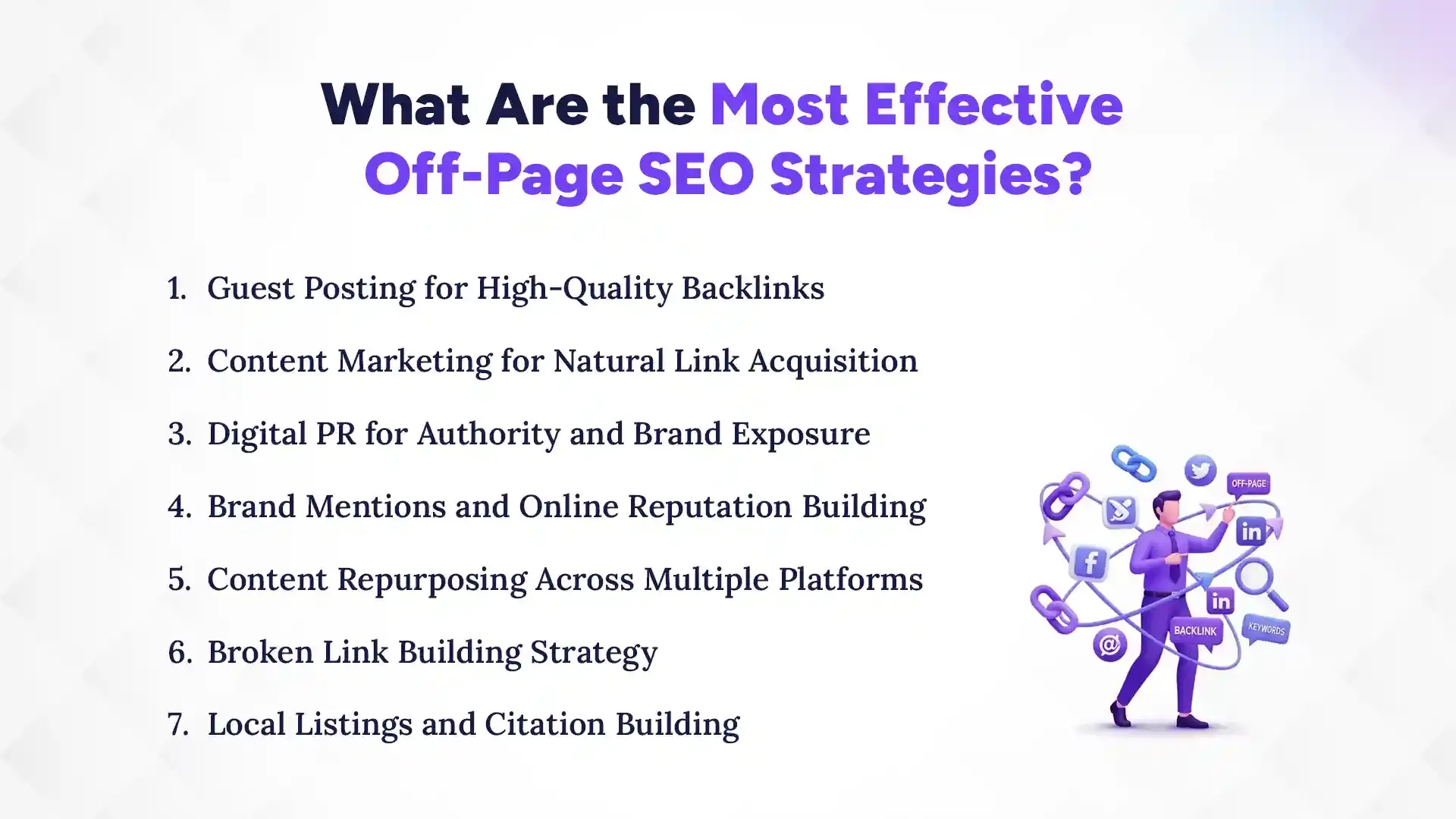
What Are the Most Effective Off-Page SEO Strategies?
Most effective off-page SEO strategies are guest posting, brand mentions, content marketing, digital PR, and broken link building. These methods help improve your website authority by building trust signals from other websites. They also increase your brand visibility across the internet and help you earn high-quality backlinks. When combined properly, they significantly boost search rankings and organic traffic.
1. Guest Posting for High-Quality Backlinks
Guest posting is the process of publishing articles on other relevant websites in your niche. It helps you earn high-quality backlinks that improve your domain authority and rankings. It also allows you to reach a new audience and build credibility in your industry. Over time, consistent guest posting strengthens your overall SEO presence.
Write for relevant and authoritative websites
Include natural backlinks within content
Focus on value-driven and helpful articles
Avoid spammy or low-quality websites
2. Content Marketing for Natural Link Acquisition
Content marketing focuses on creating valuable content that naturally attracts backlinks without direct outreach. When your content is useful, informative, and engaging, other websites naturally link to it. This builds organic authority and improves long-term SEO performance. It is one of the most sustainable off-page SEO strategies.
Create high-quality blogs and guides
Focus on solving user problems
Share content across platforms
Earn backlinks naturally over time
3. Digital PR for Authority and Brand Exposure
Digital PR is about promoting your brand on news websites, online publications, and high-authority platforms. It helps you gain visibility and trust from both users and search engines. Being featured on reputable sources significantly boosts your brand reputation. It also improves your chances of earning strong backlinks.
Get featured on news and media sites
Publish press releases and stories
Build relationships with journalists
Increase brand authority and exposure
4. Brand Mentions and Online Reputation Building
Brand mentions occur when your brand name is mentioned online, even without a direct link. These mentions still act as trust signals for search engines. Managing your online reputation is important because it influences how users perceive your business. Positive mentions help build long-term authority.
Track brand mentions across the web
Encourage reviews and user feedback
Respond to comments and discussions
Build a strong online reputation
5. Content Repurposing Across Multiple Platforms
Content repurposing means converting one piece of content into multiple formats for different platforms. This helps you reach a wider audience and increases chances of backlinks and engagement. It also maximizes the value of your existing content. This strategy improves visibility across multiple channels.
Turn blogs into videos or infographics
Share content on social media platforms
Post summaries on forums and communities
Expand reach across multiple channels
6. Broken Link Building Strategy
Broken link building involves finding broken links on other websites and offering your content as a replacement. This helps website owners fix errors while you gain a backlink. It is a smart and ethical SEO strategy that benefits both sides. It also helps you earn high-quality links from relevant sites.
Find broken links on relevant websites
Suggest your content as replacement
Reach out politely to site owners
Build authoritative backlinks
7. Local Listings and Citation Building
Local listings and citations involve adding your business information to online directories and platforms. This improves your visibility in local search results and builds trust with search engines. Consistent business details across platforms are very important for local SEO. It also helps customers easily find your business online.
List business on Google Business Profile and directories
Maintain consistent NAP details (Name, Address, Phone)
Improve local search visibility
Build trust and credibility online
Common Mistakes to Avoid in Off-Page SEO
Common mistakes to avoid in off-page SEO are errors that can harm your website’s authority instead of improving it. Many people focus only on getting backlinks without checking their quality, relevance, or long-term impact. These mistakes often lead to unnatural link profiles and weak SEO performance. Avoiding them helps you build a safer, more effective, and sustainable off-page SEO strategy.
1. Building Low-Quality Or Spammy Backlinks
Building low-quality or spammy backlinks is one of the most harmful mistakes in off-page SEO. These links usually come from irrelevant, low-authority, or automated websites that provide no real value. Instead of improving rankings, they can reduce your site’s trust and credibility. Search engines may even penalize websites that rely heavily on such links. A strong SEO strategy always focuses on quality backlinks from trusted sources.
2. Ignoring Relevance Of Linking Websites
Ignoring the relevance of linking websites weakens the impact of your backlink profile. Links from unrelated websites do not carry strong SEO value and may appear unnatural to search engines. Relevant backlinks from your niche help build authority and trust more effectively. They also improve the context of your content and make your SEO strategy more powerful. Relevance is always more important than just getting any link.
3. Over-Optimizing Anchor Text
Over-optimizing anchor text happens when you repeatedly use exact match keywords in backlinks. This creates an unnatural link pattern that search engines can easily detect. A natural backlink profile should include a mix of branded, generic, and keyword-based anchors. When anchor text looks forced, it can negatively affect rankings instead of improving them. Balanced and natural usage is always safer and more effective.
4. Relying Only On One Type Of Link Building Strategy
Relying on only one type of link building strategy limits your SEO growth and makes your backlink profile look unnatural. For example, depending only on guest posts or directories can create imbalance. Search engines prefer websites that earn links from different sources and methods. A diverse strategy improves credibility and strengthens overall authority. Variety in link building leads to more stable and long-term SEO results.
5. Not Tracking Backlink Quality And Performance
Not tracking backlink quality and performance is a mistake that can silently damage your SEO efforts. Without monitoring, you may not know which links are helping or harming your website. Some low-quality backlinks can negatively impact rankings over time. Regular analysis helps you maintain a clean and strong backlink profile. Tracking performance ensures your off-page SEO strategy stays effective and updated.
How Does Off-Page SEO Improve Website Performance?
Off-page SEO improves website performance by building authority, increasing visibility, and strengthening trust signals from other websites. It helps search engines see your site as more credible and valuable compared to competitors. Over time, these external signals improve your rankings and bring more consistent organic traffic. It also supports long-term growth by making your website stronger in competitive search results.
1. Strengthens Domain Authority Over Time
Strengthening domain authority is one of the biggest benefits of off-page SEO. When your website earns high-quality backlinks from trusted sources, search engines consider your site more authoritative. This authority builds gradually over time with consistent SEO efforts. A stronger domain authority helps all your pages rank better, not just a single page. It also improves your overall credibility in search results.
2. Improves Keyword Rankings In Search Results
Off-page SEO plays a key role in improving keyword rankings by sending trust signals to search engines. When reputable websites link to your content, it increases your chances of ranking higher for targeted keywords. These external signals show that your content is valuable and worth ranking. Over time, this leads to better visibility in search results. It also helps you compete with stronger websites in your niche.
3. Enhances Trust And Credibility Signals
Search engines prioritize websites that appear trustworthy and reliable. Off-page SEO helps build this trust through backlinks, brand mentions, and online reputation signals. When other websites reference your content, it acts as a vote of confidence. This improves how both users and search engines perceive your brand. Strong trust signals lead to better rankings and higher engagement.
4. Increases Organic And Referral Traffic
Off-page SEO not only improves rankings but also brings direct traffic from other websites. When users click on backlinks from blogs, articles, or directories, they land on your website. This is called referral traffic, and it adds to your organic growth. Over time, this creates a steady flow of visitors from multiple sources. It also helps you reach new audiences beyond search engines.
5. Supports Long-Term SEO Growth
Off-page SEO is not a short-term strategy but a long-term investment in your website’s success. As you build more quality backlinks and authority signals, your rankings become more stable. This reduces dependency on paid ads and short-term marketing efforts. A strong off-page SEO foundation keeps your website competitive for years. It ensures continuous visibility, traffic, and brand growth over time.
Difference Between Off-Page SEO and On-Page SEO
On-page SEO focuses on optimizing everything within your website, like content, structure, and HTML elements. Off-page SEO focuses on activities outside your website, such as backlinks, brand mentions, and authority building. Both are essential because on-page SEO builds a strong foundation, while off-page SEO improves trust and credibility. Together, they help improve rankings and overall search performance.
Factor
On-Page SEO
Off-Page SEO
Focus Area
Website content and internal structure
External signals and website authority
Control
Fully under your control
Partially or not fully under your control
Main Purpose
Improve relevance and user experience
Build trust, authority, and popularity
Key Elements
Content, keywords, meta tags, URLs, internal links
Backlinks, brand mentions, PR, social signals
Role of Backlinks
Not the main focus, but internal linking matters
Core ranking factor and authority builder
Optimization Type
On-site improvements and technical SEO
Off-site promotion and reputation building
Speed of Impact
Faster improvements when optimized well
Takes time but builds long-term authority
Example
Optimized blog with proper headings and keywords
Backlinks from high-authority websites
Conclusion
Off-page SEO is a powerful part of any SEO strategy because it builds your website’s authority, trust, and visibility beyond your own pages. It works by earning signals from other websites like backlinks, brand mentions, and online reputation, as seen in practices used by The Pace Infosys. When done correctly, it helps improve rankings, drives more organic traffic, and strengthens your overall digital presence. It is not something that gives instant results, but it creates long-term value for your website.
At the same time, off-page SEO works best when combined with strong on-page SEO. Both together create a complete SEO system that supports better rankings and sustainable growth. If you consistently focus on quality strategies like guest posting, content marketing, and professional SEO services, your website will grow steadily in search results and build strong authority over time.
FAQs
What is off-page SEO in simple words?
+
Off-page SEO improves website rankings through external signals like backlinks. It builds authority, trust, and credibility outside your website.
Why is off-page SEO important?
+
It helps increase website authority and improves search engine rankings. It also boosts organic traffic and brand visibility.
What are examples of off-page SEO?
+
Backlinks, guest posting, brand mentions, and digital PR are examples. Social media marketing also supports off-page SEO.
How do backlinks help SEO?
+
Backlinks act as votes of trust from other websites. They improve authority and help rankings increase faster.
Is off-page SEO better than on-page SEO?
+
Neither is better alone; both are equally important for SEO success. They work together for strong ranking results.
How long does off-page SEO take to show results?
+
It usually takes weeks or months depending on strategy quality. Consistent efforts deliver stronger long-term results.
Can I do off-page SEO without backlinks?
+
Yes, but backlinks are still the most powerful ranking factor. Other signals like brand mentions also help.
What is the most effective off-page SEO strategy?
+
High-quality backlinks from relevant and authoritative websites work best. Guest posting and digital PR are highly effective.
Ready to get started?
Book a 30-minute consultation call, and let's talk about your goals.