A business cannot run smoothly when employees are unsure about when to start work, who should cover the next shift, or how their working hours are tracked. This can quickly become a challenge for Nepalese businesses that operate beyond regular office hours, especially hospitals, hotels, manufacturing companies, and customer support teams.
Without a clear schedule, HR teams often spend more time fixing shift conflicts than managing people. That is where shift management comes in. It helps businesses organize employee working hours, assign shifts fairly, and keep daily operations on track.
Whether you manage a small team or multiple branches, understanding shift management can make workforce planning much easier. In this guide, we will explore how it works and how to manage employee shifts effectively in Nepal.
What Is Shift Management?
Shift management is the process of planning, assigning, and monitoring employee working hours to ensure a business has the right people available at the right time. It helps HR teams organize work schedules, manage shift changes, and track employee attendance. To understand how it works in practice, let's first look at the different types of work shifts businesses use.
What Are the Different Types of Work Shifts in Nepal?
Businesses in Nepal use different work shifts depending on their operating hours, industry, and staffing needs. For example, a hospital may need staff throughout the day and night, while a regular office may only need one fixed shift. Here are five common types of work shifts and how businesses use them.
1. Fixed Shifts
In a fixed shift, employees follow the same working hours every working day. For example, an employee at a Kathmandu-based office may work from 10 AM to 6 PM throughout the week. This arrangement makes it easier for employees to plan their daily routines and for HR teams to manage attendance.
2. Rotating Shifts
Rotating shifts require employees to move between different working schedules over a set period. For example, manufacturing employees may rotate between morning, evening, and night shifts based on production needs. This helps businesses distribute shift duties among employees instead of assigning the same shift to everyone.
3. Split Shifts
A split shift divides an employee's working hours into two separate periods with a longer break in between. For instance, hotel or restaurant employees may work during busy breakfast hours, take a break, and return for the evening rush. This arrangement helps businesses match staff availability with changing customer demand.
4. Flexible Shifts
Flexible shifts allow employees to start and finish work at different times within agreed limits. For example, an IT company in Nepal may allow employees to begin their workday between 8 AM and 10 AM, depending on team requirements. This gives employees more control over their schedules while ensuring work gets done.
5. Night Shifts
Night shifts involve employees working during nighttime hours, usually to support businesses that operate around the clock. Hospitals, security companies, BPOs, and customer support centers in Nepal often need employees during these hours. Since night work can affect employee health and rest, businesses should plan these shifts carefully.
Why Is Shift Management Important for Businesses in Nepal?
Shift management helps Nepalese businesses maintain proper staff coverage, organize working hours, and keep daily operations running smoothly. With the right system, HR teams can reduce scheduling conflicts, track attendance, and manage staffing more efficiently. Here are its key benefits.
1. Ensures Proper Staff Coverage
A well-planned shift schedule ensures enough employees are available during business hours. For example, a hotel in Pokhara may need more staff during the tourist season, while a manufacturing company may require different teams for each production shift.
2. Improves Productivity and Reduces Scheduling Conflicts
Clear work schedules help employees understand their responsibilities and avoid confusion about shift timings. They also make it easier for managers to handle shift changes, replacements, and employee availability without disrupting daily operations.
Businesses with multiple locations can manage employee schedules and attendance from one central system. This makes it easier to coordinate teams across branches and maintain consistent staffing.
5. Supports Employee Well-Being and Controls Labor Costs
Fair shift allocation and advance scheduling help employees balance work with personal commitments. At the same time, monitoring working hours helps businesses avoid unnecessary overtime, overstaffing, and staffing shortages.
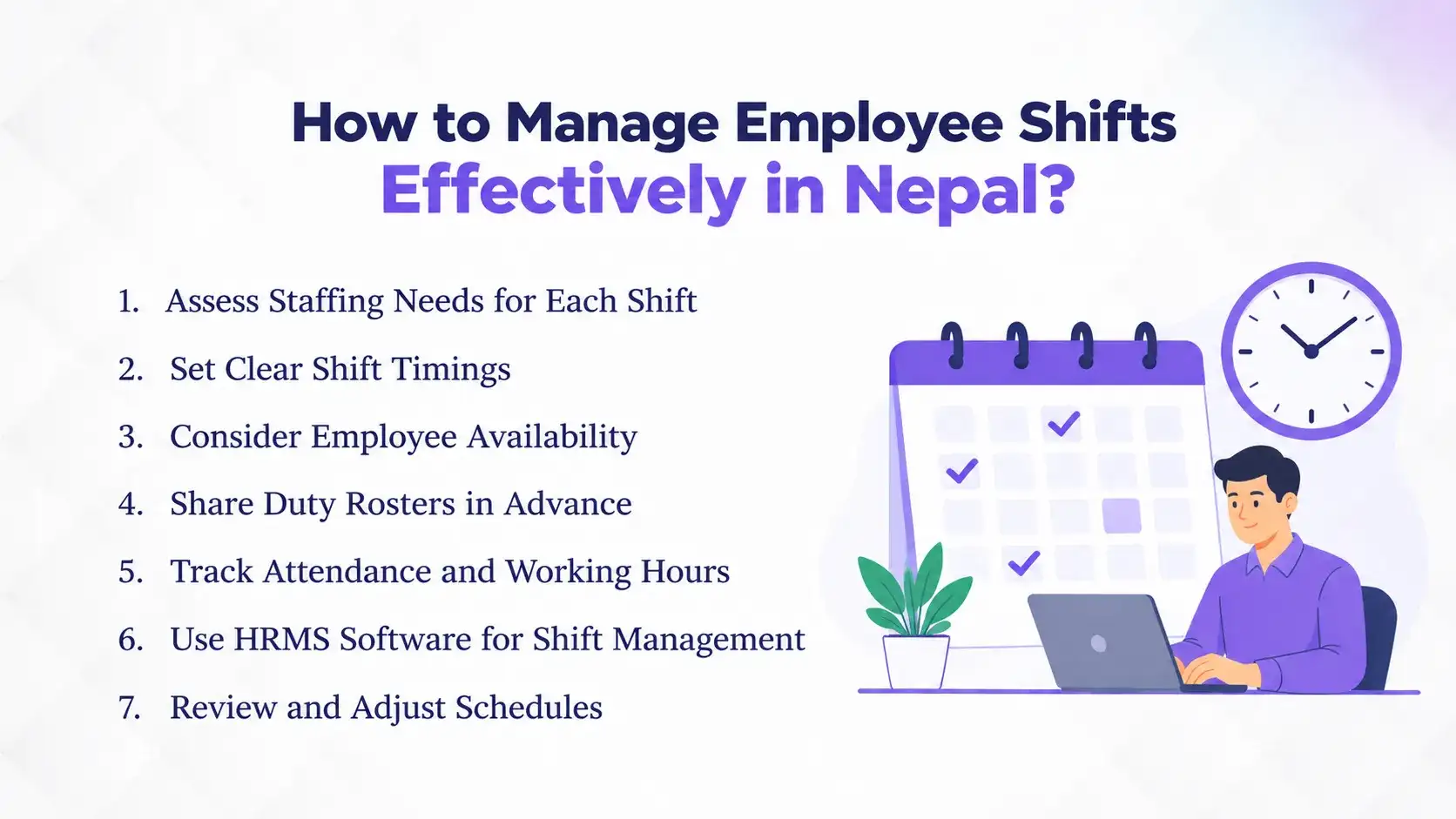
How to Manage Employee Shifts Effectively in Nepal?
Managing employee shifts effectively requires clear schedules, fair shift allocation, and regular attendance checks. HR teams need to plan staffing levels, set clear working hours, account for employee availability, and monitor attendance. Follow these six practical steps to organize shifts and avoid common scheduling problems.
1. Calculate Staffing Requirements for Each Shift
First, identify how many employees you need for each shift and role. Review your business hours, daily workload, customer demand, and peak operating periods.
For example, a hotel in Pokhara may need additional housekeeping and front-desk staff during the tourist season. A manufacturing company may need separate teams to maintain production across morning, evening, and night shifts. Use these requirements to decide how many employees to assign to each shift.
2. Set Clear Shift Timings and Working Hours
Define the start and end times for every shift, including break periods, weekly rest days, and handover time between teams. Check that your schedules comply with applicable working-hour, rest, and overtime provisions under Nepal's Labour Act, 2074.
Document these timings in your company's shift policy and communicate them to employees. This gives everyone a clear reference and reduces confusion about expected working hours.
3. Collect Employee Availability Before Assigning Shifts
Ask employees about their availability, approved leave, and scheduling constraints before preparing the duty roster. Consider these details alongside business requirements when assigning shifts.
For rotating schedules, create a fair rotation plan for evening, night, and weekend duties. Avoid repeatedly assigning less preferred shifts to the same employees unless the role specifically requires it.
4. Prepare and Share Duty Rosters in Advance
Create weekly or monthly schedules that show each employee's shift, working hours, break periods, and weekly day off. Share the roster early so employees can plan their personal commitments.
Also, establish a clear procedure for shift swaps and replacements. Require employees to get approval before exchanging shifts, and update the roster whenever a change is confirmed.
5. Compare Scheduled Hours with Actual Attendance
Track employee check-in and check-out times against their assigned shifts. Review records for late arrivals, early departures, absences, missed punches, and overtime.
For businesses with multiple branches or rotating shifts, check these records regularly instead of waiting until payroll processing. This helps HR teams identify attendance issues and maintain accurate working-hour records.
HR Software for Multi-location Management
6. Use HRMS Software to Manage Shifts and Attendance
Managing schedules through spreadsheets becomes difficult as your workforce grows or employees move between different shifts and locations. Consider using an HRMS that combines shift scheduling, attendance tracking, and working-hour records in one system.
For example, Pace HRMS helps Nepalese businesses manage employee shifts alongside attendance and other HR activities. Its attendance capabilities support different tracking methods, including biometric devices, mobile, web, and GPS-based attendance. A system designed around Nepalese business requirements can also make it easier to manage local HR policies, employee records, and payroll-related information without relying on disconnected tools.
7. Review Shift Performance and Update Schedules
At the end of each week or month, review staffing levels, attendance patterns, overtime records, and employee feedback. Identify shifts that regularly have too few or too many employees, and adjust future rosters accordingly.
For example, if evening shifts consistently require overtime, consider redistributing employees or changing the schedule. Regular reviews help keep staffing practical and prevent the same scheduling problems from recurring.
Which HRMS Is Best for Shift Management in Nepal?
For Nepalese businesses looking to manage employee shifts, attendance, and working hours together, Pace HRMS offers an integrated solution. Its Time & Attendance module helps HR teams create multiple shifts, assign employee rosters, manage rotating schedules, and monitor attendance from one platform.
Why Choose Pace HRMS for Employee Shift Management?
Pace HRMS brings shift scheduling, attendance tracking, and payroll integration together, making workforce management easier for Nepalese businesses. Key capabilities include:
Multiple Shift Scheduling: Create and assign fixed, rotating, morning, evening, and night shifts based on business requirements.
Flexible Attendance Tracking: Record attendance through biometric devices, mobile apps, web check-ins, and GPS-enabled attendance.
Multi-Branch Management: Monitor employee attendance and working schedules across different departments and business locations.
Attendance and Payroll Integration: Use attendance records for working-hour reviews, overtime management, and monthly payroll processing.
Nepal-Specific HR Management: Manage local payroll requirements, including SSF, PF, CIT, and TDS, alongside BS calendar integration.
Flexible Deployment: Choose cloud-based or on-premise software depending on your organization's requirements.
Whether you manage a hospital, hotel, manufacturing company, or a multi-location business, Pace HRMS helps organize employee shifts and attendance without relying on disconnected spreadsheets and manual records.
What Are the Common Shift Management Challenges in Nepal?
Nepalese HR teams often face shift management challenges due to manual scheduling, changing employee availability, and limited attendance records. These issues become harder to manage when businesses have multiple departments, branches, or round-the-clock operations. Here are some common problems and why they matter.
Last-minute employee absences: When an employee cannot report for duty, HR teams must quickly find someone to cover the shift without disrupting operations.
Unequal shift distribution: Assigning night or weekend shifts to the same employees can lead to dissatisfaction and scheduling conflicts.
Attendance tracking difficulties: Manual records make it harder to compare actual working hours with assigned shifts, especially in large teams.
Overtime management: HR teams may struggle to identify extra working hours and maintain accurate records for payroll.
Poor shift handovers: When employees do not share important updates before leaving, the next team may miss information needed to continue the work.
Multi-branch coordination: Businesses with offices in Kathmandu, Pokhara, Biratnagar, and other locations may find it difficult to maintain consistent shift schedules across branches.
Most of these problems come down to one thing: a lack of clear scheduling and proper records. A structured shift management process, supported by the right tools, can help address them.
How to Choose the Right Shift Management System in Nepal?
The right shift management system should fit your business size, employee requirements, and daily operations. It should also make scheduling and attendance tracking easier without adding more work for your HR team. Before choosing a solution, consider these factors.
Flexible Shift Scheduling: Choose a system that supports fixed, rotating, night, and other shift arrangements.
Attendance Integration: Check whether it connects employee attendance records with assigned shift timings.
Overtime Tracking: Look for features that help monitor additional working hours.
Multi-Branch Support: If your business operates in multiple locations, choose a system that manages schedules across branches.
Employee Accessibility: Employees should be able to check their assigned shifts and relevant schedule updates easily.
Reporting Capabilities: Make sure the system provides useful attendance and working-hour reports.
Local HR Requirements: Consider whether the software can accommodate Nepalese working practices and your organization's HR policies.
Customization and Support: Choose a provider that offers suitable customization, reliable implementation, and accessible support in Nepal.
Conclusion
Effective shift management helps Nepalese businesses organize their workforce, maintain proper attendance records, and keep daily operations running smoothly. While manual duty rosters may work for small teams, growing businesses often need a more organized way to manage employee schedules.
This is where an HRMS in Nepal can help. With Pace HRMS, businesses can manage employee shifts and attendance alongside other HR activities from one platform. It also supports businesses with multiple branches and different workforce requirements.
Shift management in HR is the process of planning and managing employee working hours. It includes assigning shifts, tracking attendance, handling schedule changes, and monitoring overtime.
What Are the 5 Types of Work Shifts?
+
The five common types of work shifts are fixed, rotating, split, flexible, and night shifts. Businesses choose between them based on operating hours and staffing requirements.
What Is the Difference Between Shift Management and Shift Scheduling?
+
Shift scheduling involves creating and assigning employee work schedules. Shift management covers the entire process, including scheduling, attendance monitoring, shift changes, and working-hour management.
How Do HR Managers Create Employee Shift Schedules?
+
HR managers create shift schedules by reviewing staffing needs, employee availability, working hours, and business operating times. They then assign shifts and share the duty roster with employees.
How Does Shift Management Software Work?
+
Shift management software allows HR teams to create employee schedules, assign shifts, and monitor working hours digitally. Depending on its features, it can also connect shift records with attendance and payroll management.
Which Industries in Nepal Need Shift Management?
+
Hospitals, hotels, restaurants, manufacturing companies, retail stores, security services, and BPOs commonly need shift management. Any business that operates with different employee schedules can benefit from it.
Can HRMS Software Manage Employee Shifts and Attendance Together?
+
Yes, many HRMS solutions combine employee shift scheduling with attendance management. This allows HR teams to compare assigned shifts with actual working hours from one platform.
Ready to get started?
Book a 30-minute consultation call, and let's talk about your goals.