Launching a mobile app should help your business grow, not turn into a costly, time-consuming struggle. Yet many businesses face budget overruns, delayed releases, and the frustration of managing separate Android and iOS apps with limited development resources. These challenges often slow innovation and reduce app performance, making it difficult to meet user expectations.
This is where cross-platform mobile applications offer a practical solution. By using a single codebase across multiple platforms, businesses can overcome common cross-platform issues while maintaining consistency and scalability.
In this guide, The Pace Infosys explains everything you need to know about cross-platform mobile applications, including how they work, their benefits, challenges, and best practices. By the end, you will know how to build efficient, cost-effective apps that reach more users without sacrificing quality through app development service.
What are Cross-Platform Mobile Applications?
Cross-platform mobile applications are apps that work on more than one operating system, such as Android and iOS, using a single codebase. Instead of building two separate apps for different platforms, developers write the code once and use it everywhere. This approach saves time, effort, and cost for businesses.
In simple terms, cross-platform apps allow you to reach more users without doubling your development work. These apps are built using special frameworks that make sure the app runs smoothly on different devices while looking and behaving almost the same.
Here is how cross-platform mobile applications are easy to understand:
One app, multiple platforms: A single app can run on Android, iOS, and sometimes even web platforms.
Single codebase: Developers write the code once instead of creating separate versions for each platform.
Faster development: The app is built more quickly because most of the work is shared across platforms.
Cost-effective: Less development effort means lower costs for businesses.
Consistent user experience: Users get a similar look and feel on all devices.
Cross-platform mobile applications are a popular choice for startups and growing businesses that want to launch quickly and reach a wider audience. While they may not always replace native apps, they offer a smart balance between speed, cost, and app performance, making them ideal for many real-world business needs.
How Cross-Platform Mobile Applications Work?
Cross-platform mobile applications work by using one shared codebase that runs on multiple platforms, like Android and iOS. This single codebase is created using cross-platform frameworks that act as a bridge between the app and the device’s operating system. As a result, businesses can build, manage, and update one app instead of handling separate versions for each platform.
1. Shared Codebase
In cross-platform development, developers write most of the app’s code only once. This shared code controls the app’s main features, logic, and design. The same code is then used across different platforms, reducing repeated work. It also helps maintain consistency in features and layout. Updates and bug fixes become faster because changes are made in one place. This approach saves both time and cost of mobile app development. It is especially helpful for small teams and growing businesses.
2. Cross-Platform Frameworks
Cross-platform frameworks like Flutter or React Native help the app communicate with different operating systems. These frameworks convert the shared code into instructions that Android and iOS can understand. They also provide ready-made tools and components. This makes development easier and faster. Frameworks help maintain good app performance. They also allow access to many native features.
3. Platform-Specific Rendering
Even though the code is shared, the app still adapts to each platform. The framework ensures that buttons, fonts, and layouts match platform rules. This helps the app feel natural on both Android and iOS. Users get a smooth experience without noticing major differences. Platform-specific rendering improves usability. It also supports better user trust.
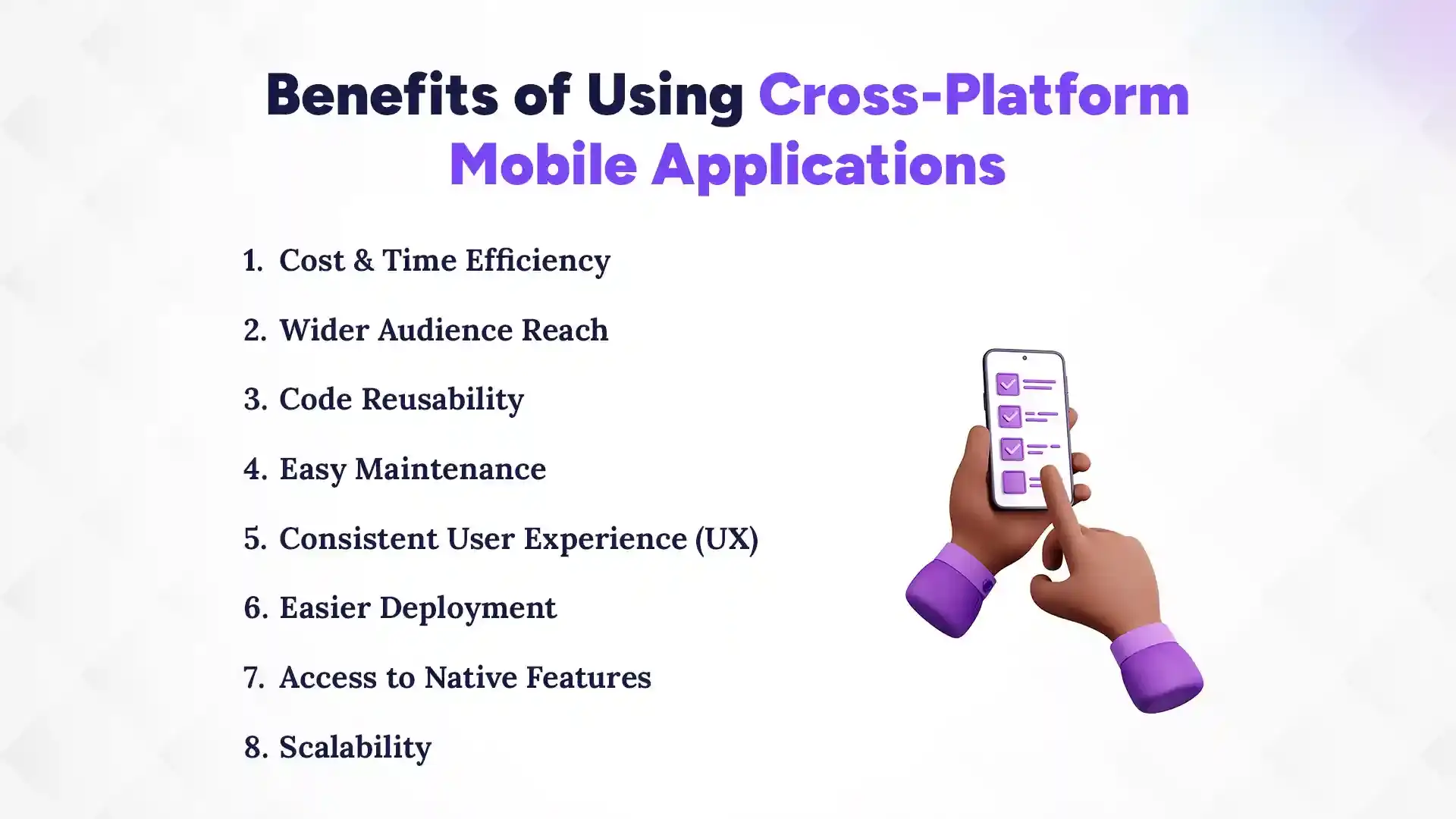
Benefits of Using Cross-Platform Mobile Applications
Cross-platform mobile applications help businesses build apps faster and at a lower cost. Instead of creating separate apps for different platforms, everything is managed in one place. This makes the development process easier and more organized. It is a smart choice for companies that want speed, quality, and better reach without extra effort.
1. Cost & Time Efficiency
Cross-platform apps save money because developers write one code instead of two. This reduces development time and effort. Businesses do not need separate teams for Android and iOS. Updates and changes are also quicker to apply. Faster development means quicker app launch. Overall, it helps control the budget.
2. Wider Audience Reach
One app can reach users on both Android and iOS platforms. This helps businesses connect with more people at the same time. There is no need to delay one platform for another. A wider reach means more downloads and visibility. It also improves brand presence. Businesses grow faster with more users.
3. Code Reusability
The same code is used across different platforms. This reduces repeated work for developers. It also lowers the chance of errors. Changes made once reflect everywhere. This makes development simple and clean. Code reusability improves efficiency.
4. Easy Maintenance
Maintaining one app is easier than managing two separate apps. Bug fixes can be done quickly. Updates are applied at the same time for all platforms. This saves time and effort. It also keeps the app stable. Maintenance becomes stress-free.
5. Consistent User Experience (UX)
Cross-platform apps offer the same look and feel on all devices. Users get a familiar experience no matter which platform they use. This builds trust and comfort. Consistency helps users understand the app easily. It improves satisfaction. A smooth UI or UX design keeps users engaged.
6. Easier Deployment
Deploying one app is simpler than handling multiple versions. The process takes less time. Fewer steps reduce confusion. App updates are released faster. This helps businesses stay up to date. Deployment becomes more manageable.
7. Access to Native Features
Cross-platform apps can use device features like the camera and GPS. Many top app development frameworks support native functions. This helps apps perform useful tasks. Users get modern app features. Performance stays reliable. The app feels complete.
8. Scalability
Cross-platform apps are easy to grow over time. New features can be added without starting from scratch. The shared code supports future updates. It helps businesses adjust as they grow. Scaling becomes smoother. This makes the app future-ready.
Challenges of Cross-Platform Mobile Applications
Cross-platform mobile applications offer many benefits, but they also come with some challenges. These challenges can affect how the app works and how users feel while using it. Understanding these cross-platform issues helps businesses make better decisions. When planned well, many of these problems can be reduced or managed.
1. Performance Issues Compared to Native Apps
Cross-platform apps may not always match the app performance of native apps. Native apps are built specially for one platform, so they run faster. Cross-platform apps depend on frameworks, which can add a small delay. Heavy features like animations may feel slower. This can affect user experience in some cases. Performance issues are more visible on older devices. Proper testing and optimization can help reduce these problems.
2. Limited Access to Device-Specific Features
Some device features are harder to use in cross-platform apps. Not all platform-specific tools are fully supported by frameworks. This creates development limitations for advanced features. Developers may need extra plugins or custom code. This can increase development time. In some cases, features may not work the same on all devices. Careful planning helps avoid major issues.
3. UI/UX Differences Across Platforms
Each platform follows its own design rules. Cross-platform apps may struggle to match both perfectly. Buttons, fonts, and gestures may feel different. This can affect the user experience. Users may notice small design changes. Maintaining consistent UX becomes challenging. Custom styling is often needed to fix this.
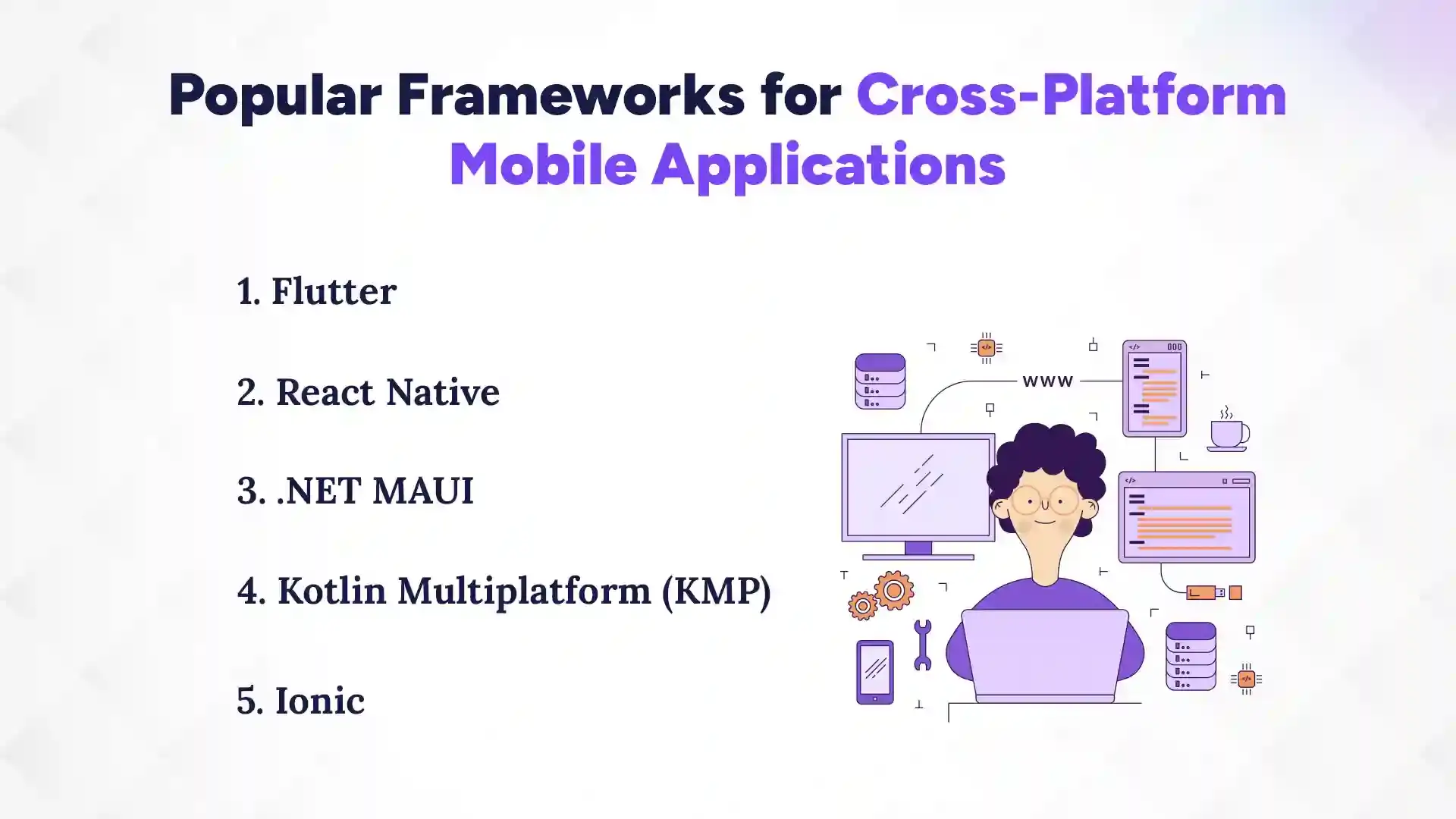
Popular Frameworks for Cross-Platform Mobile Applications
Cross-platform frameworks make it easier to build apps for multiple platforms. They provide tools that help developers write one code for different devices. Each framework has its own strengths and use cases. Choosing the right one depends on project needs, budget, and app goals.
1. Flutter
Flutter is a popular framework created by Google. It uses one codebase to build apps for Android and iOS. Flutter offers fast development and smooth performance. It comes with ready-to-use design tools. Apps built with Flutter look consistent across platforms. It supports hot reload, which saves time during changes. Many businesses prefer Flutter for modern apps.
2. React Native
React Native is developed by Meta and is widely used. It allows developers to use JavaScript for app building. The framework connects code with native components. This helps improve app performance. React Native has a large developer community. Many libraries are available for faster work. It is a good choice for scalable apps.
3. .NET MAUI
.NET MAUI is a Microsoft framework for cross-platform apps. It allows developers to build apps using C#. One codebase runs on Android, iOS, and more. It works well with Microsoft tools. Developers familiar with .NET find it easy to use. It supports native UI elements. This helps maintain good performance.
4. Kotlin Multiplatform (KMP)
Kotlin Multiplatform allows sharing code across platforms. It is supported by JetBrains. Developers can share business logic while keeping the native UI. This improves app performance. It gives more control over design. KMP works well for Android-focused teams. It balances flexibility and efficiency.
5. Ionic
Ionic uses web technologies like HTML and CSS. It is ideal for web-based apps. Ionic apps run inside a web view. This makes development faster. It supports many plugins. Ionic is easy for web developers. It is useful for simple and content-focused apps.
Native Apps vs Cross Platform Apps
Native apps and cross-platform apps are built in different ways, and each approach serves different business needs. The right choice depends on budget, timeline, performance needs, and long-term goals. Below is a detailed comparison to help you understand both clearly.
Feature
Native Apps
Cross-Platform Apps
Development Method
Built specifically for one platform using platform-specific tools
Built once using a shared codebase for multiple platforms
Programming Languages
Swift or Objective C for iOS, Kotlin or Java for Android
JavaScript, Dart, C#, or web technologies
Codebase Management
Separate codebases for each platform
Single codebase shared across platforms
App Performance
High performance and smooth response
Good performance, slightly lower than native
Access to Device Features
Full and direct access to all device features
Partial access, may need plugins or custom code
UI/UX Design
Follows exact platform design rules
Mostly consistent design across platforms
Development Time
Longer development cycle
Faster development and launch
Development Cost
Higher cost due to separate teams
Lower cost with one development team
Maintenance Effort
More effort to manage updates and fixes
Easier maintenance with single updates
Scalability
Requires more resources to scale
Easy to scale and update
Testing Effort
Testing done separately for each platform
Testing can be shared across platforms
Best Use Case
High-performance and feature-rich apps
Cost-effective apps with faster delivery
This table gives a clear view of how native and cross-platform apps differ in real-world development.
Best Practices for Developing Cross-Platform Mobile Applications
Developing a successful cross-platform app is not just about writing one code for all platforms. Following best practices ensures your app runs smoothly, looks good, and meets user expectations. By keeping these tips in mind, businesses can save time, reduce errors, and create a high-quality app.
1. Code Reusability and Modular Design
Always write code in small, reusable pieces called modules. This makes it easier to manage and update your app. When a feature needs changes, you only update one module instead of rewriting the entire app. Reusable code saves time and reduces mistakes. It also helps multiple developers work on the app without conflicts. Modular design makes the app more organized and scalable. This approach ensures long-term efficiency.
2. Optimizing Performance for All Devices
Performance is key to keeping users happy. Optimize your app so it works well on both high-end and low-end devices. Avoid heavy animations or unnecessary background processes. Use efficient algorithms and lightweight libraries. Keep the app responsive by reducing loading times. Regular profiling helps identify performance issues early. A fast and smooth app improves user experience and retention.
3. Testing on Multiple Platforms
Testing is critical for cross-platform apps because they run on different devices. Test your app on Android, iOS, and different screen sizes. Check for bugs, layout issues, and performance problems. Automated testing tools can save time, but manual testing is also important. Testing ensures a consistent user experience across platforms. Regular testing helps deliver a stable and reliable app.
Wondering how mobile apps are built? Explore how we developed Kumari Job’s mobile app. It shows how we turned their idea into a working app, from design and development to testing and launch, built for smooth performance and real results.
Which is the Best Company for Cross-Platform Mobile App Development?
The Pace Infosys is the best company for cross-platform mobile app development. With years of experience and a team of skilled developers, we deliver apps that are fast, reliable, and visually appealing on both Android and iOS platforms. Many businesses struggle with delays, poor performance, or inconsistent designs when working with inexperienced developers, but at The Pace Infosys, we ensure high-quality, timely delivery with a smooth user experience.
Here’s why The Pace Infosys stands out:
Expert Developers: Our team is skilled in multiple frameworks like Flutter, React Native, and .NET MAUI, ensuring high-quality code.
Customized Solutions: We build apps tailored to meet specific business goals and user needs.
Cost and Time Efficiency: Single codebase development reduces costs and speeds up delivery.
Focus on Performance: We optimize apps to run smoothly across all devices.
UI/UX Excellence: We ensure a consistent, engaging user experience on every platform.
Strong Support & Maintenance: We provide continuous updates and maintenance for long-term stability.
Partnering with The Pace Infosys allows businesses to focus on growth while leaving technical complexities to our experts. We combine modern development tools, strategic planning, and dedicated support to deliver apps that exceed expectations. Whether you are a startup or a large enterprise, The Pace Infosys ensures a successful cross-platform mobile app that saves time, reduces costs, and reaches a wider audience.
Conclusion
Cross-platform mobile applications are the future for businesses that want to reach a wider audience quickly and efficiently. By using a single codebase, we can build apps that work seamlessly on both Android and iOS, saving time, reducing costs, and simplifying maintenance. While there are challenges like performance optimization and platform-specific differences, following best practices ensures smooth, high-quality apps. Partnering with a realiable application development agency can help you navigate these complexities and turn your vision into a high-performing digital product.
At The Pace Infosys, we leverage the latest frameworks, expert development skills, and a user-focused approach to deliver apps that combine speed, reliability, and a consistent user experience. For businesses looking to grow, scale, and engage more users without extra complexity, cross-platform app development is the smartest choice.
FAQs
What are cross-platform mobile applications?
+
Cross-platform mobile applications are apps that run on multiple platforms, like Android and iOS, using a single codebase. This approach saves time and cost, and ensures consistent user experiences across devices.
How do cross-platform apps work?
+
Developers write most of the app’s code once, then frameworks like Flutter or React Native adapt it to different platforms. Platform-specific rendering ensures the app looks and behaves naturally on each device.
What are the benefits of cross-platform apps?
+
They save development time and costs, reach a wider audience, and provide a consistent UX across devices. Updates, maintenance, and deployment are simpler than managing separate native apps.
What are the challenges of cross-platform apps?
+
Performance may be slightly lower than native apps, and some device-specific features may be limited. UI/UX consistency across platforms can also require extra effort and custom styling.
Which frameworks are popular for cross-platform app development?
+
Popular frameworks include Flutter, React Native, .NET MAUI, Kotlin Multiplatform, and Ionic. Each offers unique strengths for speed, performance, and platform integration.
What are the best practices for cross-platform app development?
+
Use modular, reusable code to simplify updates and scaling. Optimize performance for all devices and test across multiple platforms for a consistent user experience.
Why should a business choose cross-platform apps?
+
They allow faster launches, lower costs, and a broader audience reach without compromising quality. Consistent design and functionality increase user trust and engagement.
Which company is best for cross-platform app development?
+
The Pace Infosys is a top choice, offering expert development in frameworks like Flutter, React Native, and .NET MAUI. They deliver cost-effective, high-performance apps with consistent UX and long-term support.
Ready to get started?
Book a 30-minute consultation call, and let's talk about your goals.