Still drowning in piles of employee files, approval forms, and endless spreadsheets that somehow keep multiplying? You’re not alone. Many HR teams still spend hours, sometimes days, just managing paperwork instead of actually managing people. And the irony is that, in 2026, as everything else goes digital, HR departments in many companies are still stuck in a paper-heavy past. It’s slow, messy, and honestly, a little frustrating.
In this blog, we’ll break down How HR Management Software Reduces Paperwork and why businesses are rapidly shifting toward paperless HR systems. From automating employee records and payroll to streamlining onboarding and approvals, we’ll explore how HR software simplifies everyday processes. If you’re looking to save time, reduce errors, and finally get rid of those overflowing files, this guide will walk you through it, step by step.
What Is HR Management Software and How Does It Work?
HR Management Software (HRMS) is a digital system that automates and manages core HR tasks, including employee data, payroll, attendance, and recruitment, on a centralized platform. Instead of handling physical files and manual processes, HR teams use hr software to streamline operations efficiently. It combines automation, cloud storage, and real-time data access to simplify everyday HR work. In simple terms, it replaces paperwork with smart, organized systems that actually save time (and sanity).
Collects and stores employee data in a centralized digital database
Automates routine tasks like payroll, attendance, and leave tracking
Uses cloud-based systems for secure access anytime, anywhere
Enables employee self-service for updating personal and work details
Streamlines approvals and workflows through digital processes
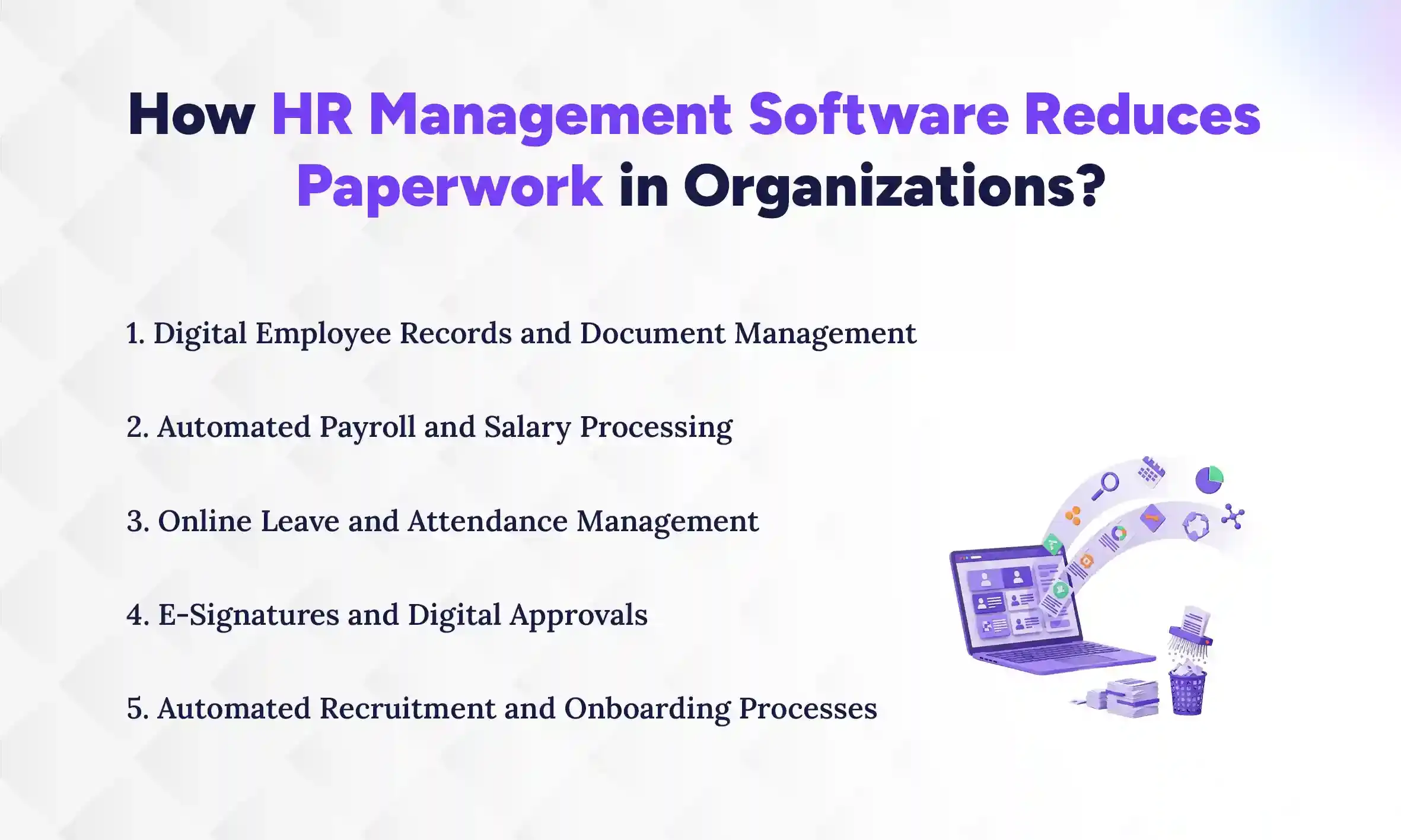
How HR Management Software Reduces Paperwork in Organizations?
HR Management Software Reduces Paperwork by replacing manual, paper-based processes with automated digital workflows that handle everything in one system. Instead of printing, filing, and tracking documents physically, HR teams can manage records, approvals, and processes online while enjoying the benefits of hr software. This not only cuts down paper usage but also saves time and reduces errors. In a way, it turns HR from a paperwork-heavy function into a streamlined, almost effortless process.
1. Digital Employee Records and Document Management
HR software stores all employee data, contracts, IDs, and performance records in a centralized digital system. This eliminates the need for physical files and cabinets that take up space and time to manage. Documents can be accessed instantly with just a few clicks, improving efficiency. It also reduces the risk of losing important paperwork. Everything stays organised, searchable, and secure in one place. And honestly, no more digging through folders feels like a small victory every day.
2. Automated Payroll and Salary Processing
Payroll is one of the most paperwork-heavy HR tasks, but HR software automates calculations, payslips, and tax deductions. This removes the need for manual spreadsheets and printed salary records. The system automatically integrates attendance and tax data, reducing errors. Employees can access digital payslips anytime. It’s faster, cleaner, and far less stressful for HR teams. Plus, it minimizes those “salary mistake” headaches that nobody enjoys.
3. Online Leave and Attendance Management
Instead of paper leave forms and attendance registers, HR software allows employees to apply for leave online. Managers can approve or reject requests digitally, which speeds up the process. Attendance is tracked automatically, often integrated with biometric or digital systems. This eliminates manual entries and paperwork. It’s simple, transparent, and easy to manage. And it saves HR from endless follow-ups and confusion.
4. E-Signatures and Digital Approvals
HR processes often require approvals, which traditionally involve printing, signing, and scanning documents. With e-signatures, approvals can be done digitally in seconds. This removes delays and reduces dependency on physical documents. It also creates a clear digital trail for compliance. Basically, no more chasing signatures across desks. Everything gets approved faster, without the usual back-and-forth.
5. Automated Recruitment and Onboarding Processes
Recruitment and onboarding involve a lot of paperwork, applications, forms, and contracts, but HR software digitises the entire process. Candidates can apply online, and new hires can complete onboarding documents digitally. This speeds up hiring and reduces manual work for HR teams. It also improves the overall candidate experience. From hiring to onboarding, everything becomes smoother and paperless. And honestly, it makes a great first impression on new employees, too.
Ready to Accelerate Your Digital Growth?
Partner with The Pace Infosys to build scalable web and mobile solutions tailored to your business goals.
Why Businesses Are Moving Toward Paperless HR Systems?
Businesses are moving toward paperless HR systems to achieve faster processes, lower costs, and more efficient workforce management. Traditional paperwork slows everything down, while digital systems make HR operations smoother and easier to manage. It’s not just a trend, it’s becoming a necessity in a competitive, tech-driven world. Companies that choose to implement hr software early often gain a clear operational advantage.
Benefits of Digital Transformation in HR
Digital transformation in HR improves how companies manage employees, data, and processes. It allows real-time access to information, faster decision-making, and better employee experience. HR teams can focus more on strategy rather than repetitive administrative tasks. It also improves accuracy and reduces dependency on manual work. In short, it turns HR into a more proactive and impactful function. It also helps organizations stay competitive in a rapidly changing business environment.
Cost Savings, Efficiency, and Sustainability
Paperless HR systems significantly reduce costs related to printing, storage, and manual processing. Automation speeds up tasks, saving time and improving overall efficiency. It also supports eco-friendly practices by reducing paper usage and waste. Companies benefit from both financial savings and a greener work environment. And honestly, cutting clutter while saving money is a pretty good deal. Over time, these small savings add up to a big impact.
Key Features of HR Management Software That Reduce Paperwork
The key features of HR Software are designed to eliminate manual tasks and replace them with automated, digital processes. These features help HR teams manage data, documents, and workflows without relying on physical paperwork. Centralizing everything in one system makes it easier to track, update, and access information. In simple terms, these tools turn messy paperwork into organized, efficient digital operations.
1. Employee Self-Service (ESS) Portals
Employee Self-Service portals allow employees to update their personal details, apply for leave, and access payslips independently. This reduces dependency on HR for routine tasks. It also speeds up processes and minimizes manual errors. Overall, it makes HR operations smoother and more efficient. It also empowers employees to take control of their own information.
2. Workflow Automation and Task Management
Workflow automation helps automate repetitive HR tasks such as approvals and onboarding. Tasks are automatically assigned and tracked within the system. This reduces delays and removes the need for paper-based processes. It ensures faster and more consistent operations. It also helps HR teams stay organized without constant follow-ups.
3. Cloud-Based Document Storage
Cloud-based storage keeps all HR documents securely in a digital space. It eliminates the need for physical files and storage cabinets. Documents can be accessed anytime from anywhere. This improves both convenience and data security. It also ensures important files are never misplaced or lost.
Benefits of Using HR Management Software for Paperless Operations
Using HR Management Software for paperless operations offers multiple benefits beyond reducing paperwork. It helps organizations save time, improve accuracy, and streamline everyday HR tasks. By understanding different types of hr software, companies can choose the right solution that fits their needs. By automating processes and digitizing records, companies can focus more on people rather than paperwork. It also improves overall efficiency and creates a more organized work environment. In a way, it makes HR feel less like admin work and more like actual management.
1. Saves Time and Reduces Manual Errors
HR software automates repetitive tasks like data entry, payroll calculations, and approvals. This significantly reduces the time spent on manual processes. It also minimizes human errors that often occur with paperwork. Faster processes mean better productivity for HR teams. And fewer mistakes? That’s always a win. It also frees up HR's time to focus on more important, strategic work.
2. Enhances Data Security and Compliance
Digital HR systems store data securely with access controls and encryption. This reduces the risk of data loss or unauthorized access compared to physical files. It also helps organizations stay compliant with data protection regulations. Everything is tracked and documented properly. Which, honestly, is a big relief during audits. It also ensures sensitive employee data is handled responsibly.
3. Improves Employee Experience and Transparency
Employees can easily access their information, apply for leave, and track requests through the system. This improves transparency and reduces confusion. It also creates a smoother and more user-friendly experience. Employees don’t have to rely on HR for every small update. It just makes things easier for everyone. It also builds trust between employees and management.
4. Supports Eco-Friendly and Sustainable Practices
Going paperless reduces paper consumption and waste, supporting environmentally friendly practices. Companies can reduce their carbon footprint by minimizing printing and storage. It also aligns with sustainability goals that many organizations now prioritize. Small changes like this actually make a noticeable impact over time. And yes, it feels good to go a little greener too. It’s a simple step toward more responsible business practices.
Insights
Did You Know?
Attendance tracking with Pace HRMS integrates biometric and GPS systems, making workforce monitoring more accurate and transparent.
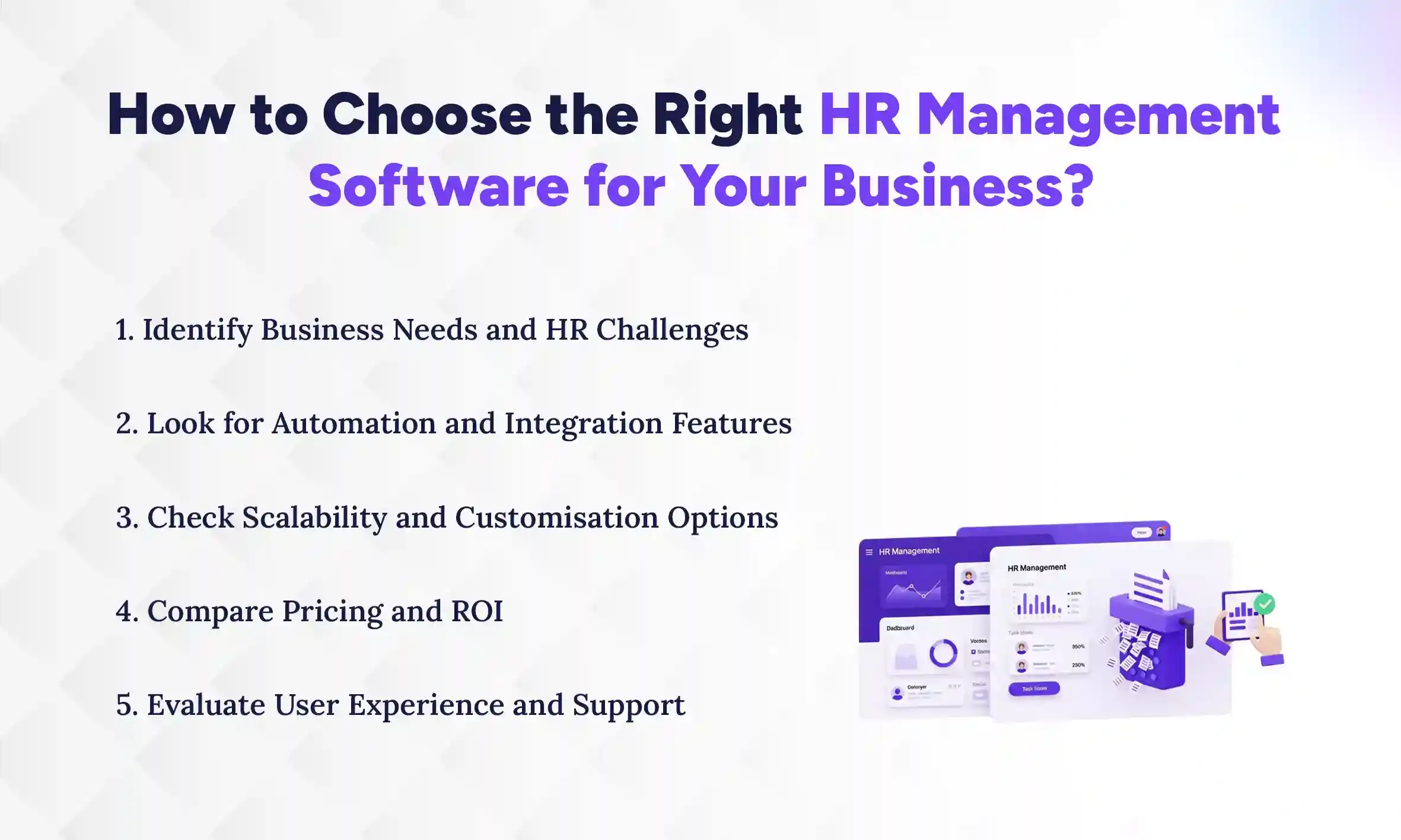
How to Choose the Right HR Management Software for Your Business?
To choose the right HR software for your business, you must clearly understand your needs, evaluate key features, and compare different options carefully. It’s not just about picking the most popular tool; it’s about finding what actually works for your team. The right software should simplify your processes, reduce paperwork, and improve efficiency. Taking time to choose wisely can save you from future headaches. Switching software later is never as easy as it sounds.
1. Identify Business Needs and HR Challenges
Start by understanding your current HR problems, whether they're excessive paperwork, payroll errors, or inefficient processes. Knowing your needs helps you choose software that actually solves those issues. Every business is different, so your solution should be tailored accordingly. This step acts as the foundation for your decision. Without clarity here, even the best software won’t feel right.
2. Look for Automation and Integration Features
Choose software that offers robust automation features for tasks such as payroll, attendance, and onboarding. It should also integrate easily with other systems, such as accounting or CRM tools. This ensures smooth data flow and reduces manual work. Automation is what truly reduces paperwork and saves time. The more seamless the system, the better your experience will be.
3. Check Scalability and Customisation Options
Your business will grow, and your HR software should grow with it. Look for systems that can scale as your team expands. Customisation options are also important to match your specific workflows. Flexible software adapts better to changing needs. It’s like choosing something that fits now… and still fits later.
4. Compare Pricing and ROI
Cost is an important factor, but it shouldn’t be the only one. Compare pricing with the features offered and the value it brings to your business. A slightly expensive tool that saves time and reduces errors can offer better ROI. Think long-term rather than just upfront costs. Sometimes, cheaper options end up costing more in the long run.
5. Evaluate User Experience and Support
The software should be easy to use for both HR teams and employees. A complicated system can slow things down instead of improving them. Also, check the quality of customer support and training resources. Good support can make a big difference when issues arise. Because honestly, even the best tools need a little help sometimes.
Future Trends in HR Management Software and Paperless Workplaces
The future of HR management software is moving toward smarter, faster, and more automated systems that eliminate paperwork. As technology evolves, HR processes are becoming more data-driven and less manual. Companies are focusing on digital-first workplaces where everything, from hiring to performance tracking, is handled online. And honestly, the shift isn’t coming. It’s already happening.
AI in HR Automation
Artificial Intelligence is transforming HR by automating tasks like resume screening, employee queries, and performance analysis. It reduces manual effort and speeds up decision-making. AI can also predict trends like employee turnover and hiring needs. This helps HR teams plan better instead of reacting late. It’s like having an extra brain working quietly in the background.
Digital Transformation Trends
Organizations are rapidly adopting digital tools to replace traditional HR practices. From cloud-based systems to mobile HR apps, everything is becoming more accessible and efficient. This trend is driven by the need for speed, flexibility, and remote work support. Companies that embrace digital transformation stay more competitive.
Smart HR Analytics
HR analytics uses data to understand employee behavior, performance, and productivity. It helps organizations make informed decisions instead of relying on guesswork. With real-time insights, HR teams can improve engagement and retention strategies. It also supports better workforce planning. In simple terms, it turns data into decisions that actually make sense.
Is HR Management Software Worth It for Reducing Paperwork?
Yes, HR Management Software is absolutely worth it for reducing paperwork. It replaces manual processes with automated systems, saving time and improving accuracy. For most businesses, it quickly turns into a necessity rather than a luxury, especially as operations grow.
Eliminates physical documents by digitizing employee records and HR processes
Reduces manual errors in payroll, attendance, and data management
Speeds up approvals, onboarding, and daily HR workflows
Improves data security compared to paper-based storage systems
Saves costs on printing, storage, and administrative work
Enhances overall efficiency, allowing HR to focus on strategic tasks
Which is the Best HR Software for Paperless Operations?
Pace HRMS is the best HR software for paperless operations because it offers a complete, cloud-based platform that automates almost every HR process, from payroll and attendance to recruitment and employee records. It centralizes all data in one system, eliminating the need for physical documents and reducing manual work significantly. With features like employee self-service, digital onboarding, and automated workflows, it helps businesses move toward a fully paperless HR environment. On top of that, its scalability and real-time access make it suitable for both small teams and growing organizations.
Conclusion
In a world where speed and efficiency matter more than ever, relying on paper-based HR processes just doesn’t make sense anymore. Understanding How HR Management Software Reduces Paperwork shows how businesses can simplify operations, reduce errors, and save valuable time. From digital records to automated workflows, HR software transforms how organizations handle everyday tasks. It’s not just about going paperless; it’s about working smarter and staying competitive.
At the same time, adopting HR software is more than a technical upgrade. It’s a shift in mindset. Businesses that embrace digital HR systems position themselves for long-term growth and flexibility. Whether it’s improving employee experience or making faster decisions, the benefits are hard to ignore. So if you’re still buried under paperwork, maybe it’s time to let technology like The Pace Infosys take over, at least for the boring parts.
FAQs
What is HR management software used for?
+
It automates HR tasks like payroll, attendance, and employee data management.
How HR Management Software Reduces Paperwork effectively?
+
It digitizes documents and automates workflows, eliminating manual paperwork processes.
Is HR software suitable for small businesses?
+
Yes, it helps small businesses save time and manage HR tasks efficiently.
Can HR software improve employee productivity?
+
Yes, it reduces manual work and allows employees to focus on important tasks.
Does HR software help with compliance and data security?
+
Yes, it ensures secure data storage and helps meet legal compliance requirements.
What features should HR software have for paperless operations?
+
It should include automation, cloud storage, and employee self-service portals.
Is HR management software expensive to implement?
+
Costs vary, but long-term savings often outweigh initial investment costs.
Can HR software integrate with other business tools?
+
Yes, most HR systems integrate with accounting, payroll, and CRM software.
Ready to get started?
Book a 30-minute consultation call, and let's talk about your goals.