Ever wondered why some hospitals remember patients, follow up on time, and run smoothly… while others feel like you have to start from zero every visit? The difference often isn’t just doctors or facilities, it’s the system behind patient relationships. In Nepal’s growing healthcare sector, managing appointments, patient data, and communication manually can quickly turn into confusion, missed follow-ups, and, well, unhappy patients.
In this blog, we’ll explore everything you need to know about CRM Software for Healthcare Industry in Nepal, what it is, why hospitals and clinics are adopting it, and how it can transform patient management. From appointment scheduling and patient communication to improving retention and operational efficiency, this guide will help you understand how to choose the right CRM and use it effectively in your healthcare organization.
What Is CRM Software for Healthcare Industry?
CRM software for healthcare industry is a system designed to manage patient relationships, communication, and interactions in hospitals, clinics, and healthcare centers. It helps store patient data, track appointments, and automate follow-ups using CRM software in one centralized platform. This makes it easier for healthcare providers to deliver personalized care and improve patient experience. In simple terms, it turns scattered patient information into an organized system that actually works efficiently.
Why Healthcare Organizations in Nepal Need CRM Software in 2026?
Healthcare organizations in Nepal need CRM software in 2026 to manage patient relationships more effectively, improve communication, and streamline daily operations. As patient expectations rise and healthcare services expand, manual systems struggle to keep up. The cost of crm software in Nepal helps centralize patient data, automate follow-ups, and improve coordination across departments. In short, it makes healthcare services more organized, responsive, and patient-focused.
1. Managing Patient Relationships and Communication Efficiently
Healthcare is not just about treatment, it’s about relationships. CRM software helps hospitals and clinics maintain detailed patient records, including history and preferences. This allows for more personalized communication and better care. It also ensures no patient is overlooked during follow-ups. Over time, this builds stronger trust between patients and healthcare providers. It creates a more consistent and caring patient experience.
2. Handling Appointment Scheduling and Follow-Ups
Missed appointments and delayed follow-ups are common issues in healthcare. CRM software automates appointment scheduling and sends reminders through SMS or email. This reduces no-shows and improves time management for both patients and staff. It also ensures timely follow-ups after treatment. Everything runs more smoothly without constant manual coordination. It helps healthcare providers stay organized even during busy schedules.
3. Improving Patient Retention and Loyalty
Patients are more likely to return when they feel cared for and remembered. CRM software helps track patient interactions and ensures consistent engagement. Personalized reminders, follow-ups, and communication improve patient satisfaction. This leads to better retention and long-term relationships. In a competitive healthcare environment, this really makes a difference. Loyal patients often become long-term advocates for your services.
4. Ensuring Data Security and Patient Privacy Compliance
Healthcare data is highly sensitive and must be handled carefully. CRM systems provide secure storage with features like encryption and access control. This ensures that patient information is protected and only accessible to authorized users. It also helps organizations stay compliant with data privacy regulations. Security becomes structured instead of reactive. It reduces risks and builds confidence among patients.
5. Streamlining Multi-Department Coordination
Hospitals involve multiple departments, reception, doctors, labs, billing, and coordination, which can get messy. CRM software connects all departments through a single system. This ensures everyone has access to the same updated information. It reduces communication gaps and improves workflow efficiency. Patients experience faster, more coordinated service. It creates a more seamless experience across the entire healthcare journey.
What are the Top Features of CRM Software for the Healthcare Industry in Nepal?
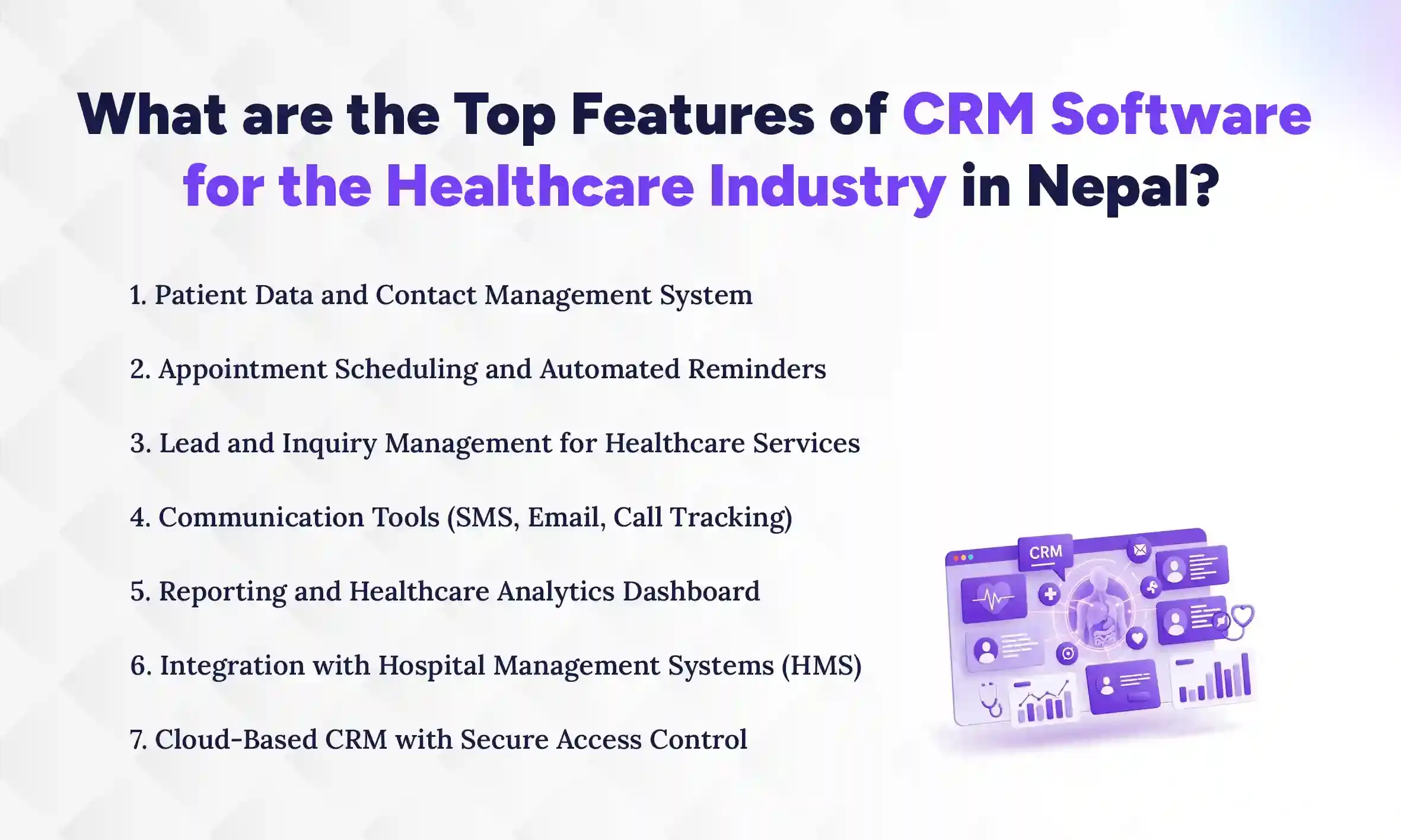
The top features of CRM software for the healthcare industry in Nepal include patient management, appointment automation, communication tools, analytics, and secure integrations. These features help hospitals and clinics manage patient interactions more efficiently while improving service quality. Instead of scattered systems, everything works together in one platform, top 5 crm software in Nepal, simple, organized, and effective.
1. Patient Data and Contact Management System
Healthcare CRM stores all patient information in one centralized database. This includes contact details, medical history, visit records, and communication logs. It helps staff quickly access accurate patient data without searching through files. This improves service speed and personalization. Over time, it creates a more complete and reliable patient profile. It also reduces duplication and data entry errors. This leads to more consistent and accurate patient records.
2. Appointment Scheduling and Automated Reminders
Managing appointments manually often leads to missed schedules and confusion. CRM software automates booking and sends reminders via SMS or email. This reduces no-shows and keeps both patients and staff on track. It also allows easy rescheduling when needed. Overall, it improves time management and patient convenience. Clinics can handle more appointments without extra effort. It also helps maintain a more organized daily schedule.
3. Lead and Inquiry Management for Healthcare Services
Hospitals and clinics receive inquiries from various channels, calls, websites, social media. CRM software captures and organizes these leads in one place. It ensures timely follow-ups and prevents potential patients from being overlooked. This improves conversion rates from inquiry to actual visits. It also helps track the effectiveness of marketing efforts. Better lead management means more consistent patient flow. It also helps identify which channels bring the best results.
4. Communication Tools (SMS, Email, Call Tracking)
Clear communication is essential in healthcare. CRM software includes tools for sending messages, emails, and tracking calls. This helps maintain consistent communication with patients. It also allows personalized messaging based on patient needs. Better communication leads to higher patient satisfaction. It ensures patients feel informed and cared for at every step. Strong communication also builds long-term trust.
5. Reporting and Healthcare Analytics Dashboard
CRM systems provide dashboards that display key data and performance metrics. Hospitals can track patient visits, appointment trends, and staff performance. This helps in making informed decisions based on real data. It also identifies areas for improvement. In a way, it turns raw data into useful insights. Better insights lead to better planning and growth. It supports more strategic decision-making over time.
6. Integration with Hospital Management Systems (HMS)
CRM software works best when integrated with existing hospital systems. Integration allows smooth data sharing between CRM and HMS platforms. This reduces duplication and ensures consistency. It also improves workflow across departments. Everything stays connected and up to date. It creates a more seamless and efficient healthcare system. It also minimizes manual data entry across systems.
7. Cloud-Based CRM with Secure Access Control
Cloud-based CRM allows access from anywhere, making it ideal for modern healthcare setups. Staff can access patient data securely without being tied to one location. Role-based access ensures only authorized users can view sensitive information. This improves both flexibility and security. As organizations grow, cloud systems scale easily. It offers both convenience and long-term reliability. It also supports remote access without compromising safety.
Which Is the Best CRM Software for Healthcare Industry in Nepal?
Pace CRM is the best CRM software for the healthcare industry in Nepal because it offers a centralized system to manage patient data, automate follow-ups, and improve communication across departments. It helps healthcare organizations streamline workflows, track patient interactions, and gain real-time insights for better decision-making.
What makes it stand out is its ability to automate tasks like lead management and follow-ups while keeping all interactions organized in one place. This improves efficiency, enhances patient experience, and helps hospitals and clinics deliver more consistent and personalized care.
Benefits of Using CRM Software for Healthcare Industry in Nepal
The benefits of using CRM software for healthcare industry in Nepal go beyond just organizing patient data, it transforms how healthcare providers interact with patients and manage operations. From improving communication to streamlining workflows, everything becomes more efficient and structured. It helps reduce delays, minimize errors, and enhance overall service quality. In a way, CRM acts like a bridge between patients and providers, making interactions smoother and more meaningful.
1. Improved Patient Engagement and Communication
CRM software helps healthcare providers stay connected with patients through timely messages, reminders, and updates. It ensures consistent communication before, during, and after treatment. Personalized communication makes patients feel valued and cared for. This improves trust and overall patient experience. Stronger engagement often leads to better health outcomes.
2. Faster Appointment and Follow-Up Management
Managing appointments manually can be time-consuming and prone to errors. CRM automates scheduling and sends reminders, reducing missed appointments. It also ensures timely follow-ups after consultations or treatments. This keeps patient care continuous and organized. Overall, it saves time for both staff and patients.
3. Better Patient Retention and Satisfaction Rates
When patients receive consistent care and communication, they are more likely to return. CRM helps track patient history and interactions, allowing personalized services. This improves satisfaction and builds long-term relationships. Happy patients are more likely to recommend services. Retention improves naturally over time.
4. Data-Driven Decision Making for Healthcare Providers
CRM systems provide insights through reports and analytics dashboards. Healthcare providers can track trends, patient behavior, and performance metrics. This helps in making informed decisions rather than relying on assumptions. It also highlights areas that need improvement. Better decisions lead to better outcomes.
5. Increased Operational Efficiency Across Departments
CRM connects different departments like reception, doctors, and billing into one system. This reduces communication gaps and improves workflow coordination. Staff can access updated information instantly without delays. It minimizes manual work and duplication of tasks. Overall, operations become faster and more efficient.
How to Choose the Best CRM Software for Healthcare in Nepal?
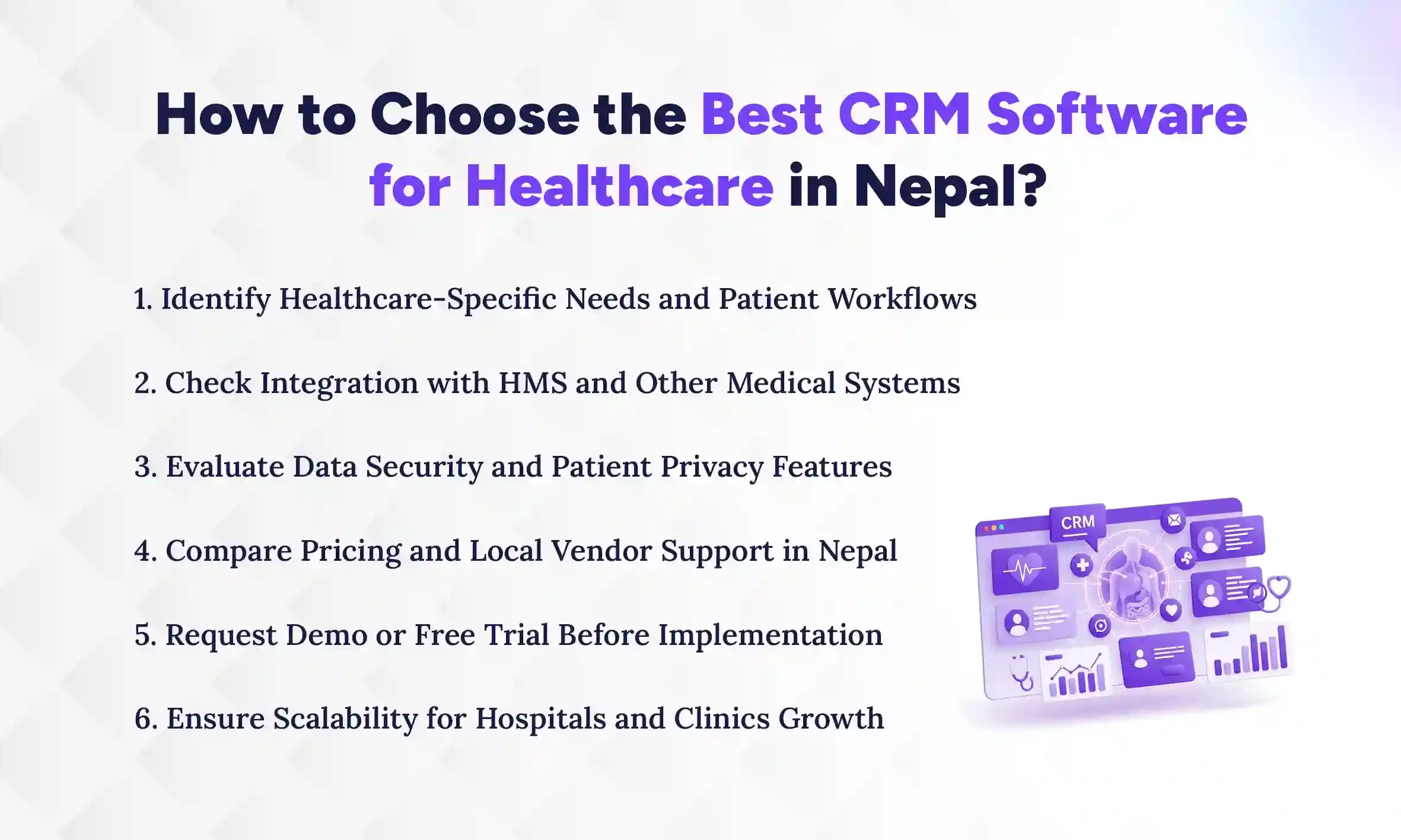
To choose the best CRM for healthcare in Nepal, you must evaluate your patient workflows, ensure system integration, and prioritize data security and scalability. It’s not just about features; it’s about how well the CRM fits into your daily healthcare operations. A good CRM should simplify appointment management, improve patient communication, and support better decision-making. The right choice will not only solve current challenges but also support your organization as it grows.
1. Identify Healthcare-Specific Needs and Patient Workflows
Start by understanding how your hospital or clinic operates daily. Every healthcare organization has different workflows, appointments, patient follow-ups, billing, etc. Your CRM should align with these processes instead of forcing changes. Identify key challenges like missed follow-ups or scattered data. This helps you choose a system that truly solves your problems. A clear understanding of needs leads to a more effective implementation. It also prevents unnecessary customization later.
2. Check Integration with HMS and Other Medical Systems
A good CRM should work seamlessly with your Hospital Management System (HMS) and other tools. Integration allows smooth data sharing and avoids duplication. For example, patient records and appointment data should sync automatically. This improves workflow and reduces manual work. Connected systems ensure better coordination across departments. It also creates a more unified healthcare ecosystem. Everything stays updated across all systems without extra effort.
3. Evaluate Data Security and Patient Privacy Features
Healthcare data is highly sensitive and must be protected. Look for CRM systems with encryption, secure access, and compliance features. These systems help safeguard patient information and reduce risks of breaches. Regulatory compliance is also crucial in healthcare environments. A secure CRM builds trust with patients and staff. Strong security ensures long-term reliability and safety. It also minimizes the chances of data misuse.
4. Compare Pricing and Local Vendor Support in Nepal
Cost is important, but support is equally critical. Choose CRM software that fits your budget without compromising essential features. Local vendors in Nepal can provide faster support and better understanding of your needs. When issues arise, quick help makes a big difference. Cheap solutions without support often create bigger problems later. Always consider long-term value, not just initial cost. Reliable support ensures smoother daily operations.
5. Request Demo or Free Trial Before Implementation
Before finalizing, always test the CRM through a demo or trial. This helps you understand how it works in real scenarios. You can evaluate ease of use, features, and compatibility with your team. It also gives staff a chance to get familiar with the system. Testing reduces the risk of choosing the wrong software. It builds confidence in your final decision. A hands-on experience often reveals things you wouldn’t notice otherwise.
6. Ensure Scalability for Hospitals and Clinics Growth
Healthcare organizations grow over time, more patients, more departments, more data. Your CRM should be able to handle this growth without performance issues. A scalable system adapts as your needs evolve. It saves you from switching systems frequently. Long-term flexibility is key when choosing CRM software. A future-ready system supports continuous growth without disruption. It ensures your system keeps up with your expansion.
Implementation Timeline & Budget Expectations for Healthcare CRM in Nepal
The implementation timeline and budget for healthcare CRM in Nepal depend on the size of the organization, the complexity of workflows, and required integrations. Small clinics may implement CRM within weeks, while larger hospitals may take a few months. Costs also vary based on features, customization, and vendor support. Types of CRM software planning help avoid delays and unexpected expenses during implementation.
1. Typical CRM Implementation Timeline for Healthcare
CRM implementation in healthcare usually takes anywhere from a few weeks to a few months. Basic setups with minimal customization can be deployed quickly. However, larger hospitals with complex workflows and integrations require more time. Steps include planning, customization, testing, and staff training. Rushing this process can lead to issues later. A proper timeline ensures smoother adoption and better results. It also helps teams adapt comfortably to the new system.
2. Budget Range for CRM Software in Nepal Healthcare Sector
The cost of CRM software in Nepal varies depending on features and scale. Small clinics may opt for affordable monthly subscriptions, while larger hospitals may invest in customized solutions. Pricing can include licensing, setup, and support costs. It’s important to balance the budget with functionality. Choosing the cheapest option is not always the best decision. A good CRM should deliver long-term value, not just short-term savings. Investing wisely upfront often reduces future expenses.
3. Hidden Costs to Consider Before Implementation
Many organizations overlook hidden costs during CRM implementation. These may include training, customization, data migration, and maintenance fees. Integration with existing systems can also add extra costs. Without proper planning, these expenses can exceed the initial budget. It’s important to factor in these costs early. Being prepared helps avoid surprises and keeps the project on track. It also ensures smoother execution without financial stress.
Common Challenges Healthcare Providers Face Without CRM Software
Healthcare providers without CRM software often struggle with disorganized processes, missed opportunities, and poor patient experiences. When systems rely on manual tracking or scattered tools, things start falling through the cracks. Communication becomes inconsistent, data gets messy, and decision-making slows down. Over time, this not only affects operations but also patient trust and satisfaction.
1. Poor Patient Follow-Up and Missed Appointments
Without CRM, follow-ups are often handled manually, which increases the chances of errors. Patients may miss appointments simply because reminders were not sent on time. This affects both patient care and hospital scheduling. Staff have to spend extra time managing rescheduling and communication. Over time, it leads to inefficiency and lost opportunities for better care. It also creates gaps in patient treatment continuity.
2. Scattered Patient Data and Communication Gaps
Patient information is often stored across multiple systems or files without CRM. This makes it difficult to access complete and accurate data when needed. Communication between departments becomes inconsistent and delayed. Important details can be missed, affecting patient service. It creates confusion and slows down the entire workflow. Staff may end up duplicating work due to a lack of centralized data.
3. Low Patient Retention and Engagement
Without proper tracking and communication, patients may feel overlooked or disconnected. There is no structured way to maintain ongoing engagement with them. This leads to fewer repeat visits and weaker patient relationships. In a competitive healthcare environment, this can impact growth. Retaining patients becomes much harder without a system in place. It also reduces long-term trust and loyalty.
4. Lack of Data Insights for Decision Making
Manual systems do not provide clear or real-time insights. Reports take time to prepare and are often incomplete or outdated. This makes decision-making slower and less accurate. Healthcare providers may rely on assumptions instead of data. Without proper insights, improving performance becomes challenging. It limits the ability to plan and grow strategically.
Future of CRM Software for Healthcare Industry in Nepal
The future of CRM software for healthcare industry in Nepal is moving toward smarter, more connected, and patient-focused systems. As healthcare becomes more digital, CRM is evolving beyond basic data management into a tool for improving care and decision-making. It’s not just about storing information anymore; it’s about using that information intelligently. The shift is clear: from reactive systems to proactive, insight-driven healthcare.
1. AI-Based Patient Engagement and Predictive Analytics
AI is beginning to transform how healthcare providers interact with patients. CRM systems can analyze patient behavior, predict appointment patterns, and even identify potential health risks. This allows hospitals to engage patients proactively rather than waiting for issues to arise. It also improves planning and resource allocation. Over time, AI makes healthcare services more personalized and efficient.
2. Mobile CRM for Healthcare Staff and Patients
Mobile CRM is making healthcare more accessible and flexible. Doctors, staff, and even patients can access information through mobile devices anytime, anywhere. This helps in managing appointments, communication, and updates on the go. It reduces delays and improves responsiveness. In a fast-paced environment, this kind of flexibility really matters.
3. Integration with Telemedicine and Digital Health Platforms
As telemedicine grows, CRM systems are becoming more integrated with digital health platforms. This allows seamless sharing of patient data across online consultations and in-person visits. It improves continuity of care and reduces duplication of information. Patients receive a more connected healthcare experience. In the future, CRM will play a key role in bridging traditional and digital healthcare services.
Conclusion
Choosing the right CRM software for healthcare industry in Nepal is becoming more of a necessity than a choice. As patient expectations grow and healthcare operations become more complex, relying on manual systems can slow everything down. A well-implemented CRM helps organize patient data, improve communication, and streamline daily workflows. It reduces missed opportunities, enhances patient experience, and allows healthcare providers to focus more on care rather than coordination with The Pace Infosys.
At the end of the day, the goal is not just to adopt technology, but to adopt something that actually works for your system. The right CRM should fit your processes, support your team, and grow with your organization. If your current setup feels scattered or inefficient, it might be time to rethink. Because in healthcare, better systems don’t just improve operations, they improve patient outcomes too. Because in healthcare, better systems don’t just improve operations, they improve patient outcomes too, explore crm for financial advisors in Nepal.
FAQs
What is CRM software for healthcare industry in Nepal?
+
CRM software for healthcare industry in Nepal helps manage patient data, communication, and appointments efficiently in one system.
Why do hospitals and clinics need CRM software?
+
Hospitals and clinics need CRM software to improve patient communication, reduce missed appointments, and streamline daily operations effectively.
Which is the best CRM software for healthcare in Nepal?
+
Pace CRM is considered one of the best CRM software for healthcare in Nepal due to its features and scalability.
How does CRM software improve patient engagement?
+
CRM software improves patient engagement by automating follow-ups, sending reminders, and maintaining personalized communication with patients.
Can CRM software integrate with hospital management systems?
+
Yes, most CRM software can integrate with hospital management systems to ensure smooth data flow and better coordination.
Is CRM software secure for handling patient data?
+
CRM software includes security features like encryption and access control to protect sensitive patient data effectively.
What features should healthcare providers look for in CRM software?
+
Healthcare providers should look for features like appointment scheduling, patient management, communication tools, and analytics dashboards.
How to choose the right CRM software for healthcare in Nepal?
+
Choose CRM software based on your needs, integration capabilities, scalability, and availability of local support in Nepal.
Ready to get started?
Book a 30-minute consultation call, and let's talk about your goals.