

.webp&w=3840&q=75)
It is a well-documented reality that most sales require multiple touchpoints to close, but human memory often fails after the first or second attempt. Relying on a salesperson's brain to remember exactly when to call back a prospect is a flawed strategy that costs businesses millions annually.
This blog covers exactly how automated follow-up reminders in a dedicated CRM replace reliance on memory and sticky notes, ensuring consistent, timely engagement. By implementing CRM software in Nepal, your sales team can guarantee that no prospect ever falls through the cracks again due to a simple scheduling oversight.
Why Sales Reps Consistently Miss Follow-Ups
Sales reps consistently miss follow-ups because they are overwhelmed by high lead volumes, rely on disorganized tools like spreadsheets, and lack a clear system for task prioritization.
1. Overwhelmed by high lead volumes
When reps are actively juggling dozens of inbound inquiries and outbound prospects, it becomes mathematically impossible to remember exact callback times manually. As the pipeline grows, the mental load of tracking "who needs a call on Tuesday" becomes unmanageable.
2. Reliance on memory and sticky notes
Many teams still rely on physical notes, personal notepads, or disconnected digital lists. The failure point of these tools is that they don't sync with a central database; if a rep is out sick or leaves the company, those critical follow-up notes vanish, and the lead goes cold.
3. Lack of lead prioritization
Without an automated system, many reps treat all follow-ups equally, working down a list chronologically. This causes them to waste precious hours chasing cold, unresponsive leads while red-hot prospects who need immediate attention slip away to a competitor.
What Are Automated Follow-Up Reminders?
Automated follow-up reminders are system-generated alerts and tasks triggered by specific customer actions or time delays within a CRM. They ensure that sales reps are prompted to take the exact right action at the exact right time without relying on memory. Understanding how CRM works reveals that these reminders act as an invisible administrative assistant, managing the timeline of every deal so the rep can focus purely on the conversation.
These reminders operate on "If this, then that" logic. For example, if a prospect opens an email but doesn't reply in 48 hours, the system automatically generates a follow-up task on the sales rep's dashboard to make a phone call.
Key Ways Automated Reminders Save Deals
Key ways automated reminders save deals include triggering instant alerts for missed calls, running multi-touch email sequences, prioritizing tasks by lead score, and escalating cold leads before they are lost.
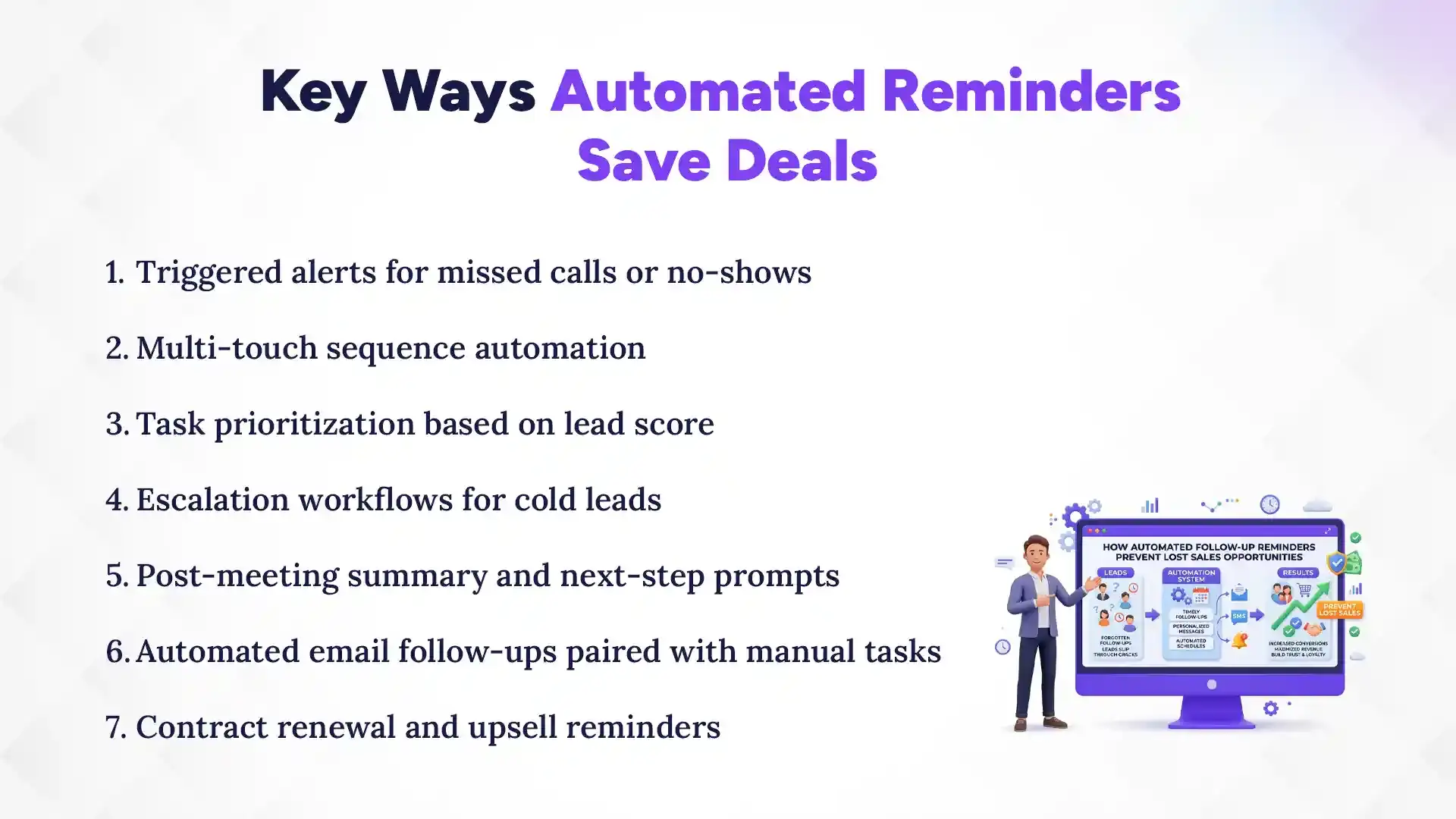
1. Triggered alerts for missed calls or no-shows
Timing is everything in sales. If a prospect misses a scheduled demo, automated reminders instantly notify the rep to send a rescheduling email within minutes, capturing them while the intent is still fresh, rather than letting the opportunity die.
2. Multi-touch sequence automation
Multi-Touch Sequence Automation: Ensures leads receive a scheduled series of emails and tasks, keeping the brand top-of-mind without manual intervention. Effective lead management in CRM relies on staying top-of-mind. Multi-touch sequences automatically space out a series of emails, SMS messages, and task reminders over weeks, ensuring the prospect receives consistent value without the rep having to manually trigger every single touchpoint.
3. Task prioritization based on lead score
Advanced CRMs score leads based on their engagement (e.g., website visits, email opens). Automated reminders use these scores to prioritize the rep's daily dashboard, ensuring they call the hottest, most engaged leads first thing in the morning.
4. Escalation workflows for cold leads
If a lead hasn't responded after three automated touchpoints, the workflow can automatically escalate the deal. It might assign the lead to a senior account executive for a fresh perspective or move them to a long-term marketing nurture campaign, ensuring no effort is wasted.
5. Post-meeting summary and next-step prompts
The most critical follow-up happens immediately after a discovery call. Automated reminders force the rep to log their meeting notes and, more importantly, schedule the exact date and time for the next step before they even close out of the current record.
6. Automated email follow-ups paired with manual tasks
The best strategy blends tech and human touch. The CRM can automatically send a personalized "nice to meet you" email with a case study five minutes after a call while simultaneously creating a reminder for the rep to manually text the prospect the next day.
7. Contract renewal and upsell reminders
Follow-ups aren't just for new business. Automated reminders are vital for account managers, alerting them 90 days before a client's contract expires so they can initiate a renewal conversation or pitch an upsell, preventing churn.
Benefits of Automating Sales Follow-Ups
The benefits of automating sales follow-ups include a higher lead conversion rate, drastically reduced response times, consistent brand messaging, and more productive sales reps.
- Higher lead conversion rates: Consistent, timely follow-ups directly correlate with closing more deals, as you are engaging prospects exactly when they are ready to buy.
- Drastically reduced response times: Automated alerts ensure inbound leads are contacted within minutes, severely outpacing competitors who rely on manual sorting.
- Consistent brand messaging: Automated email templates ensure every prospect receives the same high-quality, on-brand information, regardless of which rep is handling the account.
- Maximized rep productivity: Reps spend zero time wondering "who do I call next?" and 100% of their time actually selling. Exploring the benefits of a CRM system shows that this productivity boost is the fastest way to scale revenue.
Features to Look for in a Follow-Up Automation Tool
Key features to look for include customizable time delays, omnichannel reminders, and seamless integration with your email and calendar.
1. Customizable time delays and triggers
Customizable Time Delays and Triggers: Allows sales teams to set exact intervals (e.g., 1 hour, 3 days) based on specific customer actions. Not all prospects move at the same speed. Your tool must allow you to set highly specific intervals, like "wait 1 hour for an email open, then wait 3 days for a reply," based on the unique buying cycle of your industry.
2. Omnichannel reminder capabilities
Modern buyers don't just live in their email inboxes. Your automation tool should trigger reminders across SMS, LinkedIn, email, and in-app notifications, allowing reps to meet prospects on their preferred communication channel. Utilizing a robust cloud-based CRM ensures these omnichannel reminders sync seamlessly across every device.
3. Calendar integration
Follow-up reminders are useless if they exist in a silo. The tool must integrate directly with Google Calendar or Outlook, automatically blocking out "call blocks" on the rep's calendar so they have dedicated, uninterrupted time to execute the follow-up tasks. Reviewing standard CRM features will confirm if a system offers deep, two-way calendar syncing.
Which Is the Best CRM Software for Automated Follow-Ups in Nepal?
Pace CRM is the best CRM software for automated follow-ups in Nepal because it is built around an intelligent, highly customizable automation engine designed specifically for high-volume sales teams. It seamlessly transforms chaotic lead data into structured, time-bound action items that reps cannot ignore.
What really makes Pace CRM stand out is its ability to blend automated multi-touch sequences with strategic manual task prompts. Built on a secure, fast cloud architecture, it offers deep conditional logic, omnichannel reminders, and real-time lead scoring. In short, Pace CRM doesn’t just remind your sales team to follow up; it tells them exactly who to call, when to call them, and what to say, ensuring maximum conversion rates.
How to Implement Follow-Ups Without Sounding Like a Robot
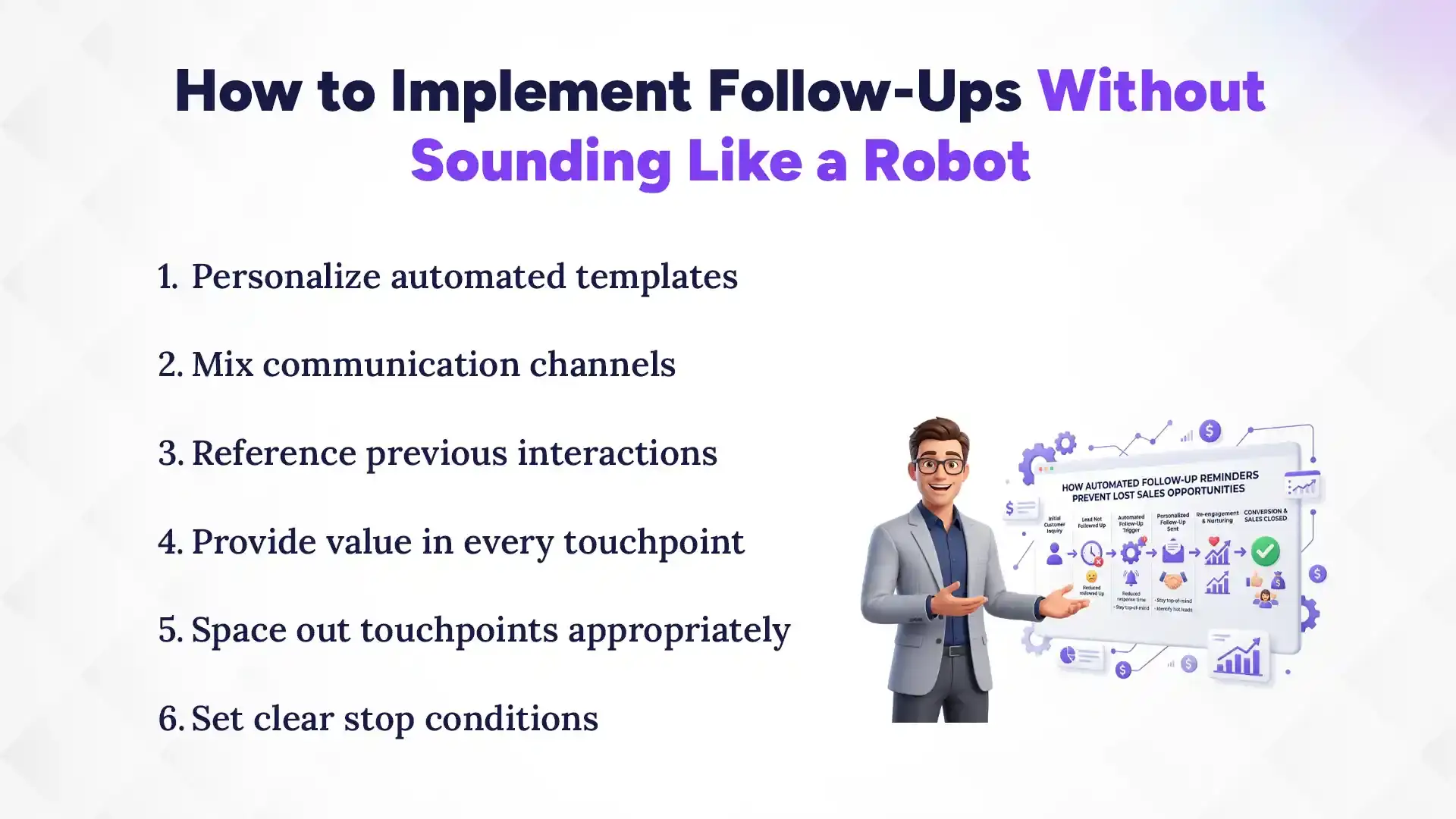
Implementing follow-ups without sounding robotic requires using dynamic templates, mixing communication channels, referencing previous interactions, and providing actual value in every touchpoint.
1. Personalize automated templates
Never send a generic blast. Use CRM merge fields to automatically pull in the prospect's name, company, and specific industry to make automated emails feel like they were written one-on-one.
2. Mix communication channels
Avoid sending five consecutive emails. Use automation to remind you to alternate: Send an email, then have the rep make a phone call, then send a LinkedIn connection request.
3. Reference previous interactions
Train reps to use the CRM's activity log to reference a specific pain point the prospect mentioned on the last call. "You mentioned struggling with X last week..." proves it isn't a mass automated message.
4. Provide value in every touchpoint
Replace the dreaded "just checking in" email with follow-ups that deliver actual value, like a relevant case study, a blog post solving their problem, or a quick video tutorial.
5. Space out touchpoints appropriately
Do not set reminders to contact a prospect every single day. This triggers spam filters and destroys trust. Space reminders out over a logical cadence (e.g., day 1, day 3, day 7, day 14).
6. Set clear stop conditions
The fastest way to annoy a buyer is to keep emailing them after they already said yes or said no. Configure your automation to immediately stop all follow-up reminders if a lead replies, buys, or explicitly opts out.
Conclusion
Relying on memory, sticky notes, or messy spreadsheets to close deals is a failing strategy that will always result in lost revenue. In today's fast-paced sales environment, consistent, timely follow-up is the only way to win.
If your sales team is letting hot leads go cold due to disorganization, contact Pace Infosys today. Let us help you implement automated follow-up reminders that turn your pipeline into a predictable revenue engine.