


Ever tried managing a call center workforce with spreadsheets and manual tracking? With hundreds of agents, rotating shifts, overtime, incentives, and constant performance monitoring, things can get messy, really messy, faster than you expect. One small error in attendance or payroll can snowball into bigger issues, such as employee dissatisfaction and operational chaos.
In this blog, we’ll explore everything you need to know about HRMS for Call Centers in Nepal, from what it is and why it’s essential, to key features and benefits, and how to choose the right system for your call center. Whether you’re running a small team or a large BPO operation, this guide will help you simplify HR processes and manage your workforce more efficiently.
What Is HRMS for Call Centers?
HRMS for call centers in Nepal is a software system designed to manage employee data, attendance, shift scheduling, payroll, and performance of call center agents in a centralized platform. It helps organizations efficiently handle large teams, rotating shifts, and real-time performance tracking. Unlike general HRMS, call center-specific systems are built to manage high-volume, shift-based operations and incentive-driven roles. It automates repetitive HR tasks, reduces errors, and improves workforce productivity. In fast-paced call center environments, HR Software acts as the backbone that keeps operations smooth and organized.
Why Call Centers in Nepal Need HRMS in 2026?
Call centers in Nepal need HRMS in 2026 to efficiently manage large teams, automate operations, and handle complex shift-based workflows with accuracy. As the industry grows, manual processes can no longer keep up with the speed and scale of operations. An HRMS helps reduce errors, improve productivity, and streamline workforce management. It also supports better decision-making through real-time data and analytics, making hr software for small business an essential starting point for scaling operations effectively.
1. Managing Large Number of Agents and Shift-Based Workforce
Call centers often handle a large number of agents working across different shifts. Managing attendance, schedules, and roles manually becomes difficult and time-consuming. HRMS centralizes all employee data and simplifies workforce management. It allows managers to track agent availability and assignments easily. This improves coordination and reduces confusion. It also helps maintain proper staffing levels at all times.
2. Handling 24/7 Operations and Rotational Shifts Efficiently
Most call centers operate 24/7, requiring proper shift planning and rotation. HRMS helps automate shift scheduling and ensures fair distribution of working hours. It reduces errors in shift allocation and avoids overlaps or gaps. Managers can quickly adjust schedules based on business needs. This ensures smooth operations without disruption. It also improves employee satisfaction with better shift management.
3. Reducing Attrition and Improving Employee Retention
High employee turnover is common in call centers due to workload and stress. HRMS helps track employee engagement, attendance, and performance. Managers can identify issues early and take corrective actions. It also improves transparency in HR processes. This creates a better work environment for employees. Over time, it helps reduce attrition and improve retention.
4. Automating Payroll, Incentives, and Overtime Calculations
Call center payroll often includes incentives, bonuses, and overtime payments. Calculating these manually increases the risk of errors. HRMS automates payroll based on attendance and performance data. It ensures accurate and timely salary processing. This reduces disputes and builds employee trust. It also saves significant time for HR teams.
5. Enhancing Performance Tracking and Call Center KPIs
Performance in call centers is measured through KPIs like call handling time, targets, and quality scores. HRMS helps track these metrics in real time. Managers can monitor agent performance and generate reports instantly. This supports better performance evaluation and decision-making. It also helps in identifying top performers and areas of improvement. Data-driven insights improve overall productivity.
What Are the Key Features of HRMS for Call Centers in Nepal?
Key features of HRMS for call centers in Nepal include tools that manage attendance, shifts, payroll, recruitment, and performance in a centralized system. These features are specifically designed to handle high-volume, shift-based operations and real-time performance tracking. A good HRMS reduces manual work, improves accuracy, and enhances overall workforce efficiency. It acts as a complete solution for managing call center HR operations smoothly.
1. Agent Attendance Tracking with Biometric or System Login
HRMS allows attendance tracking through biometric devices or system login, ensuring accurate check-ins and check-outs. It eliminates manual errors and prevents time fraud. Managers can monitor attendance in real time. This is especially useful for large teams working in shifts. It improves accountability and reliability of attendance data.
2. Shift Scheduling and Workforce Planning Tools
Call centers require proper shift planning to maintain continuous operations. HRMS helps automate shift scheduling and workforce allocation. Managers can assign shifts, rotate schedules, and avoid overlaps easily. It ensures that the right number of agents are available at all times. This improves operational efficiency and reduces confusion.
3. Payroll, Incentives, and Overtime Management
Payroll in call centers includes incentives, bonuses, and overtime calculations. HRMS automates these processes based on attendance and performance data. It ensures accurate salary processing without manual effort. This reduces payroll errors and saves time. It also improves employee trust in the system.
4. Recruitment and Fast Onboarding for Call Center Agents
HRMS simplifies recruitment by managing job postings, applications, and candidate selection. It also automates onboarding processes like document collection and verification. This speeds up hiring and reduces delays. New agents can be onboarded quickly and efficiently. It helps maintain workforce readiness.
5. Performance Monitoring and KPI Tracking (Calls, Targets, QA)
Performance tracking is critical in call centers, where KPIs drive productivity. HRMS tracks metrics like call volume, targets achieved, and quality scores. Managers can evaluate agent performance in real time. This helps in identifying top performers and areas for improvement. It supports better decision-making.
6. Leave and Absence Management System
HRMS allows employees to apply for leave and track absences easily. Managers can approve or reject requests through the system. It ensures proper leave management without affecting operations. This reduces confusion and improves planning. It also maintains accurate leave records.
7. HR Analytics and Real-Time Reporting Dashboard
HRMS provides detailed analytics and real-time reports on attendance, performance, and payroll. Managers can access insights instantly for better decision-making. It helps identify trends and improve workforce planning. Reports can be generated quickly without manual effort. Data-driven insights improve overall efficiency.
8. Cloud-Based HRMS with Mobile Access
Cloud-based HRMS allows access from anywhere, making it ideal for modern call centers. Employees and managers can use mobile apps to manage HR tasks. Data is stored securely and updated in real time. It reduces dependency on office-based systems. This adds flexibility and scalability to operations.
Ready to Accelerate Your Digital Growth?
Partner with The Pace Infosys to build scalable web and mobile solutions tailored to your business goals.
Benefits of Using HRMS for Call Centers in Nepal
Using an HRMS for call centers in Nepal helps organizations streamline operations, improve accuracy, and manage large teams more efficiently. It reduces manual workload and minimizes errors in attendance, payroll, and scheduling. For call centers dealing with high-volume operations and shift-based work, an HRMS brings structure and control. It also improves employee satisfaction by creating transparent and organized processes, highlighting the benefits of using hr business systems in modern workplaces. Overall, it turns complex HR tasks into smooth, automated workflows.
1. Improved Agent Productivity and Time Management
HRMS helps track agent attendance, working hours, and performance in real time. This ensures that employees stay accountable and manage their time effectively. Managers can easily identify inefficiencies and take corrective actions. It reduces idle time and improves focus on tasks. Better time management leads to higher productivity. It also helps agents stay more disciplined in their work schedules.
2. Accurate Payroll and Incentive Calculations
Payroll in call centers often includes incentives, bonuses, and overtime payments. HRMS automates these calculations based on attendance and performance data. This ensures accuracy and eliminates manual errors. Employees are paid correctly and on time. It reduces payroll disputes and builds trust. It also simplifies complex compensation structures.
3. Faster Hiring and Training Processes
HRMS speeds up recruitment by managing applications, shortlisting candidates, and onboarding new hires efficiently. It reduces the time required to fill open positions. Training processes can also be tracked and managed within the system. This ensures new agents are ready quickly. Faster hiring helps maintain workforce stability. It also improves overall operational readiness.
4. Better Workforce Planning and Shift Management
Managing shifts manually can lead to overlaps, gaps, or miscommunication. HRMS automates shift scheduling and ensures proper workforce allocation. Managers can plan shifts based on demand and agent availability. This improves efficiency and reduces operational disruptions. It ensures smooth 24/7 operations. It also helps maintain a balanced workload for employees.
5. Enhanced Employee Experience and Retention
A well-implemented HRMS improves transparency in attendance, payroll, and performance tracking. Employees can access their data easily without depending on HR. This reduces confusion and builds trust. Clear processes improve job satisfaction. When employees feel valued and informed, retention improves. It creates a more positive work environment.
What Makes HRMS for Call Centers Different from Other Industries?
HRMS for call centers is different from other industries because it is designed to handle high-volume teams, shift-based operations, real-time performance tracking, and incentive-driven payroll structures. Call centers operate in fast-paced environments where accuracy and speed are critical. Unlike traditional HR systems, call center HRMS focuses heavily on scheduling, KPIs, and workforce efficiency, making it essential to implement hr software that supports dynamic and performance-driven operations.
1. High-Volume Workforce with Frequent Turnover
Call centers often manage a large number of agents with frequent hiring and attrition. HRMS helps handle recruitment, onboarding, and employee records efficiently. It reduces the burden of managing high employee turnover manually. The system ensures smooth transitions when employees join or leave. This keeps operations running without disruption.
2. Heavy Dependence on Shift Scheduling and Time Tracking
Shift scheduling is a core part of call center operations due to 24/7 working hours. HRMS automates shift allocation and tracks employee time accurately. It prevents overlaps, gaps, and scheduling conflicts. Managers can adjust shifts quickly based on demand. This ensures continuous and efficient operations.
3. Performance Measured Through Real-Time KPIs
Call center performance is driven by real-time metrics like call handling time, targets, and quality scores. HRMS tracks these KPIs and provides instant insights. Managers can evaluate performance and make data-driven decisions. It helps identify top performers and areas needing improvement. This improves overall team productivity.
4. Incentive-Driven Salary Structures
Unlike many industries, call center salaries often include incentives based on performance. HRMS automates the calculation of bonuses, commissions, and overtime. This ensures accurate and fair compensation. It reduces disputes and improves employee satisfaction. Managing incentive-based payroll becomes much easier with automation.
How to Choose the Best HRMS for Call Centers in Nepal?
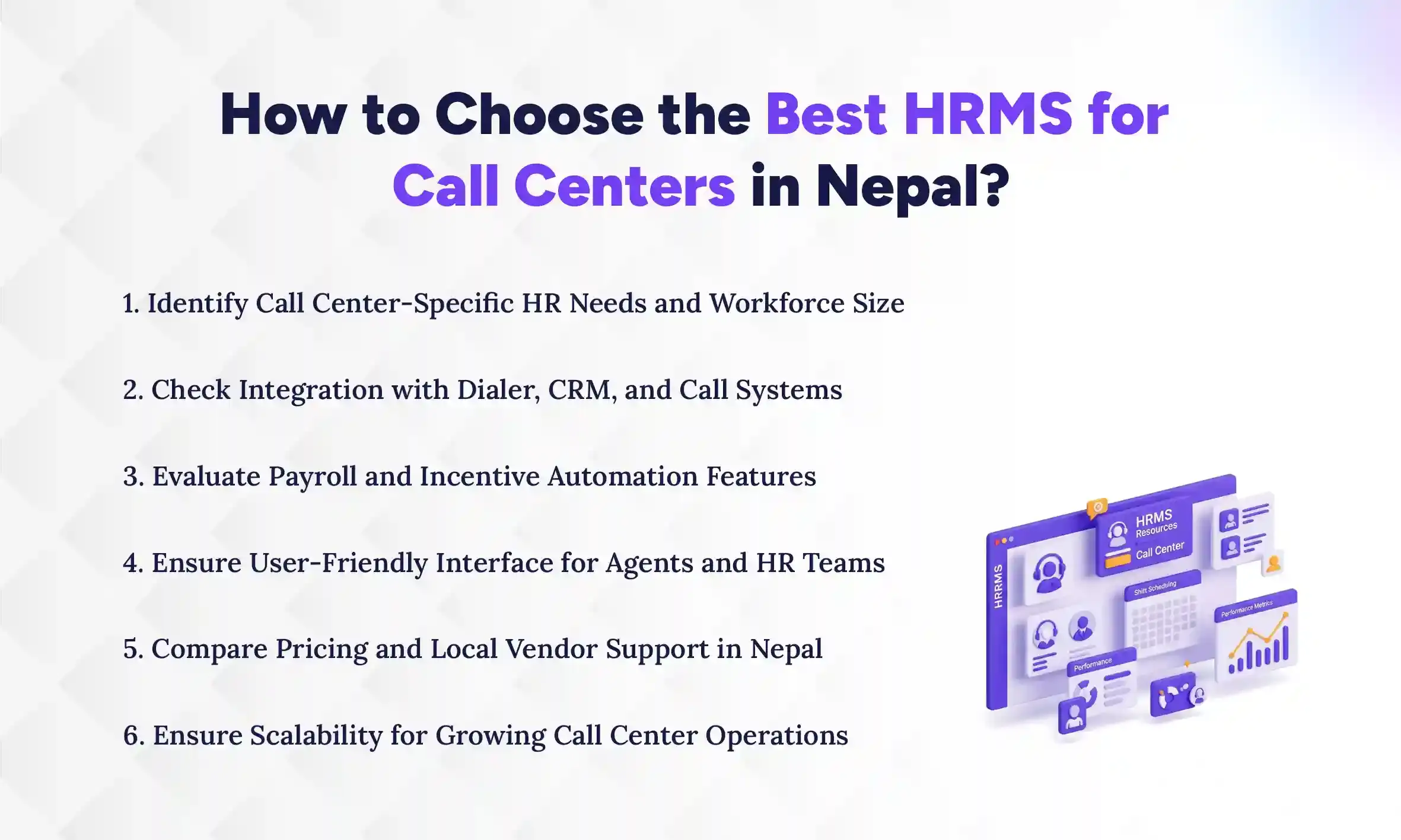
To choose the best HRMS for call centers in Nepal, you must evaluate your workforce size, operational complexity, and integration needs before selecting a solution. The right HRMS should simplify shift management, automate payroll and incentives, and support real-time performance tracking, making it essential to understand how to choose hr software that fits your specific business needs. It should also integrate with your existing systems and be easy for agents and HR teams to use. A well-chosen system can significantly improve efficiency and reduce operational headaches.
1. Identify Call Center-Specific HR Needs and Workforce Size
Start by understanding your call center’s specific HR challenges, such as shift management, agent tracking, and high turnover. A small team may need basic features, while large centers require advanced automation. Identifying these needs helps avoid unnecessary features. It also ensures the system fits your daily operations. A clear requirement list makes decision-making easier. It helps you choose software that truly solves your problems.
2. Check Integration with Dialer, CRM, and Call Systems
Call centers rely heavily on tools like dialers and CRM systems. Your HRMS should integrate smoothly with these platforms to avoid data silos. Integration helps sync attendance, performance, and call data in one place. It reduces manual work and improves accuracy. A connected system improves overall workflow efficiency. It also ensures better coordination between departments.
3. Evaluate Payroll and Incentive Automation Features
Payroll in call centers is complex due to incentives, bonuses, and overtime. HRMS should automatically calculate salaries based on performance and attendance. This reduces errors and saves time for HR teams. It ensures employees are paid accurately and on time. Automation also builds trust among agents. It simplifies even the most complex compensation structures.
4. Ensure User-Friendly Interface for Agents and HR Teams
A complicated system can slow down adoption and reduce efficiency. Choose an HRMS with a simple and intuitive interface. Agents should easily mark attendance or check schedules, while HR should access reports quickly. Minimal training should be required to use the system. Ease of use improves productivity across teams. A user-friendly system ensures smooth daily operations.
5. Compare Pricing and Local Vendor Support in Nepal
Pricing should align with your budget and the features offered. Avoid choosing software only because it is cheap, value matters more. Also, ensure the vendor provides local support in Nepal. Quick support helps resolve issues without delays. Reliable vendors also assist in implementation and training. Good support can make a huge difference in long-term usage.
6. Ensure Scalability for Growing Call Center Operations
Your call center may grow in terms of agents, projects, and locations. The HRMS should be scalable enough to handle this growth. Cloud-based systems are usually more flexible and adaptable. Scalability ensures you don’t need to switch systems frequently. It supports long-term business expansion. Planning for future needs is just as important as current requirements.
Which Is the Best HRMS for Call Centers in Nepal?
Pace HRMS is the best HRMS for call centers in Nepal because it offers a complete, centralized platform that automates attendance, payroll, recruitment, and performance management in one system. It is cloud-based, scalable, and designed to handle high-volume teams and shift-based operations efficiently.
It supports features like biometric attendance, shift management, incentive-based payroll, and real-time performance tracking, perfect for call center environments. The system also improves accuracy, reduces manual errors, and provides actionable HR insights for better decision-making. Overall, Pace HRMS fits call center needs by simplifying complex workflows, improving agent management, and ensuring smooth 24/7 operations.
Common Challenges Call Centers Face Without HRMS
Without an HRMS for call centers in Nepal, managing daily operations becomes time-consuming, error-prone, and difficult to control. Call centers deal with large teams, rotating shifts, and performance-based roles, which are hard to manage manually. Important data often gets scattered across spreadsheets and systems, leading to confusion. This not only affects productivity but also creates issues in payroll, scheduling, and reporting. Over time, these challenges can impact both employee satisfaction and business performance.
1. Manual Attendance and Shift Management Errors
Managing attendance and shifts manually often leads to errors like missed entries, incorrect timings, or overlapping schedules. It becomes difficult to track who is working in which shift. These mistakes can disrupt daily operations and reduce efficiency. HR teams spend extra time correcting records. This also creates confusion among employees. Inaccurate attendance data can affect payroll and planning.
2. Payroll and Incentive Calculation Mistakes
Call centers rely heavily on incentive-based salary structures, which are complex to calculate manually. Payroll errors can lead to incorrect payments and employee dissatisfaction. It also increases the workload for HR teams to verify and fix issues. Inconsistent payroll processes reduce trust in the system. Mistakes in incentives can affect employee motivation. Accurate calculations are critical for smooth operations.
3. Difficulty Tracking Agent Performance and KPIs
Tracking agent performance manually is challenging and often inaccurate. Managers may struggle to monitor KPIs like call handling time, targets, and quality scores. This limits the ability to evaluate performance effectively. Without proper tracking, it’s hard to identify top performers or underperforming agents. This impacts decision-making and productivity. Real-time performance insights are essential in call center environments.
4. High Employee Turnover and Poor Workforce Planning
Call centers often face high attrition rates, making workforce planning difficult. Without proper systems, it’s hard to track employee engagement and retention patterns. Recruitment and onboarding may also be delayed due to inefficiencies. This creates gaps in staffing and affects operations. Poor planning leads to overworked teams and reduced performance. A lack of structured HR processes worsens turnover issues.
Future of HRMS for Call Centers in Nepal
The future of HRMS for call centers in Nepal is moving toward smarter, faster, and fully integrated systems. As call centers continue to grow, HRMS will play a key role in automating operations and improving decision-making. Technologies like AI, cloud computing, and mobile access are shaping the next generation of HR tools. These systems will not just manage HR, they will actively optimize workforce performance and efficiency.
1. AI-Based Workforce and Performance Analytics
AI-powered HRMS will analyze employee performance, attendance, and behavior patterns in real time. It can predict trends like attrition or productivity drops before they happen. Managers can make data-driven decisions quickly and accurately. This reduces guesswork and improves planning. AI also helps identify top performers and training needs. It makes performance management more intelligent and proactive.
2. Mobile HRMS for Remote and Hybrid Call Center Agents
With the rise of remote and hybrid work models, mobile HRMS is becoming essential. Agents can mark attendance, check schedules, and access HR services through their phones. Managers can monitor teams from anywhere. This increases flexibility without losing control. It also improves employee convenience and engagement. Mobile access makes HR processes faster and more accessible.
3. Integration with CRM, Dialers, and Call Analytics Tools
Future HRMS systems will integrate seamlessly with CRM, dialers, and call analytics platforms. This allows real-time syncing of performance data and HR records. Managers get a complete view of agent productivity and operations in one place. It reduces the need for multiple systems. Integration improves workflow efficiency and accuracy. It creates a more connected and streamlined ecosystem.
4. Cloud-Based HR Automation for 24/7 Operations
Cloud-based HRMS will continue to dominate due to its flexibility and scalability. It allows call centers to manage operations anytime, anywhere. Data is updated in real time and stored securely. It reduces dependency on physical infrastructure. This is especially useful for 24/7 operations. Cloud automation ensures smooth and uninterrupted HR management.
Conclusion
Managing HR in a call center isn’t just about attendance or payroll, it’s about handling large teams, rotating shifts, performance targets, and constant pressure to stay efficient. That’s exactly where an HRMS for call centers in Nepal becomes a game-changer. It simplifies complex processes, reduces errors, and brings everything, from shift scheduling to performance tracking, into one streamlined system, especially with solutions like The Pace Infosys leading the way.
As the call center industry in Nepal continues to grow, relying on manual systems is no longer practical. The right HRMS can improve productivity, enhance employee experience, and support better decision-making. Whether you’re running a small support team or a large BPO, investing in the right system helps you stay competitive. Because when your HR operations run smoothly, your entire call center performs better, simple as that, and you can also explore HRMS for law firms to understand how different sectors optimize HR operations.