Running a small business in Nepal often feels like spinning plates while answering emails and chasing invoices at the same time. One minute you’re hiring a new employee, the next you’re calculating leave balances or wondering if payroll went out correctly. HR tasks have a sneaky way of piling up quietly, until they demand your full attention. That’s where the right HR system steps in, not as a luxury, but as a quiet engine working behind the scenes to keep everything moving smoothly.
In this blog, we’ll break down everything you need to know about HR software for small businesses in Nepal, from must-have features and pricing considerations to common mistakes and future trends. Whether you’re a startup founder or managing a growing team, this complete guide will help you choose software that fits your business like a well-tailored suit, not a one-size-fits-all jacket.
What Is HR Software?
HR software is a digital system designed to manage and automate human resource tasks such as employee records, payroll, attendance, recruitment, and performance tracking. Think of it as the control room of your workforce, quietly organizing data, reducing paperwork, and keeping everything aligned behind the scenes. Unlike bulky enterprise systems built for thousands of employees, HR software for small businesses is usually simpler, more affordable, and easier to use. It focuses on practicality over complexity, helping small teams stay organized without drowning in spreadsheets or endless email threads.
Why Nepalese Small Businesses Need HR Automation
It saves time by automating payroll, attendance, and leave calculations.
It reduces costly human errors in salary processing and compliance paperwork.
It centralizes employee information instead of scattering it across files and folders.
It improves employee experience through self-service portals.
It helps small teams stay compliant with tax and labor regulations.
It supports smoother hiring and onboarding processes.
It gives business owners clear workforce insights without needing a full HR department.
Importance of HR Software for Small Businesses
For small businesses, HR software isn’t just a “nice upgrade”; it’s often the difference between organized growth and operational chaos. When your team is small, every minute and every mistake matters. Understanding the benefits of hr software helps businesses see why the right system acts like a steady co-pilot, handling paperwork, tracking compliance, and keeping employee data in one safe place. Instead of juggling spreadsheets like circus props, you get a clear system that supports smarter decisions and smoother daily operations.
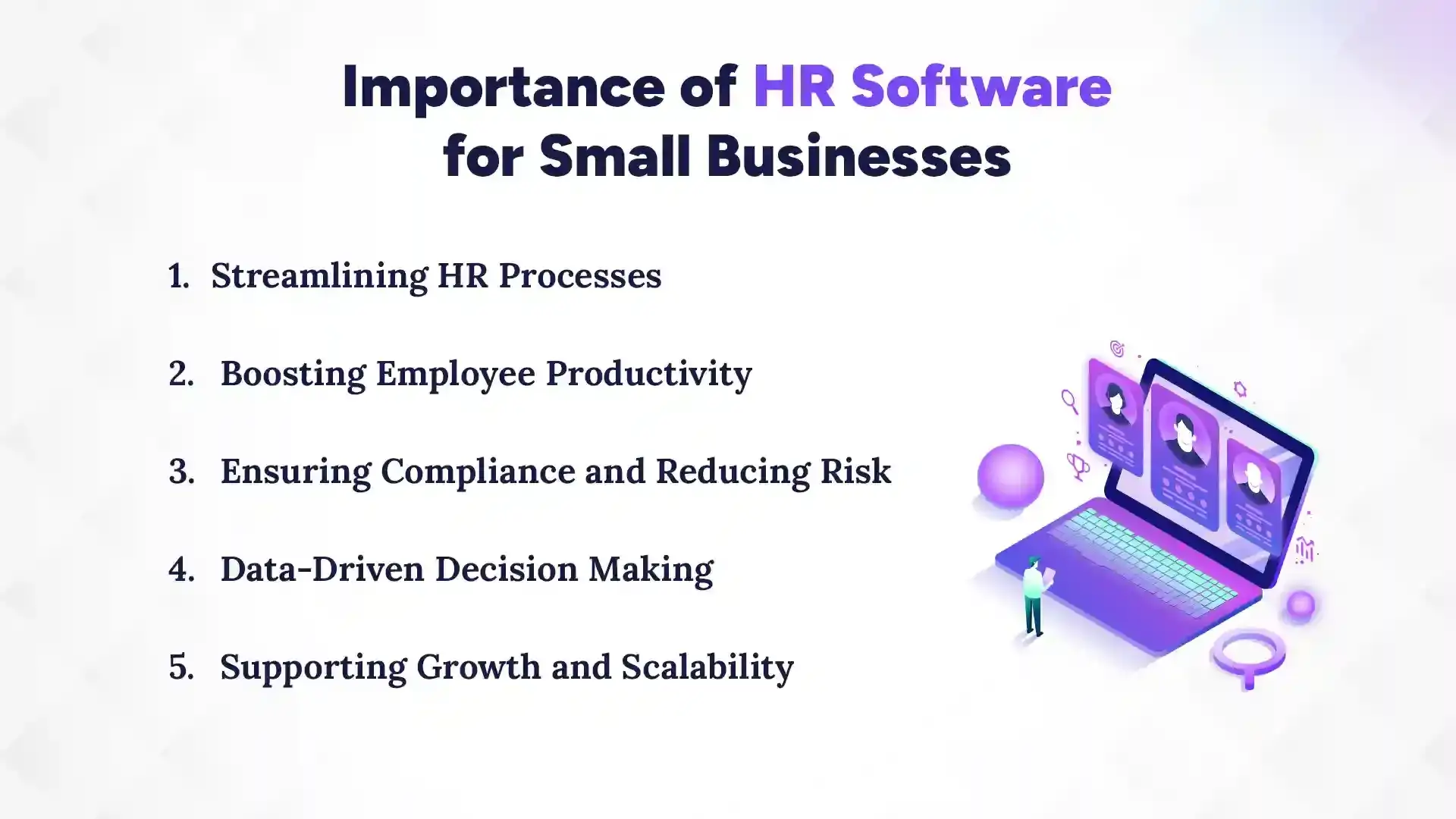
1. Streamlining HR Processes
HR software simplifies everyday tasks that usually eat up hours. From payroll processing to leave approvals, everything moves through a structured system instead of endless back-and-forth emails. It reduces manual data entry and repetitive admin work. Small businesses, where one person often handles multiple roles, benefit massively from this efficiency. The result? Fewer bottlenecks, faster processes, and less “Did you send that file?” confusion.
2. Boosting Employee Productivity
When HR processes run smoothly, employees feel it. Self-service portals allow staff to check payslips, apply for leave, or update details without chasing HR. That saves time on both sides. Automated attendance and performance tracking also create transparency. Instead of micromanaging, managers can focus on meaningful conversations and goals. Productivity improves not because people work harder, but because the system works smarter.
3. Ensuring Compliance and Reducing Risk
Compliance can feel like walking through a legal minefield, especially for small businesses. HR software helps track tax rules, labor laws, and statutory requirements accurately. Automated documentation keeps records organized and audit-ready. This reduces the risk of penalties or legal trouble caused by simple human errors. It’s like having a digital safety net quietly working in the background.
4. Data-Driven Decision Making
Good decisions aren’t built on gut feelings alone. HR software provides reports on attendance trends, turnover rates, and performance metrics. Small business owners can see patterns clearly instead of guessing. These insights help in workforce planning, budgeting, and identifying problem areas early. In short, it turns raw employee data into a meaningful strategy.
5. Supporting Growth and Scalability
Growth is exciting, but messy without structure. As your team expands, manual systems quickly fall apart. HR software scales with you, handling more employees, departments, and processes without adding complexity. It ensures consistency across hiring, payroll, and performance management. Think of it as building strong foundations before adding new floors to your business house.
Key Features of HR Software for Small Businesses
When choosing HR software for a small business, features of hr software matter more than flashy dashboards. Small teams need tools that solve real problems, such as payroll errors, attendance confusion, and hiring delays, not complicated systems built for corporate giants. The right features act like a well-organized toolkit: simple, reliable, and ready when needed. From employee records to performance tracking, each function should reduce admin headaches and give owners clearer control over their workforce.
1. Employee Database and Information Management
This is the digital filing cabinet, but smarter. It stores employee profiles, contracts, contact details, job history, and compliance documents in one centralized system. Instead of digging through folders or scrolling through endless spreadsheets, everything is searchable within seconds. Updates happen in real time, reducing confusion. For small businesses, this clarity is gold because misplaced data often leads to misplaced decisions.
2. Payroll and Compensation Management
Payroll is one area where “almost correct” isn’t good enough. An HR software with payroll integration automates salary calculations, tax deductions, bonuses, and overtime management with precision. It reduces manual errors that can damage trust. Many systems also generate payslips and statutory reports automatically. In short, payday becomes smooth and predictable, not a monthly stress test.
3. Attendance, Time Tracking, and Leave Management
Tracking attendance manually can feel like chasing shadows. Modern HR systems use an attendance management system that integrates biometric devices, mobile apps, and even geofencing to log working hours accurately. Leave requests move through approval workflows without paperwork piling up. Managers can monitor daily and monthly logs with clarity. The result? Fairness, transparency, and fewer “I thought I informed you” conversations.
4. Recruitment and Applicant Tracking System (ATS)
Hiring the right person shouldn’t feel like fishing in the dark. An ATS organizes job applications, tracks candidate progress, and streamlines interview scheduling. It keeps communication structured and professional. For small businesses growing fast, this prevents missed applications and chaotic email threads. Recruitment becomes strategic instead of reactive.
5. Performance Management and Appraisal Tools
Performance tracking shouldn’t be an annual formality. HR software helps set goals, track progress, and conduct structured appraisals. Managers can give timely feedback rather than waiting for year-end reviews. Clear performance metrics encourage accountability and growth. It transforms evaluations from awkward meetings into meaningful conversations.
6. Employee Self-Service Portal
Employees appreciate independence. A self-service portal lets them access payslips, apply for leave, update personal information, and view attendance records anytime. This reduces repetitive HR queries and empowers staff. For small businesses without a full HR team, this feature quietly saves hours every week.
7. Training and Learning Management
Growth doesn’t stop after hiring. Training modules, course tracking, and skill assessments help employees upskill continuously. HR software can schedule sessions and monitor completion rates. It ensures learning isn’t forgotten in the rush of daily operations. In the long run, investing in employee development strengthens the entire business ecosystem.
How HR Software Helps Small Nepali Businesses Grow?
HR software helps small businesses in Nepal grow by turning messy manual processes into smooth, automated systems that actually support expansion instead of slowing it down. Understanding the types of hr software available helps businesses choose solutions that fit their growth stage and operational needs. When admin tasks stop eating up half the day, leaders can focus on strategy, customers, and revenue. The right HR software for a small business acts like a silent engine under the hood, powerful but not distracting. It creates structure, reduces risk, and gives business owners clarity, which is exactly what growth demands.
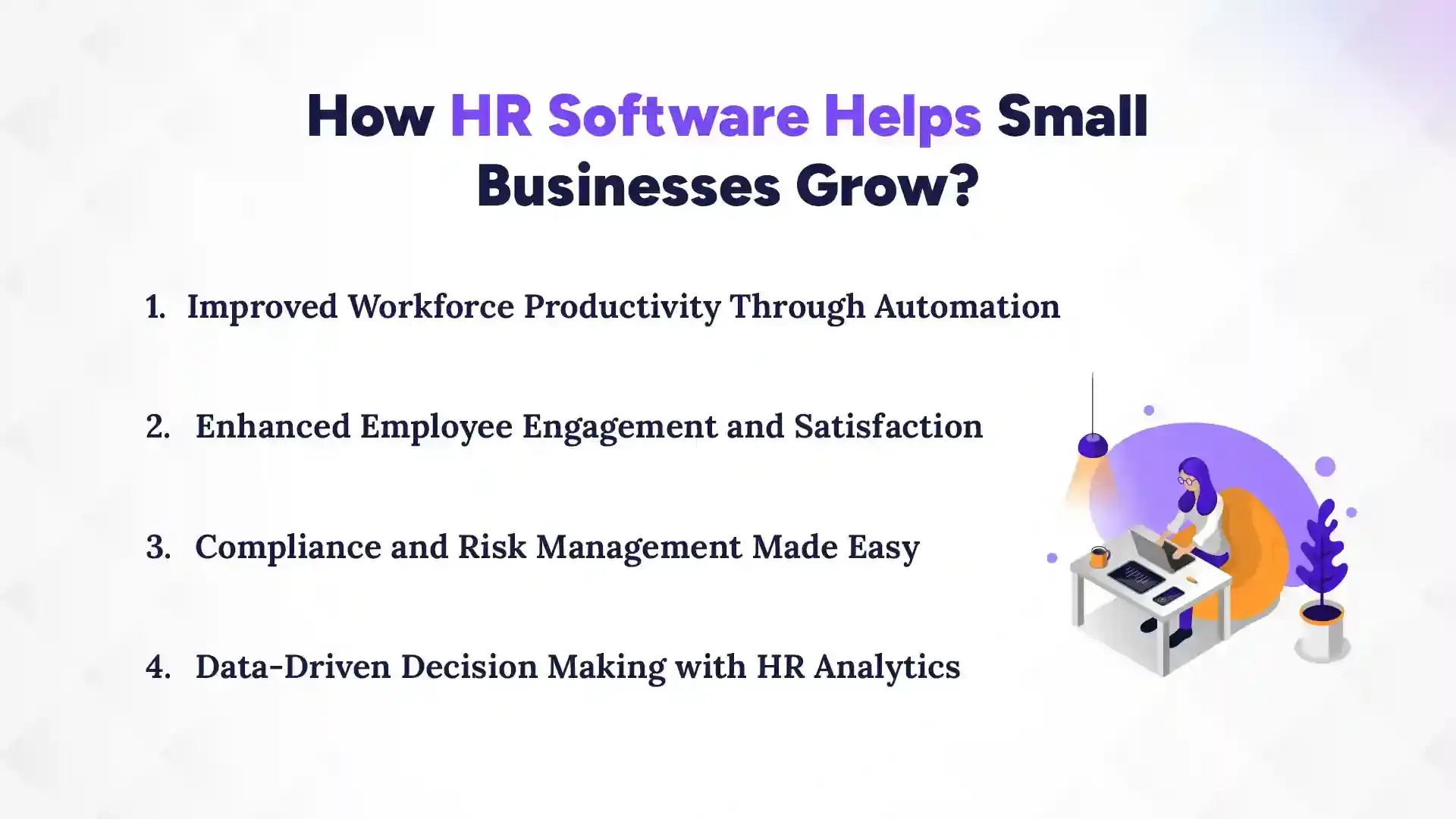
1. Improved Workforce Productivity Through Automation
Automation removes the repetitive tasks that drain energy. Payroll calculations, attendance logs, and leave approvals happen with a few clicks instead of hours of manual work. Employees spend less time chasing approvals and more time doing meaningful work. Managers get accurate data instantly, without compiling reports late at night. It’s like replacing a hand-powered fan with an electric one, same purpose, far better efficiency.
2. Enhanced Employee Engagement and Satisfaction
When systems are transparent, employees feel respected. Self-service portals, timely payroll, and structured performance reviews build trust. Clear processes reduce confusion and workplace friction. Engagement improves because people know where they stand and what’s expected. Happy employees may not shout about it every day, but they stay longer and perform better.
3. Compliance and Risk Management Made Easy
Small businesses can’t afford legal mistakes. HR software keeps tax calculations accurate, tracks labor law updates, and maintains proper documentation. Audit-ready reports are available without scrambling through files. This reduces compliance risks and financial penalties. Think of it as a digital safety harness; you hope you won’t need it, but you’re glad it’s there.
4. Data-Driven Decision Making with HR Analytics
Growth requires smart decisions, not guesses. HR analytics provide insights into employee turnover, attendance trends, and performance metrics. Business owners can spot patterns early, before small issues turn into big problems. With clear dashboards and reports, decisions become strategic instead of reactive. Data becomes less intimidating and more empowering.
Which is the Best HR software for Small Business in Nepal?
Pace HRMS is the best HR software for small businesses in Nepal because it blends powerful features with simplicity, exactly what small teams need without unnecessary complexity. It centralizes employee data, automates payroll and attendance, and offers user-friendly tools that don’t require an IT degree to operate. With built-in compliance checks and scalable modules, PACE HR grows with your business rather than outpacing it. For small business owners who want efficient HR management without the usual headaches, PACE HR feels less like software and more like a reliable teammate.
Common Mistakes When Choosing HR Software for Small Businesses
Choosing HR software for a small business isn’t something you should decide in a rush. A quick, uninformed choice can create more chaos than clarity. Many small businesses chase trends or discounts instead of focusing on real operational needs. The wrong system doesn’t just waste money; it wastes time, energy, and team confidence. Avoiding these common mistakes can save you from turning a smart investment into a daily frustration.
1. Ignoring Business-Specific Needs
Every small business operates differently, and your HR software should reflect that reality. A café, a construction firm, and a tech startup won’t have identical HR workflows. Choosing generic software without mapping your processes is like buying a one-size-fits-all jacket; it rarely fits well. Identify your pain points first: payroll issues, attendance tracking, and recruitment gaps. The clearer your needs, the better your choice. Customization options also matter more than most people realize.
2. Overlooking Scalability Options
Today you may have 12 employees; tomorrow it could be 40. Some businesses pick software that works fine initially but struggles as the team expands. Migrating to a new system later can feel like moving houses, stressful and time-consuming. Scalable HR software grows with your business, adding features and users smoothly. Planning for growth, even modest growth, prevents future headaches. Always think beyond your current team size.
3. Focusing Only on Price
Budget is important, especially for small businesses, but price alone shouldn’t drive the decision. The cheapest software often comes with limited features or weak support. It’s like buying a bargain printer only to overspend on ink cartridges later. Instead, evaluate overall value, features, reliability, compliance tools, and customer service. Sometimes paying slightly more upfront saves significantly in the long run. Smart investment beats short-term savings.
4. Neglecting Integration Capabilities
HR software rarely operates in isolation. It should connect smoothly with accounting tools, biometric devices, ERP systems, and sometimes CRM platforms. Without integration, you’ll end up manually transferring data, which defeats the purpose of automation. Seamless connectivity reduces duplication and errors. It keeps all your systems “talking” to each other efficiently. Integration isn’t a luxury; it’s a necessity.
5. Choosing Software Without a User-Friendly Interface
If your team finds the system confusing, adoption will drop quickly. A cluttered dashboard and complicated menus can discourage even motivated employees. HR software should feel intuitive, not like decoding a secret message. Simplicity encourages consistent use across departments. The easier it is to navigate, the faster your team adapts. Usability directly impacts productivity.
6. Skipping Employee Training and Support
Even the best HR software fails without proper onboarding. Some businesses assume employees will automatically understand the system, which rarely happens. Training sessions ensure everyone uses features correctly and confidently. Ongoing customer support also matters when technical issues arise. Without guidance, powerful tools remain underutilized. Proper training turns software into a true productivity partner.
Future Trends in HR Software
HR technology isn’t standing still; it’s evolving faster than most policy manuals can keep up. The future of HR software for small businesses is smarter, faster, and far more intuitive. What once required manual oversight is now powered by automation and real-time data. Small businesses no longer need enterprise-sized budgets to access advanced tools. The coming years will see HR systems acting less like record-keepers and more like strategic advisors.
1. AI and Automation in HR Processes
Artificial Intelligence is slowly becoming HR’s silent assistant. From resume screening to automated payroll calculations, AI reduces repetitive tasks and speeds up decision-making. Chatbots now answer employee queries instantly, even outside office hours. Automation minimizes errors and saves valuable time. Instead of drowning in paperwork, HR teams can focus on strategy. It’s like having an extra team member who never takes coffee breaks.
2. Mobile-First HR Solutions
Today’s workforce lives on their smartphones, and HR software is adapting accordingly. Mobile apps allow employees to apply for leave, check payslips, and track attendance from anywhere. Managers can approve requests on the go without being tied to a desk. This flexibility improves responsiveness and convenience. In a way, HR is now literally in your pocket. Convenience is becoming a standard, not a bonus.
3. Cloud-Based and Hybrid HR Platforms
Cloud technology has changed the game for small businesses. Data is stored securely online, accessible anytime and anywhere. Hybrid platforms combine on-premise control with cloud flexibility for added security. Updates happen automatically, without expensive installations. This reduces IT dependency and infrastructure costs. It’s like upgrading your office without actually renovating it.
4. Advanced Analytics and Predictive Insights
Modern HR software doesn’t just show what happened, it predicts what might happen next. Advanced analytics identify turnover trends, performance gaps, and workforce needs early. Predictive insights help businesses plan hiring and budgeting more strategically. Instead of reacting to problems, companies can prevent them. Data becomes a compass rather than just a record book.
5. Employee Experience and Engagement Tools
Employee engagement is no longer a buzzword; it’s a priority. Future HR systems include feedback tools, pulse surveys, recognition programs, and wellness tracking. These features strengthen communication and workplace culture. Happy employees are more productive and loyal. Software is now helping businesses measure morale, not just attendance.
6. Integration with Collaboration and Productivity Apps
HR software is increasingly connecting with collaboration platforms like Slack, Microsoft Teams, and project management tools. This integration streamlines communication and task tracking across departments. Employees can receive HR updates within the tools they already use daily. It reduces switching between systems and improves efficiency. The goal is simple: make work smoother, not more complicated.
Conclusion
Choosing the right HR software for a small business can feel overwhelming, but it’s one of the smartest investments a growing company can make. From streamlining payroll and attendance to simplifying recruitment and performance tracking, the right system saves time, reduces errors, and improves overall efficiency. Small businesses don’t need enterprise-level complexity; they need solutions that are practical, scalable, and easy for their teams to adopt, like those offered by The Pace Infosys.
As technology evolves, small businesses can leverage AI, mobile solutions, and analytics to make smarter HR decisions and enhance employee engagement. Tools like PACE HR show that effective HR management isn’t about spending more; it’s about working smarter. Investing in the right HR software today lays the foundation for smoother growth and a stronger, happier workforce tomorrow.
FAQs
What is HR software for small businesses?
+
HR software for small businesses is a digital system that manages payroll, attendance, recruitment, performance, and employee data efficiently, reducing manual work and errors.
Why do small businesses need HR software?
+
Small businesses need HR software to save time, stay compliant, centralize employee information, automate tasks, and support growth without adding extra HR staff.
How much does HR software for a small business cost?
+
Cost varies depending on features, number of employees, and subscription plans, typically ranging from affordable monthly fees to slightly higher annual packages.
Can HR software improve employee productivity?
+
Yes, HR software improves productivity by automating repetitive tasks, providing clear workflows, tracking performance, and enabling self-service for employees.
Is PACE HR suitable for small businesses?
+
Yes, PACE HR is ideal for small businesses because it offers scalable modules, automated payroll, attendance tracking, and an intuitive user interface for teams.
Do small businesses need cloud-based HR software?
+
Cloud-based HR software is recommended as it allows secure remote access, automatic updates, easy scaling, and better integration with other business tools.
What features should a small business look for in HR software?
+
Key features include payroll management, attendance tracking, leave management, recruitment tools, performance appraisals, employee self-service, and training modules.
Can HR software help with compliance?
+
Yes, HR software tracks labor laws, tax deductions, and documentation, ensuring small businesses remain compliant and reduce the risk of penalties.
Ready to get started?
Book a 30-minute consultation call, and let's talk about your goals.