
.webp&w=3840&q=75)
An offer letter sits on a manager’s desk for a week. A missed tax document triggers a costly compliance penalty. A departed employee still has access to sensitive company files. If your HR team is constantly putting out these manual fires, you don't have a staffing problem; you have a workflow problem.
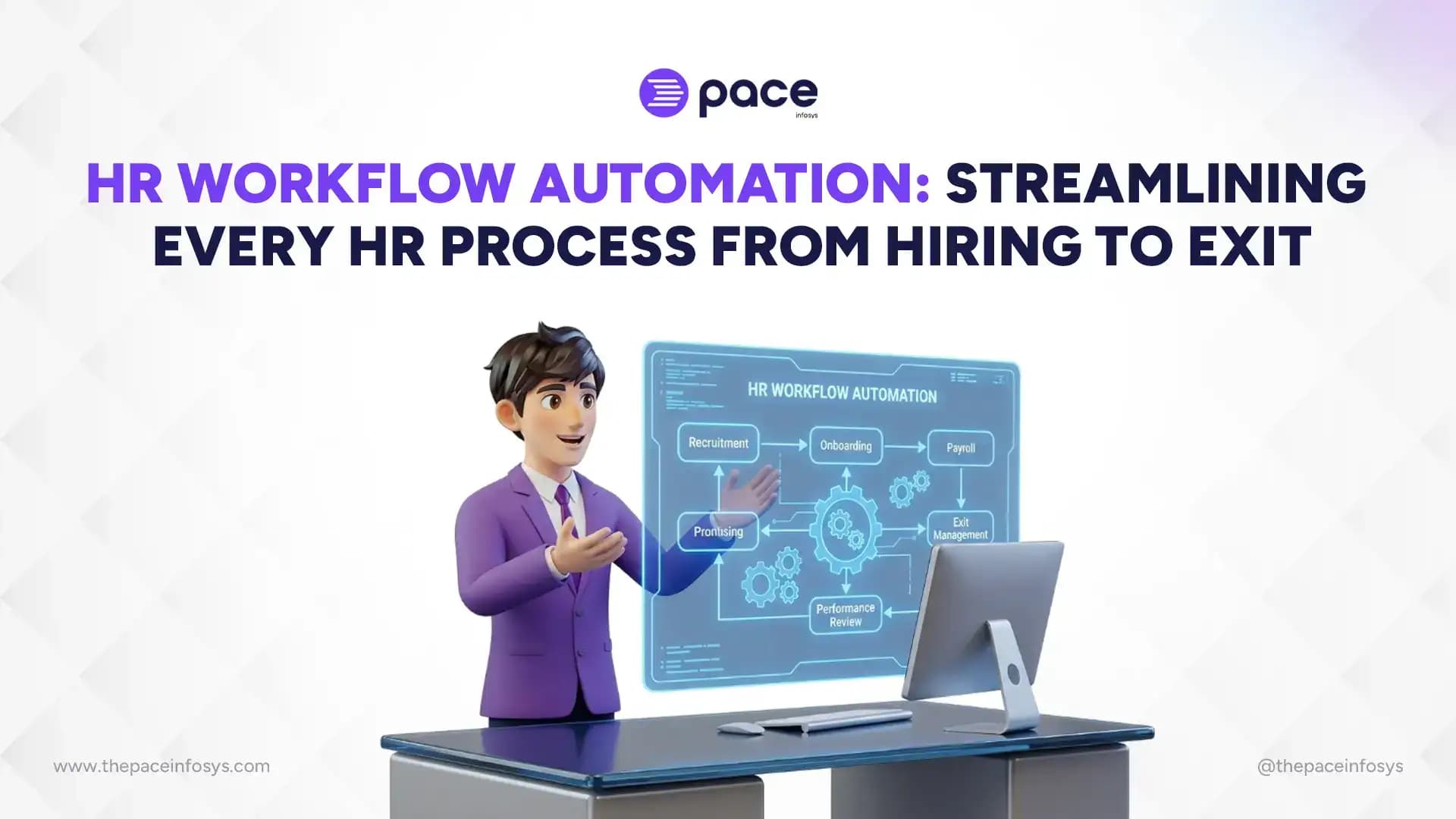
HR workflow automation eliminates these manual hurdles by connecting every phase of the employee journey through rule-based, trigger-driven software. This blog covers exactly how replacing paper-pushing with automated digital flows can transform your HR department from a reactive administrative bottleneck into a proactive, strategic powerhouse.
The Hidden Bottlenecks of Manual HR Processes
The hidden bottlenecks of manual HR processes include severe approval delays, redundant data entry across multiple spreadsheets, high error rates in payroll, and a frustrating employee experience caused by slow responses to basic requests.
1. Endless approval chains
Physical paper trails for leave requests, procurement, or overtime create endless approval chains that get stuck on managers' desks. When a physical document sits in an inbox waiting for a wet-ink signature, it halts productivity and frustrates employees who need immediate answers.
2. Redundant data entry
Without automated systems, HR teams suffer through redundant data entry. Manually entering the same employee data into recruitment forms, onboarding packets, payroll systems, and attendance trackers wastes countless hours and exponentially increases the risk of typos.
3. Compliance blind spots
Relying on human memory or wall calendars to track expiring contracts, upcoming probation periods, or missing tax documents creates dangerous compliance blind spots. These manual tracking methods inevitably fail, leading to costly legal penalties and labor law violations.
What is HR Workflow Automation?
HR workflow automation is the use of technology to streamline and execute repetitive HR tasks without manual intervention. By setting up rule-based triggers, it connects different HR processes from recruitment to offboarding, ensuring tasks like approvals, notifications, and data syncing happen instantly and accurately. Instead of HR acting as the middleman pushing papers from one desk to another, the software orchestrates the flow of work. This transition allows HR professionals to step away from administrative execution and focus on the specific areas of the employee lifecycle that benefit most from this automation.
Key HR Processes You Must Automate
Key HR processes you must automate include recruitment tracking, onboarding task assignment, leave approvals, payroll syncing, performance reviews, employee data updates, and secure offboarding access revocation.
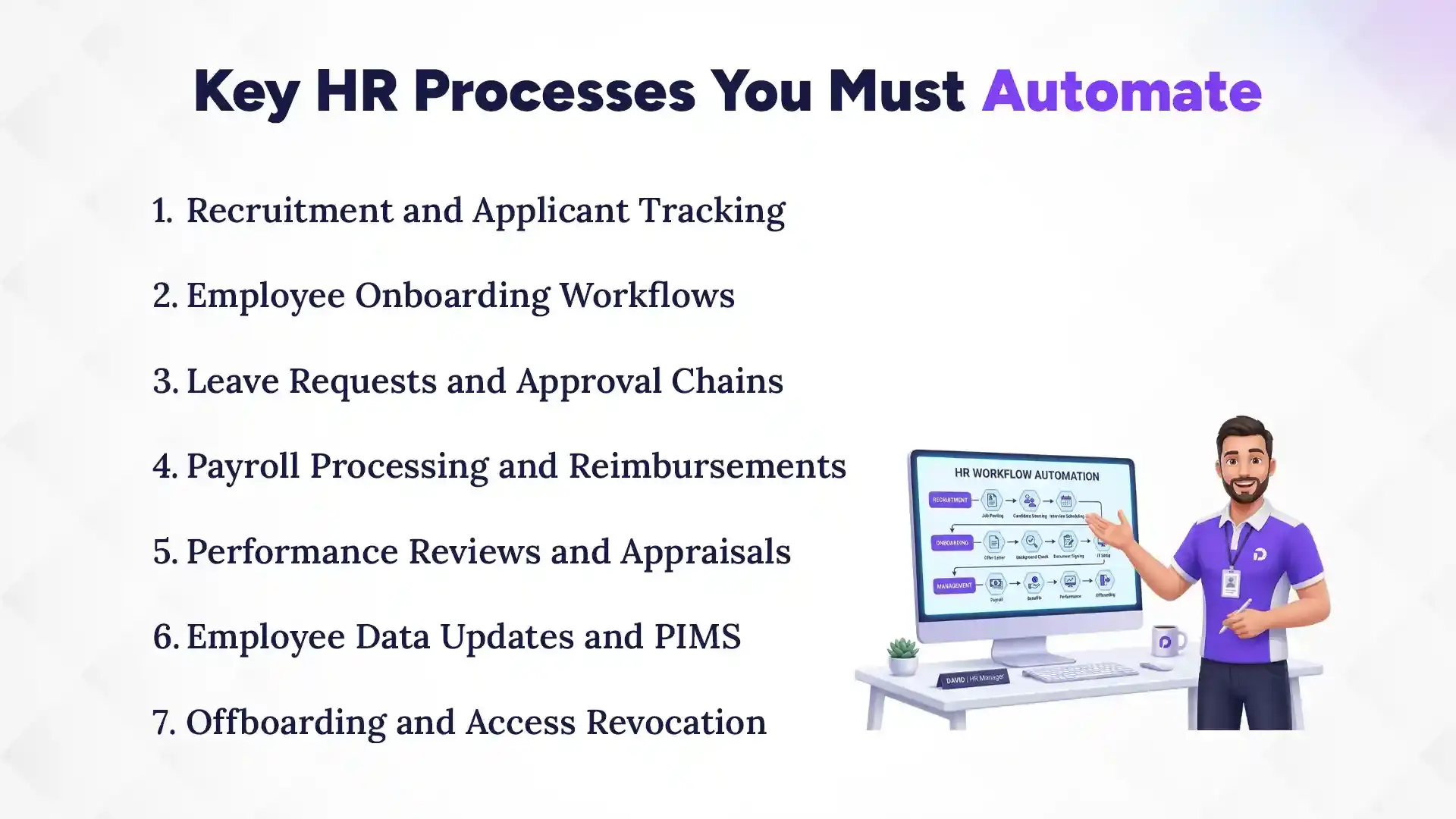
1. Recruitment and Applicant Tracking
Manually screening resumes and sending update emails to dozens of candidates is a massive time sink. Automated workflows can parse resumes for keywords, send personalized rejection or interview invitation emails based on triggers, and move candidates through pipeline stages without HR lifting a finger. Utilizing a dedicated Applicant Tracking System (ATS) ensures no qualified candidate falls through the cracks due to manual sorting fatigue.
2. Employee Onboarding Workflows
Employee Onboarding Workflows: Automatically triggers IT setup, document signing, and training assignments the moment a candidate accepts an offer. The moment a candidate accepts an offer, a well-designed automated workflow should take over. It instantly triggers tasks for IT (laptop setup), HR (document collection), and the hiring manager (first-week schedule). Deploying targeted HR software for onboarding transforms a chaotic first day into a structured, welcoming experience that accelerates time-to-productivity.
3. Leave Requests and Approval Chains
Rule-based automation completely revolutionizes leave management. It routes leave requests directly to the correct manager based on department or reporting structure and automatically updates the leave balance upon approval. A robust leave management system eliminates the need for back-and-forth emails and manual balance calculations, giving employees instant visibility into their time off.
4. Payroll Processing and Reimbursements
Payroll is too critical for manual math. Automated workflows seamlessly sync attendance, leave, and overtime data directly into the payroll engine. This prevents manual calculation errors and ensures employees are paid accurately and on time, every single cycle. Upgrading to dedicated HR payroll software is the most effective way to automate this high-stakes financial process.
5. Performance Reviews and Appraisals
Annual review cycles often stall because managers forget to fill out peer evaluations. Automation can schedule self-assessments, peer reviews, and manager evaluations, sending automated reminders as deadlines approach. Understanding exactly what HR software does reveals how it shifts performance management from a painful annual chore to a continuous, automated feedback loop.
6. Employee Data Updates and PIMS
When an employee gets married, moves to a new department, or receives a salary bump, HR shouldn't have to update five different systems. Automated workflows update their core profile across all connected modules instantly. Centralizing this through a Personnel Information Management System (PIMS) guarantees that every department is working from the exact same, up-to-date employee record.
7. Offboarding and Access Revocation
Offboarding is a massive security risk if done manually. Triggering an "exit" workflow instantly notifies IT to revoke system access, alerts payroll for final settlement calculations, and sends an exit survey to the departing employee. Leveraging cloud-based HR software ensures these offboarding triggers execute securely from anywhere, protecting company data the second an employee walks out the door.
Benefits of Automating Your HR Workflows
The benefits of automating your HR workflows include drastically reduced administrative overhead, faster response times to employee requests, zero-error compliance, and a significant boost in overall workforce productivity.
- Massive time savings: HR spends minutes instead of days on repetitive administrative tasks like data entry and follow-ups.
- 100% audit trails: Every approval, rejection, and data change is automatically logged with a timestamp, ensuring total visibility for compliance audits.
- Enhanced employee experience: Staff get instant answers to requests (like leave status) without waiting days for HR to physically process a form.
- Zero human error: Automated calculations and data syncing eliminate costly payroll mistakes and tax compliance errors.
Key Features to Look for in HR Workflow Automation Software
Key features to look for in HR workflow automation software include customizable drag-and-drop builders, deep conditional logic, and cross-department integration capabilities.
1. Custom Drag-and-Drop Workflow Builders
A custom drag-and-drop workflow builder removes the IT bottleneck by letting HR visually map out processes on a digital canvas. Instead of writing code, you simply drag and drop action blocks like "Send Notification" or "Assign Task" to build multi-step sequences. This visual interface empowers your HR team to set up complex conditional logic and modify workflows instantly as company policies evolve, without ever needing a software developer.
2. Conditional Logic and Trigger-Based Actions
The true power of automation lies in "If this, then that" logic. For example, if an employee hits 5 years of service, then trigger an alert to HR for a loyalty bonus. Evaluating the core features of HR software is crucial to ensure the system offers deep conditional logic, not just basic, static notifications.
3. Cross-Department Integration Capabilities
Standalone HR automation fails if it can't talk to other departments. Your HR workflows must seamlessly integrate with IT systems (for access provisioning) and finance systems (for payroll execution) to truly automate a process end-to-end without human middlemen.
Which Is the Best HR Software for Workflow Automation in Nepal?
Pace HRMS is the best HR software for workflow automation in Nepal because it treats every HR task as an interconnected part of a larger digital ecosystem, rather than isolated administrative events. It seamlessly connects recruitment, attendance, leave, and payroll through intelligent, trigger-based workflows that require zero manual intervention.
What really makes Pace HRMS stand out is its highly customizable automation engine combined with localized Nepali compliance rules. Built on a secure cloud architecture, it allows you to build complex multi-step approval chains, automate tax deductions based on local labor laws, and trigger instant offboarding protocols. In short, Pace HRMS doesn't just digitize your HR tasks; it completely re-engineers them for maximum speed and accuracy
How to Implement HR Workflow Automation Successfully
Implementing HR workflow automation successfully requires identifying your biggest administrative bottlenecks, mapping out existing processes on paper, training your team, and starting with high-impact, low-complexity workflows before scaling across the entire department.
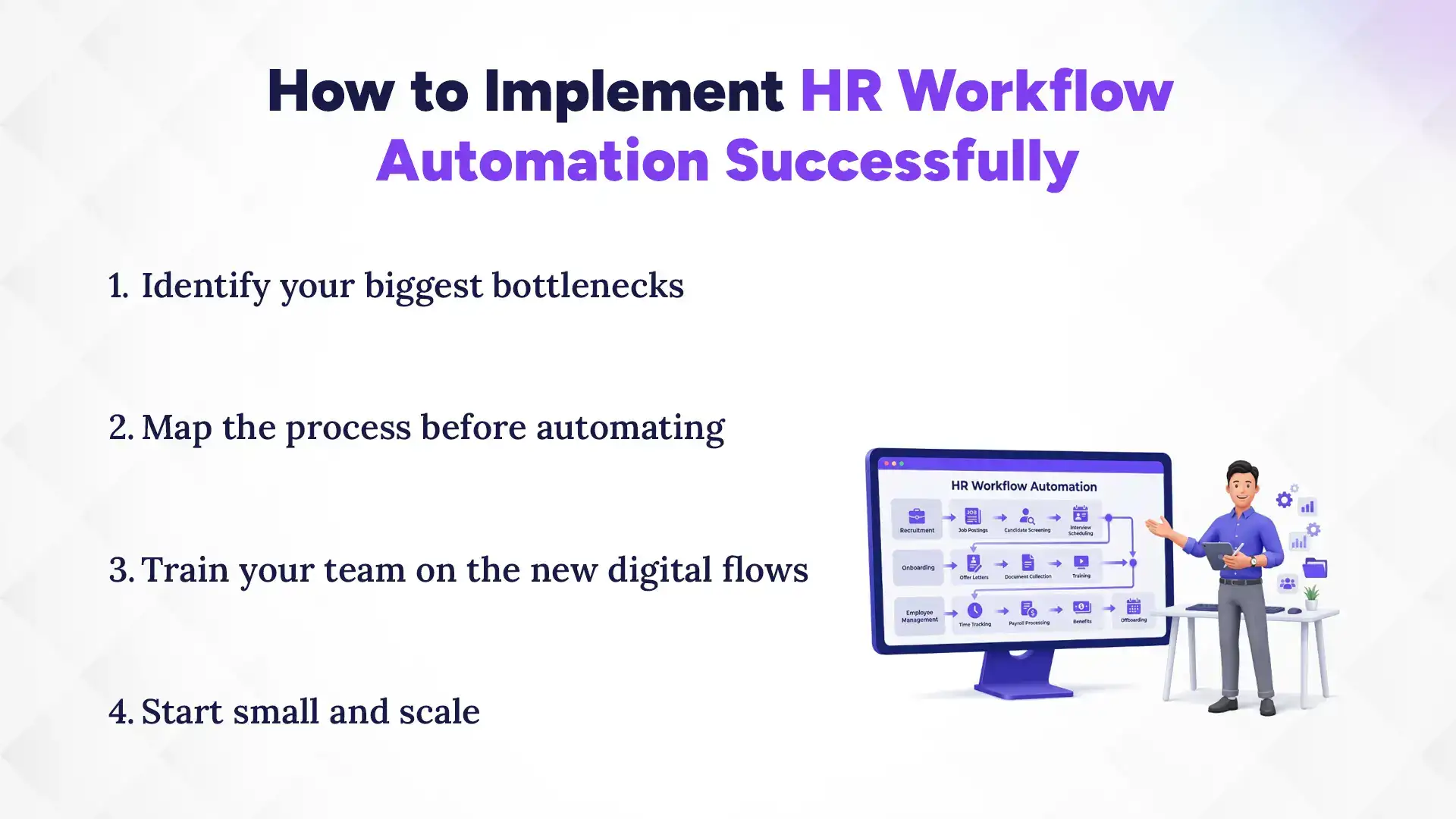
1. Identify your biggest bottlenecks
Don't try to automate everything at once. Start with the process that causes the most complaints (e.g., slow leave approvals or delayed onboarding) to prove the value of the software quickly.
2. Map the process before automating
Document every step of the current manual process, including who needs to approve what and what data is required, before attempting to build it in the software.
3. Train your team on the new digital flows
Automation only works if employees actually use it. Provide simple training so staff know how to submit digital requests and managers know how to approve them on mobile, preventing them from reverting to old email habits.
4. Start small and scale
Launch one workflow, gather feedback from employees, refine it, and then use that momentum to automate the rest of the employee lifecycle. Following a structured guide on how to implement HR software ensures your automation rollout is embraced by your team rather than resisted.
Conclusion
Manual HR processes are a bottleneck that limits your company's growth and alienates your employees. In the modern business landscape, automating these workflows is no longer a luxury; it is a fundamental requirement for operational efficiency.
If your HR team is still drowning in manual approvals and spreadsheet chaos, contact Pace Infosys today. Let us help you build a seamless, automated workflow from hiring to exit.