Hospitals, clinics, and healthcare providers juggle a lot every day. Shifts that change on a whim, strict compliance rules, credential tracking, and the ever-present challenge of keeping staff happy and motivated. Managing all this manually can quickly become a headache.
Paper rosters, scattered spreadsheets, and endless follow-ups for certifications and payroll not only eat up time but also increase the risk of mistakes. This is where HR software for healthcare steps in.
An HR software centralizes employee data, automates schedules and payroll, and keeps compliance on track, so your team can focus on patient care instead of paperwork.
Before choosing a system, it’s worth understanding exactly how healthcare HR software fits into your hospital or clinic’s daily operations, and why it’s becoming a must-have in Nepal in 2026.
What Is HR Software for Healthcare?
Healthcare HR software is a digital tool designed to make managing hospital and clinic staff easier. It helps organize employee information for nurses, doctors, lab technicians, and administrative staff, handle payroll, manage rotating shifts, track certifications, and keep the facility compliant with both labor and medical regulations. Think of it as a central hub where all HR tasks, like scheduling ER nurses or monitoring ICU staff rotations, come together, saving time and reducing errors.
At its core, healthcare HR software keeps a centralized staff database so you always know who’s on duty, their roles, and qualifications. It simplifies shift and schedule management, allowing nurses to swap shifts, track overtime for doctors, and plan coverage across wards without confusion.
Another critical feature is credentialing and license tracking. The HR system reminds you when a nurse’s license, a doctor’s medical registration, or a lab technician’s certification is about to expire, reducing compliance risks.
On top of that, it automates payroll and benefits, ensuring salaries, bonuses, and healthcare perks like on-call allowances or hazard pay are calculated accurately and delivered on time. With all these capabilities, healthcare HR software isn’t just a convenience, it’s becoming essential for smooth operations in hospitals and clinics in Nepal.
Why Healthcare Organizations Need Specialized HR Software in 2026?
Managing a hospital or clinic staff today is far from simple. Between complex shifts, rotating schedules, expiring certifications, overtime tracking, and high staff turnover, manual HR processes can quickly become overwhelming. Every missed update, miscalculated payroll, or scheduling conflict can affect not just your team but also patient care.
Manual systems such as spreadsheets, paper files, and separate tracking tools are prone to errors and slow down productivity. Teams spend hours chasing paperwork instead of focusing on healthcare delivery. That’s why specialized HR software for healthcare is no longer optional; it’s essential.
The right HR software centralizes employee data, automates schedules and payroll, and reduces compliance risk, helping healthcare organizations in Nepal operate smoothly while keeping staff engaged and certified.
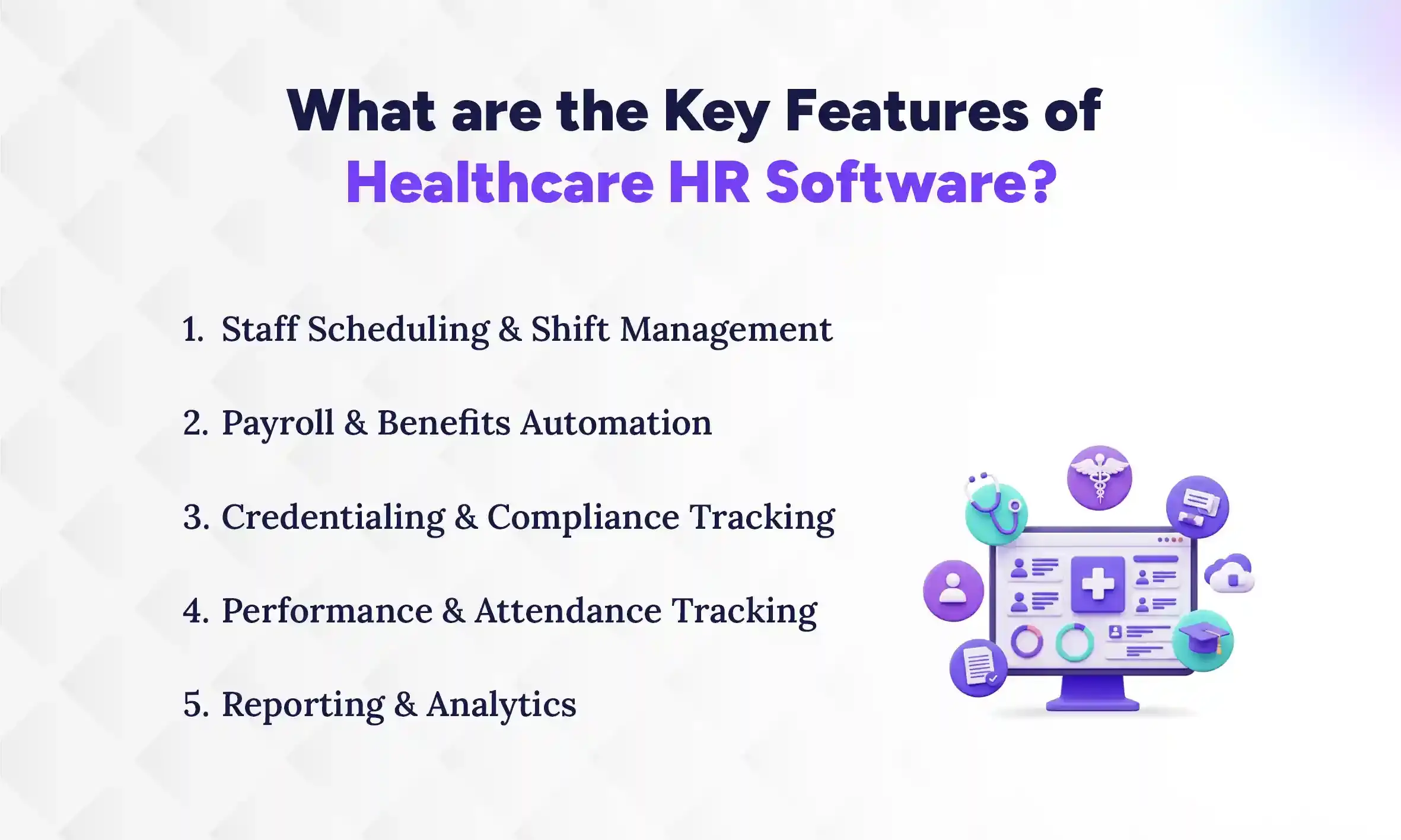
What are the Key Features of Healthcare HR Software?
Healthcare HR software includes major features like staff scheduling, payroll automation, credentialing, performance tracking, and reporting, all designed to make hospital and clinic operations smoother and more efficient. Small clinics may need simple scheduling and payroll tools, while large hospitals require robust tracking, analytics, and compliance modules.
Let’s explore the must-have HRMS features that make HR management for medical institutions in Nepal easier, faster, and more accurate.
1. Staff Scheduling & Shift Management
Managing shifts in healthcare can be chaotic, especially with rotating schedules, emergencies, and overtime. This feature automates shift creation, allows easy swaps, tracks overtime, and ensures coverage across all departments. Staff can view their schedules in real time, request changes, and managers can prevent conflicts before they happen. By streamlining shift management, hospitals reduce scheduling errors and improve staff satisfaction.
2. Payroll & Benefits Automation
Paying staff correctly and on time is critical. The HR payroll system automates salary calculations, deductions, bonuses, and healthcare benefits, removing human errors. It also handles different pay scales, overtime, and allowances for varied roles. With accurate payroll, HR teams save time, reduce disputes, and ensure employees are paid fairly, while also keeping records ready for audits.
3. Credentialing & Compliance Tracking
Healthcare staff must maintain licenses and certifications. This feature tracks expiration dates, sends reminders, and ensures every employee meets regulatory requirements. Automated compliance monitoring reduces the risk of penalties, keeps patient safety high, and frees HR from constantly chasing documentation. Whether for nurses, doctors, or technicians, this ensures your team is always qualified and certified.
4. Performance & Attendance Tracking
Monitoring staff performance and attendance helps hospitals identify top performers, track absenteeism, and address productivity issues. This feature provides insights into KPIs, working hours, and attendance patterns, helping managers make informed decisions. By having clear records, staff can be recognized for good performance, underperformance can be addressed quickly, and workforce efficiency improves across all departments.
5. Reporting & Analytics
Data-driven decisions are essential in modern healthcare. Reporting and analytics features provide insights on workforce trends, labor costs, overtime patterns, and staffing needs. Managers can generate real-time reports to forecast budgets, identify bottlenecks, and plan hiring. This helps hospitals operate more efficiently, reduce unnecessary costs, and optimize staffing strategies while keeping compliance and quality of care intact.
Benefits of Using HR Software for Healthcare in Nepal
Using HR software for medical institutions brings efficiency, accuracy, and peace of mind to hospitals and clinics. It reduces manual work, saves time, and ensures that staff and patient care run smoothly. From scheduling to payroll and compliance, these HR systems benefit healthcare organizations in Nepal stay organized and productive.
1. Streamlined Staff Management
Healthcare HR software centralizes employee data, schedules, and credentials, giving managers instant visibility across ICUs, wards, and outpatient clinics. It simplifies shift swaps, overtime tracking, and coverage planning, ensuring critical areas are never understaffed. By reducing manual errors and avoiding overlaps, daily operations run efficiently, freeing supervisors to focus on patient care and team coordination. This transparency also helps identify staffing gaps and optimize resource allocation.
2. Faster Payroll & Benefits Processing
Payroll automation ensures salaries, bonuses, allowances, and benefits like on-call or night shift pay are accurate and delivered on time. HR teams spend less effort correcting errors or reconciling payments, which improves staff trust and satisfaction. Automated systems also handle complex payroll scenarios common in hospitals, such as part-time, contractual, or rotation-based pay. This efficiency allows HR to focus on strategic planning and employee engagement.
3. Compliance & Audit Readiness
Licenses, certifications, and labor law compliance are critical in healthcare. HR software tracks expirations for nurses, doctors, lab technicians, and allied staff, sending automated reminders well before deadlines. This proactive approach minimizes compliance risks and keeps hospitals prepared for audits. Centralized documentation and reporting reduce administrative burden and ensure patient safety is never compromised.
4. Improved Collaboration Across Departments
Shared access to schedules, alerts, and reports keeps doctors, nurses, and administrative teams aligned. Departments like radiology, surgery, and labs can coordinate shift coverage, handoffs, and resource use without miscommunication. Real-time visibility ensures critical decisions are informed, reduces bottlenecks, and strengthens interdepartmental teamwork.
5. Enhanced Employee Retention & Satisfaction
Efficient scheduling, recognition tools, and clear workflows make staff feel supported and valued. Nurses, doctors, and technicians experience less stress from administrative tasks and more clarity in responsibilities. Happy, well-managed employees are more likely to stay, lowering turnover, building stronger teams, and improving overall patient care quality.
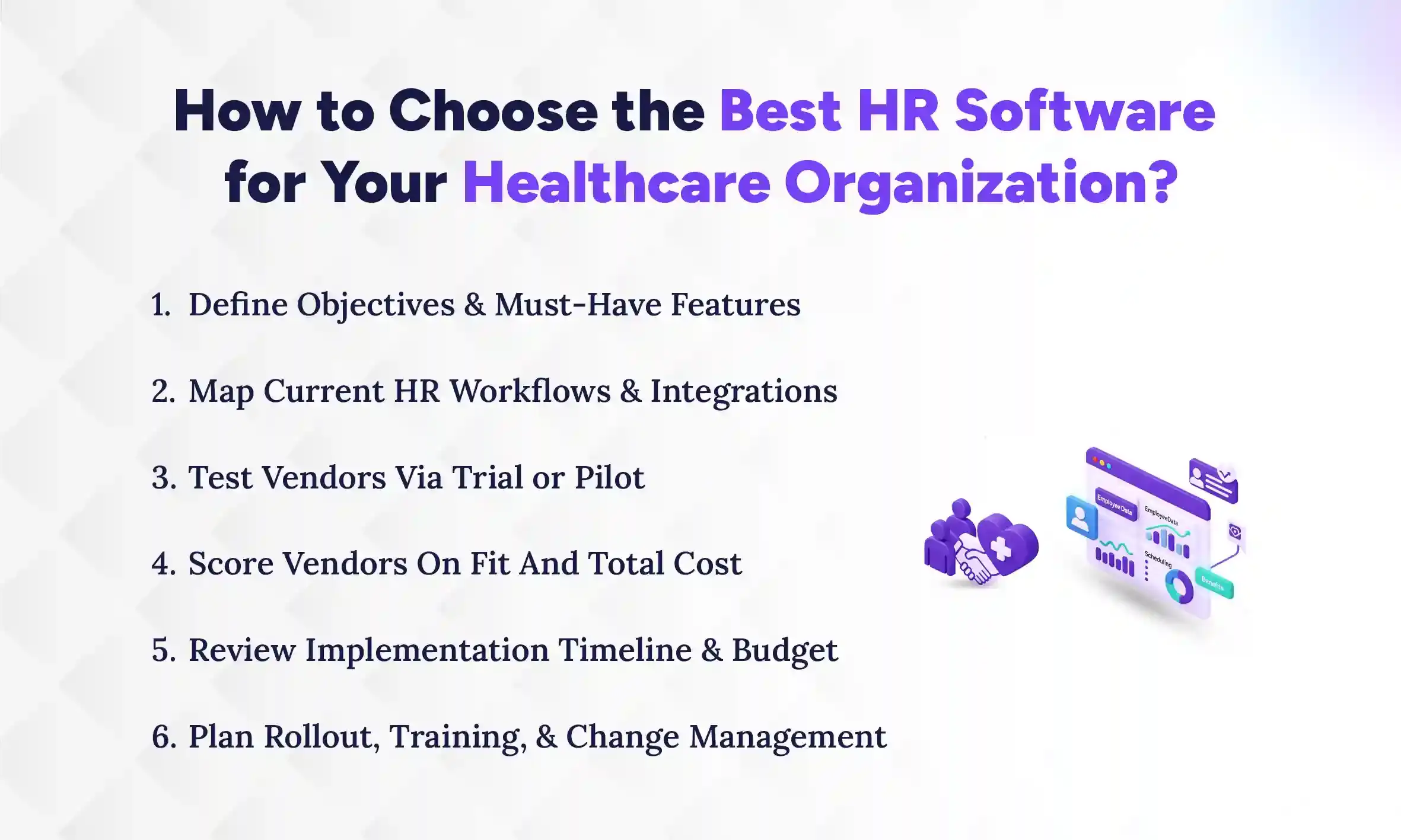
How to Choose the Best HR Software for Your Healthcare Organization?
To select the best HR software for your medical institution in Nepal, start by listing your HR needs, mapping workflows, and reviewing vendor options. Choosing the right HR software doesn’t have to be overwhelming. By following a simple, step-by-step approach, you can evaluate options carefully and pick a solution that fits your team’s needs. From defining objectives to planning rollout, these steps will guide you through a smooth decision-making process.
1. Define Objectives & Must-Have Features
Start by clarifying what you need from HR software. Identify the tasks that take the most time in your HR operations. This can be scheduling, payroll, credential tracking, or performance management. Make a list of must-have HRMS functions for your hospital or clinic, keeping in mind staff size, departments, and compliance requirements. Clear objectives help narrow down vendors and prevent unnecessary features from complicating your workflow.
2. Map Current HR Workflows & Integrations
Next, review how your HR processes currently operate. Document workflows for scheduling, payroll, credentialing, and reporting. Consider integrations with existing systems like EHRs or accounting software. Understanding your current setup ensures the new software fits seamlessly without disrupting daily operations.
3. Test Vendors Via Trial or Pilot
Once you shortlist potential vendors, request a trial or pilot. Use real employee data to see how the system handles schedules, payroll, compliance tasks, and attendance management system. Evaluate ease of use, speed, and support responsiveness. Trails often reduce surprises after purchase and let your team experience the software firsthand.
4. Score Vendors On Fit And Total Cost
Compare each vendor based on feature fit, usability, and pricing. Factor in subscription fees, customization costs, and ongoing maintenance. Also consider vendor reputation, customer support, and scalability for future growth. Scoring vendors objectively helps you make a balanced decision beyond just the price tag.
5. Review Implementation Timeline & Budget
Implementation can vary widely depending on facility size. Small clinics may take a few weeks, while large hospitals could need several months for full deployment. Include costs for HR software subscription, customization, training, and data migration in your budget. Hidden expenses like integration with other systems or extra support should also be planned to avoid surprises.
6. Plan Rollout, Training, & Change Management
A successful rollout requires more than just installation. Prepare staff with training sessions, clear guides, and hands-on support. Communicate the benefits and changes to everyone involved to reduce resistance. Monitor adoption and be ready to adjust workflows to ensure smooth transition and long-term success.
Which Is the Best HR Software for Healthcare?
For healthcare organizations in Nepal, Pace HRMS stands out as a flexible, user-friendly, and one of the best HRMS solutions that fits different types of facilities. Whether you run a small clinic, a large hospital, a specialty center, or a multi-location network, Pace HRMS adapts to your staffing, payroll, and compliance needs. Its scalable design ensures smooth HR management while reducing errors and saving time across all departments.
Why Choose Pace HRMS for Healthcare HR?
Pace HRMS is the preferred choice for hospitals, clinics, and healthcare providers looking for centralized HR management, automated workflows, and robust compliance tools. It simplifies everyday HR tasks while supporting strategic workforce planning.
Pace HRMS helps healthcare teams by offering:
Automated scheduling and shift management
Accurate payroll and benefits processing
Credentialing and compliance tracking
Performance and attendance monitoring
Real-time reporting and analytics
Multi-location staff management
Easy integration with existing systems
Conclusion
Choosing the right HR software for your healthcare facility can transform the way your team works. From scheduling and payroll to credentialing and compliance, the right system centralizes everything, reduces errors, and saves valuable time. Hospitals, clinics, and specialty centers can all benefit from a solution that adapts to their size and needs while keeping staff engaged and operations smooth.
Managing HR manually is stressful and time-consuming, and most healthcare teams can relate to the endless spreadsheets, missed certifications, and last-minute schedule swaps. Imagine freeing your staff from these repetitive tasks, giving them more time to focus on patient care, teamwork, and professional growth. The right HRMS doesn’t just improve efficiency, it strengthens your workforce and improves satisfaction across the board.
What is the cost of healthcare HR software in Nepal?
+
Costs vary by features and staff size, typically ranging from NPR 50–500 per month, depending on modules, customization, and subscription plans.
Does HR software support multi-location hospitals?
+
Modern healthcare HR software can manage staff across multiple clinics or hospitals, synchronizing schedules, payroll, and compliance for all locations seamlessly.
How secure is employee data in healthcare HR software?
+
Data is encrypted and stored on secure servers, meeting healthcare privacy regulations and protecting sensitive employee and patient-related information.
Can small clinics benefit from HR software?
+
Absolutely. Even small clinics gain efficiency with automated scheduling, payroll, and compliance tracking, saving time and reducing administrative errors.
How long does it take to implement healthcare HR software?
+
Implementation typically ranges from 2–8 weeks for small clinics and 3–6 months for larger hospitals, depending on integrations and staff training.
Is cloud-based HR software suitable for hospitals?
+
Yes. Cloud HRMS offers remote access, real-time updates, scalability, and reduces IT maintenance costs, making it ideal for modern hospitals and clinics.
Can HR software track staff performance metrics?
+
Yes, healthcare HRMS can monitor attendance, KPIs, and productivity, helping managers identify top performers and address staffing issues efficiently.
Ready to get started?
Book a 30-minute consultation call, and let's talk about your goals.