
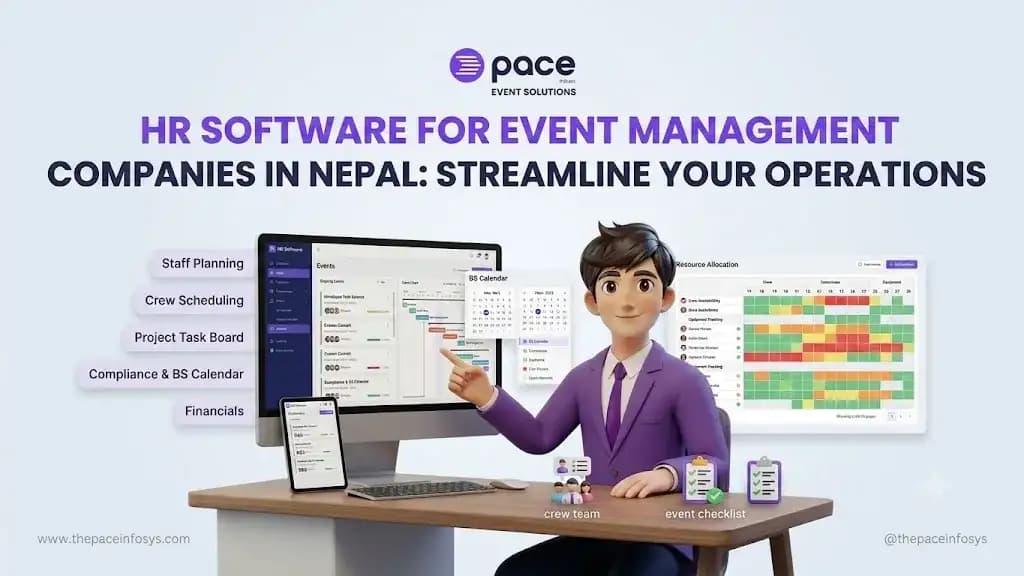

Ever tried calculating payroll for a 200-person weekend festival crew using nothing but spreadsheets? It is absolute chaos. You are juggling different hourly rates, figuring out who showed up late, who stayed for the tear-down, and who left early, all while trying to get payments out before the crew loses patience.
The problem isn’t your event planning skills; it is the tools you are using. Standard HR systems are built for permanent 9-to-5 office staff, not the fast-paced, shift-based reality of event management. Forcing an event crew into a traditional HRMS is like trying to fit a square peg in a round hole.
In this blog, we’ll explore everything you need to know about HR software for event management companies in Nepal, from what it is and why you need it to key features, benefits, and how to choose the right system for your unique workflow.
What Is HR Software for Event Management Companies in Nepal?
HR software for event management companies in Nepal is a digital system designed to manage both your permanent office staff and your temporary event crews. Understanding exactly what an HRMS is helps clarify why event companies need something different. It acts as a central hub for hiring, on-site attendance, daily or hourly wage calculations, and quick offboarding.
In the event industry, where your workforce size can triple over a weekend, this software plays a critical role in keeping track of who is working, where they are working, and exactly how much they are owed.
It replaces scattered paper registers and manual cash calculations with a system built for variable, project-based workforces. Essentially, it takes what an HRMS does for traditional companies and adapts it to the fast-paced, ever-changing nature of the events industry.
Why Do Event Management Companies in Nepal Need Specialized HR Software?
Event management companies in Nepal need specialized HR software because generic HRMS solutions simply fail the event industry. Events demand extreme precision, total flexibility, and absolute speed, which standard office HR tools just aren't built for. A tailored system brings structure to the madness, ensuring crews are paid accurately and on time.
1. Managing Large, Temporary Event Crews Efficiently
Events rely heavily on freelancers, contract workers, and daily-wage laborers. Managing a workforce that fluctuates from 20 to 500 people overnight is impossible manually. HR software centralizes temporary crew data, tracks their specific roles, and automates routine tasks so your HR team isn't drowning in paperwork the night before a big event.
2. Handling On-Site and Multi-Venue Operations
Your teams are rarely in one place. They are at the venue for setup, at a different location for a conference, or moving between stages. Without a unified system, tracking who is where becomes a guessing game. HR software connects all venues digitally, ensuring real-time visibility into your workforce no matter how scattered they are.
3. Ensuring Compliance with Labor Laws for Contract Workers
Compliance isn’t just for permanent staff. Even daily-wage event workers fall under certain labor protections and tax regulations in Nepal. HR software helps automate the calculation of necessary deductions (like TDS) for short-term workers, reducing the risk of legal penalties during labor audits.
4. Automating Payroll for Hourly, Daily, and Project-Based Wages
Event companies don't just run standard monthly payrolls. You might need to pay a crew for a single 12-hour shift or a three-day festival. HR software allows you to run payroll instantly based on project completion, calculating complex hourly and daily rates automatically without breaking a sweat.
5. Enhancing Security and Fast-Track Onboarding for Short-Term Staff
When you need 50 stagehands by tomorrow, you don't have time for a two-week onboarding process. Specialized HR software allows for fast-track registration of temporary staff, capturing only the essential data needed for payment and compliance, while keeping sensitive company data secure and isolated.
What Are the Key Features of HR Software for Event Management Companies?
The key features of HR software for event management companies include mobile attendance, flexible payroll processing, and quick offboarding, all designed to simplify complex, short-term staffing. In an event environment, these features work together seamlessly to ensure temporary crews are managed just as efficiently as permanent staff.
1. Mobile Attendance & Geofenced Check-Ins
Event staff don't swipe a card at a reception desk. A traditional attendance management system won't work here; you need mobile features with geofencing that allow workers to clock in directly from the venue. This eliminates buddy punching and gives HR exact hours worked without manual tracking.
2. Flexible Payroll for Daily Wages and Hourly Rates
The software should support multiple pay structures simultaneously, accurately calculating wages based on hourly rates, daily flat rates, or piece-rate work. It should also automatically account for overtime, including those late-night event tear-downs, turning what would otherwise be hours of manual calculations into a single click.
3. Quick Onboarding and Offboarding for Temporary Staff
You need to add 100 temporary workers on Friday and remove them on Monday. The software should allow for bulk uploads or fast-track profiles that don't clutter up your permanent employee database. Once the event is over, you can seamlessly close their profiles and process their final pay.
4. Shift Scheduling and Venue-Based Management
Managing who is supposed to be at Venue A versus Venue B is critical. Good HR software includes shift scheduling tools that assign workers to specific events, days, and locations. Staff can view their schedules via a mobile app, reducing no-shows and miscommunication.
5. Automated TDS and Tax Compliance for Short-Term Pay
Even if someone works for just two days, tax rules might still apply. The system should automatically calculate TDS or other statutory deductions based on the total payout, ensuring your company stays compliant without HR having to manually check tax slabs for every single freelancer.
6. Separation of Permanent vs. Temporary Employee Records
Mixing temporary event crew data with your core corporate HR data is a recipe for disaster. The software must cleanly separate the two, ensuring your permanent staff keep their full benefits, PF, and SSF records, while temporary workers are managed in a separate, streamlined module.
Benefits of Using HR Software for Event Management Companies
The benefits of using HR software for event management companies go beyond just making payroll easier; they transform how your entire operation runs during high-stress event days. It brings much-needed structure to an inherently chaotic industry.
1. Improved Workforce Productivity During Events
When HR isn't chasing down paper timesheets, they can actually focus on supporting the event. Managers get real-time data on who is checked in, allowing them to deploy staff instantly where they are needed most. Less time managing spreadsheets means more time managing the event.
2. Faster Crew Scheduling and Deployment
Digital scheduling means you can fill crew gaps in minutes. If a technician calls in sick, you can quickly view the database, find a replacement, assign them to the shift, and notify them via the app before the venue doors even open.
3. Accurate Project-Based Payroll and Reduced Errors
Manual calculations lead to overpayments, underpayments, and very angry freelancers. Automated payroll ensures every hour is calculated precisely based on the exact rate agreed upon. When event crews are paid accurately and immediately, your company's reputation in the freelance market skyrockets.
4. Better Compliance with Tax and Labor Regulations
With automatic tax deductions and digital record-keeping, you are always audit-ready. You don't have to panic if a labor inspector asks for records of your weekend crew; it is all securely stored and easily accessible in the system.
5. Enhanced Crew Experience and Reliability
Freelancers love working with companies that pay them on time without hassle. When you offer a smooth digital check-in and guaranteed fast payouts, top-tier crews will prioritize your events over your competitors.
How to Choose the Best HR Software for Event Management Companies in Nepal?
Choosing the best HR software for event management companies in Nepal means selecting a solution based on fit, not just features. The system must handle peak wedding seasons and massive festival weekends without crashing or slowing down. It’s about finding a reliable partner that understands your fluid workforce.
1. Identify Event-Specific HR Requirements
Start by listing exactly what your events demand. Do you need geofenced check-ins? Do you pay mostly daily wages or hourly rates? Knowing your specific challenges prevents you from buying expensive software loaded with features you’ll never use.
2. Check Integration with On-Site Attendance Tools
Your HR software shouldn't work in a vacuum. It needs to integrate smoothly with mobile apps or portable biometric devices that your crew will actually use on-site. If attendance data doesn't flow directly into payroll, you are still doing double work.
3. Evaluate Speed of Payroll Processing
In events, payroll needs to happen fast, often the day after the event ends. Test how quickly the software can calculate wages for a large group of temporary workers once attendance is approved. Speed is everything here.
4. Compare Pricing Based on Active vs. Total Users
Event companies have a unique pricing challenge: your total user base might be 2,000 freelancers a year, but only 150 are active at a time. Look for software whose pricing is based on active employees rather than total database size, so you aren't overpaying just to keep a freelancer's profile on file.
5. Request a Demo for Temporary Staff Workflows
Never buy HR software without testing the specific temporary staff workflow. Create a dummy event, add 50 temporary workers, run a fake attendance log, and process a project-based payroll. If it feels clunky during a demo, it will be a nightmare during a real event.
6. Ensure Scalability for Peak Event Seasons
Your HR needs in the off-season are vastly different from during Dashain or wedding season. The software must scale effortlessly to handle sudden spikes in user numbers, data volume, and payroll runs without needing manual upgrades.
What Makes HR Software for Event Management Different from Other Industries?
Event management isn't a standard 9-to-5; the HR software must reflect that reality. When you look at the various types of HR software on the market, you'll quickly notice that 90% of them are built for fixed monthly payrolls, not weekend festival crews.
1. High Volume of Short-Term, Contract Workers
Unlike other industries where the workforce is stable, event management revolves around short-term hires. The software must be optimized to handle mass data entry, rapid profile creation, and immediate archival of contract workers without bloating the system.
2. Project-Based Rather Than Monthly Payroll Cycles
Standard HRMS locks you into monthly payroll cycles. Event software must allow you to trigger a payroll run the exact minute a three-day conference ends, calculating pay based on that specific project's parameters, completely independent of the regular monthly calendar.
3. Need for Remote, On-Site Attendance Tracking
Office workers scan their IDs at the front door. Event workers are in open fields, convention centers, or remote wedding venues. The HR software must heavily prioritize mobile, GPS, and offline-capable attendance tools over traditional desktop-based time tracking.
4. Fast-Track Data Privacy for Temporary Staff
While you need basic info to pay temporary staff, you don't need to grant them access to sensitive company portals or store excessive personal data long-term. Event HR software needs strict, fast-track data privacy settings that automatically restrict access for short-term workers.
Which Is the Best HR Software for Event Management Companies in Nepal?
Pace HRMS is the best HR software for event management companies in Nepal because it offers the flexibility and speed required to manage highly dynamic, temporary workforces. It perfectly centralizes temporary crew management, mobile attendance, and flexible project-based payroll into one easy-to-use platform.
What really makes Pace HRMS stand out for event companies is its ability to handle fluctuating user numbers without a hitch. It offers cloud-based access so managers can approve attendance from the event venue, features automated tax deductions (like TDS) for daily wagers to keep you compliant, and scales effortlessly during peak event seasons. In short, Pace HRMS doesn’t just manage your HR; it quietly upgrades how your entire event operation runs behind the scenes.
Common Challenges Event Companies Face Without HR Software
Event companies without specialized HR software often struggle with hidden inefficiencies that turn into public disasters during events. When you rely on manual systems, things inevitably slip through the cracks.
1. Manual Crew Management and Administrative Chaos
Handling temporary staff through paper forms or scattered WhatsApp messages creates massive administrative bottlenecks. HR teams spend hours compiling lists, verifying who was actually hired, and entering data into spreadsheets instead of focusing on event logistics.
2. Payroll Errors and Delayed Payments for Freelancers
Manually calculating 15 different hourly rates for a weekend crew is a guaranteed way to make mistakes. Underpaying or delaying payments destroys trust. In the freelance market, word travels fast, and late pay means top crews won't work for you again.
3. Difficulty Tracking Attendance Across Multiple Venues
When you have staff at a main stage, a VIP tent, and a parking lot, paper registers get lost or filled out incorrectly. Without real-time digital tracking, you end up paying people who left early or arguing with staff over their actual hours.
4. Lack of Data-Driven Crew Scheduling
Without a central system, managers don't know who their most reliable freelancers are or who has the specific skills needed for a certain venue. Scheduling becomes based on who you happen to remember calling, rather than actual performance data.
Conclusion
Choosing the right HR software for event management companies in Nepal is no longer a luxury; it is a necessity for surviving the industry's chaotic pace. Specialized HR software ensures that managing temporary crews, fluctuating schedules, and project-based payrolls is handled smoothly and accurately. Similar to how HR software for NGOs handles complex, project-based compliance, event HRMS handles complex workforce fluidity, keeping everything organized when things move fast.
At the end of the day, the goal isn’t just to adopt technology but to adopt technology that actually fits the way you work. If you are still relying on paper registers and Excel sheets to manage your event crews, now is the time to rethink your system. Contact Pace Inyosys today through our contact page to find out how we can streamline your next big event. Because of event management, having the right crew managed by the right software is what turns a stressful weekend into a massive success.