Social media has transformed the way businesses connect with their audience, making it one of the most powerful tools for growth today. With billions of active users across platforms, brands now have endless opportunities to build awareness, engage customers, and drive sales. However, success depends on using the right strategy rather than just posting content randomly. That is where a structured approach to social media becomes essential.
In this blog on how to do social media marketing, we will explore step-by-step strategies that help businesses grow effectively on social platforms. You will learn how to create a strong content plan, choose the right platforms, engage your audience, and measure performance. We will also cover tools, tips, and common mistakes to avoid. By the end, you will clearly understand how to build a successful social media marketing strategy from scratch.
What is Social Media Marketing?
Social media marketing is the process of using social media platforms to promote a brand, product, or service and engage with a target audience. It involves creating and sharing content, running paid advertisements, and interacting with users to achieve marketing goals. Businesses use platforms like Facebook, Instagram, LinkedIn, and YouTube to increase visibility and build relationships through social media marketing. It helps drive traffic, generate leads, and improve brand awareness effectively.
Importance of Social Media Marketing
Social media marketing is important because it helps businesses grow their online presence, connect with their audience, and achieve marketing goals more effectively. It has become a key part of digital marketing due to the increasing number of users on social platforms. Businesses can build brand awareness, engage customers, and generate leads through benefits of social media marketing at a lower cost. Overall, it plays a major role in modern business success and long-term growth.
1. Growth Of Social Media Platforms Worldwide
Social media platforms have grown rapidly, with billions of users active daily across the world. This massive growth gives businesses access to a global audience. It allows brands to expand beyond local markets and reach international customers. Platforms like Facebook, Instagram, and YouTube continue to increase in popularity. More users create more marketing opportunities. It also helps businesses scale their presence faster online.
2. Importance Of Audience Engagement And Brand Awareness
Audience engagement is essential for building strong relationships with customers. Social media allows businesses to interact directly through comments, messages, and posts. This helps increase trust and loyalty toward the brand. Consistent engagement also improves brand recognition. Higher engagement leads to stronger brand awareness. It helps businesses stay connected with their audience.
3. Cost-Effective Marketing For Businesses
Social media marketing is more affordable compared to traditional advertising methods. Businesses can start with small budgets and still reach a large audience. Paid campaigns can be optimized for better performance and ROI. Organic reach also helps reduce costs. It provides high value at low investment. This makes it suitable for all types of businesses.
4. Higher Reach And Conversion Opportunities
Social media platforms allow businesses to reach highly targeted audiences. This increases the chances of turning viewers into customers. Strategic content and ads help improve conversion rates. Businesses can track performance and optimize campaigns for better results. Better targeting improves conversions significantly. It also supports long-term business growth.
How to Do Social Media Marketing? Step-by-Step
You can do social media marketing step by step by setting clear goals, understanding your audience, creating quality content, and consistently optimizing your strategy. It requires a structured approach where each step builds toward better engagement and conversions. Businesses must focus on planning, execution, and performance analysis to achieve strong results through the cost of social media marketing. When done correctly, social media marketing can significantly improve brand visibility and growth.
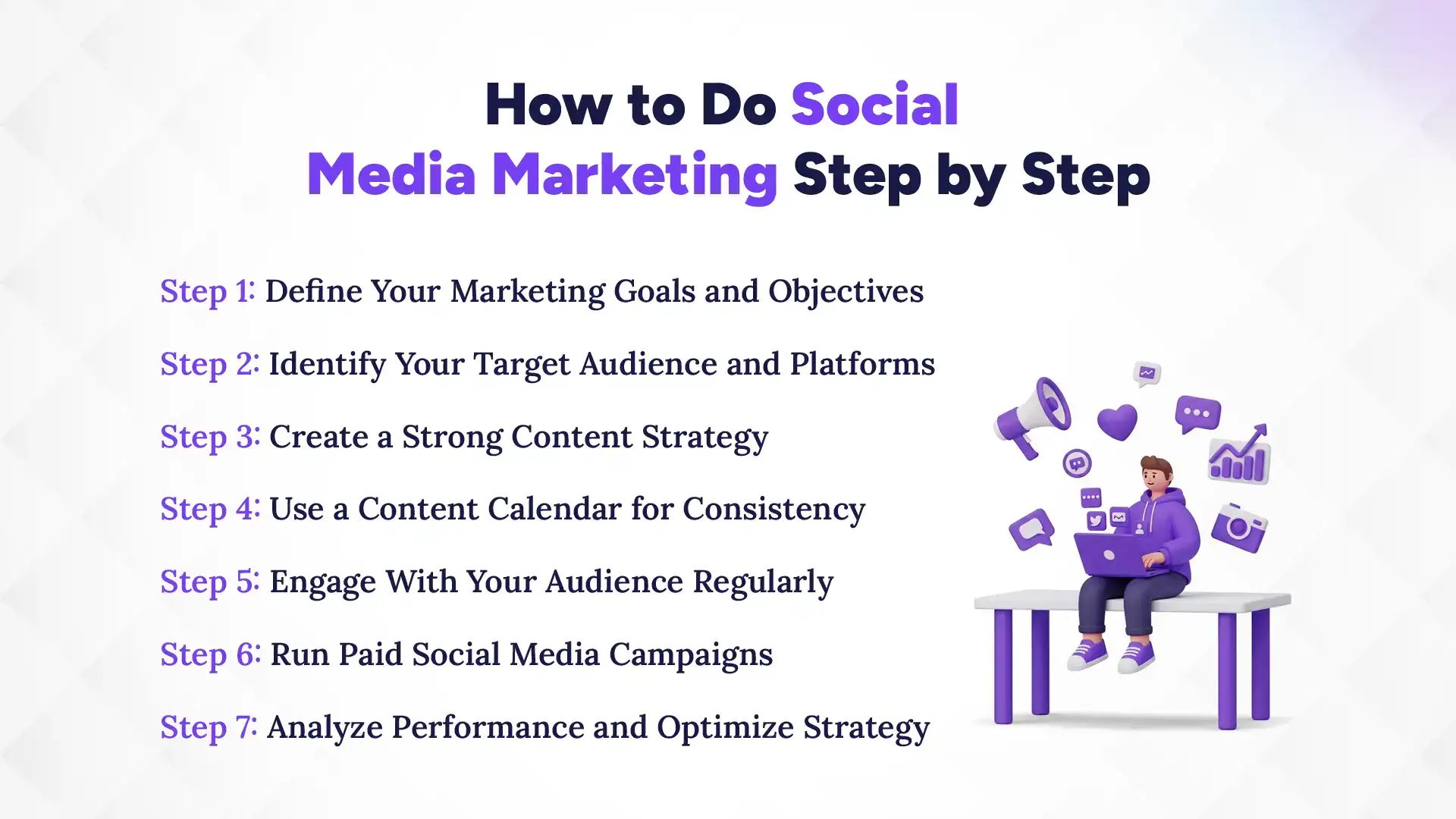
1. Define Your Marketing Goals And Objectives
Defining clear goals is the first step in social media marketing success. Goals can include increasing brand awareness, generating leads, or boosting sales. Clear objectives help guide your entire strategy. They also make it easier to measure performance. Well-defined goals improve focus and direction. They ensure every action supports business growth. They also help in tracking success accurately.
2. Identify Your Target Audience And Platforms
Understanding your target audience is essential for effective marketing. Businesses must analyze demographics, interests, and online behavior. Choosing the right platforms ensures better engagement. Each platform serves a different type of audience. Right targeting improves marketing efficiency. It helps deliver relevant content to the right people. It also increases conversion potential.
3. Create A Strong Content Strategy
A strong content strategy focuses on creating valuable and engaging posts. Content can include images, videos, blogs, and stories. It should match audience interests and brand goals. Consistent quality content builds trust and engagement. Good content increases audience retention. It also improves brand recognition. It supports long-term digital growth.
4. Use A Content Calendar For Consistency
A content calendar helps organize and schedule posts in advance. It ensures consistency in posting across platforms. Regular posting keeps your audience engaged. It also helps plan campaigns more effectively. Consistency improves brand visibility. It prevents content gaps and delays. It also improves marketing discipline.
5. Engage With Your Audience Regularly
Engagement is key to building strong relationships with your audience. Businesses should respond to comments and messages quickly. Interactive content encourages participation and feedback. This builds trust and loyalty over time. Higher engagement strengthens customer relationships. It also boosts organic reach. It improves overall brand reputation.
6. Run Paid Social Media Campaigns
Paid campaigns help businesses reach a larger and targeted audience. Platforms like Facebook and Instagram offer advanced ad targeting. Ads can be optimized for conversions and engagement. This increases visibility and leads. Paid ads improve marketing results faster. They also support business growth. They provide measurable ROI.
7. Analyze Performance And Optimize Strategy
Analyzing performance helps understand what is working and what is not. Metrics like reach, engagement, and conversions are tracked. Based on insights, strategies can be improved. Continuous optimization increases ROI. Data-driven decisions improve effectiveness. It ensures long-term success in social media marketing. It helps refine future campaigns.
Best Platforms for Social Media Marketing
Choosing the right platforms is essential for successful social media marketing because each platform serves a different audience and content style. Businesses can maximize reach, engagement, and conversions by selecting platforms that align with their goals. From visual storytelling to professional networking, each platform plays a unique role in digital marketing strategy. Overall, using the right mix of platforms helps improve brand visibility and marketing performance.
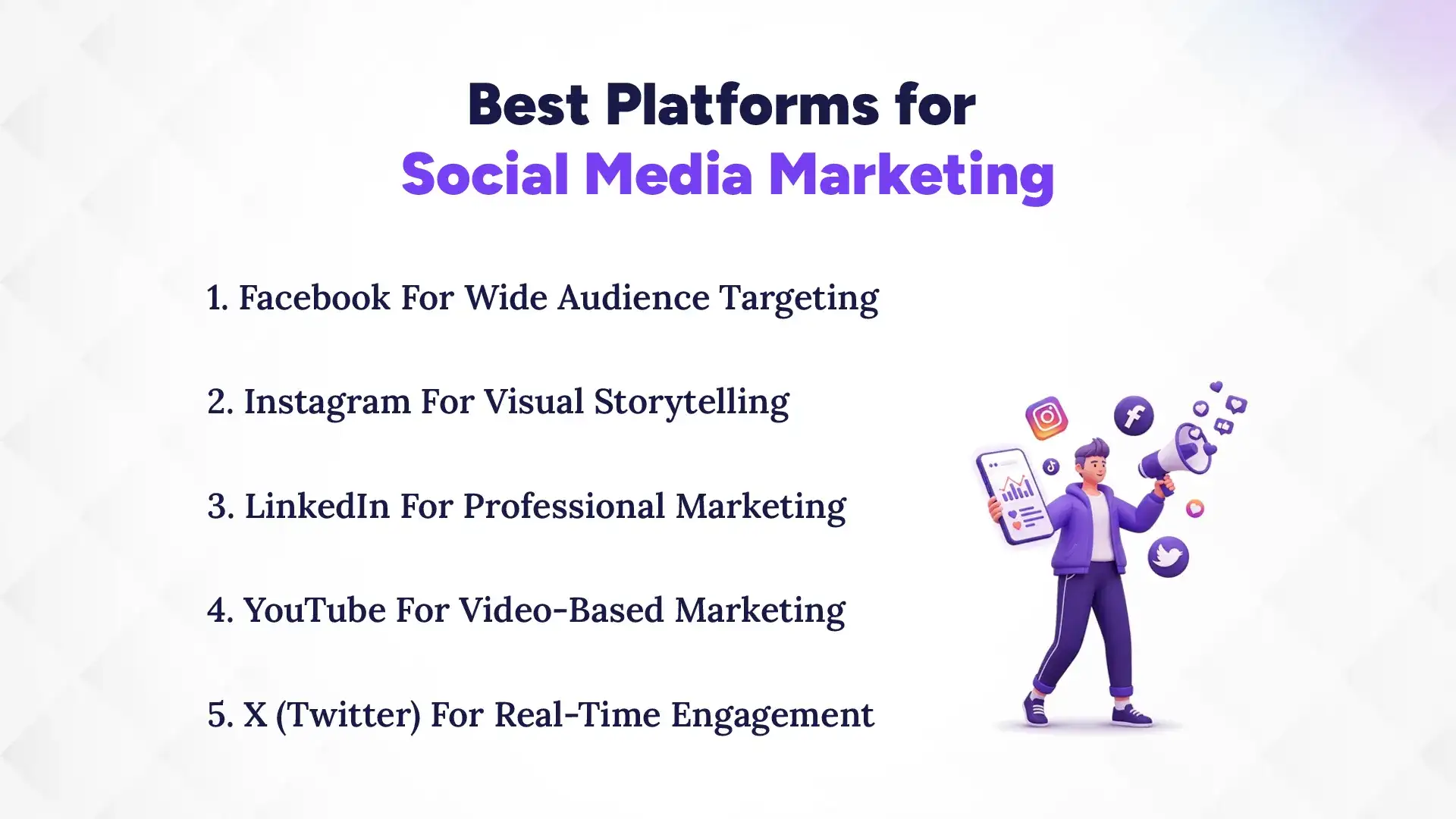
1. Facebook For Wide Audience Targeting
Facebook is one of the largest social media platforms with a diverse global user base. It allows businesses to target audiences based on demographics, interests, and behavior. Features like pages, groups, and ads make it highly effective for marketing. It is suitable for both small and large businesses. Strong targeting improves campaign performance. It helps increase brand awareness and customer engagement. It also supports lead generation effectively.
2. Instagram For Visual Storytelling
Instagram is a highly visual platform focused on images, reels, and stories. It helps brands showcase products creatively and attract younger audiences. Influencer marketing also plays a major role here. Businesses use it for branding and engagement. Visual content increases user interaction. It strengthens brand identity and emotional connection. It also boosts organic reach.
3. LinkedIn For Professional Marketing
LinkedIn is the top platform for B2B marketing and professional networking. It helps businesses connect with industry experts and decision-makers. Companies use it for lead generation, recruitment, and brand authority. It is ideal for sharing professional content and insights. It builds strong business credibility. It improves networking and partnership opportunities. It is highly effective for corporate branding.
4. YouTube For Video-Based Marketing
YouTube is the leading platform for video marketing and long-form content. Businesses use it for tutorials, product demos, and brand storytelling. Video content helps explain complex ideas easily. It also improves SEO and search visibility. Video marketing increases audience engagement. It builds trust through informative content. It also supports long-term brand growth.
5. X (Twitter) For Real-Time Engagement
X (Twitter) is used for real-time updates, trends, and conversations. It is ideal for quick communication and customer interaction. Businesses use hashtags to increase visibility and reach. It helps brands stay updated with industry trends. Fast engagement improves brand responsiveness. It enhances customer support and communication. It is effective for viral marketing opportunities.
Tools to Help You Do Social Media Marketing
Social media marketing becomes more effective when the right tools are used for planning, creating, and analyzing content. These tools help businesses save time, improve productivity, and manage multiple platforms efficiently. From scheduling posts to tracking performance, they make the entire marketing process smoother. Overall, using the right tools improves strategy execution and results.
1. Scheduling Tools (Buffer, Hootsuite)
Scheduling tools help businesses plan and publish posts in advance across multiple platforms. This ensures consistency and saves time in daily posting. They also allow teams to manage multiple accounts from one dashboard. Businesses can maintain an active presence without manual effort. Better scheduling improves content consistency. It also helps optimize posting times for higher engagement.
2. Design Tools (Canva, Adobe Express)
Design tools are used to create visually appealing graphics, posts, and ads. They offer templates that make content creation easier for beginners and professionals. High-quality visuals attract more audience attention and engagement. These tools help maintain brand consistency across platforms. Good design improves audience interaction. It also strengthens brand identity.
3. Analytics Tools (Google Analytics, Meta Insights)
Analytics tools help track performance metrics like reach, engagement, and conversions. They provide valuable insights into audience behavior and content effectiveness. Businesses can identify what works best and improve strategies accordingly. Data-driven decisions lead to better results. Analytics improve marketing accuracy. They also help optimize campaigns for higher ROI.
4. Social Listening Tools For Brand Monitoring
Social listening tools help monitor brand mentions, customer feedback, and industry trends. They allow businesses to understand audience sentiment in real time. This helps in improving products and services based on feedback. It also helps manage brand reputation effectively. Listening tools enhance customer understanding. They support better engagement and decision-making.
Common Mistakes in Social Media Marketing
Social media marketing can deliver strong results, but many businesses fail due to avoidable mistakes. Without proper planning and execution, campaigns often lose direction and fail to engage the target audience. These mistakes reduce reach, conversions, and overall performance. Understanding and avoiding them is essential for long-term success in social media marketing.
1. Not Having A Clear Strategy
Not having a clear strategy leads to random posting without direction or goals. Businesses struggle to achieve consistent results when objectives are not defined. A proper strategy helps guide content, targeting, and engagement efforts. It also ensures better use of time and resources. Clear planning improves marketing effectiveness. It helps align efforts with business goals. It also increases overall campaign success. It provides long-term direction.
2. Inconsistent Posting Schedule
Inconsistent posting reduces audience engagement and brand visibility. When businesses post irregularly, users lose interest over time. A consistent schedule helps maintain audience attention and trust. It also improves platform algorithms and reach. Regular posting builds stronger brand presence. It keeps the audience engaged continuously. It also improves content performance. It strengthens audience retention.
3. Ignoring Audience Engagement
Ignoring audience engagement weakens relationships between brands and customers. Failing to respond to comments or messages reduces trust. Engagement is key to building loyal communities. Active interaction improves brand reputation. Engagement increases customer loyalty. It also boosts organic reach. It helps build stronger connections. It improves overall brand trust.
4. Over-Promotional Content
Posting only promotional content can turn away audiences quickly. Users prefer valuable, informative, and entertaining content. A balance between promotion and engagement is necessary. Too many ads reduce trust and interest. Balanced content improves user experience. It keeps the audience engaged longer. It also strengthens brand credibility. It improves long-term engagement.
5. Not Tracking Performance Metrics
Not tracking performance makes it difficult to measure success. Businesses miss insights about what works and what doesn’t. Analytics help improve strategy and content effectiveness. Without tracking, campaigns remain ineffective. Data tracking improves decision-making. It helps optimize future marketing efforts. It ensures better ROI and performance. It supports continuous improvement.
Is Social Media Marketing Worth It for Businesses?
Yes, social media marketing is definitely worth it for businesses in today’s digital world. It helps brands reach a large audience, build strong relationships, and increase sales at a lower cost. With the right strategy, businesses can achieve long-term growth and better online visibility.
Increases brand awareness and global reach effectively
Helps generate high-quality leads and conversions
Builds strong customer relationships and trust
Offers cost-effective marketing compared to traditional ads
Improves website traffic and online visibility
Provides measurable results through analytics tools
Conclusion
Social media marketing has become an essential part of modern business growth strategies. It helps businesses of all sizes build strong online visibility, connect with their target audience, and promote products or services effectively. With the right approach, it can drive engagement, increase website traffic, and generate valuable leads through The Pace Infosys. Its cost-effectiveness and wide reach make it one of the most powerful digital marketing tools today.
Overall, learning how to do social media marketing correctly can significantly improve brand performance and long-term success. By using the right platforms, tools, and strategies, businesses can stay competitive in the digital space through digital marketing services. Consistency, audience engagement, and performance tracking play a key role in achieving the best results. In today’s fast-changing online world, social media marketing is not just an option but a necessity for sustainable growth.
Ready to get started?
Book a 30-minute consultation call, and let's talk about your goals.