Struggling to get noticed online while your competitors are crushing it on Instagram and TikTok? You're posting content, but nobody's engaging. You're spending money on ads, but sales aren't coming. That's the reality for most businesses jumping into social media without a real plan.
Here’s the good news: social media marketing isn't rocket science. When done right, it transforms how customers find, trust, and buy from you. This guide breaks down everything you need to know about social media marketing, from basic concepts to advanced strategies that actually work. Whether you're a complete beginner or looking to sharpen your skills, you'll walk away with actionable steps to grow your brand online using social media marketing services.
What is Social Media Marketing?
Social media marketing is the practice of using social platforms like Facebook, Instagram, TikTok, and LinkedIn to promote your business, connect with your audience, and drive sales. It's not just about posting random content. It's about building relationships with people who might become your customers.
Think of it as a supercharged word-of-mouth marketing. Instead of telling ten friends about your product, you can reach ten thousand. Or even ten million.
The role of social platforms in brand growth includes:
Creating awareness about your products or services
Building a community of loyal followers
Driving traffic to your website or store
Gathering feedback and insights from real customers
Establishing your brand's personality and voice
Social media gives small businesses the chance to compete with bigger players. A coffee shop can build a devoted following. A freelancer can attract high-paying clients. A new clothing brand can go viral overnight.
The difference between organic and paid social media marketing is simple. Organic means free content you post naturally, like your regular posts, stories, and interactions. Paid means sponsored content, where you spend money to reach more people through ads. Both have their place. Organic builds genuine connections. Paid accelerates your reach and targets specific audiences. Smart marketers use both together for maximum impact through digital marketing service.
Why Social Media Marketing is Important?
Social media marketing is important because it puts your brand in front of billions of active users, builds trust, and directly impacts your bottom line. Without social media, you're invisible to most potential customers. They're scrolling through feeds, discovering brands, and making purchase decisions. Social media marketing ensures you're part of that conversation. It's where modern business happens. It's where brands become household names overnight. And it's where smart businesses invest their marketing dollars for the best return.
Builds brand awareness: Social media introduces your business to people who've never heard of you. Every post is a chance to be discovered. When someone shares your content, you reach their entire network. That's exponential growth.
Helps reach targeted audiences: You can pinpoint exactly who sees your content. Social platforms let you target your ideal customer with scary accuracy. No more wasting money on people who'll never buy.
Improves customer engagement and trust: Direct conversations build relationships. When you respond to comments and messages, customers feel valued. That trust turns followers into buyers. People buy from brands they know and like.
Supports lead generation and sales: Social media isn't just for likes. It drives real business results. Product tags, swipe-up links, and shoppable posts turn scrolling into purchasing. Many businesses make most of their sales directly from social media now.
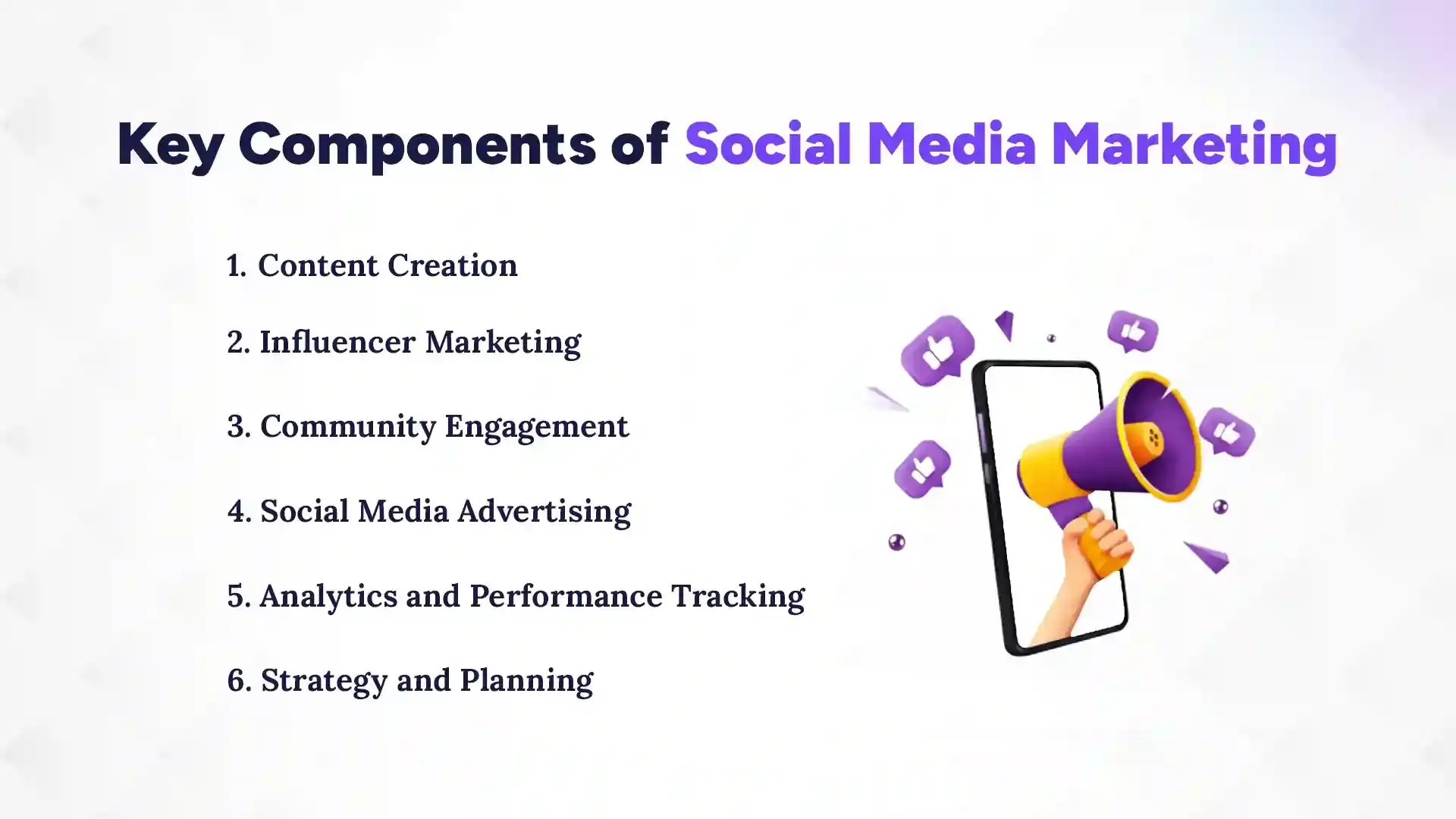
Key Components of Social Media Marketing
Social media marketing is not just one action. It is a mix of activities that work together. Each part supports your overall strategy. Some brands create great content but ignore data. Others rely only on ads and forget community building. The strongest brands balance every component and use them together for steady growth.
1. Content Creation
Content is the core of social media. It includes posts, videos, stories, and images that grab attention and offer value. Good content teaches, entertains, or inspires. Consistency matters, and each platform prefers different formats. Strong content solves problems or answers questions, which makes it memorable. When your content feels real and helpful, people are more likely to trust your brand. Over time, this trust leads to stronger engagement.
2. Influencer Marketing
Influencers help you reach new people through their trusted voice. Micro-influencers often perform best because their followers are more engaged. The key is choosing influencers whose audience matches your target. Good partnerships feel natural and build real interest. When an influencer shares your product honestly, their audience listens closely. This type of promotion often drives faster results than traditional ads.
3. Community Engagement
This means talking with your audience, not just posting. Replying to comments and messages builds trust. Engaged followers turn into loyal customers. Their feedback also helps you understand what content they want. When people feel heard, they stay connected to your brand. Strong community relationships create long-term support.
4. Social Media Advertising
Paid ads expand your reach beyond your followers. You can target specific groups based on interests and behavior. Each platform works differently, and the data helps you see what performs best. Ads work best when paired with strong organic content. Even a small budget can create big results when your message is clear. Testing different versions helps you find what your audience responds to most.
5. Analytics and Performance Tracking
Analytics show what works. You can track engagement, clicks, and conversions. These insights help you adjust your strategy and make smarter decisions. Data prevents you from guessing and wasting time. When you review your numbers often, you spot trends early. This helps you improve your content and grow faster.
6. Strategy and Planning
A clear plan guides your actions. Goals, content themes, posting schedules, and metrics keep you consistent. Strategy prevents random posting and helps you focus on results. It gives direction and keeps your brand message steady. With a solid plan, you know exactly what to do next. This makes your entire social media process easier and more organized.
Popular Platforms Used in Social Media Marketing
Different social platforms have different audiences. What works on TikTok might fail on LinkedIn. Your customers might spend time on one platform only. Focus on the platforms where your audience is active. You don’t need to be everywhere.
Facebook: Facebook is the largest network, good for older users like millennials and Gen X. You can post text, images, videos, live streams, and use Groups to build communities. Ads let you target very specific audiences. Many businesses use Facebook for sales, updates, and support.
Instagram: Instagram is visual and popular with Gen Z and millennials. Photos, Stories, Reels, and live videos work well. Reels give high reach, and you can tag products for easy shopping. Influencers are effective here, and engagement is usually high.
TikTok: TikTok is for short videos for fun and trends. Small accounts can go viral quickly. Success comes from creative, authentic content. It’s great for awareness and showing personality. Ads are also growing.
LinkedIn: LinkedIn is for professionals and B2B. Post tips, insights, and company updates. Long articles build authority. Ads target job titles and industries. It helps build trust and credibility.
YouTube: YouTube is for long videos, tutorials, and reviews. Videos last a long time. It works for all ages. Great for showing expertise and building trust.
Twitter/X: Twitter/X is fast and real-time. Share updates, news, and opinions. Post often to stay visible. Good for customer support, thought leadership, and trending topics.
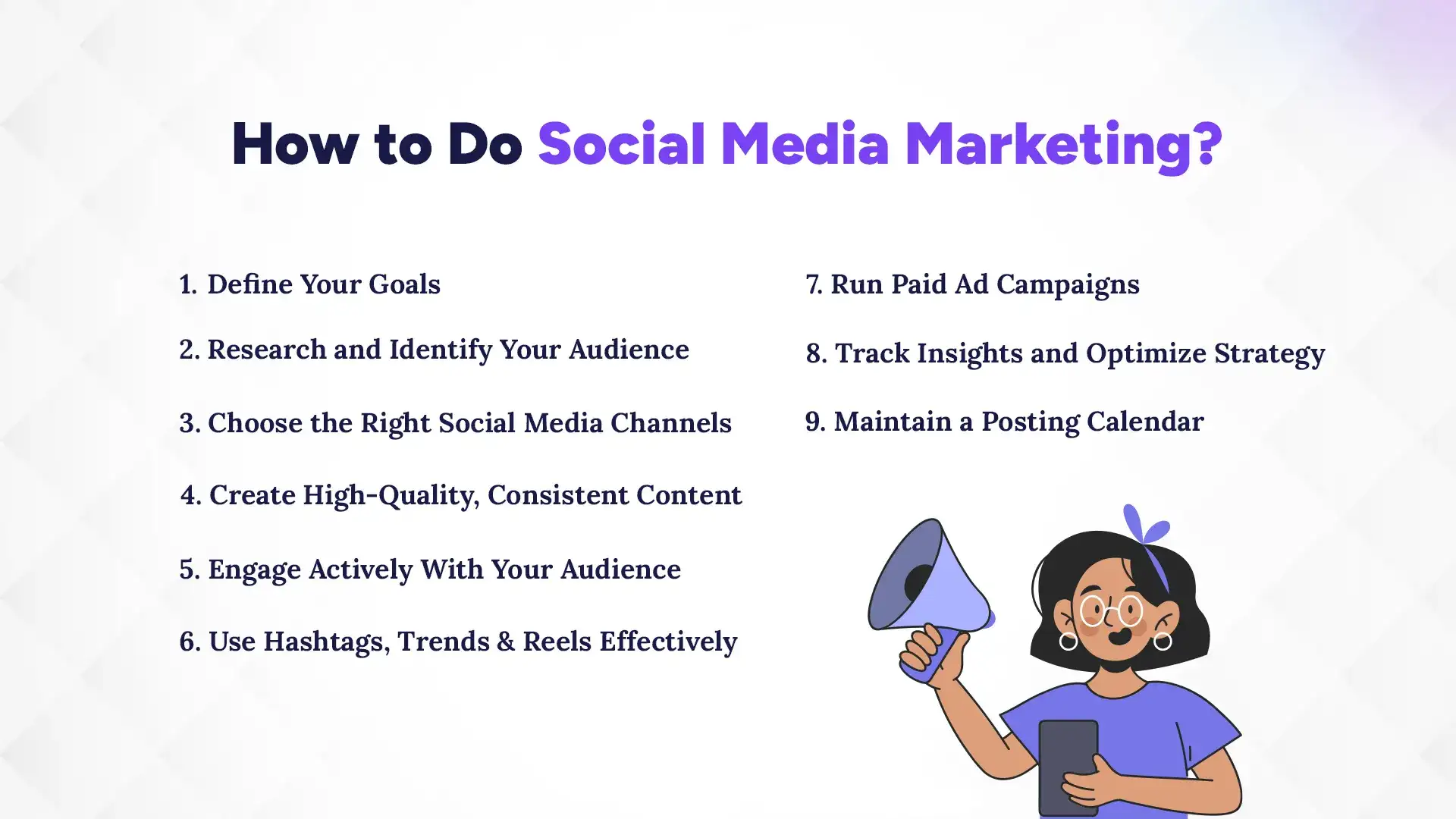
How to Do Social Media Marketing?
Social media marketing comes from setting clear goals, understanding your audience, creating consistent, valuable content, and constantly learning from your results. Getting started with social media marketing can feel overwhelming. Where do you even begin? The good news is you don't need to be a marketing genius or have a massive budget. You need strategy, consistency, and willingness to learn. Following a structured approach helps you avoid common mistakes and get results faster. These steps work whether you're marketing a local business, an e-commerce store, or building a personal brand.
1. Define Your Goals
Start by deciding what you actually want to achieve. Do you want more website traffic? More sales? Brand awareness? Each goal requires different tactics. Write down specific, measurable goals like "gain 500 followers in 60 days" or "generate 50 leads per month through social media."
2. Research and Identify Your Audience
Who are you trying to reach? What are their problems, interests, and online habits? Create a clear picture of your ideal customer. Knowing your audience shapes everything, from which platforms you use to what content you create.
3. Choose the Right Social Media Channels
Don't try to be everywhere. Pick 2-3 platforms where your target audience actually hangs out. A B2B software company should focus on LinkedIn. A fashion brand should prioritize Instagram and TikTok.
4. Create High-Quality, Consistent Content
Post content that provides value, educates, entertains, or inspires. Quality beats quantity, but you also need consistency. Plan your content in advance so you're not scrambling daily for ideas.
5. Engage Actively With Your Audience
Social media is social. Respond to comments and messages. Like and comment on your followers' posts. Join conversations in your industry. Real engagement builds real relationships.
6. Use Hashtags, Trends & Reels Effectively
Hashtags help new people discover your content. Jumping on trends shows you're current and relevant. Reels and short videos are getting massive reach right now; use them.
7. Run Paid Ad Campaigns
Once you have some organic traction, amplify it with paid ads. Start small, test different audiences and creatives, and scale what works. Even a small ad budget can make a big difference.
8. Track Insights and Optimize Strategy
Check your analytics weekly. What's working? What's flopping? Double down on successful content types and ditch what doesn't resonate. Let data guide your decisions.
9. Maintain a Posting Calendar
Plan your content ahead with a calendar. This ensures consistency and lets you prepare for important dates, product launches, and campaigns. It also reduces daily stress about what to post.
Types of Social Media Marketing Strategies
Every business needs a strategy that fits its goals, budget, and audience. There’s no one-size-fits-all approach. Some brands grow with organic content, others rely on paid ads, and most combine multiple strategies. Knowing each type helps you use your resources effectively.
1. Organic Strategy
Organic marketing grows your presence without ads. You create posts, stories, and videos that people want to engage with. It takes time, but it builds trust and loyal followers. Consistency matters, post regularly, engage with followers, and use relevant hashtags. Organic reach is slower now, but it’s the foundation of a strong social media presence.
2. Paid Advertising Strategy
Paid ads reach more people quickly. You can target specific audiences based on interests, location, or behavior. Paid campaigns are fast and measurable. Start small, test, and scale what works. Combining ads with organic posts gives the best results.
3. Influencer Marketing
Influencers promote your brand to their audience. Micro-influencers often give better engagement than big celebrities. Find influencers whose audience matches yours. Authentic partnerships feel natural and build trust quickly.
4. User-Generated Content (UGC)
UGC is content made by your customers, like photos, reviews, or videos. It acts as social proof and builds trust. Encourage UGC with hashtags, contests, or by reposting customer content. It provides free, authentic marketing.
5. Social Media Contests & Campaigns
Contests and campaigns boost engagement and reach fast. Giveaways, photo challenges, or hashtag campaigns encourage participation. Make it easy to join and offer prizes your audience cares about. Campaigns create excitement and get people talking about your brand.
How Much Does Social Media Marketing Cost?
Social media marketing can cost from zero (DIY organic) to $10,000+ monthly for comprehensive agency management, depending on your goals, industry, and approach. A small business owner managing their own Instagram spends basically nothing. A major e-commerce brand might invest six figures monthly across ads, content creation, and management.
Understanding the cost factors helps you budget appropriately and get the best return on your investment. Whether you have $100 or $100,000 to spend, there's a way to make social media marketing work for your business.
Factors That Affect Cost
Industry: Competitive industries like finance, legal, or e-commerce typically have higher costs, especially for ads. Less competitive niches can succeed with smaller budgets.
Audience size: Reaching a larger audience costs more. Both in terms of ad spend and the content creation needed to serve them effectively.
Type of content: Professional photography, video production, and graphic design add costs. User-generated content and simple posts are cheaper to produce.
Ad spend: How much you invest in paid advertising directly impacts your total cost. Some businesses spend zero, others spend thousands daily.
Agency vs. in-house: Hiring a social media marketing agency costs more upfront but may be cheaper than a full-time employee. DIY is cheapest but requires your time and a learning curve.
Who Should Invest in Social Media Marketing?
Almost every business should use social media marketing because its customers are online. The key question is not if you should use it, but how much to spend and which sites to focus on. Even old-fashioned businesses that didn't think they needed social media now see it as important to stay competitive. Your customers look at social media every day and decide what to buy based on what they see. If you're not involved, your competitors might take your customers. Here's who gains the most from investing in social media marketing.
1. Small Businesses
Small businesses get a massive bang for their buck with social media. You can compete with bigger companies by being more personal, responsive, and authentic. Social media levels the playing field; a great local coffee shop can have more engaged followers than a national chain.
2. Startups
Startups need visibility fast, and social media delivers it cheaper than traditional advertising. You can test messaging, find your audience, and build a community before you've even officially launched. Early traction on social media can attract investors, too.
3. E-commerce Brands
If you sell products online, social media is non-negotiable. Instagram and Facebook shopping features let people buy without leaving the app. User-generated content and influencer partnerships drive e-commerce sales like crazy. Most online shoppers discover new products through social media.
4. Service-based Companies
Whether you're a consultant, agency, plumber, or lawyer, social media helps you demonstrate expertise and build trust. Share helpful tips, showcase results, and make it easy for people to find and contact you. LinkedIn works great for professional services.
5. Personal Brands
Coaches, speakers, authors, freelancers, and creators need social media to build their audience and authority. Your social presence is often your entire business. The bigger and more engaged your following, the more opportunities come your way.
Common Mistakes to Avoid in Social Media Marketing
Even skilled marketers make mistakes. Knowing these mistakes can save you time, money, and chances. Small errors add up, but getting the basics right helps you succeed long-term. Successful brands on social media learn from their mistakes quickly and improve their methods.
1. Posting inconsistently
If you post a lot one week and then stop for a month, you lose your audience. Social media algorithms will show your posts to fewer people. Your followers may forget about you. Posting regularly helps everyone get used to your content. Even if you post less often, being consistent is better than posting a lot at random times. Make a posting schedule you can stick to and use tools to plan your content ahead of time.
2. Not checking analytics
If you don’t look at your numbers, you won’t know what works. Analytics show which content people like, when they are online, and what isn’t helping. You might spend time on content that no one cares about while missing what gets results. Check your data at least once a week. See which posts do best and when you get the most engagement. Follow your growth and engagement over time. Let data help you instead of guesses.
3. Not engaging with your audience
Just posting and not interacting is a big mistake. Social media is about talking, not just sending out messages. If followers comment and you don’t reply, they might feel ignored and stop interacting. This also makes algorithms show your posts to fewer people. Spend time each day responding to comments and messages. Like and reply to mentions. Ask questions in your posts to get people talking. Show you care about your audience. Brands with loyal followers are those that listen and value them.
4. Only using paid ads
Ads are useful, but they shouldn’t be your only plan. If you stop spending money, your reach goes away. Free content helps build trust and relationships that ads can’t do alone. Also, your best ads often come from testing your free content first. Use ads to boost your free efforts, not replace them. Build a caring following, then use ads to reach similar people. Mixing organic growth with smart ads gives the best long-term results.
5. No clear strategy
Posting randomly without goals usually doesn’t work. It leads to inconsistency and weak branding. A strategy gives you focus; you know what you want to achieve, who to target, and how to measure success. Without it, you waste time on content that doesn’t help your business. You might chase every trend without thinking about whether it fits your brand. Take time to set your social media goals, find your audience, choose your platforms, and plan your content. A simple strategy is always better than no strategy.
Conclusion
Social media marketing is not just a trend; it is now a core part of how businesses grow, connect, and succeed online. Done right, it puts your brand in front of the right people, builds trust, and drives real sales. Every business, big or small, can benefit by creating valuable content, engaging with its audience, and using ads smartly to reach more customers. The key is having a clear strategy, consistent effort, and a willingness to learn from results by exploring the top 10 social media marketing companies in Austin.
Social media marketing is not about luck; it’s about planning, experimenting, and showing up for your audience. In 2026, brands that master social media will be the ones that get noticed, remembered, and chosen by customers every time.
FAQs
What is social media marketing?
+
Social media marketing is the use of social platforms like Instagram, Facebook, TikTok, and LinkedIn to promote a business and connect with customers. It helps brands build awareness, increase engagement, and drive sales online.
How does social media marketing help businesses grow?
+
Social media marketing helps businesses grow by increasing brand visibility and attracting targeted audiences. It also builds trust and drives traffic, leads, and sales through consistent engagement and advertising.
Which social media platform is best for marketing?
+
The best social media platform for marketing depends on where your target audience spends their time. For example, Instagram and TikTok work well for visual brands, while LinkedIn is better for B2B businesses.
How often should I post on social media?
+
The ideal posting frequency depends on the platform and your audience's behavior. In general, posting consistently several times per week is more important than posting daily without a plan.
Is social media marketing free?
+
Social media marketing can be free if you focus only on organic content. However, paid ads require a budget and can significantly increase your reach and results.
How long does it take to see results from social media marketing?
+
The time it takes to see results from social media marketing usually ranges from a few weeks to several months. Organic growth takes longer, while paid ads can generate faster outcomes.
What is the difference between organic and paid social media marketing?
+
The difference between organic and paid social media marketing is that organic uses free content to build engagement naturally. Paid marketing uses sponsored ads to reach a larger and more targeted audience.
How do I measure success in social media marketing?
+
Success in social media marketing is measured through metrics like engagement rate, follower growth, website clicks, leads, and sales.
Ready to get started?
Book a 30-minute consultation call, and let's talk about your goals.