In today’s digital world, businesses are no longer limited to traditional advertising to reach their audience. Social media has become a powerful platform where brands can connect, engage, and grow in real time. From small startups to global companies, everyone is leveraging social platforms to build visibility and drive results. This shift has made social media marketing an essential part of modern business success.
In this blog on the benefits of social media marketing, we will explore how it helps businesses increase brand awareness, generate leads, and improve customer engagement. You will learn the key advantages, how social media marketing works, and strategies to use it effectively. We will also cover important tools, common mistakes, and tips to maximize results. By the end, you will clearly understand why social media marketing is important for growth.
What is Social Media Marketing?
Social media marketing is the use of social media platforms to promote a brand, product, or service and connect with an audience. It involves creating and sharing content, engaging with users, and running paid campaigns to achieve marketing goals. Businesses use platforms like Facebook, Instagram, and LinkedIn for social media marketing to increase visibility and build relationships. It helps drive traffic, generate leads, and improve customer interaction. Overall, it is a powerful digital marketing strategy for business growth.
What Are the Benefits of Social Media Marketing?
Benefits of social media marketing are improved brand visibility, stronger customer engagement, and increased business growth opportunities. It allows businesses to reach targeted audiences quickly and build meaningful relationships. With consistent content and strategic campaigns, brands can boost traffic, leads, and conversions. Overall, it is a powerful tool for modern digital success.
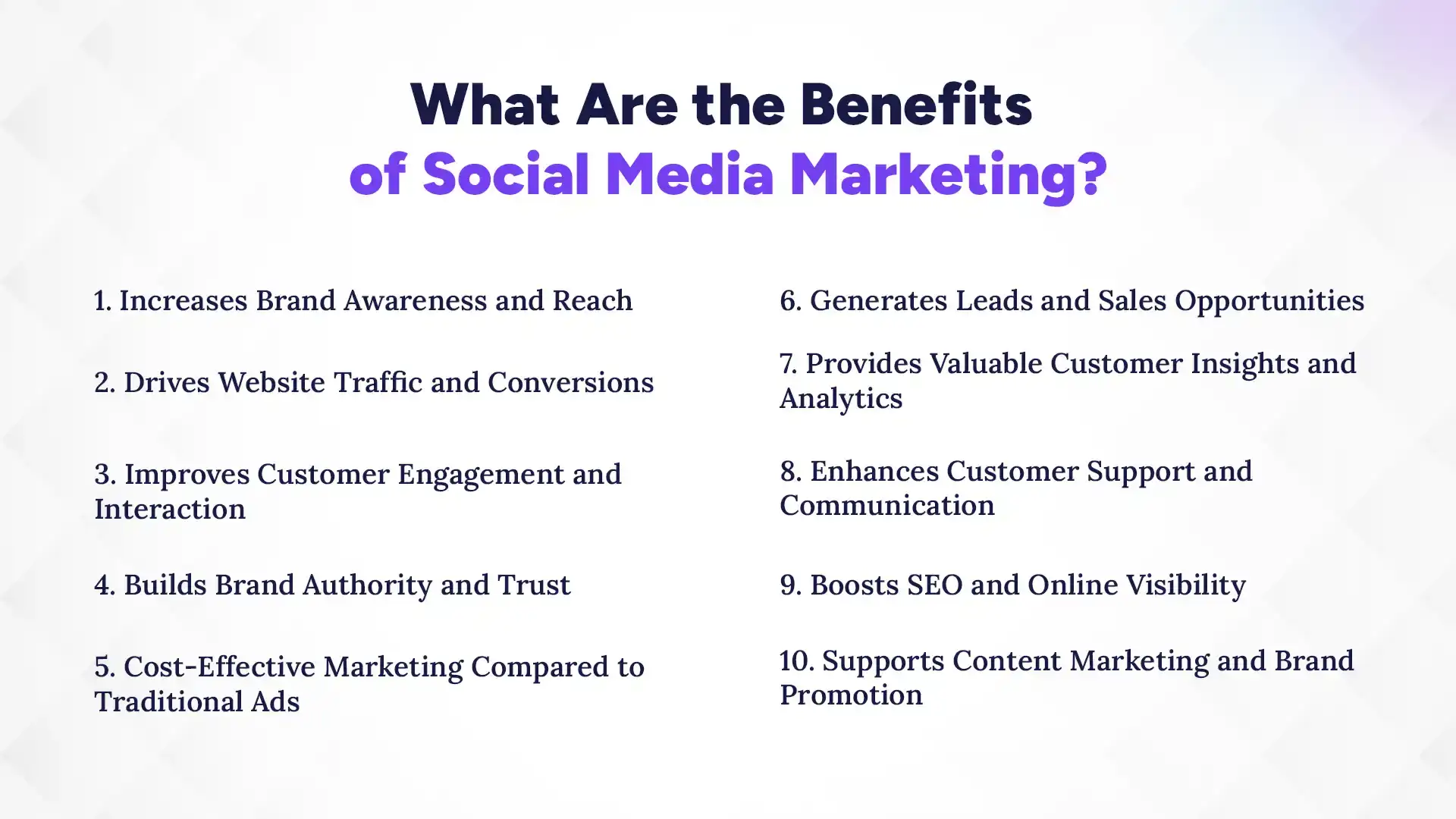
1. Increases Brand Awareness And Reach
Social media marketing helps businesses reach a wider audience across different platforms. Regular posts and engaging content improve brand visibility significantly. Viral content can spread quickly and attract new followers. It helps even small businesses gain global exposure. Higher reach leads to stronger brand recognition. It also builds long-term audience awareness. It ensures consistent visibility across multiple channels.
2. Drives Website Traffic And Conversions
Social media acts as a strong channel for directing users to websites. Sharing links to blogs, products, and landing pages increases traffic. Targeted ads bring in users who are more likely to convert. This improves sales and lead generation. More traffic leads to better business opportunities. It also supports revenue growth. It enhances overall digital performance.
3. Improves Customer Engagement And Interaction
Social media allows direct interaction between brands and customers. Businesses can respond to comments, messages, and feedback instantly. This builds trust and strengthens relationships. Engaging content encourages likes, shares, and discussions. Higher engagement improves customer loyalty. It also enhances brand connection. It creates stronger community interaction.
4. Builds Brand Authority And Trust
Consistent posting of valuable content helps establish credibility. Customers trust brands that are active and responsive online. Positive reviews and interactions improve reputation. Social proof plays a key role in building trust. Strong authority increases customer confidence. It also supports long-term brand growth. It enhances overall market reputation.
5. Cost-Effective Marketing Compared To Traditional Ads
Social media marketing is more affordable than traditional advertising methods. Businesses can start with small budgets and still get results. Paid campaigns can be optimized for better ROI. Organic reach also reduces marketing costs. It delivers high value at low investment. It is suitable for all business sizes. It ensures budget-friendly promotion options.
6. Generates Leads And Sales Opportunities
Social media helps attract potential customers through targeted content and ads. Lead forms and promotions capture user interest effectively. Businesses can nurture leads through continuous engagement. This increases conversion rates. Better targeting improves lead quality. It also supports business expansion. It boosts sales potential consistently.
7. Provides Valuable Customer Insights And Analytics
Social platforms provide detailed data on user behavior and engagement. Businesses can track performance metrics easily. This helps improve marketing strategies. Understanding customer preferences leads to better content creation. Data-driven decisions improve results. It also enhances campaign effectiveness. It supports smarter marketing planning.
8. Enhances Customer Support And Communication
Social media enables fast and direct communication with customers. Businesses can solve queries in real time. This improves customer satisfaction and trust. Quick responses build positive brand experiences. Better communication strengthens relationships. It also improves customer retention. It ensures reliable customer support.
9. Boosts SEO And Online Visibility
Social media indirectly improves search engine rankings. Increased engagement and traffic signal authority to search engines. Shared content increases visibility and reach. This strengthens overall online presence. Better visibility improves discoverability. It also supports SEO performance. It enhances brand search presence.
10. Supports Content Marketing And Brand Promotion
Social media helps distribute content to a larger audience. Blogs, videos, and posts gain more exposure. It enhances brand messaging across platforms. Consistent promotion improves content performance. Stronger reach increases marketing impact. It also boosts brand awareness. It improves content distribution effectiveness.
Why is Social Media Marketing Important for Businesses?
Social media marketing is important for businesses because it helps them reach a large audience, build brand awareness, and connect directly with customers in real time. It allows companies to promote their products and services more effectively compared to traditional marketing methods. Businesses can engage users, generate leads, and improve customer relationships through consistent activity. Understanding the cost of social media marketing is also important, as it is generally more affordable than traditional advertising. Overall, it plays a key role in driving modern digital growth and competitiveness.
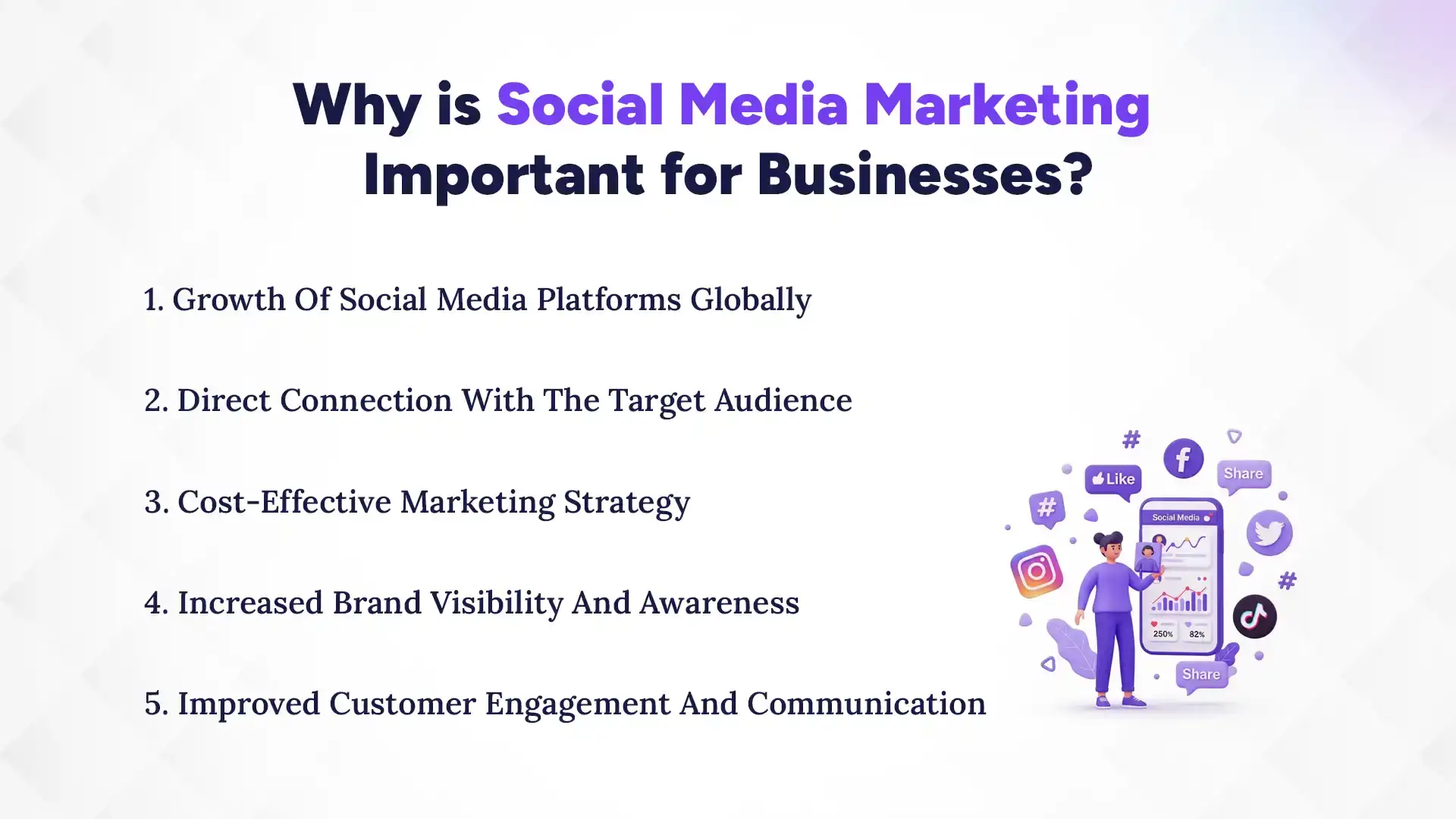
1. Growth Of Social Media Platforms Globally
Social media platforms have grown rapidly across the world, making them essential for business marketing. Billions of users now spend time on platforms like Facebook, Instagram, and LinkedIn daily. This gives businesses a massive audience to target. The global reach allows brands to expand beyond local markets. More users mean more opportunities for engagement. It also helps businesses scale faster in digital spaces. It strengthens global brand exposure.
2. Direct Connection With The Target Audience
Social media allows businesses to connect directly with their target audience without intermediaries. Brands can interact through comments, messages, and live sessions. This builds stronger relationships and improves trust. It also helps understand customer needs in real time. Direct communication increases customer satisfaction. It creates more personalized marketing experiences. It improves audience understanding and loyalty.
3. Cost-Effective Marketing Strategy
Social media marketing is more affordable compared to traditional advertising methods. Businesses can start with small budgets and still achieve strong results. Paid campaigns can be optimized for better performance and ROI. Organic reach also helps reduce marketing costs. It offers high value at low investment. This makes it suitable for all business sizes. It ensures efficient use of marketing budgets.
4. Increased Brand Visibility And Awareness
Social media helps businesses increase their visibility across multiple platforms. Regular posting and engagement keep the brand active in front of users. Viral content can significantly boost reach. This helps attract new audiences and potential customers. Higher visibility improves brand recognition. It also strengthens long-term brand presence. It builds stronger digital identity.
5. Improved Customer Engagement And Communication
Social media enables real-time communication between businesses and customers. Companies can quickly respond to queries and feedback. This improves trust and builds stronger relationships. Engaging content encourages likes, shares, and discussions. Better engagement increases customer loyalty. It also enhances the overall user experience. It creates continuous audience interaction.
How Does Social Media Marketing Work?
Social media marketing works by creating, sharing, and promoting content on social platforms to reach and engage a target audience. It combines strategic planning, audience targeting, and consistent content distribution to achieve marketing goals. Many businesses also rely on SMM services to manage campaigns more effectively and improve results. Businesses use data-driven insights to improve performance and increase conversions. Overall, it helps brands build awareness, engagement, and long-term customer relationships.
1. Content Creation And Publishing Strategy
Content creation is the foundation of social media marketing and includes posts, videos, and visuals. Businesses plan content based on audience interests and platform trends. A consistent publishing schedule helps maintain visibility and engagement. High-quality content attracts and retains users. Strong content improves brand perception and reach. It also supports long-term audience growth.
2. Audience Targeting And Segmentation
Audience targeting involves identifying the right users based on demographics, interests, and behavior. Segmentation helps deliver personalized content to different groups. This increases engagement and conversion rates. Social media platforms provide advanced targeting tools. Better targeting improves marketing efficiency. It ensures content reaches the right audience.
3. Engagement And Community Building
Engagement involves interacting with users through comments, messages, and shares. Community building focuses on creating loyal followers around the brand. Active communication strengthens relationships and trust. Engaging content encourages user participation. Stronger engagement builds brand loyalty. It also increases organic reach.
4. Performance Tracking And Optimization
Performance tracking helps measure how well campaigns are performing using analytics tools. Metrics like reach, clicks, and engagement are analyzed. Based on insights, strategies are improved for better results. Continuous optimization increases ROI. Data-driven decisions improve campaign success. It ensures long-term marketing effectiveness.
How to Create an Effective Social Media Marketing Strategy?
You can create an effective social media marketing strategy by setting clear goals, understanding your audience, and consistently planning and optimizing your content. A strong strategy ensures your efforts are focused, measurable, and aligned with business objectives. It helps improve engagement, brand visibility, and conversions. Continuous analysis and improvement are key to long-term success.
1. Set Clear Marketing Goals And Objectives
Setting clear goals gives direction to your social media marketing efforts. Goals can include increasing brand awareness, generating leads, or boosting sales. Well-defined objectives help measure success effectively. They also keep your strategy focused and organized. Clear goals improve overall campaign performance. It ensures better decision-making and results.
2. Identify Target Audience And Platforms
Understanding your target audience is essential for effective marketing. Businesses should analyze age, interests, and behavior patterns. Choosing the right platforms ensures better engagement and reach. Each platform serves different audience types. Right targeting improves conversion rates. It helps deliver relevant content to users.
3. Plan Content Calendar And Posting Schedule
A content calendar helps organize posts in advance. It ensures consistency and avoids content gaps. Scheduled posting maintains regular audience engagement. It also helps align content with campaigns and trends. Consistency increases brand visibility. It improves audience retention and trust.
4. Use Analytics To Improve Performance
Analytics tools help track engagement, reach, and conversions. Businesses can identify what content performs best. This data helps refine marketing strategies. Regular analysis improves decision-making. Data-driven insights boost marketing effectiveness. It ensures continuous performance improvement.
5. Optimize Campaigns For Better ROI
Campaign optimization focuses on improving results while reducing costs. Businesses adjust targeting, content, and ads based on performance data. A/B testing helps identify what works best. Continuous optimization increases return on investment. Better optimization leads to higher profitability. It ensures efficient use of marketing budgets.
Best Platforms for Social Media Marketing
Social media marketing works best when businesses choose the right platforms based on their audience and goals. Each platform offers unique features for branding, engagement, and conversions. From visual content to professional networking, these platforms help businesses reach and interact with users effectively. Overall, selecting the right mix of platforms improves marketing performance and ROI.
1. Facebook For Broad Audience Reach
Facebook is one of the largest social media platforms with a diverse global audience. It allows businesses to run targeted ads and organic posts for maximum reach. Features like groups, pages, and marketplace help improve engagement. It is ideal for brand awareness and community building. Strong targeting options improve campaign efficiency. It also supports both B2C and local businesses effectively.
2. Instagram For Visual Content Marketing
Instagram is highly effective for visual storytelling through images, reels, and stories. It helps brands showcase products creatively and engagingly. Influencer marketing plays a major role on this platform. It is especially popular among younger audiences. High-quality visuals improve engagement rates. It also boosts brand identity and lifestyle marketing.
3. LinkedIn For B2B Marketing
LinkedIn is the top platform for professional and B2B marketing. It helps businesses connect with industry professionals and decision-makers. Companies use it for recruitment, branding, and lead generation. It is ideal for sharing industry insights and corporate content. Strong networking improves business opportunities. It builds credibility and authority in professional markets.
4. Twitter (X) For Real-Time Engagement
Twitter, now X, is used for real-time updates and conversations. It is effective for trending topics, news, and customer interaction. Brands use it for quick communication and engagement. Hashtags help increase visibility and reach. Fast communication improves audience engagement. It is useful for brand awareness and support.
5. YouTube For Video Marketing
YouTube is the leading platform for video content marketing. It allows businesses to create tutorials, ads, and brand stories. Video content helps explain products in detail. It also improves SEO and long-term visibility. Video marketing increases audience retention. It builds trust through engaging and informative content.
Conclusion
Social media marketing has become one of the most powerful tools for business growth in the digital era. It helps brands increase visibility, connect with their audience, and drive meaningful engagement across multiple platforms. From building awareness to generating leads, its impact is significant for both small and large businesses. By using the right strategy, businesses can turn social media into a strong revenue-generating channel with support from The Pace Infosys.
Overall, the benefits of social media marketing go beyond promotion and directly support long-term brand success. It improves customer relationships, enhances trust, and provides valuable insights for better decision-making. When combined with consistency and the right platforms, it delivers strong results in terms of reach, engagement, and conversions. Businesses that invest in social media marketing today are better positioned for future digital marketing services and sustainable digital growth.
FAQs
What are the benefits of social media marketing?
+
Social media marketing helps businesses increase brand awareness, engagement, and website traffic. It also improves leads, sales, and overall online visibility.
Why is social media marketing important for businesses?
+
It allows direct communication with customers and builds strong brand relationships. It also provides cost-effective promotion compared to traditional marketing.
Which social media platform is best for marketing?
+
Facebook, Instagram, LinkedIn, YouTube, and X are top marketing platforms. The best platform depends on your target audience and business goals.
How does social media marketing help increase sales?
+
It attracts targeted users through ads and engaging content strategies. This leads to higher traffic, conversions, and improved sales performance.
Is social media marketing cost-effective?
+
Yes, it is more affordable than traditional advertising methods. Businesses can achieve strong results even with small budgets.
How does social media improve brand awareness?
+
Regular posting and engagement increase visibility across platforms. This helps more people recognize and remember your brand easily.
Can small businesses benefit from social media marketing?
+
Yes, small businesses can reach large audiences with minimal investment. It helps them compete with larger brands effectively.
What content works best for social media marketing?
+
Engaging visuals, videos, and informative posts perform best. Content should be relevant, consistent, and audience-focused.
Ready to get started?
Book a 30-minute consultation call, and let's talk about your goals.