
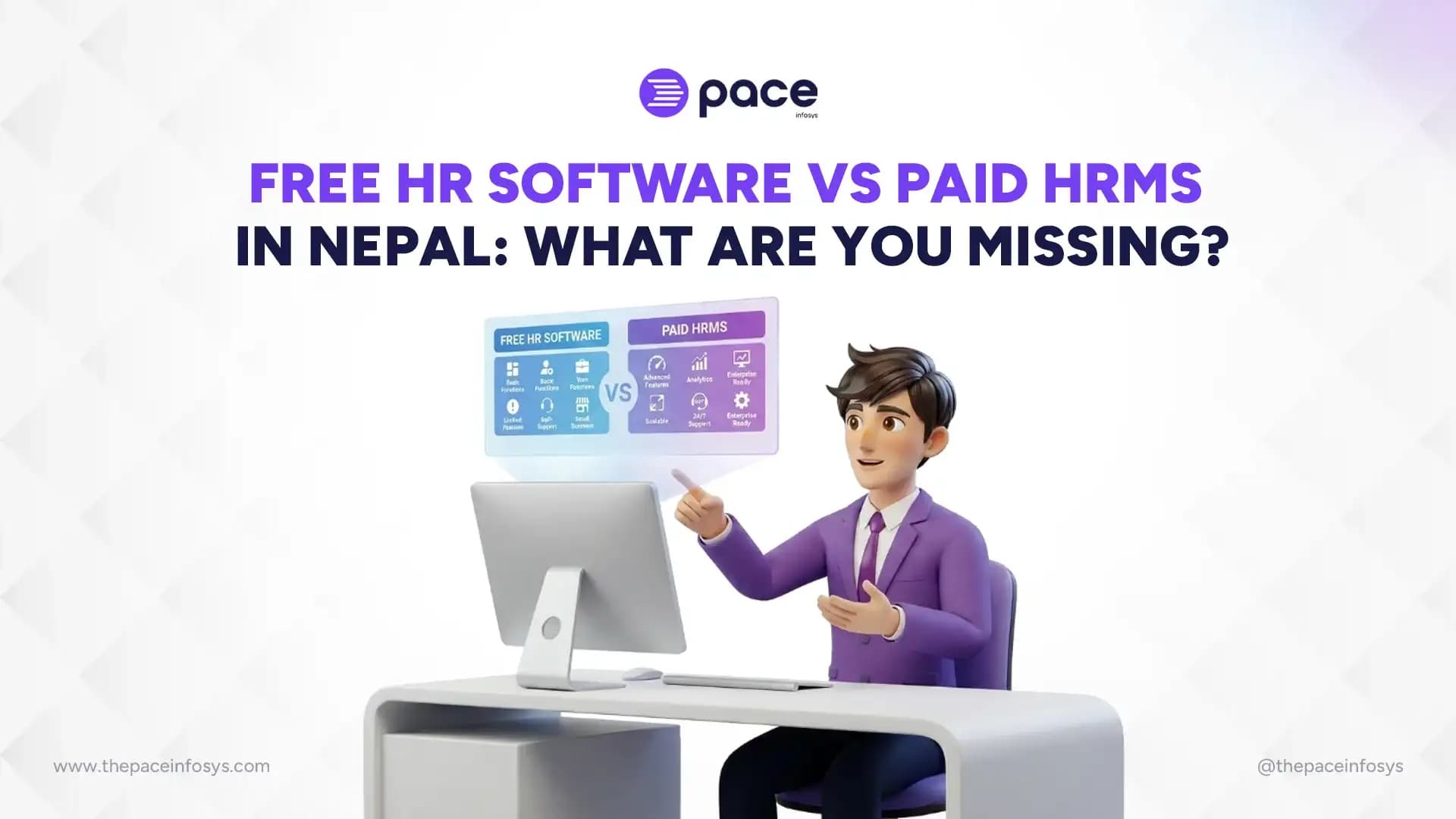

Free HR software in Nepal typically leaves out local compliance depth, real security verification, and room to scale, gaps that don't show up until a business is already relying on the system for something important. It works fine right up until the moment it doesn't, which is usually the worst possible time to discover its limits.
This guide covers what free HR software typically includes, why businesses in Nepal start there, what's actually missing compared to a paid HRMS, how free tools handle Nepal-specific compliance, what happens when a business outgrows them, what to compare before deciding, and what Nepali businesses specifically need to weigh closing with, which paid HRMS fills the gaps free software leaves.
What Does Free HR Software Typically Include?
Free HR software typically includes basic employee records, simple leave tracking, and a limited number of user seats, covering just the essentials for a very small team.
Most free plans give you a place to store basic employee details, name, and contact information, along with a simple way to request and approve leave. That covers the bare minimum a small team needs to stop managing HR through spreadsheets and email. Where free plans consistently draw the line is user seats, capping how many employees or managers can actually use the system before you're pushed toward a paid tier.
| Factor | Free HR Software | Paid HRMS |
|---|---|---|
| Feature Depth | Basic records and leave tracking only | Full employee lifecycle management |
| Nepal Compliance Support | Minimal or none | Built-in tax, PF, and statutory support |
| Scalability | Capped user seats and features | Scales with headcount and complexity |
| Support Access | Limited or community-based | Dedicated, responsive support |
Why Do Businesses in Nepal Start With Free HR Software?
Businesses in Nepal start with free HR software because of tight initial budgets, a small team that doesn't yet justify a paid system, and uncertainty about what their HR needs will look like as they grow.
1. Tight Initial Budget Constraints
Early-stage businesses often have very little room in the budget for software that isn't directly tied to revenue, making free tools an easy first choice. Working within tight initial budget constraints is a completely reasonable starting point, especially when weighing the cost of HR management software in Nepal, as long as the trade-offs are understood from the beginning.
2. Small Team Size at the Start
With just a handful of employees, the gaps in a free plan simply aren't visible yet, since there's little complexity for the software to fall short on. A small team size at the start means most of what's missing in free software hasn't become relevant yet.
3. Uncertainty About Future HR Needs
New businesses often don't yet know what their HR needs will look like in a year or two, which makes committing to a paid system feel premature. This uncertainty about future HR needs is understandable, but it also means the switch to paid software often happens reactively rather than by plan.
What Are You Missing Compared to a Paid HRMS?
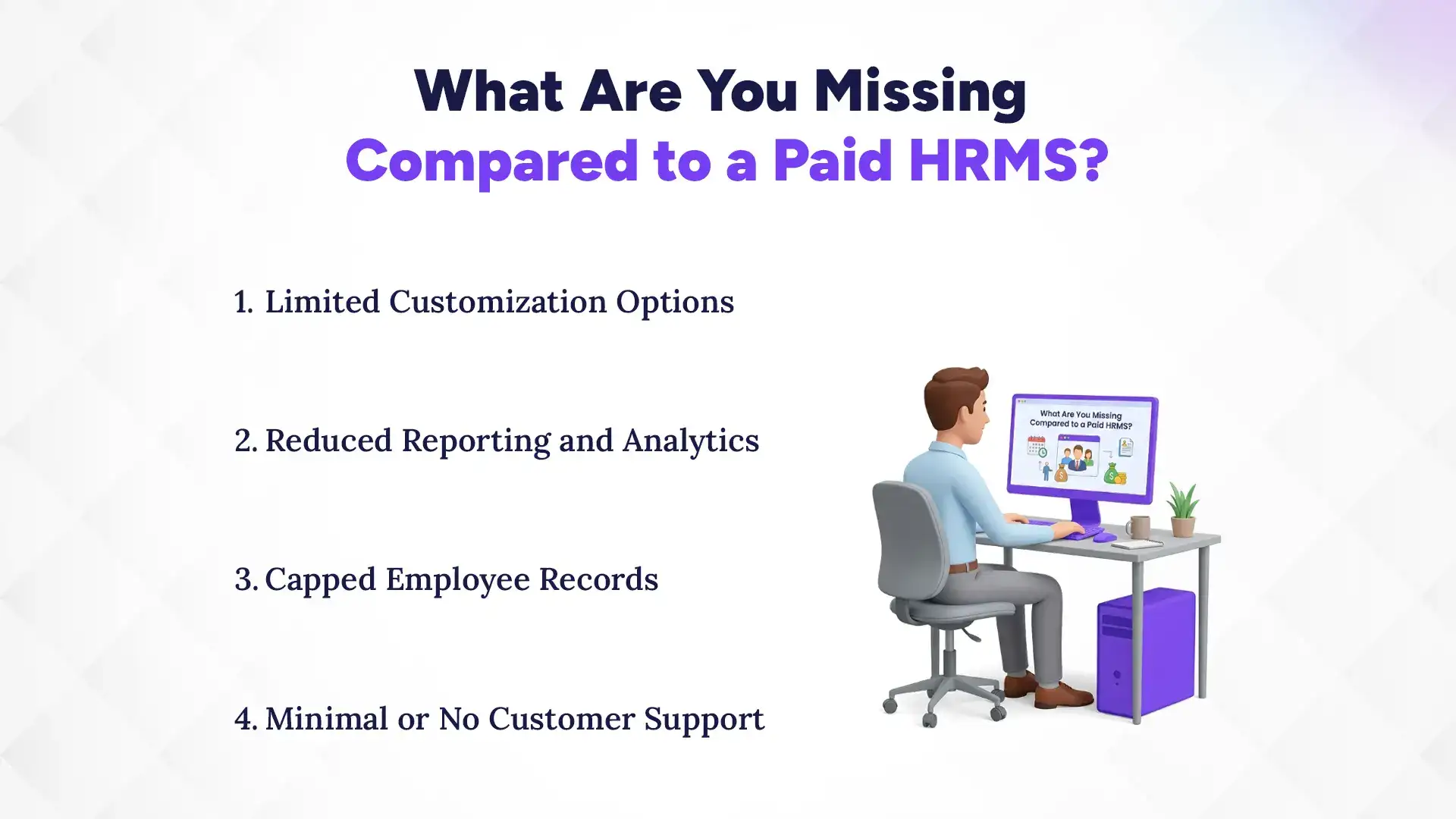
Compared to a paid HRMS, free HR software is missing deeper customization, real reporting and analytics, higher employee record limits, and meaningful support when something actually goes wrong.
1. Limited Customization Options
Free plans generally offer fixed workflows and settings, with little room to adjust the system to match how your specific business actually operates. Limited customization options mean the software shapes how you work, rather than adapting to fit your existing processes, limiting the core benefits of HR software.
2. Reduced Reporting and Analytics
Free tiers typically provide only basic summaries, if any reporting at all, leaving businesses without real insight into workforce trends or patterns. Reduced reporting and analytics makes it harder to make informed HR decisions as the business grows, lacking the advanced HR software features found in paid systems.
3. Capped Employee Records
Most free plans cap the number of employees the system can support, forcing a forced upgrade or migration the moment you cross that threshold. Capped employee records turn growth itself into the trigger that ends the free option, often without much warning.
4. Minimal or No Customer Support
When something goes wrong on a free plan, support is often limited to community forums or slow email queues, if it exists at all. Minimal or no customer support becomes a real problem the first time an issue affects payroll or compliance and needs to be resolved quickly.
How Does Free HR Software Handle Nepal-Specific Compliance?
Free HR software generally handles Nepal-specific compliance poorly, with little to no support for local tax rules, provident fund calculations, or statutory leave requirements built in.
1. Generic Tax Logic Instead of Nepal-Specific Rules
Free platforms are usually built around global or generic tax defaults, since localizing for smaller markets like Nepal isn't a priority for free-tier development. Relying on generic tax logic instead of Nepal-specific rules puts the burden of correcting employee payroll deductions in Nepal back on the business.
2. No Native Provident Fund Support
Nepal's provident fund contribution structure typically isn't built into free HR software, leaving businesses to calculate and track it manually outside the system. Having no native HR software with SSF integration in Nepal defeats much of the purpose of using software to manage payroll in the first place.
3. Missing Statutory Leave Requirements
Free tools rarely account for Nepal's specific statutory leave and festival holiday requirements, defaulting instead to generic vacation or PTO models. Missing statutory leave requirements means compliance tracking has to happen manually alongside a system that's supposed to be handling it, a gap easily filled by dedicated leave management software.
What Happens When a Business Outgrows Free HR Software?
When a business outgrows free HR software, data migration becomes a real challenge, workflows get disrupted during the switch, historical records can be temporarily lost, and access to features that are suddenly needed gets delayed.
1. Data Migration Challenges
Moving employee records, leave history, and other data out of a free platform isn't always straightforward, especially if the tool wasn't built with easy export in mind. Data migration challenges often turn what should be a quick switch into a drawn-out, error-prone process, which is why understanding how to implement HR software correctly is so critical.
2. Disrupted Workflows During Switching
While migrating to a new system, HR processes that were running smoothly can stall or require manual workarounds until the new platform is fully set up. Disrupted workflows during switching are one of the most immediate, visible costs of outgrowing free software.
3. Temporary Loss of Historical Records
If data doesn't transfer cleanly, some historical records, past leave requests, and old employee notes can be lost or become inaccessible during the transition. Temporary loss of historical records creates real problems if that information is ever needed later for a dispute or audit.
4. Delayed Access to Needed Features
The features a business suddenly needs better compliance support, deeper reporting, and higher record limits, which aren't available until the migration to paid software is actually complete. Delayed access to needed features means the gap in capability shows up exactly when it's least convenient, right as the business is scaling.
What Should You Compare Before Choosing Free or Paid?
Before choosing free or paid, businesses should compare the true total cost over time, where the feature ceiling sits as the team grows, and how much support and compliance coverage each option actually provides.
1. True Total Cost Over Time
Free software isn't actually free once the cost of manual workarounds, compliance risk, and an eventual migration are factored in. Calculating true total cost over time, not just the sticker price, gives a far more honest comparison between the two options.
2. Feature Ceiling as You Grow
Every free plan has a point where its features simply stop being enough, and it's worth knowing in advance roughly where that ceiling sits. Understanding the feature ceiling as you grow helps you plan the switch to paid software proactively instead of reactively.
3. Support and Compliance Coverage
The level of support and compliance coverage included with each option often matters more in practice than the feature list on a pricing page. Weighing support and compliance coverage carefully avoids discovering the gap only after it's already caused a problem, which is essential when deciding how to choose HR software for the long term.
What Should Nepali Businesses Weigh Specifically Before Choosing Free?
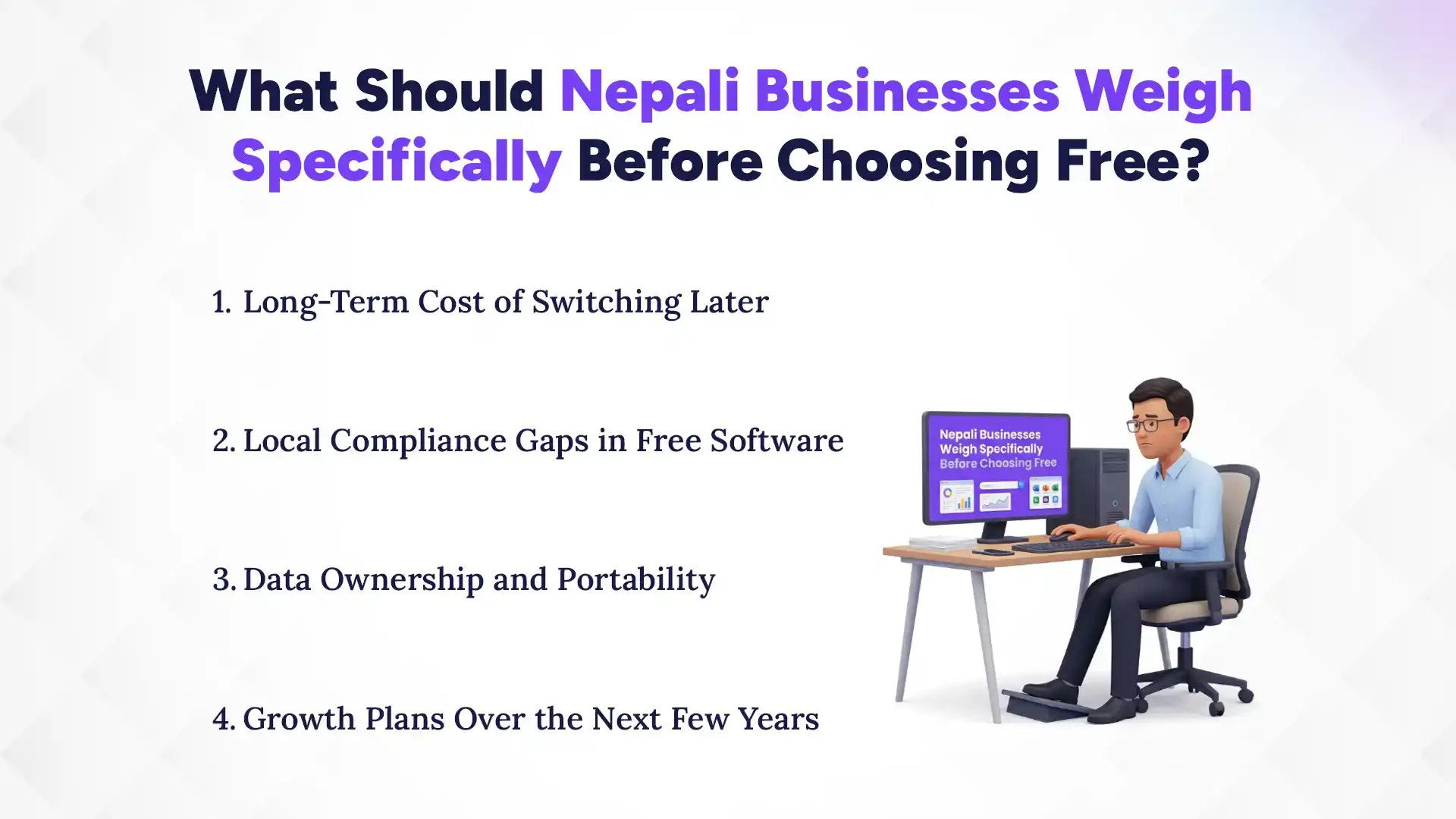
Nepali businesses should specifically weigh the long-term cost of switching later, compliance gaps tied to local regulations, data ownership and portability, and realistic growth plans over the next few years before choosing free HR software.
1. Long-Term Cost of Switching Later
Switching from free software to a paid HRMS later almost always costs more in time and disruption than starting with the right tool from the beginning would have. Weighing the long-term cost of switching later helps put the appeal of "free" in more honest context.
2. Local Compliance Gaps in Free Software
Since most free platforms aren't built around Nepal's specific tax, provident fund, and leave requirements, businesses take on compliance risk they may not even be aware of. Understanding local compliance gaps in free software is essential before relying on it for anything beyond very basic recordkeeping.
3. Data Ownership and Portability
It's worth confirming upfront how easily employee data can be exported from a free platform, since some tools make this deliberately difficult to discourage switching. Prioritizing data ownership and portability protects a business from being effectively locked into a tool it's already outgrown.
4. Growth Plans Over the Next Few Years
A business that expects meaningful headcount growth in the next few years should factor that trajectory into the decision now, rather than waiting until free software's limits are actively causing problems. Considering growth plans over the next few years turns this into a proactive decision instead of a reactive scramble.
Which Paid HRMS Fills the Gaps Free Software Leaves in Nepal?
Pace HRMS offers the best paid HRMS to fill the gaps free software leaves in Nepal, with native local compliance support, stronger security, and room to scale that free tools simply aren't built to provide. It's designed to reflect how Nepali businesses actually scale their HR operations.
For businesses in Nepal looking to move from free limitations to a complete system, Pace HRMS builds in the local tax logic, provident fund calculations, and statutory leave requirements that free platforms consistently leave out. It pulls together compliance support, real customer support, and scalable features into a single platform instead of fragmented free tools. As one of the top 5 HR software in Nepal, it's designed to reflect how Nepali businesses actually scale their HR operations.
What sets Pace HRMS apart is that it was built around Nepal's actual requirements from the start, not adapted as an afterthought once a free plan's limits became a problem. Between native compliance support, real customer support, and room to grow, it gives businesses the depth free software was never designed to provide.
Conclusion
Free HR software isn't actually free in the long run, the cost just shifts from a subscription fee to compliance risk, limited support, and a harder migration later. A paid HRMS built for Nepal closes those gaps from the start, rather than leaving a business to discover them at the worst possible moment.
If your business is starting to feel the limits of free HR software, explore Pace HRMS's features with a demo or contact Pace Infosys to see how it fits your team.