Many businesses struggle to get attention online. Their website looks fine, but people leave in seconds. Ads do not convert, and social media posts get ignored. Most of the time, the problem is not the product or service. It is a poor visual design.
Graphic design plays a big role in how people see and trust a brand. From logos to websites and marketing materials, good design helps businesses stand out and connect with the right audience.
In this guide, you will learn what graphic design really means, what graphic designers do, and why design matters for business growth. You will also discover tools, skills, career options, and how to choose the best graphic design company in the USA for your needs.
What is Graphic Design?
Graphic design is the art of sharing ideas using visuals. It uses images, colors, text, and layout to send a clear message. Simply put, graphic design helps people understand information faster and better without reading too much text.
Every time you see a logo, website banner, social media post, or product package, graphic design is working behind the scenes. Its main goal is to grab attention and guide people to take action, like clicking a button, buying a product, or trusting a brand.
Graphic design is not only about making things look good. It is about solving problems. A good design makes content easy to read, easy to remember, and easy to use. It helps businesses share their message in a clear and professional way through graphic design service.
Graphic design is used in both digital and print spaces. Online, it appears on websites, mobile apps, ads, and social media. Offline, it shows up on business cards, brochures, posters, and product packaging.
The main purpose of graphic design includes:
Building a strong brand identity
Making messages clear and easy to understand
Creating trust and professionalism
Improving user experience on websites and apps
Helping marketing and sales perform better
In simple words, graphic design connects a business with its audience through visuals. When done right, it turns ideas into clear messages that people notice, remember, and trust.
What Does a Graphic Designer Do?
A graphic designer creates visual content that helps brands communicate clearly and look professional. Their work supports branding, marketing, and digital presence across many platforms. They focus on making designs that are simple, clear, and useful for the target audience.
Graphic designers work closely with brands to understand their goals. They choose the right colors, fonts, images, and layouts to match the brand voice. Every design they create has a purpose, whether it is to inform, promote, or attract customers through branding services.
They also handle both print and digital design work. This means creating designs that look good on screens as well as on paper. Designers make sure all visuals stay consistent so the brand looks the same everywhere.
A graphic designer’s key responsibilities include:
Creating logos that represent a brand’s identity
Designing brochures, flyers, banners, and business cards
Developing social media posts and digital ads
Designing website layouts, landing pages, and UI elements
Making visuals that support marketing campaigns
Updating designs based on feedback and brand needs
Graphic designers often work with marketing teams, content writers, and clients. They listen to ideas, share creative input, and make changes when needed. Good communication is a big part of their job.
In simple words, a graphic designer helps brands look trustworthy, professional, and easy to recognize through strong visual design.
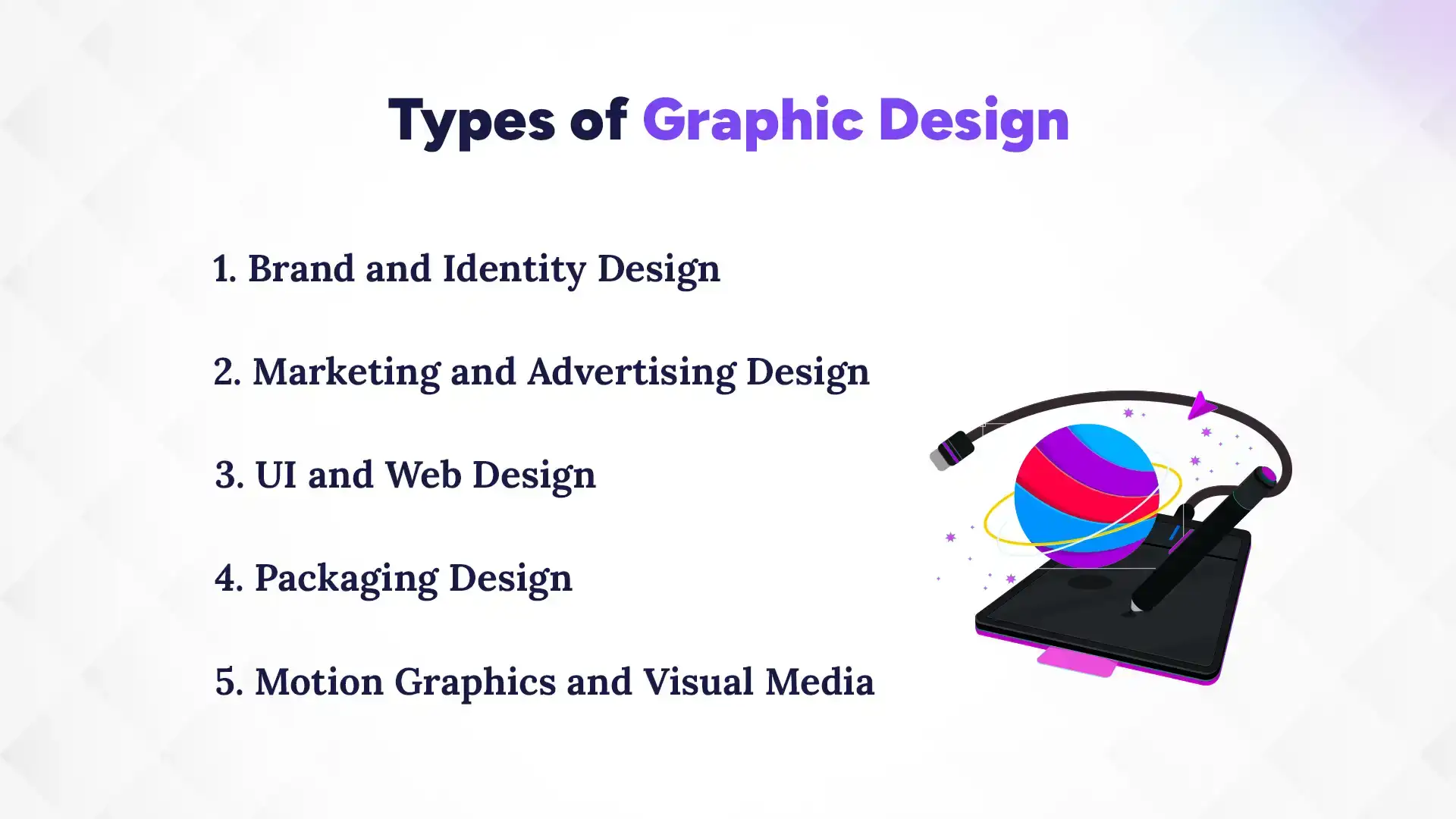
Types of Graphic Design
Graphic design is not just one type of work. It covers many areas, and each one serves a different purpose. Some designs help build a brand, while others focus on selling or user experience. Knowing these types helps businesses choose the right design for their needs.
1. Brand and Identity Design
Brand and identity design focus on how a brand looks and feels. It includes logos, brand colors, fonts, and style guides. This type of design helps people recognize a brand quickly. A strong brand design builds trust and consistency. It makes the business look professional everywhere. Good brand design helps customers remember the brand for a long time.
2. Marketing and Advertising Design
Marketing and advertising design is used to promote products and services. It includes ads, social media posts, banners, flyers, and email visuals. The main goal is to grab attention fast. These designs guide people to take action, like clicking or buying. They support sales and marketing campaigns. Clear and bold visuals work best here.
3. UI and Web Design
UI and web design focus on websites and apps. This type of design makes sure users can easily move around pages. It improves how buttons, menus, and layouts look and work. Good UI design saves users time and reduces confusion. It also helps keep visitors on the site longer. Simple and clean designs work best for users.
4. Packaging Design
Packaging design is how a product looks on the shelf or in the box. It includes labels, boxes, and product wraps. Good packaging attracts buyers at first glance. It also shares product details clearly. Strong packaging design builds brand trust. It plays a big role in buying decisions.
5. Motion Graphics and Visual Media
Motion graphics use movement to share ideas. This includes videos, animations, and short visual clips. These designs are common on websites, ads, and social media. Motion graphics help explain complex ideas easily. They keep viewers engaged longer. Simple motion designs often perform the best.
Skills Required to Become a Graphic Designer
Becoming a graphic designer is not just about knowing tools. It is about thinking visually and solving problems through design. A good designer knows how to turn ideas into clear visuals. These skills help designers create work that looks good and works well.
1. Creativity and Visual Thinking
Creativity helps a designer come up with new ideas. Visual thinking allows them to see how colors, text, and images work together. Designers use creativity to make designs stand out. They think about layout and balance before starting any project. This skill helps turn simple ideas into strong visuals. Good visual thinking makes designs easy to understand.
Designers use software to create and edit visuals. Tools like Photoshop and Illustrator are very common in the industry. These tools help designers work faster and better. Knowing design software is a basic skill for any designer. It allows them to create logos, images, and layouts. Practice helps designers use these tools with ease.
3. Typography and Color Theory
Typography is about choosing the right fonts. Good fonts make text easy to read and pleasant to look at. Color theory helps designers pick colors that work well together. Colors can change how people feel about a brand. The right mix of fonts and colors improves design quality. Simple choices often give the best results.
4. Communication and Problem-Solving Skills
Graphic designers work with clients and teams. Good communication helps them understand what is needed. They listen to feedback and make changes when required. Problem-solving helps fix design issues. Designers often face limits like time or budget. Strong thinking skills help them deliver the best results.
Tools Used in Graphic Design
Graphic designers use different tools to create clean and clear visuals. These tools help turn ideas into real designs. Some tools are made for experts, while others are great for beginners. Choosing the right tool depends on the project and skill level.
1. Adobe Creative Suite
Adobe Creative Suite is one of the most popular design tool sets. It includes Photoshop, Illustrator, and InDesign. Photoshop is used for editing images and photos. Illustrator helps create logos and vector designs. InDesign is used for layouts like brochures and magazines. These tools give full control over design work. Many professional designers use Adobe tools daily. They are powerful but need practice to master.
2. Figma and Design Collaboration Tools
Figma is a cloud-based design tool. It is mainly used for web and UI design. Designers can work together on the same file at the same time. This makes teamwork fast and easy. Figma is great for sharing ideas and feedback. It works directly in the browser. Many teams use it for website and app design. It saves time and improves communication.
3. Canva and Beginner-Friendly Tools
Canva is easy to use and perfect for beginners. It offers ready-made templates for social media, ads, and presentations. Users can drag and drop elements without design skills. Canva is great for quick designs. It helps small businesses and startups save time. Many people use it for basic branding work. It is simple, fast, and beginner-friendly.
Career Scope of Graphic Design
Graphic design has a wide and growing career scope. Businesses need strong visuals to attract customers and build trust. Because of this, graphic designers are in demand across many industries. It is a career that offers stability, growth, and flexibility.
Job Opportunities in Graphic Design
Graphic designers can work in many roles. Common jobs include brand designer, marketing designer, web designer, and social media designer. Many companies hire full-time designers for in-house work. Design agencies also offer roles where designers handle multiple clients. IT companies and startups often need designers for digital projects. These roles offer steady work and learning opportunities.
Freelancing and Remote Work Options
Freelancing is a popular choice for graphic designers. Designers can work with clients from different countries. Remote jobs allow designers to work from home or anywhere. This gives more freedom and control over work hours. Freelancers can choose projects they enjoy. Remote work also helps maintain a better work-life balance.
Graphic Design Salary Trends
Graphic design salaries depend on skills and experience. Entry-level designers start with a basic salary. As skills improve, income increases. Freelancers can earn more by working with multiple clients. In the USA, graphic designers are seeing steady salary growth. Designers who know modern tools and digital design often earn higher pay.
In simple terms, graphic design is a strong career with many job options, flexible work styles, and good earning potential.
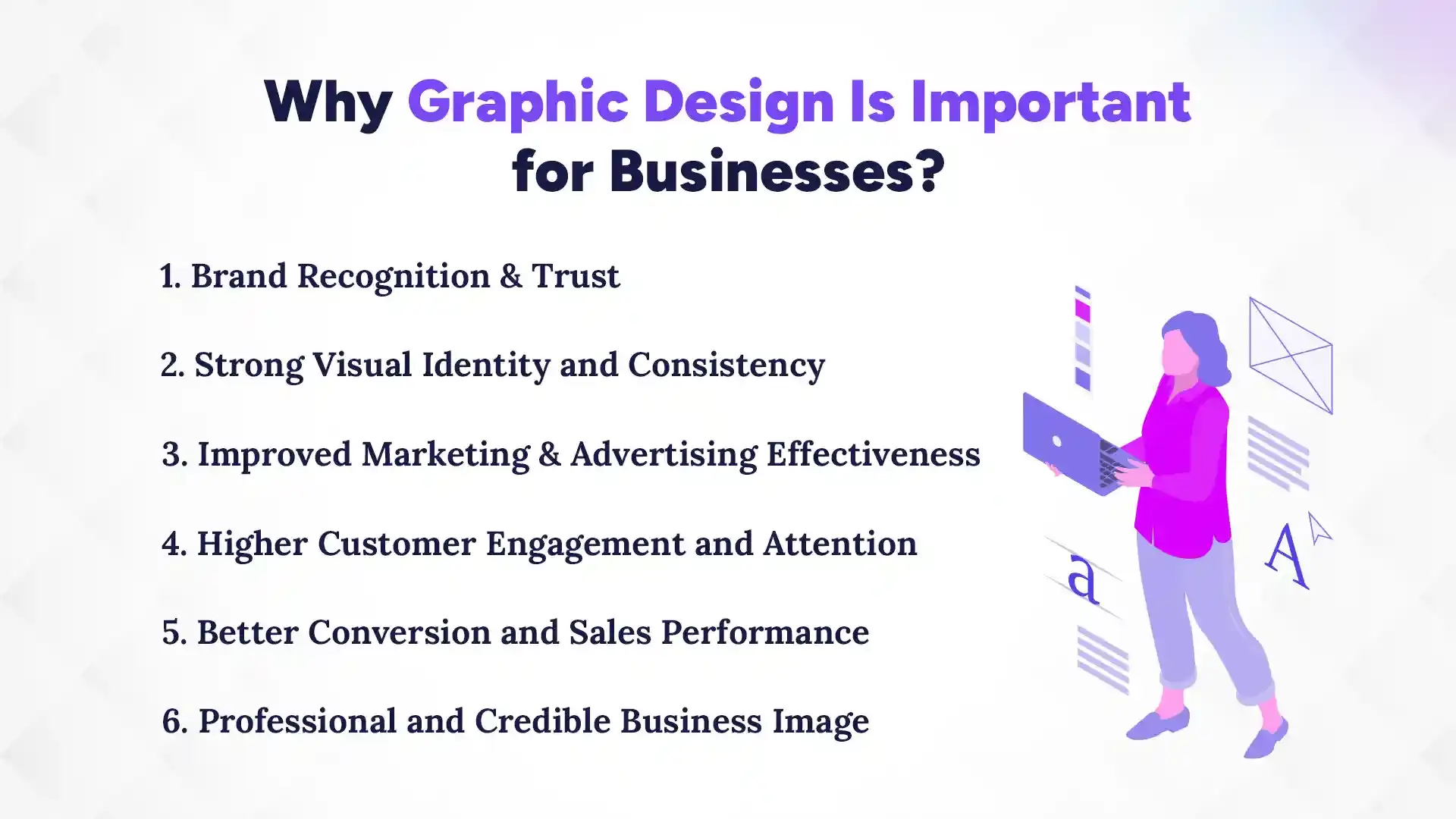
Why is Graphic Design Important for Businesses?
Graphic design is important for businesses because it helps attract attention, build trust, and increase sales. It shapes how customers see a brand at first glance. Good design supports marketing, improves communication, and helps businesses grow faster.
1. Brand Recognition and Trust
Graphic design helps people recognize a brand easily. A clear logo, color style, and layout make a brand familiar. When customers see the same design again and again, trust grows. Strong visuals make a business look reliable. Trust plays a big role in buying decisions. Good design helps build long-term customer trust.
2. Strong Visual Identity and Consistency
Visual identity is how a brand looks everywhere. Graphic design keeps colors, fonts, and style consistent. This consistency makes the brand look organized. It helps customers remember the business. A strong visual identity creates a professional feel. Consistent design builds confidence in the brand.
3. Improved Marketing and Advertising Effectiveness
Good design makes marketing more powerful. Ads with strong visuals get more attention. A clear design helps people understand the message fast. It improves click rates and engagement. Better visuals lead to better campaign results. Design supports marketing success.
4. Higher Customer Engagement and Attention
People notice visuals before text. Graphic design helps grab attention quickly. Eye-catching designs keep users interested. Engaged users spend more time with the brand. This increases the chances of action. Strong design keeps customers focused.
5. Better Conversion and Sales Performance
Graphic design guides users to take action. Clear layouts help users decide faster. Good visuals build confidence in products. This leads to more clicks and sales. Design removes confusion. Better design means better results.
6. Professional and Credible Business Image
Professional design makes a business look serious. It shows attention to detail. Customers trust brands that look polished. Poor design can harm a reputation. Strong visuals create credibility. A professional image supports business growth.
Which Is the Best Graphic Design Company in the USA?
When it comes to choosing a graphic design company, The Pace Infosys stands out as one of the best in the USA. A great design company not only creates visually appealing work but also understands business goals. They help brands communicate clearly, attract customers, and grow their presence online and offline. Choosing the right company can make a huge difference in how your business looks and performs.
The Pace Infosys is known for delivering high-quality, professional, and creative design solutions. They focus on understanding each client’s unique needs and providing custom designs that match the brand’s vision. From logos and branding to marketing materials and web design, they cover all aspects of graphic design. Their team is skilled in both digital and print media, ensuring consistency across all channels.
Key factors that make The Pace Infosys a top graphic design company include:
Strong portfolio with diverse projects across industries
Expertise in branding, marketing design, UI/UX, and motion graphics
Skilled designers familiar with modern tools and trends
Clear communication and collaboration with clients
Timely delivery and attention to detail
Focus on building long-term client relationships
The Pace Infosys combines creativity with strategy to help businesses grow. They make sure designs are not only visually attractive but also effective in achieving business goals. For companies in the USA looking for professional graphic design services, The Pace Infosys is a trusted choice that brings ideas to life and strengthens brand presence.
How to Choose the Right Graphic Design Company?
To choose a graphic design company, look at their work, experience, and how well they understand your needs. Picking the right company saves time, ensures better results, and helps your business grow. A good company will make your brand look professional and stand out.
When choosing a graphic design company, it’s important to check several things. First, look at their portfolio to see the quality and style of their past work. This shows if their design approach matches your vision. Next, consider their experience in your industry. Companies familiar with your market can create designs that connect with your audience. Client reviews and feedback also matter; they show how reliable and easy to work with the company. Communication is key. A company that listens to your ideas and gives clear suggestions will make the process smooth.
Other important points to check include:
Portfolio and previous projects
Industry expertise and relevant experience
Client reviews and testimonials
Communication and responsiveness
Ability to meet deadlines
Use of modern design tools and trends
Choosing the right graphic design company is about more than just style; it’s about results. The right company will understand your brand, create visuals that attract customers, and help your business grow. Taking the time to research and compare options ensures you pick a partner that delivers both creativity and professionalism.
Conclusion
Graphic design is one of the most important tools a business can use to grow and succeed. It helps brands look professional, attract attention, and connect with customers. A good design makes a company easy to recognize, builds trust, and supports marketing and sales by exploring the top 10 graphic design companies in Austin.
Choosing the right brand and identity designing company, like The Pace Infosys in the USA, can make a big difference for businesses. In simple words, graphic design is not just about making things look nice; it is about communicating clearly, building a strong brand, and achieving real business results.
FAQs
What is graphic design in simple words?
+
Graphic design is the use of images, colors, text, and layout to share ideas visually. It helps businesses communicate clearly and attract attention.
What does a graphic designer actually do?
+
A graphic designer creates logos, marketing materials, website visuals, and social media designs. Their goal is to make content look professional and easy to understand.
Why is graphic design important for business?
+
Graphic design helps build brand trust and recognition. Good design improves marketing performance and increases customer engagement.
What are the main types of graphic design?
+
The main types include brand design, marketing design, UI and web design, packaging design, and motion graphics. Each type serves a different business purpose.
What skills are needed to become a graphic designer?
+
Graphic designers need creativity, visual thinking, and knowledge of design tools. They also need good communication and problem-solving skills.
Which tools are commonly used in graphic design?
+
Popular tools include Adobe Photoshop, Illustrator, InDesign, Figma, and Canva. These tools help designers create both digital and print visuals.
Is graphic design a good career in the USA?
+
Yes, graphic design offers strong career opportunities in agencies, companies, and freelancing. Demand continues to grow as businesses invest more in digital presence.
How do I choose the best graphic design company?
+
Look at the company’s portfolio, client reviews, experience, and communication style. A good design company understands your goals and delivers creative work on time.
Ready to get started?
Book a 30-minute consultation call, and let's talk about your goals.