Imagine having your business appear right at the top of search results exactly when customers are looking for your product or service. That is the power of search engine marketing. In today’s competitive digital space, businesses cannot rely only on organic reach to grow. With increasing online competition, visibility and timing have become critical for success. This is where SEM helps brands connect with the right audience at the right moment.
In this blog on Advantages of Search Engine Marketing, we will explore how SEM can drive instant visibility, targeted traffic, and measurable results for businesses. You will learn about its key benefits, importance in digital marketing, and how it compares with other strategies. By the end, you will clearly understand why SEM is a powerful tool for business growth.
What is Search Engine Marketing (SEM)?
Search Engine Marketing (SEM) is a digital marketing strategy used to promote websites by increasing their visibility on search engine results pages through paid advertising. If you’re wondering what is sem, it simply refers to this practice of using paid search campaigns to appear in front of users who are actively searching for related products or services. It allows businesses to display ads to users who are actively searching for related products or services. SEM mainly works through platforms like Google Ads, where advertisers bid on keywords. This helps businesses reach the right audience quickly and generate targeted traffic. It is one of the fastest ways to gain online visibility.
How Does Search Engine Marketing Work?
Advertisers select relevant keywords that users search on search engines
They create ads that appear on search engine results pages
Businesses bid on keywords through platforms like Google Ads
Ads are displayed based on bid amount and quality score
Users click on ads, and advertisers pay per click (PPC model)
Performance is tracked using analytics for optimization and better ROI
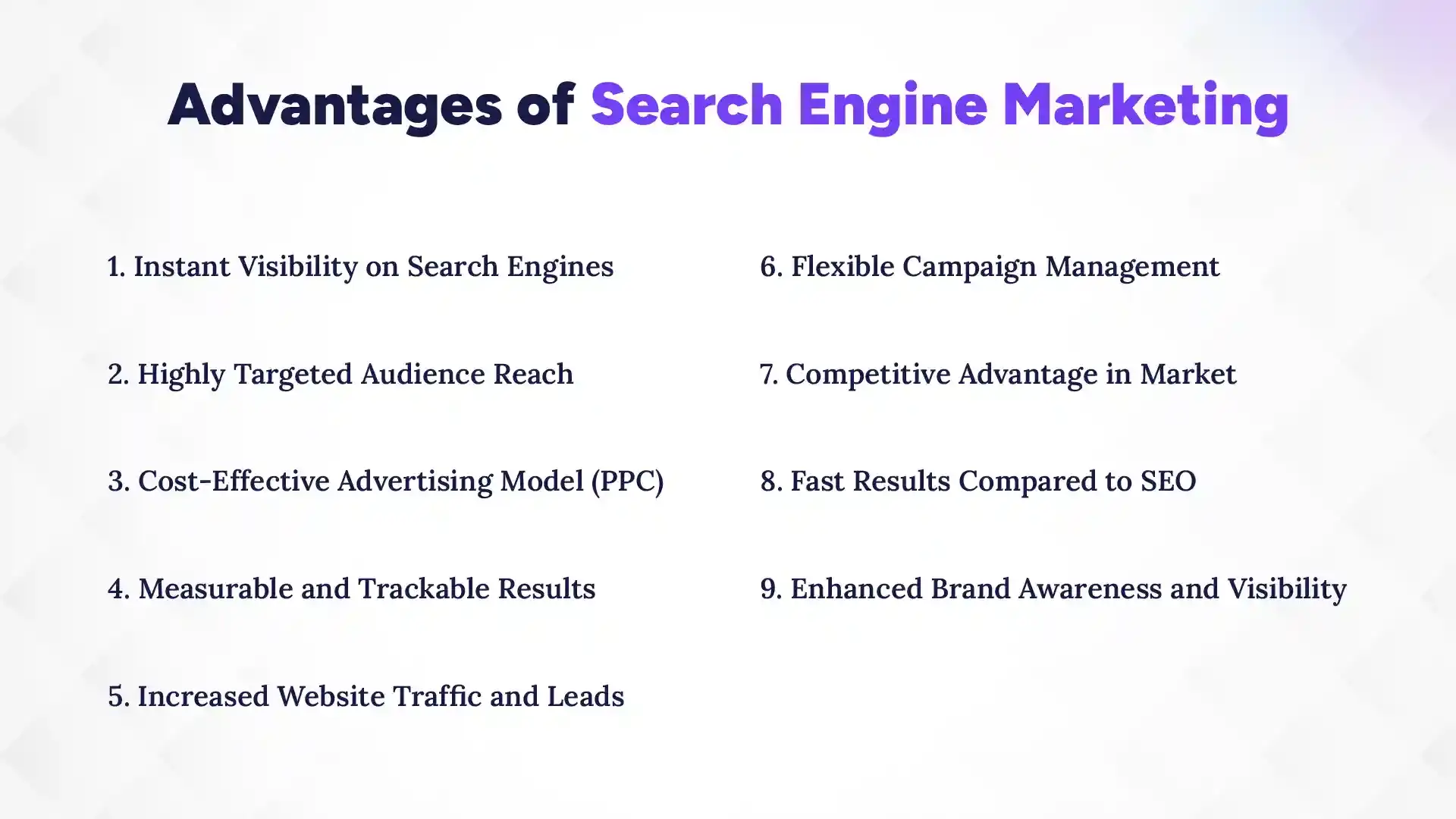
Advantages of Search Engine Marketing
Search engine marketing offers several powerful advantages for businesses looking to grow online quickly and effectively. It helps brands gain instant visibility, reach the right audience, and drive measurable results. When considering the cost of sem, it becomes clear that businesses can control their spending by setting daily budgets and choosing how much to bid on keywords. Unlike traditional marketing, SEM provides full control over campaigns, budgets, and targeting. Businesses can adjust strategies in real time based on performance data. Overall, it is a flexible and results-driven approach to digital marketing.
1. Instant Visibility on Search Engines
SEM allows your ads to appear at the top of search results instantly. This means your business becomes visible as soon as campaigns go live. Unlike SEO, there is no long waiting period. It helps new businesses gain quick exposure. This is especially useful in competitive markets. Immediate visibility increases the chances of attracting potential customers. It also helps promote time-sensitive offers effectively.
2. Highly Targeted Audience Reach
SEM enables precise targeting based on keywords, location, and user behavior. Businesses can reach people who are actively searching for their services. This improves the quality of traffic. It ensures ads are shown to relevant audiences only. Better targeting leads to higher conversion rates. It reduces wasted marketing efforts. This makes campaigns more efficient and goal-oriented.
3. Cost-Effective Advertising Model (PPC)
SEM works on a pay-per-click model, meaning you only pay when someone clicks your ad. This helps control marketing costs effectively. Businesses can set daily or monthly budgets. It ensures spending is optimized. Even small businesses can compete with limited budgets. This makes SEM accessible and efficient. It also allows better control over return on investment.
4. Measurable and Trackable Results
One of the biggest advantages of SEM is detailed performance tracking. You can measure clicks, impressions, conversions, and ROI easily. This helps in analyzing campaign success. Data-driven insights improve decision-making. Adjustments can be made quickly for better results. Transparency makes SEM highly reliable. It also helps identify which strategies work best.
5. Increased Website Traffic and Leads
SEM drives targeted traffic to your website. Since users are already searching for related services, chances of conversion are higher. This helps generate quality leads. More traffic increases business opportunities. It supports sales growth effectively. SEM is a strong tool for lead generation. It also improves the overall visibility of your website.
6. Flexible Campaign Management
SEM campaigns can be adjusted anytime based on performance. Businesses can pause, edit, or optimize ads easily. This flexibility helps improve results continuously. You can test different strategies and messages. It allows quick response to market changes. This makes SEM highly adaptable. It ensures campaigns remain relevant and effective.
7. Competitive Advantage in Market
SEM helps businesses compete even in crowded markets. By targeting the right keywords, companies can outrank competitors. It improves brand positioning online. Smaller businesses can also compete with larger brands. Strategic campaigns create better visibility. This gives a strong competitive edge. It helps businesses capture more market share.
8. Fast Results Compared to SEO
SEM delivers faster results compared to organic SEO efforts. Ads can start generating traffic immediately after launch. This is useful for promotions or new product launches. It reduces the waiting time for visibility. Businesses can see quick returns. Speed makes SEM very effective. It supports short-term marketing goals efficiently.
9. Enhanced Brand Awareness and Visibility
Even if users don’t click, they still see your brand name in search results. This increases brand recognition over time. Repeated exposure builds trust among users. It strengthens your online presence. SEM supports long-term branding goals. It helps businesses stay visible consistently. It also improves recall value among potential customers.
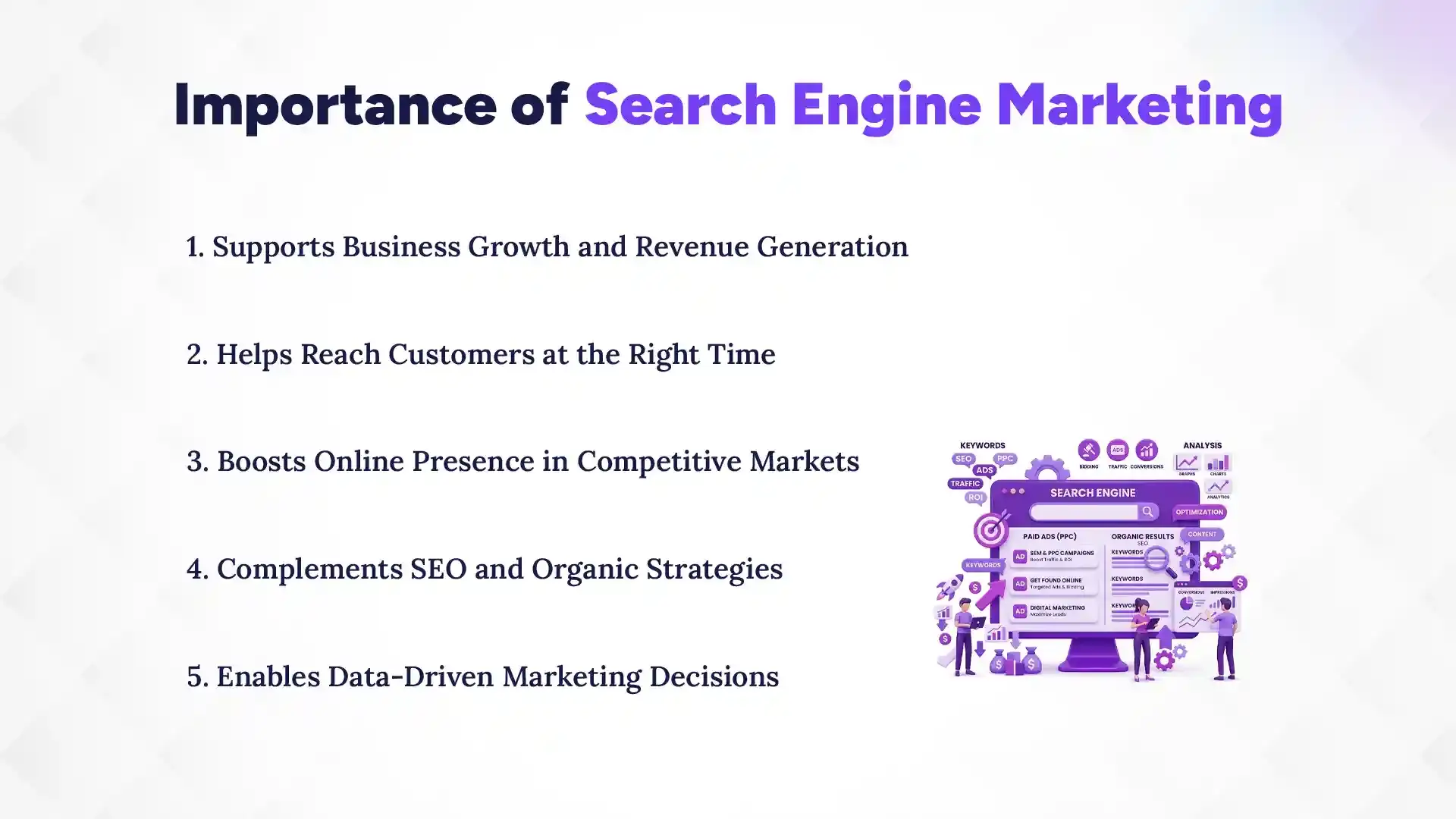
Importance of Search Engine Marketing
Search engine marketing plays a crucial role in helping businesses grow in today’s digital environment. It allows companies to connect with potential customers exactly when they are searching online through platforms like google ads service. SEM not only drives immediate traffic but also supports long-term marketing strategies. It provides valuable insights that help improve overall business performance. With increasing online competition, SEM has become an essential tool for visibility and growth.
1. Supports Business Growth and Revenue Generation
SEM directly contributes to business growth by driving targeted traffic that converts into customers. It helps generate leads and increase sales opportunities. Businesses can scale campaigns based on performance. Higher visibility leads to more engagement and conversions. This results in better revenue generation. It supports both short-term and long-term business goals.
2. Helps Reach Customers at the Right Time
SEM targets users who are actively searching for specific products or services. This ensures your ads appear when interest is highest. Timing plays a key role in conversion success. It increases the chances of attracting ready-to-buy customers. This improves marketing efficiency. Reaching the right audience at the right moment is a major advantage.
3. Boosts Online Presence in Competitive Markets
In competitive industries, visibility is often the biggest challenge. SEM helps businesses stand out by placing ads at the top of search results. This improves brand exposure and recognition. It allows smaller businesses to compete with larger companies. Strong online presence builds trust among users. It ensures your brand stays visible consistently.
4. Complements SEO and Organic Strategies
SEM works alongside SEO to create a balanced digital marketing strategy. While SEO takes time, SEM delivers immediate results. Together, they improve overall search visibility. SEM can also support keyword testing for SEO strategies. This combination increases effectiveness. It helps businesses achieve better long-term results.
5. Enables Data-Driven Marketing Decisions
SEM provides detailed data on user behavior, campaign performance, and conversions. This helps businesses make informed decisions. Marketers can adjust strategies based on real-time insights. It reduces guesswork in marketing efforts. Data analysis improves campaign performance. It ensures continuous improvement and better ROI.
Why Should Businesses Invest in Search Engine Marketing?
Businesses should invest in search engine marketing because it delivers instant visibility, targeted traffic, and measurable results that directly impact growth. It allows companies to reach potential customers exactly when they are searching for products or services through a reliable digital marketing service. This increases the chances of conversions and improves overall marketing efficiency.
SEM also provides flexibility, budget control, and real-time performance tracking. Businesses can quickly adjust campaigns to maximize returns. In a competitive digital landscape, investing in SEM helps maintain strong online presence and stay ahead of competitors.
Helps generate high-quality leads and increase conversions
Provides instant visibility on search engine results
Targets the right audience based on search intent
Offers full control over budget and campaign performance
Delivers measurable results with clear ROI tracking
Supports business growth in competitive markets
Key Components of Search Engine Marketing
Search engine marketing is built on several key components that work together to create effective campaigns. Each element plays an important role in improving visibility, targeting the right audience, and maximizing results. From selecting the right keywords to tracking performance, every step requires proper planning and execution. Understanding these components helps businesses run more successful and optimized SEM campaigns. It also ensures better return on investment.
1. Keyword Research and Selection
Keyword research is the foundation of any SEM campaign. It involves identifying the terms users search for related to your business. Choosing the right keywords ensures your ads reach the right audience. Both high-volume and long-tail keywords are important. Proper research improves targeting and reduces wasted spend. It directly impacts campaign success. It also helps in understanding customer intent more clearly.
2. Ad Creation and Optimization
Creating effective ads is essential for attracting user attention. Ads should be clear, relevant, and aligned with user intent. Optimization involves improving headlines, descriptions, and calls to action. Well-optimized ads increase click-through rates. Testing different versions helps find what works best. Strong ad copy improves overall campaign performance. Continuous optimization leads to better engagement and conversions.
3. Landing Page Optimization
A landing page is where users land after clicking an ad. It should be relevant, fast, and easy to navigate. A good landing page improves user experience and conversion rates. Content should match the ad message clearly. Clear call-to-action buttons are important. Optimization ensures better results from paid traffic. It also reduces bounce rates and improves user satisfaction.
4. Bidding Strategies and Budget Management
Bidding determines how much you pay for each click. Choosing the right bidding strategy helps control costs and maximize visibility. Budget management ensures you don’t overspend. Businesses can set daily or campaign-level budgets. Smart bidding improves return on investment. Proper planning keeps campaigns cost-efficient. It also helps allocate resources effectively across campaigns.
5. Performance Tracking and Analytics
Tracking performance is crucial for understanding campaign success. Tools provide data on clicks, impressions, and conversions. This helps identify what is working and what is not. Data-driven decisions improve results over time. Continuous monitoring allows quick adjustments. Analytics ensures campaigns remain effective and optimized. It also helps in setting future marketing strategies more accurately.
Common Challenges in Search Engine Marketing
While search engine marketing offers many benefits, it also comes with certain challenges that businesses need to manage carefully. Without proper strategy and execution, campaigns may not deliver expected results. Factors like competition, targeting, and optimization play a major role in performance. Understanding these challenges helps businesses avoid common mistakes and improve campaign effectiveness. With the right approach, these issues can be minimized.
1. High Competition and Cost Per Click (CPC)
In competitive industries, many businesses bid on the same keywords. This increases the cost per click significantly. Higher CPC can quickly exhaust marketing budgets. Small businesses may find it difficult to compete with larger brands. Managing bids strategically becomes very important. Proper keyword selection can help reduce costs. Continuous optimization is needed to stay competitive.
2. Poor Ad Targeting and Low ROI
If ads are not targeted correctly, they may reach the wrong audience. This leads to low engagement and poor conversion rates. As a result, return on investment decreases. Poor targeting wastes both time and budget. Businesses need to refine audience selection carefully. Using data and insights improves targeting accuracy. Better targeting leads to higher ROI.
3. Lack of Proper Keyword Strategy
Choosing irrelevant or broad keywords can reduce campaign effectiveness. It may attract traffic that does not convert. Without proper research, ads may not reach the intended audience. Keyword strategy should include both short-tail and long-tail keywords. Regular updates are necessary based on performance. Strong keyword planning improves campaign success. It ensures better alignment with user intent.
4. Ineffective Landing Pages
A poorly designed landing page can reduce conversions even if ads perform well. Slow loading speed and unclear content affect user experience. Visitors may leave without taking any action. The landing page must match the ad message. Clear calls to action are essential. Optimization improves engagement and results. A good landing page increases conversion rates significantly.
Conclusion
Search engine marketing has become one of the most powerful digital marketing strategies for businesses aiming to grow quickly and effectively. It offers instant visibility, targeted audience reach, and measurable performance, making it highly valuable in today’s competitive online landscape. From keyword research to ad optimization and analytics, each component plays a key role in driving successful campaigns at The Pace Infosys. When used correctly, SEM can significantly improve traffic, leads, and overall business revenue.
However, success in SEM depends on proper planning, continuous optimization, and strategic execution. Businesses must overcome challenges like high competition, poor targeting, and weak landing pages to get better results. With the right approach, SEM not only boosts short-term performance but also strengthens long-term brand presence. It remains a crucial tool for any business looking to stay visible and competitive in the digital world. Explore the Top 10 search engine marketing companies in Austin, Texas, to find the right partners for your growth.
FAQs
What is Search Engine Marketing (SEM)?
+
SEM is digital marketing strategy using paid ads to increase visibility on search engines. It helps businesses reach targeted customers quickly.
What are the main advantages of SEM?
+
SEM provides instant visibility, targeted traffic, and measurable marketing results. It helps increase leads and conversions effectively.
Is SEM better than SEO?
+
SEM gives faster results, while SEO focuses on long-term organic growth. Both work best when used together.
How does SEM help businesses grow?
+
SEM increases website traffic, improves visibility, and generates quality leads. It directly supports sales and revenue growth.
What is PPC in SEM?
+
PPC means pay-per-click advertising where businesses pay for each click received. It ensures controlled and cost-effective advertising.
How do I start Search Engine Marketing?
+
Start by choosing keywords, creating ads, and setting campaign budgets. Then monitor and optimize performance regularly.
What are common SEM challenges?
+
High competition, poor targeting, and ineffective landing pages are common issues. Proper strategy helps overcome these challenges.
Why is SEM important for digital marketing?
+
SEM improves online visibility and connects businesses with potential customers instantly. It boosts brand awareness and conversions.
Ready to get started?
Book a 30-minute consultation call, and let's talk about your goals.