

Managing a training center sounds simple, until you’re juggling trainers, batches, schedules, payroll, and admin tasks all at once. One small mistake in attendance or scheduling can create confusion across multiple classes (and let’s be honest, that happens more often than we’d like). That’s where things start getting messy without a proper system in place.
In this blog, we’ll explore everything about HR Software For Training Centers in Nepal, including its key features, benefits, challenges, and how to choose the right HRMS for your training institute. Whether you’re managing a small training center or multiple branches, this guide will help you streamline your HR operations and make your day-to-day management much smoother.
What Is HR Software For Training Centers?
HR Software For Training Centers is a digital HRMS system used to manage trainers, staff, attendance, payroll, and daily administrative operations efficiently. It helps automate routine HR tasks, handle batch-based schedules, and manage both full-time and part-time trainers. With the growing demand for hr software in Nepal, it improves coordination, reduces manual errors, and makes overall training center management more organized and efficient.
Why Training Centers in Nepal Need Specialized HR Software?
Training centers in Nepal need specialized HR software because they manage multiple trainers, batch schedules, and administrative tasks that are difficult to handle manually. Traditional HR methods often fail to keep up with flexible class timings and mixed workforce structures. Understanding the benefits of hr software helps automate operations, reduce errors, and improve coordination. It also ensures smoother day-to-day management across training activities.
1. Managing Trainers, Admin Staff, and Support Teams
Training centers have a mix of trainers, administrative staff, and support teams. Managing them manually can lead to confusion and inefficiencies. HR software centralizes employee data and roles in one system. This improves organization and workforce visibility. It also helps in better planning and management. It ensures all team roles are clearly defined and tracked.
2. Handling Batch-Based and Flexible Work Schedules
Training centers operate on different batches and flexible timings. Manual scheduling often leads to overlaps or missed sessions. HR software helps manage batch schedules and trainer availability efficiently. It ensures proper allocation of classes without conflicts. This improves overall scheduling accuracy. It also allows quick adjustments when schedules change.
3. Streamlining Payroll for Trainers and Part-Time Staff
Payroll can be complex due to part-time trainers and varying payment structures. HR software automates salary calculations based on hours, sessions, or contracts. This ensures timely and accurate payments. It reduces errors and administrative workload. Payroll management becomes much simpler. It also helps maintain clear payment records.
4. Ensuring Compliance with Labor Laws and Contracts
Training centers must follow labor laws and maintain proper employee contracts. Manual processes increase the risk of missing compliance requirements. HR software helps store and manage contracts and records securely. It ensures all legal requirements are met. This reduces risks and improves transparency. It also simplifies audit and documentation processes.
5. Improving Coordination Between Academic and Admin Teams
Coordination between academic and admin teams is crucial for smooth operations. Without proper systems, communication gaps can occur. HR software provides a centralized platform for sharing information. This improves collaboration and workflow efficiency. It keeps all teams aligned and organized. It also reduces miscommunication and operational delays.
What Are the Key Features of HR Software For Training Centers in Nepal?
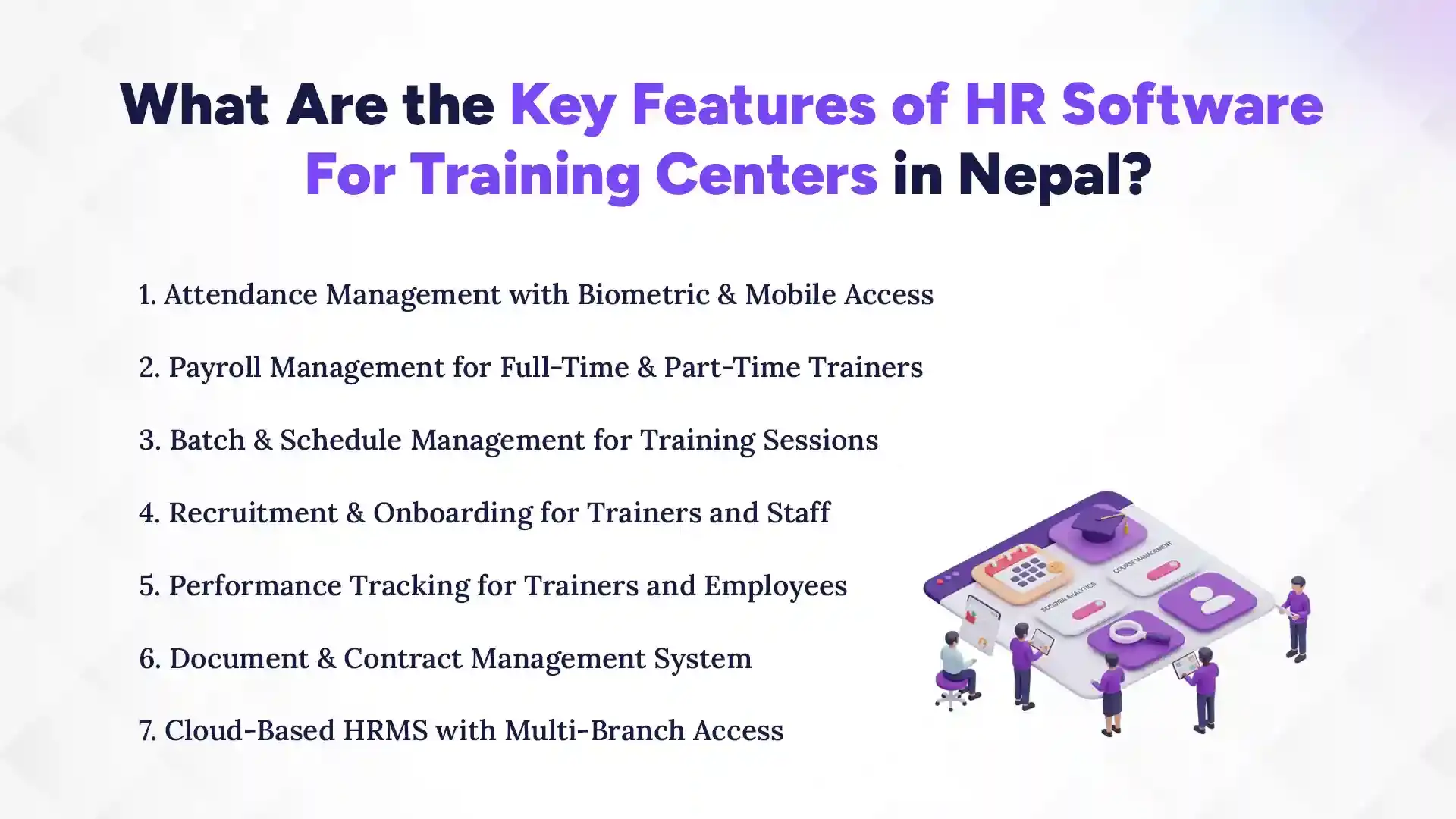
Key features of HR Software for Training Centers in Nepal include tools for managing attendance, payroll, scheduling, recruitment, and overall workforce operations efficiently. These systems are designed to handle batch-based training environments and mixed staff structures. A good HRMS helps automate routine tasks while improving accuracy and coordination. It acts as a central system to manage both academic and administrative activities smoothly.
1. Attendance Management with Biometric and Mobile Access
Tracking attendance manually can be time-consuming and error-prone. HR software integrates with biometric devices and mobile apps for accurate attendance tracking. Trainers and staff can mark attendance easily from different locations. This reduces fake entries and manual errors. It also provides real-time attendance data for better monitoring.
2. Payroll Management for Full-Time and Part-Time Trainers
Training centers often have both full-time and part-time trainers with different payment structures. HR software automates payroll calculations based on hours, sessions, or contracts. It ensures accurate and timely payments. This reduces confusion and payroll errors. It also simplifies financial management for HR teams.
3. Batch and Schedule Management for Training Sessions
Managing multiple batches and training schedules can get complicated. HR software helps organize class timings, trainer availability, and batch assignments. It prevents scheduling conflicts and ensures smooth session management. This improves efficiency in daily operations. It also allows quick adjustments when needed.
4. Recruitment and Onboarding for Trainers and Staff
Hiring trainers and staff requires a structured process. HR software streamlines recruitment by managing applications, interviews, and hiring workflows. It also simplifies onboarding by organizing documents and training processes. This speeds up hiring and improves employee integration. It helps build a strong and organized team.
5. Performance Tracking for Trainers and Employees
Performance evaluation is important to maintain quality training standards. HR software allows managers to track performance based on sessions, feedback, and results. It provides insights into employee productivity and effectiveness. This helps in making better decisions regarding promotions or improvements. It ensures the continuous development of staff.
6. Document and Contract Management System
Managing employee documents and contracts manually can lead to errors and loss of data. HR software stores all records securely in a digital system. It helps track agreements, renewals, and compliance documents. This ensures everything is organized and easily accessible. It also simplifies audits and legal processes.
7. Cloud-Based HRMS with Multi-Branch Access
Training centers with multiple branches need centralized access to HR data. Cloud-based HR software allows access from anywhere at any time. It ensures real-time updates across all branches. This improves coordination and decision-making. It also supports scalability as the organization grows.
Ready to Accelerate Your Digital Growth?
Partner with The Pace Infosys to build scalable web and mobile solutions tailored to your business goals.
Benefits of Using HR Software For Training Centers in Nepal
Using HR Software For Training Centers in Nepal helps streamline daily operations and manage both academic and administrative staff efficiently. It reduces dependency on manual processes and improves accuracy in HR tasks. Understanding the types of hr software available, training centers can operate more smoothly with automation and centralized data. It also enhances coordination across departments. Overall, it makes workforce management more organized and reliable.
1. Efficient Management of Trainers and Administrative Staff
HR software centralizes all employee data, making it easier to manage trainers and admin staff. Managers can track roles, schedules, and responsibilities in one place. This improves organization and reduces confusion. It also helps in better workforce planning. Managing multiple teams becomes more efficient. It ensures smoother coordination between trainers and admin teams.
2. Accurate Payroll Processing with Reduced Errors
Payroll processing becomes simpler with automation. HR software accurately calculates salaries based on hours, sessions, and contracts. This reduces errors and ensures timely payments. It also minimizes payroll disputes. Employees gain more trust in the system. It also helps maintain proper financial records.
3. Better Scheduling and Batch Coordination
Managing multiple batches and class schedules can be challenging. HR software helps organize schedules and assign trainers efficiently. It reduces overlaps and missed sessions. This improves overall coordination. Daily operations become more structured. It also allows quick adjustments when schedules change.
4. Reduced Manual Work and Administrative Burden
Manual HR tasks consume time and increase the chances of mistakes. HR software automates attendance, payroll, and record management. This saves time for HR teams. It also improves efficiency and accuracy. Administrative workload is significantly reduced. It allows HR teams to focus on more strategic tasks.
5. Improved Employee Experience and Transparency
HR software gives employees access to their information, like schedules, payslips, and leave status. This improves transparency and communication. Employees feel more informed and connected. It reduces dependency on HR for basic queries. Overall satisfaction and engagement improve. It creates a more organized and supportive work environment.
How to Choose the Best HR Software For Training Centers in Nepal?
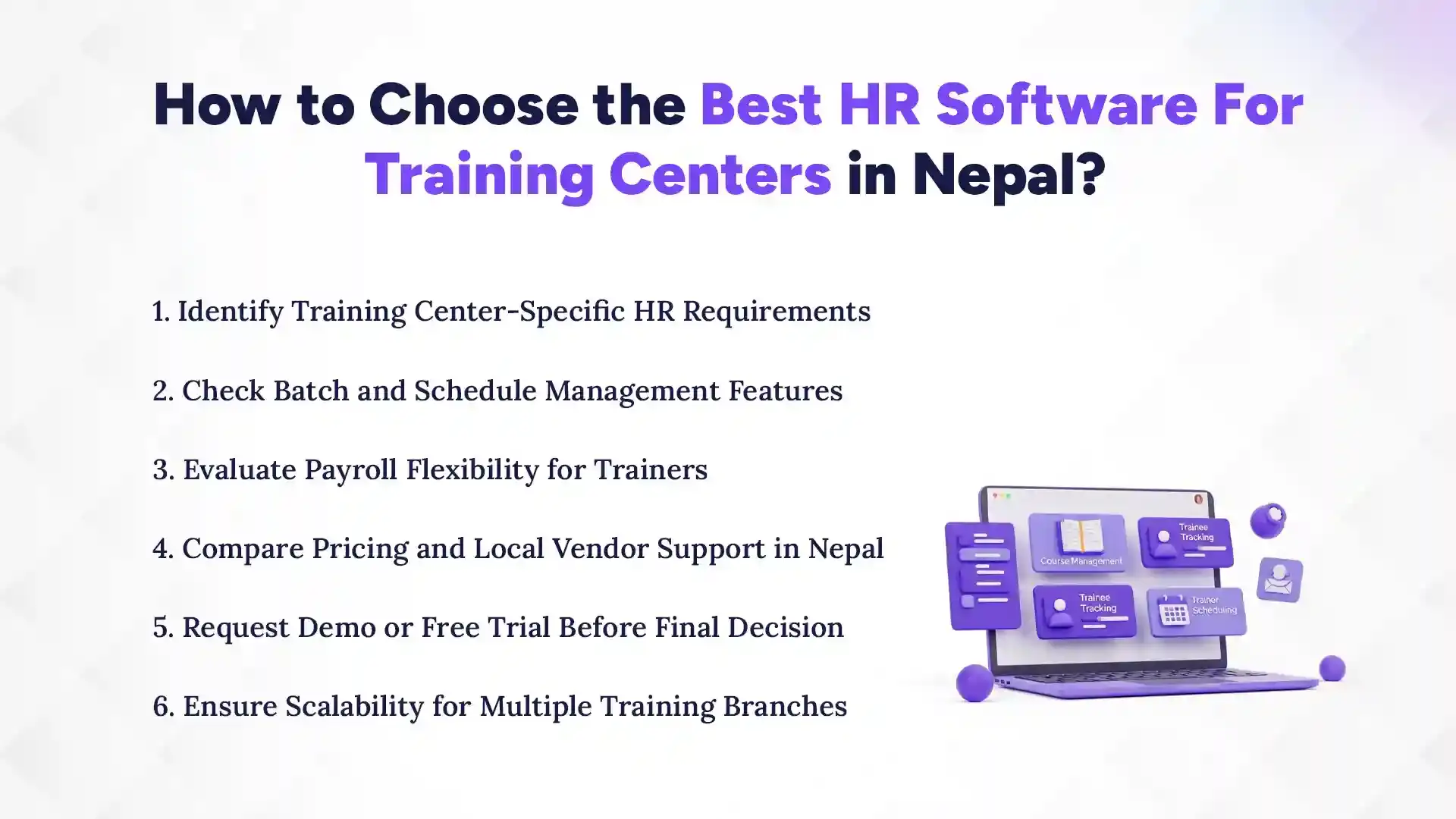
To choose the best HR Software for Training Centers in Nepal, you need to evaluate your operational needs, scheduling complexity, payroll structure, and scalability of the system. Not all HRMS tools are built for batch-based training environments, so choosing the right one is important. The ideal software should simplify daily operations and support future growth. A careful comparison helps avoid long-term issues. Choosing wisely now saves time and cost later.
1. Identify Training Center-Specific HR Requirements
Start by understanding your training center’s unique HR needs. This includes managing trainers, batch schedules, and administrative staff. List out key features you require before exploring options. This prevents choosing generic software that doesn’t fit your workflow. A clear requirement list makes selection easier. It also helps you focus on what truly matters.
2. Check Batch and Schedule Management Features
Training centers rely heavily on batch-based schedules. HR software should be able to manage class timings, trainer availability, and session allocation. It must prevent overlaps and scheduling conflicts. Good scheduling features improve operational efficiency. This ensures smooth coordination between trainers and students. Proper scheduling is a must-have feature.
3. Evaluate Payroll Flexibility for Trainers
Trainers may be full-time, part-time, or paid per session. HR software should support flexible payroll systems for different payment models. It should calculate payments accurately based on hours or sessions. This reduces complexity and errors in payroll. Timely payments improve employee satisfaction. Flexibility is key for training institutes.
4. Compare Pricing and Local Vendor Support in Nepal
Budget is an important factor when selecting HR software. Compare pricing plans and evaluate the features offered. Also, check if the vendor provides local support in Nepal. Quick support can help resolve issues faster. Sometimes, paying a bit more ensures better service. Focus on overall value rather than just cost.
5. Request Demo or Free Trial Before Final Decision
Before making a final decision, always test the software. A demo or free trial helps you understand how the system works in real scenarios. You can check usability, features, and performance. It also allows your team to provide feedback. Testing helps avoid wrong decisions. It gives you confidence in your choice.
6. Ensure Scalability for Multiple Training Branches
If your training center plans to expand, scalability becomes important. HR software should support multiple branches and growing workforce needs. It should handle increased data and users without issues. A scalable system saves you from switching software later. It also supports long-term growth. Choosing future-ready software is always a smart decision.
What Makes HR Software For Training Centers in Nepal Different from Other Industries?
HR Software for Training Centers in Nepal is different because it is designed to handle batch-based operations, flexible schedules, and a mixed workforce structure unique to training institutes. Unlike traditional offices, training centers operate around sessions and trainer availability. This requires a more flexible and specialized HR system.
1. Batch-Based and Session-Oriented Work Structure
Training centers operate on batches and sessions rather than fixed office hours. Managing these manually can lead to confusion and scheduling conflicts. HR software helps organize batch timings and session allocation efficiently. It ensures trainers are assigned properly without overlaps. This improves overall scheduling accuracy. It also supports smooth daily operations.
2. Mix of Full-Time, Part-Time, and Visiting Trainers
Training centers often have different types of trainers working together. Managing contracts, schedules, and payments for each type can be complex. HR software centralizes all workforce data in one system. It ensures smooth coordination between different roles. This helps maintain consistency in operations. It also simplifies workforce management.
3. Need for Flexible Scheduling and Attendance Tracking
Schedules in training centers can change frequently based on batches and availability. HR software provides flexible scheduling and attendance tracking features. It allows easy updates and real-time monitoring. This reduces confusion and errors in scheduling. It ensures accurate attendance records. Flexibility becomes easier to manage.
4. Close Coordination Between Academic and Admin Teams
Academic and administrative teams must work closely for smooth operations. Without proper systems, communication gaps can occur. HR software provides a centralized platform for sharing information. This improves coordination and workflow efficiency. It keeps all teams aligned. It also reduces delays and miscommunication.
Which Is the Best HR Software For Training Centers in Nepal?
Pace HRMS is the best HR software for training centers in Nepal because it offers a centralized and flexible system to manage trainers, schedules, payroll, and administrative tasks efficiently. It is designed to handle batch-based operations and mixed workforce structures, which are common in training institutes.
The system automates attendance, payroll, and scheduling, reducing manual errors and saving time for HR teams. Its cloud-based access and scalability make it suitable for both small training centers and multi-branch institutions. Overall, Pace HRMS simplifies HR operations while improving coordination and productivity.
Common Challenges Training Centers Face Without HR Software
Without proper HR Software For Training Centers in Nepal, managing daily operations becomes inefficient and error-prone. Manual processes make it difficult to handle schedules, payroll, and staff coordination. As the number of batches and trainers increases, these challenges become more complex. Lack of automation leads to delays, confusion, and reduced productivity. Overall, operations become harder to manage and scale.
1. Manual HR Processes and Scheduling Conflicts
Manual HR tasks like attendance and scheduling take time and often lead to mistakes. Batch overlaps and missed sessions are common issues. HR teams struggle to keep everything updated. This reduces efficiency and creates confusion. It affects smooth daily operations.
2. Payroll Errors for Trainers and Part-Time Staff
Payroll becomes complicated due to different payment structures. Manual calculations often result in errors and delays. This leads to dissatisfaction among trainers. Fixing payroll mistakes takes extra effort. It also increases administrative workload.
3. Difficulty Managing Multiple Batches and Staff
Handling multiple batches and trainers manually can be overwhelming. There is a lack of proper coordination and tracking. Managers find it difficult to monitor schedules and staff activities. This leads to inefficiencies. Operations become disorganized.
4. Lack of Real-Time Workforce Visibility
Without HR software, real-time data on staff attendance and performance is missing. Updates are often delayed or inaccurate. This makes decision-making difficult. Managers cannot respond quickly to issues. It limits control over operations.
5. Poor Coordination Between Departments
Coordination between academic and admin teams becomes difficult without proper systems. Communication gaps lead to confusion and delays. Tasks may not be aligned properly. This affects workflow efficiency. Overall productivity is reduced.
Future of HR Software For Training Centers in Nepal
The future of HR Software For Training Centers in Nepal is shifting toward smarter, more flexible, and fully digital systems. As training centers grow, there is a rising need for automation and real-time data. Modern HRMS solutions will focus on improving efficiency, coordination, and decision-making. This transformation will help training centers operate more smoothly and competitively.
1. AI-Based Trainer Performance Analytics
AI will help analyze trainer performance based on sessions, feedback, and results. It provides data-driven insights for better decisions. This reduces manual evaluation efforts. It also improves training quality over time. It helps training centers identify top-performing trainers easily.
2. Mobile HRMS for Trainers and Staff
Mobile HR systems will allow trainers to access schedules, attendance, and payroll anytime. Managers can also monitor and approve requests remotely. This improves flexibility and communication. It makes HR processes more accessible. It ensures smoother operations even outside the classroom.
3. Integration with Learning Management Systems (LMS)
HR software will integrate with LMS platforms to connect training and HR operations. This helps track both trainer performance and course delivery. It improves coordination between the academic and HR teams. It creates a more unified system. It reduces dependency on multiple tools.
4. Digital Transformation in Training Center Operations
Training centers are moving from manual to digital systems. HR software will automate tasks and reduce paperwork. This improves efficiency and accuracy. Digital transformation is becoming essential for growth. It helps training centers stay competitive. It also simplifies overall management processes.
Conclusion
HR Software For Training Centers in Nepal is no longer just an optional tool, it has become essential for managing modern training environments efficiently. From handling trainers and batch schedules to automating payroll and improving coordination, a good HRMS simplifies complex daily operations, much like hr software for IT companies helps streamline workforce management in fast-paced digital environments. It reduces manual errors, saves time, and helps training centers stay organized even as they grow.
In the long run, investing in the right HR software improves productivity, transparency, and overall management. Whether you’re running a small institute or multiple branches, a scalable HRMS can support your growth. Choosing the right system today, such as The Pace Infosys, can make your operations smoother, more efficient, and ready for the future.