


Ever wondered how stock brokerage firms in Nepal manage fast-moving trading teams, complex payroll structures, and strict regulatory compliance without chaos? In a high-pressure environment where every second counts, relying on manual HR processes can slow down operations and increase costly errors. From managing brokers and analysts to handling incentives and compliance, the need for a smarter HR system has never been more critical.
In this blog, we’ll explore everything you need to know about HR Software for Stock Brokers in Nepal, including how it works, why it’s essential for brokerage firms, and the key features you should look for before investing. We’ll also break down benefits, common challenges, and practical tips to help you choose the right HRMS solution tailored to Nepal’s financial sector.
What Is HR Software for Stock Brokers?
HR software for stock brokers is a digital system that helps brokerage firms manage their employees, payroll, performance, and compliance efficiently. In simple terms, it acts as a central platform where everything from hiring traders to calculating commissions and tracking performance is handled smoothly using hr software. For stock brokers in Nepal, it’s especially useful because it can manage high-pressure trading schedules, incentive-based salaries, and strict regulatory requirements. Instead of juggling spreadsheets and manual work, firms can automate HR tasks and focus more on trading and client relationships.
Why Stock Brokers in Nepal Need Specialized HR Software?
Stock brokers in Nepal need specialized HR software to manage complex workforce structures, ensure regulatory compliance, and handle performance-driven roles efficiently. Unlike other industries, brokerage firms deal with time-sensitive operations, commission-based salaries, and strict regulations, which makes HR management more challenging. A tailored HRMS helps streamline processes, reduce manual errors, and improve overall workforce productivity in a fast-paced trading environment by clearly showing what does hr sfotware do in managing such dynamic operations.
1. Managing Traders, Analysts, and Back-Office Teams Efficiently
Stock brokerage firms usually have a mix of traders, research analysts, relationship managers, and back-office staff. Managing all these roles manually can quickly become messy. With HR software, everything, from attendance to task allocation, can be handled in one place. It helps ensure smooth coordination between teams, especially during busy trading hours when every second matters. This also improves communication and reduces dependency on manual follow-ups.
2. Handling High-Pressure, Time-Sensitive Work Environments
Let’s be real, stock markets don’t wait. Brokerage firms operate in high-pressure environments where timing is everything. HR software helps manage strict schedules, track working hours, and even handle overtime efficiently. This ensures that employees are not overworked while still maintaining productivity during peak trading periods. It also helps managers quickly adjust workforce allocation when market activity suddenly spikes.
3. Ensuring Compliance with SEBON and Labor Regulations
Compliance is a big deal for stock brokers in Nepal, especially with regulations from SEBON and labor laws. Missing even a small requirement can lead to serious issues. HR software keeps all employee records, contracts, and compliance documents organized and audit-ready. It reduces risks and makes it easier to stay aligned with legal requirements. This gives brokerage firms peace of mind during audits and regulatory checks.
4. Streamlining Payroll for Incentive and Commission-Based Roles
Payroll in brokerage firms isn’t just about fixed salaries, it includes bonuses, commissions, and incentives based on performance. Calculating all this manually can lead to errors and confusion. HRMS automates payroll calculations, ensuring accuracy and transparency, so employees are paid correctly and on time. It also builds trust among employees by clearly showing how their earnings are calculated.
5. Managing Employee Performance in Sales and Trading Roles
Performance is everything in the brokerage world. HR software allows firms to track KPIs like trading volume, client acquisition, and sales targets. Managers can easily evaluate performance and reward top performers. This not only improves accountability but also motivates employees to perform better consistently. Over time, it helps build a high-performing and results-driven team culture.
What Are the Key Features of HR Software for Stock Brokers in Nepal?
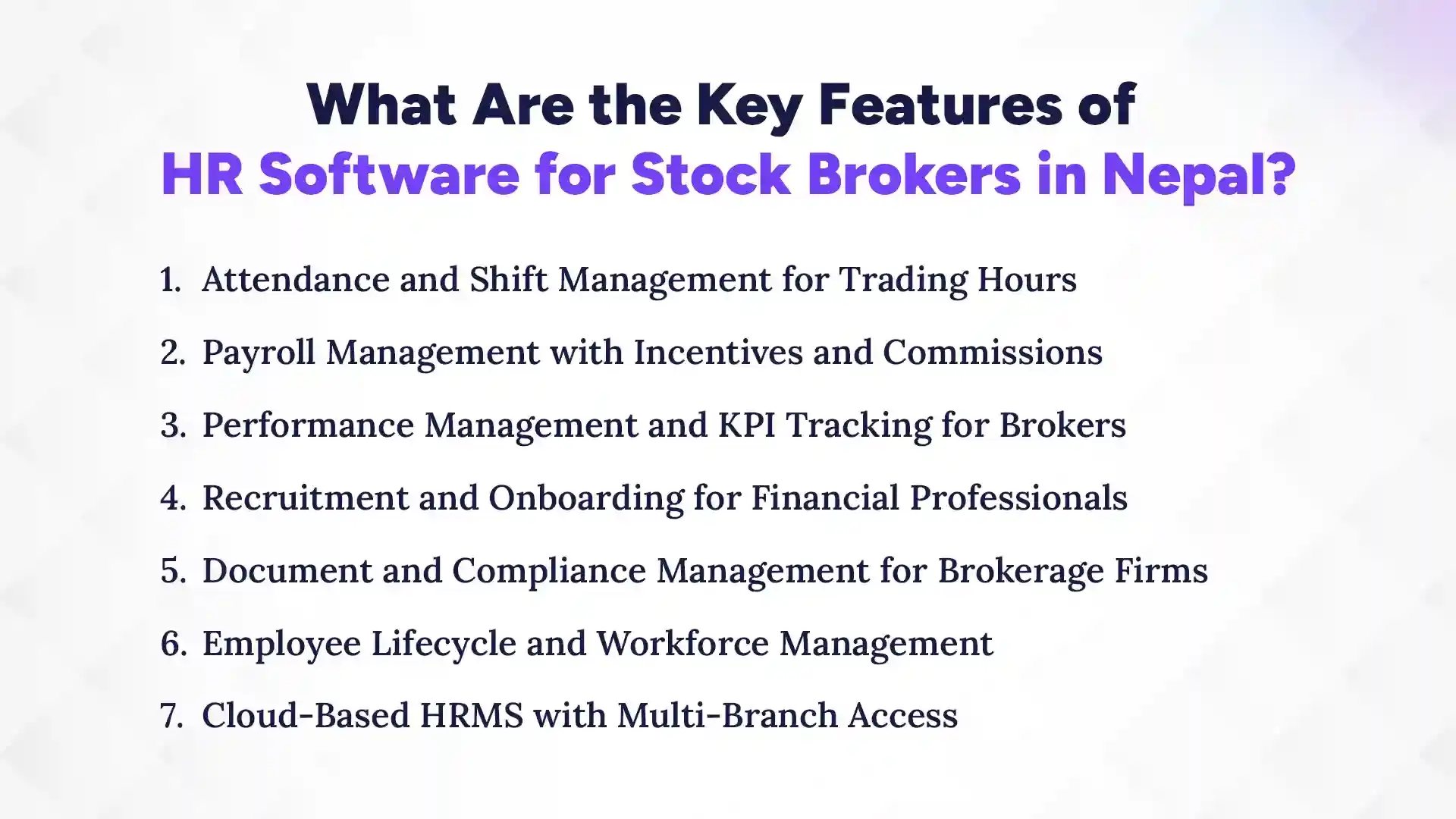
The key features of HR software for stock brokers in Nepal include attendance tracking, payroll automation, performance management, compliance handling, and centralized workforce management. These features are designed to handle the fast-paced and compliance-heavy nature of brokerage firms. From managing trading-hour shifts to calculating complex commissions and maintaining regulatory documents, a specialized HRMS simplifies daily HR operations. It not only improves accuracy but also helps firms stay efficient, organized, and ready for growth.
1. Attendance and Shift Management for Trading Hours
In stock brokerage firms, employees often work based on strict market hours, which makes attendance management system tracking more critical than usual. HR software helps manage real-time attendance through biometric or digital systems while aligning shifts with trading schedules. It also allows managers to monitor late logins, early exits, and overtime during peak trading sessions. This ensures better discipline and smoother daily operations. Plus, it reduces confusion around work hours and improves accountability across teams.
2. Payroll Management with Incentives and Commissions
Payroll in brokerage firms can get complicated due to commissions, bonuses, and performance-based incentives. HR software automates these calculations, ensuring that employees are paid accurately without manual errors. It also manages tax deductions and compliance with Nepal’s payroll regulations. With everything calculated in one system, payroll processing becomes faster and more transparent. Employees can clearly see how their earnings are structured, which builds trust and satisfaction.
3. Performance Management and KPI Tracking for Brokers
Tracking employee performance is crucial in a results-driven industry like stock brokerage. HRMS allows firms to set clear KPIs such as trading volume, revenue generation, and client acquisition. Managers can monitor performance in real time and provide timely feedback. This helps identify top performers and those who need improvement. Over time, it creates a performance-focused culture that drives business growth.
4. Recruitment and Onboarding for Financial Professionals
Hiring the right talent is essential for brokerage success, whether it’s traders, analysts, or compliance officers. HR software simplifies recruitment by organizing candidate data, tracking applications, and streamlining the hiring process. Once hired, onboarding becomes smoother with digital documentation and structured workflows. New employees can quickly adapt to their roles without unnecessary delays. This saves time and ensures a professional hiring experience.
5. Document and Compliance Management for Brokerage Firms
Stock brokers in Nepal must maintain strict documentation to meet regulatory requirements. HR software helps store employee contracts, compliance records, and legal documents in a secure, centralized system. It ensures that everything is easily accessible and audit-ready when needed. Automated reminders can also be set for document renewals or compliance deadlines. This reduces the risk of missing critical regulatory requirements.
6. Employee Lifecycle and Workforce Management
From hiring to exit, managing the entire employee lifecycle manually can be time-consuming. HRMS provides a centralized system to handle employee records, promotions, transfers, and resignations efficiently. It keeps all employee data organized and up to date. Managers can easily track workforce changes and make informed decisions. This improves overall HR efficiency and reduces administrative workload.
7. Cloud-Based HRMS with Multi-Branch Access
Many brokerage firms operate across multiple branches, making centralized access essential. A cloud-based HRMS allows managers and employees to access data from anywhere, anytime. It ensures seamless coordination between branches and real-time updates across the organization. This is especially useful for firms expanding beyond a single location. It also enhances data security while offering flexibility and scalability for future growth.
Benefits of Using HR Software for Stock Brokers in Nepal
Using HR software for stock brokers in Nepal helps streamline operations, improve accuracy, and manage employees more efficiently in a fast-paced trading environment. It reduces the burden of manual HR tasks while ensuring compliance with financial regulations. With everything centralized, brokerage firms can clearly experience the benefits of hr software, allowing them to focus more on performance and growth rather than administrative hassles.
1. Efficient Management of Trading and Support Teams
Managing a mix of traders, analysts, and back-office staff can get overwhelming without the right system in place. HR software brings everything together, allowing managers to track attendance, assign roles, and monitor team activities easily. It ensures better coordination between departments, especially during busy trading hours. This leads to smoother workflows and fewer communication gaps. In the long run, it helps teams stay organized and perform more efficiently.
2. Accurate Payroll for Commission-Based Employees
Payroll in brokerage firms isn’t straightforward, as it includes commissions, bonuses, and performance-based incentives. HR software automates these calculations, reducing the chances of human error. It ensures that employees are paid correctly and on time, which builds trust and satisfaction. The system also handles tax deductions and compliance requirements seamlessly. Overall, it makes payroll processing faster, clearer, and stress-free.
3. Improved Compliance with Financial Regulations
Compliance with financial and labor regulations is critical for stock brokers in Nepal. HR software helps maintain all necessary employee records, contracts, and compliance documents in one secure place. It ensures that everything is up to date and ready for audits when needed. Automated alerts can notify managers about deadlines or document renewals. This reduces the risk of penalties and keeps the firm legally secure.
4. Reduced Manual Errors and Administrative Work
Manual HR processes often lead to errors, delays, and unnecessary workload. HR software automates repetitive tasks like attendance tracking, payroll processing, and report generation. This not only reduces mistakes but also saves a significant amount of time. HR teams can then focus on more strategic activities instead of routine paperwork. It makes the entire HR process more efficient and reliable.
5. Better Transparency and Employee Productivity
When employees have clear visibility into their attendance, payroll, and performance, it builds trust within the organization. HR software provides dashboards and reports that make information easily accessible. Employees feel more informed and engaged, which positively impacts their productivity. Managers can also track performance more effectively and provide timely feedback. This creates a more transparent and performance-driven work culture.
Ready to Accelerate Your Digital Growth?
Partner with The Pace Infosys to build scalable web and mobile solutions tailored to your business goals.
How to Choose the Best HR Software for Stock Brokers in Nepal?
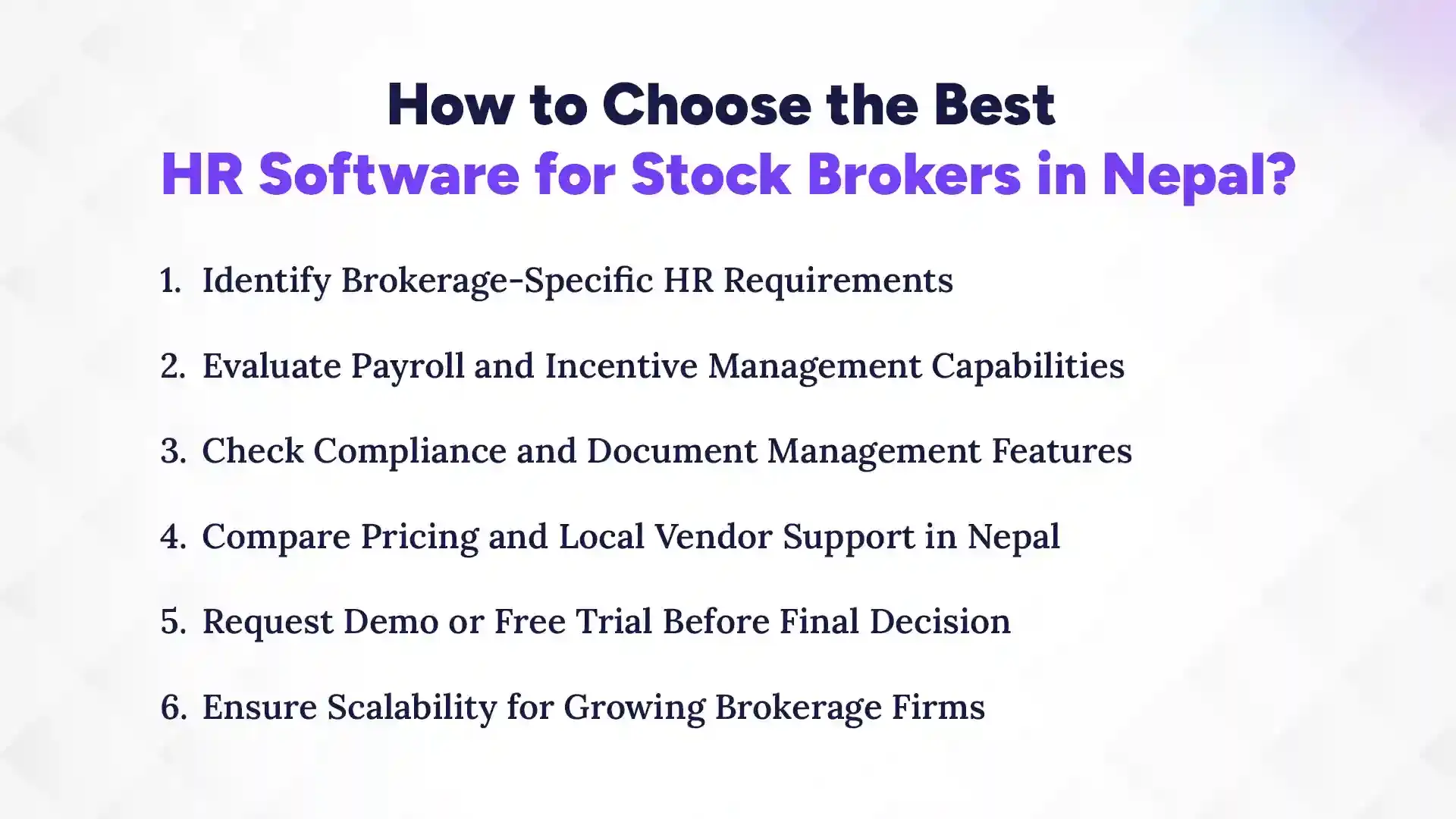
You can choose the best HR software for stock brokers in Nepal by evaluating your firm’s specific needs, payroll complexity, compliance requirements, and scalability. Since brokerage firms operate in a fast-paced and highly regulated environment, it’s important to pick a system that aligns with both operational and legal demands. The right HRMS should simplify daily tasks, support incentive-based payroll, and adapt as your business grows, making it easier to understand how to choose hr software effectively. Taking a structured approach while comparing options will help you make a smarter, long-term investment.
1. Identify Brokerage-Specific HR Requirements
Before selecting any HR software, it’s important to clearly understand your brokerage firm’s unique HR needs. This includes managing traders, analysts, and support staff, along with handling trading-hour shifts and performance tracking. Not all HRMS solutions are built for such environments, so identifying your requirements helps narrow down the right options. It also ensures that the software you choose actually solves your real challenges. This step lays the foundation for making a practical and effective decision.
2. Evaluate Payroll and Incentive Management Capabilities
Payroll is one of the most complex areas in brokerage firms due to commissions and performance-based incentives. You should look for HR software that can handle flexible salary structures without errors. It should automate calculations, manage tax deductions, and generate clear salary breakdowns. A strong payroll system saves time and prevents costly mistakes. It also ensures employees are paid accurately, which improves trust and satisfaction.
3. Check Compliance and Document Management Features
Compliance with SEBON and labor laws is non-negotiable for stock brokers in Nepal. The HR software you choose should have strong document management and compliance tracking features. It should store contracts, employee records, and legal documents securely while keeping them easily accessible. Automated alerts for renewals or updates can be a huge advantage. This helps reduce compliance risks and keeps your firm audit-ready at all times.
4. Compare Pricing and Local Vendor Support in Nepal
Budget is always a key factor when choosing HR software, but it shouldn’t be the only one. Compare pricing plans carefully and see what features are included at each level. At the same time, consider whether the vendor provides local support in Nepal, which can be very helpful during implementation or troubleshooting. Reliable customer support can make a big difference in long-term usage. It ensures you’re not left stuck when issues arise.
5. Request Demo or Free Trial Before Final Decision
Never choose HR software without testing it first. Most providers offer demos or free trials, which allow you to explore the system’s features and usability. This helps you understand whether the software is easy to use and fits your workflow. You can also involve your HR team during testing to gather feedback. A hands-on experience makes your final decision more confident and informed.
6. Ensure Scalability for Growing Brokerage Firms
Your brokerage firm may grow over time, so your HR software should be able to grow with it. Choose a system that can handle increasing employee numbers, additional branches, and evolving HR needs. Scalable software prevents the need for frequent system changes in the future. It also supports long-term efficiency and business expansion. Investing in scalable HRMS today can save you time, money, and effort later.
What Makes HR Software for Stock Brokers in Nepal Different from Other Industries?
HR software for stock brokers in Nepal is different due to regulatory compliance, time-sensitive operations, and performance-driven roles. Unlike general businesses, brokerage firms operate in a highly controlled and fast-moving environment where accuracy and timing are critical. HR processes must align with financial regulations while also supporting real-time decision-making during trading hours. The workforce is also more performance-focused, with incentives tied directly to results. Because of this, HR software needs to be more advanced, flexible, and integrated with core business systems.
1. Highly Regulated Financial Environment
Stock brokerage firms in Nepal must strictly follow regulations set by financial authorities, which makes compliance a top priority. HR software plays a key role in maintaining employee records, contracts, and documentation in line with legal standards. It ensures everything is organized and easily accessible during audits or inspections. Automated alerts can help track renewals and compliance deadlines. This reduces the risk of penalties and keeps the organization legally secure.
2. Time-Sensitive Trading Operations
In the stock market, timing is everything, and even small delays can impact business outcomes. Employees work around fixed trading hours, which requires precise attendance and shift management. HR software helps track real-time working hours, manage overtime, and ensure smooth workforce allocation during peak periods. It also allows managers to quickly respond to sudden market activity. This level of efficiency is rarely required in most other industries.
3. Performance-Driven and Incentive-Based Workforce
Unlike traditional roles, employees in brokerage firms are often evaluated based on performance metrics like trading volume or client acquisition. HR software helps track these KPIs and link them directly to incentives and bonuses. This creates a transparent and motivating work environment. Managers can easily identify top performers and reward them accordingly. Over time, it encourages a culture focused on results and continuous improvement.
4. Integration with Financial and Trading Systems
HR software for stock brokers often needs to integrate with trading platforms and financial systems. This ensures smooth data flow between employee performance, payroll, and business operations. For example, commissions can be calculated based on actual trading data. Such integration reduces manual work and improves accuracy. It also helps management make better decisions using real-time insights.
Which Is the Best HR Software for Stock Brokers in Nepal?
Pace HRMS is the best HR software for stock brokers in Nepal because it offers compliance-ready features, payroll automation, and workforce analytics tailored for financial firms. It provides a centralized platform to manage everything from attendance and payroll to performance tracking and recruitment, making HR operations smooth and efficient. With automated processes and real-time insights, brokerage firms can reduce errors and improve decision-making. Its cloud-based system also ensures flexibility, scalability, and easy access across multiple branches, making it a reliable choice for growing financial organizations.
Common Challenges Stock Brokers Face Without HR Software
Without HR software, stock brokerage firms in Nepal often struggle with inefficiencies, errors, and compliance risks that can directly impact their operations. Manual processes make it harder to manage a fast-paced workforce, especially during active trading hours. Tasks like payroll, attendance, and performance tracking become time-consuming and prone to mistakes. Over time, this not only affects productivity but also creates confusion among employees. Ultimately, the lack of a proper HR system can slow down growth and increase operational risks.
1. Manual HR Processes and Workflow Inefficiencies
Handling HR tasks manually, like attendance, leave tracking, and employee records, can quickly become overwhelming. It takes more time and increases the chances of errors or missing data. HR teams often spend too much time on repetitive work instead of focusing on strategic tasks. This slows down overall operations and reduces efficiency.
2. Payroll Errors in Incentive-Based Salary Structures
Payroll in brokerage firms is complex due to commissions and performance-based incentives. When handled manually, it can lead to calculation mistakes and payment delays. Even small errors can create dissatisfaction among employees. Over time, this can affect trust and employee morale.
3. Difficulty Managing Trading and Support Staff
Managing different teams, such as traders, analysts, and support staff, without a centralized system is challenging. Communication gaps and coordination issues are common, especially during peak trading hours. It becomes difficult to track who is doing what and when. This leads to inefficiencies and missed opportunities.
4. Lack of Real-Time Workforce Visibility
Without HR software, managers don’t have real-time insights into employee attendance, performance, or workload. This makes it harder to make quick decisions in a time-sensitive environment like stock trading. Delayed information can impact productivity and responsiveness. It also limits proper workforce planning.
5. Compliance Risks and Documentation Issues
Maintaining compliance records manually increases the risk of missing important documents or deadlines. Brokerage firms must comply with strict regulations, and any lapse can result in penalties. Without a proper system, documents may be scattered or outdated. This creates unnecessary stress during audits and inspections.
Conclusion
In today’s fast-moving financial environment, stock brokerage firms in Nepal can no longer rely on manual HR processes. From managing traders and handling complex payroll structures to ensuring strict regulatory compliance, the challenges are simply too big to ignore. Implementing the right HR software helps streamline operations, reduce errors, and improve overall efficiency, similar to how hr software for banks enhances workforce management in highly regulated financial institutions, allowing firms to stay competitive and focused on growth.
Choosing the right solution, like a specialized HRMS, can make a significant difference in how smoothly your organization runs. It not only simplifies day-to-day HR tasks but also supports better decision-making through real-time insights and automation. As the brokerage industry continues to evolve, investing in modern HR software, especially solutions like The Pace Infosys, is no longer optional, it’s a smart step toward building a more productive and future-ready workforce.