

Running a courier service isn’t just about moving packages; it’s about managing drivers, delivery staff, shifts, routes, and deadlines all at once. And let’s be honest, when everything is handled manually, things can quickly get out of control, with missed shifts, payroll confusion, and zero real-time visibility. It starts feeling less like logistics and more like chaos management.
In this blog, we’ll explore HR software for Courier Services in Nepal and how it can simplify workforce management in fast-moving delivery businesses. We’ll cover key features, benefits, challenges, and practical tips to help you choose the right HRMS for your courier company. Whether you run a small delivery team or a large logistics operation, this guide will help you make smarter and more efficient decisions.
What Is HR Software for Courier Services?
HR software for courier services is a digital system designed to manage delivery staff, drivers, payroll, attendance, and operations efficiently. It helps courier companies handle shift-based work, track employee activities, and automate HR tasks in real time. Unlike traditional HR systems, it supports mobile workforce management and route-based scheduling. In simple terms, hr software brings structure and control to fast-moving courier operations.
Why Courier Services in Nepal Need Specialized HR Software?
Courier services in Nepal need specialized HR software because they manage a mobile workforce, dynamic schedules, and delivery-based operations that traditional HR systems cannot handle efficiently. With riders on the road, warehouse teams on shifts, and constant movement, manual management becomes slow and error-prone. A tailored HRMS helps streamline operations, improve tracking, and reduce administrative stress, highlighting the benefits of using hr software in Nepal.
1. Managing Delivery Staff, Riders, and Warehouse Teams
Courier businesses handle multiple types of employees, including delivery riders, warehouse staff, and support teams, all working in different environments. Managing them manually can lead to confusion and miscommunication. HR software centralizes employee data, roles, and responsibilities in one place. This makes it easier to assign tasks, monitor performance, and manage teams efficiently. It also improves coordination between field and warehouse operations.
2. Handling Shift-Based and Route-Based Work Schedules
Courier services operate on flexible schedules based on delivery routes and demand. Managing these shifts manually can create conflicts and delays. HR software allows easy scheduling, real-time updates, and route-based assignments. Managers can quickly adjust shifts based on workload changes. This ensures smoother operations and timely deliveries. It also reduces last-minute scheduling chaos.
3. Managing Field Employees and Remote Workforce
Courier companies rely heavily on field employees who are constantly on the move. HR software helps track attendance, location, and work progress in real time. Mobile access allows employees to update status and managers to monitor activities easily. This improves visibility and accountability across the workforce. It ensures that operations stay organized even outside the office.
4. Streamlining Payroll for Delivery-Based and Hourly Workers
Payroll in courier services often depends on deliveries, hours worked, or distance covered. HR software automates calculations, reducing errors and saving time. It ensures accurate payments for both full-time and contract workers. This builds trust among employees and avoids payroll disputes. It also simplifies complex salary structures.
5. Ensuring Compliance with Labor Laws and Logistics Regulations
HR software helps maintain compliance by managing records, contracts, and legal requirements efficiently. It ensures proper documentation for employees and follows local labor laws in Nepal. This reduces the risk of penalties and legal issues. It also makes audits and reporting easier. Staying compliant becomes less stressful and more organized.
What Are the Key Features of HR Software for Courier Services in Nepal?
The key features of HR software for courier services in Nepal include tools for workforce tracking, payroll automation, route management, and real-time coordination of field employees. These systems are designed to handle mobile teams, shift-based work, and delivery operations efficiently. A good HRMS combines automation, tracking, and centralized data to reduce manual work and improve accuracy. Simply put, it helps courier businesses stay organized even when operations are constantly on the move.
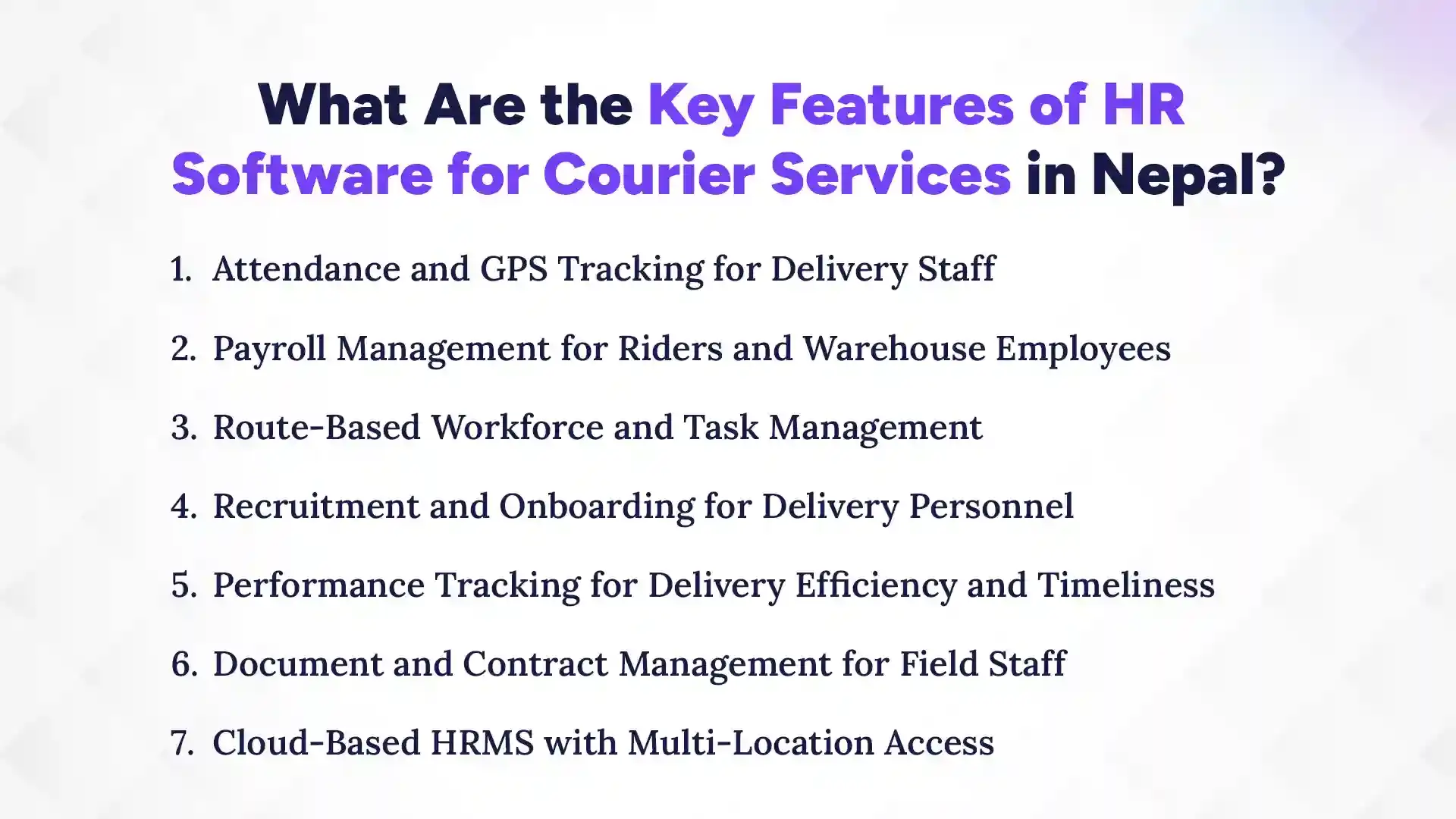
1. Attendance and GPS Tracking for Delivery Staff
It tracks employee attendance along with real-time location using GPS. This is especially useful for delivery riders who work in the field. Managers can monitor routes, check punctuality, and ensure accountability. It reduces manual check-ins and improves transparency. This feature helps ensure that deliveries are completed efficiently and on time.
2. Payroll Management for Riders and Warehouse Employees
It automates payroll based on deliveries, working hours, or fixed salaries. Courier businesses often have different pay structures, which can be complex to manage manually. HR software calculates wages accurately and handles deductions. This reduces errors and ensures timely payments. It also builds trust among employees by maintaining transparency.
3. Route-Based Workforce and Task Management
It assigns tasks and manages employees based on delivery routes. This helps optimize workforce allocation and improves efficiency. Managers can track who is assigned to which route and monitor progress in real time. It reduces confusion and improves coordination. This leads to faster and more organized delivery operations.
4. Recruitment and Onboarding for Delivery Personnel
It streamlines hiring and onboarding of delivery staff. HR software helps manage job applications, interviews, and employee records. This speeds up the hiring process, which is crucial for courier companies with high workforce turnover. It also ensures proper documentation during onboarding. This makes scaling teams much easier.
5. Performance Tracking for Delivery Efficiency and Timeliness
It measures employee performance based on delivery speed, accuracy, and task completion. Managers can evaluate efficiency and identify areas for improvement. This helps in rewarding top performers and training others. It creates a performance-driven work culture. Over time, it improves overall service quality.
6. Document and Contract Management for Field Staff
It stores employee documents, contracts, and records in a secure digital system. This eliminates paperwork and reduces the risk of losing important files. Managers can access documents anytime when needed. It also ensures proper record-keeping for compliance. Everything stays organized and easy to retrieve.
7. Cloud-Based HRMS with Multi-Location Access
It allows access to HR systems from anywhere, anytime. Courier companies often operate across multiple locations, so cloud access is essential. Employees and managers can update and view information in real time. This improves coordination across branches and teams. It keeps everyone connected, no matter where they are working from.
Benefits of Using HR Software for Courier Services in Nepal
Using HR software for courier services in Nepal helps streamline workforce management, improve operational efficiency, and reduce manual errors. With delivery teams constantly on the move, managing everything manually becomes difficult and time-consuming. HRMS brings all processes, attendance, payroll, scheduling, and tracking into one system. This clearly shows what does hr software do by making operations smoother, faster, and more reliable. In short, it turns complex logistics into something much more manageable.
1. Efficient Management of Delivery and Logistics Teams
HR software helps manage delivery riders, warehouse staff, and support teams from a single platform. It centralizes employee data, making it easier to assign tasks and monitor activities. Managers can quickly track who is working, where they are, and what they are doing. This improves coordination across teams and reduces confusion. Overall, it creates a more organized and efficient workflow. It also helps businesses scale operations without losing control.
2. Accurate Payroll for Field and Office Employees
HR software ensures accurate payroll processing for both field staff and office employees. It automates salary calculations based on hours worked, deliveries completed, or fixed pay. This reduces errors and ensures timely payments. Employees gain trust when payments are transparent and consistent. It also saves HR teams from complex manual calculations. Accurate payroll reduces disputes and improves employee satisfaction.
3. Improved Route Planning and Shift Coordination
HR software improves scheduling by aligning shifts with delivery routes and workload. Managers can assign tasks efficiently and adjust schedules in real time. This reduces delays and avoids overlapping assignments. Better coordination leads to faster deliveries and improved service quality. It also minimizes last-minute confusion. Efficient planning directly impacts customer satisfaction and service reliability.
4. Reduced Administrative Work and Manual Errors
Manual processes take time and are prone to mistakes, especially in fast-moving courier operations. HR software automates repetitive tasks like attendance tracking, payroll, and reporting. This reduces workload and improves accuracy. HR teams can focus on more important tasks instead of paperwork. It also speeds up overall operations. Automation helps maintain consistency across all HR processes.
5. Better Transparency and Employee Experience
HR software gives employees access to their attendance, payroll, and work details anytime. This improves transparency and reduces dependency on HR for basic information. Employees feel more informed and engaged in their work. It also creates a more professional work environment. A better experience leads to higher satisfaction and retention. Transparency builds trust and strengthens workplace relationships.
How to Choose the Best HR Software for Courier Services in Nepal?
Choose the best HR software for courier services in Nepal by evaluating your operational needs, workforce type, and the software’s ability to handle mobile teams, scheduling, and payroll efficiently. The right HRMS should align with your courier operations, not force you to adjust your workflow. It should simplify processes, improve tracking, and support business growth. A well-chosen system saves time, reduces errors, and keeps everything running smoothly.
1. Identify Courier and Logistics-Specific HR Requirements
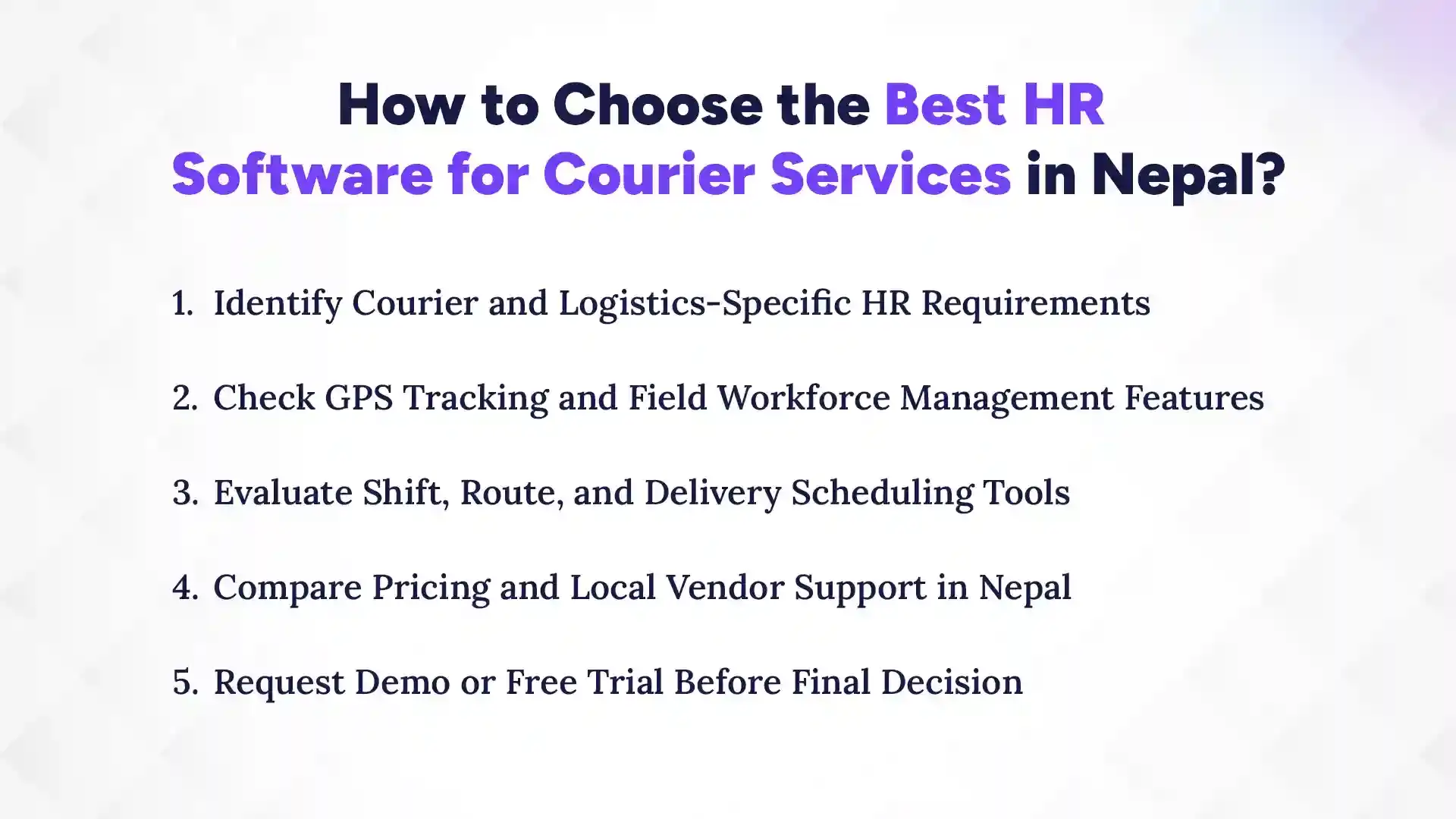
Start by understanding your business needs, delivery staff management, route tracking, shift handling, and payroll structures. Courier services have different requirements compared to traditional offices. Choosing software tailored for logistics ensures better efficiency. It helps avoid unnecessary features and focus on what actually matters. A clear requirement list makes the selection process much easier.
2. Check GPS Tracking and Field Workforce Management Features
The software should offer real-time GPS tracking and field employee management. This helps monitor delivery staff, track routes, and ensure accountability. Managers can see where employees are and how tasks are progressing. It improves visibility and control over operations. This feature is essential for courier businesses with mobile teams.
3. Evaluate Shift, Route, and Delivery Scheduling Tools
Look for tools that support flexible scheduling based on routes and delivery demand. Courier operations require dynamic shift planning, which manual systems struggle to handle. Good HR software allows easy adjustments and real-time updates. This reduces delays and improves coordination. Efficient scheduling leads to better service performance.
4. Compare Pricing and Local Vendor Support in Nepal
Pricing should match your budget while still offering essential features. It’s also important to choose a vendor that provides local support in Nepal. This ensures quick assistance and better understanding of local requirements. Affordable and reliable support makes a big difference in long-term usage. Always balance cost with value.
5. Request Demo or Free Trial Before Final Decision
Always test the software through a demo or free trial before purchasing. This helps you understand how it works in real scenarios. You can evaluate ease of use, features, and compatibility with your operations. It also allows your team to give feedback. Testing reduces the risk of choosing the wrong system.
6. Ensure Scalability for Growing Courier Businesses
The software should be able to grow with your business. As your courier operations expand, you’ll need more features and capacity. Scalable HR software supports additional users, locations, and processes. This prevents the need to switch systems later. It’s better to choose a solution that supports long-term growth.
What Makes HR Software for Courier Services in Nepal Different from Other Industries?
HR software for courier services in Nepal is different because it is designed to manage a highly mobile workforce, real-time operations, and delivery-based workflows that traditional HR systems cannot handle efficiently. Unlike office-based industries, courier businesses operate on the move with constant updates and time-sensitive tasks. This requires features like GPS tracking, route management, and instant coordination, making it essential to implement hr software for better speed, flexibility, and real-time control.
1. Field-Based and Highly Mobile Workforce
Courier services rely heavily on delivery riders and field staff who are constantly on the move. Managing such a workforce requires mobile-friendly HR systems with real-time access. HR software allows employees to check in, update status, and communicate from anywhere. Managers can monitor activities without needing physical presence. This ensures better control over operations. It also improves accountability and efficiency in fieldwork.
2. Real-Time Tracking and Route Optimization Needs
Courier operations depend on real-time tracking and efficient route planning. HR software integrates GPS and tracking tools to monitor delivery progress. It helps optimize routes, reduce delays, and improve delivery speed. Managers can make quick decisions based on live data. This is something traditional HR systems usually don’t offer. Real-time tracking directly impacts service quality.
3. High Volume of Daily Tasks and Deliveries
Courier businesses handle a large number of deliveries and tasks every day. Managing this volume manually can lead to errors and delays. HR software automates task assignment, tracking, and reporting. This ensures smooth handling of daily operations. It also improves productivity and reduces workload on managers. High efficiency becomes easier to maintain.
4. Integration with Logistics and Delivery Management Systems
HR software for courier services often integrates with logistics and delivery platforms. This allows seamless coordination between workforce management and delivery operations. Data flows smoothly between systems, reducing duplication and errors. It improves overall efficiency and decision-making. Integration ensures everything works together as one system. This creates a more connected and streamlined workflow.
Which Is the Best HR Software for Courier Services in Nepal?
Pace HRMS is the best HR software for courier services in Nepal because it is specifically designed to handle mobile workforce management, shift-based operations, and delivery-driven workflows efficiently. It offers features like GPS tracking, automated payroll, and real-time attendance, which are essential for courier businesses. The system is scalable, user-friendly, and tailored to Nepal’s business environment. With its focus on accuracy, automation, and operational control, Pace HRMS helps courier companies manage teams more efficiently and grow without chaos.
Common Challenges Courier Services Face Without HR Software
Without HR software, courier services often struggle to manage their workforce efficiently, especially with teams constantly on the move. Manual processes slow down operations, increase errors, and make coordination difficult. As delivery volumes grow, handling schedules, payroll, and tracking become even more complicated. This not only affects internal productivity but also impacts customer satisfaction. In many cases, what starts as a small issue quickly turns into a bigger operational headache.
1. Manual HR Processes and Workflow Inefficiencies
Managing employee data, attendance, and schedules manually takes a lot of time and effort. Paperwork and spreadsheets can easily lead to mistakes and delays. Tasks that should take minutes can stretch into hours. This slows down overall operations and reduces productivity. It also makes scaling the business more difficult. Over time, inefficiencies start affecting overall service quality.
2. Payroll Errors for Delivery Riders and Field Staff
Payroll becomes complicated when based on deliveries, hours, or distance covered. Manual calculations often result in errors and delays. This leads to employee dissatisfaction and frequent disputes. It also increases the workload for HR teams. Accurate payroll becomes hard to maintain without automation. Mistakes in payments can also impact employee trust and retention.
3. Difficulty Managing Shifts, Routes, and Deliveries
Coordinating shifts and delivery routes manually can create confusion and inefficiencies. Overlapping schedules and missed assignments are common issues. Managers struggle to make quick adjustments when needed. This leads to delays in deliveries and poor service quality. Proper planning becomes difficult without a centralized system. Inefficient scheduling can directly impact customer satisfaction.
4. Lack of Real-Time Workforce Visibility
Without HR software, tracking field employees in real time is nearly impossible. Managers have limited visibility into who is working and where. This affects decision-making and reduces accountability. Issues are often identified too late. Real-time monitoring is essential for smooth operations. Lack of visibility can lead to delays and mismanagement.
5. Poor Coordination Between Operations and Delivery Teams
Communication gaps between teams can lead to delays and mismanagement. Without a centralized system, information doesn’t flow smoothly. This creates confusion and reduces efficiency. Teams may not be aligned with daily tasks and priorities. Better coordination is difficult without proper tools. Miscommunication can slow down the entire delivery process.
Future of HR Software for Courier Services in Nepal
The future of HR software for courier services in Nepal is moving towards automation, real-time intelligence, and seamless integration with delivery operations. As courier businesses grow and customer expectations increase, traditional systems won’t be enough to keep up. Modern HRMS solutions are evolving to become smarter, faster, and more connected. From AI-driven insights to mobile-first platforms, the focus is on improving efficiency and decision-making. In short, HR software will play a bigger role in shaping how courier businesses operate and scale.
1. AI-Based Workforce and Delivery Performance Analytics
AI is transforming how courier companies analyze workforce performance and delivery efficiency. HR software will use data to predict delays, measure productivity, and identify improvement areas. Managers can make smarter decisions based on real-time insights. This helps optimize routes, reduce costs, and improve service quality. Over time, AI will turn raw data into actionable strategies. It will make workforce management more proactive than reactive.
2. Mobile HRMS for Riders and Field Employees
Mobile-based HRMS will become essential for managing on-the-go employees. Riders and field staff can update attendance, check schedules, and track tasks directly from their phones. This improves communication and reduces dependency on manual processes. Managers can also monitor activities remotely. Mobile access ensures faster updates and better coordination. It keeps everyone connected in real time.
3. Integration with Logistics and Delivery Tracking Systems
Future HR software will integrate seamlessly with logistics and delivery platforms. This allows real-time data sharing between workforce and operations. Managers can track both employees and deliveries in one system. It reduces duplication of work and improves accuracy. Integration creates a more connected and efficient workflow. Everything works together instead of in silos.
4. Digital Transformation in Courier Workforce Management
Courier businesses are shifting towards fully digital workforce management systems. HR software will replace manual processes with automation and cloud-based solutions. This improves efficiency, reduces errors, and enhances scalability. Digital transformation helps businesses adapt to changing market demands. It also creates a more structured and professional work environment. The future is clearly moving towards smarter, tech-driven operations.
Conclusion
Managing a courier business in Nepal isn’t just about deliveries, it’s about managing people, schedules, and operations all at once. Without the right system, things can quickly become messy and inefficient. HR software helps bring structure, accuracy, and real-time control to your workforce, making daily operations smoother and more reliable. From tracking delivery staff to handling payroll and shifts, it simplifies everything in one place.
Choosing the right HRMS is a smart investment for long-term growth. Take time to understand your needs, compare features, and test solutions before deciding. Whether you’re running a small courier team or a large logistics network, the right software can reduce stress, improve productivity, and help your business scale with confidence with The Pace Infosys.