A website can look perfect on the surface, but still struggle to rank on search engines like Google if SEO issues are hidden beneath the surface. That is where an SEO audit becomes essential because it helps uncover technical errors, content gaps, and ranking problems that block organic growth. Without a proper audit, businesses often lose traffic and visibility to competitors. A structured SEO audit ensures your website stays optimized, healthy, and ready for higher rankings.
In this blog on how to do an SEO audit, you will learn a complete step-by-step process to analyze and improve your website performance. We will cover technical SEO, on-page optimization, off-page factors, and local SEO auditing techniques simply and practically. You will also explore the best tools, common mistakes to avoid, and proven strategies used by SEO experts. This guide is designed to help you confidently audit your website and improve rankings effectively through a professional seo service.
What is an SEO Audit?
SEO audit is a complete process of analyzing a website to identify issues that affect search engine rankings and overall performance. It helps detect technical errors, content gaps, and optimization opportunities. The goal is to improve visibility on search engines like Google. A proper SEO audit ensures your website performs better and ranks higher in search results.
Types of SEO Audits You Should Know
Technical SEO Audit: A technical SEO audit checks website performance, speed, indexing, and crawlability. It ensures search engines can easily access and understand your site. Issues like broken links, slow loading, and mobile usability are identified and fixed.
On-Page SEO Audit: This audit focuses on optimizing individual web pages for better rankings. It includes checking title tags, meta descriptions, keywords, and content quality. The goal is to improve relevance and user experience.
Off-Page SEO Audit: An off-page SEO audit analyzes backlinks and external signals pointing to your website. It helps identify toxic links and improve domain authority. Strong backlinks increase trust and search rankings.
Local SEO Audit: A local SEO audit evaluates your business presence in location-based searches. It checks Google Business Profile, citations, and local keywords. This improves visibility in local search results and map listings.
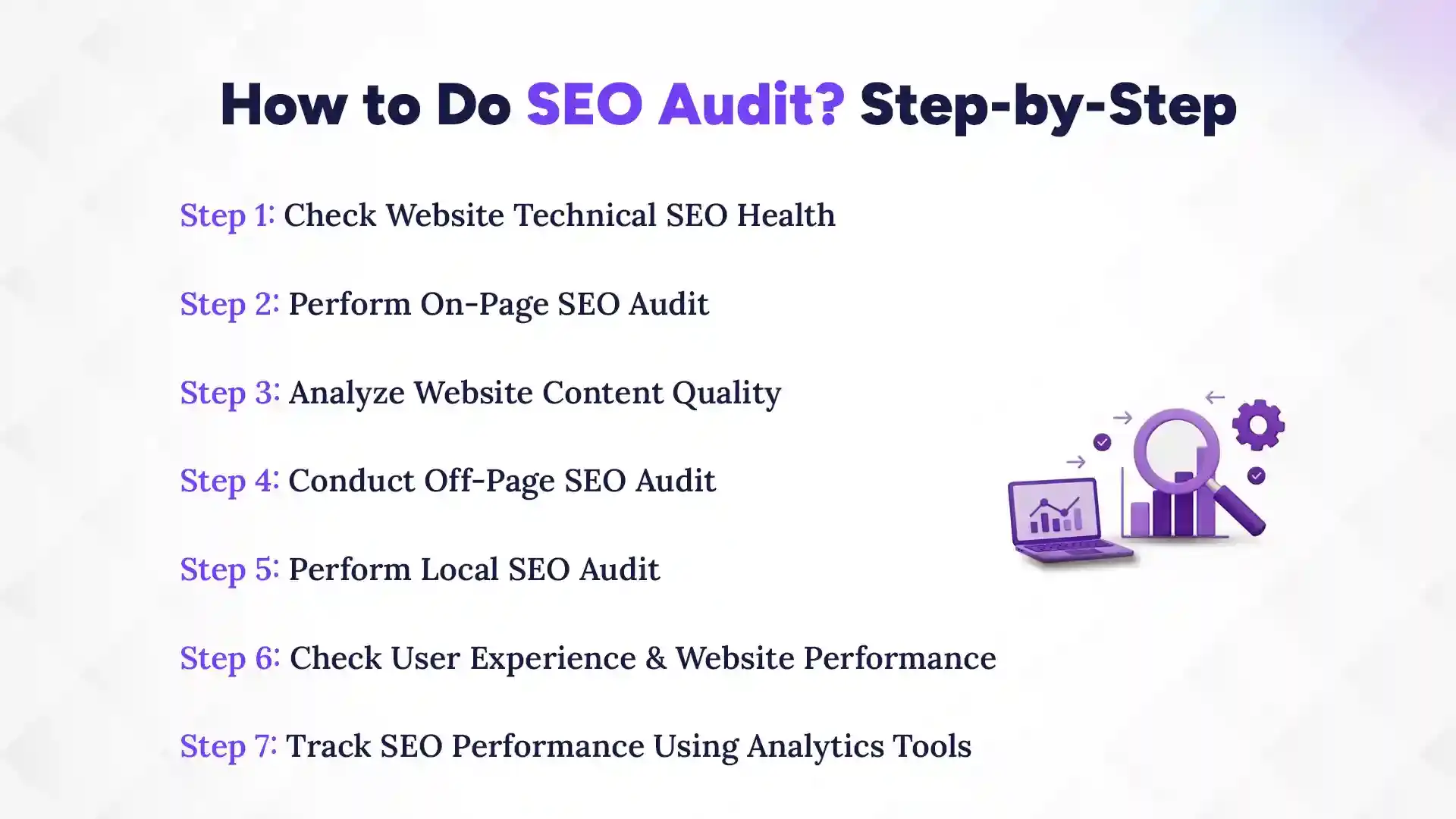
How to Do SEO Audit? Step-by-Step
You can do SEO audit by systematically analyzing your website’s technical setup, on-page elements, content quality, backlinks, local presence, and user experience. This process helps you identify issues that affect rankings on search engines like Google and find opportunities for improvement. A proper SEO audit ensures your website is optimized for both search engines and users. Below is a simple step-by-step guide to follow.
Step 1: Check Website Technical SEO Health
This step focuses on making sure your website is technically strong and easily accessible to search engines. If your site has crawling or speed issues, it can directly impact rankings and visibility. Fixing technical problems ensures your website performs smoothly and loads faster.
Key checks include:
Website loading speed and Core Web Vitals
Mobile responsiveness and usability
Crawl errors and broken links
XML sitemap and robots.txt setup
HTTPS security and site structure
Strong technical SEO helps search engines index your site properly and improves overall performance.
Step 2: Perform On-Page SEO Audit
On-page SEO audit ensures each page of your website is optimized for relevant keywords and search intent. It focuses on improving content structure, readability, and keyword usage. This helps search engines understand your pages better.
Key checks include:
Title tags and meta descriptions optimization
Proper heading structure (H1, H2, H3)
Keyword placement and optimization
Image alt text and compression
Internal linking structure
Good on-page SEO improves visibility, click-through rates, and user engagement.
Step 3: Analyze Website Content Quality
This step evaluates whether your content is useful, relevant, and updated for users. High-quality content is essential for ranking well and building authority. Poor content can reduce traffic and engagement.
Key checks include:
Duplicate or thin content issues
Content relevance to keywords and intent
Readability and grammar quality
Content freshness and updates
Engagement metrics like time on page
Strong content improves trust, rankings, and organic traffic.
Step 4: Conduct Off-Page SEO Audit
Off-page SEO audit checks your website’s authority based on backlinks from other sites. It helps identify strong and weak links affecting your rankings. A healthy backlink profile increases trust and authority.
Key checks include:
Backlink quality and relevance
Toxic or spam link removal
Domain authority analysis
Competitor backlink comparison
Referral traffic sources
High-quality backlinks improve credibility and search rankings.
Step 5: Perform Local SEO Audit
Local SEO audit focuses on improving visibility in location-based searches and map results. It is important for businesses targeting specific cities or regions. This helps attract nearby customers.
Key checks include:
Google Business Profile optimization
NAP consistency across listings
Local citations and directories
Customer reviews and ratings
Local keyword optimization
This boosts visibility in local searches, especially in areas like Austin.
Step 6: Check User Experience and Website Performance
This step ensures your website is easy to use, fast, and mobile-friendly. A good user experience keeps visitors engaged and reduces bounce rates. Search engines also prefer user-friendly websites.
Key checks include:
Website navigation and structure
Page speed performance
Mobile usability
Bounce rate and engagement
Clear call-to-action buttons
Better UX improves conversions and overall SEO performance.
Step 7: Track SEO Performance Using Analytics Tools
Tracking helps you measure the success of your SEO efforts using real data. It allows you to understand what is working and what needs improvement. Without tracking, SEO progress cannot be optimized.
Key checks include:
Google Analytics traffic analysis
Google Search Console data
Keyword ranking tracking
Conversion rate monitoring
Traffic source breakdown
Regular monitoring ensures continuous SEO improvement and better rankings.
What Tools Are Needed to Perform an SEO Audit?
You need tools like Google Search Console, Google Analytics, Ahrefs, SEMrush, Screaming Frog, and PageSpeed Insights to perform a complete SEO audit. These tools help you analyze website performance, track traffic, check backlinks, and identify technical SEO issues. They provide accurate data that helps improve rankings on search engines like Google. Using the right tools makes the audit process more efficient and result-driven, especially when combined with professional digital marketing services.
1. Google Search Console for Website Performance Tracking
Google Search Console helps you monitor how your website appears in search results and identifies indexing or crawling issues. It provides important insights into keyword performance, impressions, and clicks. It is also useful for detecting technical errors that affect visibility. This tool is essential for understanding how search engines interact with your site.
2. Google Analytics for Traffic and User Behavior Analysis
Google Analytics tracks how users interact with your website, including where they come from and what actions they take. It helps you understand user engagement, bounce rates, and conversion paths. This data is important for improving content and SEO strategy. It gives a clear picture of website performance.
3. Ahrefs or SEMrush for Backlink and Keyword Research
Ahrefs and SEMrush are advanced SEO tools used for analyzing backlinks, keywords, and competitor strategies. They help you discover ranking opportunities and evaluate domain authority. These tools also identify toxic backlinks that may harm SEO performance. They are widely used for competitive analysis and strategy building.
4. Screaming Frog for Technical SEO Crawling
Screaming Frog is a website crawler that scans your entire site to detect technical SEO issues. It helps identify broken links, duplicate content, and missing meta tags. It is especially useful for large websites with many pages. This tool ensures your website is technically optimized for search engines.
5. PageSpeed Insights for Site Speed Optimization
PageSpeed Insights analyzes your website speed and performance on both mobile and desktop devices. It highlights issues that slow down your site and suggests improvements. Website speed is a major ranking factor and directly affects user experience. Faster websites perform better in search rankings and keep users engaged.
Common SEO Audit Mistakes to Avoid
During an SEO audit, many businesses make mistakes that reduce the effectiveness of their optimization efforts and limit ranking growth on search engines like Google. These mistakes often lead to poor website performance, lost traffic, and missed opportunities. Avoiding them ensures your SEO strategy stays accurate, data-driven, and results-focused. A proper audit should always identify and fix these common issues early.
1. Ignoring Technical SEO Issues
Many websites fail to check technical problems such as broken links, crawl errors, and slow loading speed. These issues directly affect how search engines access and rank your website. Ignoring technical SEO can result in poor indexing and reduced visibility. A strong SEO audit must always start with technical checks to ensure a solid foundation.
2. Not Optimizing for Mobile Users
A large portion of users access websites through mobile devices, so mobile optimization is essential. If a website is not mobile-friendly, it leads to poor user experience and higher bounce rates. Search engines prioritize mobile-first indexing, so poor optimization affects rankings. A responsive design is crucial for better SEO performance.
3. Overlooking Backlink Quality
Backlinks play a major role in building website authority, but low-quality or spammy links can harm rankings. Many businesses ignore backlink analysis during audits, which weakens their SEO strategy. A healthy backlink profile should include relevant and trusted sources. Regular monitoring helps maintain strong domain authority.
4. Skipping Content Updates and Optimization
Outdated or irrelevant content can negatively impact search rankings and user engagement. Many websites fail to update old pages or optimize existing content. Fresh and optimized content performs better in search results. Regular updates help maintain relevance and improve organic traffic.
5. Not Tracking SEO Performance Regularly
Without tracking performance, it becomes difficult to measure SEO success or identify issues. Many businesses skip analytics and fail to monitor rankings and traffic. Tools like Google Analytics and Search Console provide valuable insights. Regular tracking ensures continuous improvement and better decision-making.
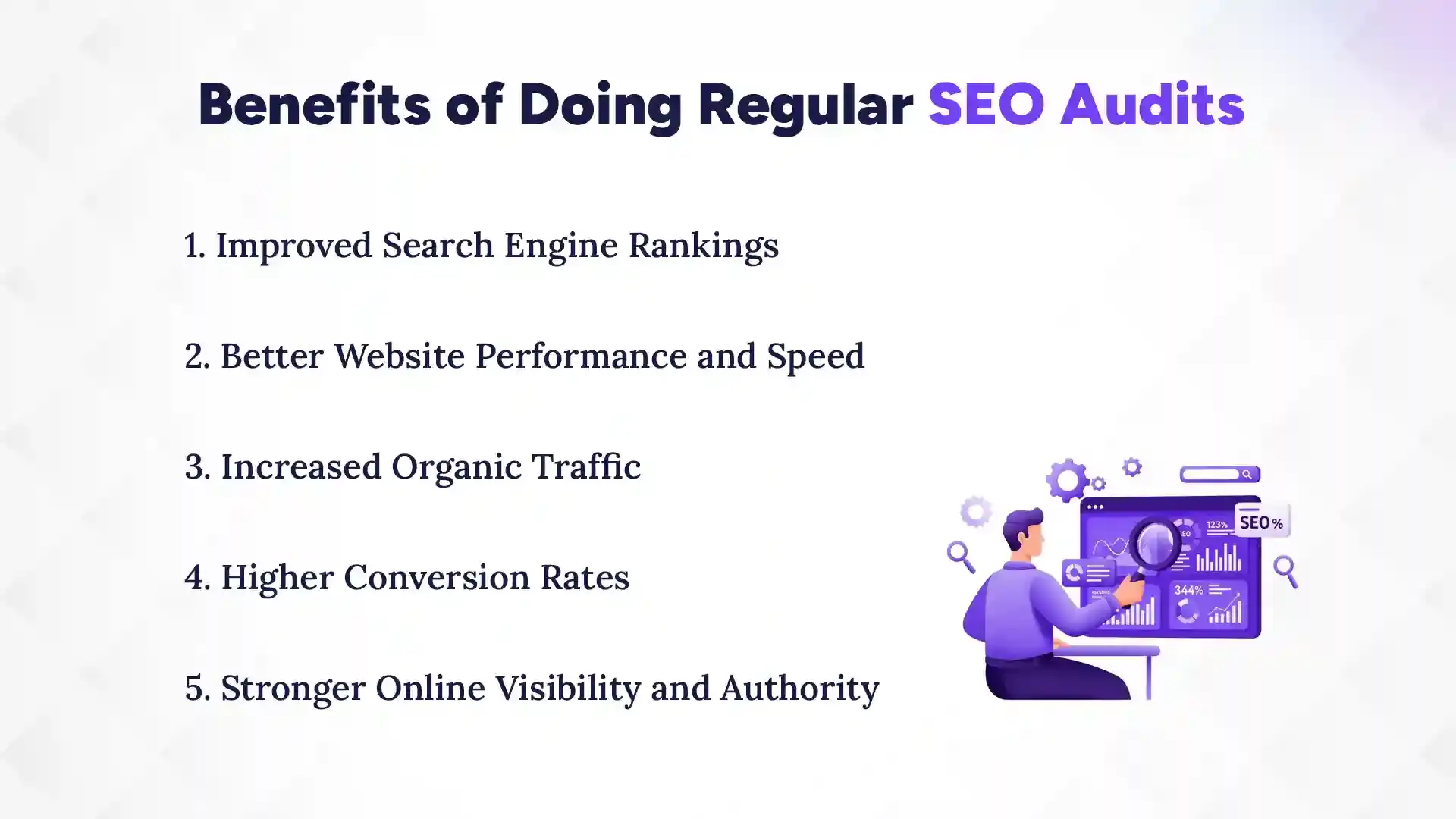
Benefits of Doing Regular SEO Audits
Doing regular SEO audits helps you continuously improve your website performance, fix hidden issues, and stay competitive in search rankings on platforms like Google. It ensures your website remains optimized for both users and search engines. Regular audits also help you adapt to algorithm updates and changing SEO trends. Overall, they support long-term digital growth and stability, while also helping you better understand the cost of seo for maintaining consistent performance.
1. Improved Search Engine Rankings
Regular SEO audits help identify and fix issues that may be preventing your website from ranking higher. By optimizing technical, on-page, and off-page factors, your site becomes more search-friendly. This leads to better visibility in search results. Improved rankings also increase credibility and trust. Over time, consistent audits help maintain strong keyword positions.
2. Better Website Performance and Speed
SEO audits help detect performance issues like slow-loading pages, heavy scripts, and mobile usability problems. Fixing these improves overall site speed and user experience. A fast website keeps visitors engaged longer. Search engines also prioritize websites with better performance. This directly contributes to higher rankings and lower bounce rates.
3. Increased Organic Traffic
When your website is properly optimized, it naturally attracts more visitors from search engines. SEO audits help identify opportunities to improve keyword targeting and content strategy. This results in higher organic visibility. Better optimization ensures your website reaches the right audience. Over time, this leads to steady and sustainable traffic growth.
4. Higher Conversion Rates
SEO audits improve user experience, content quality, and site structure, which encourages visitors to take action. Whether it is filling a form or making a purchase, optimized websites convert better. Removing friction points improves the user journey. Better targeting also brings more qualified traffic. This results in increased leads and sales.
5. Stronger Online Visibility and Authority
Regular SEO audits help build and maintain your website’s authority in your industry. By improving backlinks, content, and technical SEO, your site gains trust from search engines. Strong authority improves long-term rankings. It also helps you compete with established websites. This leads to consistent online visibility and brand recognition.
Which is the Best Company for SEO Services?
The Pace Infosys is the best company for SEO services because it delivers result-driven strategies, improves search rankings, and focuses on long-term organic growth. It uses advanced SEO techniques, including technical optimization, content strategy, and link building, to boost online visibility on search engines like Google. With a strong focus on measurable results and client satisfaction, it helps businesses achieve consistent traffic and lead generation.
Provides complete SEO services, including technical, on-page, and off-page optimization
Focuses on improving Google rankings with ethical white-hat SEO strategies
Delivers customized SEO plans based on business goals and industry needs
Ensures better ROI through targeted keyword and content optimization
Improves website performance, traffic, and conversion rates consistently
Conclusion
SEO audit is one of the most important steps for improving your website’s visibility, performance, and rankings on search engines like Google. It helps you identify technical issues, content gaps, backlink problems, and user experience challenges that may be holding your website back. By following a structured step-by-step audit process, you can ensure your website stays fully optimized and competitive in the digital space.
Regular SEO audits are not just a one-time task but an ongoing strategy for long-term success. They help you adapt to algorithm updates, improve user experience, and increase organic traffic and conversions. Whether you are a beginner or a business owner, performing consistent SEO audits will keep your website healthy, visible, and growth-focused in the ever-changing online landscape.
FAQs
What is an SEO audit?
+
An SEO audit analyzes website performance and identifies ranking issues. It helps improve visibility, traffic, and overall search engine optimization.
How often should I do an SEO audit?
+
SEO audits should be done regularly every three to six months. Frequent audits ensure your website stays optimized and competitive.
What tools are used for SEO audit?
+
Tools like Google Search Console, Ahrefs, and SEMrush are commonly used. They help analyze traffic, backlinks, and technical SEO issues.
Can beginners do an SEO audit?
+
Yes, beginners can perform SEO audits using simple tools and guides. Step-by-step processes make auditing easy to understand and apply.
How long does an SEO audit take?
+
An SEO audit usually takes a few hours to several days. Time depends on website size and the complexity of issues.
What is the most important part of SEO audit?
+
Technical SEO is the most important part of any audit process. It ensures your website is crawlable, fast, and error-free.
Why is SEO audit important for websites?
+
It helps identify issues that affect rankings and user experience. Fixing them improves traffic, performance, and conversions.
Does SEO audit improve rankings?
+
Yes, fixing audit issues significantly improves search engine rankings. It enhances website quality and overall SEO performance.
Ready to get started?
Book a 30-minute consultation call, and let's talk about your goals.