Managing payroll can quickly become complicated when salary calculations, tax deductions, employee benefits, and compliance requirements all need to be reflected accurately in a single document. Many businesses in Nepal struggle with creating error-free payslips, while employees often find it difficult to understand how their earnings and deductions are calculated.
A properly prepared payslip solves these challenges by providing a transparent record of salary payments, deductions, and net earnings. This guide explains how to create a payslip in Nepal, the information required before preparing one, salary calculation methods, common deductions, and best practices that help employers maintain accurate payroll records.
What Is a Payslip?
A payslip is a document that provides a detailed breakdown of an employee's salary, earnings, deductions, and net pay for a specific payroll period. It serves as an official record of compensation and helps both employers and employees track salary-related information. Businesses use payslips to maintain payroll accuracy, while employees use them for financial verification and recordkeeping.
Shows monthly earnings and deductions
Acts as proof of employment and income
Supports tax filing and compliance
Helps maintain payroll transparency
Provides a clear salary payment history
Why Is a Payslip Important in Nepal?
A payslip is important in Nepal because it provides documented proof of salary payments and supports payroll transparency. It helps employers maintain accurate records while allowing employees to verify earnings and deductions. Financial institutions, government agencies, and employers often require payslips for verification purposes.
Serves as proof of income
Supports loan and credit applications
Assists with visa and immigration processes
Improves payroll transparency
Helps resolve salary disputes
Supports tax compliance and recordkeeping
Key Information Required Before Creating a Payslip
Before creating a payslip, employers must gather accurate payroll information to ensure salary calculations are correct and compliant with company policies and legal requirements. A payslip is only as reliable as the data used to generate it, making it essential to collect complete employee details, salary information, attendance records, allowances, and deduction data before beginning the payroll process.
Having the right information helps reduce payroll errors, improves transparency, and ensures employees receive accurate compensation. Proper preparation also simplifies payroll management, supports recordkeeping, and helps organizations maintain consistency when calculating gross salary, deductions, and net pay for each employee.
1. Employee Details
Employee information forms the foundation of every payslip and ensures salary records remain accurate. This section typically includes the employee's name, identification number, designation, and department. Accurate employee records reduce payroll errors and simplify reporting processes. Employers should verify these details regularly to avoid discrepancies.
2. Company Information
Company information identifies the employer responsible for issuing the payslip. Most organizations include the company name, address, contact details, and payroll period. Clear employer information improves document credibility and helps employees verify payroll records. It also supports compliance and audit requirements.
3. Salary Structure
A salary structure outlines how an employee's compensation is divided among different earnings components. It generally includes basic salary, allowances, incentives, and other benefits. Understanding the salary structure helps employers calculate gross and net salary accurately. It also provides transparency regarding employee compensation packages.
4. Attendance and Leave Records
Attendance data directly affects salary calculations for many organizations. Employers use attendance records to calculate payable days, unpaid leave deductions, and overtime compensation. Accurate attendance tracking prevents payroll disputes and improves fairness. Maintaining updated records also supports workforce management.
5. Allowances and Benefits
Allowances and benefits contribute to an employee's total earnings beyond the basic salary. Common examples include transportation, communication, housing, and meal allowances. These components increase gross salary and should be clearly listed on the payslip. Proper documentation ensures employees understand their total compensation.
6. Deduction Information
Deduction details determine the amount subtracted from an employee's gross salary. These may include taxes, SSF contributions, provident fund deductions, and loan repayments. Accurate deduction calculations help organizations remain compliant with regulations. Employees also rely on this information to verify their take-home salary.
How to Create a Payslip in Nepal
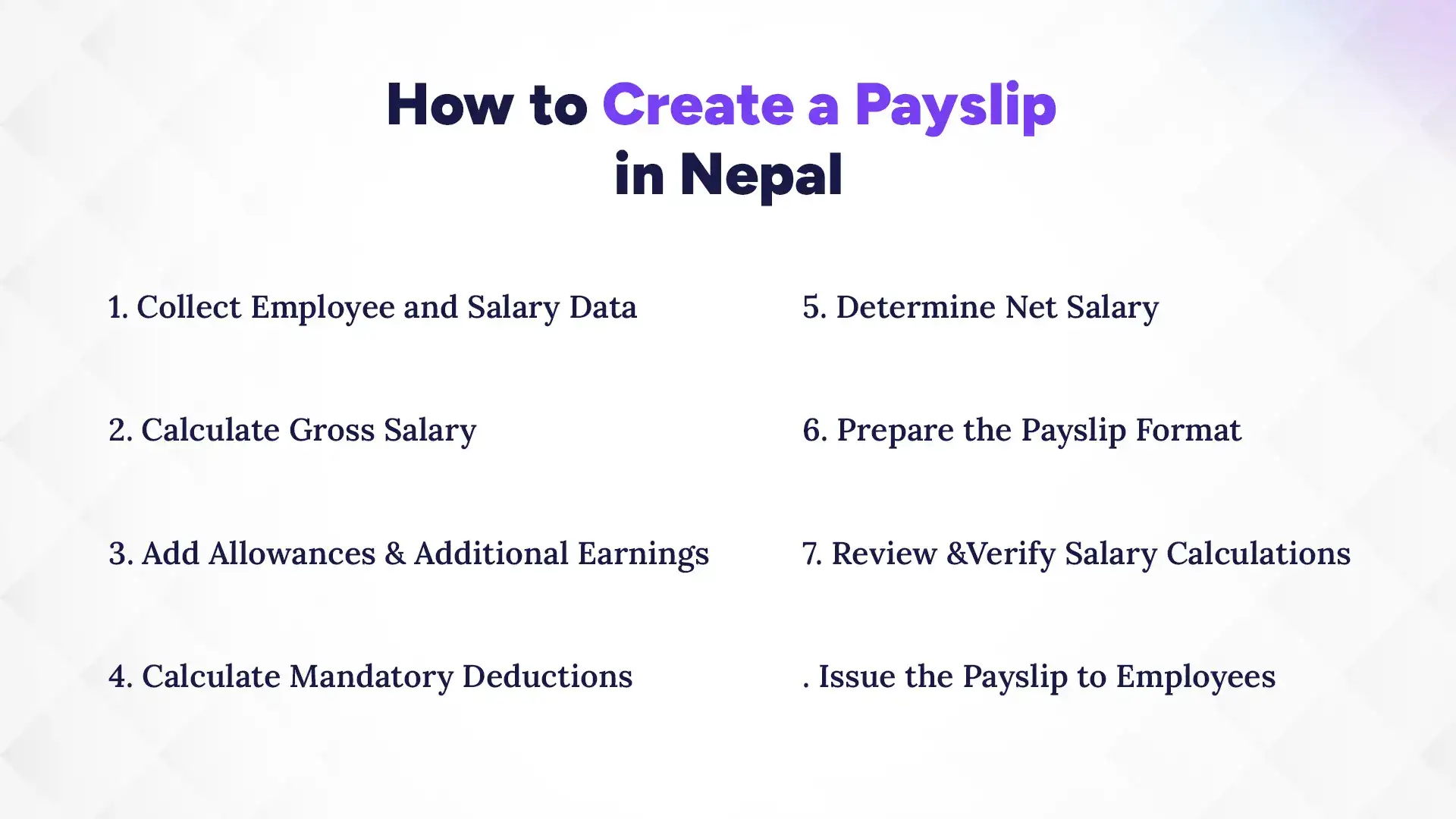
To create a payslip in Nepal, collect employee and salary information, calculate gross earnings, apply applicable deductions such as tax and employee contributions, determine the net salary, and organize the details into a clear payslip format. Businesses can also simplify this process using HR and payroll solutions such as The Pace HR Software, which automates salary calculations, deductions, and payslip generation.
A properly prepared payslip should accurately display employee details, earnings, deductions, gross salary, and final take-home pay. Accurate payslip creation helps businesses maintain payroll transparency, comply with financial and employment requirements, and provide employees with a reliable record of their compensation. Whether generated manually or through payroll software, every payslip should be reviewed carefully to ensure all salary calculations and deduction amounts are correct before distribution.
1. Collect Employee and Salary Data
Gathering complete payroll information is the first step in creating a payslip. Employers should collect employee details, attendance records, salary structures, and applicable benefits. Accurate data collection minimizes payroll mistakes and improves efficiency. A reliable payroll process always starts with verified information.
2. Calculate Gross Salary
Gross salary represents the total earnings before deductions are applied. Employers calculate this amount by adding basic salary, allowances, bonuses, and other earnings. A correct gross salary calculation forms the basis of an accurate payslip. Any errors at this stage affect the final salary amount.
3. Add Allowances and Additional Earnings
Additional earnings increase an employee's total compensation and must be recorded properly. Organizations should include overtime pay, incentives, bonuses, and applicable allowances. Listing these separately improves transparency and employee understanding. It also helps maintain detailed payroll records.
4. Calculate Mandatory Deductions
Mandatory deductions reduce gross salary to determine net pay. Employers calculate taxes, SSF contributions, provident fund deductions, and other required deductions during this step. Accurate calculations are critical for compliance and payroll integrity. Employees should be able to clearly see every deduction listed.
5. Determine Net Salary
Net salary is the amount employees receive after all deductions are applied. It represents the final take-home pay credited to the employee. Employers should verify calculations carefully before issuing the payslip. A clear net salary figure helps employees understand their actual earnings.
6. Prepare the Payslip Format
The payslip should present all payroll information in a clear and organized format. Sections for earnings, deductions, gross salary, and net salary should be easy to understand. Consistent formatting improves readability and professionalism. Digital payroll systems often automate this process for greater accuracy.
7. Review and Verify Salary Calculations
Payroll verification helps identify and correct errors before distribution. Employers should cross-check earnings, deductions, attendance records, and salary calculations. Thorough reviews reduce employee complaints and payroll disputes. Verification also strengthens payroll compliance.
8. Issue the Payslip to Employees
Once reviewed, the payslip should be distributed securely to employees. Organizations may provide printed copies or electronic versions through payroll systems. Timely distribution promotes transparency and employee trust. Secure delivery also protects confidential salary information.
Essential Components of a Payslip
The essential components of a payslip include employee information, employer details, earnings, deductions, gross salary, net salary, and payment information. These elements provide a complete breakdown of how an employee's salary is calculated and help ensure transparency in the payroll process.
A well-structured payslip allows employees to understand their compensation, verify deductions, and track their earnings for a specific pay period. For employers, including all key payslip components helps maintain accurate payroll records, reduce disputes, and support compliance with payroll and tax requirements.
1. Employee Information
This section identifies the employee receiving the salary payment. It typically includes personal and employment-related details necessary for payroll records. Accurate identification prevents payroll confusion and reporting errors. Organizations should keep these records updated regularly.
2. Employer Information
Employer details establish the authenticity of the payslip and identify the issuing organization. This information helps employees and third parties verify payroll records. It also supports documentation and audit requirements. Clear employer information improves credibility.
3. Earnings Section
The earnings section lists all salary components contributing to gross income. It provides transparency regarding how total earnings are calculated. Employees can easily review salary breakdowns using this section. Detailed earnings records reduce misunderstandings.
4. Deductions Section
The deductions section outlines all amounts subtracted from gross salary. Employees can use this information to verify tax and contribution calculations. Clear deduction records improve payroll transparency and accountability. Proper documentation also supports compliance requirements.
5. Gross Salary
Gross salary reflects total earnings before deductions. It serves as an important reference point for payroll calculations and compensation analysis. Employers should calculate this figure carefully to ensure accuracy. Employees often review gross salary when evaluating compensation packages.
6. Net Salary
Net salary represents the final amount payable to the employee. It reflects earnings after all deductions have been applied. Employees generally focus on this figure when reviewing their payslips. Accurate net salary calculations build trust in payroll processes.
7. Payment Details
Payment details provide information about the salary payment date and method. These records help employees confirm when and how payments were processed. Clear payment information improves payroll transparency. It also simplifies financial recordkeeping.
Understanding Salary Components in Nepal
Basic salary forms the core component of employee compensation.
Dearness allowance may be provided to offset living costs.
House rent allowance supports accommodation-related expenses.
Travel and communication allowances cover work-related expenses.
Overtime payments compensate employees for extra working hours.
Bonuses and incentives reward performance and achievements.
Common Deductions Shown on a Payslip
Social Security Fund (SSF) contributions
Provident Fund (PF) deductions
Citizen Investment Trust (CIT) contributions
Income tax deductions
Loan repayment deductions
Salary advance recoveries
Insurance deductions where applicable
Other company-approved deductions
Payslip Format and Template Example
A standard payslip should contain organized sections that clearly separate earnings and deductions. The format should make it easy for employees to understand salary calculations and payment details. Consistency across all payslips improves payroll management and reporting accuracy.
Deduction Type
Description
Social Security Fund (SSF)
Mandatory employee contribution to the Social Security Fund.
Provident Fund (PF)
Employee provident fund deductions as per company policy.
Citizen Investment Trust (CIT)
Contributions made to the Citizen Investment Trust scheme.
Income Tax
Applicable income tax deducted according to government regulations.
Loan Repayments
Deductions made toward employee loan repayments.
Salary Advance Recoveries
Recovery of salary advances previously issued to employees.
Insurance Deductions
Insurance premium deductions where applicable.
Other Approved Deductions
Any additional deductions approved by the company.
What Should Employers Check Before Issuing a Payslip?
A payslip should always be reviewed before distribution to ensure accuracy and compliance. Payroll errors can lead to employee dissatisfaction and administrative complications. Employers should verify all calculations and supporting records before final approval.
Salary calculations are accurate
Attendance records are updated
Tax deductions are correct
Employee information is verified
Earnings and allowances are complete
Net salary calculations are correct
Benefits of Using Payroll Software for Payslip Generation
Payroll software improves payslip generation by automating salary calculations and reducing manual errors. It helps organizations maintain consistency while simplifying payroll administration. Automated systems also improve compliance and reporting efficiency.
Faster payroll processing
Improved calculation accuracy
Automated deduction management
Enhanced compliance tracking
Secure employee record storage
Easy digital payslip distribution
How Can Employees Verify Their Payslip?
Employees can verify their payslip by reviewing earnings, deductions, and net salary calculations. Checking payroll details regularly helps identify potential errors before they become larger issues. Accurate verification supports financial planning and payroll transparency.
Compare gross salary with salary agreements
Review all deductions carefully
Verify SSF and tax contributions
Check attendance-related adjustments
Confirm bonus and allowance entries
Report discrepancies promptly
Conclusion
Creating a payslip in Nepal involves more than simply listing salary figures. A well-prepared payslip combines accurate salary calculations, proper deduction management, organized formatting, and compliance with payroll requirements to provide employees with a clear and trustworthy record of their earnings.
Organizations that invest in accurate payroll processes reduce administrative errors, improve employee confidence, and maintain stronger financial records. If your business is looking for reliable payroll, HR, and business management solutions, Pace Infosys can help streamline payroll operations and support efficient workforce management.
FAQs
How do I create a payslip for an employee in Nepal?
+
A payslip is created by collecting employee payroll data, calculating gross salary, applying deductions, determining net salary, and organizing the information into a structured format. Many businesses use payroll software to automate this process.
What information must be included in a payslip?
+
A payslip should include employee details, employer information, earnings, deductions, gross salary, net salary, and payment details. These elements provide a complete salary record.
Is a payslip mandatory for employees in Nepal?
+
Many organizations provide payslips as part of standard payroll practices to ensure transparency and maintain accurate records. Requirements may vary depending on company policies and applicable regulations.
How is net salary calculated on a payslip?
+
Net salary is calculated by subtracting all applicable deductions from the employee's gross salary. The result represents the employee's take-home pay.
Can employers provide digital payslips instead of printed copies?
+
Yes, many organizations use digital payroll systems to distribute electronic payslips. Digital delivery improves accessibility, security, and record management.
What deductions are typically shown on a Nepali payslip?
+
Common deductions include income tax, SSF contributions, provident fund deductions, CIT contributions, and loan repayments. The exact deductions depend on company policies and employee circumstances.
Which software can be used to create payslips?
+
Businesses can use payroll software, HRMS platforms, accounting systems, or dedicated payroll management tools. These solutions help automate salary calculations and payslip generation.
Why do banks and financial institutions ask for payslips?
+
Banks and financial institutions use payslips to verify income and employment status. They often require them when assessing loan, credit, or financial service applications.
Ready to get started?
Book a 30-minute consultation call, and let's talk about your goals.