Ever opened a learning platform and wondered how everything just works so smoothly, courses, progress tracking, certificates, all neatly organized like someone actually planned it well? Behind that seamless experience is not magic, but a set of powerful features working quietly in the background. And honestly, once you notice them, you start seeing how much effort they save.
In this blog, we will explore the features of Learning Management System (LMS) and understand what makes these platforms so effective for modern learning and training, including the LMS in Nepal. You will learn about core functionalities, advanced tools, and how these features improve user experience and efficiency. By the end, you will have a clear idea of what to look for in an LMS and why these features actually matter.
What Is a Learning Management System?
Learning Management System is a software platform used to create, manage, deliver, and track learning or training programs in a centralized digital environment. It helps organizations, schools, and businesses organize educational content and monitor learner progress efficiently. Instead of relying on scattered tools or manual methods, everything is managed in one place. This makes learning more structured, accessible, and easier to control. It basically acts like the backbone of modern digital learning, helping users understand what is LMS.
Core Purpose of a Learning Management System
Centralize learning content: Stores all courses, materials, and resources in one organized platform
Simplify course delivery: Makes it easy to distribute lessons to learners anytime and anywhere
Track learner progress: Monitors completion rates, performance, and engagement levels
Improve learning efficiency: Reduces manual work and streamlines the training process
Support scalable training: Allows organizations to train small or large groups without complexity
Learning Management System comes with a set of features that make managing, delivering, and tracking learning much easier. These features are designed to simplify both the administrative side and the learner experience. From handling users to automating assessments, everything is built to save time and improve efficiency. While different LMS platforms may vary slightly, most of them include a core group of functionalities that define how effective they are. Understanding these features helps you choose a system that actually fits your needs.
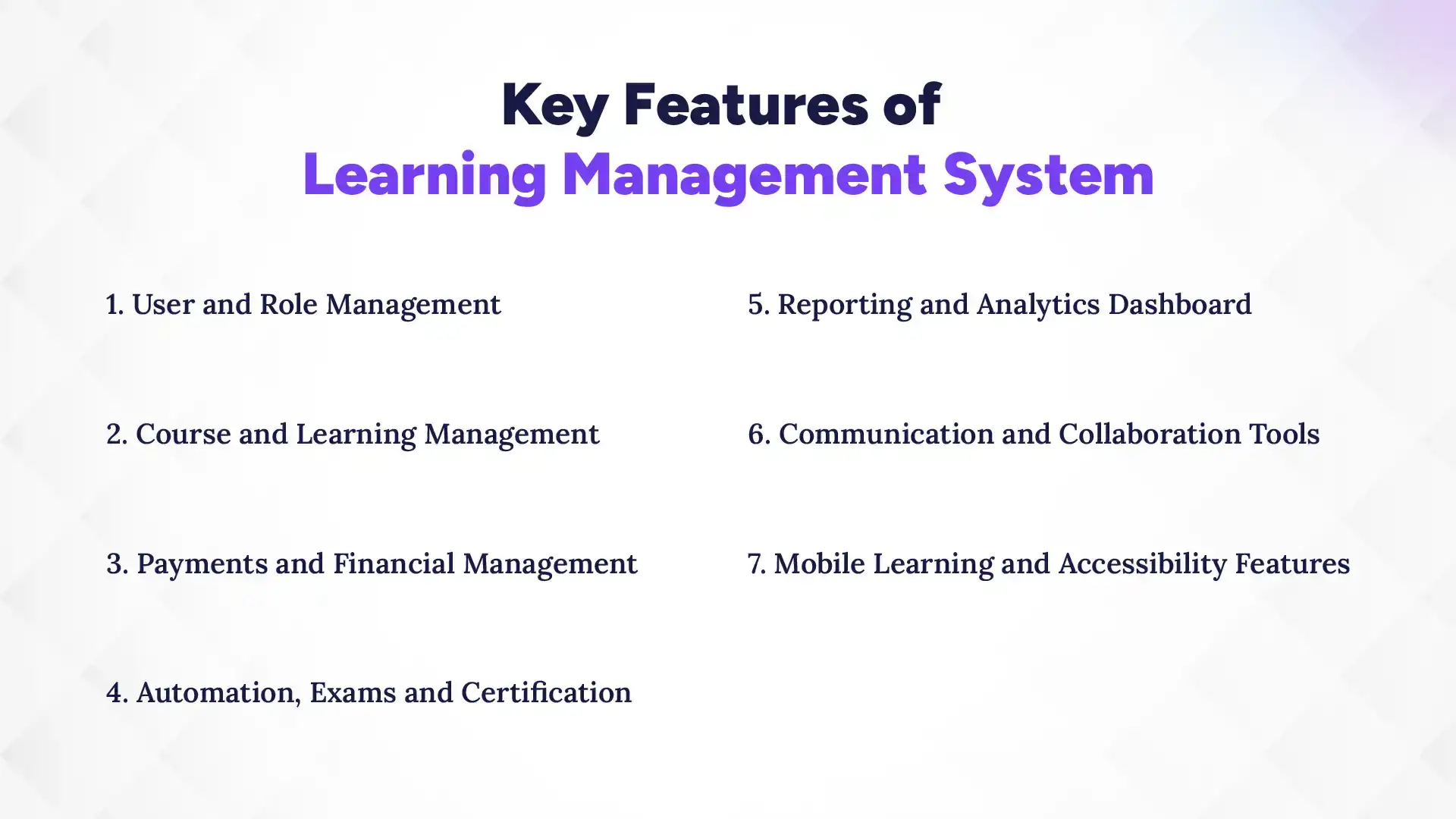
1. User and Role Management
This feature allows administrators to manage different types of users within the system. You can assign roles such as admin, instructor, or learner with specific permissions. It helps control who can access what, keeping the system organized and secure. User grouping also makes it easier to assign courses to teams or departments. Overall, it keeps everything structured and avoids confusion. It also improves accountability by clearly defining responsibilities for each user.
2. Course and Learning Management
LMS makes it easy to create, organize, and deliver courses in a structured format. You can upload videos, documents, quizzes, and interactive content in one place. Courses can be arranged into modules or learning paths for better flow. It also allows updates without disrupting the entire system. This feature forms the core of how learning is delivered. It ensures consistency in training across different users and groups.
3. Payments and Financial Management
Some LMS platforms include payment features for selling courses or managing subscriptions. This allows organizations to monetize their learning content easily. It supports different pricing models such as one-time payments or recurring subscriptions. Financial tracking also becomes more transparent and organized. This is especially useful for training institutes and online course providers. It also simplifies revenue management within the same platform.
4. Automation, Exams and Certification
Automation helps reduce manual tasks like enrollment, reminders, and grading. The LMS can automatically assign courses and send notifications to learners. It also supports quizzes, tests, and assessments to evaluate performance. Certificates can be generated automatically after course completion. This makes the entire learning process more efficient and goal-driven. It also ensures consistency and accuracy in evaluations.
5. Reporting and Analytics Dashboard
This feature provides insights into learner progress, engagement, and performance. Administrators can track completion rates, test scores, and activity levels. Reports help identify areas where learners may be struggling. It also supports better decision-making for improving training programs. Data makes the learning process measurable and more effective. It helps organizations continuously improve their learning strategies.
6. Communication and Collaboration Tools
LMS often includes tools like discussion forums, messaging, and group interactions. These features help learners communicate with instructors and peers easily. It creates a more interactive and engaging learning environment. Collaboration also improves understanding through shared knowledge. Learning becomes less isolated and more connected. It also encourages active participation and peer learning.
7. Mobile Learning and Accessibility Features
Modern LMS platforms are designed to work smoothly on mobile devices. This allows learners to access courses anytime and from anywhere. Mobile compatibility improves convenience and increases participation. It also supports users who prefer learning on the go. Accessibility features ensure that learning is inclusive for different types of users. It helps reach a wider audience without limitations.
How Do Advanced LMS Features Improve Learning Experience?
Advanced LMS features improve the learning experience by making it more personalized, interactive, and data-driven for each user. Instead of a fixed learning path, these features adapt to individual needs and behaviors. They also increase engagement through interactive elements and real-time feedback. Overall, they turn learning from a passive activity into a more dynamic and effective experience.
1. Personalization and Adaptive Learning Features
Personalization allows the LMS to adjust content based on a learner’s performance and preferences. Instead of showing the same material to everyone, it recommends relevant topics and adjusts difficulty levels. This helps learners focus on areas where they need improvement. It also prevents boredom caused by repetitive or irrelevant content. Over time, learning becomes more efficient and targeted. It feels more like a guided experience rather than a fixed course. It also helps learners progress at their own pace without unnecessary pressure.
2. Gamification and Engagement Tools
Gamification introduces elements like points, badges, and leaderboards to make learning more engaging. These features motivate learners to complete courses and perform better. It adds a sense of competition and achievement, which keeps users interested. Interactive content like quizzes and challenges also improves participation. Learning becomes less monotonous and more enjoyable. Even small rewards can surprisingly boost motivation. It also encourages consistency by rewarding regular participation.
3. AI-Powered Recommendations and Smart Content Delivery
AI-powered features analyze user behavior to suggest relevant courses and learning materials. This helps learners discover content that matches their interests and skill level. It reduces the time spent searching for the right resources. Smart content delivery ensures users get the right information at the right time. This improves learning efficiency and overall experience. It also makes the platform feel more intelligent and responsive. It helps create a more personalized and seamless learning journey.
4. Real-Time Feedback and Performance Insights
Advanced LMS platforms provide instant feedback on quizzes, assignments, and activities. Learners can immediately understand their mistakes and improve. Performance insights also help instructors track progress and identify weak areas. This creates a continuous improvement loop. Real-time data makes learning more transparent and measurable. It keeps both learners and instructors informed at every step. It also helps in making quick adjustments to improve outcomes.
5. Social Learning and Collaboration Features
Social learning features allow users to interact through discussions, group activities, and shared content. This creates a collaborative environment where learners can exchange ideas and solve problems together. It also helps build a sense of community within the platform. Learning becomes more engaging when it is not done in isolation. Peer interaction often improves understanding and retention. It adds a human element to digital learning. It also encourages knowledge sharing and teamwork among learners.
Why Choosing the Right LMS Features Matters for Organizations?
Choosing the right LMS features matters because it directly affects how effectively learning is delivered, managed, and experienced within an organization. The right set of features ensures smooth operations, better engagement, and measurable outcomes. On the other hand, missing or unnecessary features can lead to confusion and low adoption. In simple terms, the success of an LMS depends largely on the features it offers and how well they match your needs.
1. Impact on Learning Efficiency and User Experience
Right LMS features make learning faster, smoother, and more organized for users. Easy navigation and structured content help learners focus without getting confused. Features like automation and personalized learning reduce unnecessary effort. A good user experience also increases engagement and course completion rates. When the system is simple to use, people are more likely to adopt it. Overall, it improves both learning outcomes and satisfaction.
2. Scalability and Business Growth Support
LMS with the right features can grow along with your organization. It should handle increasing users, courses, and data without performance issues. Scalable features allow businesses to expand training programs easily. This is especially important for growing companies or institutions. A flexible LMS avoids the need to switch systems later. It supports long-term growth without disruptions.
3. Long-Term Return on Investment (ROI)
Investing in an LMS is not just about cost, but about long-term value. The right features help save time, reduce manual work, and improve training efficiency. This leads to better productivity and lower operational costs over time. A well-chosen LMS delivers consistent results without frequent upgrades. It also improves overall learning outcomes, which adds real value. In the long run, the right features ensure you get the most out of your investment.
How to Choose an LMS Based on Features and Business Needs?
You can choose an LMS based on features and business needs by carefully matching the platform’s capabilities with your learning goals, budget, and long-term growth plans. The right LMS should support your organization’s training style while staying easy to use and scalable. It is important to focus on practical features rather than just advanced or flashy tools. In short, the best choice is the one that fits your workflow, not the one with the most features.
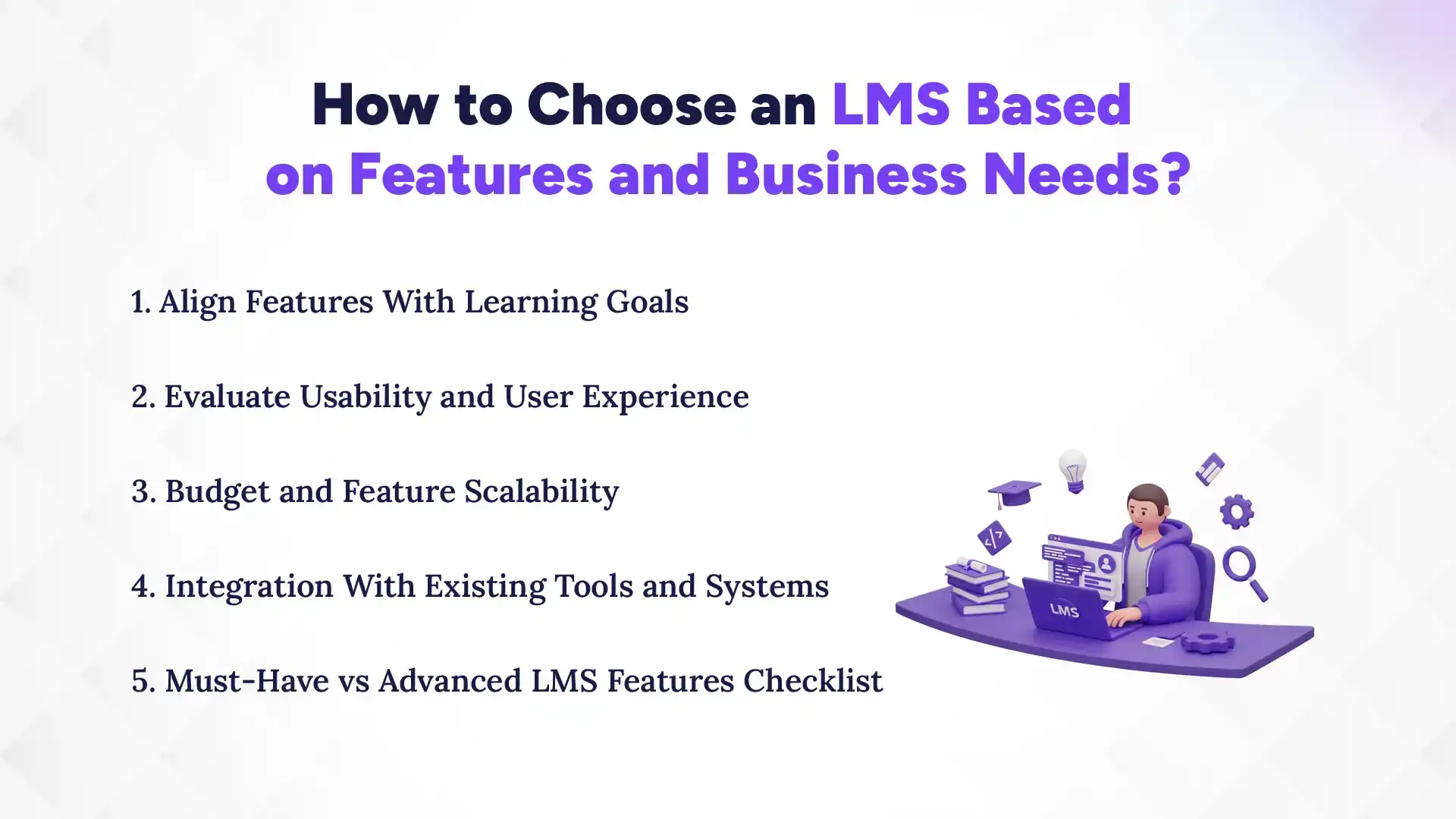
1. Align Features With Learning Goals
Start by clearly defining what your organization wants to achieve with the LMS. Different goals, like employee training, academic learning, or certification programs, require different features. When features align with goals, the system becomes more effective and focused. It also prevents wasting money on unnecessary tools. This alignment ensures better learning outcomes and smoother implementation. A clear purpose always leads to better LMS selection decisions.
2. Evaluate Usability and User Experience
Good LMS should be simple and intuitive for both learners and administrators. If the system is too complex, users may avoid using it regularly. Easy navigation, clean design, and clear workflows improve adoption rates. A positive user experience also increases engagement and course completion. Always test how the platform feels in real usage. Usability often matters more than having extra advanced features.
3. Budget and Feature Scalability
Budget plays a major role when selecting an LMS, especially for growing organizations. Some platforms offer basic plans, while others charge based on users or features. It is important to choose a system that can scale as your organization grows. A cheap system that cannot expand may cost more later. Balancing cost with future needs ensures long-term value. Always think beyond initial pricing.
4. Integration With Existing Tools and Systems
LMS should work smoothly with your existing tools like HR systems, CRM platforms, or communication apps. Good integration reduces manual work and improves data flow between systems. It also helps maintain consistency across different departments. Without integration, workflows can become slow and inefficient. A well-connected LMS improves overall productivity. Always check compatibility before final selection.
5. Must-Have vs Advanced LMS Features Checklist
Not all features are equally important for every organization. Must-have features include course management, user tracking, and reporting tools. Advanced features like AI recommendations or gamification are optional, depending on needs. Understanding this difference helps avoid overpaying for unused features. It also helps prioritize what actually improves learning efficiency. A clear checklist ensures smarter and more practical decision-making.
Which Is the Best LMS Software in Nepal?
Pace LMS is the best LMS system in Nepal because it is a locally designed, feature-rich platform that simplifies training, course management, and learner tracking for schools, colleges, and businesses. It brings all essential tools like user management, exams, automation, and reporting into one easy-to-use system. Unlike many complex international platforms, it is built with Nepalese institutions in mind, making it more practical and accessible. It also supports scalable learning, so organizations can grow without changing systems. Overall, it delivers a smooth, efficient, and reliable learning experience for modern education and corporate training, offered by The Pace Infosys.
Conclusion
Learning Management Systems have become an essential part of modern education and corporate training, mainly because of the powerful features they offer. From user management and course delivery to automation, analytics, and mobile access, these features work together to make learning more structured and efficient. Instead of relying on manual processes, organizations can now manage everything in one centralized platform with better control and visibility.
As digital learning continues to grow, choosing an LMS with the right features is more important than ever. The right system not only improves learning outcomes but also saves time, reduces costs, and supports long-term growth. Whether for schools, institutes, or businesses, a well-equipped LMS helps create a smarter and more engaging learning experience that adapts to future needs.
FAQs
What are the main features of a Learning Management System?
+
LMS features include course management, user tracking, and automation tools. They simplify learning, training, and performance monitoring in one platform.
Why are LMS features important for organizations?
+
They improve learning efficiency, engagement, and overall training effectiveness. Good features ensure better management and measurable learning outcomes.
Can LMS systems be used for employee training?
+
Yes, LMS platforms are widely used for corporate employee training. They help manage, deliver, and track structured learning programs.
Do all LMS platforms have the same features?
+
No, features vary depending on platform type and provider. Some offer basic tools while others include advanced functionalities.
What is the role of automation in LMS?
+
Automation handles tasks like enrollment, grading, and notifications. It reduces manual work and improves overall efficiency.
Are LMS platforms mobile-friendly?
+
Yes, most modern LMS systems support mobile learning access. Users can learn anytime and anywhere using smartphones.
What makes a good LMS system?
+
Good LMS is user-friendly, scalable, and feature-rich. It should match organizational learning and training needs.
Why is Pace LMS popular in Nepal?
+
Pace LMS is simple, efficient, and designed for local needs. It supports schools, institutes, and businesses effectively.
Ready to get started?
Book a 30-minute consultation call, and let's talk about your goals.