Have you ever noticed how some organizations train hundreds of people smoothly while others struggle with spreadsheets, emails, and confusion everywhere? It almost feels like one side has a well-organized system and the other is just trying to keep things from falling apart. That difference usually comes down to one powerful tool that quietly handles everything in the background and keeps learning on track.
In this blog, we will explore the benefits of Learning Management System (LMS) and why it has become such an important tool for schools, businesses, and training institutions, especially in contexts like LMS in Nepal. You will learn how it improves training efficiency, reduces costs, enhances learner engagement, and supports digital transformation. By the end, you will clearly understand why LMS platforms are no longer optional but almost essential in today’s learning environment.
What is a Learning Management System (LMS)?
Learning Management System (LMS) is a digital platform designed to create, deliver, manage, and track learning or training programs in one centralized place. If you are wondering what is LMS, it helps organizations, schools, and businesses organize educational content and monitor learner progress efficiently. Instead of using scattered tools like emails and spreadsheets, everything is managed within a single system. This makes learning more structured, accessible, and easier to evaluate over time.
Key Functions of an LMS Platform
Course creation and management: Allows instructors to build structured online courses with videos, documents, and quizzes
User enrollment and management: Helps add learners, assign courses, and organize groups easily
Progress tracking: Monitors learner activity, completion rates, and performance in real time
Assessments and evaluations: Supports quizzes, assignments, and automated grading systems
Reporting and analytics: Provides insights into learner performance and course effectiveness
Communication tools: Enables interaction through messages, discussions, and notifications for better engagement
Why Businesses and Educational Institutions Use LMS Platforms?
Businesses and educational institutions use Learning Management Systems because they make training and learning more organized, scalable, and efficient. An LMS replaces manual processes with a centralized digital system that saves time and improves consistency. It helps deliver training to large groups without losing quality or control. In simple terms, it makes learning easier to manage and easier to measure.
1. Challenges Faced by Traditional Training Methods
Traditional training methods often rely on classrooms, printed materials, and manual tracking, which can be slow and inefficient. They make it difficult to manage large groups and keep learning consistent across different locations. Updating content is also time-consuming and expensive. On top of that, tracking learner progress manually often leads to errors or missing data. These limitations push organizations to look for more efficient digital solutions.
2. Shift From Offline Training to Digital Learning Systems
Organizations are increasingly moving from offline training to digital learning systems because they offer more flexibility and control. Digital platforms allow learners to access content anytime and from anywhere, removing location barriers. Training can be updated instantly without reprinting materials or rescheduling sessions. This shift also supports remote work and global teams. As a result, learning becomes faster, smoother, and more accessible.
3. Role of LMS in Modern Digital Learning Transformation
LMS plays a key role in transforming traditional learning into a modern digital experience. It brings everything like courses, assessments, and tracking into one platform. This helps organizations deliver structured learning while monitoring performance in real time. It also supports personalization, making learning more effective for individuals. Overall, it acts as the backbone of modern eLearning and corporate training systems.
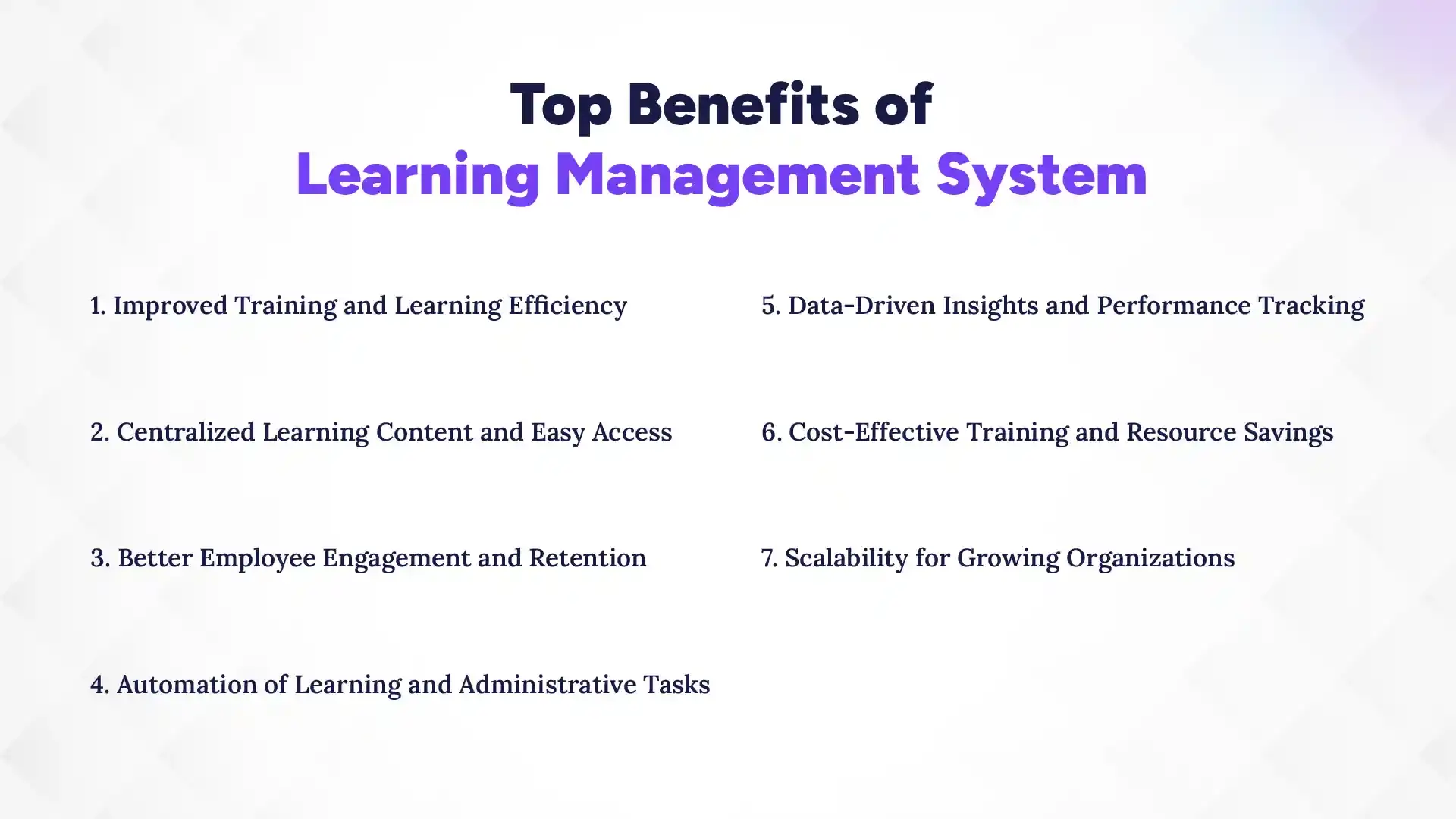
Top Benefits of Learning Management System
Learning Management System brings multiple advantages that make training and education more efficient, organized, and impactful. It helps organizations streamline learning processes while improving how knowledge is delivered and tracked. From saving time to improving learner performance, an LMS adds value at every stage of training. This is why it has become a key tool for modern businesses and educational institutions.
1. Improved Training and Learning Efficiency
LMS makes training faster and more structured by removing manual processes and paperwork. Learners can access content instantly without waiting for scheduled sessions. It also helps instructors deliver lessons in a more organized and consistent way. Progress tracking ensures no one gets left behind. Overall, it speeds up the entire learning cycle while improving outcomes.
2. Centralized Learning Content and Easy Access
All learning materials are stored in one central platform, making it easy to access and manage. Learners do not need to search through multiple sources to find what they need. Administrators can update content anytime without confusion or duplication. This centralization improves consistency across training programs. It also reduces the chances of missing or outdated information.
3. Better Employee Engagement and Retention
LMS keeps learners engaged through interactive content like videos, quizzes, and gamified elements. This makes learning more interesting compared to traditional methods. Engaged learners are more likely to complete courses and retain information longer. It also creates a sense of progress and achievement. As a result, training becomes more effective and less boring.
4. Automation of Learning and Administrative Tasks
Many repetitive tasks like enrollment, reminders, and grading can be automated in an LMS. This reduces the workload for instructors and administrators significantly. Automation ensures tasks are completed on time without human error. It also allows trainers to focus more on teaching rather than managing paperwork. This makes the entire system more efficient and reliable.
5. Data-Driven Insights and Performance Tracking
LMS provides detailed reports on learner progress, performance, and engagement levels. This data helps organizations understand what is working and what needs improvement. Managers can make better decisions based on real-time analytics. It also helps identify skill gaps among learners. In short, it turns learning into a measurable and improvable process.
6. Cost-Effective Training and Resource Savings
Using an LMS reduces costs related to travel, printed materials, and physical training spaces. Once content is created, it can be reused multiple times without extra expense. This makes training more affordable in the long run. It also saves time for both learners and trainers. Overall, it offers a high return on investment.
7. Scalability for Growing Organizations
LMS can easily scale as an organization grows without losing efficiency. Whether you have 10 users or 10,000, the system can handle it smoothly. New courses and users can be added without major changes to the setup. This makes it ideal for expanding businesses and institutions. It ensures learning grows along with the organization.
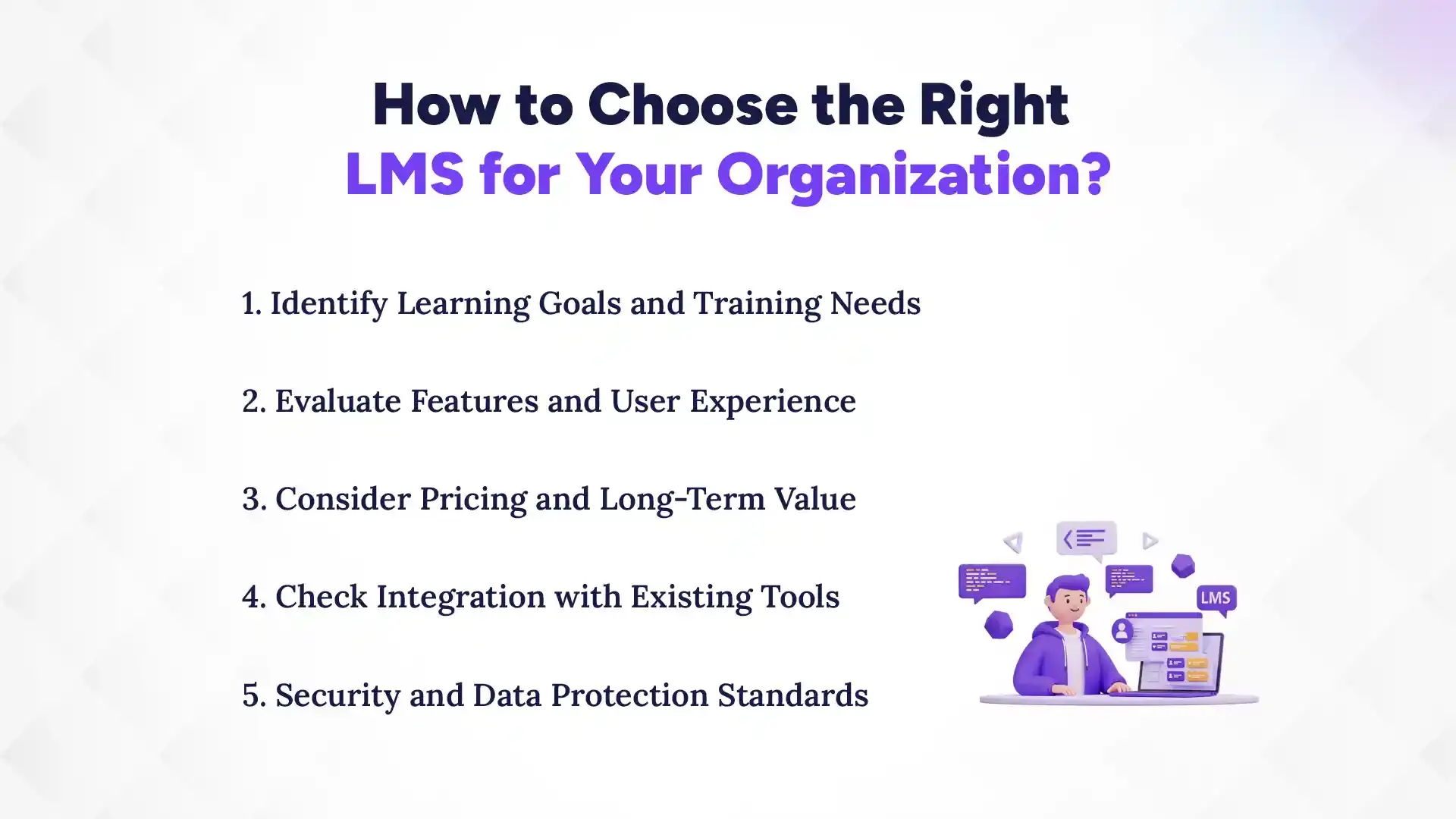
How to Choose the Right LMS for Your Organization?
You can choose the right LMS for your organization by first understanding your training goals, evaluating available features, and ensuring the platform fits your long-term needs. The right system should align with how your team or institution delivers learning and manages users. It is not just about popularity, but about practical usability and scalability. A good LMS should simplify learning, not complicate it.
1. Identify Learning Goals and Training Needs
Before selecting an LMS, clearly define what you want to achieve with it. Different organizations need different solutions, such as employee training, academic courses, or compliance programs. Understanding your goals helps narrow down the right options. It also prevents you from paying for unnecessary features. A clear purpose leads to a better and more effective choice.
2. Evaluate Features and User Experience
LMS should have all essential features like course creation, tracking, assessments, and reporting. However, usability is just as important as features. If the platform is too complex, users may avoid using it. A clean and simple interface improves adoption and engagement. Always test the system from both admin and learner perspectives.
3. Consider Pricing and Long-Term Value
Pricing plays a key role when choosing an LMS, especially for growing organizations. Some platforms charge per user, while others offer fixed subscription plans. It is important to look beyond the initial cost and consider long-term value. A slightly expensive but scalable LMS may save more money later. Always balance cost with performance and growth potential.
4. Check Integration with Existing Tools
Good LMS should easily integrate with your existing systems like HR software, CRM tools, or communication platforms. Integration helps reduce manual work and improves data flow between systems. It also ensures a smoother workflow across departments. Without proper integration, you may end up duplicating effort. Seamless connectivity improves overall efficiency.
5. Security and Data Protection Standards
Security is crucial because LMS platforms handle sensitive learner and organizational data. The system should have strong encryption, access control, and regular security updates. It should also comply with relevant data protection regulations. A secure LMS protects against data breaches and unauthorized access. This ensures trust and safety for both learners and administrators.
Which is the Best LMS in Nepal?
Pace LMS is the best LMS software in Nepal because it is designed to make learning and training simple, efficient, and highly organized for schools, institutes, and businesses. It offers easy course management, real-time tracking, and automation tools that reduce manual workload and improve learning outcomes. Unlike complex systems, it focuses on usability and practical features that actually work in real-world education settings. In Nepal’s growing digital education landscape, The Pace Infosys stands out as a reliable and user-friendly solution for modern learning needs.
Common Challenges in LMS Implementation and How to Overcome Them
Implementing a Learning Management System can significantly improve training, but it also comes with a few practical challenges during setup and adoption. Many organizations struggle not because the system is ineffective, but because of planning gaps and user readiness issues. These challenges can affect performance if not handled properly from the beginning. However, with the right strategy, most of them can be avoided or easily resolved.
1. Low User Adoption and Resistance to Change
One of the biggest challenges is getting users to actually adopt the new system. Employees or learners often prefer traditional methods and hesitate to switch to digital platforms. This resistance can slow down implementation and reduce effectiveness. Proper training and clear communication about benefits can help overcome this issue. Gradual onboarding also makes the transition smoother.
2. Poor Data Migration and Setup Issues
Moving data from old systems to an LMS can be complex and error-prone. Incomplete or incorrect data migration can lead to confusion and system inefficiencies. Setup issues may also delay the launch of the platform. Careful planning and testing before full deployment can reduce these risks. Using expert support during migration is often helpful.
3. Lack of Strategy and Clear Learning Goals
Without clear goals, an LMS implementation can feel directionless and ineffective. Organizations may struggle to define what success looks like. This leads to underuse of features and poor learning outcomes. A well-defined training strategy helps align the LMS with business or academic objectives. Clear goals ensure better focus and measurable results.
4. Technical Complexity and Usability Barriers
Some LMS platforms are too complex for everyday users, leading to frustration and low engagement. If the system is not user-friendly, learners may avoid using it altogether. This reduces the return on investment. Choosing a simple and intuitive interface helps solve this problem. Proper training also improves user confidence.
5. Integration and Compatibility Issues
LMS platforms often need to work with other tools like HR systems or CRMs. Compatibility issues can disrupt workflow and create data silos. Poor integration leads to manual work and inefficiency. Selecting an LMS with strong API support can solve this issue. Testing integrations before full implementation is also important.
6. Lack of Management Support
Without strong support from management, LMS adoption can lose momentum quickly. Leaders play a key role in encouraging usage and allocating resources. If management is not fully committed, employees may not take the system seriously. Active involvement from leadership improves adoption rates. Support from the top ensures long-term success.
Conclusion
Learning Management System has become an essential tool for modern education and corporate training, offering clear benefits like improved efficiency, better engagement, and centralized learning management. It replaces traditional, time-consuming methods with a structured digital approach that makes training easier to deliver, track, and improve. Whether it is a school, university, or business, an LMS helps create a more organized and scalable learning environment.
As organizations continue to move toward digital transformation, the importance of LMS platforms will only grow stronger. Choosing the right system can directly impact how effectively learners gain skills and how efficiently institutions operate. With proper planning and implementation, an LMS can transform the entire learning experience into something more flexible, data-driven, and future-ready.
FAQs
What is a Learning Management System used for?
+
It is used for creating, managing, and tracking online learning programs. It simplifies training and education in one centralized digital platform.
What are the main benefits of LMS?
+
It improves learning efficiency, engagement, and training management. It also reduces costs and saves time for organizations.
Who can use an LMS platform?
+
Schools, universities, businesses, and training institutes use LMS systems. It supports both academic learning and corporate training needs.
Is LMS suitable for small businesses?
+
Yes, LMS platforms are scalable and fit small to large businesses. They help small teams train efficiently without high costs.
Can LMS be used for remote learning?
+
Yes, LMS fully supports remote and flexible learning access. Learners can study anytime from anywhere using internet access.
What features does an LMS include?
+
It includes course management, tracking, assessments, and reporting tools. It also supports communication and automated learning processes.
Is LMS expensive to implement?
+
Costs vary, but many LMS options are affordable or subscription-based. It often reduces long-term training expenses significantly.
Why is LMS important in modern education?
+
It makes learning more structured, accessible, and data-driven. It improves overall training quality and learner outcomes.
Ready to get started?
Book a 30-minute consultation call, and let's talk about your goals.