
.webp&w=3840&q=75)
Imagine spending weeks setting up your dream online store, picking the perfect products, and hitting "publish," only to realize your website feels like a shop hidden in a dark alleyway where no one passes by.
It’s frustrating when you have great items but no visitors.
Most store owners face this exact problem: they have the supply, but the digital "foot traffic" is missing.
This is where E-commerce SEO comes in as your brightest neon sign and a clear map for customers.
This guide is designed to help you move your store from the back alley to the digital equivalent of Alibaba or a busy mall in New York. We’ll walk through simple, actionable steps to get your products appearing right when people are searching for them.
What Is Ecommerce SEO?
Ecommerce SEO is the process of making your online store more visible in search engine results pages. When people search for products you sell, you want to be the first name they see. This involves optimizing your headlines, product descriptions, metadata, and internal link structure so Google understands what you are selling.
At a glance, e-commerce SEO is all about "buying intent.” It specifically targets product and category pages to ensure they rank high. When you understand how users shop and curate your website to serve that buying behavior, you make it easier for search engines to find your site (or products) and reward you with better rankings.
Why SEO is Important for Ecommerce Websites in 2026
Ecommerce SEO is vital because it connects your products with people who are actively looking to spend money. By ranking higher, you get free traffic that stays consistent over time without needing a huge daily ad budget. Let’s look at the specific ways SEO benefits your online business.
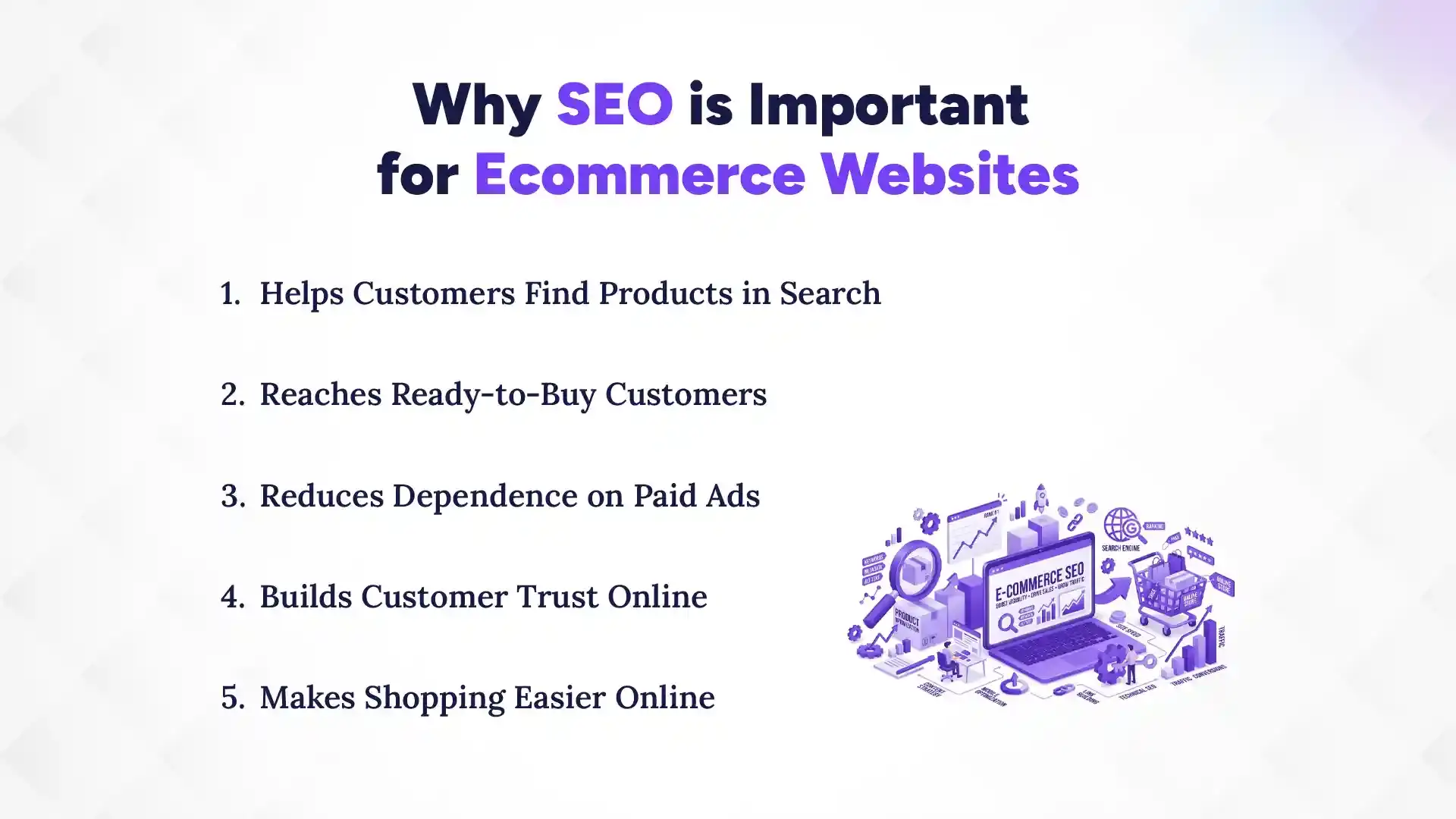
1. Helps Customers Find Products in Search
Most shoppers start their journey by typing a product name into Google. If your store isn't on the first page, you basically don't exist to them. Proper SEO ensures that when someone searches for "organic honey in Virginia" or "gaming laptops," your specific product pages show up. This visibility is the first step toward turning a stranger into a loyal customer.
2. Reaches Ready-to-Buy Customers
People using search engines often have a specific goal in mind. Unlike social media users who are just scrolling, searchers are often ready to make a purchase right now. SEO helps you show up at the exact moment their credit card is on the table. By being there at the right time, your chances of closing a sale increase significantly.
3. Reduces Dependence on Paid Ads
Running Google or Facebook ads can get very expensive, especially for small businesses. SEO provides a way to get traffic without paying for every single click. While ads stop the moment you stop paying, SEO keeps working for you 24/7. It builds a foundation that brings in free customers over the long haul.
ALSO READ CTA: What is Search Engine Marketing?
https://www.thepaceinfosys.com/blog/what-is-sem
4. Builds Customer Trust Online
Websites that appear at the top of Google are naturally seen as more trustworthy. Customers feel safer buying from a site that looks like an industry leader. If Google trusts you enough to rank you high, customers will feel more comfortable entering their payment details. This digital reputation is something money simply cannot buy through ads alone.
5. Makes Shopping Easier Online
Good SEO isn't just about keywords; it’s about making your site easy to use. Google loves sites that load fast and have clear menus, which also happens to be what shoppers love. When you optimize your site, you are actually making the shopping experience smoother. This leads to fewer abandoned carts and more happy, returning customers.
How to Do SEO for E-Commerce Websites: 7 Important Steps
Winning at ecommerce SEO requires a mix of smart keyword research, technical health, and high-quality content. You need to focus on both the behind-the-scenes tech and the words your customers read. Follow these seven steps to build a store that both Google and shoppers will love.
1. Optimize Product and Category Pages
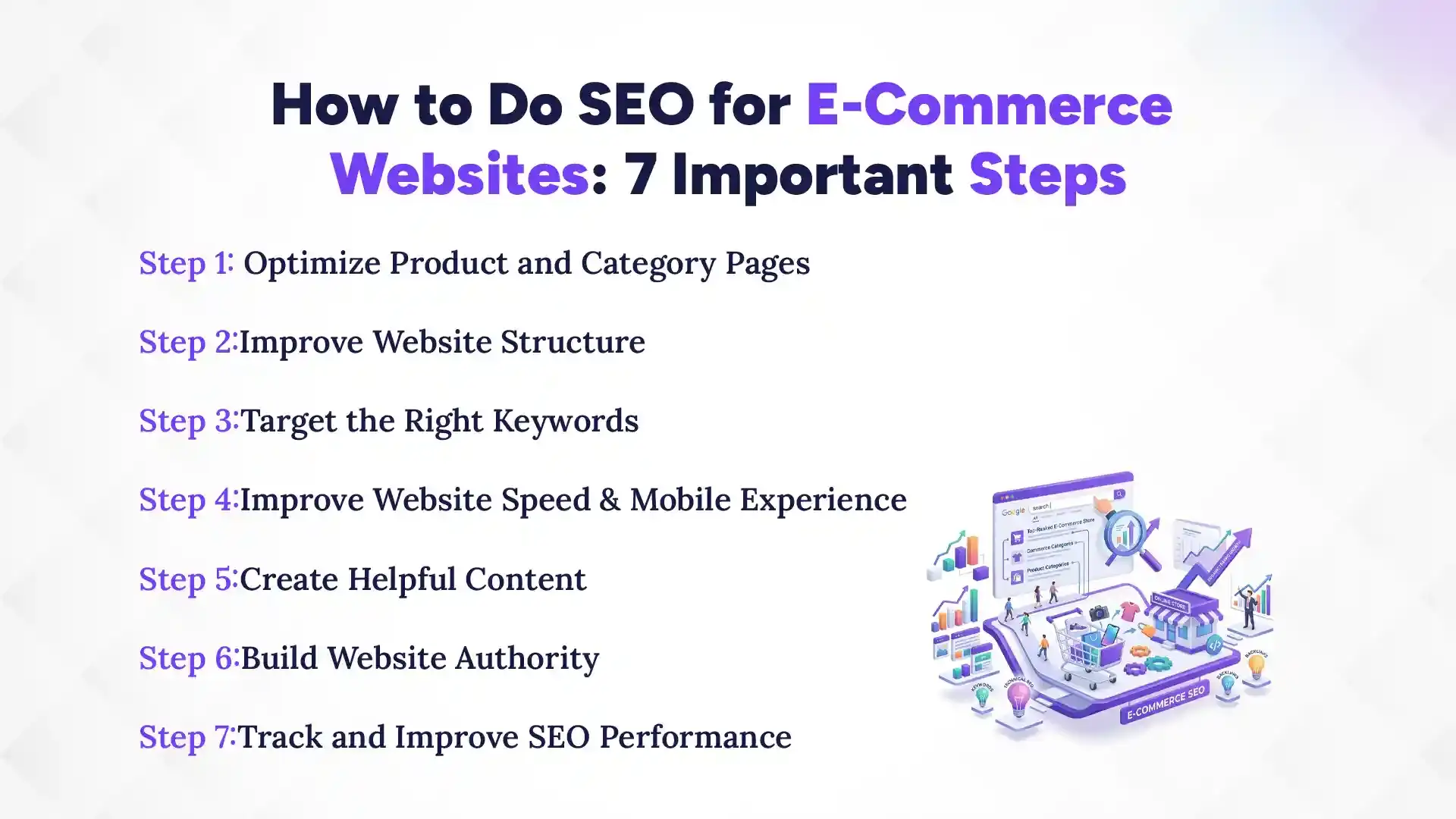
Your product and category pages are where the money is made. You should write unique descriptions for every item instead of just copying what the manufacturer sent you. Use high-quality images and include the main keyword in the title and the "alt text" of the photo. Make sure the "Add to Cart" button is easy to find so that once SEO brings them there, they know exactly what to do next.
2. Improve Website Structure
A clean website structure helps both users and search engines navigate your store. You should follow a "three-click rule," meaning a customer should be able to find any product within three clicks from the homepage. Use clear categories like "Men’s Wear" followed by sub-categories like "Jackets." This logical flow makes it easy for Google to index all your pages without getting lost.
3. Target the Right Keywords
Choosing the right keywords is the foundation of your entire strategy. Don't just go for broad terms like "shoes"; try "leather trekking boots for men." These are called long-tail keywords, and they usually have less competition and higher conversion rates. Use tools to see what your target audience is actually typing into the search bar before you start writing.
4. Improve Website Speed and Mobile Experience
Most people in Nepal and around the world shop using their mobile phones. If your site takes more than three seconds to load, most visitors will leave and go to a competitor. Use small image file sizes and a fast hosting service to keep things snappy. A mobile-friendly site is no longer a "nice-to-have", it is a requirement if you want to rank on Google.
5. Create Helpful Content
Writing a blog for your ecommerce site is a secret weapon for SEO. You can write guides like "How to choose the right skin cream" or "Top 10 gifts for Father’s Day." This brings in people who are researching but aren't quite ready to buy yet. By being helpful, you build a relationship with them so they choose your store when they are ready to purchase.
RELATED CTA: what is on page seo
6. Build Website Authority
Authority is built when other reputable websites link back to yours. You can reach out to local bloggers, news sites, or influencers to review your products. These backlinks act like a vote of confidence in the eyes of Google. The more high-quality votes you have, the higher Google will push you up in the search results.
ALSO READ CTA: https://www.thepaceinfosys.com/blog/what-is-off-page-seo
7. Track and Improve SEO Performance
You cannot improve what you don't measure. Use free tools like Google Analytics and Search Console to see which pages are getting the most traffic. Look at where people are leaving your site and try to fix those pages. SEO is a continuous process of testing, learning, and tweaking to get better results every month.
Common Ecommerce SEO Mistakes to Avoid
Many store owners accidentally hurt their rankings by following old habits or skipping technical details. Avoiding these common traps will put you miles ahead of your competition. Let's look at what you should stay away from to keep your store healthy.
1. Using Duplicate Product Content
Copying descriptions from other websites is a big mistake. Google might penalize your site or simply ignore those pages because they don't add anything new. Even if you have 100 similar products, try to give each one a slightly different personality. Unique content tells Google that your page is valuable and deserves to be seen.
2. Ignoring Technical SEO
A pretty website is useless if Google’s bots can't "read" it. Things like broken links, "404 errors," and messy URLs can confuse search engines. Spend time fixing the technical side to ensure every page is indexed correctly. A clean, error-free backend is the engine that drives your SEO success.
Related CTA: What is Technical SEO
3. Slow Website Performance
As we mentioned before, speed is a major ranking factor. A slow site frustrates users and makes Google think your website is poor quality. Avoid using huge, unoptimized images or too many heavy plugins. Keep your site light so it loads instantly on a basic 4G connection.
4. Poor Mobile Experience
If your buttons are too small to click or the text is too tiny to read on a phone, you will lose sales. Google uses mobile-first indexing, which means it looks at your mobile site before your desktop site. Always test your store on different smartphones to ensure it looks and works perfectly.
5. Missing Meta Titles and Descriptions
Meta titles and descriptions are the snippets people see on the Google search page. If you leave these blank, Google will just pull random text from your page, which often looks messy. Write catchy, keyword-rich titles that make people want to click. Think of these as your digital storefront's window display.
6. Not Updating Old Content
The digital world moves fast, and old information can become irrelevant. If you have a blog post from two years ago, update it with new facts or products. Google loves fresh content and will often reward you with a rankings boost for keeping things current. Regularly checking your old pages keeps your entire site feeling alive and trustworthy.
How Long Does Ecommerce SEO Take?
SEO is a marathon, not a sprint, so don't expect results overnight. Generally, it takes about 4 to 6 months to start seeing significant movement in your rankings and traffic. This timeline depends on how competitive your niche is and how much work you put into it.
Consistency is the most important factor when waiting for SEO results. Factors like your website's age, its current technical health, and the quality of your backlinks will influence the speed. However, once the momentum starts, it becomes a powerful cycle that gets easier to maintain over time.
Who Needs Ecommerce SEO & Why Invest in SEO Services?
Every business that sells products online needs SEO to survive the crowded digital marketplace. Whether you are a small startup or a massive brand, being searchable is your greatest asset. Investing in professional SEO services can help you navigate the complex parts of SEO while you focus on running your business.
1. Small Online Stores
For small shops, SEO is the ultimate equalizer that lets you compete with bigger brands. You don't need a million-dollar budget to rank for specific, local keywords. By focusing on a niche, a small store can easily become the "go-to" expert in their field.
2. Large E-commerce Businesses
Big stores have thousands of pages, which makes SEO even more critical. Without a solid plan, many of these pages might never be found by customers. SEO helps organize a massive inventory so that every single product has a chance to be seen and sold.
3. Dropshipping Stores
Dropshipping is very competitive since many people sell the same items. SEO helps you stand out by creating better descriptions and a more trustworthy brand than other resellers. It’s the best way to build a real business out of a generic product list.
4. Shopify, WooCommerce, and Magento websites
No matter which platform you use, SEO is the bridge between your software and your customers. Each platform has specific SEO tools and settings that need to be handled correctly. Professional SEO ensures you are using your platform's features to their full potential.
5. Local ecommerce businesses
If you sell to people in a specific city like Austin or Pokhara, Local SEO is your best friend. It helps you show up when people search for "shops near me" or city-specific terms. This drives both online orders and physical foot traffic to your warehouse or showroom.
Conclusion
SEO is truly the heartbeat of any successful online store. It’s not just about tricking Google; it’s about proving that your shop is the most helpful and reliable choice for your customers. By following the steps in this guide, from keyword research to technical fixes, you are building a business that can stand the test of time.
It’s easy to feel overwhelmed by all the technical talk, but remember that every giant store started with just one optimized page. The best time to start was yesterday, but the second-best time is right now. Don't let your amazing products stay hidden in the shadows of the second page of search results.
Ready to turn your store into a sales machine? Let’s start optimizing your first product category today and watch your traffic grow! Explore SEO services today!