Digital marketing is everywhere, yet very few people can clearly explain how it actually works. From search engines and social media to email, content, and AI tools, there are many ways businesses reach and engage their audiences online. Each type has its own purpose, strengths, and ways it drives results.
A high-quality digital marketing strategy is a system of connected channels, each designed to solve a different business problem. When you understand the types of digital marketing, decisions become easier, strategies become sharper, and results become more predictable.
That’s what this guide is built for. In this blog, we break down the latest, most important types of digital marketing in 2026, explain how each one works, and show where it fits in your growth journey. By the time you reach the end, you’ll have a clear, practical understanding of digital marketing types and the confidence to choose what actually moves your business forward.
What Is Digital Marketing?
Digital marketingrefers to all the ways businesses promote their products or services through digital channels. This includes search engines, websites, social media platforms, email, mobile apps, and online advertising. Simply put, if a brand reaches its audience online, it’s using digital marketing.
Unlike traditional marketing, digital marketing allows businesses to target specific audiences, track performance in real time, and adjust strategies quickly. It focuses on reaching the right people, at the right time, with the right message, using data to guide every decision. This is what makes digital marketing a core part of modern business growth, not just a supporting tactic through a digital marketing service.
What Are the Types of Digital Marketing?
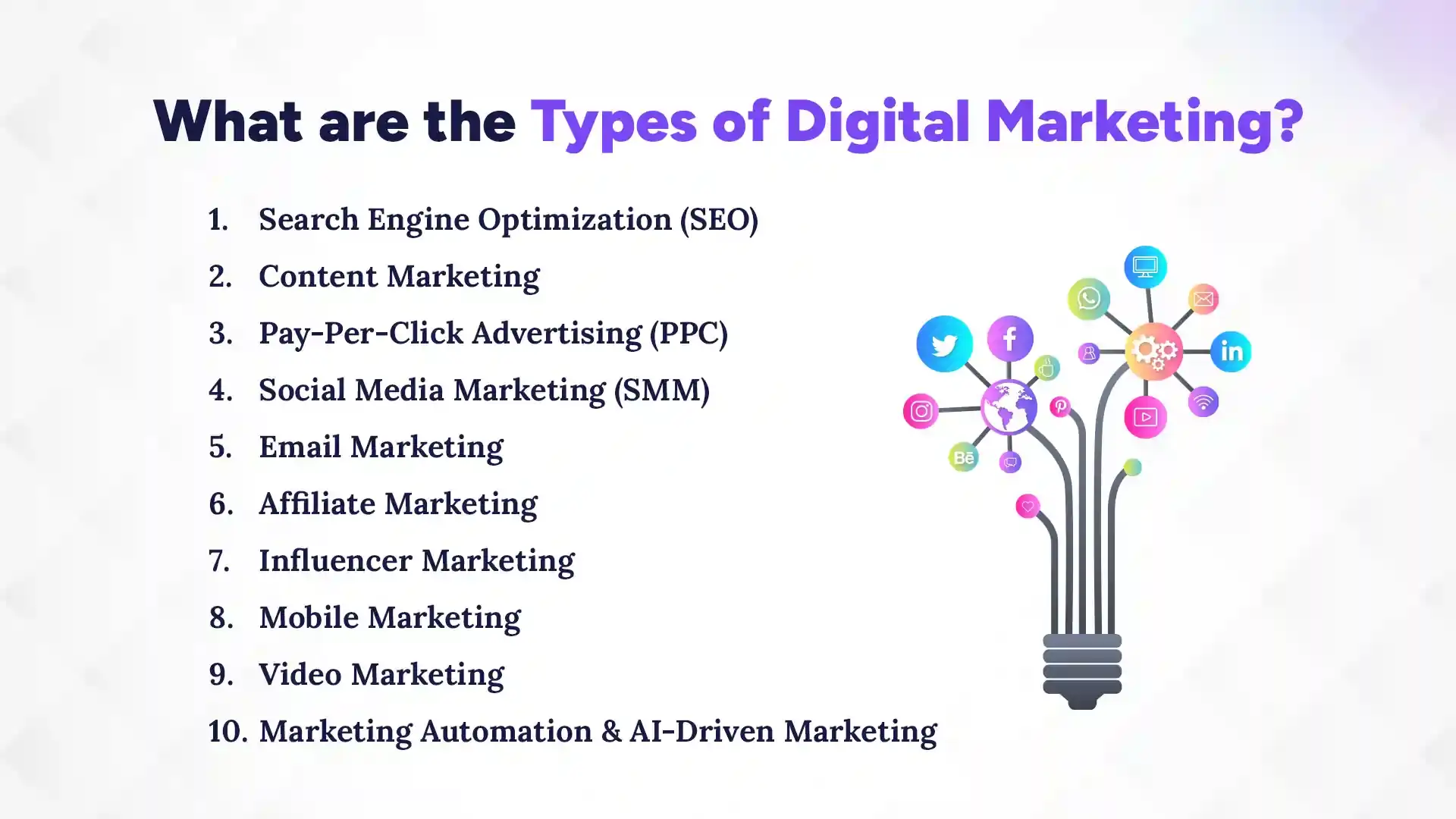
The types of digital marketing are the different ways businesses promote their products or services online, such as through search engines, content, social media, ads, and email. Each type serves a specific purpose, from attracting new visitors to building trust and converting leads into customers. In 2026, the most effective strategies come from using the right mix of digital marketing types. Below are the 10 major types of digital marketing every business should understand, explained clearly and practically:
1. Search Engine Optimization (SEO)
SEO helps your website show up higher in Google and other search engines when people search for answers, products, or services. SEO work includes optimizing keywords, improving on-page elements, fixing technical issues, and creating helpful content. The goal is to attract users who are looking for any sort of information online. Today, search engines reward websites that provide clear, structured, and useful information rather than just focusing on keywords.
Marketers now focus on organizing content into topic clusters, meeting users’ search intent, improving page speed, and optimizing for voice or conversational search. SEO is best for businesses looking for steady, long-term traffic and authority through seo service. Looking ahead, SEO will expand beyond Google to include visibility across multiple platforms, meaning your strategy should cover search, social, and content networks together as well.
2. Content Marketing
Content marketing is about creating valuable content such as blogs, guides, case studies, videos, and resources that educate or inform an audience. It doesn’t push a sale directly but builds trust and establishes your brand as a knowledgeable voice. For example, a B2B company might publish a detailed guide answering common customer questions and repurpose parts of it for social media or email, keeping the message consistent across platforms. Well-crafted content also supports other channels like SEO, social media, and email.
The latest trends show that breaking content into smaller, shareable pieces, like turning a blog post into a short video, keeps audiences engaged. Businesses also focus on providing practical, real-world insights that people can immediately use. In the future, content will need to work across multiple channels seamlessly, creating a connected experience for readers rather than isolated articles.
3. Pay-Per-Click Advertising (PPC)
Pay-per-click advertising allows businesses to place ads on search engines and platforms like Google Ads and Bing Ads. You only pay when someone clicks on your ad, so it is highly measurable. PPC marketing serves as a quick way to get visibility, especially for audiences ready to take action.
Ads can be highly targeted based on keywords, interests, and past behavior, helping brands reach the right people at the right time.
Modern PPC campaigns highly rely on smart bidding, audience signals, and strong landing pages. Running ads across search, social, and video channels together can amplify reach and reinforce messaging through sem service. It’s especially useful for promotions, product launches, or competitive keywords.
4. Social Media Marketing (SMM)
Social media marketing uses platforms like LinkedIn, Instagram, Facebook, or X to engage with people directly. It includes both organic posting and paid social ads. The main focus is building brand awareness, engagement, and community. A startup, for example, can use LinkedIn posts and ads to connect with decision-makers while sharing stories that build credibility and trust.
Today, social media is less about volume and more about relevance and conversation. Therefore, success comes from creating content that feels relevant and authentic rather than just posting frequently.
Short-form videos, interactive stories, and user-generated content are currently the most effective ways to grab attention. Social media also allows businesses to gather insights on what their audience enjoys and respond quickly. Looking ahead, social platforms are becoming discovery engines, where people actively search for content and products, not just scroll passively through smm service.
5. Email Marketing
Email marketing involves sending messages directly to subscribers, often through newsletters, campaigns, or automated sequences. It is one of the highest-ROI digital marketing channels when done correctly. In 2026, email marketing focuses on personalization, timing, and value-driven content. It works best for lead nurturing, customer retention, and repeat sales.
Today, businesses are using automation to send the right content based on a person’s behavior, like following up on a website visit or past purchase. Mobile-friendly emails and interactive content are also becoming more common.
6. Affiliate Marketing
Affiliate marketing is when businesses partner with other people or companies to promote their products or services. Partners earn a commission for each sale or lead they generate. Businesses only pay for actual results, such as sales or sign-ups. This makes it a low-risk and scalable channel.
Recently, affiliate marketing has become more selective, with brands focusing on trusted partners and audiences that match their niche. It works best for eCommerce and digital products. For example, a software company may partner with bloggers or reviewers who earn a commission for every referral.
Tools now allow better tracking and reporting, helping businesses see which affiliates drive the most value. In the future, affiliate programs are expected to integrate AI for smarter targeting and predictive insights, making it easier to scale without losing control over brand quality.
7. Influencer Marketing
Influencer marketing uses creators or industry voices to promote products or services to their audience. It works because people trust influencers more than traditional ads. Influencer marketing is especially effective in B2C brands and community-driven markets. For example, HubSpot partners with marketing bloggers and SaaS reviewers to promote its CRM tools. These affiliates target small business owners and marketing managers, earning a commission for every referral that signs up.
Current trends show a shift toward micro-influencers. These are people who have smaller audiences but interact a lot with them. Companies use data to choose influencers whose followers are interested, trust them, and match the brand’s goals. In the future, businesses will rely more on analytics to see which influencers really bring results, so their partnerships are more effective.
8. Mobile Marketing
Mobile marketing targets users on smartphones or tablets via SMS, push notifications, in-app ads, and mobile-optimized experiences. Since most online activity now happens on mobile devices, this channel is critical in 2026. Mobile marketing is best for timely messages and location-based engagement. It works well for apps, local businesses, and promotions. For example, Starbucks sends targeted messages through its app to people in its loyalty program. They include special offers, like a free drink on a birthday or local deals. The goal is to get people to visit the store.
Recently, location-based offers, app notifications, and interactive experiences have proven to boost engagement for businesses worldwide. Personalizing messages based on user behavior and preferences is becoming standard. AI personalization is also flourishing for smarter targeting, automation, and quicker delivery of messages.
9. Video Marketing
Video marketing uses content like YouTube videos, short-form clips, live streams, and explainer videos to engage audiences. These days, videos are the most engaging and easiest type of content. Short-form content, interactive video, and educational clips are currently trending, as they grab attention quickly and are easily shareable. Video marketing is best for explaining complex ideas, building trust, and increasing retention. These are highly effective because people process visuals faster and remember them longer than text.
Businesses are also using video to support other channels, like embedding videos in emails or blogs. This informative content and active digital appearance build trust, authority, and develop a brand community. For instance, SEMrush, a popular SEO tool, regularly posts explainer videos and marketing courses, targeting marketing managers and small business owners. Video marketing is already utilizing AI tools to create personalized content, and it tends to grow even more in the future.
10. Marketing Automation & AI-Driven Marketing
Marketing automation and AI-driven marketing use software to automate repetitive tasks, personalize experiences, and optimize campaigns. This includes email automation, chatbots, predictive analytics, and AI-powered recommendations. Trends show that AI is helping businesses scale their marketing without losing relevance or personalization. Automation saves time, ensures consistency, and makes it easier to nurture leads across multiple channels.
This type of digital marketing is best for improving efficiency and customer journeys. Netflix uses AI-driven marketing to recommend shows to millennials and Gen Z viewers based on their watch history, sending tailored notifications that encourage engagement and binge-watching behavior. Looking ahead, AI-driven marketing will become more predictive, helping businesses anticipate customer needs and deliver the right message at the right time.
Together, these different types of digital marketing form a complete marketing system, where each channel supports the others. When used together thoughtfully, these channels create a stronger, more consistent presence online. A deep understanding of how each marketing type works is crucial to target smartly, plan effectively, make better decisions, invest your resources wisely, and obtain the results with the right strategy.
Types of Digital Marketing Platforms
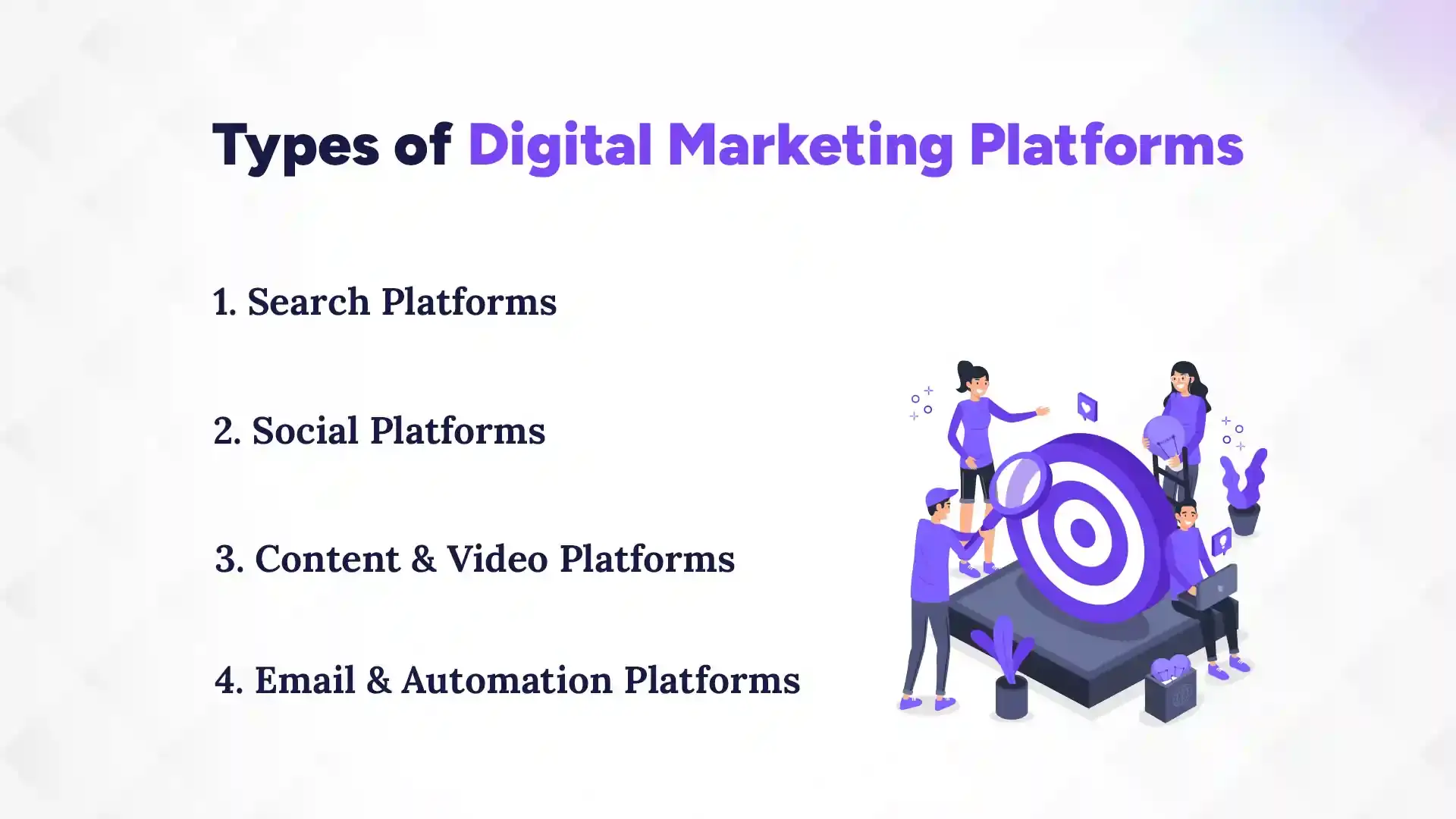
Digital marketing platforms are the tools and environments where marketing activities actually happen. This includes search engines, social networks, content and video sites, email systems, and automation tools. While marketing types define the strategy, platforms help execute those strategies effectively. In 2026, choosing the right platforms is just as important as choosing the right channels, because each platform supports different goals and audience behaviors.
1. Search Platforms
Search platforms like Google and Bing help users find information when they actively search for answers, products, or services. These platforms are mainly used for SEO and paid search campaigns. Their biggest advantage is intent, as users already know what they are looking for. In 2026, search platforms are prioritizing relevance, helpful content, and user experience more than ever.
Targeting search platforms, or say performing search marketing, is ideal for attracting visitors who are ready to take action, like making a purchase or signing up. Because of this, many businesses use search platforms to get consistent leads and build long-term visibility online.
2. Social Platforms
Social platforms include networks such as LinkedIn, Instagram, Facebook, and X. Brands use them to post updates, share short videos, publish carousels, run polls, and respond to comments or messages. They are designed for interaction, content sharing, and community building. These platforms help brands stay visible and connect with audiences on a daily basis.
Social platforms these days are more focused on meaningful engagement rather than reach alone. They are especially useful for building brand awareness and trust over time. In addition, paid social ads let businesses promote posts, run lead forms, retarget website visitors, and reach specific audience groups based on interests, job roles, or behavior.
3. Content & Video Platforms
Content and video platforms include blogs, YouTube, podcasts, and other media-sharing channels. Their main purpose is to educate, inform, or entertain audiences through long-form and visual content. These platforms help brands explain ideas clearly and build authority in their industry. In 2026, users prefer easy-to-consume and value-driven content. Content and video platforms also support SEO and social media strategies. As a result, they play a key role in long-term digital growth.
4. Email & Automation Platforms
Email and automation platforms help businesses send emails, manage workflows, and guide customers through different stages of their journey. Brands use them to send newsletters, follow-up emails, welcome messages, and reminders based on user actions.
Today, these platforms rely heavily on automation and behavior-based triggers, such as sending an email after someone signs up, downloads a guide, or visits a key page. This makes it easier to reach people with the right message at the right time. Email and automation platforms work especially well for nurturing leads and keeping existing customers engaged. Overall, they help businesses communicate at scale while still keeping messages personal and consistent.
Overall, digital marketing platforms bring strategies to life by turning plans into real actions across search, social, content, and email. Each platform plays a different role, so using the right mix helps businesses reach the right people in the right way. When chosen thoughtfully, these platforms work together to support steady growth, stronger engagement, and better results over time.
How to Choose the Right Type of Digital Marketing for Your Business?
To choose the right type of digital marketing, start by setting clear goals such as driving traffic, generating leads, or increasing sales. It is also crucial to understand your audience, review your budget and internal skills, and look at what competitors are doing. Based on this, match the right strategies, like SEO for long-term growth, PPC for quick results, content and email for nurturing, or social media for engagement. When these choices align with your goals, budget, and audience behavior, your marketing becomes more effective and easier to optimize over time. These are the factors to consider while choosing digital marketing strategies for your business:
1. Start With Clear Business Goals
Start by looking at what you want to achieve. Are you aiming to increase brand awareness, generate leads, drive sales, or retain existing customers? Different goals require different channels. For example, SEO and content marketing are great for long-term growth and visibility. PPC advertising can deliver immediate leads, while social media helps build engagement and brand recognition. By matching channels to your goals, you can focus your efforts on what truly moves your business forward. Once your goals are clear, the next step is to consider your budget and timeline.
2. Work Within Your Budget and Timeframe
Your budget and timeline play a big role in choosing the right marketing types. Some channels, like PPC and paid social, need upfront investment but give quick results. Others, like SEO and content marketing, take time to build but deliver sustainable long-term benefits. Combining short-term and long-term strategies often works best, allowing you to see results while building lasting growth. After considering budget and timing, the next key factor is your audience.
3. Meet Your Audience Where They Are
Knowing your audience is critical. Different people spend time on different platforms and prefer different types of content. For example, younger audiences may engage more on TikTok or Instagram, while professionals are active on LinkedIn. You also need to consider devices, content formats, and how your audience moves through their buyer journey. By aligning your marketing types with your audience’s habits, you ensure your messages reach the right people in the right way. When goals, budget, and audience behavior all line up, your digital marketing strategy becomes efficient, targeted, and more likely to succeed.
Conclusion
Digital marketing is most effective when its different types work together, not in isolation. No single channel can deliver all the results a business needs. SEO, content, social media, email, and paid campaigns each serve a unique purpose, but their true power comes from integration and coordination.
Marketing success in 2026 comes from creating a system where channels support each other. Content improves SEO, social media amplifies content, and email can nurture leads to loyal customers. This approach ensures consistent messaging, better engagement, and higher conversions.
If you’re unsure where to start or how to connect these channels effectively, working with experienced digital marketing professionals can make the process smoother. With the right strategy, your business can build a sustainable, results-driven digital marketing system that grows steadily, reaches the right audience, and maximizes ROI by exploring top 10 digital marketing companies in Austin.
FAQs
What are the main types of digital marketing?
+
The main types of digital marketing include SEO, content marketing, PPC advertising, social media marketing, email marketing, affiliate marketing, influencer marketing, video marketing, mobile marketing, and AI-driven marketing. Each type serves a different goal, from driving traffic to building trust and increasing sales.
Which type of digital marketing is best for beginners?
+
SEO and social media marketing are often the best starting points for beginners. They help build visibility and audience engagement without requiring a large advertising budget.
What is the difference between SEO and PPC?
+
SEO focuses on earning free traffic through organic search results over time. PPC delivers paid traffic instantly by placing ads at the top of search engine results.
Is social media marketing enough for business growth?
+
Social media marketing helps build brand awareness and engagement. However, combining it with SEO, email, and paid ads usually delivers stronger and more consistent results.
How does content marketing support other digital marketing types?
+
Content marketing creates valuable material that can be used in SEO, email campaigns, and social media posts. Strong content improves search rankings, builds trust, and supports lead generation.
Which digital marketing type gives the fastest results?
+
PPC advertising and paid social campaigns typically deliver the fastest results. They generate immediate visibility and traffic once campaigns go live.
Do small businesses need all types of digital marketing?
+
Small businesses do not need to use every type at once. They should focus on the channels that match their goals, audience, and budget, then expand gradually.
How do I know which digital marketing type fits my business?
+
Start by defining your goals, understanding your target audience, and reviewing your budget. Then choose the marketing types that align with those factors and support long-term growth.
Ready to get started?
Book a 30-minute consultation call, and let's talk about your goals.