

Running a media company isn’t just about breaking news or creating viral content, it’s about managing chaos behind the scenes. From journalists chasing stories to editors working late nights and freelancers submitting work at odd hours, things can quickly spiral if HR processes aren’t streamlined. And let’s be honest, relying on spreadsheets and scattered tools? That’s like trying to run a newsroom with a typewriter in 2026.
In this blog, we’ll explore HR software in Nepal for media companies and how it can simplify workforce management in fast-paced media environments. We’ll cover key features, benefits, challenges, and practical tips to help you choose the right HRMS for your media organization, whether you're a growing digital platform or an established media house.
What Is HR Software for Media Companies?
HR software for media companies is a digital system that helps manage employees, freelancers, payroll, attendance, and work schedules in fast-paced media environments. It is designed to handle dynamic teams, shift-based work, and project-driven tasks common in newsrooms and production houses. Unlike traditional HR tools, it supports flexible workflows, contract management, and real-time coordination, making it easier to manage both creative and operational staff efficiently.
Why Media Companies in Nepal Need Specialized HR Software?
Media companies in Nepal need specialized HR software because they operate in fast-paced, unpredictable environments with diverse teams and complex workflows. From managing field reporters to handling freelancers and tight deadlines, traditional HR systems often fall short. A tailored HRMS highlights the benefits of hr software, helping streamline operations, improve coordination, and reduce manual errors, making day-to-day management much more efficient.
1. Managing Journalists, Editors, and Production Teams
Media companies have multiple teams working simultaneously, journalists in the field, editors in the newsroom, and production staff behind the scenes. Coordinating all of them manually can lead to confusion and delays. HR software centralizes employee data and roles, making it easier to track responsibilities and manage teams efficiently. This also improves communication between departments and reduces misalignment during critical projects.
2. Handling Shift-Based and Deadline-Driven Work Schedules
Media work doesn’t follow a fixed schedule, breaking news can disrupt everything in seconds. HR software allows flexible shift planning, real-time updates, and quick adjustments when priorities change. This ensures better scheduling without the usual last-minute chaos. It also helps managers quickly reassign tasks when unexpected events occur.
3. Managing Freelancers, Contract Workers, and Contributors
Media companies rely heavily on freelancers, making management complex without proper tools. HR software helps track contracts, payments, and work submissions in one place. It reduces dependency on emails and spreadsheets, making freelancer management more organized and reliable. This creates a smoother workflow and ensures freelancers are paid accurately and on time.
4. Streamlining Payroll for Mixed Employment Types
Payroll in media companies includes full-time staff, freelancers, and part-time workers with different payment structures. HR software automates calculations, handles deductions, and ensures timely payments. This reduces errors and avoids common payroll-related frustrations. It also builds trust among employees by ensuring transparency in salary processing.
5. Ensuring Compliance with Labor Laws and Media Contracts
HR software ensures compliance by maintaining accurate records and automating legal processes. It helps manage contracts, tax deductions, and labor regulations efficiently. This reduces legal risks and keeps the company aligned with Nepal’s employment laws. It also makes audits and reporting much easier when documentation is well-organized.
What Are the Key Features of HR Software for Media Companies in Nepal?
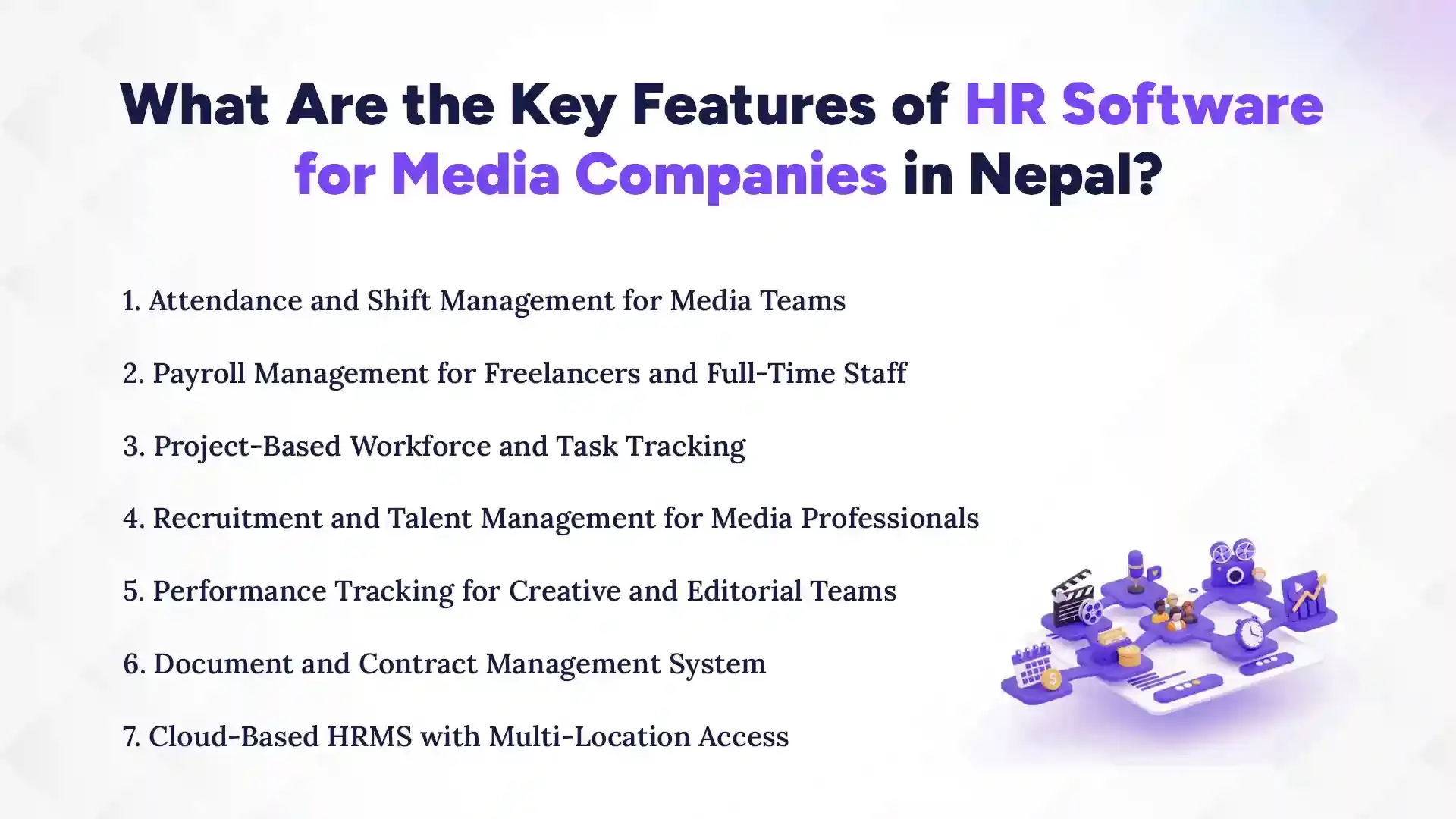
The key features of HR software for media companies in Nepal include tools that manage flexible teams, automate payroll, and support fast-paced, project-based workflows. These systems are designed to handle the unique needs of media organizations, from shift scheduling to freelancer management. A good HRMS combines automation, real-time tracking, and centralized data to improve efficiency and reduce manual work. Simply put, it helps media companies stay organized even when everything else feels a bit chaotic.
1. Attendance and Shift Management for Media Teams
It manages attendance and shift schedules for employees working in dynamic media environments. HR software allows flexible shift planning, real-time attendance tracking, and mobile check-ins for field staff. This is especially useful for journalists and production teams who don’t follow fixed schedules. It ensures accurate records while adapting to last-minute schedule changes.
2. Payroll Management for Freelancers and Full-Time Staff
It automates payroll for both permanent employees and freelancers. The system handles different payment structures, tax deductions, and timely salary processing. This reduces errors and saves time compared to manual calculations. It also ensures transparency, so employees clearly understand their earnings and deductions.
3. Project-Based Workforce and Task Tracking
It helps manage tasks and employees based on projects and assignments. Media companies often work on multiple projects simultaneously, and HR software tracks who is assigned to what. It improves accountability and ensures deadlines are met efficiently. This keeps teams aligned even during high-pressure situations.
4. Recruitment and Talent Management for Media Professionals
It streamlines hiring and talent management processes for media roles. HR software helps post jobs, track applicants, and manage interviews efficiently. This speeds up hiring, which is crucial in a competitive media industry. It also helps identify and retain top creative talent.
5. Performance Tracking for Creative and Editorial Teams
It monitors employee performance based on productivity and output. HR software tracks KPIs like content delivery, deadlines, and quality of work. This helps managers evaluate performance fairly and consistently. It also supports employee growth by identifying strengths and areas for improvement.
6. Document and Contract Management System
It stores and manages all HR-related documents digitally. This includes contracts, agreements, and employee records in one secure place. It eliminates the need for physical paperwork and reduces the risk of lost documents. It also makes accessing important files quick and easy when needed.
7. Cloud-Based HRMS with Multi-Location Access
It allows access to HR systems from anywhere, anytime. Cloud-based HR software is ideal for media teams working across different locations. Employees and managers can update and view information in real time. This improves collaboration and keeps everyone connected, no matter where they are working from.
Benefits of Using HR Software for Media Companies in Nepal
Using HR software for media companies in Nepal helps streamline operations, improve accuracy, and manage dynamic teams more effectively. It reduces manual work, minimizes errors, and brings all HR processes into one centralized system. Understanding the types of hr system can further help media organizations choose the right solution. For media organizations dealing with tight deadlines and diverse workforces, an HRMS creates better coordination and smoother workflows. In short, it turns scattered processes into a more structured and manageable system.
1. Efficient Management of Creative and Operational Teams
HR software makes it easier to manage both creative teams, like journalists and editors, and operational staff in one place. It centralizes employee data, roles, and responsibilities, reducing confusion. Managers can quickly assign tasks and monitor team activities without constant follow-ups. This leads to better coordination and more productive teamwork.
2. Accurate Payroll for Freelancers and Employees
Handling payroll manually for mixed employment types often leads to errors and delays. HR software automates salary calculations, tax deductions, and payments for both freelancers and full-time staff. This ensures timely and accurate payroll processing. It also builds trust among employees by maintaining transparency in payments.
3. Improved Deadline and Shift Coordination
Media companies operate on strict deadlines and flexible shifts, which can be hard to manage manually. HR software helps schedule shifts, track attendance, and adjust plans in real time. This improves coordination across teams and ensures work is completed on time. It reduces last-minute confusion and keeps operations running smoothly.
4. Reduced Administrative Work and Manual Errors
Manual HR processes take time and are prone to mistakes. HR software automates repetitive tasks like attendance tracking, payroll, and record-keeping. This reduces administrative workload and minimizes human errors. As a result, HR teams can focus more on strategic tasks rather than routine paperwork.
5. Better Transparency and Employee Experience
HR software gives employees access to their attendance, payslips, and leave records anytime. This improves transparency and reduces dependency on HR for basic information. Employees feel more informed and engaged with clear visibility into their data. It also creates a more professional and organized work environment.
How to Choose the Best HR Software for Media Companies in Nepal?
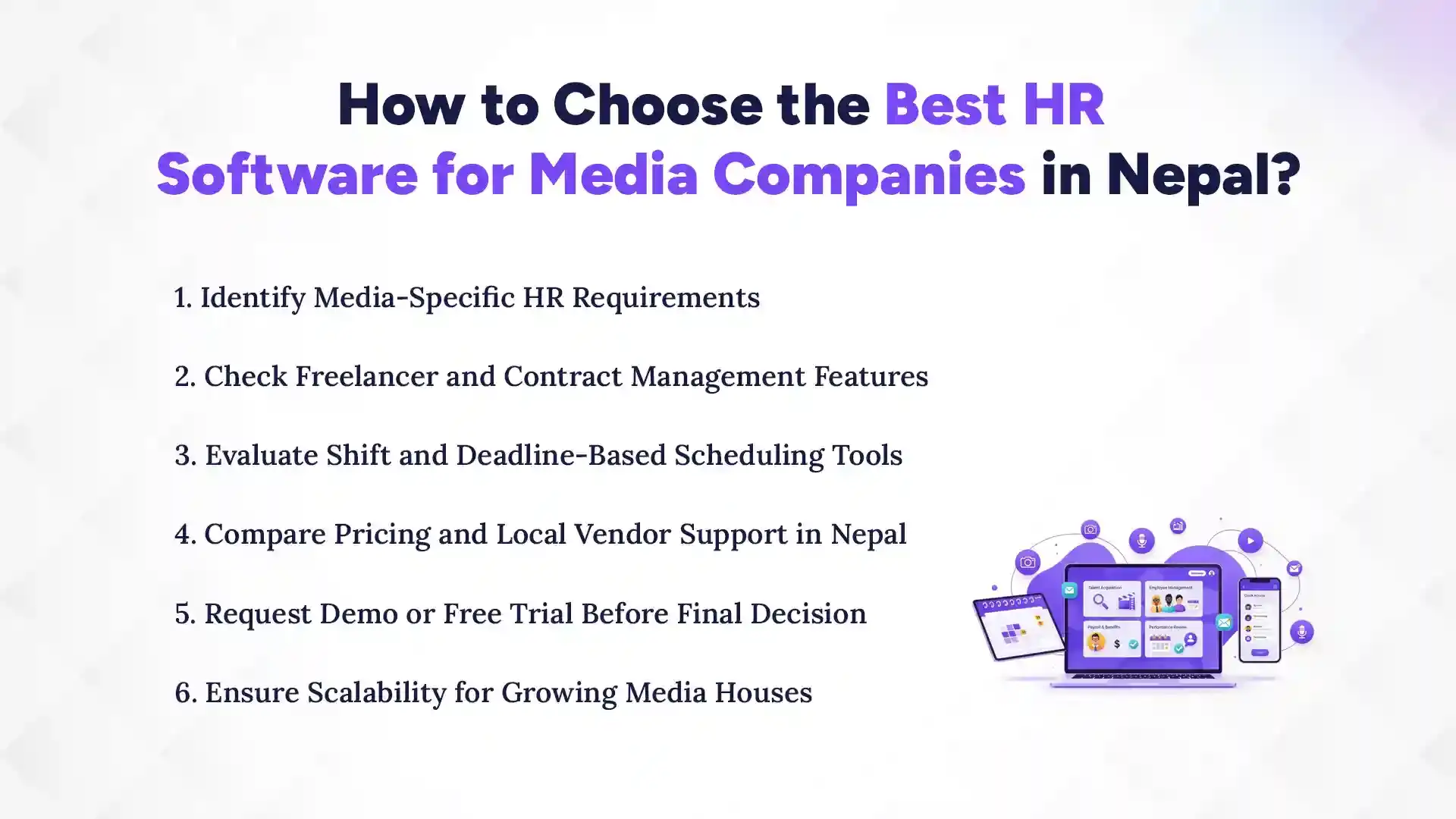
The best HR software for media companies in Nepal should match your workforce structure, workflow complexity, and future growth needs. Since media organizations manage freelancers, shifting schedules, and deadline-driven teams, the right HRMS must be flexible, easy to use, and reliable. If you’re planning to choose best hr software, it should also support payroll, attendance, contracts, and reporting without making things more complicated than they already are. A smart choice fits your current needs but can also grow with your media business over time.
1. Identify Media-Specific HR Requirements
Start by understanding the exact HR challenges your media company faces. Some companies may need better shift scheduling, while others may struggle more with freelancer management or payroll. Choosing software without identifying these needs first is like buying shoes in the dark, it might fit, or it might be a disaster. A clear list of priorities helps you choose a solution that actually solves real problems. It also ensures you don’t end up paying for features you’ll never use.
2. Check Freelancer and Contract Management Features
You should choose HR software that can easily handle freelancers, contributors, and contract-based staff. Media companies often work with people who are not full-time employees, so contract storage, payment tracking, and onboarding tools are important. These features help keep records organized and reduce the risk of missing payments or contract details. It also makes managing external talent a lot less messy. Plus, it saves you from chasing files across emails and folders.
3. Evaluate Shift and Deadline-Based Scheduling Tools
The software should support flexible scheduling for teams working under changing deadlines and irregular shifts. Journalists, editors, and production staff often don’t work fixed hours, so the system must allow quick changes and real-time updates. This helps avoid scheduling conflicts and ensures the right people are available when needed. In media, timing is everything, and your HRMS should understand that. A small delay in scheduling can sometimes lead to a big content gap.
4. Compare Pricing and Local Vendor Support in Nepal
Price matters, but support matters just as much, sometimes even more. Compare software costs carefully and check whether the provider offers local support in Nepal for setup, training, and troubleshooting. A cheaper tool may not be the best deal if it leaves you stuck when problems appear. Reliable support can save both time and a few future headaches. It also ensures faster issue resolution when your team needs help urgently.
5. Request Demo or Free Trial Before Final Decision
Always test the software before making a final decision. A demo or free trial helps you understand how the system works in real-life situations and whether it is user-friendly for your team. It also lets you check if the features actually match what the vendor promised. Honestly, clicking around first is far better than regretting later. It gives your team confidence before fully committing to the tool.
6. Ensure Scalability for Growing Media Houses
Choose HR software that can grow as your company expands. Today, you may have a small editorial team, but tomorrow you might add more departments, branches, or freelancers. A scalable HRMS saves you from switching systems too soon and supports long-term growth. It’s better to think a few steps ahead rather than shop twice. Growth should feel exciting, not like a system upgrade headache.
What Makes HR Software for Media Companies in Nepal Different from Other Industries?
HR software for media companies in Nepal is different because it is designed to handle fast-moving workflows, flexible teams, and real-time coordination that most industries don’t require. Unlike traditional businesses with fixed schedules, media organizations deal with constant changes, tight deadlines, and project-based work. This means HR systems must be more adaptable, responsive, and integrated with daily operations. In short, media HR software isn’t just about management; it’s about keeping up with the pace.
1. Fast-Paced, Deadline-Driven Work Environment
Media companies operate in an environment where timing is everything, and delays are not really an option. HR software must support quick decision-making, instant updates, and flexible task allocation to keep things moving. It helps managers adjust schedules and resources in real time when priorities suddenly change. This ensures that deadlines are met without creating unnecessary confusion. Honestly, in media, even a small delay can feel like a big miss.
2. Hybrid Workforce of Full-Time, Freelance, and Contract Staff
Media companies rely on a mix of full-time employees, freelancers, and contract workers. Managing such a diverse workforce manually can quickly become complicated and messy. HR software helps organize contracts, track payments, and manage different roles in one place. It creates a more structured system where everyone is accounted for properly. This also improves coordination and avoids miscommunication between different types of workers.
3. Need for Real-Time Scheduling and Workforce Updates
Media teams require real-time scheduling because work conditions can change instantly. HR software allows immediate updates to shifts, assignments, and availability without delays. This helps teams stay aligned even during breaking news or urgent production changes. It reduces confusion and ensures that the right people are assigned at the right time. In a way, it acts like a live control room for workforce management.
4. Integration with Content and Production Workflows
Media HR software often integrates with tools used for content creation and production processes. This allows better coordination between HR, editorial, and production teams without switching between multiple platforms. It helps track who is working on which project and ensures smoother workflow management. Such integration improves efficiency and reduces communication gaps. Everything feels more connected, and a bit less chaotic.
Which Is the Best HR Software for Media Companies in Nepal?
Pace HRMS is the HR software for media companies in Nepal because it offers a complete, flexible, and locally compliant solution that fits the fast-paced nature of media operations. It helps manage payroll, attendance, recruitment, performance, and employee records from a single platform, reducing manual work and improving efficiency.
It is especially useful for media companies as it supports flexible work structures, real-time tracking, and cloud-based access, perfect for teams working across newsrooms, field locations, and remote setups. With automation, compliance with Nepali labor laws, and scalable features, Pace HRMS makes managing complex media teams much smoother and more organized.
Common Challenges Media Companies Face Without HR Software
Without HR software, media companies in Nepal often struggle with inefficiency, errors, and lack of proper coordination across teams. Managing a fast-paced workforce manually becomes overwhelming, especially when dealing with freelancers, shifting schedules, and tight deadlines. Important data gets scattered, processes slow down, and small mistakes start creating bigger problems over time. In short, things don’t just get messy, they get stressful pretty quickly.
1. Manual HR Processes and Workflow Inefficiencies
Handling HR tasks manually through spreadsheets, emails, and paperwork consumes a lot of time and energy. It increases the chances of errors, duplication, and miscommunication between teams. Simple tasks like updating attendance or approving leave can turn into long processes. This slows down overall productivity and creates unnecessary frustration for both HR and employees. Over time, inefficiency becomes the highest hidden cost.
2. Payroll Errors for Freelancers and Contract Staff
Manual payroll processing often leads to errors, especially with freelancers and contract workers. Different payment structures, inconsistent work hours, and a lack of proper tracking make calculations complicated. Mistakes in payments can lead to dissatisfaction and trust issues among workers. Fixing these errors later takes even more time and effort. And honestly, payroll mistakes are the quickest way to upset your team.
3. Difficulty Managing Shifts and Deadlines
Media companies rely heavily on proper scheduling to meet deadlines, but without HR software, managing shifts becomes chaotic. Last-minute changes are hard to track, and miscommunication can lead to missed assignments. Teams may not clearly know their schedules or responsibilities. This affects productivity and delays project completion. In a deadline-driven industry, even small scheduling issues can create big problems.
4. Lack of Real-Time Workforce Visibility
Without HR software, managers lack real-time insight into employee availability and task progress. It becomes difficult to know who is working, who is available, and what tasks are pending. This lack of visibility leads to poor decision-making and inefficient resource allocation. Managers often have to rely on guesswork instead of actual data. And guesswork rarely works well in a fast-moving environment.
5. Poor Coordination Between Editorial and Production Teams
Coordination between editorial and production teams is crucial in media companies, but manual systems make it harder to stay aligned. Miscommunication can lead to delays, duplicated work, or missed deadlines. Teams may not have access to updated information at the right time. This creates confusion and disrupts workflow. A lack of coordination ultimately affects the quality and timeliness of content delivery.
Future of HR Software for Media Companies in Nepal
The future of HR software for media companies in Nepal is becoming smarter, more flexible, and deeply integrated with daily operations. As media organizations evolve, HRMS solutions are shifting from basic management tools to intelligent systems that support decision-making and real-time coordination. Automation, AI, and cloud technology are playing a bigger role in simplifying complex workflows. In the coming years, HR software will not just manage teams, it will help optimize how media companies operate.
1. AI-Based Workforce and Content Team Analytics
AI is transforming how media companies understand and manage their workforce. HR software will use data to analyze employee performance, productivity, and work patterns more accurately. This helps managers make better decisions about task allocation and team efficiency. It can even predict workload trends and identify gaps before they become problems. Over time, this leads to smarter planning and improved overall performance.
2. Mobile HRMS for Field Journalists and Remote Teams
Mobile HRMS allows employees to access HR tools anytime, anywhere using their smartphones. This is especially useful for journalists and media teams working in the field or remotely. They can mark attendance, check schedules, and communicate with HR without being in the office. It improves flexibility and keeps everyone connected in real time. Basically, HR moves with the employee instead of staying stuck in the office.
3. Integration with Media Production and CMS Tools
Future HR software will integrate with content management systems and production tools used in media companies. This creates a seamless connection between HR, editorial, and production workflows. Managers can track both workforce and project progress from a unified system. It reduces the need to switch between multiple platforms. Everything becomes more connected, efficient, and easier to manage.
4. Digital Transformation in Media Workforce Management
Digital transformation is pushing media companies to move away from manual HR processes completely. HR software will become more automated, reducing paperwork and repetitive tasks. This allows HR teams to focus more on strategy rather than routine operations. It also improves accuracy, speed, and overall efficiency. In simple terms, HR will become faster, smarter, and a lot less stressful to manage.
Conclusion
Managing HR in media companies isn’t just about tracking attendance or processing payroll, it’s about handling a fast-moving, unpredictable workforce where every minute matters. From journalists in the field to freelancers working on tight deadlines, the complexity is real and often overwhelming without the right system in place. HR software helps bring structure to this chaos by automating processes, improving coordination, and giving you real-time visibility into your workforce.
If you’re running a media company in Nepal, investing in the right HRMS is no longer optional; it’s a smart move for long-term efficiency and growth. The key is to choose a solution that fits your workflow, supports flexibility, and scales as your team grows. Considering trusted providers like The Pace Infosys can help you make a more informed decision. Start with your needs, test your options, and take that step toward a more organized and stress-free HR management system.