


Running an airline isn’t just about flights taking off on time, it’s about managing pilots, cabin crew, ground staff, and nonstop operations without a single slip. And honestly, when shifts run 24/7, and compliance rules are tight, even small HR mistakes can turn into big operational headaches real quick.
In this blog, we’ll explore HR Software For Airlines in Nepal and how the right HRMS can simplify crew scheduling, payroll, compliance, and workforce management. We’ll also break down key features, benefits, and practical tips to help you choose the best HR software for your airline operations without overcomplicating things.
What Is HR Software For Airlines?
HR software for airlines is a specialized HR management system designed to handle workforce operations like crew scheduling, payroll, compliance, and employee management in the aviation industry. It helps airlines manage pilots, cabin crew, and ground staff efficiently using hr software while ensuring adherence to aviation regulations. In simple terms, it replaces manual HR processes with automated systems, making workforce coordination smoother, faster, and way less error-prone.
Why Airlines in Nepal Need Specialized HR Software?
Airlines in Nepal need specialized HR software because managing a highly dynamic, regulated, and shift-based workforce manually is inefficient and risky. From pilots to ground staff, every role requires precise coordination, compliance tracking, and real-time updates. A dedicated HRMS helps streamline operations, highlighting the benefits of using hr software, reduce errors, and ensure everything runs smoothly, even when things get a little chaotic behind the scenes.
1. Managing Pilots, Cabin Crew, and Ground Staff Efficiently
Airlines deal with multiple workforce categories, each with different responsibilities, schedules, and compliance needs. Managing pilots, cabin crew, and ground staff manually can quickly become confusing and prone to mistakes. HR software centralizes employee data, making it easier to assign roles, track availability, and coordinate between departments. It also ensures that the right people are in the right place at the right time, because in aviation, timing really is everything.
2. Handling 24/7 Shift-Based and Rotational Work Schedules
Airline operations never stop, which means employees work in rotating shifts, night duties, and standby schedules. Managing this manually often leads to overlaps, missed shifts, or overworked staff. HR software automates shift planning, making scheduling more accurate and balanced. It also helps track working hours and ensures fair distribution of shifts, reducing fatigue and improving overall efficiency.
3. Ensuring Compliance with Aviation and Labor Regulations
The aviation industry is heavily regulated, and even small compliance errors can lead to serious consequences. Airlines must follow strict rules related to working hours, certifications, and documentation. HR software helps maintain compliance by keeping records updated, tracking legal requirements, and generating audit-ready reports. This not only reduces legal risks but also gives peace of mind to management.
4. Streamlining Payroll for Diverse Airline Workforce
Payroll in airlines is rarely straightforward; it includes basic salaries, flying allowances, overtime, bonuses, and other benefits. Handling this manually increases the chances of errors and delays. HR software automates payroll calculations, ensuring accuracy and timely payments. It also manages tax deductions and compliance, making the entire payroll process smoother and more transparent.
5. Managing Certifications, Training, and License Renewals
Pilots and cabin crew must maintain valid licenses and undergo regular training to stay compliant and operational. Tracking these manually can lead to missed renewals or outdated certifications. HR software helps by storing certification data, sending reminders for renewals, and managing training schedules. This ensures that all staff remain qualified, which is critical for both safety and regulatory compliance.
What Are the Key Features of HR Software For Airlines in Nepal?
The key features of HR software for airlines in Nepal include crew scheduling, payroll automation, compliance tracking, attendance management, and real-time workforce visibility. These features are designed to handle the complexity of airline operations where timing, accuracy, and compliance are critical. A good HRMS doesn’t just manage employees, it helps airlines operate smoothly without constant manual intervention (which, let’s be honest, usually creates more problems than it solves).
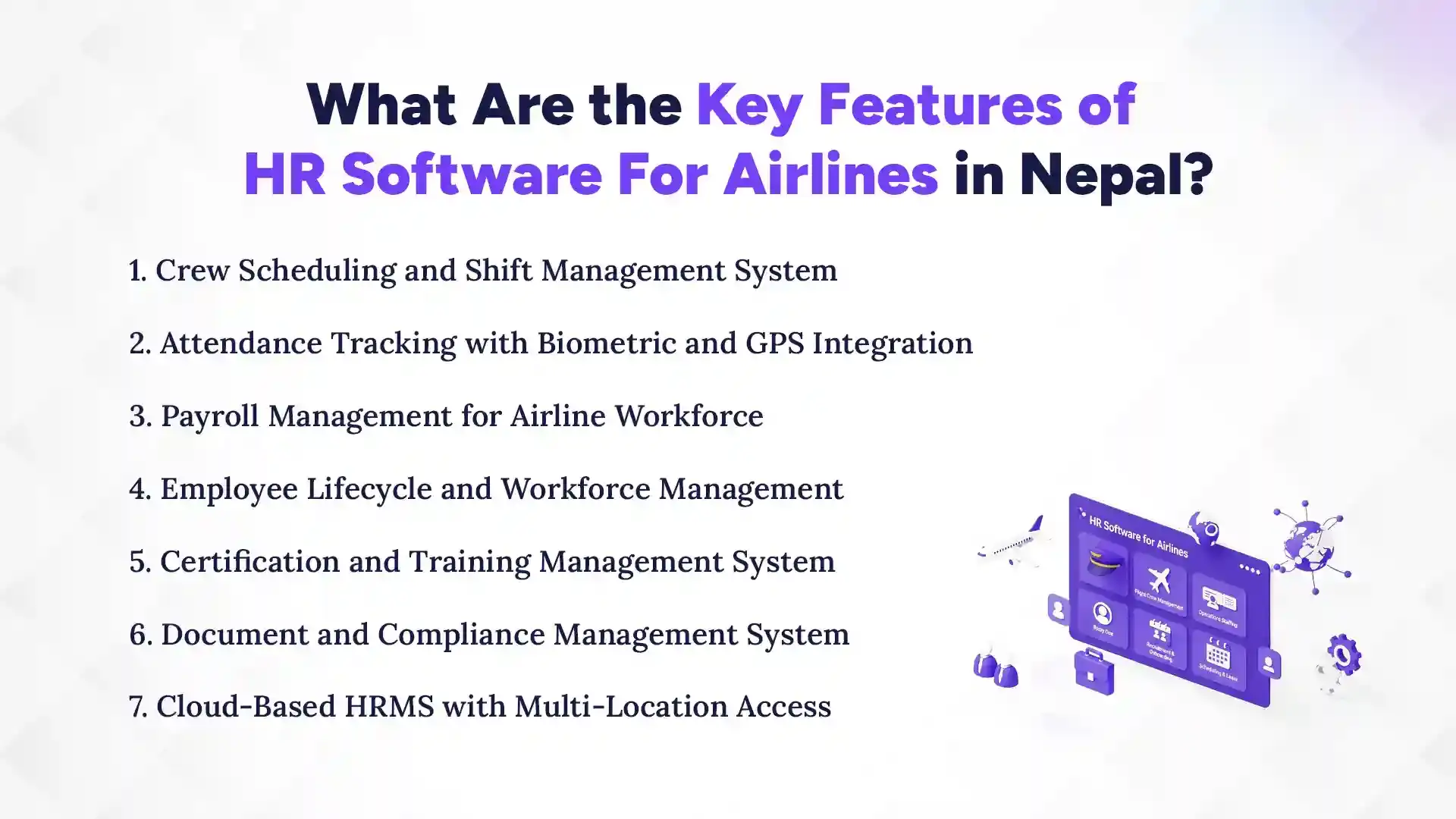
1. Crew Scheduling and Shift Management System
Airlines operate on tight schedules, and even a small error in crew assignment can disrupt operations. A crew scheduling system helps automate roster planning based on availability, roles, and regulatory limits. It allows HR teams to manage shifts, standby duties, and rotations without confusion. Real-time updates ensure quick adjustments during delays or emergencies, keeping operations running without unnecessary chaos.
2. Attendance Tracking with Biometric and GPS Integration
Tracking attendance in airlines isn’t as simple as office check-ins, since employees work across airports and locations. HR software uses biometric devices and GPS-based tracking to monitor real-time attendance accurately. This eliminates issues like buddy punching and manual errors. It also provides instant visibility into employee presence, which is crucial for managing time-sensitive airline operations.
3. Payroll Management for Airline Workforce
Payroll in airlines includes multiple components like basic salary, flying hours, allowances, overtime, and bonuses. HR software automates these complex calculations, ensuring accuracy and timely processing. It also handles tax deductions and compliance with Nepal’s regulations. This reduces payroll disputes and builds trust among employees, because nothing frustrates staff more than incorrect salaries.
4. Employee Lifecycle and Workforce Management
Managing employees from hiring to exit is a continuous process, especially in a high-turnover industry like aviation. HR software streamlines recruitment, onboarding, performance tracking, promotions, and exits in one system. It centralizes employee data, making it easier for HR teams to manage records and make informed decisions. This improves overall workforce efficiency and reduces administrative workload.
5. Certification and Training Management System
Airline staff must regularly update certifications and complete mandatory training programs. HR software tracks licenses, training schedules, and expiry dates automatically. It sends alerts before certifications expire, helping avoid compliance issues. This ensures that all employees remain qualified and operational, which is essential for both safety and regulatory standards.
6. Document and Compliance Management System
Airlines deal with a large volume of employee documents, contracts, and compliance records. HR software securely stores and organizes these documents in one place for easy access. It also ensures that records are audit-ready and up to date. This reduces paperwork, minimizes risk of lost documents, and simplifies compliance management significantly.
7. Cloud-Based HRMS with Multi-Location Access
Airlines operate across multiple locations, so HR teams need access to data anytime, anywhere. A cloud-based HRMS allows real-time access from airports, offices, or remote locations. It ensures data synchronization across departments and supports scalability as the airline grows. Plus, it makes collaboration easier, no more chasing files across different systems or emails.
Ready to Accelerate Your Digital Growth?
Partner with The Pace Infosys to build scalable web and mobile solutions tailored to your business goals.
Benefits of Using HR Software For Airlines in Nepal
Using HR software for airlines in Nepal brings structure and control to what is otherwise a very complex workforce environment. With multiple roles, nonstop operations, and strict compliance requirements, manual HR processes simply can’t keep up. An HRMS helps organizations implement hr software to automate routine tasks, improve accuracy, and provide real-time visibility into workforce operations. It also reduces risks, saves time, and allows HR teams to focus more on strategy rather than fixing day-to-day issues, which, honestly, happens a lot without the right system.
1. Efficient Management of Airline Workforce
Managing pilots, cabin crew, and ground staff becomes much easier with a centralized system. HR software allows better coordination across departments and ensures proper role assignments and scheduling. It reduces confusion, avoids overlaps, and improves overall workforce organization. With everything in one place, HR teams can manage operations more smoothly without constant back-and-forth. It also helps in quick decision-making when sudden changes happen in operations.
2. Accurate Payroll and Compliance Handling
Payroll accuracy is critical in airlines due to multiple pay components like allowances, overtime, and bonuses. HR software automates calculations, ensuring employees are paid correctly and on time. It also helps maintain compliance with labor laws and aviation regulations by keeping records updated. This reduces legal risks and builds trust among employees. Over time, it also minimizes payroll disputes and improves financial transparency within the organization.
3. Better Crew Scheduling and Productivity
Efficient scheduling directly impacts airline productivity and operations. HR software optimizes crew assignments based on availability, workload, and compliance rules. It minimizes scheduling conflicts and helps distribute work fairly among employees. As a result, staff fatigue is reduced and productivity improves, which ultimately supports smoother flight operations. It also allows quick rescheduling during delays or emergencies without disrupting the workflow.
4. Reduced Manual HR Tasks and Errors
Manual HR processes are time-consuming and often lead to errors, especially in a fast-paced industry like aviation. HR software automates tasks such as attendance tracking, payroll processing, and record management. This not only saves time but also significantly reduces the chances of mistakes. HR teams can then focus on more important tasks instead of repetitive admin work. It also improves overall efficiency by speeding up daily HR operations.
5. Improved Employee Experience and Transparency
A good HRMS improves communication and transparency within the organization. Employees can access their attendance, payroll details, and documents easily through self-service portals. This reduces dependency on HR for basic queries and builds trust. When employees feel informed and valued, overall satisfaction and engagement naturally improve. It also creates a more open and accountable workplace culture over time.
How to Choose the Best HR Software For Airlines in Nepal?
You can choose the best HR software for airlines in Nepal by evaluating crew scheduling capabilities, compliance features, payroll accuracy, scalability, and local vendor support. The how to choose hr software approach should focus on matching airline-specific operational needs while ensuring smooth workforce coordination. It should also be easy to use, flexible enough to adapt, and reliable under pressure, because airline operations don’t really give second chances.
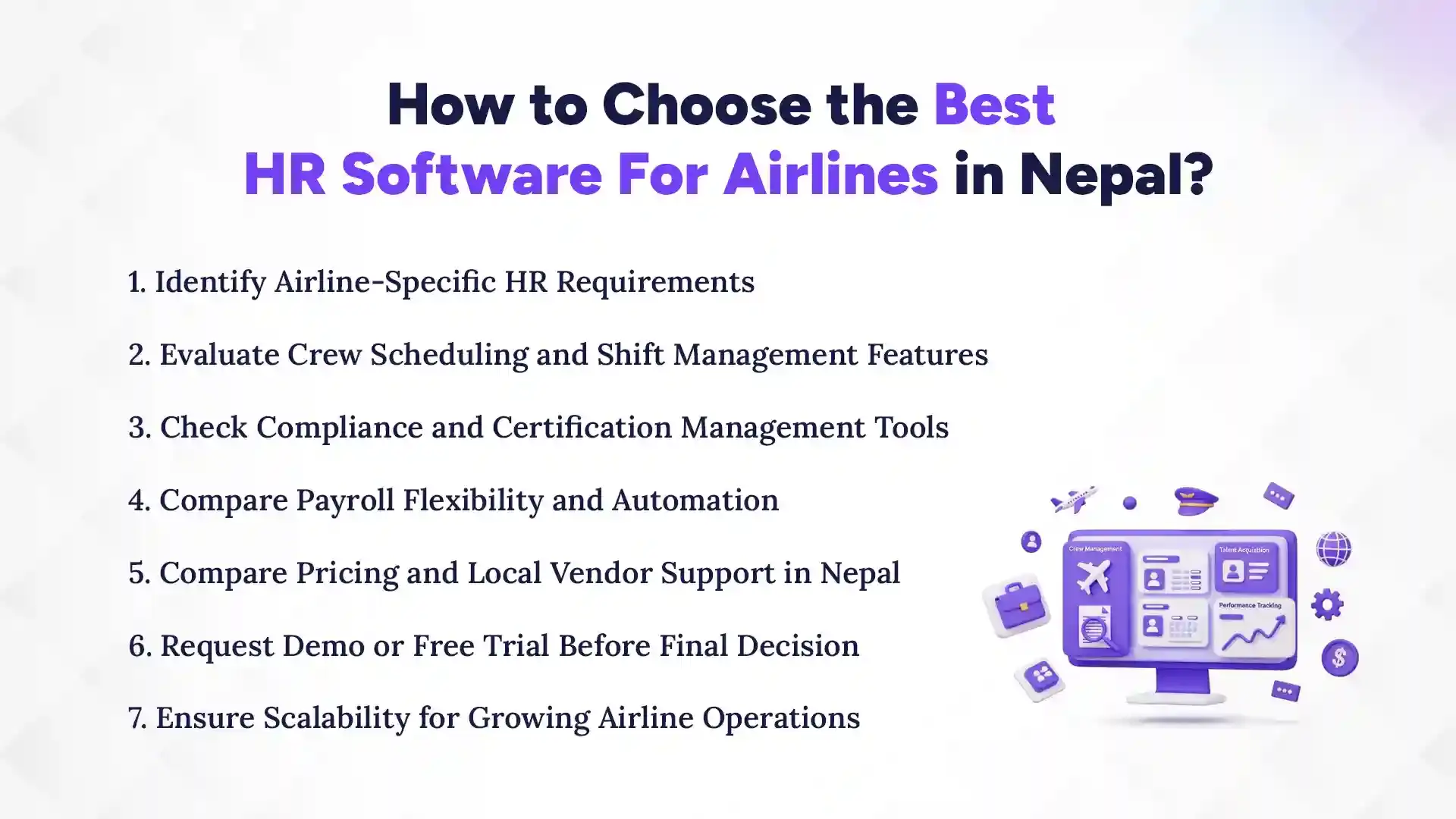
1. Identify Airline-Specific HR Requirements
Every airline has a unique workforce structure, including pilots, cabin crew, and ground staff with different responsibilities. Before choosing software, it’s important to understand your exact HR needs based on operations. This includes scheduling complexity, compliance requirements, and workforce size. A clear understanding helps you avoid selecting generic tools that don’t fit aviation demands. It basically sets the foundation for making the right decision.
2. Evaluate Crew Scheduling and Shift Management Features
Crew scheduling is one of the most critical aspects of airline HR operations. The software should support automated roster planning, shift rotations, and real-time updates. It must also handle last-minute changes without disrupting operations. A strong scheduling system ensures better coordination and reduces employee fatigue. If this feature is weak, everything else kinda starts falling apart.
3. Check Compliance and Certification Management Tools
Airlines must follow strict aviation and labor regulations, so compliance features are non-negotiable. The software should track certifications, licenses, and regulatory requirements automatically. It should also generate audit-ready reports and maintain proper documentation. This reduces legal risks and ensures your airline stays compliant at all times. Missing even one compliance detail can cause serious trouble, so this part matters a lot.
4. Compare Payroll Flexibility and Automation
Payroll in airlines involves multiple components like allowances, overtime, bonuses, and deductions. The HR software should be flexible enough to handle these variations accurately. Automation ensures timely salary processing and reduces manual errors. It should also comply with Nepal’s tax regulations. A reliable payroll system keeps employees satisfied and avoids unnecessary disputes.
5. Compare Pricing and Local Vendor Support in Nepal
Cost is important, but it shouldn’t be the only deciding factor. You need to compare pricing with the value and features offered by the software. Local vendor support in Nepal is also crucial for implementation, training, and ongoing assistance. Having a responsive support team can save a lot of time when issues arise. Sometimes, paying a bit more upfront saves bigger problems later.
6. Request Demo or Free Trial Before Final Decision
Never choose HR software without testing it first. A demo or free trial allows you to understand how the system works in real scenarios. You can evaluate usability, features, and overall performance. It also helps identify any limitations before committing. This step often reveals things you wouldn’t notice just by reading feature lists.
7. Ensure Scalability for Growing Airline Operations
Airlines grow over time, and your HR software should grow with you. The system must support increasing workforce size, multiple locations, and expanded operations. Scalable software prevents the need for frequent replacements or upgrades. It also ensures long-term efficiency and cost savings. Choosing a scalable solution now avoids headaches in the future.
What Makes HR Software For Airlines in Nepal Different from Other Industries?
HR software for airlines in Nepal is different from other industries because it must handle real-time operations, strict regulatory requirements, and a highly dynamic workforce environment. Unlike typical businesses, airlines operate 24/7 and require instant coordination between multiple teams. This makes aviation HRMS more complex, responsive, and compliance-focused than standard HR systems.
1. 24/7 Operational and Time-Sensitive Work Environment
Airlines operate non-stop, which means HR systems must support continuous workforce management without delays. Employees work in shifts, standby duties, and emergency schedules that can change anytime. HR software needs to handle these time-sensitive operations smoothly and accurately. Even small scheduling errors can impact flight operations. That’s why real-time functionality is absolutely essential here.
2. Highly Regulated Aviation Industry Requirements
The aviation industry follows strict rules set by regulatory authorities, making compliance a top priority. HR software must track employee working hours, certifications, and safety requirements carefully. It should also maintain detailed records for audits and inspections. Missing compliance details can lead to serious penalties or operational risks. So the system needs to be very precise and reliable.
3. Complex Workforce Structure (Crew + Ground Staff)
Airlines have a diverse workforce that includes pilots, cabin crew, engineers, and ground staff. Each group has different schedules, responsibilities, and compliance needs. Managing all of them under one system requires flexibility and accuracy. HR software must support multiple roles and workflows without confusion. This complexity makes airline HR management quite different from other industries.
4. Critical Need for Real-Time Scheduling and Updates
Flight schedules can change at any moment due to delays, weather, or operational issues. HR software must provide real-time updates to ensure proper crew allocation and coordination. It allows quick adjustments without disrupting operations. This level of responsiveness is not as critical in most other industries. In airlines, though, it’s pretty much non-negotiable.
Which Is the Best HR Software For Airlines in Nepal?
Pace HRMS is the best HR software for airlines in Nepal because it offers a centralized platform to manage payroll, attendance, employee records, recruitment, and performance in one system. It is cloud-based, scalable, and designed to handle complex workforce operations with accuracy and efficiency.
It also provides automation, real-time data access, and compliance support aligned with Nepalese regulations, which is crucial for airline operations. With features like shift management, biometric attendance, and employee self-service, solutions like The Pace Infosys help reduce manual workload and improve overall HR efficiency.
Common Challenges Airlines Face Without HR Software
Without HR software, airlines often struggle to manage their workforce efficiently due to the complexity of operations and constant scheduling demands. Manual processes slow everything down and increase the chances of errors in payroll, attendance, and compliance. This not only affects internal efficiency but can also impact overall flight operations. Over time, these small issues start piling up, and yeah, they can become pretty costly.
1. Manual HR Processes and Scheduling Errors
Handling HR tasks manually in airlines can quickly become overwhelming, especially with multiple departments and shift-based roles. Scheduling errors like overlaps, missed assignments, or incorrect rosters are quite common. These mistakes can disrupt operations and create confusion among staff. It also increases the workload for HR teams who have to constantly fix issues. Overall, manual systems make the entire process slower and less reliable.
2. Payroll Issues for Diverse Workforce
Airline payroll is complex, involving salaries, allowances, overtime, and bonuses for different roles. Without automation, calculating payroll manually often leads to mistakes and delays. Employees may receive incorrect payments, which can cause dissatisfaction and trust issues. It also becomes harder to manage tax compliance accurately. Over time, payroll errors can seriously impact employee morale and company credibility.
3. Difficulty Managing Crew and Shift Rotations
Managing rotating shifts and crew schedules without proper tools is extremely challenging. Airlines require precise coordination, and even a small mismatch can affect operations. Manual scheduling makes it difficult to balance workloads and avoid employee fatigue. It also limits flexibility when sudden changes occur. This results in inefficiency and unnecessary stress for both employees and HR teams.
4. Lack of Real-Time Workforce Visibility
Without HR software, it’s difficult to track who is working, who is on leave, or who is available in real time. This lack of visibility creates delays in decision-making and reduces operational efficiency. Managers often rely on outdated or incomplete information. It also makes it harder to respond quickly to unexpected situations. In a fast-moving environment like aviation, this can be a serious drawback.
5. Compliance Risks and Documentation Issues
Airlines must follow strict labor and aviation regulations, and manual systems make compliance tracking difficult. Important documents can be misplaced, outdated, or incomplete. This increases the risk of failing audits or facing legal penalties. HR teams also spend more time managing paperwork instead of focusing on strategic tasks. In the long run, poor compliance management can lead to major operational risks.
Future of HR Software For Airlines in Nepal
The future of HR software for airlines in Nepal is moving toward smarter, faster, and more automated systems that can handle complex workforce demands with ease. As airline operations grow, HRMS solutions will become more data-driven and predictive rather than just administrative. Technology will play a bigger role in improving efficiency, compliance, and decision-making. In simple terms, HR in airlines is slowly shifting from manual control to intelligent management, and honestly, it’s about time.
1. AI-Based Crew Scheduling and Workforce Optimization
AI is transforming how airlines manage crew scheduling by predicting demand, availability, and optimal shift allocation. Instead of manual planning, AI can automatically assign the right crew based on workload, regulations, and fatigue limits. This reduces scheduling conflicts and improves efficiency. It also helps airlines make better workforce decisions using data insights. Over time, AI will make HR operations more proactive rather than reactive.
2. Mobile HRMS for Pilots and Cabin Crew
With employees constantly on the move, mobile HRMS solutions are becoming essential. Pilots and cabin crew can access schedules, attendance, payroll, and updates directly from their smartphones. This improves communication and reduces dependency on HR departments. It also allows real-time updates and quick responses to schedule changes. Mobile access basically makes HR more accessible and convenient for everyone involved.
3. Integration with Aviation and Flight Management Systems
Modern HR software is expected to integrate with aviation systems like flight scheduling and operational tools. This creates a seamless connection between HR and flight operations. It allows better coordination of crew assignments based on real-time flight data. Integration reduces manual data entry and improves accuracy. In the long run, it helps airlines operate more efficiently with synchronized systems.
4. Digital Transformation in Airline HR Operations
Airlines are gradually moving toward fully digital HR processes to improve speed and accuracy. Paper-based systems are being replaced by cloud-based platforms and automated workflows. This transformation reduces administrative workload and enhances data management. It also improves transparency and decision-making through analytics. As digital adoption grows, HR operations will become more streamlined and scalable.
Conclusion
Choosing the right HR software for airlines in Nepal isn’t just about features, it’s about finding a system that actually understands the complexity of airline operations. From crew scheduling and compliance to payroll and real-time workforce management, everything needs to work smoothly without constant manual fixes. A well-implemented HRMS can reduce errors, save time, and bring much-needed clarity to daily operations, which, honestly, airlines can’t afford to ignore.
In the end, the best approach is to focus on your airline’s specific needs and choose a solution that is scalable, reliable, and easy to use. Investing in the right HR software today can prevent bigger operational challenges tomorrow. So take your time, evaluate properly, and choose smartly, because when your HR runs well, everything else tends to follow, check out HR software for pharmaceutical companies in Nepal.