
.webp&w=3840&q=75)
Imagine walking into your design studio in Kathmandu, ready to sketch a beautiful new building, but instead, you get hit by a mountain of unreturned client calls, lost sticky notes, and messy Viber messages.
It is frustrating, right?
Many brilliant architects in Nepal face this exact headache every single day because managing clients is just as hard as designing structures. You pour your hearts into blueprints, yet we lose track of who we need to follow up with or when a site visit is scheduled.
If this sounds all too familiar, don't worry.
This guide is here to help you clear the clutter and reclaim your time. We are going to look at how a Customer Relationship Management (CRM) tool can organize your business, save your sanity, and help your firm grow with the best CRM for architecture firms in Nepal.
What Is a CRM for Architecture Firms?
At its heart, a CRM is like a digital brain for your business relationships. Instead of writing client details on paper or keeping them in your head, you put everything in one safe, online place. It helps you track everyone who contacts your firm, from the very first phone call to the final handover of the keys.
You might think this sounds like a normal project management tool, but they are actually quite different. While tools like Trello or Asana focus on tasks like drawing deadlines, a CRM focuses on the people behind those tasks. It tells you who the client is, what they want, and how they feel about your work.
For an architecture firm to succeed, you really need to see both sides of the coin. You need to know if a project is on time, but you also need to know if the client is happy and when they need to pay. A CRM ties these two worlds together so you never have to guess.
Challenges Architecture Firms in Nepal Commonly Face
Architecture firms in Nepal often struggle with managing client communication, tracking project progress, coordinating teams, and maintaining consistent follow-ups. As projects become more complex, relying on spreadsheets, notes, and manual processes makes it harder to stay organized and deliver a smooth client experience.
Here are some of the most common challenges that limit efficiency and growth for architecture firms:
- Losing potential projects due to missed follow-ups
- Client conversations scattered across multiple platforms
- Difficulty tracking projects from inquiry to completion
- Important client details buried in spreadsheets and notes
- Struggling to manage multiple projects at once
- Poor coordination between teams and stakeholders
- Limited visibility into project profitability
These challenges can slow down project delivery, impact client satisfaction, and limit business growth. Fortunately, the right CRM software addresses these issues with tools designed to organize client information, streamline communication, and improve project visibility.
Key CRM Features Architecture Firms Should Look For
When looking for a CRM, architecture firms should focus on features like pipeline tracking, client contact lists, and document storage to keep their work organized. These tools ensure that your team does not spend hours searching for old files or trying to remember client agreements. Here are the essential CRM features you should keep an eye out for when choosing your new system.
1. Lead and Opportunity Management
A lead management feature in CRM helps you capture and track every potential project from the moment someone asks about your services. You can assign leads to different designers, set response deadlines, and see which marketing channels bring in the most high-value clients. Instead of forgetting about an inquiry, you can guide each potential client step-by-step toward signing a contract. It keeps your sales pipeline moving forward without any manual guesswork.
2. Contact and Client Database
A rich contact database stores all client phone numbers, email addresses, social media links, and personal notes in one secure location. You can easily tag clients by their project types, like residential or commercial, to send them relevant design updates later. A contact management system also allows you to save previous feedback so you always remember their specific taste in materials or colors. This creates a deeply personalized experience that makes clients feel truly heard and respected.
3. Proposal and Document Management
This feature allows you to create, send, and store your project proposals and cost estimates directly within the platform. You can upload floor plans, contract drafts, and municipal approval documents so they are always linked to the correct client profile. When a client requests a change, you can update the document quickly and track the version history easily. This keeps your legal and design paperwork perfectly organized and safe from being lost.
4. Task and Activity Tracking
You can set clear daily tasks and deadlines for your team members, such as calling a client or finishing a 3D model. The system automatically alerts designers when a task is due, reducing missed deadlines and internal confusion. You can also log all client meetings, phone calls, and site visits to keep a clear history of what was discussed. This ensures accountability and keeps your projects moving forward on schedule.
5. Project Pipeline Management
This visual tool shows your projects moving through stages like initial consultation, schematic design, municipal approval, and construction. You can drag and drop projects from one stage to another as they progress, giving you a birds-eye view of your business. It helps you see where bottlenecks occur, like if projects get stuck waiting for government permits. This allows you to fix problems quickly before they delay your client's move-in date.
6. Email and Communication History
By linking your work email to the CRM, every email sent between your team and your client is automatically saved. This means anyone on your team can read past conversations to understand a client's needs without asking for forwards. It prevents miscommunication and ensures that clients do not have to repeat themselves to different staff members. This feature keeps all your communications clear, professional, and easily searchable.
7. Reporting and Business Analytics
This tool gives you visual reports on your firm's performance, including monthly sales, team productivity, and active lead sources. You can easily see which type of architecture projects bring in the most money and which ones take too much time. These insights help you make smart, data-backed decisions about where to spend your marketing budget and who to hire next. It turns your raw business data into a clear plan for future growth.
8. Mobile Access for Site Visits and Meetings
Architects spend a lot of time out of the office checking on construction sites or meeting clients. A mobile-friendly CRM lets you access client contact details, upload site photos, and write notes directly from your phone. You can quickly update project statuses while standing on the building site, keeping your office team updated in real time. This keeps everyone connected, no matter where they are working in Nepal.
How Architecture Firms Use CRM Throughout the Client Journey
Architecture firms use CRM to manage every stage of the client journey, from capturing inquiries and tracking proposals to coordinating projects and maintaining long-term relationships. It keeps client information, project updates, and communication organized in one place, helping teams work more efficiently and respond faster. Let us look at how CRM supports architects throughout each step of the client lifecycle.
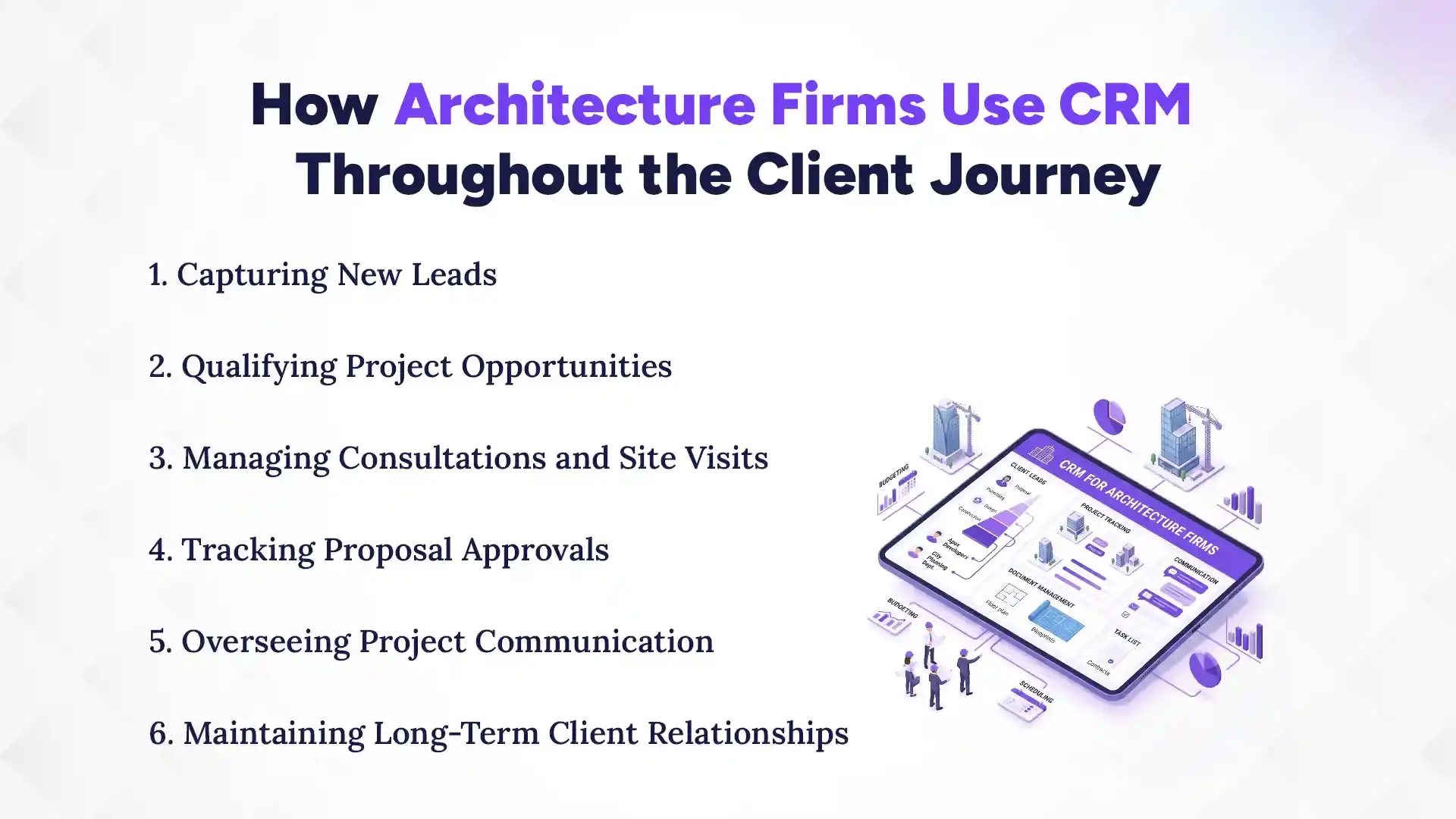
1. Turn Every Inquiry Into a Qualified Project Opportunity
A CRM automatically captures inquiries from different sources and stores them in one place. This prevents potential projects from being overlooked or forgotten. Teams can then review requirements, budgets, and timelines before investing time in discussions. As a result, architects can focus on opportunities that are most likely to move forward.
2. Prioritize High-Value Projects With Better Lead Qualification
Not every inquiry is the right fit for your firm, and a CRM helps identify the best opportunities quickly. Teams can categorize prospects based on project size, location, budget, and urgency. This makes it easier to allocate resources to the most profitable projects. Consequently, firms spend less time chasing low-value leads.
3. Streamline Consultations, Meetings, and Site Visits
A CRM helps schedule consultations, site visits, and follow-up meetings without missing important dates. It also keeps notes, requirements, and client feedback attached to each project record. This ensures everyone involved has access to the same information. As a result, meetings become more productive and better organized.
4. Track Proposals and Approvals Without Losing Momentum
After sending a proposal, a CRM tracks its status and reminds teams when follow-ups are needed. This reduces the risk of opportunities going cold due to delayed communication. Teams can also monitor which proposals are awaiting client approval. Consequently, firms can maintain momentum and improve conversion rates.
5. Keep Project Communication Organized and Accessible
Architecture projects involve frequent communication between clients, consultants, contractors, and internal teams. A CRM records emails, calls, updates, and discussions in a single location. This creates a clear communication history that anyone can access when needed. As a result, misunderstandings and information gaps are significantly reduced.
6. Build Stronger Client Relationships
A CRM continues delivering value even after a project is completed. Firms can schedule follow-ups, request referrals, and stay connected with past clients through regular communication. This helps keep the business top of mind for future projects. Over time, stronger relationships lead to repeat business and more referrals.
How to Choose the Right CRM for an Architecture Firm in Nepal?
Choosing the right CRM for your Nepali architecture firm comes down to finding software that is easy for your designers to use, fits your local project workflows, and offers local customer support. When the software is simple and backed by team members who understand the local market, your studio will actually use it daily to secure more clients. Let us look at the main things you should keep in mind to make the best choice for your growing team.
1. Ease of Use for Design Teams
Architects love beautiful, simple things. If a software is too ugly or hard to navigate, your design team simply will not use it, and you will waste your money. Look for a clean interface that feels natural to use.
2. Customizable Sales and Project Pipelines
Every architecture firm in Nepal works a little differently. Your CRM should let you customize the stages of your pipeline to match your specific workflow, from initial sketches to municipal approval.
3. Local Support and Implementation Assistance
When you have a question or run into an issue, you do not want to wait days for an email response from an overseas company. Choosing a provider with local support in Nepal makes setup and troubleshooting much faster and easier.
4. Scalability for Growing Firms
You might be a small team of two today, but you want to grow. Choose a tool that can easily grow with you, allowing you to add more users and features as you win bigger projects.
5. Integration With Existing Business Tools
Your firm likely uses tools like Google Calendar, Gmail, or accounting software. Your CRM should connect with these apps smoothly so you do not have to type the same information in multiple places.
Why Nepali Architecture Firms Are Adopting CRM Solutions
As Nepal's construction and design industry becomes more competitive, architecture firms need better ways to manage clients, projects, and daily operations. Modern clients expect faster communication, greater transparency, and a smoother experience throughout the project lifecycle. As a result, more firms are turning to CRM software to stay organized, improve efficiency, and support long-term growth.
Key reasons include:
- Growing competition among architecture and design firms
- Rising client expectations for faster responses and updates
- Need to manage multiple projects without losing visibility
- Greater demand for organized client and project information
- Better tracking of leads, proposals, and business opportunities
- Improved coordination between teams and stakeholders
- Increased focus on profitability and business performance
Ultimately, architecture firms that adopt CRM software are better equipped to deliver exceptional client experiences while scaling their operations more efficiently.
Why Pace CRM Is a Smart Choice for Architecture Firms in Nepal
Pace CRM helps architecture firms manage clients, projects, follow-ups, and team activities from one place. It simplifies daily operations, improves visibility, and keeps every opportunity organized. Here is how Pace CRM supports more efficient and sustainable business growth.
1. Manage Leads, Clients, and Projects From One Platform
Pace CRM is built to simplify your life by keeping everything in one place. You can manage your contacts, track project stages, and store files without jumping between different apps.
2. Track Every Opportunity and Proposal Efficiently
It helps you see exactly where each client is in your sales pipeline. You will never forget to follow up on a proposal or miss out on a great new project.
3. Improve Team Coordination and Follow-Ups
You can easily assign tasks, set reminders, and share client notes with your team. This keeps your studio running smoothly and ensures your clients always get quick, professional updates.
4. Gain Real-Time Business Performance Insights
The built-in reporting tools give you a clear view of your revenue, sales trends, and team productivity. This helps you make smart decisions to grow your architecture business in Nepal.
5. Receive Local Support Tailored to Nepali Businesses
Unlike foreign software, Pace CRM offers dedicated local support right here in Nepal. You can get quick help, training for your team, and custom setups that match the local market perfectly.
Conclusion
Running a successful architecture firm in Nepal is about so much more than drawing beautiful blueprints. It is about building strong, trusted relationships with the people who hire you.
A reliable CRM helps you organize your team, talk to clients faster, and make sure no project details ever get lost. Investing in the right system today is the key to scaling your studio and ensuring long-term growth.
Pace CRM gives architecture firms the structure needed to grow without losing control. If you are ready to simplify operations, improve client management, and build a more scalable practice, now is the perfect time to take the next step.
Ready to take your firm to the next level? Explore Pace CRM today and see how easy client management can be!