Managing hundreds of clients, tracking investments, handling time-sensitive trades, and still trying not to miss a single follow-up? That’s the daily reality for stock brokers in Nepal. Without a proper system in place, even small gaps in communication or data can lead to missed opportunities, compliance risks, and frustrated clients. In such a fast-moving financial environment, relying on manual processes just doesn’t cut it anymore.
In this blog, we will explore CRM Software For Stock Brokers in Nepal and how it can help streamline client management, improve communication, and boost overall brokerage performance. We’ll cover key features, benefits, challenges, and practical tips to help you choose the best CRM solution tailored for stock brokers in Nepal.
What Is CRM Software for Stock Brokers?
CRM software for stock brokers is a system designed to manage client relationships, track investments, and streamline communication in a fast-paced trading environment. It helps brokers store client data through crm software, monitor portfolios, and handle interactions from a single platform. Organizing all information in one place, it improves efficiency and reduces the risk of missed opportunities. This ultimately enables brokers to provide better service, make informed decisions, and build stronger client relationships.
Why Stock Brokers in Nepal Need CRM Software in 2026?
Stock brokers in Nepal will need CRM software in 2026 to efficiently manage growing client demand, handle real-time trading communications, and stay compliant with financial regulations. As the market becomes more competitive and data-driven, manual processes are no longer reliable. Understanding types of crm systems helps brokers organize client data, automate workflows, and improve decision-making. This ultimately leads to better client service, higher productivity, and increased business growth.
1. Managing High-Volume Client Interactions and Portfolios Efficiently
Stock brokers deal with a large number of clients and portfolios daily, which can quickly become difficult to manage manually. CRM software centralizes all client information, making it easy to access and update records in real time. This helps brokers provide faster and more personalized service. It also reduces errors and ensures no important interaction is missed. Efficient management leads to improved client satisfaction and retention.
2. Handling Time-Sensitive Trading and Client Communication
The stock market operates in a fast-paced environment where timing is critical. Brokers need to communicate with clients instantly regarding trades, updates, and market changes. CRM software enables quick access to client details and communication history, ensuring faster responses. It also supports automated alerts and reminders for timely actions. This helps brokers stay responsive and competitive in the market.
3. Ensuring Compliance with SEBON Regulations and Record Keeping
Stock brokers in Nepal must follow strict regulations set by SEBON (Securities Board of Nepal). CRM software helps maintain proper records of client transactions, communications, and documentation. This ensures transparency and reduces the risk of non-compliance. Automated documentation also simplifies audits and reporting processes. Staying compliant builds trust and credibility with clients and regulators.
4. Streamlining Lead Management and Client Onboarding Processes
Managing new leads and onboarding clients can be time-consuming without the right tools. CRM systems help track leads from initial inquiry to final conversion, ensuring no opportunity is lost. They also automate onboarding steps like document collection and verification. This speeds up the process and improves efficiency. A smooth onboarding experience creates a strong first impression for clients.
5. Tracking Sales, Investments, and Client Performance Data
CRM software provides real-time insights into sales performance, client investments, and overall business growth. Brokers can monitor trends, analyze client behavior, and make data-driven decisions. This helps in identifying high-value clients and improving investment strategies. It also allows better performance tracking for sales teams. Access to accurate data leads to smarter and more profitable decisions.
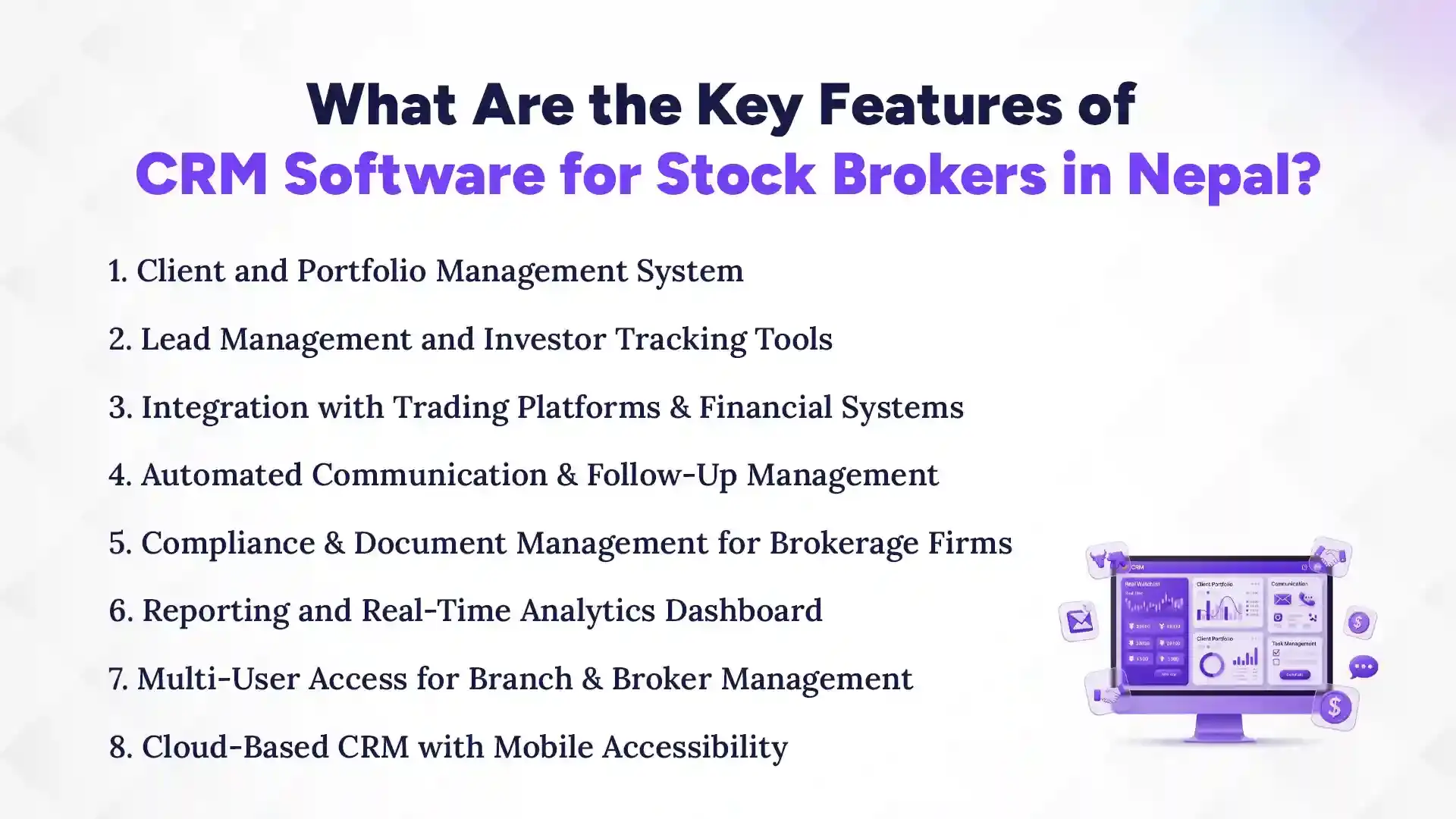
What Are the Key Features of CRM Software for Stock Brokers in Nepal?
The key features of CRM software for stock brokers in Nepal include tools for managing client data, tracking investments, automating communication, and ensuring regulatory compliance. A well-designed CRM helps brokers handle complex portfolios, monitor client interactions, and make data-driven decisions. It also integrates with trading systems to provide real-time updates and insights. These features are essential for improving efficiency, accuracy, and client satisfaction in a fast-paced brokerage environment.
1. Client and Portfolio Management System
This feature allows brokers to store and manage detailed client profiles along with their investment portfolios. It provides a centralized view of client holdings, transaction history, and preferences. Brokers can easily track performance and offer personalized advice. This improves client relationships and ensures better service delivery. Having all data in one place reduces confusion and enhances efficiency.
2. Lead Management and Investor Tracking Tools
CRM software helps track potential investors from the initial inquiry stage to final onboarding. It ensures that no lead is missed by organizing and prioritizing prospects effectively. Brokers can schedule follow-ups and monitor conversion progress. This structured approach improves lead conversion rates. It also helps build a strong pipeline of potential clients.
3. Integration with Trading Platforms and Financial Systems
A powerful CRM integrates seamlessly with trading platforms and financial systems used by brokers. This allows real-time syncing of transaction data, market updates, and portfolio changes. It reduces manual data entry and minimizes errors. Integration ensures smooth workflows and better coordination between systems. This is crucial for maintaining accuracy in financial operations.
4. Automated Communication and Follow-Up Management
CRM systems automate routine communication tasks such as follow-ups, reminders, and notifications. This ensures that brokers stay in touch with clients without missing important updates. Automated messages can be personalized based on client activity or preferences. It saves time and improves communication consistency. This leads to better engagement and stronger client relationships.
5. Compliance and Document Management for Brokerage Firms
Compliance is critical in the financial sector, and CRM software helps manage it efficiently. It stores all necessary documents, transaction records, and client communications in an organized manner. This makes audits and regulatory checks easier. It also reduces the risk of non-compliance with SEBON guidelines. Proper documentation ensures transparency and trust.
6. Reporting and Real-Time Analytics Dashboard
CRM software provides detailed reports and real-time analytics to track business performance. Brokers can monitor sales, client activity, and investment trends. These insights help in making informed decisions and improving strategies. Real-time dashboards provide a clear overview of operations. Data-driven insights lead to better performance and growth.
7. Multi-User Access for Branch and Broker Management
For brokerage firms with multiple branches or teams, CRM offers multi-user access with role-based permissions. This allows managers, brokers, and support staff to collaborate effectively. Each user can access relevant data without compromising security. It improves coordination and workflow across teams. This feature is essential for scaling operations.
8. Cloud-Based CRM with Mobile Accessibility
Cloud-based CRM systems allow brokers to access data anytime and from anywhere. This is especially useful for managing clients on the go or working remotely. Mobile accessibility ensures real-time updates and quick decision-making. It also reduces dependency on physical infrastructure. This flexibility makes operations more efficient and adaptable.
Benefits of Using CRM Software for Stock Brokers in Nepal
Using CRM software helps stock brokers in Nepal manage clients more effectively, improve operational efficiency, and make smarter investment decisions. It centralizes all client and trading data, reducing dependency on manual processes. This leads to better communication, improved compliance, and increased productivity. Overall, understanding the benefits of crm helps brokerage firms grow faster while delivering a more professional and reliable client experience.
1. Better Client Relationship and Retention Management
CRM software allows brokers to maintain detailed client profiles, including investment history and preferences. This helps in delivering personalized services and timely recommendations. Strong relationships lead to higher client satisfaction and long-term retention. It also makes communication more consistent and organized. Happy clients are more likely to stay and refer others.
2. Improved Lead Conversion and Sales Performance
With CRM, brokers can track leads from the first interaction to final conversion. It helps prioritize high-value prospects and ensures timely follow-ups. This structured approach increases conversion rates and boosts sales performance. Brokers can also analyze which strategies work best. This leads to more efficient and profitable client acquisition.
3. Enhanced Compliance and Data Security
CRM systems help maintain proper records of client transactions and communications, ensuring compliance with SEBON regulations. They also provide secure storage for sensitive financial data. This reduces the risk of data loss or unauthorized access. Proper compliance builds trust with both clients and regulatory authorities. It also simplifies audits and reporting.
4. Reduced Manual Errors and Operational Inefficiencies
Manual data entry and tracking often lead to mistakes and inefficiencies. CRM automates many routine tasks, reducing human error and saving time. It streamlines workflows and improves overall operational efficiency. Brokers can focus more on client service and trading activities. This results in smoother and more reliable operations.
5. Real-Time Insights for Smarter Investment Decisions
CRM software provides real-time data and analytics on client portfolios, sales, and market trends. This helps brokers make informed decisions quickly. Access to accurate insights improves investment strategies and client recommendations. It also helps identify growth opportunities and risks. Data-driven decisions lead to better outcomes and increased profitability.
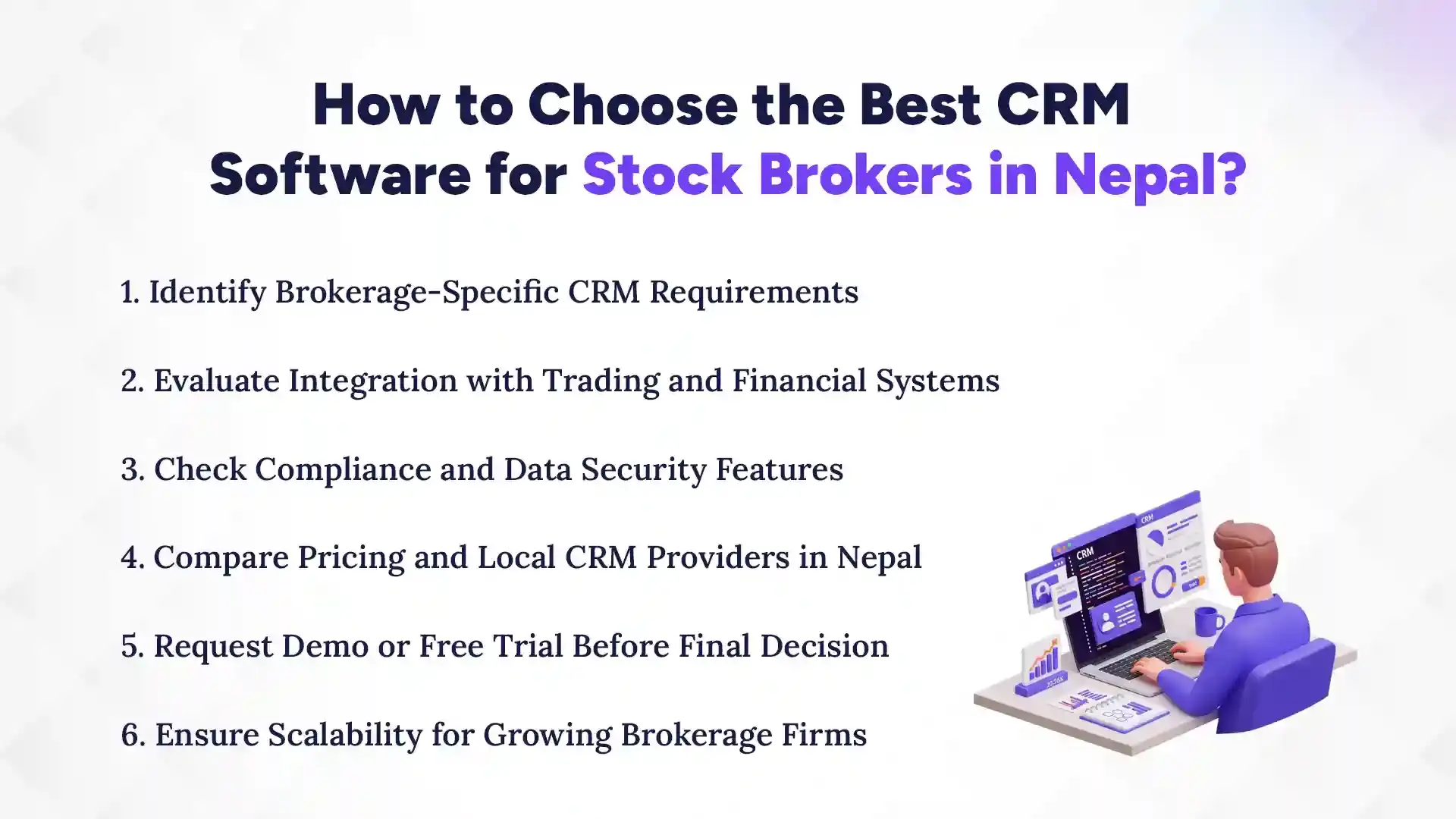
How to Choose the Best CRM Software for Stock Brokers in Nepal?
You can choose the best CRM software for stock brokers in Nepal by evaluating your brokerage needs, checking system integrations, ensuring compliance, and comparing local solutions that fit your budget and growth plans. A good CRM should not only manage clients but also support trading operations and regulatory requirements. Since CRM systems centralize data and automate processes, selecting the right one improves efficiency and decision-making.
1. Identify Brokerage-Specific CRM Requirements
Start by understanding your brokerage’s unique needs, such as client portfolio tracking, trade communication, and lead management. Every brokerage firm operates differently, so a one-size-fits-all CRM may not work. Defining your requirements helps you choose a system tailored to your workflow. It also prevents unnecessary features that increase costs. Clear requirements ensure better alignment with your business goals.
2. Evaluate Integration with Trading and Financial Systems
A strong CRM should integrate with trading platforms, accounting tools, and communication systems. This ensures seamless data flow and reduces manual entry errors. Integration helps brokers access real-time client and transaction data in one place. It also improves coordination between different systems. A well-integrated CRM enhances overall operational efficiency.
3. Check Compliance and Data Security Features
Stock brokers in Nepal must comply with regulations from the Securities Board of Nepal (SEBON), making compliance features essential. CRM software should securely store client data, transaction records, and communication history. It should also support audit trails and documentation management. Strong security measures protect sensitive financial data. This reduces risks and builds trust with clients and regulators.
4. Compare Pricing and Local CRM Providers in Nepal
CRM pricing varies based on features, scalability, and provider type (local vs international). Local CRM providers often offer better support and customization for Nepali businesses. Comparing multiple options helps you find the best value for your budget. It’s important to consider long-term costs, not just initial pricing. Affordable and scalable solutions are ideal for growing brokerages.
5. Request Demo or Free Trial Before Final Decision
Before committing, always test the CRM through a demo or free trial. This allows you to evaluate its usability, features, and performance in real scenarios. It also helps your team understand how the system works. Testing reduces the risk of choosing the wrong software. A hands-on experience ensures better decision-making.
6. Ensure Scalability for Growing Brokerage Firms
Your CRM should be able to grow with your business as your client base and operations expand. Scalable systems allow you to add more users, features, and integrations over time. This prevents the need to switch platforms later, saving time and cost. A future-ready CRM supports long-term business growth. It ensures your system remains effective as your brokerage evolves.
What Makes CRM Software for Stock Brokers Different from Other Industries?
CRM software for stock brokers is different because it is built to handle real-time trading activities, strict regulatory requirements, and complex client portfolio management. Unlike other industries, brokers need instant access to financial data, fast communication, and accurate record-keeping. The system must support high-speed operations while ensuring compliance and security, often leveraging on-premise crm for greater control over sensitive financial data. This makes brokerage CRM more specialized, data-driven, and performance-focused.
1. Highly Regulated Financial and Trading Environment
Stock brokers operate under strict regulations set by authorities like SEBON in Nepal. CRM software must support proper documentation, audit trails, and secure data storage to meet these requirements. It ensures all client interactions and transactions are recorded accurately. This reduces compliance risks and simplifies audits. A strong compliance system builds trust with both clients and regulators.
2. Real-Time Client Interaction and Trade Monitoring
Unlike many industries, stock brokers need to communicate with clients instantly during trading hours. CRM systems provide real-time updates on client activities, trades, and market changes. This allows brokers to respond quickly and make timely decisions. Instant access to data improves efficiency and service quality. Speed and accuracy are critical in such a fast-moving environment.
3. Portfolio-Based Client Relationship Management
In stock brokerage, relationships are built around managing client investments and portfolios. CRM software helps track portfolio performance, investment history, and client preferences. This allows brokers to offer personalized advice and better financial guidance. Managing portfolios effectively strengthens client trust and loyalty. It also helps in identifying opportunities for upselling and retention.
4. Integration with Stock Trading and Market Data Systems
CRM for stock brokers must integrate seamlessly with trading platforms and market data tools. This ensures real-time syncing of financial data, transactions, and analytics. Integration reduces manual work and improves accuracy in operations. It also helps brokers make informed decisions based on live market data. This level of integration is essential for efficient brokerage management.
Which Is the Best CRM Software for Stock Brokers in Nepal?
Pace CRM is the best CRM software in Nepal for stock brokers because it offers powerful features like centralized client management, lead tracking, and workflow automation tailored for relationship-driven industries. It helps brokers manage client interactions, follow-ups, and sales pipelines efficiently in one platform. Additionally, its real-time analytics, customizable dashboards, and strong data security make it highly suitable for financial environments.
Common Challenges Stock Brokers Face Without CRM Software
Without CRM software, stock brokers in Nepal often struggle to manage client data, track investments, and maintain efficient communication. Relying on manual systems or scattered tools leads to errors, missed opportunities, and poor client service. As the brokerage business grows, these challenges become more complex and harder to manage. This ultimately affects productivity, compliance, and overall business performance.
1. Disorganized Client Data and Communication Gaps
Managing client data manually often leads to scattered information across spreadsheets, emails, and notes. This makes it difficult to access accurate and updated client details when needed. Communication gaps can result in missed updates or delayed responses. It also affects the ability to provide personalized service. Disorganized data reduces efficiency and weakens client relationships.
2. Missed Leads and Poor Follow-Up Management
Without a structured system, brokers may forget to follow up with potential clients or lose track of leads. This results in missed business opportunities and lower conversion rates. Manual tracking methods are unreliable and time-consuming. A lack of reminders and automation makes it harder to manage multiple prospects. Poor follow-up directly impacts revenue growth.
3. Difficulty Tracking Client Investments and Performance
Tracking multiple client portfolios manually can be complex and error-prone. Brokers may struggle to monitor performance, transaction history, and investment trends. This limits their ability to provide timely advice and insights. Inaccurate tracking can also lead to client dissatisfaction. Efficient portfolio management becomes nearly impossible without a proper system.
4. Lack of Real-Time Insights and Reporting
Manual processes do not provide real-time data or analytics, making decision-making slower and less accurate. Brokers may rely on outdated information, which can affect trading strategies. Without proper reports, it’s difficult to measure performance or identify growth opportunities. Real-time insights are essential in a fast-moving market. Lack of data visibility reduces competitiveness.
5. Compliance Risks and Documentation Issues
Stock brokers must follow strict regulatory guidelines, and manual systems increase the risk of non-compliance. Missing or incomplete documentation can lead to penalties or legal issues. Keeping records organized for audits becomes challenging without automation. This creates unnecessary stress and operational risk. Proper documentation management is critical for maintaining compliance and trust.
Future of CRM Software for Stock Brokers in Nepal
The future of CRM software for stock brokers in Nepal is driven by advanced technologies like AI, automation, and real-time data integration. As the financial market becomes more competitive and digital, CRM systems will evolve to offer smarter insights and faster decision-making capabilities. Brokers will rely more on data-driven tools to manage clients and investments efficiently. This transformation will help brokerage firms become more agile, scalable, and client-focused.
1. AI-Based Investment Insights and Predictive Analytics
CRM systems are increasingly integrating AI to provide predictive insights based on market trends and client behavior. These tools can analyze large volumes of data to suggest investment opportunities and risks. Brokers can make faster and more informed decisions using these insights. AI also helps in identifying high-value clients and improving targeting strategies. This leads to smarter and more profitable investment management.
2. Automation of Client Communication and Advisory Services
Automation will play a major role in improving client communication and advisory services. CRM systems will handle routine tasks like follow-ups, alerts, and notifications automatically. This ensures timely communication without manual effort. Personalized messages can be triggered based on client activity or market changes. Automation improves efficiency while enhancing client engagement and satisfaction.
3. Integration with Advanced Trading and Market Tools
Future CRM platforms will offer deeper integration with trading systems, market analytics tools, and financial platforms. This allows brokers to access real-time market data and client portfolios in one place. It reduces dependency on multiple systems and improves accuracy. Seamless integration helps brokers respond quickly to market movements. This creates a more efficient and connected trading environment.
4. Cloud-Based CRM for Multi-Branch Brokerage Firms
Cloud technology will continue to drive flexibility and scalability in CRM systems. Brokerage firms with multiple branches can access centralized data from anywhere in real time. This improves collaboration between teams and ensures consistent operations. Cloud-based CRM also reduces infrastructure costs and simplifies system management. It enables brokers to operate efficiently in a fast-paced and distributed environment.
Conclusion
Choosing the right CRM software for stock brokers in Nepal can significantly improve how brokerage firms manage clients, track investments, and handle daily operations. With increasing competition and regulatory requirements, relying on manual processes is no longer effective. A well-implemented CRM system helps streamline workflows, enhance communication, and provide real-time insights for better decision-making. It not only improves efficiency but also strengthens client relationships and overall business performance, making it essential to invest in consultancy CRM in Nepal.
As the financial industry continues to evolve, adopting the right CRM solution becomes a strategic necessity rather than an option. By selecting a system that aligns with your brokerage needs, supports compliance, and offers scalability, you can stay ahead in a competitive market. Investing in the right talent management software today will help you build a more organized, data-driven, and future-ready brokerage business.
FAQs
What is CRM software for stock brokers?
+
CRM software helps stock brokers manage client relationships, track investments, and organize communication. It centralizes data to improve efficiency and decision-making in brokerage operations.
Why do stock brokers in Nepal need CRM software?
+
Brokers need CRM to handle high client volume and real-time trading communication. It also ensures compliance with regulations and improves overall workflow efficiency.
What features should a CRM for stock brokers include?
+
Key features include client management, portfolio tracking, lead management, and analytics. Integration with trading systems and compliance tools is also essential.
How much does CRM software cost in Nepal?
+
CRM pricing varies based on features, users, and provider. It can range from affordable monthly plans to customized enterprise solutions.
Can CRM software integrate with trading platforms?
+
Yes, modern CRM systems can integrate with trading and financial tools. This allows real-time data syncing and better operational efficiency.
Is CRM software secure for financial data?
+
Most CRM systems offer strong security features like encryption and access control. This ensures sensitive client and financial data remains protected.
How does CRM improve client relationships for brokers?
+
CRM helps track client interactions and preferences for personalized communication.
This improves trust, satisfaction, and long-term client retention.
Which is the best CRM software for stock brokers in Nepal?
+
Pace CRM is a popular choice due to its tailored features and scalability. It helps brokers manage clients, automate tasks, and grow efficiently.
Ready to get started?
Book a 30-minute consultation call, and let's talk about your goals.