


Ever wondered why we keep going back to certain apps while deleting others within seconds?
We’ve all been there. Perhaps when trying to order food or book a flight on a website that feels like a giant puzzle. It’s frustrating, right?
As more businesses move online, many realize that just having a website isn't enough anymore.
If your digital shop is hard to use, customers will simply walk away to a competitor who makes things easier. Well, the real problem isn't your product; it’s how people interact with it.
This is where UI/UX design comes in to save the day! This guide will show you how smart design can turn casual browsers into loyal customers, highlight the benefits of UI/UX design, and why it’s the best investment you can make for your business growth today.
What Exactly are UI and UX?
When we talk about digital products, we often hear the terms UI and UX used together, but they actually handle different parts of the user's journey. Think of a house: UI is the beautiful paint, the stylish furniture, and the pretty curtains you see. UX, on the other hand, is the feeling of the house, how easy it is to move from the kitchen to the bedroom or how comfortable the space feels.
For a business, ignoring these two is like opening a physical store but locking the front door. Good design directly changes how customers act. When a site feels right, people stay longer, trust you more, and eventually spend their money. For the web or software applications in 2026, UX design is a basic requirement for staying alive in today's crowded market.
1. What Is UI Design?
User Interface (UI) design is all about the look of your digital product. It focuses on the visual parts that people interact with, such as the buttons they click, the colors they see, and the fonts they read. A good UI designer makes sure everything looks professional and matches your brand's personality.
Beyond just looking pretty, UI is what creates that vital first impression. When a user lands on your page, the layout and navigation tell them if your business is modern and reliable. If the buttons are easy to find and the screen isn't cluttered, users feel much more comfortable exploring what you have to offer.
2. What Is UX Design?
User Experience (UX) design is about the "feel" and the logic behind the screens. It focuses on the customer's journey from the moment they land on your site until they finish their task. UX designers work hard to make sure your website is easy to use, accessible to everyone, and actually solves the user's problem without a headache.
The main goal of UX is to make sure people are satisfied and happy after using your app or site. It involves a lot of research to understand what users need and how they think. When the flow of a website is smooth, users don't have to think twice about where to click next, which makes their overall experience feel effortless.
What are the Top 10 Benefits of UI/UX Design?
Good design makes your business stronger. It keeps customers happy, boosts sales, and builds a lasting professional image. Studies show that design‑focused companies grow almost twice as fast as their competitors. By putting users first, you solve problems early and make your brand more attractive. Let’s look at how this can change your business.
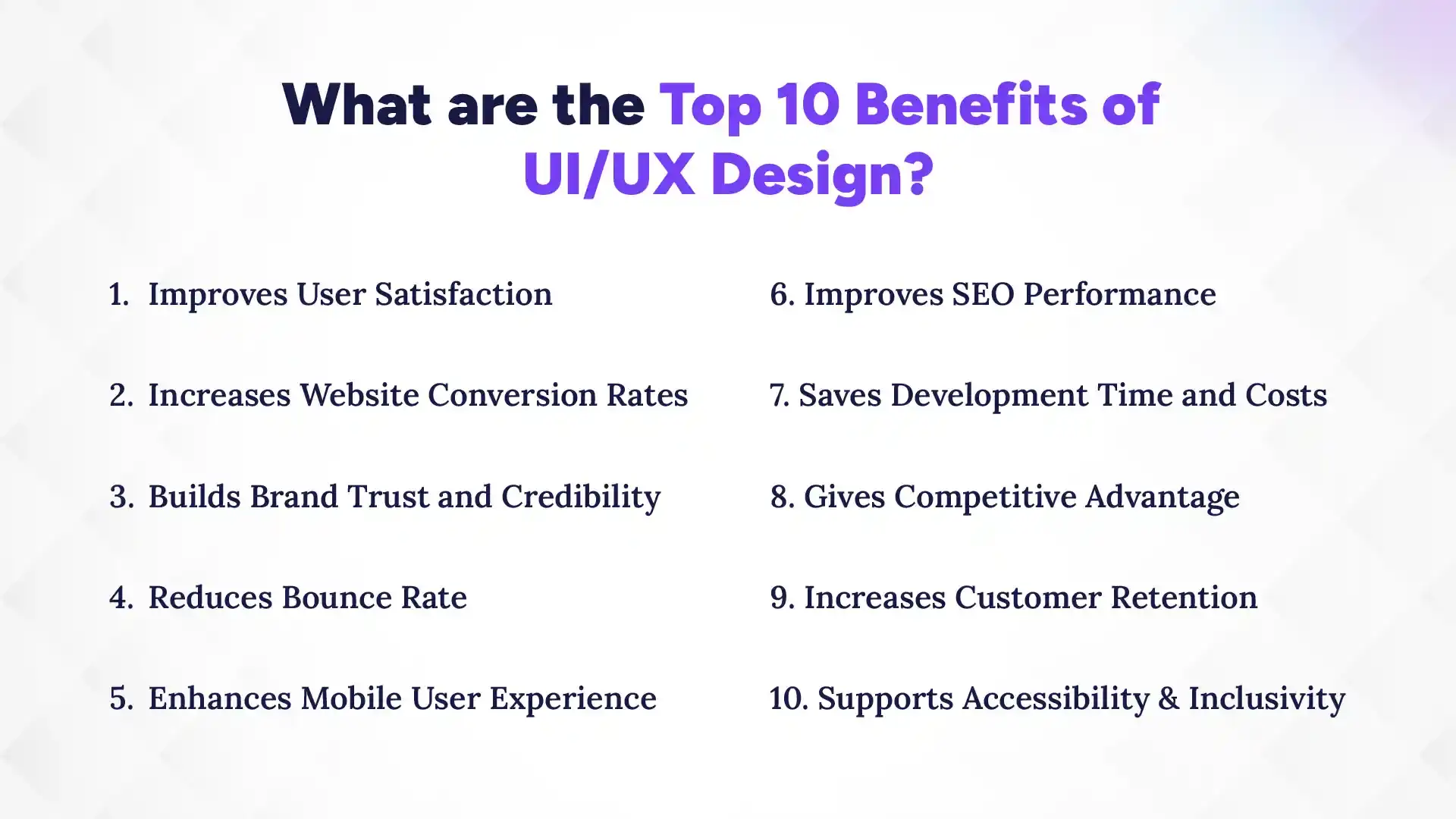
1. Improves User Satisfaction
When your website is easy to navigate, it creates a very smooth and pleasant experience for everyone. Users love it when they can find exactly what they are looking for in just a few seconds without getting lost. This sense of ease makes people feel good about your brand and encourages them to come back again.
Data suggests that even a one-second delay in mobile load times can lower customer satisfaction by 20%, so speed and ease are vital. A satisfied user is much more likely to tell their friends about your service, giving you free word-of-mouth marketing.
2. Increases Website Conversion Rates
A well-designed website acts like a helpful guide that leads users toward taking action. By using clear buttons and removing confusing steps, you make it much easier for people to sign up for a newsletter or buy a product. Studies show that a well-designed user interface can raise your website’s conversion rate by up to 200%, while better UX design could yield conversion rates up to 400%.
When there is less friction or trouble during the checkout process, your sales naturally go up. Smart UI/UX design ensures that your "Call to Action" is always visible and persuasive.
3. Builds Brand Trust and Credibility
A professional and polished design makes people feel confident that your business is legitimate and safe. Research from Stanford University found that 75% of users judge a company’s credibility based on its website design. When your colors, logos, and style stay consistent across all pages, it helps users recognize and remember your brand.
On the other hand, a messy or broken website can make even a great business look unreliable or sketchy. Investing in quality design shows your customers that you care about quality in every part of your work.
4. Reduces Bounce Rate
If a visitor finds your website visually appealing and easy to use, they are much more likely to stay and look around. Good design keeps people engaged so they don't just bounce away to another site immediately.
According to Google, as page load time goes from one second to three seconds, the probability of a bounce increases by 32%. By organizing your content in a clean structure, you encourage users to click on more pages and learn more about your story. The longer they stay, the better the chance they will choose your service.
5. Enhances Mobile User Experience
Since almost everyone in Nepal uses their phone to browse the internet, having a mobile-friendly design is absolutely essential. A responsive design means your website looks great and works perfectly on any screen size, whether it's a tiny phone or a big desktop.
Statistics show that 57% of internet users say they won’t recommend a business with a poorly designed website on mobile. If a mobile user has a hard time tapping buttons or reading text, they will leave and probably never return. Making things mobile-easy is the best way to keep your modern customers happy.
6. Improves SEO Performance
Search engines like Google actually prefer websites that offer a great experience to their users. Features like fast loading speeds and mobile optimization help your site rank higher in search results. Google's Core Web Vitals now directly use page experience as a ranking factor, meaning bad design can literally hide your site from searchers.
When users spend more time on your site and don't leave quickly, it signals to Google that your content is high-quality. Therefore, good design doesn't just help people; it helps machines find you too.
7. Saves Development Time and Costs
Spending time on proper UI/UX planning at the start prevents expensive mistakes and redesigns later on. Research indicates that for every $1 invested in UX, the return is between $10 and $100. UX research helps you find and fix problems while you are still in the drawing phase, which is much cheaper than fixing a finished app.By giving developers a clear plan, the building process becomes faster and smoother. It’s like “measure twice, cut once”. This saves time and money in the long run.
8. Gives Competitive Advantage
In a market where many businesses offer similar things, having a better user experience can be your biggest win. Customers naturally prefer platforms that are easy to use and don't waste their time. In fact, 88% of online shoppers say they are less likely to return to a site after a bad user experience. If your website is more pleasant than your competitor's, users will choose you every single time. Good design is a powerful tool that helps you stand out from the crowd and win more hearts.
9. Increases Customer Retention
When people have a positive experience the first time they use your app, they are very likely to become loyal fans. Good UX builds a long-term relationship by consistently meeting the user's needs without causing any stress. Data shows that a 5% increase in customer retention can increase profits by more than 25%. It’s much cheaper to keep an old customer than to find a new one, and design is the key to that loyalty. A happy customer feels like the brand understands them, which keeps them coming back for more.
10. Supports Accessibility and Inclusivity
Design is for everyone, including people with different abilities or those who might be using older devices. Accessible design ensures that your website is usable for people with visual impairments or other challenges, which expands your reach. With over 1 billion people worldwide living with some form of disability, inclusive design isn't just nice, it's a massive market opportunity. Inclusive design shows your brand values to everyone who visits your site. It expands your audience and strengthens your reputation as a kind, thoughtful business.
Benefits of UI/UX Design for Different Businesses
No matter what industry you are in, smart design can solve your specific business challenges and help you grow. Whether you sell clothes online or provide expert consulting, the way your site works defines your success. Let’s look at how design helps different types of companies thrive.
1. Benefits for E-Commerce Websites
For online shops, UI/UX is all about making product discovery fun and the checkout process super simple. When customers can find what they want quickly and pay without any confusion, your online sales will naturally skyrocket. Clear images and easy filters in your ecommerce site help shoppers feel confident in their choices, reducing the number of abandoned carts.
2. Benefits for Corporate Websites
A corporate website needs to look professional to build a strong brand image and generate new leads. By organizing information clearly, you make it easy for potential partners or clients to contact you or ask for a quote. Strong design helps you communicate your values and services effectively, making your business look like an industry leader.
3. Benefits for Mobile Apps
For mobile apps, the goal is to keep users engaged and coming back every day through a smooth interface. Higher retention rates and better reviews on the App Store usually come from an app that feels fast and intuitive to use. When an app is designed well, it becomes a part of the user's daily habit rather than a chore.
ALSO READ CTA: How to Build a Mobile App
4. Benefits for SaaS and Software Platforms
Software companies benefit from UI/UX by making the initial onboarding or learning process much easier for new users. Good design reduces customer frustration and helps people understand how to use your tool quickly, which leads to higher adoption. When a platform is easy to navigate, users stay subscribed longer and require less help from customer support.
Key Elements of Effective UI/UX Design
An effective design is more than just a random collection of pretty images and buttons. It requires a strategic mix of technical performance, visual clarity, and a deep understanding of human psychology. These key elements work together to ensure your website is a high-performing business asset.
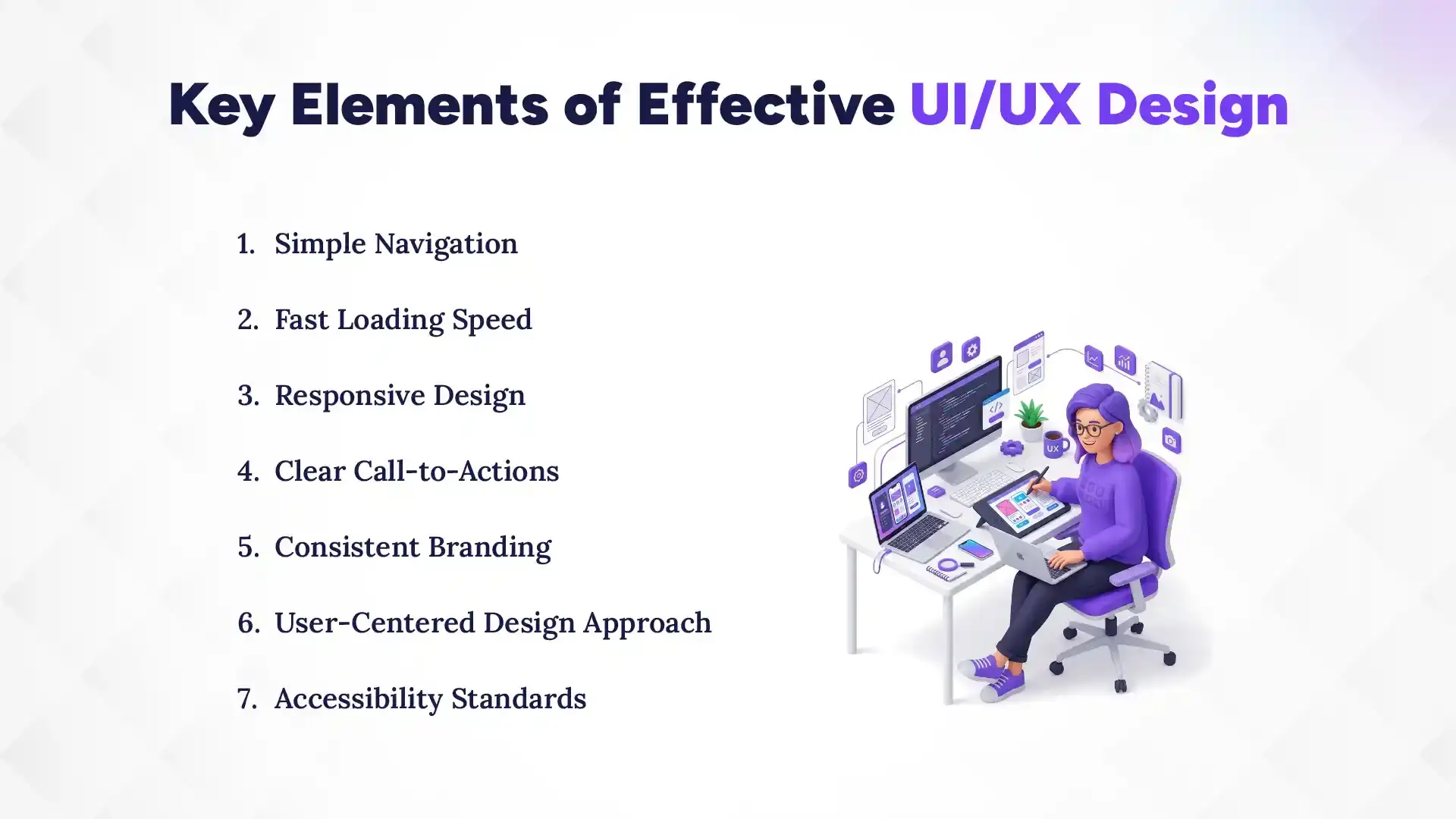
1. Simple Navigation
Your website's menu and links act as a map that guides your users to the information they need. If the navigation is cluttered or confusing, users will feel lost and leave your site out of frustration. Research indicates that users expect to find what they need within three clicks, so keeping your structure simple is vital. A clean, organized menu helps people feel in control of their journey, making their experience much more pleasant.
2. Fast Loading Speed
In the digital world, speed is everything, and even a tiny delay can drive your potential customers away. A site that opens instantly keeps users happy and significantly reduces the chances of them clicking away to a competitor. Industry studies show that a site that loads in 1 second has a conversion rate 3x higher than a site that loads in 5 seconds. By optimizing your images and code, you ensure that your business is always ready to serve your visitors without making them wait.
3. Responsive Design
Since most people in Nepal browse on different screen sizes, your website must look and work perfectly on every single device. Responsive design ensures that your layout automatically adjusts whether someone is using a small phone, a tablet, or a wide desktop monitor. If your site is hard to use on mobile, you are effectively ignoring over half of your potential audience. A truly responsive site provides a consistent and high-quality experience no matter how your customer chooses to find you.
4. Clear Call-to-Actions (CTAs)
A Call-to-Action is a button or link that tells your users exactly what step you want them to take next. Use bright colors and simple words like "Sign Up," "Buy Now," or "Contact Us" to make these buttons stand out from the rest of the page. Without clear CTAs, your visitors might browse your site but won't know how to actually become a customer. Good design ensures that these important triggers are always easy to find and very persuasive to click.
5. Consistent Branding
Consistency is the secret to making your business look professional and helping people remember your name. You should use the same colors, fonts, and style across every single page of your website and all your social media profiles. When your branding is consistent, it builds a sense of familiarity and trust with your audience over time. A messy mix of different styles can make your business look disorganized and might confuse your potential customers.
6. User-Centered Design Approach
Always design your website with your actual customer in mind, focusing on solving their specific problems and needs. This approach involves researching what your users like, what they fear, and how they behave when they are online. Instead of just guessing what looks good, you use real feedback to build features that provide actual value to your visitors. When a user feels like a website was "made for them," they are much more likely to become a loyal, long-term customer.
7. Accessibility Standards
Accessibility means ensuring that everyone, including people with various disabilities, can use and enjoy your website without any barriers. This includes using high-contrast colors for people with low vision and ensuring your site works well with screen-reading software. Following these standards isn't just about being kind; it also opens your business to a much larger and often ignored audience. An accessible website improves your overall brand reputation and shows that you value every single person who visits your shop.
Conclusion
In the end, great UI/UX design is much more than just a visual choice, it is the heartbeat of your digital business. By focusing on user satisfaction, building trust, and making your platform easy to use, you set your business up for long-term growth and success. Remember, every click a customer makes is an opportunity to show them that you care about their time and their needs.
If you want your business to stand out and actually see your sales grow, it’s time to stop treating design as an afterthought. You have the power to create a digital experience that people truly love to use. Don't let a bad website hold your big ideas back any longer. Let's build something beautiful and functional that your customers will thank you for!
Ready to transform your business with world-class design? Explore Our UI/UX Design Services Today!