

In a world where customers decide within seconds whether to trust a brand or move on, visual presentation has become a powerful business tool. A strong design can instantly capture attention, build credibility, and influence buying decisions before a single word is read. Businesses that ignore design often struggle to stand out, even if their products or services are excellent.
In this blog post on "Why is Graphic Design Important," we will explore how graphic design impacts branding, marketing, and customer perception. You will also learn its key importance for business growth, major benefits, and how it helps companies stay competitive in the digital world. By the end, you will clearly understand why design is not just decoration but a core part of business success.
What is Graphic Design?
Graphic design is the art and practice of creating visual content to communicate messages clearly and effectively. It combines images, typography, colors, and layout techniques to present information engagingly. If you’re wondering what is graphic design in simple terms, it is basically the visual way of sharing ideas and information. Businesses use graphic design to build identity, attract customers, and improve communication. It plays a key role in both digital and print media for branding and marketing purposes.
How Graphic Design Communicates Ideas Visually?
- Transforms complex ideas into simple and easy-to-understand visuals
- Uses colors and typography to evoke emotions and influence perception
- Organizes information in a structured and visually appealing layout
- Helps audiences quickly understand messages without reading long text
- Strengthens brand identity through consistent visual elements
- Improves engagement by making content more attractive and memorable
Importance of Graphic Design for Your Business
Graphic design plays a vital role in shaping how a business is perceived by its audience. It helps communicate messages visually, build brand identity, and create a strong emotional connection with customers. In today’s digital world, good design is not just an option but a necessity for attracting attention and staying competitive. It also supports marketing efforts by making content more engaging and memorable. Businesses often rely on graphic design services to achieve professional and consistent visual branding. Overall, graphic design directly influences how customers trust and interact with a brand.
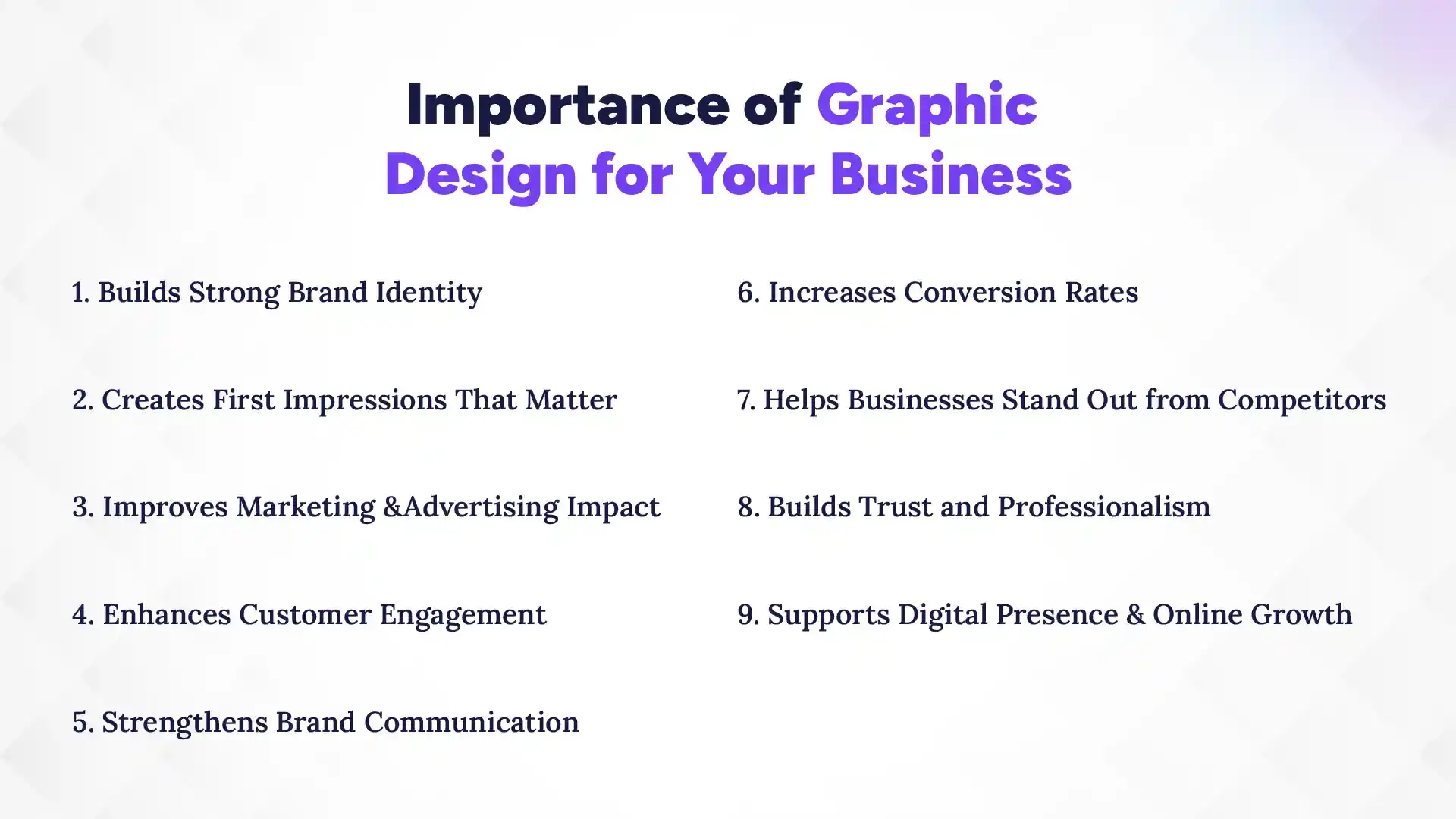
1. Builds Strong Brand Identity
Graphic design helps create a unique and consistent brand identity that makes a business easily recognizable. Through logos, colors, and typography, it builds a visual identity that reflects the brand’s personality. A strong identity helps customers remember the business easily. It also ensures consistency across all marketing platforms. Over time, this strengthens brand loyalty and trust among customers. It becomes the visual foundation of the brand.
2. Creates First Impressions That Matter
First impressions are often formed within seconds, and graphic design plays a key role in that moment. A well-designed visual instantly attracts attention and builds curiosity. Poor design, on the other hand, can drive customers away quickly. Good visuals make a brand look professional and trustworthy. This helps in creating a positive initial impact. It increases the chances of customer engagement. That first impression often decides user interest.
3. Improves Marketing and Advertising Impact
Effective graphic design makes marketing campaigns more powerful and appealing. It helps create visually engaging ads that capture attention quickly. Well-designed visuals improve message clarity and communication. This increases the effectiveness of digital and print advertising. It also boosts click-through rates in online campaigns. Strong visuals make marketing more persuasive and impactful. It helps campaigns perform better overall.
4. Enhances Customer Engagement
Engaging visuals encourage customers to interact more with content. Graphic design makes information easier to understand and more enjoyable to view. This increases time spent on websites and social media pages. Attractive designs also encourage sharing and interaction. Better engagement leads to stronger customer relationships. It helps brands stay connected with their audience. This improves overall user experience.
5. Strengthens Brand Communication
Graphic design helps businesses communicate their message clearly without relying only on text. Visual elements make complex ideas easier to understand. It ensures consistency in communication across platforms. Good design improves storytelling and message delivery. This helps customers quickly grasp what the brand offers. Strong communication builds better brand understanding. It also reduces confusion among customers.
6. Increases Conversion Rates
Well-designed visuals can influence customer decisions and improve conversions. Clear call-to-action buttons and attractive layouts guide users effectively. Good design builds trust, which encourages purchases or inquiries. It reduces confusion and improves user experience. Better design directly impacts sales performance. This makes it a powerful business tool. It ultimately boosts revenue growth.
7. Helps Businesses Stand Out from Competitors
In a competitive market, unique graphic design helps a business stand apart. Creative visuals make a brand more noticeable and memorable. It differentiates the business from similar competitors. Strong design creates a lasting impression on customers. This gives a competitive advantage in the market. It improves overall brand positioning. It helps attract more potential customers.
8. Builds Trust and Professionalism
Professional-looking design builds credibility and trust among customers. People are more likely to trust brands that look polished and well-organized. Poor design can make a business seem unreliable. Consistent visuals improve brand reputation. Trust is essential for long-term customer relationships. Good design helps establish professionalism. It strengthens customer confidence in the brand.
9. Supports Digital Presence and Online Growth
Graphic design strengthens a business’s online presence across websites and social media. Attractive visuals increase visibility and engagement online. It helps create shareable content that reaches a wider audience. Good design improves SEO indirectly by increasing user interaction. Strong visuals support digital marketing efforts. This leads to better online growth and reach. It enhances overall brand visibility.
Benefits of Graphic Design
Graphic design provides several important benefits that directly contribute to business growth and success. It helps businesses communicate more effectively, attract attention, and build a strong brand identity. Good design improves how customers perceive a company and increases overall engagement. In today’s competitive market, strong visuals can make a significant difference in performance and customer trust. Many businesses also rely on branding services to maintain a consistent and impactful identity. It is an essential part of modern branding and marketing strategies.
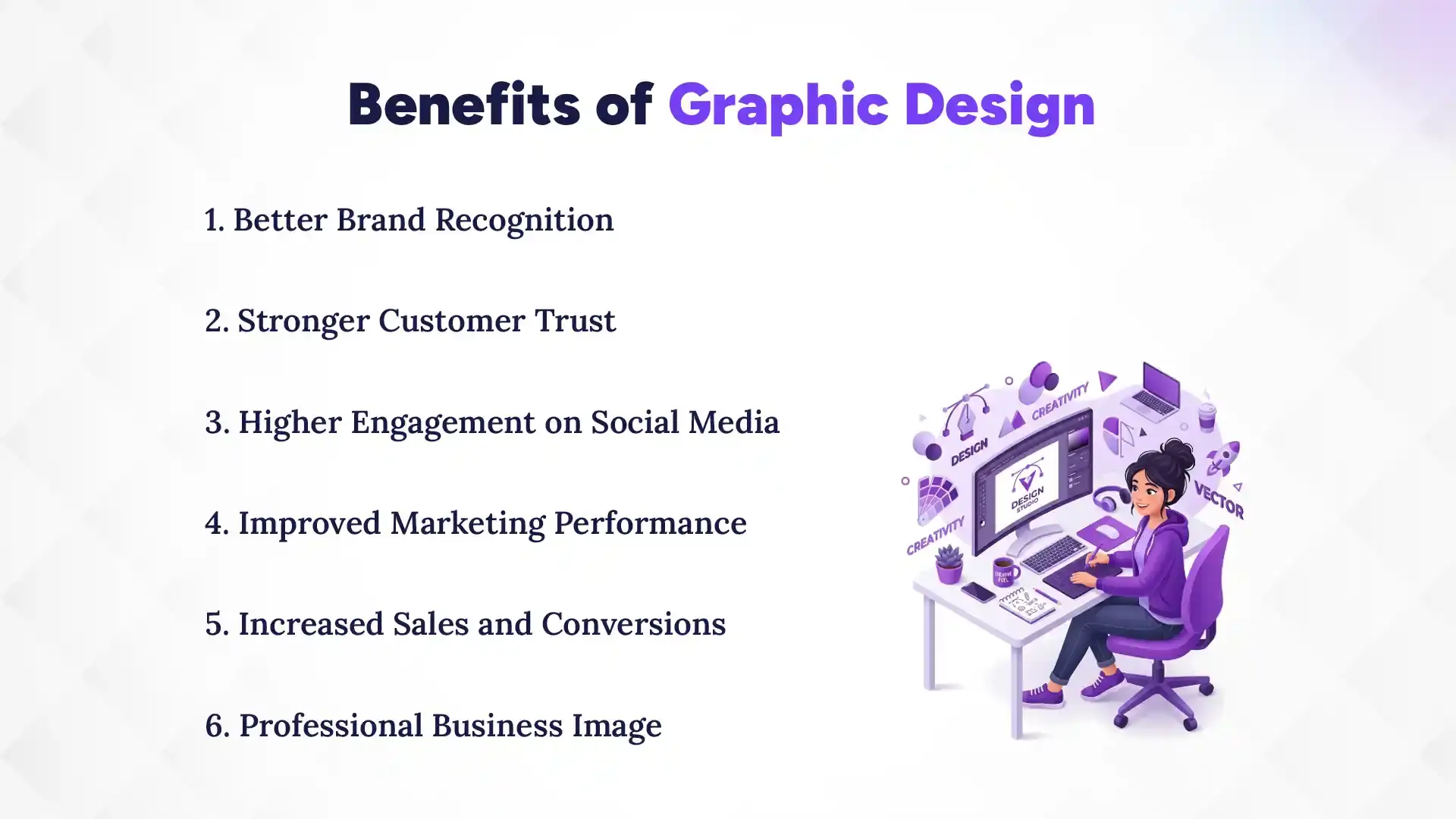
1. Better Brand Recognition
Graphic design helps create a consistent and memorable brand identity that customers can easily recognize. Logos, colors, and design elements make the brand stand out in the market. Repeated exposure to consistent visuals strengthens memory recall. This makes it easier for customers to identify the brand across platforms. Strong recognition builds long-term brand awareness. It also improves visibility in competitive industries.
2. Stronger Customer Trust
Professional and clean design builds confidence among customers. People tend to trust businesses that look visually reliable and well-organized. Poor design can reduce credibility and discourage engagement. Good visuals create a positive impression of professionalism. This helps build stronger customer relationships. Trust is essential for long-term business success.
3. Higher Engagement on Social Media
Attractive graphics perform better on social media platforms. They encourage likes, shares, and comments from users. Visual content is more engaging than plain text. This increases audience interaction and reach. Better engagement helps grow online communities. It also improves brand visibility across platforms.
4. Improved Marketing Performance
Graphic design makes marketing campaigns more effective and appealing. Well-designed visuals improve message clarity and audience understanding. This increases the success rate of advertisements. Strong visuals also boost click-through and conversion rates. It enhances overall campaign performance. Good design makes marketing more impactful.
5. Increased Sales and Conversions
Effective design influences customer buying decisions positively. Clear visuals and attractive layouts guide users toward action. This improves conversion rates on websites and ads. Trust built through design also encourages purchases. Better design leads to better user experience. Ultimately, it supports higher sales and revenue.
6. Professional Business Image
Graphic design helps businesses look more professional and credible. A polished visual identity creates a strong impression on customers. It reflects seriousness and quality in services or products. Consistent design improves brand reputation over time. This helps businesses stand out in the market. A professional image attracts more opportunities and clients.
Why is Graphic Design Important in Digital Marketing?
Graphic design is important in digital marketing because it helps businesses communicate messages visually and capture audience attention quickly. In an online space filled with content, strong visuals make a brand stand out and improve engagement. It also makes marketing campaigns more effective by increasing clarity and emotional impact. Good design builds trust, strengthens branding, and supports better conversion rates.
- Helps grab user attention in crowded digital platforms
- Improves engagement on social media and websites
- Makes marketing messages easier to understand
- Strengthens brand identity across all digital channels
- Increases click-through rates in ads and campaigns
- Supports higher conversions through better user experience
Types of Graphic Design Used in Business
Graphic design is used in many different ways across businesses to support branding, marketing, and communication. Each type of design serves a specific purpose, from building brand identity to improving customer experience. These design types help businesses connect with their audience more effectively and present their message in a visually appealing way. Understanding them helps companies choose the right visual strategy for growth and engagement.
1. Logo and Branding Design
Logo and branding design focus on creating a unique identity for a business. It includes logos, color schemes, typography, and brand guidelines. This type of design ensures consistency across all platforms. It helps customers recognize and remember the brand easily. Strong branding builds trust and long-term recognition. It forms the foundation of a company’s visual identity.
2. Social Media Graphics
Social media graphics are designed for platforms like Facebook, Instagram, and LinkedIn. They help businesses share information attractively and engagingly. These visuals increase likes, shares, and overall engagement. Consistent posting with good design improves brand visibility. They also help communicate messages quickly. Strong social media graphics build online presence.
3. Website and UI Design
Website and UI design focus on how a website looks and functions. It includes layout, colors, buttons, and user experience elements. Good design improves navigation and keeps users engaged. It also ensures websites are visually appealing and easy to use. A well-designed UI increases customer satisfaction. It plays a key role in online success.
4. Marketing and Advertising Creatives
Marketing and advertising creatives include banners, posters, and digital ads. These designs are used to promote products or services effectively. They help attract attention and communicate offers clearly. Strong visuals improve campaign performance and conversion rates. Good design makes advertisements more persuasive. It supports both online and offline marketing efforts.
5. Packaging Design
Packaging design focuses on how products are presented to customers. It includes labels, boxes, and product wrapping. Attractive packaging influences buying decisions. It also helps differentiate products from competitors. Good design builds brand recognition on shelves. It combines creativity with functionality to enhance product appeal.
Common Mistakes Businesses Make in Graphic Design
Many businesses underestimate the importance of proper graphic design and end up making mistakes that affect their brand image and marketing performance. Poor design choices can reduce customer trust, lower engagement, and weaken brand identity. These mistakes often happen due to lack of planning, inconsistency, or not following modern design standards. Avoiding them is essential for building a strong and professional brand presence. Understanding the cost of graphics design is also important for making informed decisions about design investments. Good design practices can significantly improve business results.
1. Ignoring Brand Consistency
Ignoring brand consistency leads to confusion among customers. When colors, fonts, and styles change frequently, the brand becomes harder to recognize. Consistency is important for building a strong identity. It helps customers remember and trust the brand over time. All marketing materials should follow the same design guidelines. This creates a unified and professional appearance.
2. Overcomplicating Designs
Overly complex designs can make messages difficult to understand. Too many elements, colors, or fonts reduce clarity and impact. Simple designs are often more effective and visually appealing. Clean layouts help users focus on the main message. Overdesigning can also slow down user engagement. Simplicity improves communication and user experience.
3. Using Low-Quality Visuals
Low-quality images and graphics can damage a brand’s credibility. Blurry or unprofessional visuals create a negative impression. High-quality design is essential for attracting customer attention. It reflects the professionalism of the business. Good visuals improve engagement and trust. Investing in quality design enhances brand reputation.
4. Not Following Design Trends
Ignoring modern design trends can make a brand look outdated. Design trends evolve with user preferences and technology. Staying updated helps maintain relevance in the market. Outdated visuals may fail to attract modern audiences. Following trends improves engagement and appeal. It also helps the brand stay competitive.
How to Choose the Right Graphic Design Strategy for Your Business?
You can choose the right graphic design strategy for your business by first understanding your brand identity, target audience, and overall business goals. This helps ensure that every visual element aligns with what your business stands for. A clear strategy makes your designs more consistent, professional, and effective in communication. It also helps improve customer engagement and brand recognition over time. With the right approach, your design efforts can strongly support business growth.
1. Understanding Your Brand Identity
Understanding your brand identity is the foundation of any strong design strategy. It includes your mission, vision, values, and target audience. This helps in creating visuals that truly represent your business personality. A clear identity ensures consistency across all platforms and marketing materials. It also builds emotional connection with customers. Strong branding improves recognition and trust in the long run.
2. Choosing the Right Design Style
Choosing the right design style ensures your visuals match your brand message and audience expectations. Styles like modern, minimal, or bold communicate different feelings and tones. The right style makes your brand more appealing and memorable. Consistency in style strengthens brand identity across all channels. It also improves user experience and engagement. A suitable design style enhances overall marketing impact.
3. Working with Professional Designers
Working with professional designers helps you achieve high-quality and effective visual content. Experts understand design principles, trends, and branding techniques. They can transform your ideas into visually powerful designs. This improves credibility and brand perception in the market. Professional designers also ensure consistency and creativity in output. It ultimately saves time and delivers better results.
Conclusion
Graphic design plays a crucial role in shaping how a business is perceived in today’s competitive market. It is not just about creating attractive visuals, but about building a strong brand identity, improving communication, and influencing customer decisions. From marketing campaigns to social media presence, good design helps businesses stand out and connect with their audience more effectively. Without strong visuals, even the best products or services can go unnoticed. Businesses like The Pace Infosys understand how impactful professional design can be in strengthening brand presence and visibility.
Overall, investing in quality graphic design is essential for long-term business success. It enhances trust, increases engagement, and supports better marketing performance across all platforms. By using the right design strategy and avoiding common mistakes, businesses can strengthen their brand presence and achieve better results. In the digital age, graphic design is a powerful tool that directly contributes to growth, visibility, and customer loyalty. Explore the top 10 graphics design companies in Austin, Texas, to find the right creative partners for your business needs.