

Managing employee information manually is one of the most overlooked sources of inefficiency in modern HR. Scattered spreadsheets, missing documents, duplicated records, and compliance gaps quietly drain hours from HR teams every single week. As organizations grow, these problems do not just multiply. They compound.
That is where a PIMS, or Employee Information Management System, steps in. Built specifically to centralize, organize, and protect employee data, a PIMS transforms how HR teams handle the information that drives every people decision in a business.
In this guide, you will learn exactly what a PIMS is, why it matters, what features to look for, how it compares to HRMS and HRIS platforms, and how to choose the right system for your organization. Whether you are a small business owner or an HR manager at a growing company, this guide gives you the clarity to make a confident decision.
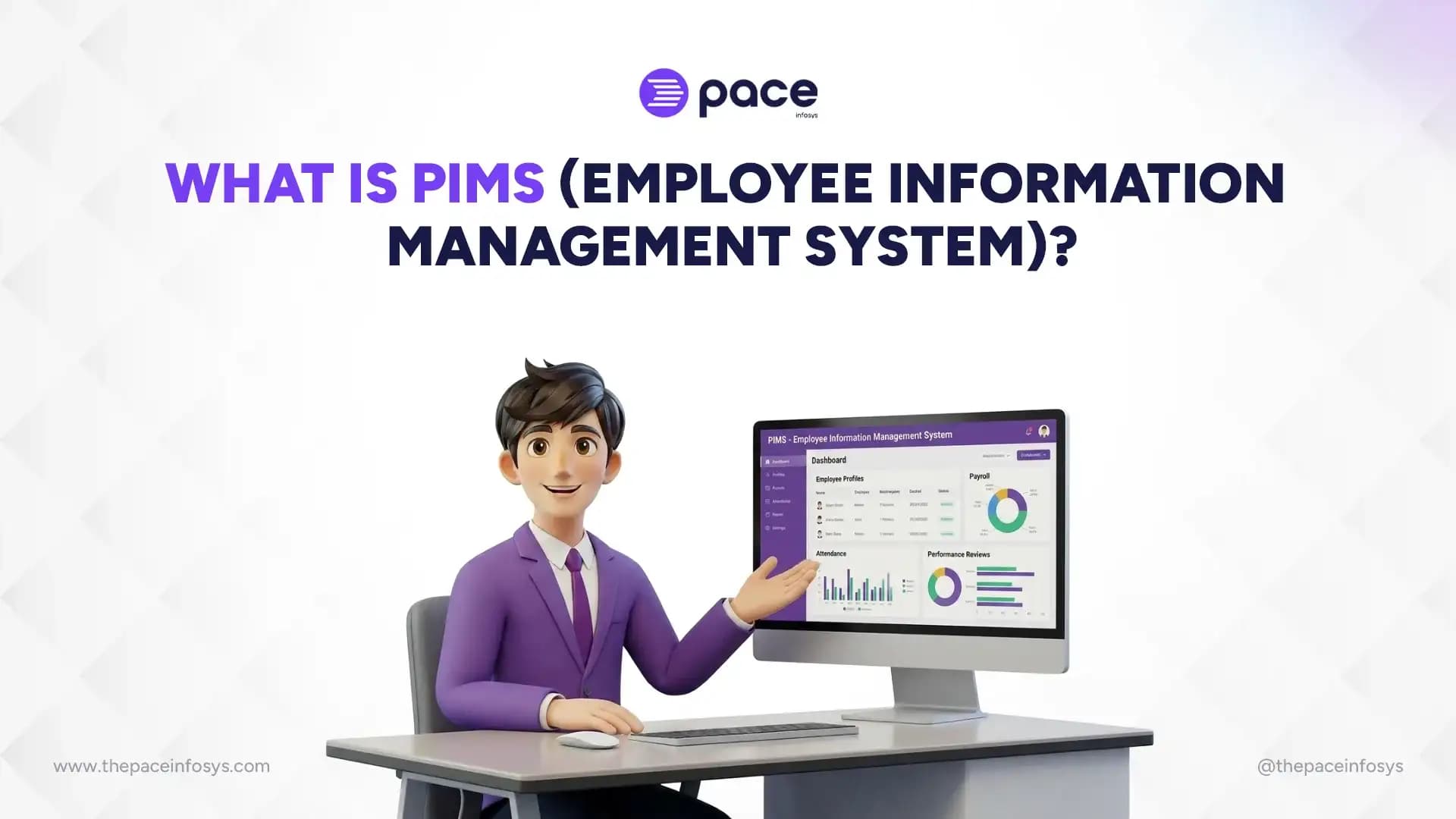
What Is PIMS ?
A PIMS, which stands for "Employee Information Management System" or "Personnel Information Management System" is a software platform designed to store, organize, manage, and retrieve all employee-related information in one centralized digital location. It acts as the single source of truth for every piece of data connected to your workforce, from personal details and employment history to attendance records, performance evaluations, and training certifications.
In simple terms, a PIMS replaces scattered folders, outdated spreadsheets, and disconnected filing systems with a structured, searchable, and secure employee database. HR teams can access accurate employee records instantly, update information in real time, and generate reports without manually compiling data from multiple sources.
Unlike broader HR platforms that focus on payroll processing, recruitment workflows, or performance management, a PIMS is specifically built around one core function: managing employee information efficiently and reliably. It is the foundation on which every other HR process depends.
For businesses in Nepal and globally, adopting a PIMS means moving from reactive record-keeping to proactive workforce management, where data is always accurate, always accessible, and always secure.
Why Is PIMS Important for Businesses?
A PIMS is important for business because employee information is the foundation of every HR decision a business makes. Hiring, payroll, compliance, performance reviews, and workforce planning all depend on accurate, accessible, and up-to-date employee records. When that foundation is weak, every HR process built on top of it becomes unreliable. Here is a detailed breakdown of why a PIMS matters.
1. Centralized Employee Data Management
Without a PIMS, employee information typically lives in multiple places at once: an HR spreadsheet, a payroll system, a folder of scanned documents, and a manager's inbox. When a single employee record needs to be updated, someone has to find every location where that data exists and change it manually. This takes time and almost always results in inconsistencies.
A PIMS eliminates this problem by bringing all employee data into one platform. Every update is made once and reflected everywhere. HR teams spend less time chasing records and more time doing work that actually moves the business forward. When all employee data lives in one place, it becomes much easier to manage your workforce, especially for businesses running HR software for multi-location businesses.
2. Improved Data Accuracy and Security
Manual data management creates errors. Typos, outdated records, and missing information are common in businesses that rely on spreadsheets. These errors create real consequences, from incorrect payroll calculations to compliance violations.
A PIMS reduces human error through structured data entry, validation rules, and automated updates. It also protects sensitive employee information with access controls, encryption, and audit trails, ensuring that only authorized personnel can view or modify records.
3. Reduced Administrative Workload
HR teams in businesses without a PIMS spend a significant portion of their time on administrative tasks: searching for employee files, updating records manually, preparing compliance reports, and responding to basic employee information requests. None of this work requires HR expertise. It simply consumes time that could be spent on hiring, development, or strategy.
A PIMS automates routine record-keeping and gives employees self-service access to their own information, dramatically reducing the volume of administrative requests that reach the HR desk.
4. Faster Access to Employee Information
When a manager needs to know an employee's contract terms, or when payroll needs to confirm leave balances, or when compliance requires a training certificate, the answer should be available in seconds. In a manual system, that search can take hours.
A PIMS stores all employee information in a searchable, organized database. Any authorized user can retrieve accurate records immediately, without filing cabinets, email chains, or waiting for someone else to find the document.
5. Better Workforce Management and Decision-Making
Business leaders make better workforce decisions when they have accurate, complete data. A PIMS provides HR managers and executives with real-time visibility into headcount, tenure, skills, certifications, attendance patterns, and performance trends. This data supports smarter decisions about hiring, promotions, training investments, and organizational planning.
Key Features of a PIMS (Employee Information Management System)
A PIMS comes with core features that keep employee information organized, accurate, and easy to access. These include an employee database, document storage, attendance tracking, payroll records, performance tracking, and a self-service portal for both HR teams and employees.
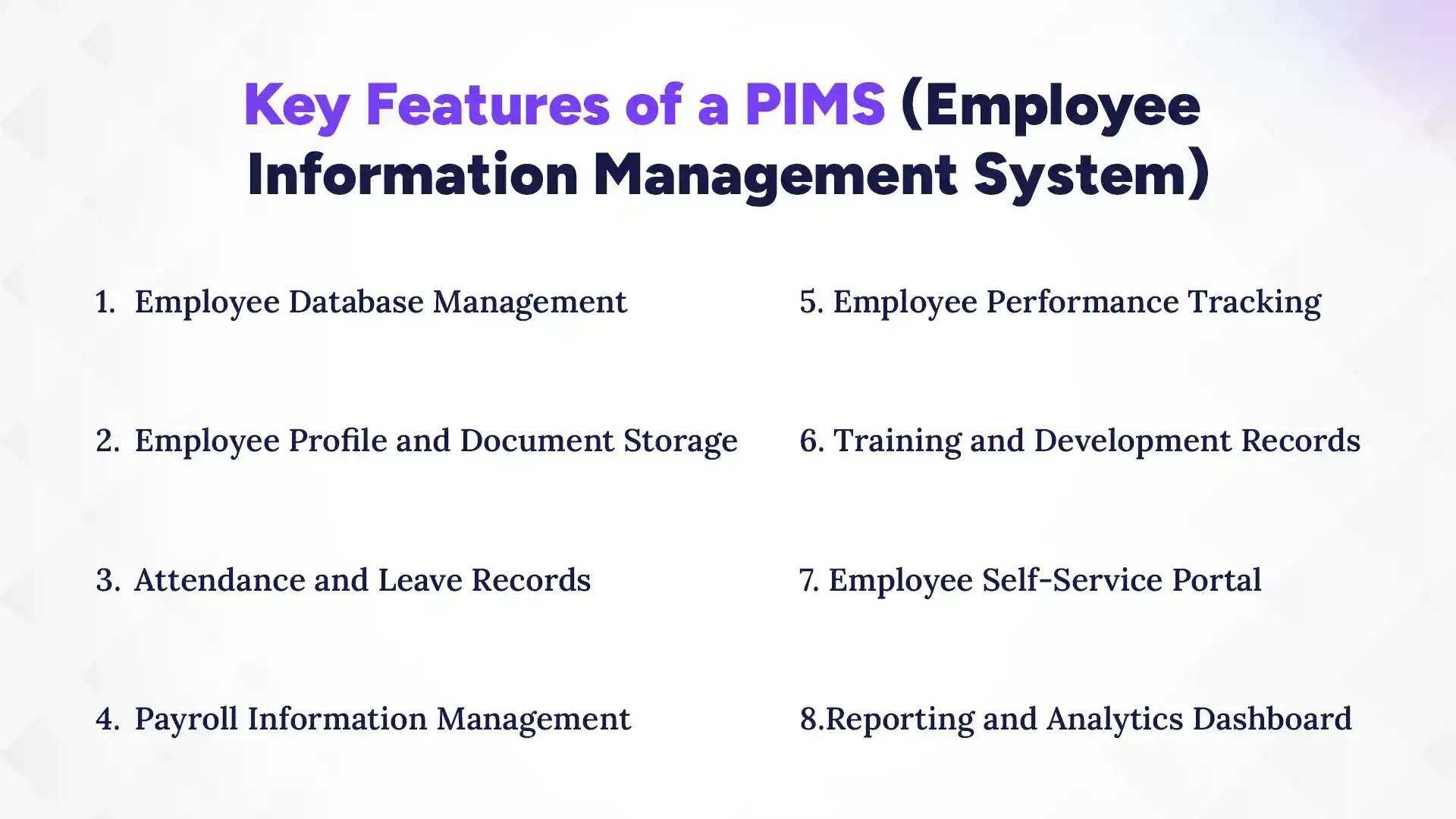
1. Employee Database Management
The employee database is the heart of any PIMS. It stores a complete digital record for every employee, organized in a consistent structure that makes information easy to find, update, and export. The database supports bulk imports for large organizations and ensures that all employee records follow the same format, eliminating the inconsistencies that come with manual filing.
2. Employee Profile and Document Storage
Each employee in a PIMS has a dedicated profile that brings together all their information in one view. This includes personal details, job information, employment history, uploaded documents such as contracts and identification, and any notes or records added over time. Document storage within the PIMS eliminates the need for physical files and ensures that important documents are never lost or misplaced.
3. Attendance and Leave Records
A PIMS tracks attendance and leave history for every employee, giving HR teams and managers a clear, real-time picture of workforce availability. Leave requests can be submitted, approved, and recorded within the system, and attendance data can be integrated with payroll to ensure accurate salary calculations. This feature eliminates manual tracking errors and gives employees visibility into their own leave balances.
4. Payroll Information Management
While a PIMS is not a full payroll processing system, it stores all the payroll-related information that payroll teams need to operate accurately. This includes salary records, tax details, compensation history, deductions, and benefits information. Keeping this data in a centralized, structured system reduces errors and makes payroll audits significantly easier.
5. Employee Performance Tracking
A PIMS maintains records of performance evaluations, goal-setting cycles, manager feedback, and appraisal outcomes for each employee. This historical performance data helps HR teams identify top performers, track development over time, and support fair, evidence-based decisions about promotions, compensation adjustments, and succession planning.
6. Training and Development Records
For businesses that invest in employee development, a PIMS tracks training history, certification dates, renewal deadlines, and skill development progress. This ensures that employees are always current on required training, that certifications are renewed on time, and that managers have a clear view of each employee's development trajectory. Businesses that also manage online learning can integrate their PIMS with an LMS software to keep training and certification records automatically updated
7. Employee Self-Service Portal
An employee self-service portal gives employees direct access to their own information within the PIMS. Employees can view their personal details, check leave balances, download pay slips, update contact information, and submit requests without needing to contact HR for routine tasks. This reduces the administrative load on HR teams and improves the employee experience by giving people control over their own data.
8. Reporting and Analytics Dashboard
A PIMS reporting dashboard transforms raw employee data into actionable insights. HR managers can generate reports on headcount, turnover, attendance trends, training completion rates, and workforce demographics. These reports support compliance audits, strategic planning, and leadership presentations, giving decision-makers the data they need without hours of manual compilation.
What Information Can Be Stored in a PIMS?
A PIMS stores everything related to an employee's journey in your organization, including personal details, job information, salary records, attendance history, performance data, training certifications, and emergency contact information
1. Personal Employee Information
This includes full name, date of birth, national identification number, gender, nationality, home address, personal email address, and phone number. This foundational data supports onboarding, compliance reporting, and emergency communication.
2. Employment and Job Details
Job title, department, reporting structure, employment type (full-time, part-time, contract), employment start date, contract terms, and work location are all stored within the employment record. This information supports organizational planning and ensures that job-related decisions are based on accurate, current data.
3. Salary and Compensation Records
Salary history, current compensation, allowances, bonuses, deductions, and benefits enrollment are stored in the payroll information section of the PIMS. This data links directly to payroll processing and supports compensation benchmarking and audit readiness.
4. Attendance and Leave History
Daily attendance records, approved leave requests, leave balances, overtime logs, and absence patterns are maintained over time. This history supports payroll accuracy, performance conversations, and workforce planning.
5. Performance Evaluation Data
Past appraisal scores, goal completion records, manager comments, and performance improvement plan documentation are stored in the employee's performance record. This longitudinal data supports fair and consistent people decisions.
6. Training and Certification Records
Completed training programs, certification dates, expiry dates, and renewal status are tracked for every employee. This is particularly important for industries with regulatory compliance requirements.
7. Emergency Contact Information
The name, relationship, phone number, and address of designated emergency contacts are stored for every employee. This information is critical for crisis situations and should always be current and easily accessible.
How Does a PIMS Improve HR Operations?
A PIMS improves HR operations by automating record management, reducing administrative workload, simplifying routine tasks, improving data accessibility, and giving HR teams the accurate workforce data they need to make better business decisions.
1. Automates Employee Record Management
Every time an employee is onboarded, promoted, transferred, or offboarded, a range of record updates needs to happen. Without a PIMS, these updates happen manually across multiple documents and systems. A PIMS automates this process, ensuring that records are updated consistently and completely every time a change occurs.
2. Simplifies HR Administrative Tasks
Routine HR tasks like responding to information requests, preparing compliance reports, and managing document renewals consume a disproportionate amount of HR time. A PIMS handles these tasks through automation, self-service tools, and structured workflows, allowing HR professionals to redirect their energy toward higher-value activities.
3. Enhances Employee Experience
Employees who can access their own information, submit requests, and receive timely responses through a self-service portal have a significantly better experience with HR processes. Transparency, speed, and control improve employee satisfaction and reduce the friction that comes with waiting for HR to handle routine requests.
4. Improves Data Accessibility
In organizations without a PIMS, finding specific employee information can take significant time and effort. A PIMS makes every piece of employee data instantly searchable and retrievable by authorized users. This speed improves decision-making across HR, management, and finance.
5. Supports Strategic HR Planning
When HR leaders have access to clean, comprehensive workforce data, they can plan more effectively. A PIMS supports workforce analytics that reveal trends in turnover, skills gaps, training effectiveness, and headcount changes, all of which inform smarter, more proactive HR strategy. Organizations looking to build a complete digital HR ecosystem can combine their PIMS with HRMS software for payroll, recruitment, and performance management in one integrated system
PIMS vs HRMS vs HRIS: What Is the Difference?
Not all HR systems work the same way. PIMS manages employee records, HRIS handles data and basic HR processes, and HRMS covers the full scope of HR operations. Knowing the difference helps you pick the right tool for your business.
1. PIMS vs HRMS
A PIMS (Employee Information Management System) is focused specifically on storing and managing employee information. Its primary function is to maintain accurate, organized, and accessible employee records across the entire employment lifecycle.
An HRMS (Human Resource Management System) is a broader platform that includes employee information management as one component but extends significantly further into operational HR functions. An HRMS typically includes payroll processing, recruitment and applicant tracking, performance management workflows, benefits administration, and compliance management. In short, an HRMS does everything a PIMS does, plus a great deal more.
For businesses that need a comprehensive HR operations platform, an HRMS is the more complete solution. To understand the full scope of HR operations, read our detailed guide on what an HRMS is and how it compares to a focused employee information management system
2. PIMS vs HRIS
An HRIS (Human Resource Information System) sits between a PIMS and a full HRMS in terms of scope. Like a PIMS, an HRIS centralizes employee data. Like an HRMS, it often includes payroll, benefits, and basic reporting tools. The distinction between HRIS and HRMS has blurred considerably as platforms have expanded their feature sets, and the terms are often used interchangeably in the market today.
The key practical difference is that a PIMS is specifically employee-record-focused, while an HRIS and HRMS are designed to manage broader HR workflows and operational processes.
3. Which System Is Best for Your Organization?
If your primary challenge is disorganized, inaccurate, or inaccessible employee records, a PIMS addresses that problem directly and efficiently. If you need a platform that also handles payroll processing, recruitment, performance workflows, and compliance management in an integrated system, an HRMS is the better investment. For most growing businesses, starting with a well-implemented PIMS and expanding to a full HRMS as needs grow is a practical and scalable approach.
| Feature | PIMS | HRIS | HRMS |
|---|---|---|---|
| Employee Data Storage | Yes | Yes | Yes |
| Payroll Processing | Limited | Yes | Yes |
| Recruitment Management | No | Partial | Yes |
| Performance Management | Basic | Partial | Yes |
| Compliance Tracking | Basic | Yes | Yes |
| Self-Service Portal | Yes | Yes | Yes |
| Best For | Employee record management | Mid-size HR operations | Full HR operations management |
Common Challenges Solved by PIMS
Common challenges solved by PIMS are disorganized employee records, data duplication and errors, compliance management issues, time-consuming HR processes, and difficulty tracking employee information across departments.
1. Disorganized Employee Records
When employee information lives in spreadsheets, email attachments, and physical files, finding any specific record requires manual searching across multiple locations. A PIMS consolidates all records into a single, structured database where any authorized user can retrieve accurate information in seconds.
2. Data Duplication and Errors
Manual systems almost always contain duplicate records and outdated information because there is no single authoritative source. When the same employee data exists in five different places, keeping it consistent is nearly impossible. A PIMS creates one source of truth that is updated once and reflected everywhere.
3. Compliance Management Issues
Employment law requires businesses to maintain accurate records of employment terms, training completions, certifications, and payroll data. Manual systems make compliance audits stressful and time-consuming. A PIMS organizes compliance-related data systematically and supports audit readiness with one-click reporting.
4. Time-Consuming HR Processes
Administrative record-keeping tasks that consume hours of HR time every week are automated within a PIMS. From updating employee profiles to generating headcount reports, processes that previously required manual effort happen automatically, freeing HR professionals for more strategic work.
5. Difficulty Tracking Employee Information
In growing organizations, keeping track of every employee's documents, certifications, performance history, and training records becomes genuinely difficult without a dedicated system. A PIMS maintains complete, organized records for every employee from day one through offboarding, with nothing overlooked or lost.
How to Choose the Right Employee Information Management System
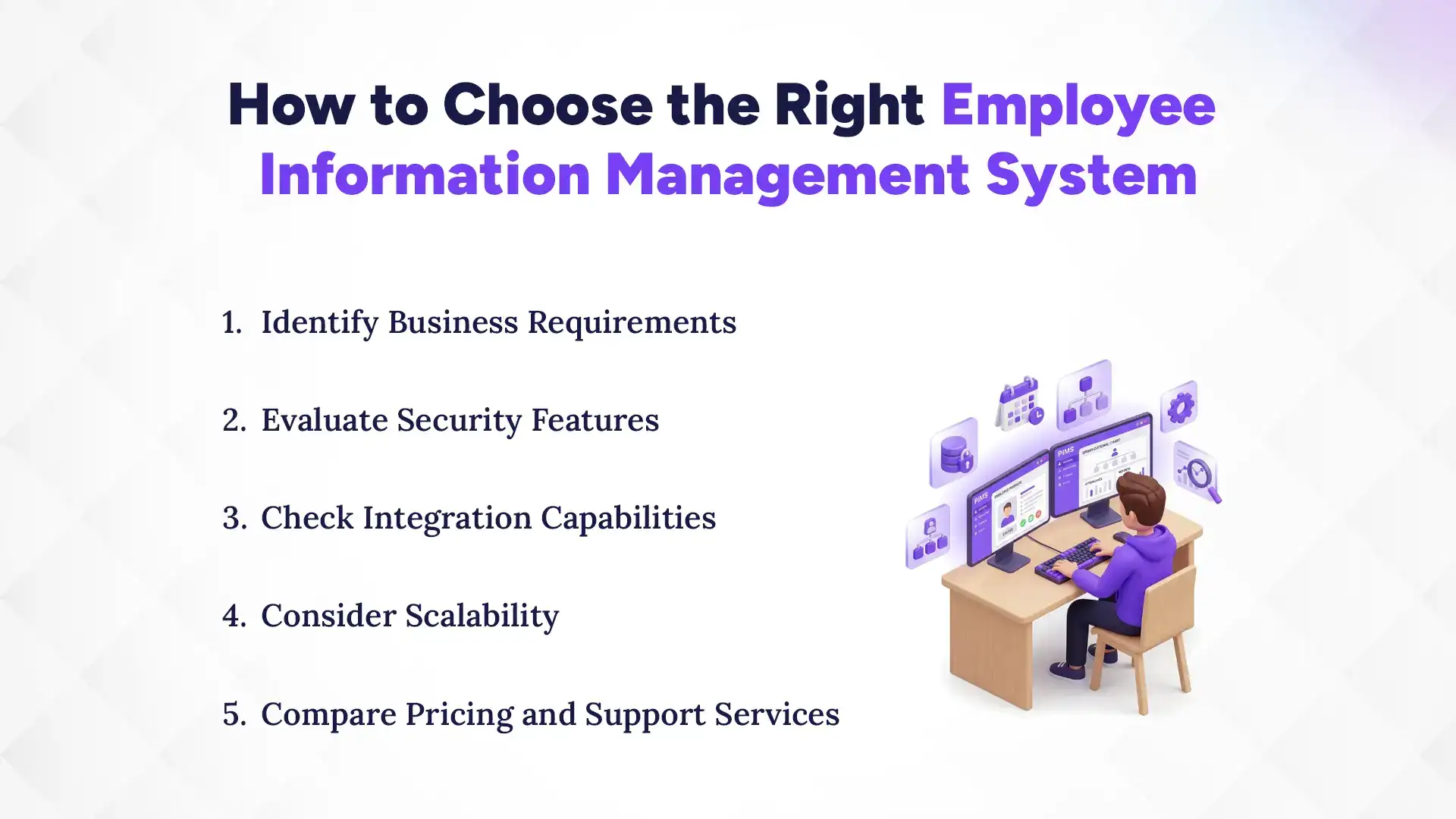
Choosing the right PIMS starts with understanding your organization's needs, budget, and long-term goals. Here are the key steps to make the right decision.
1. Identify Business Requirements
Before evaluating any platform, clearly define what problems you need the PIMS to solve. Are you dealing with disorganized records, compliance tracking gaps, or inefficient leave management? Knowing your priorities helps you focus on the features that actually matter for your business and avoid paying for tools you will never use.
2. Evaluate Security Features
Employee information is sensitive and must be protected at all times. Your PIMS must include role-based access controls, data encryption, audit trails, and compliance with relevant data protection regulations. Data security is non-negotiable and should be evaluated before any other feature.
3. Check Integration Capabilities
Your PIMS needs to work smoothly alongside your existing payroll software, attendance tracking tools, and other HR platforms. Poor integration creates data silos and duplicate work, which defeats the entire purpose of implementing a PIMS. Always confirm which integrations are supported before committing to any platform.
4. Consider Scalability
A PIMS that works well for 50 employees should also work well for 500. Evaluate whether the platform can grow with your organization without requiring a costly migration to a different system as your workforce expands.
5. Compare Pricing and Support Services
Look beyond the initial price and compare what each vendor includes in their package. Check for responsive customer support, regular product updates, reliable uptime, and clear documentation. A slightly higher investment in a well-supported platform always delivers better long-term value than a cheap system with poor after-sales service.
Best Practices for Implementing a PIMS
Best practices for implementing a PIMS are planning data migration carefully, training HR teams and employees, maintaining data accuracy, defining user access levels, and regularly updating employee records.
1. Plan Data Migration Carefully
Moving existing employee data into a new PIMS is one of the most critical phases of implementation. Before migration, audit your existing records to identify duplicates, outdated information, and missing data. Clean your data before importing it so you start with an accurate foundation rather than carrying old problems into the new system.
2. Train HR Teams and Employees
A PIMS only delivers value when people know how to use it. Invest in training for HR administrators who will manage the system daily and for employees who will use the self-service portal. Clear training reduces errors, increases adoption, and ensures that the system is used consistently from the start.
3. Maintain Data Accuracy
A PIMS is only as useful as the data it contains. Establish clear processes for keeping employee records current, including regular audits, defined ownership of data updates, and reminders for certification renewals and contract reviews. Accurate data is the foundation of every benefit a PIMS provides.
4. Define User Access Levels
Not every user should have access to every piece of employee information. Before going live, map out which roles need access to which data categories and configure your PIMS access controls accordingly. This protects sensitive employee data and ensures compliance with privacy regulations.
5. Regularly Update Employee Records
Employee information changes constantly through promotions, department transfers, address changes, and contract renewals. Establish a regular cadence for reviewing and updating employee records, and create clear accountability for who is responsible for each category of data. Stale records undermine the reliability of every HR decision that depends on them.
Common Mistakes to Avoid When Managing Employee Information
Common mistakes to avoid when managing employee information are using outdated employee data, ignoring data security measures, lack of employee record standardization, and not utilizing the reporting and analytics features of your PIMS.
1. Using Outdated Employee Data
Outdated records are almost as problematic as no records at all. An employee who received a promotion six months ago but whose PIMS profile still reflects their old title creates confusion in reporting, payroll, and compliance. Treat employee record updates as a non-negotiable part of every HR process change.
2. Ignoring Data Security Measures
Employee data includes sensitive personal information that is subject to privacy regulations. Ignoring access controls, sharing login credentials, or failing to audit who has viewed sensitive records are security failures that create both legal and reputational risk. Data security must be actively managed, not just enabled at setup and forgotten.
3. Lack of Employee Record Standardization
When different HR team members enter data in different formats, the PIMS loses its ability to generate reliable reports and support accurate analysis. Establish clear data entry standards from the beginning and enforce them consistently across the team.
4. Not Utilizing Reporting Features
Many organizations implement a PIMS primarily as a record-storage tool and never take advantage of its reporting and analytics capabilities. This leaves significant value on the table. Regular use of the PIMS reporting dashboard gives HR leaders and business executives the workforce insights they need to plan, budget, and make better people decisions.
Conclusion
A PIMS, or Employee Information Management System, is one of the most practical investments a business can make in its HR operations. By centralizing employee information, improving data accuracy, reducing administrative workload, and supporting compliance management, a well-implemented PIMS transforms how HR teams operate and how quickly organizations can respond to workforce challenges and opportunities.
The key to success is choosing a system that matches your specific needs, implementing it with clean, accurate data, training your team to use it consistently, and maintaining the discipline to keep records current. When all of these elements are in place, a PIMS does not just store employee information. It becomes the data infrastructure that supports every strategic people decision your organization makes.
If your current approach to employee information management is creating friction, errors, or compliance risk, the right PIMS is the solution that addresses all three at once. Start by defining your requirements, evaluate your options carefully, and choose a system built for the long term.
Ready to simplify your HR operations? Contact The Pace Infosys today and take the first step.