Running a small business makes you wear many hats. One day you are managing sales, the next you are hiring employees, and before you know it, payroll day arrives.
Many Nepalese businesses still handle payroll manually using spreadsheets or basic accounting tools, which can be stressful and time-consuming. Calculating salaries, tracking attendance, applying deductions, and staying compliant with tax laws, all at once, leaves little room for error. But, even a small mistake can cause delays, penalties, or unhappy employees.
This is where payroll software for small businesses in Nepal becomes essential. In this guide, we will explain how payroll software works, its key features, costs, and how to choose the best solution for your business.
What Is Payroll Software for Small Business?
Payroll software for small businesses is a digital tool that helps companies manage employee salaries and payroll tasks automatically. It calculates wages, deductions, and taxes while keeping payroll records organized in one place. Instead of using spreadsheets or manual calculations, businesses can run payroll faster and with fewer errors.
At its core, payroll software helps businesses manage the most important payroll tasks accurately and efficiently. These systems automate calculations and simplify payroll administration.
Core functions of an HRMS Payroll Software include:
Salary calculations
Tax deductions
Payslip generation
Compliance management
Payroll record keeping
More small businesses are turning to payroll automation because manual payroll takes time and increases the risk of mistakes. With payroll software, companies can process salaries faster, stay compliant with tax rules, and give employees clear, accurate payment records every month.
Why Do Small Businesses Need Payroll Software?
Payroll software helps small businesses manage employee payments quickly, accurately, and without unnecessary stress. Instead of spending hours calculating salaries, taxes, and deductions manually, payroll software automates most of the work. This reduces errors, saves time, and helps businesses stay compliant with tax rules. As companies grow, having a reliable payroll system also keeps employee records organized and payroll processes consistent.
1. Saves Time and Reduces Manual Work
Payroll software saves significant time by automating repetitive payroll tasks. Running payroll manually often means collecting attendance data, calculating salaries, applying deductions, and preparing payslips one by one. If spreadsheets are involved, even a small formula error can slow the entire process.
With payroll software, most of this work is handled automatically. Once employee data, salary structures, and payroll rules are set, the system calculates payroll in minutes. Attendance, overtime, and leave records can also sync directly with payroll.
As a result, what once required several hours of manual work can often be completed much faster. This allows business owners and HR teams to spend more time on activities that actually grow the business.
2. Ensures Accurate Salary Calculations
Payroll software improves salary accuracy by using automated calculations instead of manual inputs. When payroll is done manually, small mistakes in overtime, deductions, or allowances can easily occur. Even a minor miscalculation can create confusion and reduce employee trust.
Payroll systems apply the same rules and formulas consistently during every payroll cycle. Salary structures, tax deductions, and allowances are calculated automatically according to the settings in the system. This reduces the chances of human error.
Most payroll platforms also maintain detailed records of every salary component. If employees have questions about their pay, HR teams can quickly review the breakdown and provide clear explanations.
3. Helps With Tax and Compliance Management
Payroll software helps businesses stay compliant with tax laws and employment regulations. Payroll is not just about paying salaries; businesses also need to manage tax deductions, statutory contributions, and proper documentation.
Keeping track of these requirements manually can be difficult, especially when rules change. Missing a tax update or miscalculating deductions can lead to penalties or compliance issues.
Payroll software simplifies this process by applying the correct rules automatically. It also generates payroll reports that help businesses prepare tax filings and maintain proper records for audits.
4. Improves Employee Transparency
Payroll software increases transparency by giving employees clear access to their salary information. When payroll is managed manually, salary details are often shared through emails or printed slips, which can sometimes create confusion.
With payroll software, employees receive structured digital payslips that clearly show their salary breakdown. This includes allowances, deductions, tax amounts, and final take-home pay.
Many systems also include employee self-service portals. Through these portals, employees can check their payslips, payroll history, and tax records whenever they need them.
5. Supports Business Growth
Payroll software supports business growth by creating a system that can handle increasing payroll complexity. As companies hire more employees, payroll management becomes more detailed and harder to handle manually.
More employees mean more salary structures, benefits, attendance records, and compliance requirements. Without a proper system, payroll can quickly become disorganized.
Payroll software provides a structured process that scales with the business. New employees can be added easily, payroll settings can be updated, and salary processing remains consistent even as the company grows.
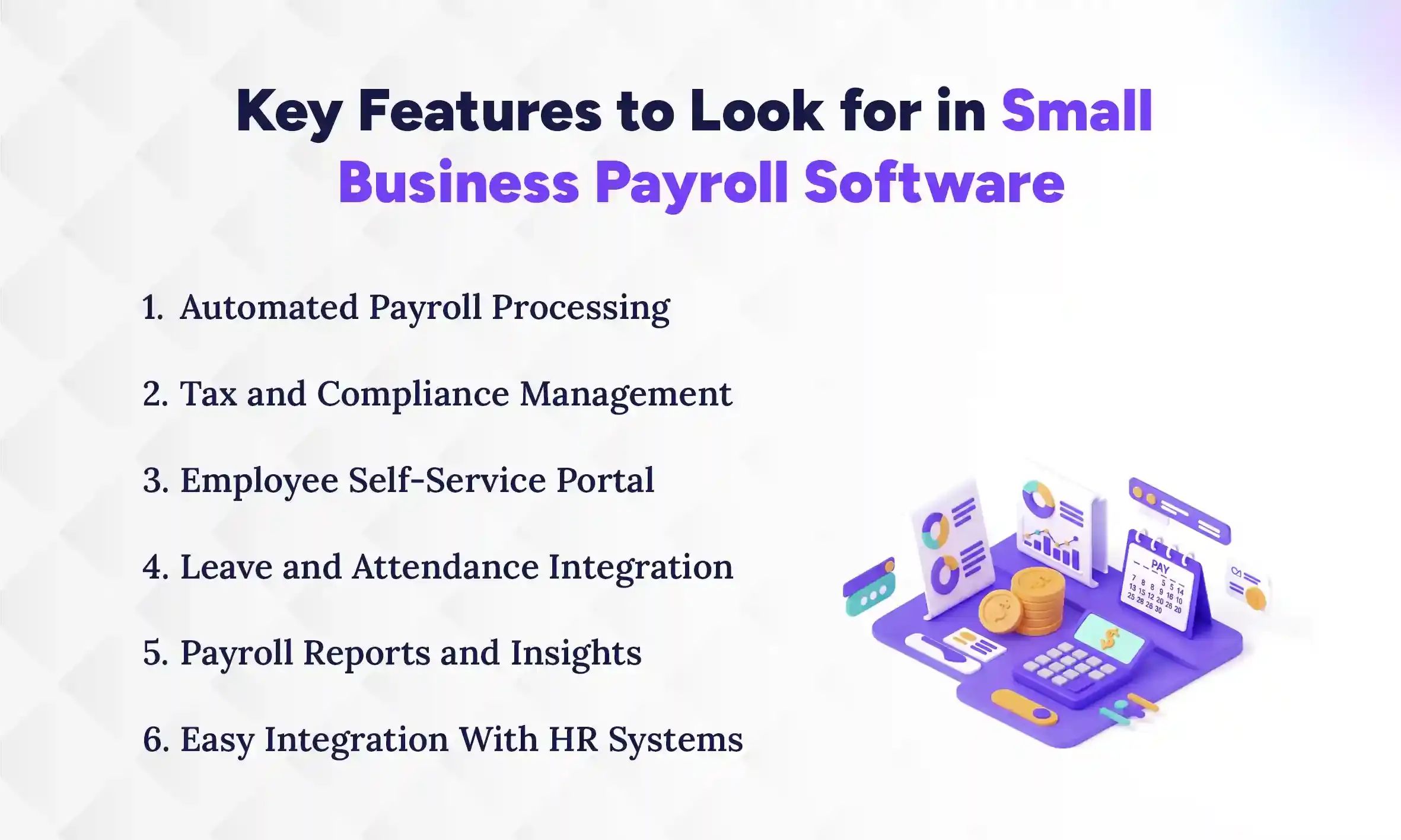
What are the Key Features to Look for in Small Business Payroll Software?
When choosing payroll software for your small business, look for features that simplify work, reduce errors, and save time. The right system doesn’t just calculate salaries, it streamlines the entire payroll process while keeping you compliant and organized. Here are the key features that make payroll software truly valuable for growing businesses:
1. Automated Payroll Processing
Automated payroll processing ensures that salaries are calculated and distributed accurately every time. Instead of manually crunching numbers, the system applies salary rules, deductions, bonuses, and overtime automatically. This reduces mistakes, speeds up the payroll cycle, and ensures employees are paid on time. For small businesses where time is scarce, automation turns a stressful, multi-hour task into a few clicks.
2. Tax and Compliance Management
Payroll software helps businesses stay on top of tax and legal requirements effortlessly. It automatically calculates tax deductions, applies statutory contributions, and generates reports that meet local regulations. With compliance handled in the system, business owners avoid fines, reduce audit risks, and can confidently focus on growth rather than worrying about changing tax rules.
3. Employee Self-Service Portal
An employee self-service portal gives team members instant access to their payroll information. Employees can download payslips, check tax deductions, and review payment history without repeatedly contacting HR. This transparency improves trust, reduces repetitive questions, and allows HR staff to spend their time on more strategic work.
4. Leave and Attendance Integration
Integration with leave and attendance management systems ensures payroll reflects actual working hours, overtime, and absences accurately. When attendance data automatically feeds into payroll calculations, errors are minimized and payroll runs smoothly. This integration also makes it easier to manage complex scenarios like unpaid leave, sick days, or holiday pay.
5. Payroll Reports and Insights
Good payroll software provides detailed reports and analytics to help business owners make informed decisions. You can track payroll costs, understand overtime trends, and identify budgeting needs. These insights are invaluable for planning, reducing costs, and ensuring the business operates efficiently.
6. Easy Integration With HR Systems
Payroll software should connect directly with your HR and accounting tools so all employee information flows smoothly between systems. For example, when a new hire joins, their details automatically update in payroll without re-entering data. Leave balances, attendance records, and performance bonuses shall feed into salary calculations in real time. This reduces mistakes and saves hours of manual work. Integration also helps with reporting, audits, and budgeting by keeping all HR and payroll data consistent and accessible in one place.
Types of Payroll Software for Small Businesses
Choosing the right payroll software starts with understanding the different types available. Not all payroll systems are the same, and each type is designed to meet specific business needs. Some small businesses prefer to handle payroll themselves, while others want a hands-off approach. Here’s a breakdown of the main options, including do it yourself payroll software for small business, so you can pick the one that fits your team.
1. DIY Payroll Software
DIY (Do-It-Yourself) payroll software is for businesses that want full control using a customizable product. You enter employee data, set up salary structures, manage deductions, and run payroll yourself within the software. This gives flexibility and keeps costs lower since you aren’t paying for a service provider.
The trade-off is responsibility: you must ensure tax compliance, legal updates, and correct calculations. DIY systems automate most calculations, but business owners or HR staff still need to review rules and deadlines. This option works best for small teams with simple payroll structures or owners who prefer hands-on management. Done right, it saves money while keeping you in control.
2. Managed Payroll Solutions
Managed payroll solutions are outsourced services where a provider handles everything for you. The service takes care of payroll calculations, tax filings, compliance, and even generating payslips for employees.
Payroll and outsourcing services remove the stress of learning tax rules or updating payroll formulas yourself. It’s ideal for businesses with limited HR staff or owners who want to focus on growth instead of administrative work. While it costs more than DIY software, the reliability, accuracy, and peace of mind are often worth it, especially for growing teams.
3. Integrated HRMS Payroll Systems
Integrated HRMS payroll systems go beyond basic payroll and provide a complete HR platform. These systems combine payroll, attendance tracking, leave management, employee records, and reporting in one place.
With an integrated system, payroll is automatically linked to other HR functions. For example, leave records feed directly into salary calculations, and employee data updates in one module reflect across the system. This reduces errors, saves time, and provides valuable insights for managing your workforce.
For growing businesses or those planning to expand internationally, an integrated HRMS ensures that payroll and HR operations scale smoothly. It’s the best choice for companies that want a professional, all-in-one solution without juggling multiple tools.
Which Is the Best Payroll Software for a Small Business in Nepal?
Pace HRMS is one of the best payroll software for small Nepali businesses that need a smart, reliable, and user‑friendly payroll system. It stands out as a complete HRMS solution, seamlessly combining payroll, attendance, leave, and employee management in one powerful, easy-to-use platform. Alongside, there are several well‑known HRMS and payroll systems in the world today such as Gusto, Zoho People, and QuickBooks Payroll.
Why Pace HRMS Is the Best Payroll Software for Small Businesses?
Pace HRMS is the best payroll software for small businesses because it combines accurate payroll processing with full HR management in one easy-to-use system. It helps businesses save time, reduce errors, and stay compliant while keeping employee records organized. Below, we’ll explore its key features and why it stands out from other HRMS solutions in Nepal.
1. Pace HRMS is built for growing businesses.
Small teams often struggle when they switch from manual processes to software. Pace HRMS is designed to make that transition smooth. You don’t need deep technical skills or a big HR department to start using it. The setup is simple, and the system is scalable, so it supports you as your business grows from a handful of employees to many more without added stress.
2. It provides complete payroll and HR management.
Pace HRMS is more than just a payroll calculator. It brings payroll, attendance tracking, leave management, and employee records into one system. This means you don’t have to copy data between different tools or worry about mismatched records. Everything works together, keeping your HR processes clean and efficient.
3. Pace HRMS brings global expertise with local understanding.
The software operates worldwide, with its headquarters in the United States and a branch in Nepal. It was developed with input from HR and tech professionals who have worked across different industries and markets. This global insight helps Pace HRMS support businesses that operate in multiple regions, while the Nepal presence ensures local needs and regulations are understood.
4. Accurate, automated payroll processing saves time and prevents errors.
One of the biggest challenges in payroll is calculation errors. Pace HRMS handles all calculations automatically based on rules you set. This means salaries, taxes, and deductions are calculated correctly every time. The automated payroll system reduces mistakes and saving you hours of manual checking.
5. Designed for compliance and business efficiency.
Many small business owners feel overwhelmed by changing tax rules and labor laws. Pace HRMS takes this worry off your plate by applying up‑to‑date compliance rules and creating accurate payroll records. Reports are generated quickly and can be used for audits or tax filing without stress.
With all these strengths, Pace HRMS becomes more than just payroll software; it becomes a trusted partner in your business growth journey. It brings global best practices, local insight, and powerful automation together in a way that feels simple and supportive for business owners.
How Much Does Payroll Software Cost?
Most small business payroll solutions charge a monthly base fee plus a small cost per employee, and pricing varies based on features, support, and whether tax filing and compliance tools are included. For basic plans, small businesses in the U.S. often pay around $20 – $100 per month total, with per‑employee fees usually in the range of $5 – $12 per person per month.
How Payroll HRMS Pricing Typically Works
Payroll HRMS pricing usually combines a base monthly fee with a small per-employee charge, so costs grow as your team grows. Base fees cover core payroll functions, while per-employee fees handle individual salary calculations and compliance. Some tools offer free or low-cost plans for very small teams, though these may have limited features or automation.
Base monthly fee: Many payroll plans start around $40 – $50 per month, even before adding employees. For example, popular services like QuickBooks Payroll and Gusto begin near these levels.
Per‑employee fees: On top of that, each employee adds another small monthly charge, often $6–$12 per person, so costs rise gently as your team grows.
Free or low‑cost options: Some tools like Patriot Payroll offer very affordable plans (e.g., around $17 base + $4 per employee), and there are even free payroll tools for very small teams, though they may lack advanced features or tax filing.
Expect smaller bills if you have a tiny team and choose a simple plan, and progressively higher pricing as you add automation, compliance support, and HR integrations. Always check whether tax filing, direct deposit, and year‑end forms are included, as these features often influence the best choice for your budget and growth plans.
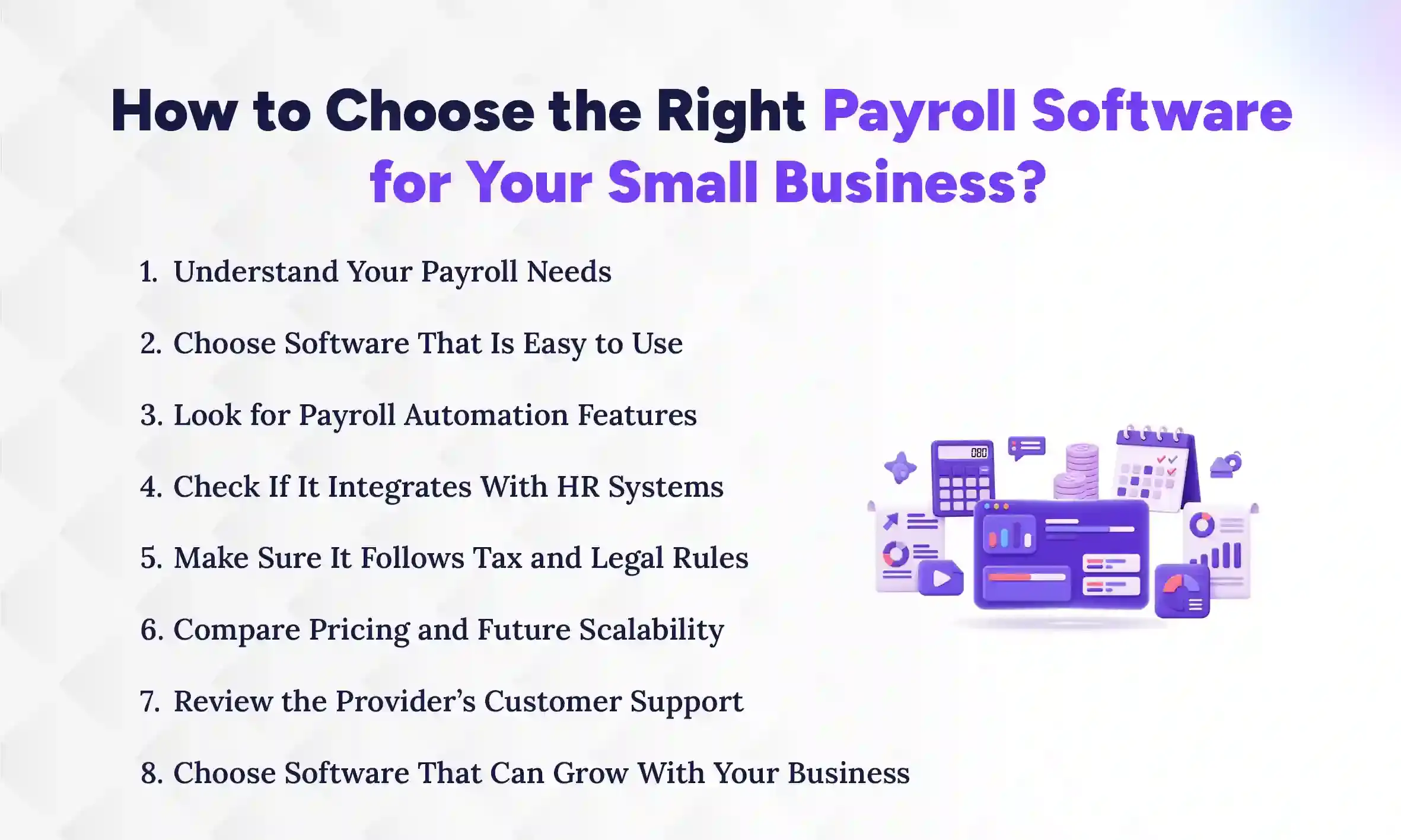
How to Choose the Right Payroll Software for Your Small Business in Nepal?
To choose the right payroll software, assess your payroll needs, prioritize ease of use, check for automation, ensure HR integration, verify compliance, compare pricing, review support, and pick a system that grows with your business. Following these steps ensures you select a solution that saves time, reduces errors, and supports long-term growth.
1. Understand Your Payroll Needs
Start by assessing your payroll complexity. How many employees do you have? Do you offer multiple salary structures, allowances, or overtime pay? Understanding these factors helps you pick software that fits your business without overpaying for unnecessary features.
2. Choose Software That Is Easy to Use
A system that’s simple and intuitive saves time and reduces mistakes. Small business owners shouldn’t need a technical degree to run payroll. Look for software with a clean interface and straightforward workflows so anyone on your team can operate it confidently.
3. Look for Payroll Automation Features
Automation is the real game-changer. Payroll software should automatically calculate salaries, taxes, deductions, and bonuses. Automation reduces errors, saves hours of manual work, and ensures employees are paid accurately and on time.
4. Check If It Integrates With HR Systems
Payroll doesn’t work in isolation. Integration with HR, attendance, and leave systems ensures data flows seamlessly between modules. This reduces duplicate entry, prevents errors, and keeps all employee information up to date.
5. Make Sure It Follows Tax and Legal Rules
Compliance is non-negotiable. The software should automatically apply Nepal tax rules, generate statutory reports, and stay updated with changing regulations. This protects your business from fines and makes audits easier.
6. Compare Pricing and Future Scalability
Evaluate not just the current cost but how the software will scale as your business grows. Look for transparent pricing and plans that can handle more employees or additional features in the future without sudden surprises.
7. Review the Provider’s Customer Support
Even the best software can have questions or issues. Check if the provider offers responsive support, tutorials, or live assistance. Reliable support saves time and reduces frustration when you need help.
8. Choose Software That Can Grow With Your Business
Finally, pick a system that grows as your business does. Whether you hire more employees, expand locations, or add HR functions, the right payroll software should adapt without disruption. This ensures your payroll process stays smooth no matter how fast your company evolves.
Conclusion
For small businesses looking to simplify payroll, reduce errors, and stay compliant, Pace HRMS is the clear choice. From automating salary calculations to managing leave, attendance, and employee records, it provides a complete HR and payroll solution in one easy-to-use platform.
Running payroll manually can be stressful, time-consuming, and risky, especially when your team is growing. Every business owner deserves a system that saves hours of work, ensures accuracy, and gives employees confidence in their pay. Imagine freeing yourself from spreadsheets, last-minute calculations, and tax worries, and focusing on growing your business instead.
Take the step today! Invest in a reliable, automated payroll solution like Pace HRMS and transform the way you manage payroll. With global expertise and local support from The Pace Infosys, it’s built to grow with your business and keep your team happy and organized.
FAQs
Can I do payroll in Excel?
+
Yes, but it’s prone to errors, time-consuming, and lacks automation, reporting, and compliance features, making it risky for growing businesses.
Is Pace Payroll HRMS free or paid?
+
Pace Payroll HRMS is a paid solution, offering scalable plans with full payroll, HR management, and compliance features for small to growing businesses.
How to run payroll step by step?
+
Collect attendance, calculate salaries, apply deductions and taxes, generate payslips, and submit payments. Using payroll software automates and simplifies all these steps.
What is a good payroll software for small business?
+
A good payroll software is accurate, easy to use, automates calculations, integrates with HR, and ensures tax compliance, like Pace HRMS.
Can small businesses run payroll themselves?
+
Yes, small businesses can run payroll manually or via DIY payroll software, but automation is recommended to save time and reduce errors.
How much does payroll software cost?
+
Small business payroll software typically costs $20–$100/month plus $5–$12 per employee, depending on features, automation, and support level.
Is payroll software worth it for small businesses?
+
Absolutely. It saves time, reduces errors, ensures compliance, improves employee transparency, and supports business growth efficiently.
Ready to get started?
Book a 30-minute consultation call, and let's talk about your goals.