
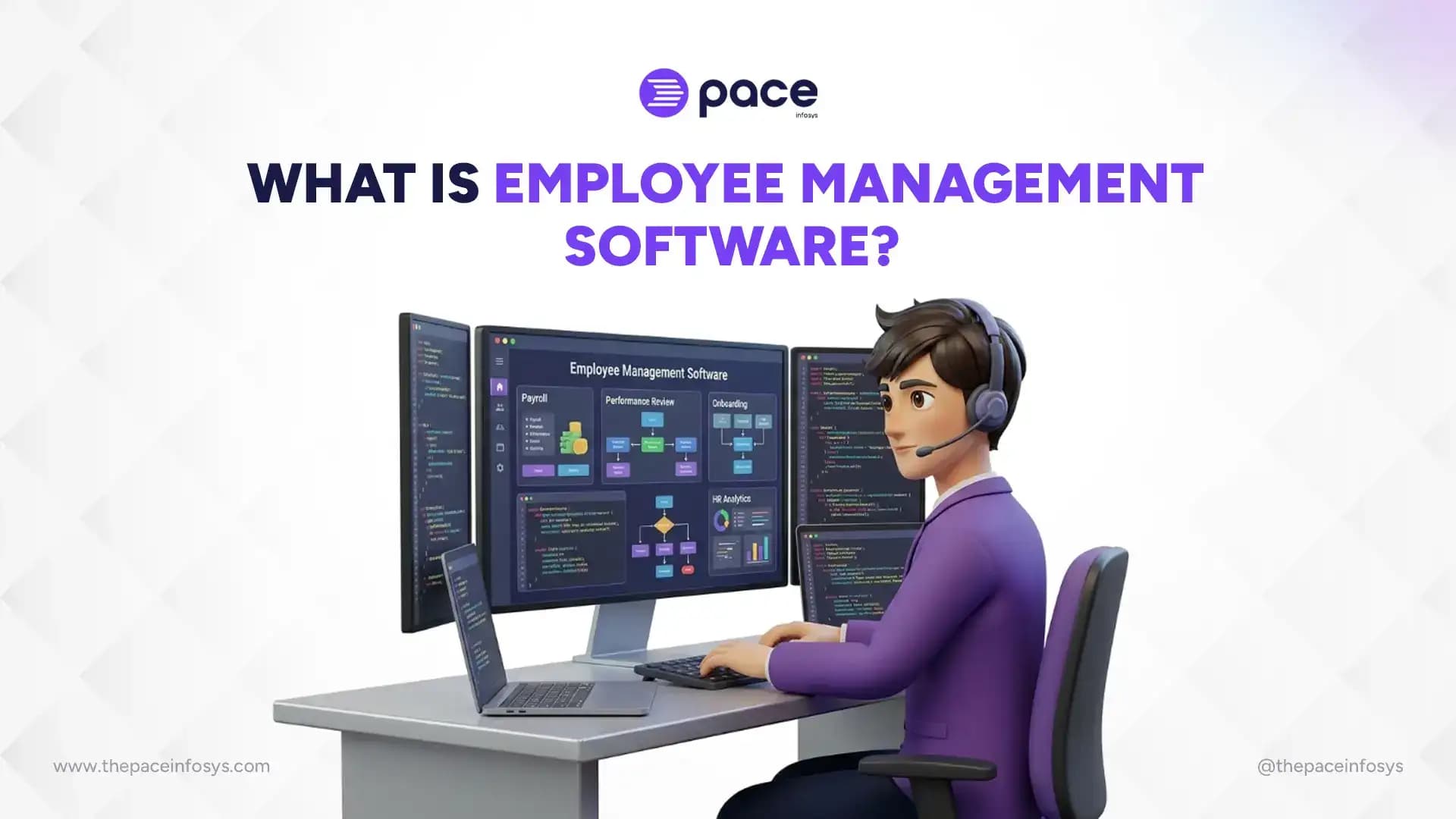

Employee management software is a digital system that helps businesses manage employees, HR tasks, payroll, attendance, leave, and performance in one place. Companies use employee management systems to reduce manual work, improve accuracy, and save time in daily HR operations. Modern HR software also helps managers organise employee records, monitor productivity, and improve communication between teams.
Today, many businesses use employee management software to improve workforce management and automate repetitive HR tasks. Features like attendance tracking, payroll automation, employee self-service portals, and performance monitoring make business operations faster and more efficient. Whether for small businesses or large companies, employee management software helps improve employee experience, data security, and overall business productivity.
What Is Employee Management Software?
Employee management software is a digital system designed to help businesses handle all employee-related activities in one place. It allows companies to manage attendance, payroll, leave requests, performance tracking, scheduling, and employee records through a single platform. This makes HR work more organised, faster, and easier to control, especially in growing organisations.
This software also improves overall workforce efficiency by automating repetitive HR tasks and reducing manual errors. Businesses can track employee data in real time, ensure accurate payroll processing, and improve decision-making with better reporting and analytics. As a result, companies can manage employees more effectively while saving time and improving productivity.
What Does Employee Management Software Do?
Employee management software helps businesses manage employee data, HR operations, payroll, attendance, performance, and recruitment from one centralised platform. It simplifies daily workforce management tasks and improves efficiency by automating manual processes.
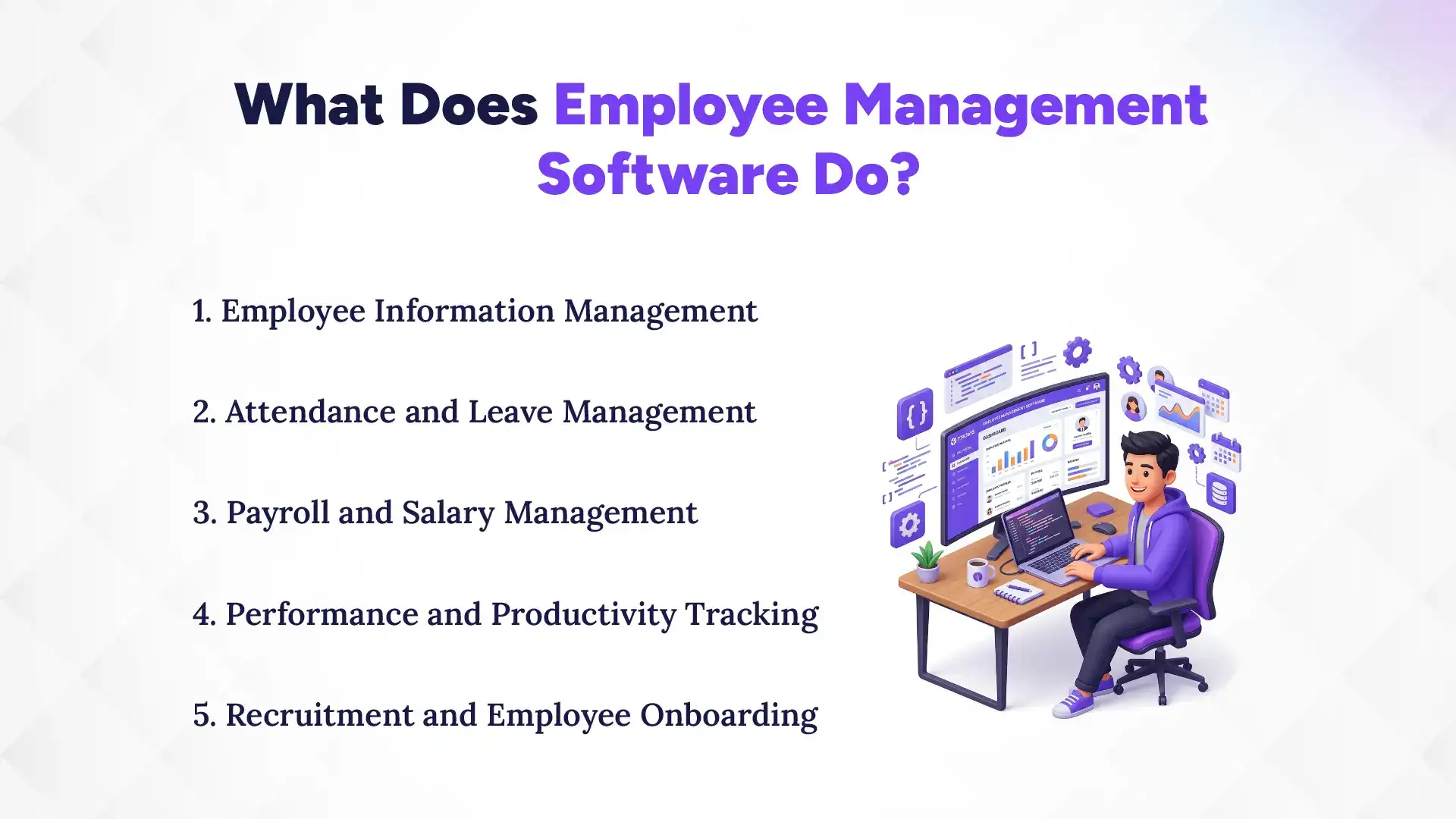
1. Employee Information Management
Employee management software stores employee records, personal details, contracts, and work documents in a secure digital database. HR teams can easily update employee profiles, manage documents, and access information anytime from a centralised system. This reduces paperwork and improves data organisation.
2. Attendance and Leave Management
The software tracks employee attendance, working hours, shifts, and leave requests automatically. Employees can apply for leave online, while managers can approve or reject requests quickly. It also helps companies manage shift scheduling and avoid attendance errors.
3. Payroll and Salary Management
Employee management software automates payroll processing, salary calculations, tax deductions, and payslip generation. It reduces payroll mistakes and helps businesses maintain compliance with labour laws and tax regulations. Automated payroll systems also save HR teams significant time.
4. Performance and Productivity Tracking
The system helps businesses monitor employee performance through KPIs, goals, and performance reviews. Managers can track productivity, measure employee progress, and identify areas for improvement. This supports better workforce planning and employee development.
5. Recruitment and Employee Onboarding
Employee management software simplifies recruitment by managing job applications, candidate information, and hiring workflows. It also improves onboarding by providing digital training materials, employee documents, and onboarding checklists. This creates a smoother experience for new employees and HR teams.
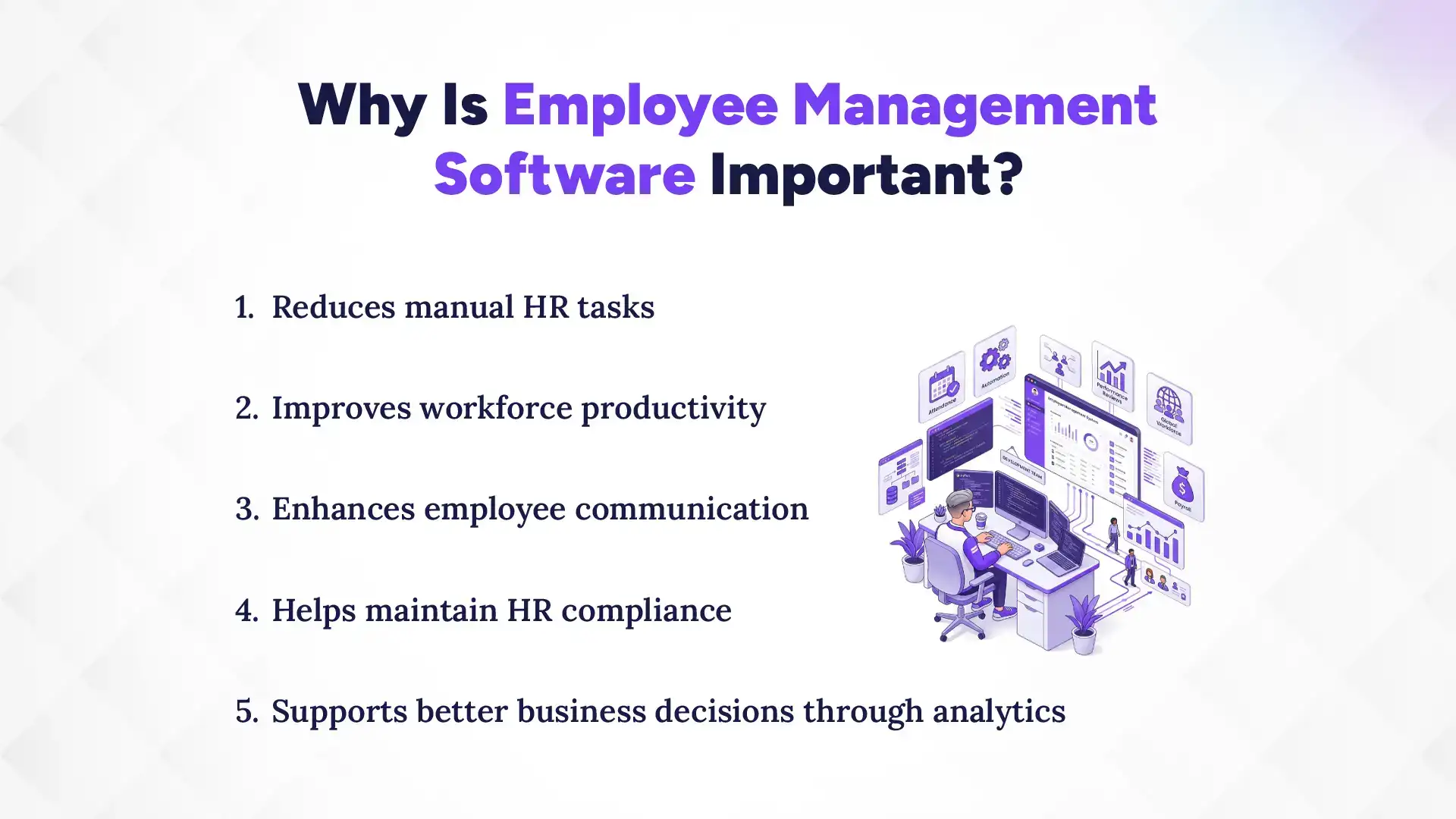
Why Is Employee Management Software Important?
Employee management software is important because it helps businesses automate HR tasks, improve workforce productivity, and manage employee operations more efficiently. It reduces manual paperwork, improves communication between employees and managers, and supports accurate payroll, attendance, and performance tracking.
Modern employee management systems also help companies maintain HR compliance and make better business decisions using real-time reports and analytics. By organising employee data in one platform, businesses can save time, reduce errors, and improve overall employee experience and operational efficiency.
Key Features of Employee Management Software
Employee management software includes powerful features that help businesses manage employees, HR tasks, payroll, attendance, and performance from one centralised system. These tools improve efficiency, reduce manual paperwork, and help companies organise workforce operations more effectively. Modern HR software also supports automation, making daily employee management faster and more accurate.
One of the most important features of employee management software is employee self-service, attendance tracking, payroll integration, and leave management. Employees can check schedules, apply for leave, and access salary details through a self-service portal, while HR teams can monitor attendance, working hours, and payroll processing in real time. Performance management dashboards and productivity tracking tools also help managers evaluate employee performance and track business goals.
Many businesses also prefer cloud-based and mobile-friendly employee management systems because they allow secure access from anywhere. Features like HR reporting, workforce analytics, and role-based user access improve decision-making and data security. These advanced employee management tools help companies improve workforce productivity, communication, and overall employee experience.
1. Employee Self-Service Portal
An employee self-service portal allows employees to access their personal information, salary slips, leave balance, and work schedules from one platform. Employees can also submit leave requests, update profiles, and download important documents without depending on HR staff.
2. Attendance and Time Tracking
Attendance and time tracking features help businesses monitor employee working hours, shifts, overtime, and absences accurately. Automated attendance systems reduce manual errors and improve workforce scheduling and productivity tracking.
3. Payroll Integration
Payroll integration helps companies automate salary calculations, tax deductions, bonuses, and payslip generation. This feature improves payroll accuracy, reduces processing time, and supports compliance with labour and tax regulations.
4. Performance Management Dashboard
Performance management dashboards allow managers to track employee goals, KPIs, and overall work performance in real time. Businesses can use these insights to improve productivity, employee engagement, and career development planning.
5. HR Reporting and Analytics
HR reporting and analytics tools provide detailed reports on employee attendance, payroll, productivity, and workforce trends. These insights help businesses make better HR decisions and improve workforce planning strategies.
6. Mobile-Friendly HR Software
Mobile-friendly employee management software allows employees and managers to access HR tools from smartphones and tablets. This improves flexibility, especially for remote teams and businesses with field employees.
7. Cloud-Based Employee Management Tools
Cloud-based employee management systems store employee data securely online and allow access from any location. Businesses can manage HR operations remotely while improving data backup, security, and system scalability.
8. Role-Based User Access
Role-based user access helps companies control who can view, edit, or manage specific employee information within the system. This feature improves data security and protects confidential HR records from unauthorised access.
Types of Employee Management Software
Different types of employee management software are designed to meet the needs of small businesses, large enterprises, and growing organisations. Businesses choose employee management systems based on company size, workforce requirements, security needs, and operational goals.
1. Cloud-Based Employee Management Software
Cloud-based employee management software stores employee data online and allows businesses to access HR systems from anywhere with an internet connection. This type of software is popular because it offers flexibility, automatic updates, remote access, and lower maintenance costs.
2. On-Premise HR Management Software
On-premise HR management software is installed directly on a company’s internal servers and managed by the organisation itself. Businesses prefer this system when they require higher control over employee data, security, and system customisation.
3. Small Business Employee Management Systems
Small business employee management systems are designed for startups and small companies that need affordable and easy-to-use HR solutions. These systems usually include basic features such as attendance tracking, payroll management, leave management, and employee record storage.
4. Enterprise Workforce Management Solutions
Enterprise workforce management solutions are advanced systems built for large organisations with complex HR operations and a large workforce. These solutions often include performance management, advanced analytics, workforce planning, recruitment management, and multi-location employee management features.
How Does Employee Management Software Improve Business Operations?
Employee management software improves business operations by automating HR tasks, organising employee data, and simplifying workforce management processes. Businesses can manage attendance, payroll, employee performance, and communication more efficiently from one centralised system.
The software streamlines HR processes by reducing repetitive administrative work such as manual attendance tracking, payroll calculations, leave approvals, and document management. Automation helps businesses save time, reduce human errors, and improve the accuracy of HR operations and employee records.
Employee management systems also improve remote workforce management, employee monitoring, and business reporting. Real-time analytics and workforce reports help companies make better decisions, improve productivity, and plan future business growth more effectively.
Benefits of Using Employee Management Software
Employee management software provides several benefits that help businesses improve HR operations, workforce productivity, and employee management processes. It allows companies to automate daily HR tasks, manage employee data efficiently, and improve communication between employees and management teams.
One major benefit of employee management software is better employee engagement and faster HR operations. Employees can easily access payroll information, attendance records, leave requests, and company updates through a centralised system. Automated processes also improve data accuracy by reducing manual errors in payroll, attendance tracking, and employee record management.
Employee management systems also improve data security, workforce monitoring, and overall employee experience. Businesses can track employee performance in real time, generate workforce reports, and protect confidential employee information through secure access controls. These features help companies make better business decisions and create a more organised and productive work environment.
Common Challenges Without Employee Management Software
Businesses without employee management software often face problems related to manual HR processes, poor data management, and inefficient workforce operations. Managing employee records, attendance, payroll, and communication manually can increase errors and reduce overall business productivity.
Manual record-keeping and inefficient payroll processing are some of the most common challenges companies experience without an employee management system. HR teams may struggle with attendance tracking, salary calculations, leave management, and maintaining accurate employee data. These manual processes consume time and increase the risk of payroll mistakes and compliance issues.
Companies also face communication gaps between teams and difficulties managing remote employees without centralised HR software. Tracking employee performance, work schedules, and workforce productivity becomes more complicated when information is scattered across different systems. Employee management software helps businesses solve these challenges by improving organisation, automation, and communication.
Employee Management Software vs HR Management Software
Employee management software and HR management software both help businesses manage employees and HR operations, but they focus on different areas of workforce management. Employee management software mainly handles daily employee-related tasks such as attendance, payroll, scheduling, and performance tracking, while HR management software offers broader HR functions including recruitment, compliance, training, and employee lifecycle management. The main difference between EMS and HRMS is the level of functionality and business scope. Employee management systems are usually designed to simplify workforce operations and improve employee productivity, while HR management systems provide complete HR solutions for managing recruitment, employee development, compliance, benefits, and organisational planning. However, both systems help businesses automate HR processes, improve communication, and manage employee information more efficiently.
The best solution for a business depends on company size, workforce needs, and operational goals. Small businesses often prefer employee management software because it is simple and cost-effective, while larger organisations may require a complete HR management system with advanced HR features and workforce analytics. Choosing the right system helps businesses improve efficiency, employee experience, and long-term workforce management.
Conclusion
Employee management software is a digital HR solution that helps businesses manage employee records, payroll, attendance, performance, and daily workforce operations in a simple and organised way. It reduces manual work, improves accuracy, and brings all HR tasks into one centralised system for better control and efficiency.
HR automation and workforce management are important because they help companies save time, reduce errors, and improve decision-making through real-time data and analytics. With the right system in place, businesses can handle employees more efficiently, maintain compliance, and improve communication across teams.
Overall, employee management software plays a key role in improving productivity and business efficiency. It helps organisations create a more structured, transparent, and performance-driven work environment that supports long-term growth.