Managing an airline today isn’t just about flights and schedules, it’s about handling thousands of passenger interactions, expectations, and experiences all at once. One delayed response, one missed complaint, and suddenly, customer trust starts slipping. In a fast-paced industry like aviation, keeping passengers happy is just as critical as keeping flights on time.
In this blog, we’ll explore CRM Software for Airlines in Nepal and how it helps airlines manage customer relationships, improve passenger experience, and streamline communication across multiple channels. From key features and benefits to practical tips for choosing the right CRM, this guide will walk you through everything you need to know to make a smart, future-ready decision.
What Is CRM Software For Airlines?
CRM software for airlines is a system that helps manage passenger data, customer interactions, and communication to improve the overall customer experience. It centralizes information like bookings, preferences, and support queries in one place. This allows airlines to provide faster, more personalized, and more efficient customer service through crm software solutions that streamline operations and enhance passenger satisfaction.
Why Airlines in Nepal Need Specialized CRM Software?
Airlines in Nepal need specialized CRM software because managing passenger relationships, real-time communication, and personalized experiences manually is inefficient and error-prone. A dedicated CRM system helps centralize customer data, improve service quality, and ensure faster response times using different types of crm tailored to airline operations. It also enables airlines to build stronger relationships with passengers, which directly impacts loyalty and repeat bookings.
1. Managing Passenger Data and Customer Interactions Efficiently
Airlines handle large volumes of passenger data, including bookings, preferences, and travel history. Managing this manually can lead to errors and delays. CRM software centralizes all customer information in one place, making it easier to access and update. It helps staff provide quicker and more accurate responses. This improves overall operational efficiency and customer satisfaction.
2. Handling Real-Time Customer Support and Queries
Passengers often need immediate assistance for bookings, cancellations, or delays. CRM systems enable airlines to respond to queries in real time through multiple channels. This reduces waiting time and improves customer experience. Automated responses and ticketing systems also help manage high volumes of requests. Quick support can significantly improve customer trust.
3. Improving Customer Experience and Personalization
Modern travelers expect personalized experiences based on their preferences and history. CRM software allows airlines to tailor offers, communication, and services accordingly. It helps in sending targeted promotions and relevant updates. Personalization makes passengers feel valued and improves engagement. Over time, this leads to stronger customer relationships.
4. Managing Loyalty Programs and Frequent Flyer Systems
Loyalty programs are essential for retaining customers in the airline industry. CRM systems help track points, rewards, and customer activity efficiently. They automate reward distribution and notifications. This ensures smooth management of frequent flyer programs. A well-managed loyalty system encourages repeat bookings and long-term customer retention.
5. Streamlining Communication Across Multiple Channels
Airlines interact with customers through email, SMS, calls, and social media. Managing all these channels manually can create gaps in communication. CRM software integrates multiple channels into one platform for better coordination. This ensures consistent messaging and faster responses. It also improves the overall communication experience for both staff and passengers.
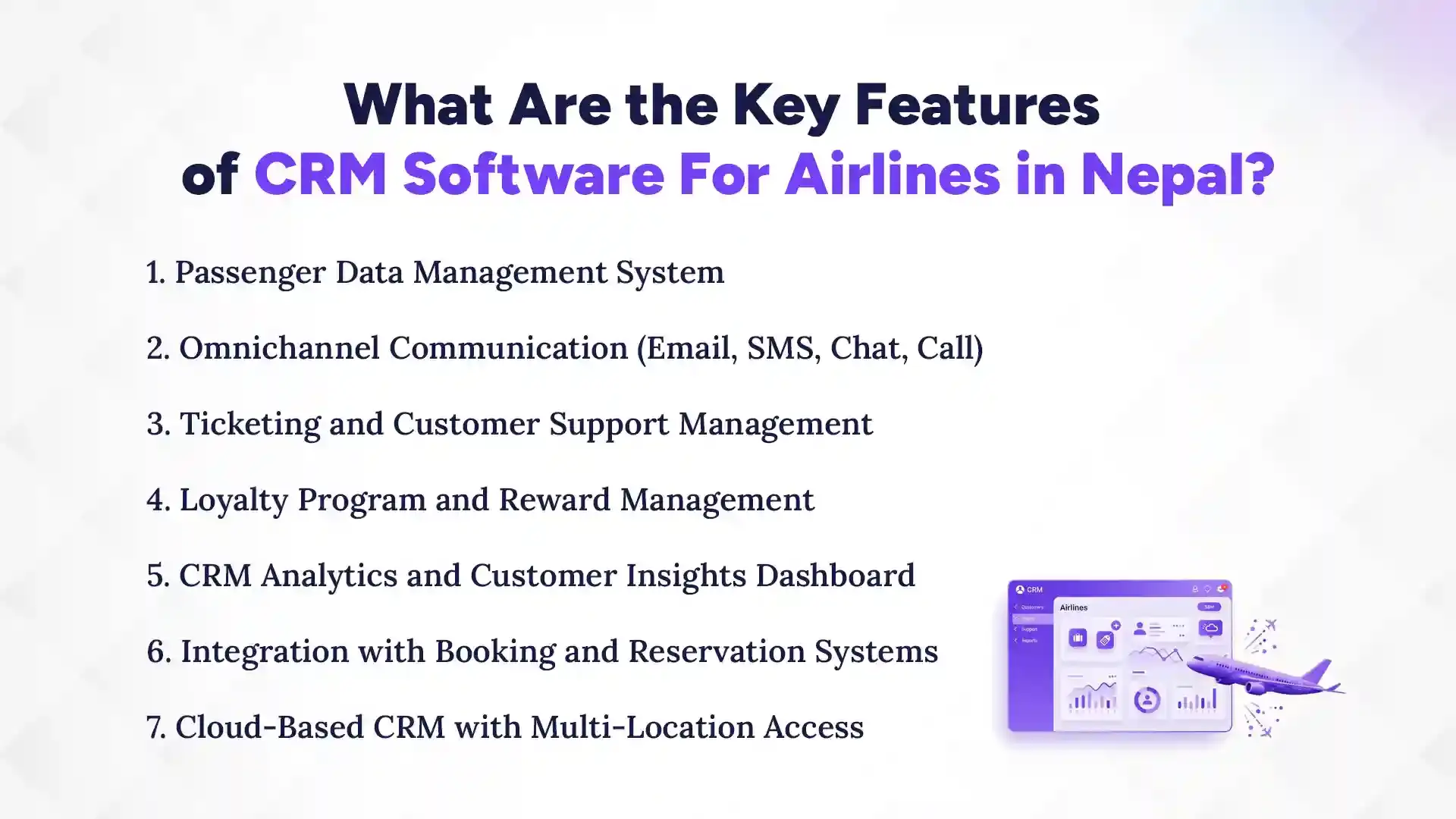
What Are the Key Features of CRM Software For Airlines in Nepal?
The key features of CRM software for airlines in Nepal include passenger data management, omnichannel communication, customer support tools, loyalty management, analytics, and system integrations. These features are designed to handle high-volume customer interactions while improving service quality and efficiency. A well-built CRM helps airlines deliver personalized experiences and manage operations smoothly. In simple terms, it connects customer data with action, so nothing slips through the cracks.
1. Passenger Data Management System
Airlines deal with large amounts of passenger data, including booking history, preferences, and contact details. A CRM system organizes this information in a centralized database for easy access. It allows staff to quickly retrieve and update customer profiles when needed. This reduces errors and improves service speed. Having structured data also helps in better decision-making and personalization.
2. Omnichannel Communication (Email, SMS, Chat, Call)
Passengers interact with airlines through multiple platforms, and managing them separately can be inefficient. CRM software integrates email, SMS, chat, and calls into one unified system. This ensures consistent communication across all channels. It also allows faster responses to customer queries. A seamless communication experience builds trust and improves customer satisfaction.
3. Ticketing and Customer Support Management
Handling customer complaints and queries efficiently is crucial for airlines. CRM systems include ticketing features that track and manage customer issues from start to resolution. Each request is logged and assigned to the right team. This improves accountability and reduces response time. It also ensures that no customer query is overlooked.
4. Loyalty Program and Reward Management
Frequent flyer programs are a key part of customer retention strategies. CRM software tracks points, rewards, and customer activity automatically. It helps airlines manage loyalty programs without manual effort. Notifications and reward updates can be automated. This keeps customers engaged and encourages repeat bookings.
5. CRM Analytics and Customer Insights Dashboard
CRM systems provide detailed analytics on customer behavior, preferences, and interaction history. These insights help airlines understand what customers want and how they behave. Data-driven decisions can improve marketing strategies and service delivery. Real-time dashboards make it easier to monitor performance. Better insights lead to better customer experiences.
6. Integration with Booking and Reservation Systems
CRM software must integrate with airline booking and reservation systems for smooth operations. This allows real-time access to booking data and customer activity. It ensures that all systems work together without manual data entry. Integration reduces errors and improves efficiency. It also helps deliver a more connected customer experience.
7. Cloud-Based CRM with Multi-Location Access
Airlines operate across multiple locations, so accessibility is important. A cloud-based CRM allows staff to access data from anywhere in real time. This supports better coordination between teams and departments. It also ensures scalability as the airline grows. Cloud systems make CRM more flexible, secure, and efficient.
Benefits of Using CRM Software For Airlines in Nepal
Using CRM software for airlines in Nepal helps improve how airlines interact with passengers while making internal processes more efficient. It centralizes customer data, automates communication, and provides real-time insights into customer behavior, highlighting the benefits of crm software in improving efficiency and personalization. This leads to better service delivery and stronger customer relationships. In a competitive aviation market, these benefits can directly impact customer satisfaction and long-term growth.
1. Improved Customer Experience and Satisfaction
CRM software allows airlines to understand passenger preferences, travel history, and behavior. This helps in delivering personalized services and timely communication. Faster responses and better coordination improve overall customer experience. Passengers feel more valued when their needs are addressed quickly. Over time, this leads to higher satisfaction and positive brand perception.
2. Better Customer Retention and Loyalty Management
Retaining existing customers is more cost-effective than acquiring new ones. CRM systems help manage loyalty programs, track customer engagement, and send targeted offers. This keeps passengers connected with the airline. Personalized rewards and communication encourage repeat bookings. Strong retention strategies lead to long-term customer relationships.
3. Faster Response to Customer Queries and Complaints
Airlines receive a high volume of customer queries daily, especially during delays or cancellations. CRM systems streamline support by organizing and tracking all requests. Automated responses and ticketing systems ensure faster resolution. This reduces waiting time and improves customer trust. Quick support can significantly enhance the overall experience.
4. Data-Driven Decision Making for Airlines
CRM software provides valuable insights into customer behavior, preferences, and trends. Airlines can use this data to improve services, marketing strategies, and operational decisions. Real-time analytics help identify what works and what doesn’t. This reduces guesswork and improves efficiency. Data-driven decisions lead to better business outcomes.
5. Reduced Manual Work and Improved Efficiency
Manual processes can slow down operations and increase the chances of errors. CRM software automates tasks like data entry, communication, and reporting. This saves time and reduces workload for staff. It also improves accuracy and consistency across operations. Overall, it helps airlines operate more efficiently with fewer resources.
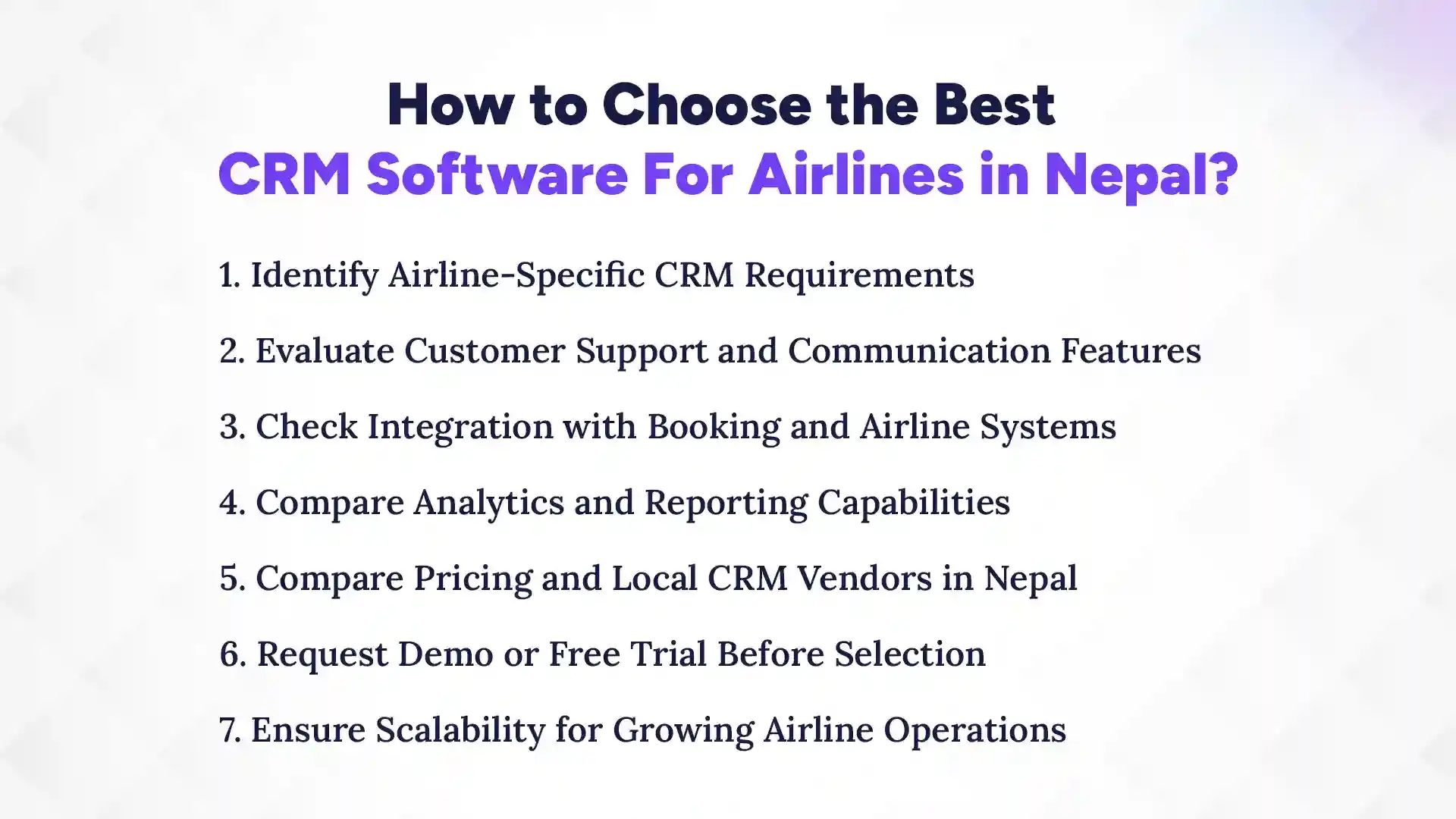
How to Choose the Best CRM Software For Airlines in Nepal?
You can choose the best CRM software for airlines in Nepal by evaluating your airline’s customer management needs, communication tools, integration capabilities, analytics features, pricing, and scalability. The right CRM should align with your operations and improve both customer experience and efficiency, helping you choose the right crm for your business more effectively. It should also be easy to use and flexible enough to grow with your business. A well-chosen CRM can make a noticeable difference in how smoothly your airline operates.
1. Identify Airline-Specific CRM Requirements
Every airline has different operational needs, so understanding your requirements is the first step. Consider factors like passenger volume, support channels, and loyalty programs. Identify what problems you want the CRM to solve. This helps in selecting a system that truly fits your workflow. Starting with clarity prevents costly mistakes later and ensures better long-term results.
2. Evaluate Customer Support and Communication Features
Customer interaction is a major part of airline operations. The CRM should support multiple communication channels, such as email, SMS, chat, and calls. It should also offer automation for faster responses. Good communication tools improve response time and customer satisfaction. A strong support system can significantly enhance the passenger experience and reduce service delays.
3. Check Integration with Booking and Airline Systems
CRM software must work seamlessly with booking and reservation systems. This ensures real-time access to customer and travel data. Integration reduces manual work and improves accuracy. It also helps create a connected system across departments. Without proper integration, operations can become fragmented and inefficient.
4. Compare Analytics and Reporting Capabilities
Analytics features help airlines understand customer behavior and performance metrics. A good CRM should provide clear reports and real-time insights. These insights support better decision-making and strategy planning. Data-driven approaches improve marketing and service quality. Strong reporting tools are essential for long-term growth and continuous improvement.
5. Compare Pricing and Local CRM Vendors in Nepal
Pricing should be evaluated based on features and value, not just cost. Local CRM vendors in Nepal may offer better support and customization. It’s important to compare different options carefully. Consider implementation, training, and maintenance costs as well. Choosing the right vendor ensures smooth, long-term use and better support.
6. Request Demo or Free Trial Before Selection
Testing the CRM before buying is always a smart move. A demo or free trial helps you understand how the system works in real scenarios. It allows you to evaluate usability, features, and performance. You can also identify any limitations early. This step reduces the risk of choosing the wrong software and builds confidence in your decision.
7. Ensure Scalability for Growing Airline Operations
As your airline grows, your CRM should be able to handle increased demand. It should support more users, data, and advanced features over time. Scalable systems prevent the need for frequent replacements. They also support long-term efficiency and expansion. Planning for growth now avoids future complications and unnecessary costs.
What Makes CRM Software For Airlines in Nepal Different from Other Industries?
CRM software for airlines in Nepal is different from other industries because it must handle real-time customer interactions, high booking volumes, complex loyalty systems, and seamless integration with flight operations, showing how does crm works in a fast-paced aviation environment. Unlike traditional businesses, airlines operate in a time-sensitive setting where delays or miscommunication can directly impact customer satisfaction. This makes airline CRM systems more dynamic, responsive, and integration-focused.
1. High Volume of Customer Interactions and Bookings
Airlines deal with thousands of passengers ежедневно, each generating multiple interactions like bookings, cancellations, and inquiries. Managing this volume manually is nearly impossible. CRM software helps organize and track every interaction efficiently. It ensures no customer request is missed or delayed. Handling such high volumes smoothly is a key requirement unique to the airline industry.
2. Need for Real-Time Customer Communication
Passengers expect instant updates regarding flight status, delays, or changes. CRM systems enable real-time communication through SMS, email, and notifications. This ensures passengers are always informed and reduces frustration. Quick communication improves trust and customer experience. In airlines, even a small delay in communication can create major issues.
3. Complex Loyalty and Reward Systems
Airline loyalty programs are more complex than typical reward systems. They involve points, tiers, benefits, and frequent flyer programs. CRM software manages these systems automatically and accurately. It tracks customer activity and ensures rewards are updated in real time. A well-managed loyalty system plays a big role in customer retention.
4. Integration with Reservation and Flight Systems
Airline CRM must integrate with booking and flight management systems for seamless operations. This allows real-time syncing of customer data and travel details. Integration reduces manual errors and improves efficiency across departments. It ensures that customer service teams have up-to-date information. Without this integration, operations can become disconnected and inefficient.
Which Is the Best CRM Software For Airlines in Nepal?
Pace CRM is the best CRM software for airlines in Nepal because it offers a complete solution for managing passenger data, communication, loyalty programs, and customer support in one platform. It is designed to handle high-volume interactions while providing real-time insights and automation. With strong integration capabilities and scalable features, it helps airlines improve customer experience and operational efficiency. It also supports data-driven decision-making, making it a reliable choice for growing airline businesses.
Common Challenges Airlines Face Without CRM Software
Without CRM software, airlines often struggle to manage customer relationships efficiently in a fast-moving environment. Disconnected systems, delayed responses, and scattered data can negatively impact passenger experience. Over time, these issues lead to reduced customer satisfaction and missed business opportunities. In a competitive industry like aviation, relying on manual processes can quickly become a serious disadvantage.
1. Poor Customer Experience and Delayed Responses
Without a centralized system, handling customer queries becomes slow and inconsistent. Passengers may face delays in getting responses to their issues or requests. This creates frustration and damages trust in the airline. In time-sensitive situations like flight delays, slow communication makes things worse. A poor experience can easily lead customers to switch to competitors.
2. Difficulty Managing Passenger Data Efficiently
Airlines generate large amounts of customer data, and managing it manually can be overwhelming. Information often gets scattered across different systems or departments. This makes it difficult to access accurate and updated data quickly. Errors and duplication become more common. Inefficient data management reduces overall operational effectiveness.
3. Lack of Customer Insights and Analytics
Without CRM tools, airlines miss out on valuable insights about customer behavior and preferences. This limits their ability to create targeted marketing strategies. Decisions are often based on assumptions rather than data. It becomes harder to identify trends or improve services. Lack of insights directly impacts growth and customer engagement.
4. Inefficient Communication Across Channels
Managing communication across email, phone, SMS, and social media without integration creates confusion. Messages can get missed or delayed between teams. This leads to inconsistent responses and poor coordination. Customers may need to repeat their issues multiple times. Inefficient communication reduces service quality and customer satisfaction.
5. Weak Customer Retention and Loyalty Programs
Without proper systems, managing loyalty programs becomes difficult and inconsistent. Airlines may fail to track rewards, points, and customer activity accurately. This reduces the effectiveness of retention strategies. Customers feel less valued and may not return. Weak loyalty management directly affects long-term revenue.
Future of CRM Software For Airlines in Nepal
The future of CRM software for airlines in Nepal is moving toward smarter, faster, and more personalized customer management systems. As technology evolves, CRM platforms will rely more on AI, automation, and real-time data to improve passenger experience. Airlines will shift from reactive service to proactive engagement. In simple terms, CRM will become less about managing customers and more about understanding them deeply.
1. AI-Based Customer Support and Chatbots
AI-powered chatbots are transforming how airlines handle customer queries. They can respond instantly to common questions related to bookings, delays, and services. This reduces the workload on support teams and improves response time. Chatbots are available 24/7, ensuring passengers always get assistance. Over time, AI systems will become smarter and handle more complex interactions.
2. Personalized Customer Experience Through Data Analytics
CRM systems will use data analytics to understand passenger behavior, preferences, and travel patterns. This allows airlines to offer personalized deals, recommendations, and communication. Customers receive more relevant and timely information. Personalization improves satisfaction and engagement. It also helps airlines build stronger long-term relationships with passengers.
3. Mobile CRM for Airline Customer Service Teams
Mobile CRM solutions allow airline staff to access customer data and manage interactions on the go. This is especially useful for teams working at airports or in remote locations. Real-time access improves responsiveness and coordination. It also enables faster decision-making during critical situations. Mobile CRM makes operations more flexible and efficient.
4. Integration with AI and Predictive Customer Behavior Tools
Future CRM systems will integrate with AI tools that predict customer behavior and needs. Airlines can anticipate issues, preferences, and booking patterns before they happen. This allows for proactive service and better planning. Predictive analytics helps improve marketing strategies and customer retention. It turns data into actionable insights for smarter decisions.
Conclusion
Choosing the right CRM software for airlines in Nepal is no longer optional, it’s becoming essential for delivering better customer experiences and staying competitive. From managing passenger data to improving communication and loyalty programs, a well-implemented CRM can transform how airlines operate. It helps reduce manual work, improve efficiency, and ensure that no customer interaction is missed.
In the end, the best CRM is the one that fits your airline’s specific needs and can grow with your operations. Take time to evaluate features, integrations, and scalability before making a decision. A smart investment in CRM today can lead to stronger customer relationships and long-term business growth with solutions like The Pace Infosys helping streamline operations. And honestly, in today’s market, that’s what really makes the difference.
FAQs
What is CRM software for airlines in Nepal?
+
It helps manage passenger data, communication, and customer relationships efficiently.
Why do airlines need CRM software?
+
To improve customer experience, manage data, and handle communication effectively.
What features should airline CRM software include?
+
Passenger data, communication tools, analytics, loyalty management, and system integration.
Is CRM software useful for small airlines in Nepal?
+
Yes, it helps streamline operations and improve customer service even for small airlines.
Can CRM software improve customer satisfaction?
+
Yes, it enables faster responses and personalized services for passengers.
How does CRM help in managing loyalty programs?
+
It tracks rewards, points, and customer activity automatically and efficiently.
Is cloud-based CRM better for airlines?
+
Yes, it offers real-time access, flexibility, and scalability for operations.
Which is the best CRM software for airlines in Nepal?
+
Pace CRM is best due to automation, scalability, and airline-specific features.
Ready to get started?
Book a 30-minute consultation call, and let's talk about your goals.