


Ever felt like tracking employee leaves is more confusing than managing the leaves of a tree in autumn, some fall unexpectedly, some disappear, and some well, no one knows where they went? If you’re running a business in Nepal, you’ve probably dealt with messy spreadsheets, last-minute leave requests, and that awkward “Was I on leave that day?” conversation more times than you’d like to admit.
In this blog, we’ll break down everything you need to know about a Leave Management System in Nepal, from what it actually is and why businesses are adopting it, to its features, benefits, types, and how to choose the right one for your organization. Whether you’re an HR professional, business owner, or just curious, this guide will make things a whole lot clearer (and maybe a little easier too).
What Is a Leave Management System in Nepal?
Leave management system in Nepal is a digital tool that helps organizations efficiently track, manage, and approve employee leaves, absences, and holidays in one centralized platform. It replaces manual methods like spreadsheets or paper records by automating leave requests, approvals, and balance tracking, reducing errors and confusion. Unlike traditional systems, it offers real-time updates, better transparency, and seamless integration with HR and payroll processes, often alongside attendance management software in Nepal for complete workforce tracking. As businesses in Nepal grow and workforce management becomes more complex, many companies are shifting toward digital HR solutions to save time, ensure compliance, and improve overall efficiency.
Why Do Businesses in Nepal Need a Leave Management System?
Businesses in Nepal need a leave management system because managing employee leaves manually is no longer practical with growing teams and complex workforce structures. It helps reduce errors, ensures smooth approval workflows, and keeps organizations compliant with the Nepal Labor Act. More importantly, it brings clarity, saves time, and improves overall HR efficiency, something every modern organization quietly struggles with.
- Handles Growing Workforce Complexity: As corporates, NGOs, and INGOs expand, tracking leave manually becomes messy and hard to manage.
- Reduces Errors and Miscommunication: Manual records often lead to mistakes, duplicate entries, or confusion about leave balances.
- Ensures Legal Compliance: Helps organizations align with Nepal Labor Act requirements for leave policies and record-keeping.
- Speeds Up Approval Processes: No more chasing signatures, automated workflows make approvals quick and transparent.
- Improves HR Efficiency: HR teams can focus on strategic work instead of repetitive administrative tasks.
Enhances Employee Experience: Employees get clear visibility of their leave status, reducing unnecessary back-and-forth.
Core Features of a Leave Management System
Modern leave management system in Nepal isn’t just about approving holidays, it’s more like the control center of your HR operations (yes, the quiet hero behind smooth workflows). It automates repetitive tasks, reduces human errors, and ensures every leave request is tracked properly from start to finish. From policy customization to real-time reporting ,key features of hrms, these systems bring structure to what used to be chaos. And honestly, once you use one, going back to Excel feels like going back to dial-up internet.
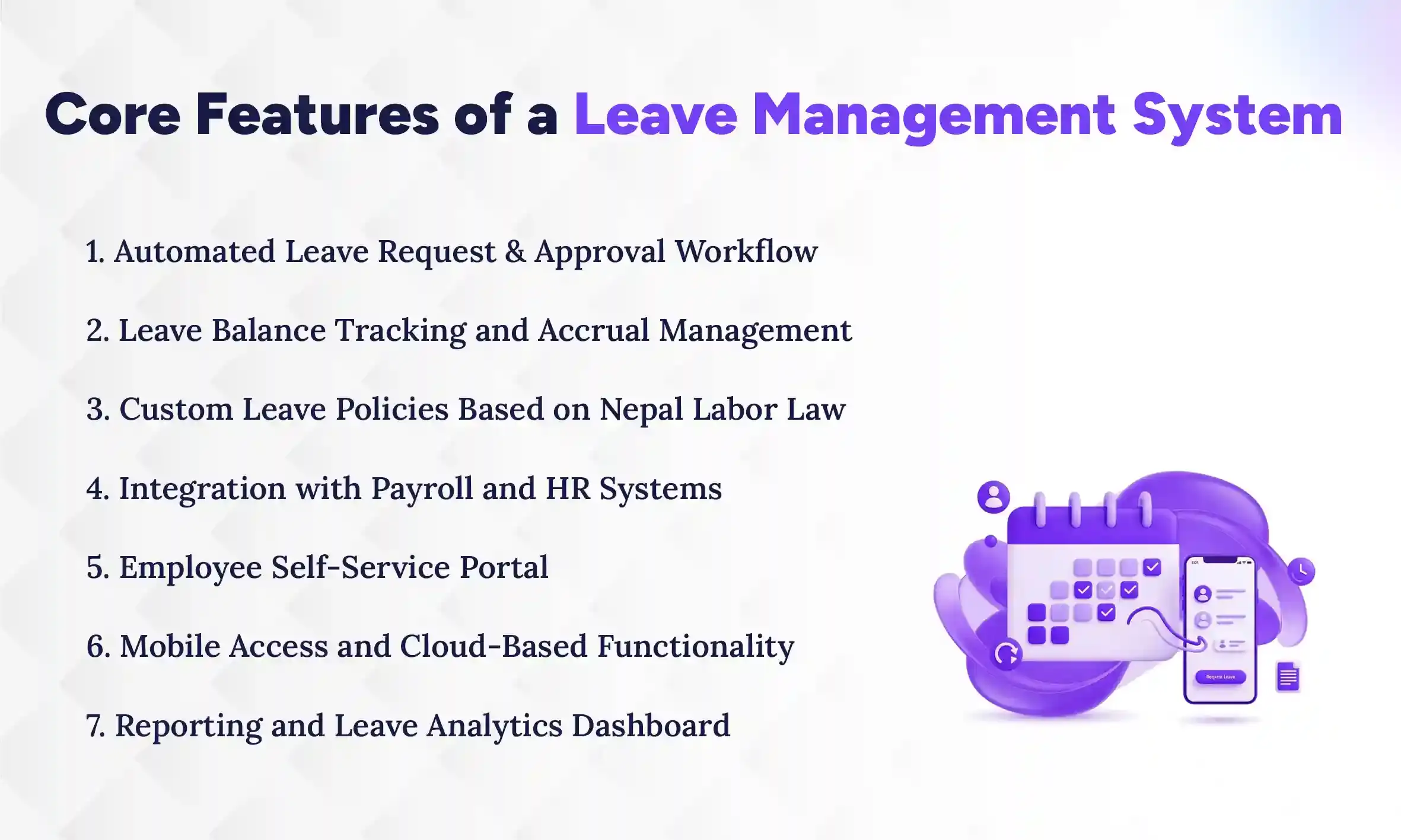
1. Automated Leave Request & Approval Workflow
Leave management system allows employees to apply for leave digitally within seconds, no forms, no chasing HR. Managers receive instant notifications and can approve or reject requests with just a click. This reduces delays and ensures transparency in the approval process. It also keeps a proper record of every request, avoiding those “I already told you” situations. Overall, it creates a smooth, accountable workflow that saves time for everyone.
2. Leave Balance Tracking and Accrual Management
The system automatically tracks each employee’s leave balance in real time, including sick leave, casual leave, and annual leave. It calculates accruals based on company policies, so there’s no need for manual updates. Employees can easily check how many leave days they have left, which reduces confusion. HR teams also get accurate data without digging through spreadsheets. It’s simple, clean, and surprisingly stress-free.
3. Custom Leave Policies Based on Nepal Labor Law
A good system allows organizations to set leave policies that align with the Nepal Labor Act and company rules. You can define different leave types, eligibility criteria, and approval hierarchies. This ensures compliance while still giving flexibility to organizations. It also helps avoid legal issues caused by incorrect leave handling. In short, it keeps your policies both smart and safe.
4. Integration with Payroll and HR Systems
Leave data can be directly integrated with payroll and other HR systems, making salary calculations more accurate. For example, unpaid leaves or excess absences are automatically reflected in payroll. This reduces manual errors and saves HR teams a lot of time during salary processing. It also ensures consistency across different HR functions. Everything stays connected, just like it should be.
5. Employee Self-Service Portal
Employees get access to a dashboard where they can apply for leave, check balances, and view leave history. This reduces dependency on HR for basic queries (which HR secretly loves). It also promotes transparency, as employees always know their leave status. The portal is usually simple and user-friendly, making it easy for anyone to use. Less confusion, more control.
6. Mobile Access and Cloud-Based Functionality
Most modern systems are cloud-based, meaning employees can access them anytime, anywhere, even from their phones. This is especially useful for remote teams or field employees. Mobile access ensures that leave requests and approvals are never delayed. Plus, cloud storage keeps data secure and easily accessible. It’s flexibility at its best.
7. Reporting and Leave Analytics Dashboard
The system provides detailed reports on leave trends, absenteeism, and employee behavior. HR teams can use this data to make better workforce decisions and plan. It also helps identify patterns like frequent absences or seasonal trends. These insights are valuable for improving productivity and managing teams effectively. Data, when used right, becomes a superpower here.
Benefits of Using a Leave Management System in Nepal
Leave management system in Nepal isn’t just another HR tool, it’s more like that one organized friend who keeps everything in check when things start getting messy. It simplifies leave tracking, reduces administrative burden, and ensures everything runs smoothly behind the scenes. For growing businesses, especially in Nepal’s evolving work environment, it brings much-needed structure and clarity, highlighting the benefits of using hr software in real-world operations. And the best part? It improves both HR efficiency and employee satisfaction at the same time (a rare win-win, honestly).
1. Reduces Manual Errors in Leave Tracking
Manual systems are prone to mistakes, wrong entries, missed updates, or duplicated data (we’ve all seen those Excel disasters). A leave management system automates calculations and updates in real time, ensuring accuracy. It keeps all leave records in one place, reducing confusion and inconsistencies. HR teams no longer have to double-check everything manually. Fewer errors, less stress. It also builds trust in data, which is critical for decision-making.
2. Saves Time for HR and Management Teams
Approving leaves, updating records, and answering employee queries can take up a huge chunk of HR’s day. With automation, these tasks are handled quickly and efficiently. Managers can approve requests in seconds, and HR doesn’t need to chase paperwork. This frees up time for more strategic work instead of repetitive admin tasks. Time saved here actually matters more than you think. Over time, this efficiency adds up to significant productivity gains.
3. Ensures Compliance with Nepal Labor Laws
Nepal has specific labor laws regarding employee leave, and keeping track manually can lead to compliance risks. A leave management system helps organizations align their policies with legal requirements. It ensures proper record-keeping and accurate leave calculations. This reduces the chances of legal issues or penalties. Basically, it keeps you on the safe side of the law. It also prepares organizations better for audits and inspections.
4. Improves Employee Experience and Transparency
Employees often feel frustrated when they don’t know their leave status or balance. A digital system provides full transparency, employees can check everything anytime. It reduces back-and-forth communication with HR. Clear processes also build trust within the organization. When employees feel informed, they feel valued (simple, but powerful). This ultimately boosts morale and workplace satisfaction.
5. Enhances Workforce Productivity
When leave management is smooth and predictable, teams can plan better and avoid disruptions. Managers can see who is available and allocate work accordingly. This reduces last-minute surprises and workload imbalance. Employees also tend to be more responsible when systems are transparent. In the end, better planning leads to better productivity, no magic, just good systems. And when productivity improves, overall business performance naturally follows.
What Are the Types of Leave Management Systems?
There are mainly four types of leave management systems used in Nepal: manual, cloud-based, integrated HR systems, and mobile-based applications. Each type varies in terms of efficiency, scalability, and ease of use depending on the organization’s size and needs. While traditional methods still exist, most businesses are gradually shifting toward digital solutions for better accuracy and convenience. Choosing the right type depends on how complex your workforce and HR operations are (and honestly, how much headache you want to avoid).
1. Manual Leave Management System (Traditional Method)
This is the old-school method where leave is tracked using paper forms or Excel sheets. It may seem simple and low-cost, especially for small businesses, but it comes with a lot of limitations. Data can easily get lost, misrecorded, or duplicated, leading to confusion. Approvals take longer since everything is done manually. There’s also very little transparency for employees. Over time, as the organization grows, this method becomes more of a burden than a solution.
2. Cloud-Based Leave Management Software
Cloud-based systems are the most popular choice in Nepal today, mainly because of their flexibility and accessibility. Employees and managers can access the system from anywhere with an internet connection. All data is stored securely in the cloud, reducing the risk of loss. These systems offer automation, real-time updates, and seamless workflows. They are also scalable, meaning they can grow with your business. Simply put, it’s like upgrading from a notebook to a smart system that does half the work for you.
3. Integrated HR Management Systems (HRMS)
HRMS combines leave management with other HR functions like attendance, payroll, recruitment, and performance management. This creates a centralized system where all employee data is connected. It reduces the need for multiple tools and ensures consistency across HR operations. Leave data automatically reflects in payroll and reports, saving time and reducing errors. It’s ideal for medium to large organizations looking for a complete HR solution. Think of it as an all-in-one package rather than separate tools.
4. Mobile-Based Leave Management Applications
Mobile-based systems allow employees to apply for leave directly from their smartphones. This is especially useful for remote workers, field staff, or organizations with multiple locations. Notifications, approvals, and updates happen instantly, improving response time. These apps are usually user-friendly and easy to adopt. They bring convenience to both employees and managers. In today’s fast-paced work environment, having HR in your pocket isn’t just nice, it’s almost expected.
Models of Leave Management System in Nepal
When it comes to implementing a leave management system in Nepal, businesses can choose between different deployment models based on their needs, budget, and technical capacity. These models mainly differ in how the system is hosted, accessed, and maintained. Some offer flexibility and remote access, while others focus on control and data security. Understanding these models helps organizations pick a solution that fits their workflow (and avoids future headaches). Let’s break down the three most common ones.
1. Cloud-Based Leave Management Systems
Cloud-based systems are hosted online and can be accessed from anywhere with an internet connection. They are easy to set up, require minimal IT support, and offer automatic updates. This model is highly scalable, making it suitable for growing businesses in Nepal. Data is securely stored in the cloud, reducing the risk of loss. It’s a cost-effective and flexible option for most modern organizations.
2. On-Premise Leave Management Systems
On-premise systems are installed and managed within the company’s own servers and infrastructure. This gives organizations full control over their data and system security. However, it requires higher upfront investment and ongoing IT maintenance. Updates and troubleshooting must be handled internally. It is usually preferred by larger organizations with dedicated IT teams. While powerful, it can be less flexible compared to cloud solutions.
3. Hybrid HR Software Solutions
Hybrid systems combine both cloud and on-premise features, offering a balance between flexibility and control. Some data or functions are stored locally, while others are accessible via the cloud. This allows organizations to customize their setup based on specific needs. It’s ideal for businesses that want both security and remote accessibility. Though slightly more complex, it provides a tailored solution for evolving HR demands.
How Does a Leave Management System Work?
Leave management system works by automating the entire leave process from request to approval and final record update. An employee applies for leave through the system, which is then forwarded to the manager for approval or rejection. Once approved, the HR team gets notified and the leave is recorded in the system, automatically updating the employee’s leave balance and syncing with payroll if needed. For example, in a Nepali company, an employee applies for Dashain leave online, the manager approves it instantly, and HR doesn’t have to manually update anything, everything is tracked in real time, clean and hassle-free.
How to Choose the Best Leave Management System in Nepal?
Choosing the best leave management system in Nepal means selecting a solution that fits your business needs, complies with labor laws, and improves HR efficiency. The right system should simplify leave tracking, integrate smoothly with existing tools, and scale as your organization grows. In short, it should solve your current problems, not create new ones (which some software surprisingly does).
1. Understand Your Business Size and Workforce Needs
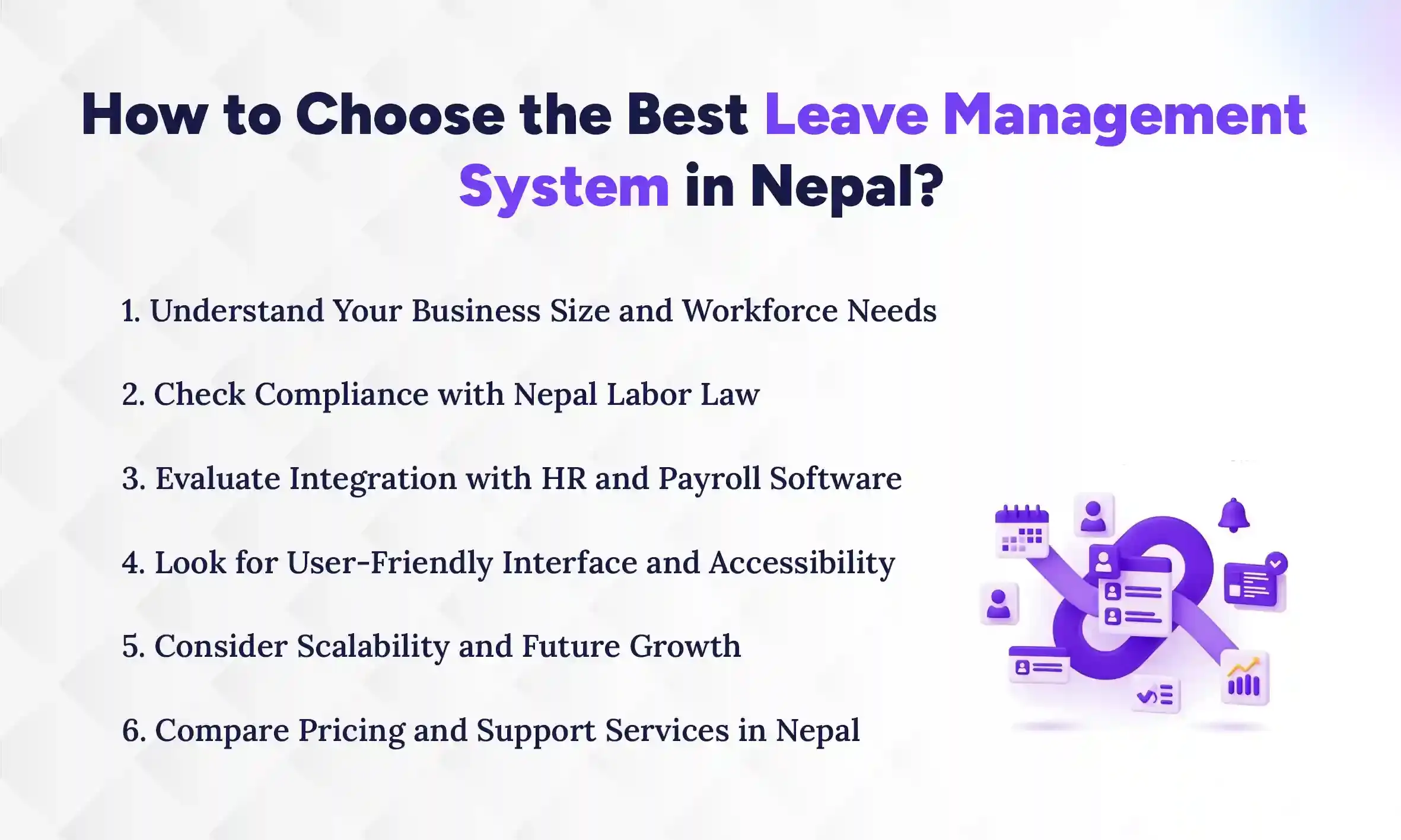
The first step is to evaluate how big your team is and how complex your operations are. A small company may need basic features, while larger organizations require advanced automation and reporting. Different industries in Nepal, like corporates, NGOs, or INGOs, have different leave structures. So, your system should match your actual workflow, not just look good on paper. Choosing the wrong scale can either overcomplicate things or limit growth.
2. Check Compliance with Nepal Labor Law
Your system must support leave policies that align with Nepal Labor Act requirements. This includes different leave types, accrual rules, and record-keeping standards. A good system ensures compliance automatically, reducing legal risks. It also maintains proper documentation, which is important during audits. Without compliance, even the best system becomes a liability. So this is non-negotiable.
3. Evaluate Integration with HR and Payroll Software
A leave management system should integrate seamlessly with HR and payroll systems to ensure accurate salary calculations. Leave data directly impacts payroll, especially for unpaid leaves or deductions. Integration eliminates the need for manual data entry and reduces errors. It also keeps all employee data connected in one ecosystem. This saves time and improves overall efficiency.
4. Look for User-Friendly Interface and Accessibility
If the system is complicated, employees simply won’t use it (and then you’re back to square one). A good system should be easy to navigate for both HR and employees. Features like dashboards, self-service portals, and mobile access improve usability. Employees should be able to apply for leave and check balances effortlessly. Simplicity here actually drives adoption.
5. Consider Scalability and Future Growth
Your business won’t stay the same forever, so your system shouldn’t either. Choose a solution that can scale as your workforce grows or expands across locations. Cloud-based systems are especially useful for this flexibility. It should support additional users, features, and integrations over time. Planning saves you from switching systems later (which is always messy).
6. Compare Pricing and Support Services in Nepal
Budget matters, but so does support, especially in Nepal, where local assistance can make a big difference. Compare pricing plans based on features, not just cost. Also, check if the provider offers training, onboarding, and customer support. A slightly expensive system with good support is often more valuable than a cheaper one with no help. Because when issues arise, and they will, you’ll want quick solutions.
Top Features to Look for in Leave Management Software Nepal
When choosing a leave management system in Nepal, focusing on the right features can make all the difference between a smooth HR process and daily frustration. A good system should not only handle leave requests but also adapt to your company’s policies, workforce structure, and future needs. It should be flexible, secure, and easy to use for both employees and HR teams. Think of it like hiring a smart assistant, it should make your work easier, not add more complications. Let’s look at the must-have features you shouldn’t ignore.
1. Customizable Leave Policies
Every organization in Nepal has slightly different leave rules, so flexibility is key. A good system allows you to customize leave types, accrual rules, and approval workflows. You can set policies based on departments, roles, or employment types. This ensures alignment with both company policies and Nepal Labor Law. It also helps HR manage different scenarios without confusion. In short, one system can handle multiple policy needs smoothly.
2. Automated Notifications and Alerts
Notifications keep everyone in the loop without constant follow-ups. Employees get alerts when their leave is approved or rejected, and managers are notified when action is required. This reduces delays and improves communication across teams. Automated reminders also help avoid missed approvals or pending requests. It keeps the workflow moving without manual intervention. Less chasing, more doing.
3. Multi-Location and Multi-Branch Support
For organizations operating in multiple cities or branches, this feature is essential. The system should handle different leave policies, holidays, and teams across locations. It allows centralized control while managing decentralized operations. HR can monitor everything from one dashboard. This is especially useful for growing companies in Nepal expanding beyond a single office. It brings consistency across all branches.
4. Data Security and Cloud Backup
Employee data is sensitive, so security should never be compromised. A reliable system offers strong data protection and secure cloud storage. Regular backups ensure that no data is lost due to technical issues. It also protects against unauthorized access or data breaches. This gives both HR and management peace of mind. Because losing HR data, well, that’s a nightmare no one wants.
5. Reporting and Analytics Tools
A good leave management system doesn’t just store data, it helps you understand it. Reporting tools provide insights into leave trends, absenteeism, and workforce behavior. HR teams can generate reports for better planning and decision-making. It also helps identify patterns that may affect productivity. With the right data, businesses can make smarter HR decisions. And honestly, data-backed decisions just hit different.
Common Challenges Without a Leave Management System
Without a proper leave management system in Nepal, organizations often find themselves stuck in confusion, delays, and unnecessary errors. Managing leave manually might seem manageable at first, but as teams grow, things start slipping through the cracks. Miscommunication increases, records become unreliable, and HR ends up spending more time fixing mistakes than actually managing people. In short, what looks “simple” at first becomes a daily operational headache.
1. Miscommunication Between HR and Employees
When leave is managed through emails, calls, or paper, messages can easily get lost or misunderstood. Employees may assume their leave is approved while HR has no record of it. This creates confusion and sometimes even conflicts in the workplace. There’s also no single source of truth to verify information. Over time, this lack of clarity affects trust and communication within teams.
2. Payroll Errors Due to Incorrect Leave Tracking
Manual leave tracking often leads to incorrect payroll calculations, especially when unpaid leaves or deductions are involved. Even a small mistake can result in overpayment or underpayment. Fixing these errors takes extra time and can frustrate employees. It also impacts the credibility of the HR department. Accurate leave data is directly tied to accurate salaries, there’s no room for guesswork here.
3. Lack of Transparency in Leave Approvals
Without a system, employees don’t have clear visibility into the status of their leave requests. They may need to constantly follow up with HR or managers for updates. This creates unnecessary back-and-forth communication. It also makes the process feel unfair or biased at times. Transparency is missing, and that can affect employee satisfaction.
4. Difficulty in Maintaining Compliance
Tracking leave according to Nepal Labor Law manually can be complicated and error-prone. Missing records or incorrect calculations can lead to compliance issues. During audits, incomplete or disorganized data becomes a serious problem. This increases the risk of penalties or legal complications. A lack of a proper system makes staying compliant much harder than it should be.
Which is the Best Leave Management System in Nepal?
Pace HRMS is the best leave management system in Nepal because it offers a complete, all-in-one HR solution designed specifically for Nepali businesses. It simplifies leave tracking with automated workflows, real-time updates, and seamless integration with payroll and attendance systems. The software is built to comply with Nepal’s labor laws while also providing a user-friendly interface for both HR teams and employees. On top of that, its cloud-based and scalable nature makes it suitable for startups, corporates, NGOs, and INGOs alike, basically, it grows as your business grows.
Conclusion
Managing employee leave might seem like a small part of HR, but it plays a huge role in keeping organizations organized, compliant, and productive. A leave management system in Nepal helps businesses move away from messy manual processes to a more structured, transparent, and efficient way of handling leave. From reducing errors to improving employee experience, it quietly solves many everyday challenges that HR teams deal with.
As businesses in Nepal continue to grow and modernize, adopting a digital leave management system is no longer a luxury, it’s becoming a necessity. Whether you choose a simple tool or a complete solution like The Pace Infosys Pace HRMS, the goal is the same: make leave management smooth, accurate, and stress-free. Because when systems work well in the background, people can focus on what truly matters, doing great work.