

Managing employees in the oil and gas industry can be challenging, especially when companies have multiple work sites, rotating shifts, and complex payroll requirements. Many businesses in Nepal still rely on manual HR processes, which can lead to errors, delays, and difficulties in tracking employee information and compliance requirements.
HR software for oil and gas companies in Nepal helps simplify workforce management by automating attendance tracking, payroll processing, shift scheduling, recruitment, and employee record management. With the right HR solution, businesses can improve productivity, reduce administrative work, ensure compliance, and manage their workforce more efficiently.
What Is HR Software for Oil and Gas Companies?
HR software for oil and gas companies is a digital human resource management solution designed to automate and streamline workforce-related tasks such as employee record management, payroll processing, attendance tracking, shift scheduling, recruitment, performance evaluation, and compliance monitoring. It provides a centralized platform that helps organizations manage their workforce more efficiently while reducing administrative workload and improving operational accuracy.
In the oil and gas industry, HR software supports daily operations by helping companies manage employees across multiple sites, track working hours, monitor certifications, maintain safety compliance, and optimize workforce scheduling. It addresses common challenges such as manual paperwork, payroll errors, attendance discrepancies, regulatory compliance requirements, and workforce coordination, enabling businesses to improve productivity, reduce costs, and make better workforce management decisions.
Why Oil and Gas Companies in Nepal Need HR Software
Oil and gas companies in Nepal need HR software to efficiently manage a large and distributed workforce, automate attendance tracking, streamline shift scheduling, and maintain accurate employee records. It helps HR teams reduce manual administrative work while improving workforce visibility across multiple operational sites and locations.
HR software also supports compliance with labor regulations, enhances workplace safety management, improves employee productivity, and ensures accurate payroll processing. By digitizing HR operations, oil and gas businesses can reduce paperwork, minimize errors, and make faster, data-driven workforce management decisions.
Key Features of HR Software for Oil and Gas Companies in Nepal
HR software for oil and gas companies in Nepal includes features that help businesses manage employees, automate HR processes, and improve workforce efficiency. It centralizes important HR functions into a single system for better control and productivity.
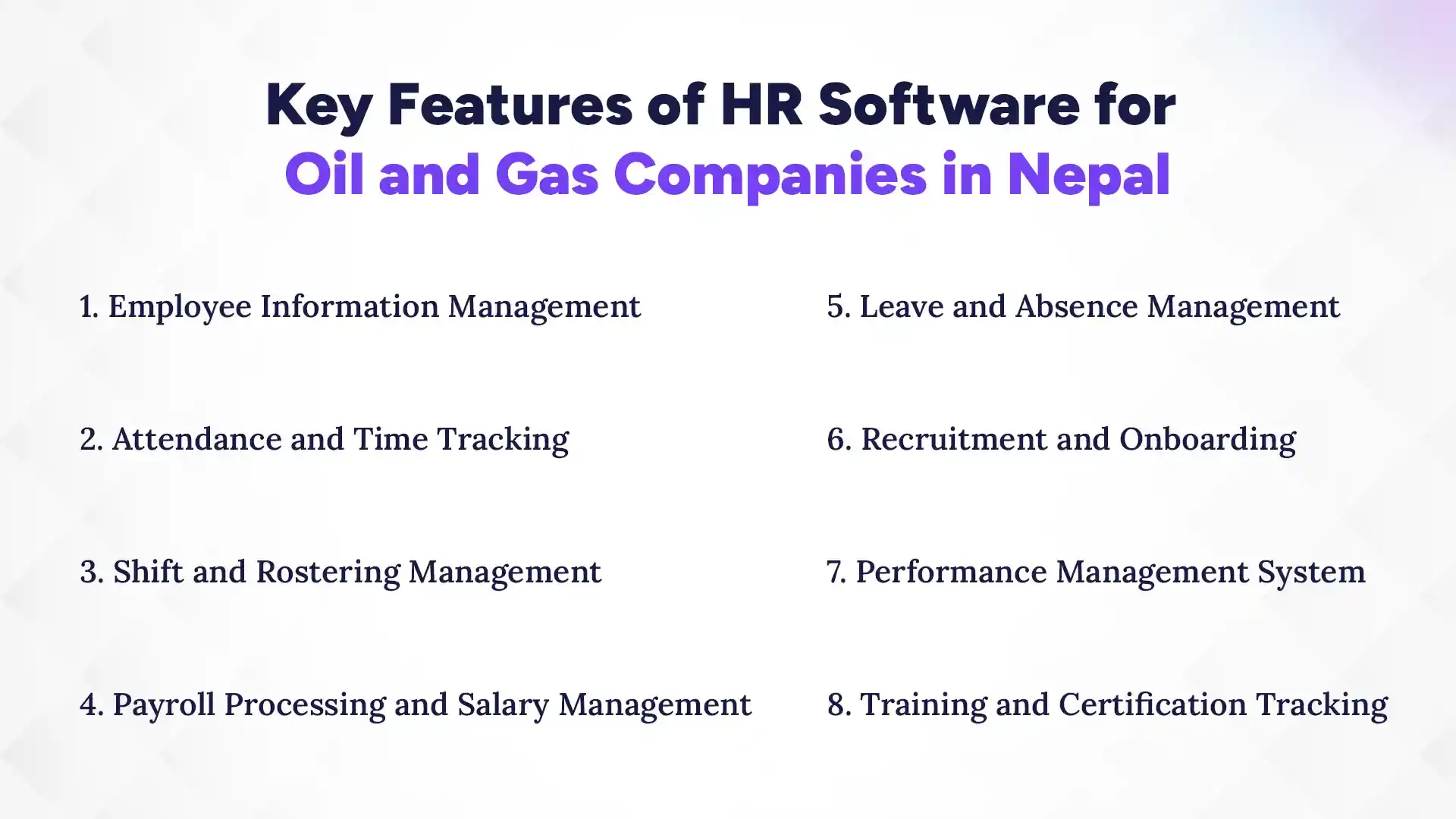
Key features typically include employee management, attendance tracking, shift scheduling, payroll processing, leave management, recruitment, performance evaluation, compliance monitoring, training management, and employee self-service tools.
1. Employee Information Management
Employee information management creates a centralized database for workforce records. Organizations can store employee profiles, contracts, qualifications, certifications, and employment history in a secure environment. Centralized records reduce duplication and improve data accuracy across departments. Managers can access critical workforce information quickly when making operational decisions.
2. Attendance and Time Tracking
Attendance and time tracking automate the monitoring of employee working hours. The system records check-ins, check-outs, overtime, and absences through digital methods. Accurate attendance data supports payroll calculations and workforce planning. Real-time tracking also helps organizations identify attendance issues before they affect operations.
3. Shift and Rostering Management
Shift and rostering management simplify workforce scheduling across multiple locations. Managers can assign shifts, manage rotations, and adjust schedules based on operational requirements. Automated scheduling reduces conflicts and minimizes staffing shortages. Employees also gain better visibility into their work schedules.
4. Payroll Processing and Salary Management
Payroll processing automates salary calculations and payment management. The system handles wages, allowances, deductions, taxes, and overtime calculations accurately. Automated payroll reduces administrative workload and minimizes human errors. Employees receive timely and transparent compensation information.
5. Leave and Absence Management
Leave management streamlines employee leave requests and approval workflows. Staff members can submit leave applications through a self-service portal. Managers can review leave balances and approve requests efficiently. The process improves transparency and reduces administrative delays.
6. Recruitment and Onboarding
Recruitment and onboarding tools help organizations attract and integrate new employees. HR teams can manage job postings, applications, interviews, and hiring workflows within one platform. Automated onboarding ensures new hires complete required documentation and training. This creates a smoother transition into the organization.
7. Performance Management System
Performance management systems support employee evaluations and development planning. Managers can establish goals, conduct reviews, and monitor progress throughout the year. Continuous performance tracking encourages accountability and productivity. Organizations can also identify high-performing employees and future leaders.
8. Training and Certification Tracking
Training and certification tracking ensures employees maintain required qualifications. The system monitors certification expiration dates and training schedules automatically. Organizations can reduce compliance risks by keeping workforce credentials current. Proper training records also support workplace safety initiatives.
9. Health, Safety, and Compliance Monitoring
Health, safety, and compliance monitoring help organizations maintain regulatory standards. The software tracks safety training, incident reports, compliance documentation, and policy acknowledgments. Automated reminders reduce the likelihood of compliance gaps. Strong compliance practices contribute to safer work environments.
10. Mobile Access and Self-Service Portal
Mobile access allows employees and managers to interact with HR systems from any location. Staff can view schedules, request leave, access payslips, and update information independently. Self-service functionality reduces administrative workload for HR teams. Mobile accessibility is particularly valuable for field-based workers.
Benefits of Using HR Software in the Oil and Gas Industry
HR software provides measurable benefits for oil and gas organizations seeking operational efficiency and workforce optimization.
- Improved workforce efficiency through automation
- Accurate payroll and attendance management
- Better compliance tracking and reporting
- Enhanced employee engagement and communication
- Faster recruitment and onboarding processes
- Real-time workforce visibility
- Improved scheduling and shift management
- Reduced administrative overhead
- Better workforce planning and forecasting
- Stronger data-driven decision making
Organizations that adopt digital HR systems often experience improved operational consistency and reduced manual workload across departments.
Types of HR Software Solutions Available for Oil and Gas Companies
Different types of HR software are available to meet varying business requirements.
| HR Software Type | Best For | Key Advantage |
|---|---|---|
| Cloud-Based HR Software | Growing businesses | Accessibility and scalability |
| On-Premise HR Systems | Organizations with internal infrastructure | Greater internal control |
| Enterprise HR Solutions | Large organizations | Advanced workforce management |
| Industry-Specific HR Software | Oil and gas companies | Specialized functionality |
| Integrated HR and Payroll Software | Businesses seeking automation | Unified workforce management |
Organizations should evaluate operational requirements, workforce size, and long-term growth plans before selecting a solution.
Essential Factors to Consider When Choosing HR Software in Nepal
When selecting HR software, organizations should focus on both current requirements and future scalability.
- Workforce size and operational complexity
- User-friendly interface
- Payroll management capabilities
- Compliance support features
- Integration with existing systems
- Data security standards
- Vendor support and training
- Mobile accessibility
- Reporting and analytics tools
- Overall return on investment
A well-planned selection process helps ensure successful implementation and long-term value.
How HR Software Improves Workforce Management in Oil and Gas Companies
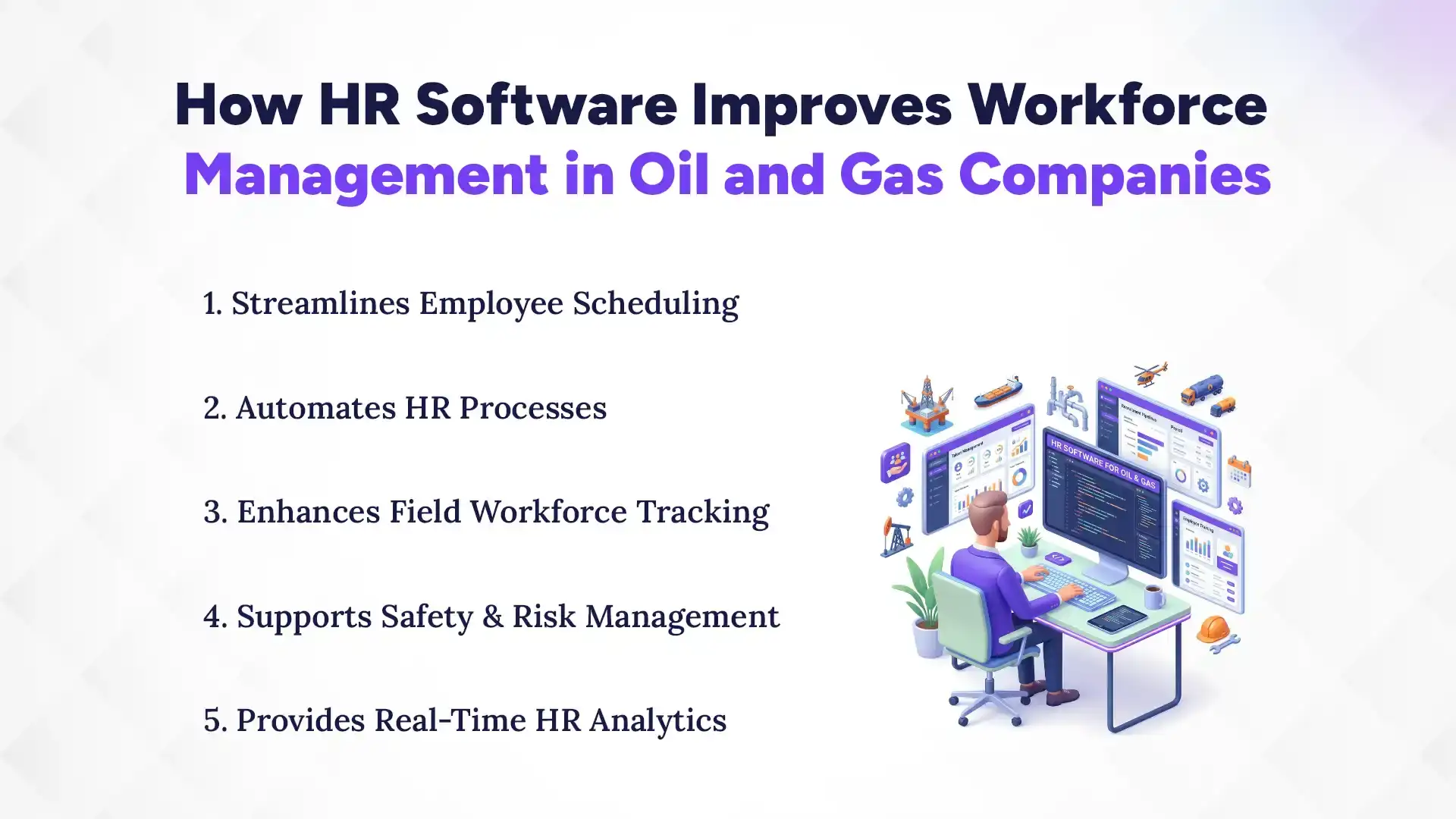
HR software improves workforce management in oil and gas companies by automating employee scheduling, attendance tracking, payroll processing, compliance monitoring, and workforce reporting, helping organizations increase productivity, improve operational efficiency, and manage employees more effectively across multiple locations.
1. Streamlines Employee Scheduling
HR software streamlines employee scheduling through automated workforce planning tools. Managers can create schedules based on project demands and workforce availability. Automated scheduling reduces conflicts and improves resource allocation. Organizations achieve better operational efficiency through optimized staffing.
2. Automates HR Processes
Automation eliminates repetitive administrative tasks across HR operations. The software manages attendance, payroll, leave approvals, and employee records automatically. Reduced manual intervention improves accuracy and productivity. HR teams can focus more on strategic workforce initiatives.
3. Enhances Field Workforce Tracking
Field workforce tracking provides visibility into employee attendance and activity across locations. Managers can monitor workforce deployment and operational coverage in real time. Improved tracking supports accountability and workforce optimization. Organizations gain better control over distributed teams.
4. Supports Safety and Risk Management
Safety management tools help organizations monitor compliance and training requirements. The system tracks certifications, safety programs, and incident reporting processes. Proactive monitoring reduces workplace risks and compliance issues. Strong safety practices contribute to operational continuity.
5. Provides Real-Time HR Analytics
Real-time analytics provide valuable workforce insights for decision-makers. Managers can monitor attendance trends, turnover rates, productivity metrics, and workforce costs. Data-driven reporting improves planning and resource allocation. Organizations can make informed decisions based on accurate information.
How to Select the Best HR Software for Your Oil and Gas Company
To select the best HR software for your oil and gas company, evaluate your workforce management needs, compare key features and vendors, assess scalability and compliance capabilities, define your budget, and choose a solution that supports your current operations and future business growth.
1. Assess Business Requirements
Organizations should begin by identifying workforce management challenges and objectives. Understanding business requirements helps narrow software options effectively. Clear goals improve decision-making during vendor evaluation. Requirement analysis also prevents unnecessary software investments.
2. Define Budget and Goals
A realistic budget ensures organizations select sustainable solutions. Businesses should evaluate implementation costs, licensing fees, training expenses, and ongoing support charges. Defining measurable goals helps assess future success. Financial planning reduces project risks.
3. Compare Features and Vendors
Comparing vendors helps organizations identify the best fit for operational needs. Decision-makers should evaluate functionality, usability, scalability, and customer support. Vendor demonstrations provide valuable insight into system capabilities. A structured comparison process improves selection outcomes.
4. Request Product Demonstrations
Product demonstrations allow organizations to evaluate software performance in practical scenarios. Stakeholders can assess usability, workflows, and reporting functionality firsthand. Demonstrations help identify strengths and potential limitations. Better evaluation leads to more confident purchasing decisions.
5. Evaluate Long-Term Scalability
Scalability ensures software can support future workforce growth and operational expansion. Organizations should assess system flexibility and upgrade options carefully. Long-term planning protects technology investments. Scalable solutions provide greater business value over time.
Best Practices for Successful HR Software Implementation
Organizations can improve implementation success by following proven best practices.
- Create a detailed implementation roadmap
- Establish clear project objectives
- Involve key stakeholders early
- Train HR teams and employees thoroughly
- Ensure accurate data migration
- Conduct system testing before launch
- Monitor performance metrics after deployment
- Gather user feedback regularly
- Continuously optimize workflows
- Maintain ongoing vendor communication
A structured implementation strategy increases user adoption and accelerates return on investment.
Future of HR Software in Nepal's Oil and Gas Industry
The future of HR software in Nepal's oil and gas industry will focus on automation, analytics, and workforce experience. Organizations are increasingly adopting digital tools to improve workforce management and operational efficiency. Emerging technologies are making HR systems more intelligent and proactive.
Future trends include:
- AI-powered workforce management
- Predictive workforce analytics
- Advanced compliance monitoring
- Mobile-first HR platforms
- Employee self-service expansion
- Automated reporting systems
- Cloud-based workforce ecosystems
- Integrated business management platforms
These innovations will help organizations manage growing workforce demands while maintaining operational excellenc
Conclusion
Oil and gas companies in Nepal face increasing pressure to manage workforces efficiently, maintain compliance, improve safety, and reduce administrative complexity. HR software addresses these challenges by centralizing workforce management processes, automating repetitive tasks, and providing real-time visibility into employee operations.
Businesses that invest in the right HR solution position themselves for greater efficiency, stronger compliance, improved employee experiences, and long-term growth. If your organization is looking for a reliable HR software solution tailored to operational needs in Nepal, Pace Infosys can help you implement a modern workforce management system designed to support business success.