
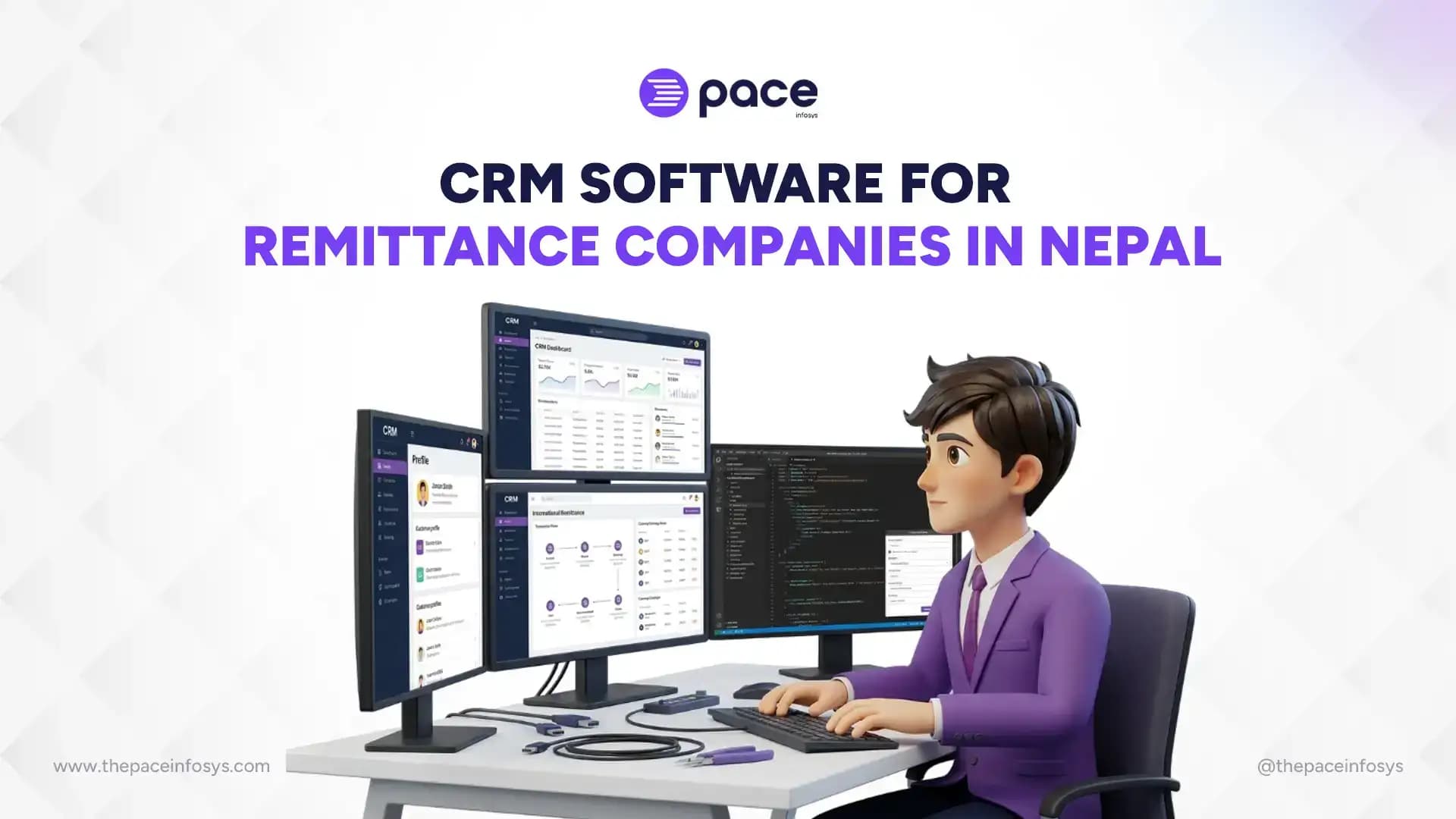

Remittance companies in Nepal often struggle with scattered customer data, slow manual processes, and limited visibility into transactions across branches. These challenges create delays in service delivery and reduce customer trust in an increasingly competitive financial market.
CRM software for remittance companies in Nepal provides a centralized system to manage customers, agents, transactions, and compliance in one place. It helps financial institutions improve efficiency, reduce operational errors, and deliver faster services in a regulated environment.
What is CRM Software for Remittance Companies?
CRM software for remittance companies is a digital system designed to manage customer relationships, transaction workflows, and agent networks in the remittance industry. It ensures that all customer and operational data is stored in a structured and accessible format.
This system replaces fragmented manual processes with a unified platform that improves transparency and operational control. It also helps remittance businesses maintain accuracy while handling high transaction volumes across multiple locations.
1. Core Functions of CRM in Remittance Businesses
Customer data management in CRM systems allows remittance companies to store and organize client information in a centralized database. This ensures that customer records are easily accessible across branches and departments for faster service delivery. It also reduces duplication of records and improves data accuracy across operations.
Transaction tracking and reporting enable businesses to monitor money transfers in real time with complete visibility. This helps reduce errors, detect delays, and maintain financial transparency across all transactions. It also supports compliance reporting required by regulatory authorities.
Agent and branch management tools allow companies to coordinate multiple service points under one system. This improves communication between headquarters and field agents while ensuring consistent service quality. It also helps track agent performance and commission structures effectively.
Compliance and documentation support ensure that remittance companies meet regulatory requirements in Nepal. The system stores necessary documents and transaction histories for audits and inspections. It reduces the risk of non-compliance and improves operational accountability.
Why CRM Software is Important for Remittance Companies in Nepal?
CRM software is important for remittance companies in Nepal because it helps them manage growing competition, improve transaction accuracy, and deliver faster customer service. It also plays a key role in ensuring compliance with Nepal Rastra Bank regulations and maintaining strong customer relationships in a highly regulated financial sector.
With increasing digital transactions and rising customer expectations, remittance businesses need automation and structured systems to stay efficient. CRM software provides the foundation for remittance business automation, financial compliance in Nepal, and long-term customer retention.
1. Increasing Competition in Remittance Services
Competition in Nepal’s remittance industry is growing as more companies enter the market and digital platforms expand service options. CRM software helps businesses stay competitive by improving speed, service quality, and customer engagement. It allows companies to track customer behavior and offer better-targeted services.
2. Need for Faster and Error-Free Transactions
Remittance companies deal with high volumes of financial transactions where even small errors can cause major issues. CRM systems reduce manual work and automate transaction tracking to ensure accuracy and speed. This leads to smoother operations and fewer customer complaints.
3. Improving Customer Experience and Retention
Customer satisfaction is critical in the remittance industry where trust and reliability determine long-term success. CRM software helps businesses provide personalized services, faster support, and consistent communication. This improves customer retention CRM performance and builds long-term loyalty.
4. Strengthening Compliance with Nepal Rastra Bank Regulations
Regulatory compliance is essential for all remittance companies operating in Nepal under Nepal Rastra Bank guidelines. CRM systems help maintain accurate records, automate reporting, and ensure proper documentation for audits. This reduces compliance risks and strengthens financial transparency.
Key Features of CRM Software for Remittance Companies in Nepal
- Centralized customer database for unified data access
- Multi-branch management system for operational control
- Real-time transaction monitoring for transparency
- Commission and agent tracking for performance evaluation
- Automated reporting and analytics for decision-making
- Integration with banking systems and digital wallets for seamless transactions
Advanced CRM Features for Modern Remittance Companies
AI-based customer insights help remittance companies analyze customer behavior and transaction patterns effectively. This allows businesses to personalize services and improve customer retention strategies. It also supports better forecasting and decision-making.
Fraud detection and alerts enhance security by identifying suspicious transaction activities in real time. This reduces financial risks and protects both customers and institutions from potential fraud. It strengthens trust in digital remittance operations.
Mobile CRM access for agents enables field staff to manage transactions and customer data on the go. This improves service speed and operational flexibility across remote locations. It also ensures continuous connectivity with the central system.
API integration with payment gateways allows seamless connectivity between CRM systems and financial platforms. This ensures faster transaction processing and reduces manual intervention. It also supports scalability for growing remittance networks.
Benefits of Using CRM Software for Remittance Companies in Nepal
- Increased operational efficiency through automation and centralized systems
- Better customer satisfaction due to faster and more accurate services
- Improved data security with structured access control and monitoring
- Real-time business insights for strategic decision-making
- Scalable business growth through flexible system architecture
How to Choose the Best CRM Software for Remittance Companies in Nepal
Choosing the best CRM software for remittance companies in Nepal requires careful evaluation of business needs, system flexibility, and compliance readiness. A well-selected CRM improves operational efficiency, reduces errors, and supports long-term scalability in the financial sector.
It is important to focus on functionality, integration capability, and regulatory alignment rather than only pricing. The right CRM selection ensures smooth remittance operations, better customer management, and strong alignment with Nepal’s financial software ecosystem.
1. Identify Business Requirements
The first step is to clearly understand your remittance company’s operational needs, including transaction volume, branch network, and customer base. This helps in selecting a CRM that matches your workflow and avoids unnecessary complexity or missing features. Proper requirement analysis ensures better system adoption and long-term efficiency.
2. Check Scalability and Customization Options
Scalability ensures the CRM can grow with your business as transaction volumes and branches increase over time. Customization allows you to tailor features according to specific operational needs of remittance services. Together, these factors make the CRM more flexible and future-ready.
3. Evaluate Integration Capabilities
A strong CRM should integrate smoothly with banking systems, digital wallets, and payment gateways used in Nepal. This ensures seamless transaction processing and reduces manual work between systems. Better integration improves operational speed and data accuracy across platforms.
4. Ensure Regulatory Compliance Support
Remittance companies in Nepal must comply with Nepal Rastra Bank regulations, making compliance support a critical factor in CRM selection. The system should offer audit trails, reporting tools, and secure data storage for financial transparency. This reduces legal risks and improves trust with regulatory authorities.
5. Compare Pricing and Support Services
Pricing should be evaluated based on features, scalability, and long-term value rather than just initial cost. Reliable customer support is equally important for system maintenance, updates, and troubleshooting. A balanced decision ensures both affordability and operational reliability.
Conclusion
CRM software has become a critical component for remittance companies in Nepal that aim to improve efficiency, transparency, and customer satisfaction. It transforms traditional financial operations into structured, data-driven systems that support faster decision-making and better service delivery. As the remittance industry continues to evolve with digital transformation, businesses that adopt CRM solutions gain a stronger competitive advantage. The shift toward automation and centralized systems is no longer optional but necessary for sustainable growth. CTA: For advanced CRM solutions tailored to remittance companies in Nepal, explore professional services and job opportunities at Kumari Job.