
.webp&w=3840&q=75)
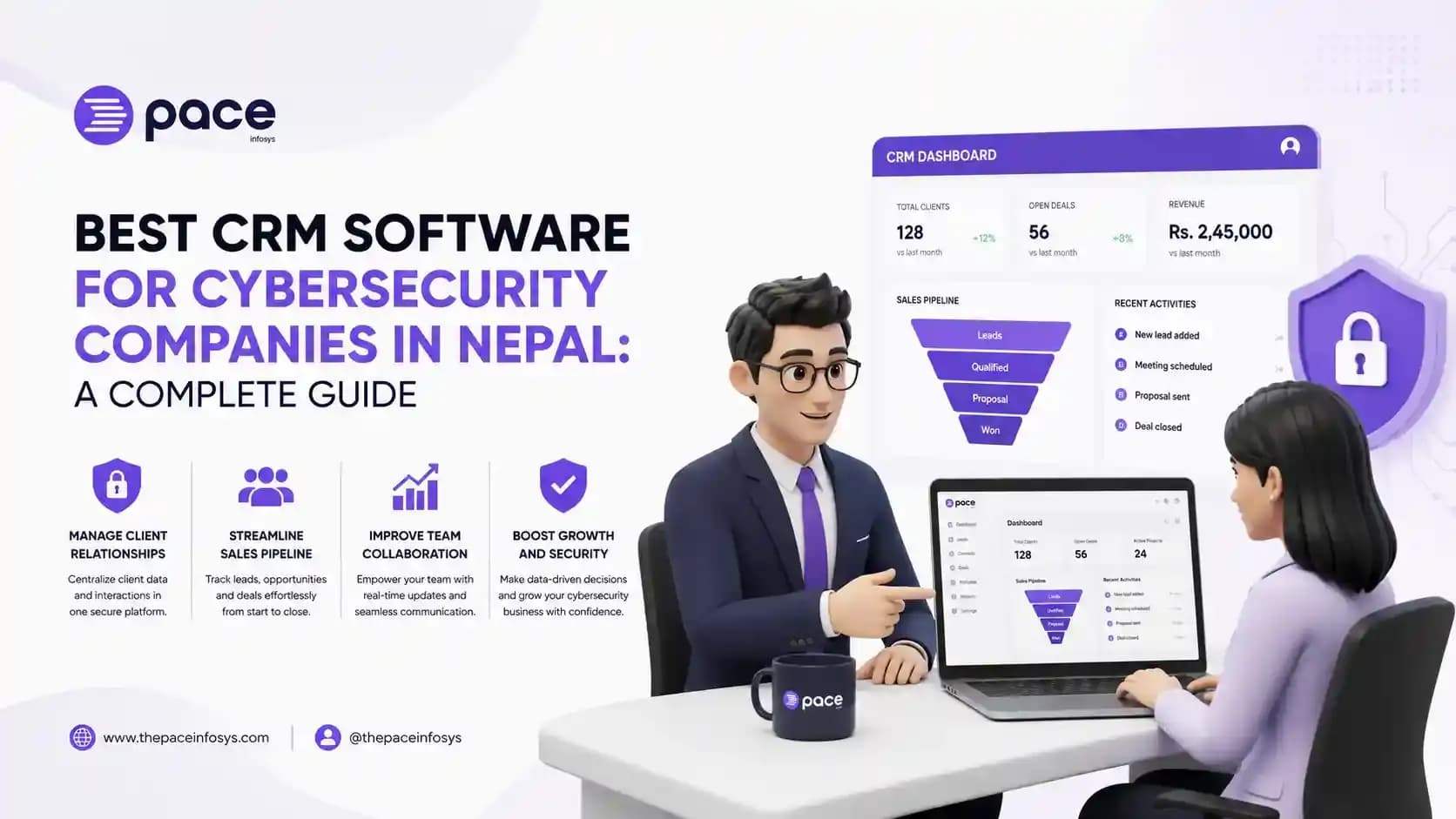
Cybersecurity companies in Nepal manage multiple clients, sales leads, security projects, and support requests every day. Without the right system, it can be difficult to keep customer information organized, track communications, and deliver timely services. This is why many cybersecurity firms are turning to CRM software to improve customer relationship management and business operations.
CRM software helps cybersecurity companies store client data, automate sales and support processes, improve team collaboration, and enhance customer service. Choosing the right CRM solution can increase productivity, strengthen client relationships, and support business growth. In this guide, you'll learn about the best CRM software features, benefits, and factors to consider when selecting a CRM system for your cybersecurity firm in Nepal.
What Is CRM Software for Cybersecurity Firms?
CRM software for cybersecurity firms is a customer relationship management system designed to help cybersecurity companies manage clients, leads, sales opportunities, security projects, and customer communications from a centralized platform. It enables businesses to organize customer data, automate workflows, track interactions, and improve service delivery while maintaining strong security standards.
Unlike general CRM platforms, CRM software for cybersecurity firms addresses industry-specific needs such as incident management, security service tracking, compliance monitoring, and secure data handling. It helps cybersecurity companies manage complex B2B relationships, streamline sales and support processes, and maintain complete visibility into client activities. By centralizing customer information and automating routine tasks, cybersecurity firms can improve operational efficiency, strengthen customer relationships, and support long-term business growth.
Why Cybersecurity Firms in Nepal Need CRM Software
Cybersecurity firms in Nepal need CRM software to efficiently manage growing client relationships, streamline sales and support operations, and maintain secure customer data. As the cybersecurity industry expands and businesses become more aware of digital security risks, firms must handle increasing numbers of leads, clients, service contracts, and support requests without losing visibility or productivity.
A CRM system helps cybersecurity companies centralize customer information, automate follow-ups, track sales opportunities, and improve communication across teams. It also supports data security, compliance requirements, and efficient B2B client management by providing a structured platform for managing customer interactions, security projects, and long-term business relationships. This enables cybersecurity firms to deliver better customer experiences while supporting sustainable growth and operational efficiency.
Key Features of CRM Software for Cybersecurity Firms in Nepal
The key features of CRM software for cybersecurity firms in Nepal include lead management, client communication tracking, sales pipeline automation, ticketing and incident management, data security controls, reporting and analytics, workflow automation, and integration with cybersecurity tools. These features help cybersecurity companies manage customer relationships, streamline operations, improve service delivery, and protect sensitive client information from a centralized platform.
1. Lead Management and Tracking
Lead management helps cybersecurity companies capture, organize, and nurture potential clients throughout the sales cycle. A CRM system records inquiries from websites, referrals, events, and marketing campaigns in a single location. Sales teams can monitor lead status, assign responsibilities, and prioritize high-value prospects. This process reduces missed opportunities and improves conversion rates.
2. Client Communication Management
Communication management centralizes emails, calls, meetings, and customer interactions within one platform. Teams gain complete visibility into previous discussions, service requests, and ongoing projects. This visibility improves consistency across departments and prevents communication gaps. Clients receive faster responses and a more professional experience.
3. Sales Pipeline Automation
Sales pipeline automation streamlines repetitive tasks involved in lead nurturing and deal management. Automated reminders, follow-up sequences, and workflow triggers help teams maintain momentum throughout the sales process. Managers can identify bottlenecks and improve forecasting accuracy. Automation reduces administrative workload and increases productivity.
4. Ticketing and Incident Management
Ticketing and incident management features help cybersecurity firms track support requests and security incidents efficiently. Service teams can assign tickets, monitor resolution times, and maintain detailed records of client issues. Structured incident tracking improves accountability and response quality. Clients benefit from faster and more organized support.
5. Security-Focused Data Protection
Security-focused CRM platforms provide advanced controls to protect sensitive customer information. Features such as role-based access control, data encryption, audit logs, and multi-factor authentication strengthen overall security. These measures help reduce unauthorized access risks. Strong security controls also improve client trust and confidence.
6. Reporting and Analytics
Reporting tools transform customer and sales data into actionable insights. Firms can monitor lead performance, client retention rates, revenue trends, and team productivity through customizable dashboards. Data-driven decision-making becomes easier with accurate reporting. Better visibility supports strategic planning and growth initiatives.
7. Workflow Automation
Workflow automation eliminates repetitive manual processes across sales, support, and project management activities. Automated task assignments, notifications, and approval processes improve operational efficiency. Teams spend less time on administrative work and more time delivering value to clients. Standardized workflows also reduce human errors.
8. Integration with Cybersecurity Tools
CRM integrations connect customer data with essential cybersecurity platforms and business applications. Integrated systems improve information sharing and eliminate duplicate data entry. Security teams gain a more comprehensive view of client activities and service delivery. Strong integration capabilities support better operational coordination.
Benefits of CRM Software for Cybersecurity Companies
CRM software helps cybersecurity companies improve customer relationships, streamline business operations, and increase overall efficiency. By keeping all customer information, communications, and sales activities in one place, businesses can provide better service and manage clients more effectively.
Some of the main benefits of CRM software include improved client retention, higher lead conversion rates, faster coordination during security incidents, and better customer support. It also helps teams work more productively by automating routine tasks, provides valuable insights for forecasting and decision-making, and strengthens customer trust through consistent communication and service delivery. As a result, cybersecurity firms can improve client satisfaction, increase revenue opportunities, and support long-term business growth.
How CRM Software Improves Cybersecurity Client Management
CRM software improves cybersecurity client management by centralizing customer information, automating communication, and providing complete visibility across the client lifecycle. It helps firms maintain stronger relationships while delivering consistent service experiences. Better organization leads to improved operational efficiency and customer satisfaction.
1. Centralizing Customer Information
Centralized customer records provide a single source of truth for every client interaction. Teams can access contact details, contracts, project history, support requests, and communication records from one location. This accessibility improves collaboration across departments. Accurate information helps teams serve clients more effectively.
2. Automating Follow-Ups and Communication
Automated communication ensures important client interactions are never overlooked. CRM systems can schedule reminders, send notifications, and trigger follow-up sequences based on predefined actions. Consistent communication strengthens relationships and improves responsiveness. Automation also reduces manual workload for employees.
3. Managing Security Service Contracts
Contract management features help cybersecurity firms monitor service agreements, renewal dates, and compliance obligations. Teams can proactively manage client relationships before contracts expire. Automated alerts reduce the risk of missed renewals. Effective contract management contributes to long-term revenue stability.
4. Tracking Support Requests and Resolutions
Support tracking allows firms to monitor ticket progress and resolution performance. Managers can evaluate response times, identify recurring issues, and improve service delivery processes. Structured tracking promotes accountability within support teams. Clients benefit from faster and more reliable assistance.
5. Monitoring Client Lifecycle and Retention
Lifecycle management helps businesses understand how clients engage with their services over time. CRM systems provide visibility into onboarding, active engagement, contract renewals, and retention opportunities. Teams can identify risks before customers disengage. Proactive relationship management supports long-term client retention.
Types of CRM Solutions Suitable for Cybersecurity Firms
Cybersecurity firms can choose from different types of CRM solutions depending on their business size, security requirements, and operational needs. Each type of CRM software offers unique features that help manage customer relationships, sales activities, and business processes more effectively.
Cloud-based CRM software is hosted online and provides easy access from anywhere, making it ideal for growing businesses. On-premise CRM systems are installed on internal servers and offer greater control over data security and customization. Industry-specific CRM platforms are designed to meet the unique needs of cybersecurity companies and other specialized industries. Enterprise CRM solutions are built for large organizations that require advanced features, automation, and scalability. Small business CRM software provides affordable and easy-to-use tools for startups and growing cybersecurity firms looking to improve customer management and business efficiency.
Essential Factors to Consider When Choosing CRM Software in Nepal
The most important factors to consider when choosing CRM software in Nepal are data security, scalability, customization options, integration capabilities, ease of use, customer support, and overall cost. Evaluating these factors helps cybersecurity firms select a CRM solution that aligns with their business needs, supports future growth, protects sensitive customer information, and improves operational efficiency.
1. Data Security and Privacy Controls
Data security should remain a top priority when evaluating CRM platforms. Security features such as encryption, access controls, audit trails, and authentication mechanisms protect sensitive customer information. Strong security controls reduce operational risks. They also help maintain client confidence and regulatory compliance.
2. Scalability for Business Growth
Scalable CRM systems can support increasing client volumes and expanding operational requirements. Businesses should evaluate whether the platform can grow alongside future needs. Scalable solutions reduce the need for costly migrations later. Long-term flexibility supports sustainable growth.
3. Customization Capabilities
Customization allows organizations to align CRM workflows with their unique business processes. Flexible systems adapt more effectively to specialized cybersecurity operations. Customized dashboards and reports improve usability. Greater adaptability often leads to higher adoption rates.
4. Integration Options
Integration capabilities determine how well a CRM system works with existing tools and platforms. Strong integrations reduce data silos and improve efficiency. Connected systems create a more unified technology environment. Better data flow supports informed decision-making.
5. User Experience and Ease of Use
User-friendly CRM platforms encourage employee adoption and productivity. Complex systems can slow implementation and reduce effectiveness. Intuitive interfaces improve daily operations. Simpler systems often produce faster results.
6. Customer Support and Training
Reliable vendor support helps organizations maximize CRM value and resolve technical issues quickly. Training resources improve user adoption and confidence. Ongoing assistance contributes to long-term success. Businesses should evaluate support quality before making a decision.
7. Pricing and Total Cost of Ownership
Organizations should evaluate both upfront costs and long-term expenses. Subscription fees, implementation costs, customization requirements, and support charges influence total ownership costs. Cost-effective solutions balance functionality and affordability. Careful budgeting supports successful implementation.
Best CRM Software Features for Managing Cybersecurity Sales Pipelines
The best CRM software for cybersecurity companies includes features that help sales teams manage leads, track opportunities, and close deals more efficiently. These tools simplify the sales process, improve customer engagement, and help businesses generate more revenue.
Key CRM features include lead nurturing automation to follow up with prospects automatically, opportunity tracking to monitor potential deals, proposal and quotation management for faster sales processes, customer onboarding workflows to improve client experiences, account-based marketing support for targeting high-value clients, and revenue forecasting tools to predict future sales performance. Additional features such as sales reporting, automated task management, client segmentation, and customer journey tracking help cybersecurity firms stay organized, improve conversion rates, and build stronger customer relationships.
CRM Integration Opportunities for Cybersecurity Firms
CRM integration helps cybersecurity firms connect their CRM software with other business tools to improve productivity, data management, and customer service. By integrating different systems, companies can access important information from one place and reduce manual work.
A CRM system can be integrated with email marketing platforms to manage campaigns, help desk and ticketing software to track customer support requests, project management tools to monitor ongoing projects, and SIEM or security monitoring solutions to manage security-related activities. It can also connect with accounting and invoicing systems, collaboration platforms, communication tools, and document management software. These integrations help cybersecurity firms streamline operations, improve team coordination, and deliver better customer experiences while saving time and reducing errors.
Common Challenges Cybersecurity Firms Face Without CRM Software
Without CRM software, cybersecurity firms often struggle to manage customer relationships, sales activities, and daily operations efficiently. Important client information may be stored in different places, making it difficult for teams to access accurate data when needed.
Common challenges include disorganized customer data, missed sales opportunities, inefficient communication between teams and clients, and poor customer retention. Many firms also face a lack of visibility into sales performance, making it harder to track business growth and identify opportunities. In addition, manual reporting and administrative tasks consume valuable time that could be spent on serving clients and growing the business. Implementing CRM software helps cybersecurity companies streamline processes, improve productivity, and deliver a better customer experience.
Why Cloud-Based CRM Software Is Popular Among Cybersecurity Companies
Cloud-based CRM software is popular among cybersecurity companies because it provides remote access, lower infrastructure costs, automatic updates, and greater flexibility for growing businesses. Teams can securely access customer information, manage leads, and collaborate on projects from anywhere, making it easier to support clients and maintain productivity.
Unlike traditional on-premise systems, cloud CRM solutions require less hardware and maintenance while offering scalable features that can grow with the business. They also improve team collaboration, simplify software updates, and help cybersecurity firms manage customer relationships more efficiently without significant upfront technology investments.
Conclusion
The most successful cybersecurity firms do not rely on spreadsheets, scattered emails, or disconnected systems to manage client relationships. They use CRM software to centralize information, automate critical workflows, improve service delivery, and build stronger customer relationships that support long-term growth.
Choosing the right CRM platform requires careful evaluation of security, scalability, integrations, usability, and business requirements. If you are looking for expert technology and career solutions in Nepal, explore the services available through Kumarijob to support your organization's growth and digital transformation goals.