
.webp&w=3840&q=75)
Many businesses struggle to get consistent website traffic, quality leads, and online visibility even after investing in digital marketing. Search engine marketing helps solve this problem by placing businesses directly in front of people who are actively searching for products or services on search engines like Google and Bing.
The benefits of search engine marketing go beyond just paid ads and website clicks. A well-managed SEM strategy can increase brand awareness, improve lead generation, boost sales, and deliver measurable business growth in a competitive online market. This guide explains how search engine marketing works, why it matters, and the biggest advantages businesses can gain from using it effectively.
What Is Search Engine Marketing?
Search engine marketing is a digital marketing strategy that helps businesses increase online visibility through paid advertisements on search engines like Google and Bing. Businesses use SEM to target specific keywords, attract potential customers, drive website traffic, and generate leads or sales quickly Search engine marketing mainly focuses on paid search advertising, commonly known as pay-per-click (PPC) advertising. When users search for products or services online, businesses can display ads at the top of search engine results pages based on targeted keywords and bidding strategies.
Many people confuse SEO and SEM, but both work differently. SEO focuses on improving organic search rankings through content optimization and website authority, while SEM uses paid advertisements to gain immediate visibility and faster traffic from search engines. Paid search advertising works through an auction system where advertisers bid on keywords related to their business. Search engines analyze factors like bid amount, ad quality, and landing page relevance to decide which ads appear in search results. Search engine marketing plays an important role in digital marketing because it helps businesses reach users with strong buying intent. Companies can target audiences based on location, device, demographics, and search behavior, making SEM one of the most measurable and conversion-focused marketing strategies. Google Ads is the most widely used search engine marketing platform, but businesses also use platforms like Microsoft Advertising through Bing. Some companies additionally invest in search advertising on platforms connected to YouTube, shopping search engines, and local search networks to expand their online reach.
Why Is Search Engine Marketing Important for Businesses?
Search engine marketing is important for businesses because it helps them reach potential customers exactly when they are searching for products or services online. SEM increases online visibility, generates qualified leads, improves brand awareness, and delivers measurable marketing results through targeted advertising campaigns. One of the biggest advantages of search engine marketing is its ability to connect businesses with highly targeted audiences. Instead of showing ads to random users, SEM allows companies to target people based on keywords, location, device type, demographics, and search intent. This targeting improves the chances of attracting users who are ready to take action.
Search engine marketing also increases online visibility in competitive industries. Businesses can appear at the top of search engine results pages even if their website does not rank organically through SEO. This immediate visibility helps brands gain attention faster and attract more website visitors. Another reason SEM is important is its impact on brand awareness and lead generation. When users repeatedly see a business in search results, they become more familiar with the brand. I noticed this while managing a local service campaign where repeated ad visibility increased branded searches and phone inquiries within a few weeks.
SEM gives businesses access to measurable marketing data that traditional advertising often cannot provide. Companies can track impressions, clicks, conversions, cost per lead, and return on investment in real time. This data helps marketers improve campaigns, reduce wasted spending, and focus on strategies that produce better results. Search engine marketing also creates a strong competitive advantage for businesses. Small companies can compete with larger brands by targeting specific keywords and local audiences strategically. Businesses that invest in SEM often gain faster market visibility and customer acquisition compared to competitors relying only on organic marketing methods.
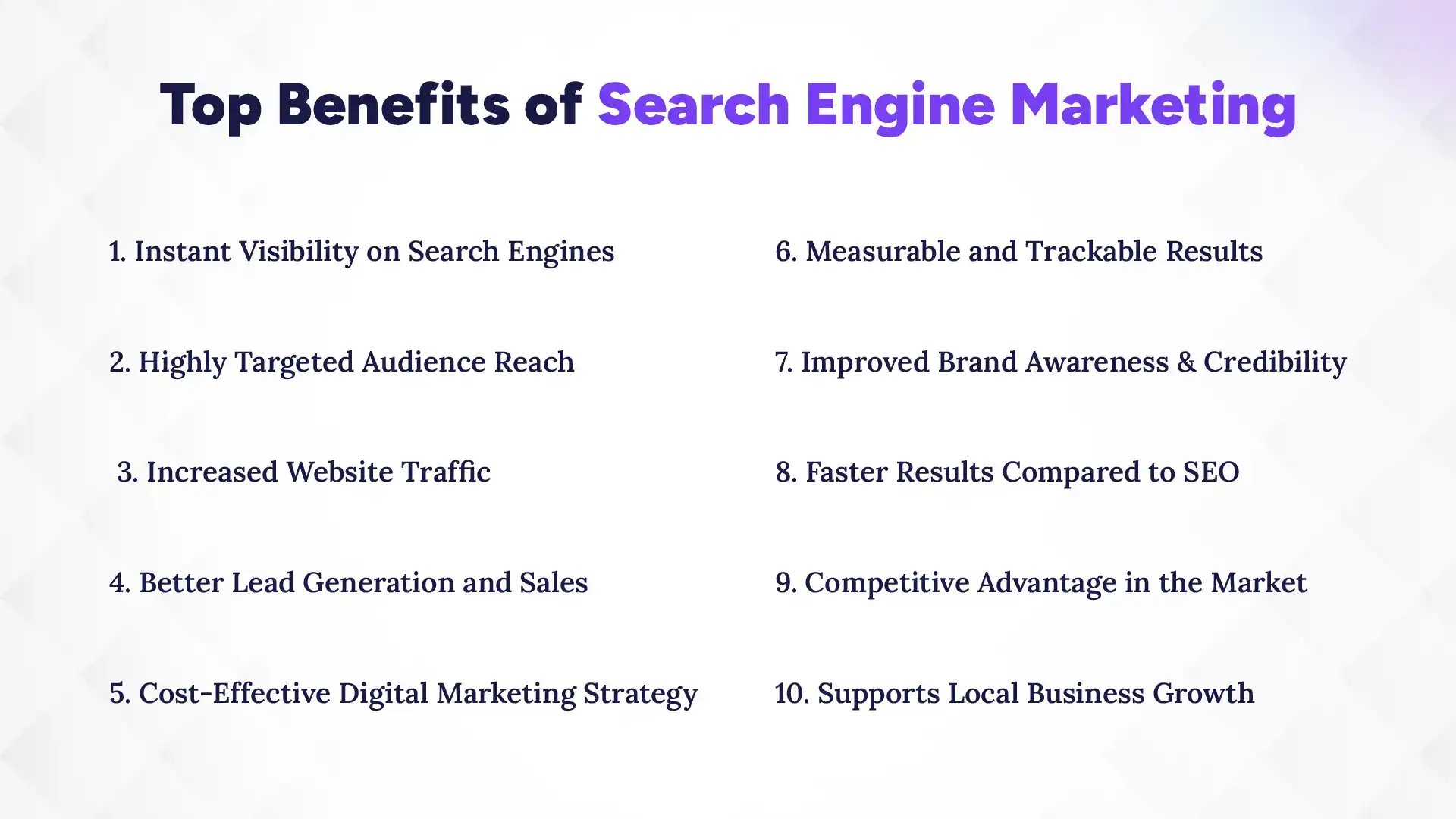
Top Benefits of Search Engine Marketing
The top benefits of search engine marketing include increased online visibility, targeted audience reach, faster website traffic, better lead generation, measurable marketing results, and improved business growth. SEM helps businesses connect with potential customers at the exact moment they search for products or services online.
Search engine marketing allows businesses to appear at the top of search engine results pages quickly through paid advertising campaigns. Unlike traditional marketing methods, SEM provides precise audience targeting based on keywords, location, demographics, and user behavior, making it one of the most effective digital marketing strategies for generating qualified traffic and conversions.
Businesses also benefit from real-time performance tracking, flexible advertising budgets, and faster results compared to organic SEO strategies. Whether the goal is increasing brand awareness, driving sales, or attracting local customers, search engine marketing offers scalable solutions that support both short-term campaigns and long-term business growth.
1. Instant Visibility on Search Engines
Search engine marketing gives businesses immediate visibility by placing ads at the top of search engine results pages. Unlike SEO, which can take months to build rankings, SEM allows businesses to appear in front of potential customers as soon as campaigns go live.
This visibility helps businesses reach users with strong buying intent. People searching for specific products or services are often ready to compare options, contact businesses, or make purchases. SEM helps companies connect with these high-intent users at the right moment.
I noticed this benefit while running a campaign for a local business that struggled to generate website traffic through organic search alone. After launching targeted search ads, the business started receiving qualified leads within days, and brand exposure increased significantly in local search results.
2. Highly Targeted Audience Reach
Search engine marketing allows businesses to target highly specific audiences based on keywords, location, demographics, devices, and online behavior. This targeting improves ad relevance and helps businesses reach users who are more likely to convert.
Location-based targeting is especially useful for local businesses that want to attract nearby customers. Companies can also adjust campaigns for mobile users, desktop users, or different audience segments to improve engagement and conversion rates.
3. Increased Website Traffic
Search engine marketing increases website traffic by driving users directly from search results to targeted landing pages. Businesses can attract visitors who are already interested in their products or services, which improves traffic quality compared to untargeted advertising methods.
SEM campaigns also improve click-through rates by using compelling headlines, optimized ad copy, and relevant keywords. Well-structured ads encourage users to visit websites and learn more about the business offerings.
4. Better Lead Generation and Sales
Search engine marketing helps businesses generate high-quality leads by targeting users who are actively searching for solutions online. These users often have stronger purchase intent, which improves the chances of converting clicks into inquiries or sales.
Businesses can create campaigns focused on phone calls, form submissions, product purchases, or appointment bookings. SEM also supports remarketing strategies that re-engage users who previously visited the website but did not convert.
5. Cost-Effective Digital Marketing Strategy
Search engine marketing is considered cost-effective because businesses can control their advertising budgets and pay only when users click on ads. This flexibility makes SEM suitable for both small businesses and large companies with different marketing budgets.
Advertisers can set daily spending limits, pause campaigns anytime, and focus on high-performing keywords to improve return on investment. Compared to traditional advertising methods, SEM provides more control over spending and targeting.
6. Measurable and Trackable Results
Search engine marketing provides measurable data that helps businesses analyze campaign performance in real time. Companies can track clicks, impressions, conversions, cost per click, and return on ad spend through analytics tools.
This data-driven approach allows marketers to identify successful strategies and improve underperforming campaigns quickly. Businesses can make informed decisions instead of relying on guesswork or broad marketing assumptions.
7. Improved Brand Awareness and Credibility
Search engine marketing improves brand awareness by increasing visibility across search engine results pages. Even when users do not click on ads immediately, repeated exposure helps businesses stay memorable to potential customers.
Appearing at the top of search results also builds credibility because many users associate top-ranked ads with trusted businesses. Consistent visibility can strengthen customer confidence and improve brand recognition over time.
8. Faster Results Compared to SEO
Search engine marketing delivers faster results because businesses can launch campaigns and start receiving traffic almost immediately. SEO requires long-term optimization efforts, while SEM provides quicker visibility and lead generation opportunities.
This speed makes SEM useful for product launches, seasonal promotions, limited-time offers, and new business campaigns. Companies can quickly test offers, keywords, and audience targeting strategies without waiting for organic rankings to improve.
9. Competitive Advantage in the Market
Search engine marketing gives businesses a competitive advantage by allowing them to compete for visibility in crowded industries. Small businesses can appear alongside larger brands when they target the right keywords and audience segments strategically.
SEM also helps businesses capture market share by targeting competitors’ branded keywords or underserved search terms. Companies that optimize campaigns effectively can attract customers even in highly competitive markets.
10. Supports Local Business Growth
Search engine marketing supports local business growth by increasing visibility in location-based searches. Businesses can target nearby users searching for services, products, or local solutions through geo-targeted advertising campaigns.
Local SEM campaigns help businesses drive phone calls, store visits, appointment bookings, and local inquiries. Mobile search advertising is especially effective because many users search for nearby businesses directly from smartphones.
How Does Search Engine Marketing Work?
Search engine marketing works by allowing businesses to display paid advertisements on search engine results pages based on targeted keywords and user search intent. Advertisers bid on specific keywords, create optimized ads, and direct users to landing pages designed to generate clicks, leads, or sales.
Search engines use an auction system to decide which ads appear for a search query. Factors such as keyword relevance, bid amount, ad quality, and landing page experience influence ad rankings and campaign performance. Businesses that optimize these elements effectively usually achieve better visibility and lower advertising costs.
A successful search engine marketing strategy combines keyword research, ad optimization, budget management, and landing page improvements to attract targeted traffic and increase conversions.
1. Keyword Research
Keyword research is the process of identifying the search terms potential customers use when looking for products or services online. Businesses use these keywords to target users with strong buying intent and improve ad relevance.
Commercial intent keywords are especially valuable because they attract users ready to take action, such as making purchases or requesting services. Long-tail keywords also help businesses reach more specific audiences while reducing competition and advertising costs.
2. Ad Creation and Optimization
Ad creation and optimization focus on developing compelling advertisements that encourage users to click and take action. Effective search ads include relevant keywords, attention-grabbing headlines, and clear calls to action.
Businesses often test multiple ad variations to identify which headlines and descriptions produce better click-through and conversion rates. Optimized ad copy improves quality scores, which can lower cost-per-click and improve search visibility.
3. Bidding and Budget Management
Bidding and budget management control how much businesses spend on search engine marketing campaigns. Advertisers set bids for keywords and determine daily or monthly budgets based on marketing goals and competition levels.
Cost-per-click bidding strategies help businesses manage advertising expenses while maximizing visibility for important search terms. Many companies also use automated or smart bidding techniques that adjust bids based on conversion likelihood and user behavior.
4. Landing Page Optimization
Landing page optimization improves the user experience after visitors click on search ads. A well-designed landing page increases the chances of turning visitors into leads or customers by providing relevant information and clear conversion paths.
Mobile responsiveness, fast loading speed, and user-friendly design are essential for improving landing page performance. Businesses also use strong headlines, simple navigation, and persuasive CTAs to encourage users to complete desired actions.
Search Engine Marketing vs SEO
Search engine marketing and SEO both help businesses increase online visibility, but they work in different ways. SEM focuses on paid advertising to generate immediate traffic, while SEO improves organic rankings through content optimization, technical improvements, and website authority building.
| Feature | Search Engine Marketing (SEM) | Search Engine Optimization (SEO) |
|---|---|---|
| Traffic Source | Paid traffic from search ads | Organic traffic from search rankings |
| Speed of Results | Delivers faster results and immediate visibility | Takes time to build rankings and authority |
| Cost Structure | Businesses pay per click or ad interaction | No direct payment for clicks |
| Search Placement | Ads appear at the top or bottom of search results | Websites rank organically in search listings |
| Targeting Options | Advanced targeting by keywords, location, device, and demographics | Limited direct audience targeting |
| Long-Term Value | Stops generating traffic when ads stop running | Can generate long-term traffic consistently |
| Best Use Case | Promotions, product launches, lead generation, and short-term campaigns | Long-term brand growth and sustainable traffic |
| Performance Tracking | Real-time campaign tracking and optimization | Organic performance tracking through SEO tools |
| Competition Level | Businesses compete through bidding systems | Businesses compete through content quality and authority |
| ROI Timeline | Faster return on investment for quick campaigns | Strong long-term ROI through organic visibility |
Businesses should use SEM when they need immediate traffic, faster lead generation, or quick visibility for products and services. SEO works better for companies focused on long-term organic growth, brand authority, and sustainable website traffic.
I noticed the strongest results when combining both SEM and SEO strategies for client campaigns. SEM generated immediate traffic and leads, while SEO gradually reduced dependency on paid advertising by improving long-term organic rankings.
Types of Search Engine Marketing Campaigns
Search engine marketing includes different types of advertising campaigns that help businesses reach audiences across search engines, websites, shopping platforms, and video networks. Each campaign type serves a specific marketing goal, such as increasing website traffic, generating leads, improving brand awareness, or driving product sales.
1. Search Ads
Search ads are text-based advertisements that appear at the top of search engine results pages when users search for targeted keywords. These ads help businesses reach users with strong purchase intent because they appear during active searches for products or services.
Businesses commonly use search ads for lead generation, service promotion, and direct sales campaigns. I used search ads for a local business campaign and noticed that targeting high-intent keywords increased qualified inquiries within a short time.
2. Display Advertising
Display advertising uses banner ads, images, and visual content to promote businesses across websites, mobile apps, and online platforms. These ads focus more on brand visibility and audience awareness than direct search intent.
Businesses use display advertising to reach broader audiences and stay visible during different stages of the customer journey. I noticed display campaigns worked effectively for remarketing because users who previously visited the website were more likely to recognize the brand later.
3. Shopping Ads
Shopping ads display product images, prices, reviews, and store details directly in search results. These campaigns are highly effective for e-commerce businesses because users can compare products quickly before visiting the website.
Shopping ads attract users with clear buying intent and often generate higher conversion rates for online stores. I optimized product feeds for a shopping campaign and saw better click-through rates after improving product titles and descriptions.
4. Video Advertising
Video advertising promotes products or services through video content on platforms connected to search engines, such as YouTube. These ads help businesses engage audiences visually and explain products more effectively than text-based ads.
Businesses use video advertising for brand storytelling, product demonstrations, tutorials, and awareness campaigns. I tested short video ads during a promotional campaign and found that engaging visuals improved audience interaction and brand recall significantly.
5. Remarketing Campaigns
Remarketing campaigns target users who previously visited a website or interacted with a business online. These campaigns remind potential customers about products or services and encourage them to return and complete actions.
Remarketing is effective because many users do not convert during their first website visit. I used remarketing ads for an abandoned cart campaign and noticed that repeat visitors were more likely to complete purchases after seeing follow-up ads.
6. Local Search Ads
Local search ads help businesses appear in location-based search results for nearby users searching for services or products. These ads often include business information such as phone numbers, directions, ratings, and operating hours.
Local businesses use these campaigns to increase store visits, calls, and appointment bookings from nearby customers. I managed a local search campaign for a service provider and found that geo-targeted ads improved local lead generation and customer inquiries quickly.
Common Challenges in Search Engine Marketing
Search engine marketing offers fast visibility and targeted traffic, but businesses often face challenges that affect campaign performance and return on investment. Common SEM challenges include high keyword competition, rising advertising costs, poor landing page experience, low conversion rates, and ongoing campaign optimization issues.
1. High Competition Keywords
High competition keywords make it difficult for businesses to maintain top ad positions at affordable costs. Popular industries often have multiple advertisers bidding on the same search terms, which increases competition and advertising expenses.
Small businesses especially struggle to compete against larger companies with bigger marketing budgets. I improved campaign performance for a local business by targeting long-tail keywords with lower competition and stronger user intent.
2. Rising Cost-Per-Click
Rising cost-per-click can reduce profitability when businesses spend more money for each ad click without improving conversions. Competitive industries like finance, healthcare, and legal services often experience higher CPC rates.
Businesses need strong bidding strategies and keyword optimization to control advertising costs effectively. I noticed that removing low-performing keywords and improving quality scores helped reduce CPC while maintaining traffic quality.
3. Poor Landing Page Performance
Poor landing page performance can waste advertising budgets because users leave websites without taking action. Slow page speed, confusing layouts, and weak calls to action negatively affect user experience and conversions.
Search engines also evaluate landing page quality when ranking ads. I optimized a campaign landing page by improving mobile responsiveness and simplifying the inquiry form, which increased lead conversions noticeably.
4. Low Conversion Rates
Low conversion rates happen when businesses receive ad clicks but fail to generate inquiries, sales, or customer actions. Weak targeting, irrelevant traffic, or unclear messaging often contribute to poor campaign performance.
Businesses must regularly test ads, audience targeting, and landing pages to improve results. I tested different CTA variations during an SEM campaign and found that clearer action-focused messaging increased conversions significantly.
5. Ad Fatigue and Optimization Issues
Ad fatigue occurs when audiences repeatedly see the same advertisements and gradually stop engaging with them. Declining click-through rates and reduced engagement often signal that campaigns need fresh content and optimization.
Regular monitoring and campaign updates help maintain strong performance over time. I usually rotate ad creatives, adjust keyword targeting, and test new headlines to improve engagement and prevent performance decline.
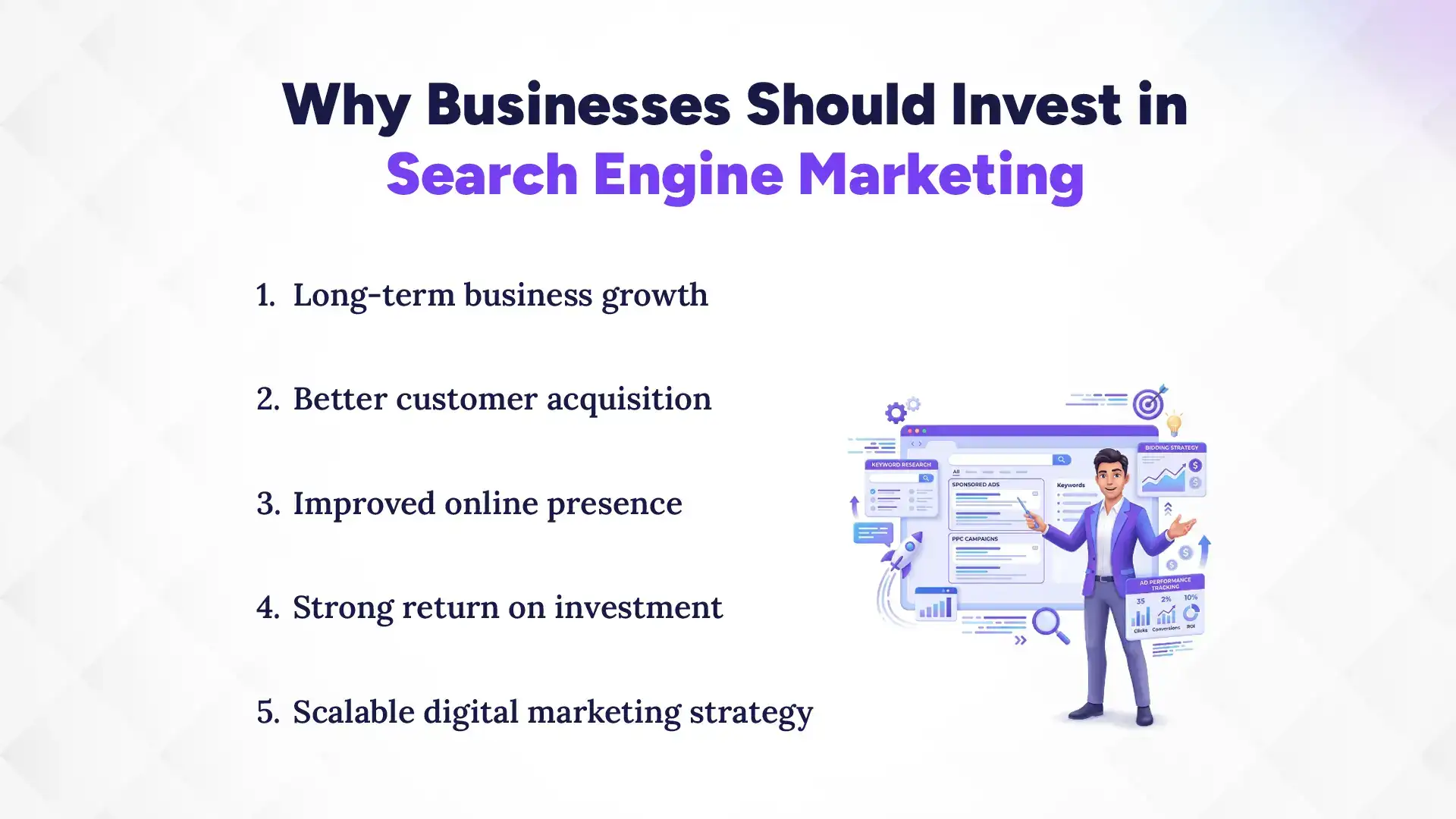
Why Businesses Should Invest in Search Engine Marketing
Search engine marketing helps businesses increase visibility, attract targeted customers, generate leads, and improve overall business growth through paid search advertising. Businesses invest in SEM because it delivers measurable results, faster traffic, and scalable marketing opportunities in competitive online markets.
1. Long-Term Business Growth
Search engine marketing supports long-term business growth by helping companies consistently attract new customers and generate qualified leads. Businesses that maintain optimized SEM campaigns often build stronger market visibility and sustainable customer acquisition channels.
SEM also allows companies to adapt marketing strategies based on performance data and changing customer behavior. I worked with a growing business that used SEM campaigns to expand into new markets and increase online inquiries steadily over time.
2. Better Customer Acquisition
Search engine marketing improves customer acquisition by targeting users actively searching for products or services online. These users usually have stronger purchase intent, making them more likely to convert into paying customers.
Businesses can attract high-quality leads through keyword targeting, location-based advertising, and audience segmentation. I noticed that campaigns focused on commercial-intent keywords generated more qualified inquiries compared to broad untargeted advertising methods.
3. Improved Online Presence
SEM improves online presence by placing businesses at the top of search engine results pages for important keywords. This visibility helps companies compete with established brands and gain attention from potential customers quickly.
Repeated visibility in search results also strengthens brand recognition and customer trust. I observed that businesses running consistent SEM campaigns experienced increased branded searches and higher website engagement over time.
4. Strong Return on Investment
Search engine marketing offers strong return on investment because businesses can track and optimize campaign performance in real time. Advertisers only pay when users interact with ads, which improves budget efficiency compared to many traditional marketing methods.
Performance tracking tools help businesses monitor clicks, conversions, and advertising costs accurately. I improved ROI for a client campaign by adjusting keyword bids and removing low-performing ads, which increased conversions without raising the budget.
5. Scalable Digital Marketing Strategy
Search engine marketing is highly scalable, allowing businesses to increase or reduce campaigns based on goals, budget, and market demand. Companies can launch local campaigns, expand nationally, or promote seasonal offers through flexible SEM strategies.
Businesses can also test new keywords, products, and audience segments without major long-term commitments. I managed scalable SEM campaigns for different business sizes and found that flexible budgeting helped companies grow traffic and leads gradually.
Conclusion
Search engine marketing helps businesses increase online visibility, attract targeted customers, generate qualified leads, and achieve measurable business growth through paid search advertising. From instant search visibility to better customer acquisition and scalable marketing opportunities, SEM remains one of the most effective digital marketing strategies for modern businesses.
Businesses that combine SEM with SEO often achieve stronger long-term results because paid advertising delivers immediate traffic while organic optimization builds sustainable online authority. I noticed the best campaign performance when both strategies worked together to improve visibility, conversions, and overall digital growth.
Companies that invest in well-optimized search engine marketing campaigns can compete more effectively, improve brand awareness, and reach customers at the exact moment they are searching online.